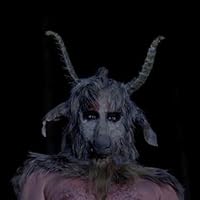
Caerlaverock is a top secret American missile silo situated in the Welsh hills, which contains the missile known as Spectre III, the most advanced on the planet. The security is strong, so to get into the base, the Russians use Mark Sallus, who has a knowledge of voodoo, and who knows a man inside. But when the Petro Gods of voodoo meet thermonuclear technology, the result can only be apocalyptic.
I was born on November 21, 1939, in the small village of Hopwas, near Tamworth, Staffordshire, England. My mother was a pre-war historical novelist (E. M. Weale) and she always encouraged me to write. I was first published at the age of 12 in The Tettenhall Observer, a local weekly newspaper. Between 1952-57 I wrote 56 stories for them, many serialized. In 1990 I collated these into a book entitled Fifty Tales from the Fifties.
My father was a dedicated bank manager and I was destined for banking from birth. I accepted it but never found it very interesting. During the early years when I was working in Birmingham, I spent most of my lunch hours in the Birmingham gun quarter. I would have loved to have served an apprenticeship in the gun trade but my father would not hear of it.
Shooting (hunting) was my first love, and all my spare time was spent in this way. In 1961 I designed and made a 12-bore shotgun, intending to follow it up with six more, but I did not have the money to do this. I still use the Guy N. Smith short-barrelled magnum. During 1960-67 I operated a small shotgun cartridge loading business but this finished when my components suppliers closed down and I could no longer obtain components at competitive prices.
My writing in those days only concerned shooting. I wrote regularly for most of the sporting magazines, interspersed with fiction for such magazines as the legendary London Mystery Selection, a quarterly anthology for which I contributed 18 stories between 1972-82.
In 1972 I launched my second hand bookselling business which eventually became Black Hill Books. Originally my intention was to concentrate on this and maybe build it up to a full-time business which would enable me to leave banking. Although we still have this business, writing came along and this proved to be the vehicle which gave me my freedom.
I wrote a horror novel for the New English Library in 1974 entitled Werewolf by Moonlight. This was followed by a couple more, but it was Night of the Crabs in 1976 which really launched me as a writer. It was a bestseller, spawning five sequels, and was followed by another 60 or so horror novels through to the mid-1990's. Amicus bought the film rights to Crabs in 1976 and this gave me the chance to leave banking and by my own place, including my shoot, on the Black Hill.
The Guy N. Smith Fan Club was formed in 1990 and still has an active membership. We hold a convention every year at my home which is always well attended.
Around this time I became Poland's best-selling author. Phantom Press published two GNS books each month, mostly with print runs of around 100,000.
I have written much, much more than just horror; crime and mystery (as Gavin Newman), and children's animal novels (as Jonathan Guy). I have written a dozen or so shooting and countryside books, a book on Writing Horror Fiction (A. & C. Black). In 1997 my first full length western novel, The Pony Riders was published by Pinnacle in the States.
With 100-plus books to my credit, I was looking for new challenges. In 1999 I formed my own publishing company and began to publish my own books. They did rather well and gave me a lot of satisfaction. We plan to publish one or two every year.
Still regretting that I had not served an apprenticeship in the gun trade, the best job of my life dropped into my lap in 1999 when I was offered the post of Gun Editor of The Countryman's Weekly, a weekly magazine which covers all field sports. This entails my writing five illustrated feature articles a week on guns, cartridges, deer stalking, big game hunting etc.
Alongside this we have expanded our mail order second hand crime fiction business, still publish a few books, and I find as much time as possible for shooting.
Jean, my wife, helps with the business. Our four children, Rowan, Tara, Gavin and Angus have all moved away from home but they visit on a regular basis.
Warhead is a crazy, fun, and crazy-fun pulp fest of a novel that explores the question: in a battle of nukes vs. voodoo, who would win? Smith, the man who gave crabs to the world, is an under-appreciated treasure of schlock-horror. Bits of the book are no longer socially acceptable but then again, they weren't in 1980 either and his fans didn't seem to mind. The countdown is commencing, so grab the popcorn.
I don't believe I've re-read 'Warhead' since my first time through back in the eighties, albeit a few years after it became the fifth horror novel Guy N. Smith released in 1981 alone. I don't remember it well, both in the sense that I've forgotten what happens in it and in the sense that it wasn't one of my favourites at the time. Reading afresh, I can see why, because it's an odd mix of approaches, both from previous books and entirely new, that sit uncomfortably together.
Initially it plays like a Cold War thriller with an overlay of voodoo. The Americans have persuaded the British government to allow them to install Spectre Mark III nuclear weapons at a Welsh base they call Caerlaverock, after the castle not far away in Scotland. An African mercenary spends the first chapter watching the base until night falls, then sacrifices a piglet in ritual fashion and works his way to the launching silo, using the protection of the Petro gods to hide his passage.
He's Lu Machin and he makes it much further than should be possible before he's shot dead on the silo ledge and the boss on site, Lex Gruber, realises that the real goal was to breach security just to get his guppy onto the base. So Gruber has him shot then personally hammers a twelve-inch steel spike through his heart to stymie that plan. Why a CIA officer should even be aware of such things, let alone know how to counter them, is a question that hovers over the first half of the book.
Perhaps appropriately for a Cold War thriller, these early chapters make for depressing reading. It all has to do with impending nuclear war, with the Soviets in Afghanistan and tensions rising south of the border in Pakistan. Caerlaverock is staffed by people manipulated into it by CIA operations. It's a claustrophobic space that feels more like a prison than a workplace. Nobody can leave. They can't even talk to people outside. The CIA are even suppressing their sexual appetites through use of drugs. Set this against a general fear of nuclear armageddon and supernatural horror and it's a fresh proto-grimdark read.
Smith also plays with our equilibrium by telling a mostly chronological story but from a plethora of perspectives and sometimes subtly out of order. The first death after Machin's is a character called Herman Szulc. He's found dead at the end of chapter five, but we watch how it was done in chapter seven and then witness the effects of his death in chapter eight. That's because the people aiming to kill him can't get into Caerlaverock, so visit the castle for which it was named and summon Petro gods from there, channelling their devastating power towards their intended victim down a personal link. That's scary because Szulc never sees it coming and has no way of stopping it, because the only presence where he is happens to be a god in search of a sacrifice.
Even with all this obvious horror novel material, Smith seems reticent to let the thriller aspect go. That feels like why we learn so many technical specifications about Spectre Mark III, as well as the Presbyterian background of wholefoods manufacturer Kapek Industries and the bloody history of Caerlaverock Castle. Most of these things don't matter at all, but serve to deepen the characters, which is something Smith embraces here. Whole chapters are devoted to what's going on inside a particular character's mind, along with what he thinks about everyone and everything else. He has always told stories through perception, but rarely applied to such an ensemble cast.
There's more thriller material to come, with a local Volunteer Defence Force building shelters for a village in the shadow of Caerlaverock, a Soviet agent gaining control over a research scientist who was brought up in Haiti very aware of the work of the bocors and also has a firm connection to the only Brit on the base. After all, the prologue features the two of them working an ouija board while at university, an experience that left their mutual friend dead in a mysterious fire. There are even social comments, hauling in a football hooligan to commit a mass atrocity that seriously resonates as a ruthless destruction of the one channel of hope the book has given us.
However, Smith isn't content to combine horror and thriller. Just as he did three books earlier with 'Manitou Doll', he adds a western flavour. One chapter takes place in Alberrow, an American ghost town that was the site of an Indian massacre after Geronimo's surrender. It's gruesome stuff, with the locals not content merely to murder the Indians but to flay their skin to make tobacco pouches. They even keep one alive to crucify on the saloon steps, leaving his body there until it's a skeleton. Sixty years on, another Indian mad from infancy gets vapourised in a Spectre test explosion.
All of this means that 'Warhead', the longest book Smith had written for New English Library, is an amalgam of the pessimism of 'Bats Out of Hell', the connection to an ancient evil of 'Doomflight', the deep character perspectives in 'The Son of the Werewolf' and the anchor to the western from 'Manitou Doll', along with a look forward to the supernatural battles of the Sabat series, only one year away. Add some personal touches and references, such as the base being only fifty miles from Shell Island, setting for 'Night of the Crabs' and taking the name Caerlaverock, as did Guy's house in Tamworth before that book allowed him to move to the Black Hill and his initial book catalogue turned zine, and this is a single volume dive into much of what made Smith tick at the time.
There are approaches that surprised me too.
There's a strong negativity towards Americans here, even if there's no equivalent positivity to the Soviets. The feel is that both are bad and that enmity will only escalate to the point of destroying civilisation. However, the Soviets have no real presence in the book, just a couple of killer agents. The Americans have a nuclear base on British soil and they run it with arrogance and racism. That mercenary in chapter one was African and four of the base's top brass think of and refer to him as the N word. Add the treatment of Indians in the western section and this clearly hasn't dated well and feels highly pessimistic about Britain's greatest ally. Maybe killing off both the president and the secretary of state in a single chapter brought a feeling of relief.
Another is the fact that so much of the characterisation is developed through thoughts that most of the named characters aren't even in the story proper, appearing only in flashback memories. In one instance, we even get a further level of abstraction: a security guard called Calloway recalls a plane ride with Rich O'Brien that ended with them crashing into the Arizona desert, just like Rich's father Skip was last seen parachuting into the jungles of Vietnam. Calloway kills Rich immediately to boost his chances of survival so we don't even spend time with him, let alone his father, who was presumably dead a decade earlier. That's unusual for Smith.
What's unusual for me is that I tend not to appreciate his more pessimistic novels, but I found that this one kept on growing on me more and more as it ran on. Partly that may be due to the chapters getting consistently shorter but containing more brutal scenes with iconic imagery. The book has a couple of parts, the first half as long again as the second. However, the most pivotal moments are sparing until halfway, with the Alberrow massacre and the hooligan's final moments, then grow in frequency as things get progressively serious, Petro gods starting to show up as characters rather than just means to an end.
By the time Smith thinks about wrapping up, the action has become so frantic that we devour the pages while having to pay very close attention to the details, a hard balancing act right there, but also almost hallucinatory. Norman Campbell, a struggling DJ, doesn't show up until three chapters from the end and I'm still not entirely sure what he goes through is real and what isn't. To use the hyperbole of movie reviews, we just can't blink during these final chapters.
I'll have to let this settle for a while, because I didn't like it until I did and I don't know how well it'll end up in my mind once the experience of it starts to fade and I come back down to earth. I have a feeling that it's going to sit better than it did four decades ago.
My least favourite Guy N Smith book to-date. The first half was a real slog to get through and was at times a hate read but then it picked up and I raced through the final 100 pages but then it fails to land the ending. I would say this is one for the fans and even then it's an unpleasant book to read at times