

What do you think?

The Godwits Fly
Persephone Books Ltd No. 177 [Published 2016]. Soft cover, in wraps, 373 pp. [From flaps] Halfway through the war, Eliza became a poet. It happened in a white dinghy down at Island Bay, where Augusta used to take them in the summer evenings. The boat looked safe and tired; there was a little dirty seawater in its bottom, but not enough to count. She slid into it and curled up... At last, when a few pale stars sprinkled the sky, silver daisies on a stiff-standing dark blue taffeta gown, she clambered out of the boat, stiff all over. Her mother caught her by the wrist. 'Do you know the Boy Scouts are out looking for you? Where have you been?' 'I couldn't help it. I was writing a poem.' Presently, Augusta was not cross any more, and they were all drinking macaroni soup at the house in Calver Street. Augusta said, 'Now let's have this blessed poem.' Eliza repeated it without a hitch. It rhymed ocean with motion and weather with feather. Augusta said, 'Humph . . . Not so bad. Iris Wilkinson (1906-39), who wrote as Robin Hyde, is now seen as one of New Zealand's major writers. Brought up in Wellington (her father was English and her mother Australian), she was encouraged to write, and at 17 started working as a newspaper journalist. A long spell in hospital resulted from a serious knee injury. She gave birth to two illegitimate children (the first died, but her son, Derek Challis b. 1930, was fostered) and then had a breakdown; despite this she continued to work ferociously hard, notably during 1934-5 when she lived in the grounds of Auckland Mental Hospital and wrote half her total output. Here she began her autobiographical novel "The Godwits Fly" (1938) describing 'Eliza' up to the age of 21. She published a total of ten books during the 1930s - five novels, poetry (inc. in 1937 Persephone in Winter), journalism and a travel book. She travelled to China in 1938, made it to London, but killed herself in Notting Hill Gate a week before the outbreak of war
373 pages, Paperback
First published January 1, 1938
About the author
Robin Hyde
24 books12 followersIris Guiver Wilkinson, better known as Robin Hyde, her chosen name as poet and writer, was born on 19 January 1906 in Cape Town, South Africa. She was the second daughter of Edith Ellinor (Nelly) Butler, an Australian nurse who on her way ‘Home’ had met and married George Edward Wilkinson, an Englishman working on the installation of a post and telegraph system in South Africa. When Iris was a month old the family sailed third-class in the Ruapehu for New Zealand.
Settling in Wellington, the Wilkinsons rented a series of dingy houses in Newtown, Melrose and Berhampore where two more daughters were born. The household was violently divided in its opinions, Iris’s mother enthusiastic for God and empire, bluebells and manners, her father immersed in books denouncing capitalism, imperialism and religion. The story of her early life is told in her autobiographical novel The godwits fly, and in a haunting sequence of poems in Houses by the sea, published after her death. She was a pupil at South Wellington School and Berhampore School, where she was dux in 1918. After her family’s move to the suburb of Northland she attended Wellington Girls’ College, where she made a lifelong friend, Gwen Hawthorn (later Mitcalfe). Although Iris wrote dismissively of her education there as stodgy and cold, she received encouragement for her writing. Many of her poems and stories appeared in the school magazine between 1919 and 1922.
At 17 the ‘Schoolgirl Poetess’ joined the staff of the Dominion, also working on the children’s page of the New Zealand Farmers’ Advocate. She had a love affair with one of her father’s protégés, Harry Sweetman, which was fictionalised in The godwits fly. They planned to go to Europe together, but at 18 she spent some months in hospital after a knee operation. She came out on crutches, lame for life, dependent on opiates for pain relief, to find that Harry had gone without her. She learned much later of his death shortly after his arrival in England.
Returning to work at the Dominion she wrote ‘Peeps at Parliament’ under the pen-name ‘Novitia’ during the election year of 1925. Although flippant (as at that time her age, sex and the editor dictated), the column touched on some serious social concerns. She met politicians William Downie Stewart, Daniel Sullivan and John A. Lee, who became lasting friends. A brief love affair while she was receiving treatment for her knee in Rotorua left her pregnant. In April 1926 she resigned from the Dominion and sailed for Sydney. Five bleak months there ended with the birth and death of a son. She gave him the name Robin Hyde, then borrowed it back from him, to use for her serious writing. On her return to New Zealand she had a nervous breakdown, and in 1927 spent some months in Queen Mary Hospital at Hanmer Springs.
Writing again, she had some poems published in newspapers. John Schroder, from the Christchurch Sun ’s literary pages, began a correspondence with her that lasted till her death. He became her literary adviser and friend. Back in Wellington she found only occasional work as a jobbing journalist. She joined New Zealand Truth in September 1928, then, after being sacked, with Schroder’s help she was appointed to assist Esther Glen with the women’s page of the Christchurch Sun. She was employed by the Wanganui Chronicle by March 1929. At each post she inserted controversial interviews or subversive comment into the society or shopping columns.
Her first collection of poetry, The desolate star, was published in 1929. Few copies sold. In Wanganui she became pregnant after a brief fling with a married journalist who suggested she pay half the cost of an abortion. ‘Well, I thought, you can’t say we haven’t got sex equality all right’. Hyde refused the abortion and took six months’ sick leave claiming ‘a dicky heart’. She lived near French Pass and later at Picton under an assumed name; her son, Derek Challis, was born in Octo
Settling in Wellington, the Wilkinsons rented a series of dingy houses in Newtown, Melrose and Berhampore where two more daughters were born. The household was violently divided in its opinions, Iris’s mother enthusiastic for God and empire, bluebells and manners, her father immersed in books denouncing capitalism, imperialism and religion. The story of her early life is told in her autobiographical novel The godwits fly, and in a haunting sequence of poems in Houses by the sea, published after her death. She was a pupil at South Wellington School and Berhampore School, where she was dux in 1918. After her family’s move to the suburb of Northland she attended Wellington Girls’ College, where she made a lifelong friend, Gwen Hawthorn (later Mitcalfe). Although Iris wrote dismissively of her education there as stodgy and cold, she received encouragement for her writing. Many of her poems and stories appeared in the school magazine between 1919 and 1922.
At 17 the ‘Schoolgirl Poetess’ joined the staff of the Dominion, also working on the children’s page of the New Zealand Farmers’ Advocate. She had a love affair with one of her father’s protégés, Harry Sweetman, which was fictionalised in The godwits fly. They planned to go to Europe together, but at 18 she spent some months in hospital after a knee operation. She came out on crutches, lame for life, dependent on opiates for pain relief, to find that Harry had gone without her. She learned much later of his death shortly after his arrival in England.
Returning to work at the Dominion she wrote ‘Peeps at Parliament’ under the pen-name ‘Novitia’ during the election year of 1925. Although flippant (as at that time her age, sex and the editor dictated), the column touched on some serious social concerns. She met politicians William Downie Stewart, Daniel Sullivan and John A. Lee, who became lasting friends. A brief love affair while she was receiving treatment for her knee in Rotorua left her pregnant. In April 1926 she resigned from the Dominion and sailed for Sydney. Five bleak months there ended with the birth and death of a son. She gave him the name Robin Hyde, then borrowed it back from him, to use for her serious writing. On her return to New Zealand she had a nervous breakdown, and in 1927 spent some months in Queen Mary Hospital at Hanmer Springs.
Writing again, she had some poems published in newspapers. John Schroder, from the Christchurch Sun ’s literary pages, began a correspondence with her that lasted till her death. He became her literary adviser and friend. Back in Wellington she found only occasional work as a jobbing journalist. She joined New Zealand Truth in September 1928, then, after being sacked, with Schroder’s help she was appointed to assist Esther Glen with the women’s page of the Christchurch Sun. She was employed by the Wanganui Chronicle by March 1929. At each post she inserted controversial interviews or subversive comment into the society or shopping columns.
Her first collection of poetry, The desolate star, was published in 1929. Few copies sold. In Wanganui she became pregnant after a brief fling with a married journalist who suggested she pay half the cost of an abortion. ‘Well, I thought, you can’t say we haven’t got sex equality all right’. Hyde refused the abortion and took six months’ sick leave claiming ‘a dicky heart’. She lived near French Pass and later at Picton under an assumed name; her son, Derek Challis, was born in Octo
Ratings & Reviews
Friends & Following
Create a free account to discover what your friends think of this book!
Community Reviews
Displaying 1 - 19 of 19 reviews

August 7, 2018
2.5 stars. I loved Eliza's thoughts and spirited actions, I loved her free thinking. In between was family life shown from Eliza's viewpoint, which, from a child's angle was rambling, random and inconclusive. Eliza is just the sort of child I love to read about but sadly the rest of the story lost my interest. I stopped half way through the book.

February 20, 2018
A lovely autobiographical novel about growing up in Wellington, New Zealand, in the early years of the 20th century. The language is beautifully poetical, and there are some wonderful descriptions of New Zealand and Australia, although I found in the end it gets hard to take so much lyrical prose in a full length novel.
It's not a cheerful story as it turns into a catalogue of missed opportunities and lost hopes, but since it mirrors the author's own devastatingly unhappy life, that's unavoidable. It's also a good reminder of how the 1920s were very like the 1960s in many ways--we tend to forget the many forms of liberation that happened in that earlier decade.
It's not a cheerful story as it turns into a catalogue of missed opportunities and lost hopes, but since it mirrors the author's own devastatingly unhappy life, that's unavoidable. It's also a good reminder of how the 1920s were very like the 1960s in many ways--we tend to forget the many forms of liberation that happened in that earlier decade.

June 14, 2016
This is the latest release from Persephone Press whose classic books I adore. This book is unlike any other I have read from their catalog so far. The entire time I was reading it I felt as if I were in the midst of a dream with lots of sounds and imagines, some vivid and some out-of-focus. And the dialogue was sparse and poetic, sometimes difficult to understand. The main character, a girl named Eliza, is an aspiring poet from a very tender age so it is no wonder that the author chose such a lyrical style for her novel.
Eliza and the other Hannays, her sisters Carly and Sandra, her brother Kitch and her parents have a somewhat nomadic life in Wellington, Australia. Eliza's father has a job as a office clerk on which salary he struggles to support his family of six. They move from one cheap house rental to another and it is thanks to his wife, Augusta that their budget is stretched so far. Augusta is an economical cook and sews clothes for her children who are always well-dressed and tidy. The first part of the book is Eliza's memories from the various houses in which they have lived.
From the beginning we understand that the Hannay family does not get along well with one another. Mr. and Mrs. Hannay are always fighting and one wonders who they ever got together and got married in the first place. Mr. Hannay fancies himself a socialist and is always reading books on the subject and dragging home his seedy friends. He appears to have little affection for or understanding of his wife and his children. All of this behavior irritates Mrs. Hannay whose main concern is caring for her family and keeping the house clean. She dreams of someday moving to her beloved England but as the story goes on it is evident that this is not an achievable dream for a poor woman with four children.
Much of the prose in the book is focused on capturing the details of the settings. For example, in chapter nine, entitled "Reflections in the Water" it is Eliza's birthday and the family celebrates by having a picnic and a swim at Day's Bay. The chapter opens with a vivid description of the people standing on the dock and boarding the boat to sail out to Day's Bay. Hyde writes, "Day's Bay sand is smooth and warm, honeycombed with tiny airholes in which the blue crabs hide." I could feel the press of people, the heat and I could smell the water and the summer as I was reading the descriptive passages in this chapter. The story continues to describe the beach and the picnic and although there is little in the chapter that advances the story we get another glimpse into the life of this family.
As Eliza and her sister Carly get older I was expecting that a man would catch their fancy and their would be multiple weddings in the book. But the hold that the Hannay family has on both of them doesn't loosen its grip for anything, not even a man. Carly is engaged for a while and she even tries her hand at becoming a nurse, but connection with her mother pulls her right back home. Eliza falls in love with a man named Timothy who is one of the socialists that her father brings home. She has a lot in common with him and they like to discuss books but it seems that Timothy is a free spirit; although he loves Eliza, the pull of traveling and exploring the world is greater than his love for her.
Timothy does write letters to Eliza and even wanders back to her in Wellington from time to time but this is more of a torment to her than anything else. She has a love affair with an older man in order to try to forget Timothy, but this episode in her life has long-term and hurtful consequences for her. The only positive that comes out of her lost loves is that she is inspired more than ever to write poetry.
For those who love poetry, The Godwits Fly is a must-read. Eliza reads and memorizes poems which she is fond of reciting from a young age. She also writes a fair amount of her own poetry and she calls her gift for writing simply, "it." When tragedy strikes, her gift for poetry suddenly returns: "She felt neither happy nor unhappy. merely still as the nurse moved about the room. When she was alone, words ran in her mind, measured themselves, a steady chain of which no link was weak enough to break. Long ago, she called the power 'it'." Eliza is able to find comfort and solace in her art, but this book doesn't have a particularly happy ending for any of the Hannay family. It serves as a stark reminder that growing up as a female in the mid-twentieth century was oftentimes harsh.
Eliza and the other Hannays, her sisters Carly and Sandra, her brother Kitch and her parents have a somewhat nomadic life in Wellington, Australia. Eliza's father has a job as a office clerk on which salary he struggles to support his family of six. They move from one cheap house rental to another and it is thanks to his wife, Augusta that their budget is stretched so far. Augusta is an economical cook and sews clothes for her children who are always well-dressed and tidy. The first part of the book is Eliza's memories from the various houses in which they have lived.
From the beginning we understand that the Hannay family does not get along well with one another. Mr. and Mrs. Hannay are always fighting and one wonders who they ever got together and got married in the first place. Mr. Hannay fancies himself a socialist and is always reading books on the subject and dragging home his seedy friends. He appears to have little affection for or understanding of his wife and his children. All of this behavior irritates Mrs. Hannay whose main concern is caring for her family and keeping the house clean. She dreams of someday moving to her beloved England but as the story goes on it is evident that this is not an achievable dream for a poor woman with four children.
Much of the prose in the book is focused on capturing the details of the settings. For example, in chapter nine, entitled "Reflections in the Water" it is Eliza's birthday and the family celebrates by having a picnic and a swim at Day's Bay. The chapter opens with a vivid description of the people standing on the dock and boarding the boat to sail out to Day's Bay. Hyde writes, "Day's Bay sand is smooth and warm, honeycombed with tiny airholes in which the blue crabs hide." I could feel the press of people, the heat and I could smell the water and the summer as I was reading the descriptive passages in this chapter. The story continues to describe the beach and the picnic and although there is little in the chapter that advances the story we get another glimpse into the life of this family.
As Eliza and her sister Carly get older I was expecting that a man would catch their fancy and their would be multiple weddings in the book. But the hold that the Hannay family has on both of them doesn't loosen its grip for anything, not even a man. Carly is engaged for a while and she even tries her hand at becoming a nurse, but connection with her mother pulls her right back home. Eliza falls in love with a man named Timothy who is one of the socialists that her father brings home. She has a lot in common with him and they like to discuss books but it seems that Timothy is a free spirit; although he loves Eliza, the pull of traveling and exploring the world is greater than his love for her.
Timothy does write letters to Eliza and even wanders back to her in Wellington from time to time but this is more of a torment to her than anything else. She has a love affair with an older man in order to try to forget Timothy, but this episode in her life has long-term and hurtful consequences for her. The only positive that comes out of her lost loves is that she is inspired more than ever to write poetry.
For those who love poetry, The Godwits Fly is a must-read. Eliza reads and memorizes poems which she is fond of reciting from a young age. She also writes a fair amount of her own poetry and she calls her gift for writing simply, "it." When tragedy strikes, her gift for poetry suddenly returns: "She felt neither happy nor unhappy. merely still as the nurse moved about the room. When she was alone, words ran in her mind, measured themselves, a steady chain of which no link was weak enough to break. Long ago, she called the power 'it'." Eliza is able to find comfort and solace in her art, but this book doesn't have a particularly happy ending for any of the Hannay family. It serves as a stark reminder that growing up as a female in the mid-twentieth century was oftentimes harsh.

August 16, 2021
Hyde, sat alongside Mansfield and Frame, forms the third member of the trio of the major Pākehā women writers of 20th century New Zealand literature, and can also comfortably be situated alongside John Mulgan (of 'Man Alone' fame) as the other major early 20th century NZ writer in the not insignificant 'New Zealand sucks, it's dreary and depressing, Europe is better' school of writing.
Compared to the outputs of these writers, Godwits Fly feels much less structured and far more frantic - Hyde is clearly writing at pace (the book was composed mostly in just 4 weeks, during a stay at a mental hospital) and the book is better read as a thinly veiled autobiography, stuffed full of the various indicidences Hyde considers significant in her early life, rather than as a conventional novel of the kind we might expect to be written in the 1930s.
Despite its somewhat frantic, 'stuffed-full' quality, however, which does sometimes make the story and syntax hard to follow, the book is (mostly) wonderful. Although declaring a focus on the cultural yearning white New Zealanders feel for the 'home' of England (these are the 'Godwits' who want to fly back to the North), the book is mostly about the experience of being a young woman in a rather stifling colonial society, hoping and striving and seeking things and mostly being pushed back by men and by the mores and social structures of the day. In this it is moving and often funny - the pictures Hyde paints of the various men in her life are usually quite satirical, while still revealing the pain they clearly cause her. In all of this, England exists as some kind of strange, utopian space where the problems the protagonist experiences in colonial Wellington may not exist (it is, in the words of an early poem of the author's reproduced at the centre of the book, a place that 'shall robe your dreams in silver/shall veil the scars of pain'), even as I think we, as readers, know that England is not likely to be less stifling than say Wellington or Auckland (though maybe early 20th C NZ readers didn't feel this).
The most unfortunate parts of the book are the portrayals of Māori, which depressingly strike me as even worse than those in Mansfield, in Mulgan etc. - something which was at least initially surprising given Hyde's progressive credentials. The book mostly occupies an entirely white world, but when Māori do appear (briefly - in stray moments on the fringes) Hyde relies on all the worst stereotypes - these passages are very unpleasant to read, and the book in this way can be understood as part of a cultural web in NZ which justifies the colonial status quo and works to position non-white individuals (mainly Māori, but we encounter a number of other non-white colonial subjects also) as deficient, foolish, 'needing' the colonial state for their own good and so on. These are then, of course, the moments when the book is not very wonderful at all, and are particularly disappointing, I think, because Hyde is otherwise deeply concerned with the marginalised status of women, but she can't apply this thinking, this concern for the marginalised, outside of the white world she floats in.
Overall, we get a fascinating insight into the colonial world of New Zealand, where people (metaphorically speaking) "live half our lives in England anyhow" and I think we are also left with a lot of sadness about Hyde and what she might have achieved should she have come from a slightly different time or place, or if she had perhaps worked harder to think through what 'New Zealand' ('Aotearoa' completely out of the picture, of course), as a place and as an idea, could be.
Compared to the outputs of these writers, Godwits Fly feels much less structured and far more frantic - Hyde is clearly writing at pace (the book was composed mostly in just 4 weeks, during a stay at a mental hospital) and the book is better read as a thinly veiled autobiography, stuffed full of the various indicidences Hyde considers significant in her early life, rather than as a conventional novel of the kind we might expect to be written in the 1930s.
Despite its somewhat frantic, 'stuffed-full' quality, however, which does sometimes make the story and syntax hard to follow, the book is (mostly) wonderful. Although declaring a focus on the cultural yearning white New Zealanders feel for the 'home' of England (these are the 'Godwits' who want to fly back to the North), the book is mostly about the experience of being a young woman in a rather stifling colonial society, hoping and striving and seeking things and mostly being pushed back by men and by the mores and social structures of the day. In this it is moving and often funny - the pictures Hyde paints of the various men in her life are usually quite satirical, while still revealing the pain they clearly cause her. In all of this, England exists as some kind of strange, utopian space where the problems the protagonist experiences in colonial Wellington may not exist (it is, in the words of an early poem of the author's reproduced at the centre of the book, a place that 'shall robe your dreams in silver/shall veil the scars of pain'), even as I think we, as readers, know that England is not likely to be less stifling than say Wellington or Auckland (though maybe early 20th C NZ readers didn't feel this).
The most unfortunate parts of the book are the portrayals of Māori, which depressingly strike me as even worse than those in Mansfield, in Mulgan etc. - something which was at least initially surprising given Hyde's progressive credentials. The book mostly occupies an entirely white world, but when Māori do appear (briefly - in stray moments on the fringes) Hyde relies on all the worst stereotypes - these passages are very unpleasant to read, and the book in this way can be understood as part of a cultural web in NZ which justifies the colonial status quo and works to position non-white individuals (mainly Māori, but we encounter a number of other non-white colonial subjects also) as deficient, foolish, 'needing' the colonial state for their own good and so on. These are then, of course, the moments when the book is not very wonderful at all, and are particularly disappointing, I think, because Hyde is otherwise deeply concerned with the marginalised status of women, but she can't apply this thinking, this concern for the marginalised, outside of the white world she floats in.
Overall, we get a fascinating insight into the colonial world of New Zealand, where people (metaphorically speaking) "live half our lives in England anyhow" and I think we are also left with a lot of sadness about Hyde and what she might have achieved should she have come from a slightly different time or place, or if she had perhaps worked harder to think through what 'New Zealand' ('Aotearoa' completely out of the picture, of course), as a place and as an idea, could be.

May 21, 2016
Part stream-of-consciousness, part autobiographical, this is an intriguing novel written by New Zealand author Robin Hyde (born Iris Dickinson). Beginning just after the start of the 20th century and running through to the 1920s, The Godwits Fly is the story of the Hannay family: mother Augusta, father John and the four children Carly, Eliza, Sandra and Kitchit. Told almost entirely from Eliza’s point of view, the Hannays are a dysfunctional family living in Wellington and trying to survive at a time of upheaval and confusion for the country.
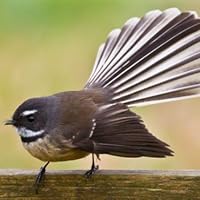
A godwit is a bird that migrates annually from Winter in Siberia to the southern hemisphere and back again when Summer begins. Their presence permeates the story as their flight is constantly referenced and they become an analogy for the desperate desire to escape that each Hannay feels. Augusta is an embittered woman, made hard by disappointment. She’s originally Australian and yet dreams of a house in England, the idealized homeland that all New Zealanders at the time apparently wanted to visit. For Augusta family and respectability are all-important, an attitude that ultimately dooms her eldest daughter, Carly, into a life of suffocating conformity. John Hannay is an ardent socialist who fantasizes about becoming a hero to the Union and yet never quite has the courage to leave the wife and children he no longer loves and the job he despises.
Eliza (the character based on Hyde's own life) has a couple of ill-fated love affairs, followed by a nervous breakdown, but ultimately manages to escape the confines of her family by becoming a writer. Eliza is intelligent and pragmatic but so desperately wants to love and be loved. She is independent and passionate, but living at a time of stifling conventionality. Eliza loves her family but also sees clearly the damage they have done to each other over the years. There is a paragraph toward the end of the novel that struck me particularly: “We take things too hard and we’re too ignorant. It’s ignorant to love so much and in this wasted way. And we fight, instead of trying to save one another.”
Like Janet Frame, Hyde’s writing is lyrical, full of strange images and ideas. Her metaphors are extraordinary. One that I love is, “Light in little pieces, like a kiss from a laughing splendid woman unseen, came and dwelt on the faces of the men.” It’s a sentence I had to read a couple of times and when I could “see” what she was describing it took my breath away. Not an easy book to read – sometimes you’ll find yourself wondering what the hell she just said – but unforgettable.
This novel was not a one-off. Hyde was quite a prolific writer in her short life (four other novels, as well as books of poetry and non-fiction) but it’s difficult to find Robin Hyde’s other books in the US. I recommend you make the effort.
A godwit is a bird that migrates annually from Winter in Siberia to the southern hemisphere and back again when Summer begins. Their presence permeates the story as their flight is constantly referenced and they become an analogy for the desperate desire to escape that each Hannay feels. Augusta is an embittered woman, made hard by disappointment. She’s originally Australian and yet dreams of a house in England, the idealized homeland that all New Zealanders at the time apparently wanted to visit. For Augusta family and respectability are all-important, an attitude that ultimately dooms her eldest daughter, Carly, into a life of suffocating conformity. John Hannay is an ardent socialist who fantasizes about becoming a hero to the Union and yet never quite has the courage to leave the wife and children he no longer loves and the job he despises.
Eliza (the character based on Hyde's own life) has a couple of ill-fated love affairs, followed by a nervous breakdown, but ultimately manages to escape the confines of her family by becoming a writer. Eliza is intelligent and pragmatic but so desperately wants to love and be loved. She is independent and passionate, but living at a time of stifling conventionality. Eliza loves her family but also sees clearly the damage they have done to each other over the years. There is a paragraph toward the end of the novel that struck me particularly: “We take things too hard and we’re too ignorant. It’s ignorant to love so much and in this wasted way. And we fight, instead of trying to save one another.”
Like Janet Frame, Hyde’s writing is lyrical, full of strange images and ideas. Her metaphors are extraordinary. One that I love is, “Light in little pieces, like a kiss from a laughing splendid woman unseen, came and dwelt on the faces of the men.” It’s a sentence I had to read a couple of times and when I could “see” what she was describing it took my breath away. Not an easy book to read – sometimes you’ll find yourself wondering what the hell she just said – but unforgettable.
This novel was not a one-off. Hyde was quite a prolific writer in her short life (four other novels, as well as books of poetry and non-fiction) but it’s difficult to find Robin Hyde’s other books in the US. I recommend you make the effort.
December 1, 2017
I read this book because it is set in New Zealand and I was born and lived there for the first 2 years of my life. I really enjoyed the first chapters particularly as they take place in Wellington where I was born. However I did find it rather wordy and too descriptive. It is based on the author's childhood so perhaps that's why it lacks an actual story often being disjointed and confusing. Characters appeared from nowhere with no introduction. However I enjoyed enough of it much of it was absorbing that I don't regret reading it though confess to a certain relief on finishing it.

May 17, 2018
At times poetic and insightful - though overall feels more like a series of oddly frenetic vignettes rather than a satisfying novel.

Read
March 30, 2024I have similar feelings toward The Godwits Fly as I do to Faulkner’s Absalom, Absalom! - which was published two years before Godwits. In both cases, I found them challenging, fascinating, confronting reads. They are the sorts of novel that deserve a type of patience and care that I’ve never possessed as a reader.
That’s not to say I didn’t appreciate or even enjoy Godwits. There are passages, whole chapters, that are breathtaking in their beauty. Descriptions of the natural world or interior thoughts that encapsulate the frailties, the doubts, the fears of being human.
Although the novel’s perspective floats between characters, much of the book focuses on Eliza Hannay (an analogue for Hyde… or should I say, Iris Wilkinson, Robin Hyde was her pen-name). Eliza is a precocious young girl living with her family in Wellington, New Zealand. As she gets older, her passions centre on literary pursuits, especially poetry. Her father, John, whom she adores, is a socialist and misery guts who gets on the nerves of Eliza’s mother, Augusta (to the extent that she packs up the kids and heads to Australia, only to return when John signs up for the Army at the eve of World War 1). As a young woman, Eliza falls in love with an idealist like her father, Timothy Cardew, an affair that does not end well. There are other tragedies, which I won’t spoil, but for all the misery that Eliza experiences, her creativity, imagination, and sense of self are never overwhelmed.
If the novel ends on a hopeful note, it sadly didn’t for its author. As someone who struggled with her mental health for years, Hyde took her own life in 1939. She was productive, writing poems and novels, some of which have been published. I feel this is a book I should come back to one day. Like Absalom, Absalom! I know it would reward a second read.
That’s not to say I didn’t appreciate or even enjoy Godwits. There are passages, whole chapters, that are breathtaking in their beauty. Descriptions of the natural world or interior thoughts that encapsulate the frailties, the doubts, the fears of being human.
Although the novel’s perspective floats between characters, much of the book focuses on Eliza Hannay (an analogue for Hyde… or should I say, Iris Wilkinson, Robin Hyde was her pen-name). Eliza is a precocious young girl living with her family in Wellington, New Zealand. As she gets older, her passions centre on literary pursuits, especially poetry. Her father, John, whom she adores, is a socialist and misery guts who gets on the nerves of Eliza’s mother, Augusta (to the extent that she packs up the kids and heads to Australia, only to return when John signs up for the Army at the eve of World War 1). As a young woman, Eliza falls in love with an idealist like her father, Timothy Cardew, an affair that does not end well. There are other tragedies, which I won’t spoil, but for all the misery that Eliza experiences, her creativity, imagination, and sense of self are never overwhelmed.
If the novel ends on a hopeful note, it sadly didn’t for its author. As someone who struggled with her mental health for years, Hyde took her own life in 1939. She was productive, writing poems and novels, some of which have been published. I feel this is a book I should come back to one day. Like Absalom, Absalom! I know it would reward a second read.

December 24, 2016
Persephone book 117 The Godwits Fly is a semi-autobiographical novel by New Zealand author Robin Hyde (born Iris Wilkinson), of which I had extraordinary high hopes. The prose is glorious, poetic and continually a delight to read. Hyde’s descriptions of landscape particularly are sumptuous as are the snippets of poetry we get throughout the novel. However, while there is nothing to actually dislike about this novel, I found myself slightly underwhelmed though I don’t know why. Perhaps I just expected a little too much, it is still a very good novel. Robin Hyde’s writing style is not always easy, her prose as I have said is wonderful, but it isn’t always straightforward, not always conventional, the perspective alters a little as the characters in the novel grow up.
Full review: https://heavenali.wordpress.com/2016/...
Full review: https://heavenali.wordpress.com/2016/...
April 27, 2019
Much like Katherine Mansfield in style and voice. Starts well but loses its way about the mid-point. I skipped a chapter in an effort to wade past the boggy middle, but found it went further than I’d anticipated. Had to stop in the end. I just could not make myself soldier on any longer.
Read
October 11, 2010I loved this book. Beautifully written and really paints a picture of Wellington in the early 1900's. It made my heart ache with longing for NewZealand.
December 28, 2013
Good, but a bit too abstract in parts.

December 3, 2014
A superb telling of life in Wellington nz early 2oth century. Amazing use of language in this almost autobiography. Stunning

December 9, 2024
Reading The Godwit’s Fly feels like standing on the Wellington waterfront, fresh from crossing the (soon-to-be-demolished) City to Sea Bridge—wind-tossed and unsettled, yet held together by the elusive beauty of the scene. Robin Hyde has written a novel that encapsulates not only the raw, sweeping landscapes of New Zealand but also the private storms and longings of its women, like a torrential snow globe swirling with restrained chaos.
Hyde’s language is as restless as the southerly wind, and her characters are alive with yearning—none more so than Eliza Hannay. This is a story of a woman’s inner life: vivid, profound, yet constrained by the slow, steady march of men who move forward while women are left to stand still, smiling and listening. Hyde renders this dynamic with piercing honesty, making it impossible not to ache for Eliza and her moments of quiet rebellion.
The novel’s lyrical prose is both pretty and provocative, even in its darkest moments. Hyde masterfully weaves together the personal and the political, addressing poverty, war, and the isolating loneliness of a woman’s role in a society eager to consume her while refusing to see her fully. Some passages are so saturated with imagery and emotion that they feel almost overwhelming—perhaps intentionally so, as a reflection of the crushing weight of Eliza’s Kiwi-dream gone awry.
If there’s any critique to offer, it is only that the narrative, much like the godwits themselves, sometimes soars so high in spirit and ambition that it becomes challenging to follow. Yet this, too, feels intentional for a book that demands its readers embrace complexity and contradiction.
Hyde’s Wellington pulses with life, not just in its streets but in its capricious weather, its relentless tides, and the unspoken tensions of gender, class, and cultural inequities. She poignantly reflects on disparities in education and the devastating impact of cultural annihilation on Māori, blending compassion with scathing critique. It’s a city I love, yet through Hyde’s eyes (and through mine own), it is unmistakably a place of deep sadness.
Hyde herself was an underappreciated jewel of Aotearoa, whose sharp insight and lyrical voice deserve far more recognition than they’ve ever received. The Godwit’s Fly is not a comfortable book, but it is a necessary one.
Hyde’s commentary on Māori illiteracy and destitution is heart-wrenching, and her portrayal of women’s quiet courage—forced to wait while men stride on, unburdened by the need to truly listen—is hauntingly true. For anyone who admires the power of Maoriland-era voices to confront these truths, this novel is mandatory reading.
Hyde’s language is as restless as the southerly wind, and her characters are alive with yearning—none more so than Eliza Hannay. This is a story of a woman’s inner life: vivid, profound, yet constrained by the slow, steady march of men who move forward while women are left to stand still, smiling and listening. Hyde renders this dynamic with piercing honesty, making it impossible not to ache for Eliza and her moments of quiet rebellion.
The novel’s lyrical prose is both pretty and provocative, even in its darkest moments. Hyde masterfully weaves together the personal and the political, addressing poverty, war, and the isolating loneliness of a woman’s role in a society eager to consume her while refusing to see her fully. Some passages are so saturated with imagery and emotion that they feel almost overwhelming—perhaps intentionally so, as a reflection of the crushing weight of Eliza’s Kiwi-dream gone awry.
If there’s any critique to offer, it is only that the narrative, much like the godwits themselves, sometimes soars so high in spirit and ambition that it becomes challenging to follow. Yet this, too, feels intentional for a book that demands its readers embrace complexity and contradiction.
Hyde’s Wellington pulses with life, not just in its streets but in its capricious weather, its relentless tides, and the unspoken tensions of gender, class, and cultural inequities. She poignantly reflects on disparities in education and the devastating impact of cultural annihilation on Māori, blending compassion with scathing critique. It’s a city I love, yet through Hyde’s eyes (and through mine own), it is unmistakably a place of deep sadness.
Hyde herself was an underappreciated jewel of Aotearoa, whose sharp insight and lyrical voice deserve far more recognition than they’ve ever received. The Godwit’s Fly is not a comfortable book, but it is a necessary one.
Hyde’s commentary on Māori illiteracy and destitution is heart-wrenching, and her portrayal of women’s quiet courage—forced to wait while men stride on, unburdened by the need to truly listen—is hauntingly true. For anyone who admires the power of Maoriland-era voices to confront these truths, this novel is mandatory reading.

November 27, 2023
Lyric writing. Characters with rich inner lives. Eliza's family sends out a search party one evening when she doesn't come home and find her curled up in a boat to do some poetic star-gazing. When they find her she says, "I can't help it. I was writing a poem." Her exasperated mother has her own thwarted love of beauty. She takes cuttings and tries to create a garden on each of family's many erratic moves. Hyde loves her plants and knows their names. I spent almost as many hours happily doing a deep dive into the plants of Aotearoa as I did reading the novel.
4+
4+
October 23, 2020
Dense with imagery. Poetic, beautiful, sad.

June 13, 2022
Tortured and melancholy, but life-affirming too.

February 20, 2015
The Godwits Fly was another of my 'Settler Fiction: Australia / New Zealand' books, one that I really liked at the time but struggled through when I reread it in 2015. Given that, and taking my recent 1-star review of
Voss
into account, I was worried this would be hard work. Which just goes to show, where and how you read a book make an enormous difference! The Godwits Fly is dense and ephemeral enough that it doesn't benefit from consumption in twice-daily half-hour chunks on the way to and from work. It benefited, this time, from being able to read whole chapters at a time without interruption.
Should anyone ask why I, who has never lived in Australia or ever visited New Zealand, took a module in Settler Fiction focusing on those countries, I couldn't give them a better answer than The Godwits Fly. Eliza perfectly sums up all the reasons I chose to study fiction from the antipodes and, for that matter, from the Caribbean, and from post/Colonial Jamaica, Dominica & South Africa. It's a very specific experience and, for all that I grew up with people who also had it, not one I've actually shared with anyone. No book review is every objective, of course, but this one is particularly personal to me.
Outside of this one central theme, The Godwits Fly doesn't necessarily have a huge amount of appeal. While the characters all feel fleshed-out, it's hard to say that any of them really develop. Their relationships to one another change, slightly and mostly for the worse, but who they are as people doesn't undergo the same level of change. Eliza's story is the most obviously sad, because she's the most central character, but if you think for more than a moment about any of the secondary characters, they’re just as stuck: Augusta never gets to England, Carly never grows into motherhood, Timothy never spreads his working wings beyond the physical realm.
Robin Hyde’s writing style is evocative, but not always transparently clear. It's usually obvious what her characters are feeling, but not always what those emotions are a response to. It's certainly possible just to let the prose sweep you along, but readers who do this may end up missing important developments. That said, there's a vivid sense of setting throughout, which may well be enough!
The Godwits Fly means a lot to me as the first book in which I encountered an aspect of myself, but just because it's the first doesn't mean it's the only, and other books with similar themes might be more enjoyable reads!
Should anyone ask why I, who has never lived in Australia or ever visited New Zealand, took a module in Settler Fiction focusing on those countries, I couldn't give them a better answer than The Godwits Fly. Eliza perfectly sums up all the reasons I chose to study fiction from the antipodes and, for that matter, from the Caribbean, and from post/Colonial Jamaica, Dominica & South Africa. It's a very specific experience and, for all that I grew up with people who also had it, not one I've actually shared with anyone. No book review is every objective, of course, but this one is particularly personal to me.
Outside of this one central theme, The Godwits Fly doesn't necessarily have a huge amount of appeal. While the characters all feel fleshed-out, it's hard to say that any of them really develop. Their relationships to one another change, slightly and mostly for the worse, but who they are as people doesn't undergo the same level of change. Eliza's story is the most obviously sad, because she's the most central character, but if you think for more than a moment about any of the secondary characters, they’re just as stuck: Augusta never gets to England, Carly never grows into motherhood, Timothy never spreads his working wings beyond the physical realm.
Robin Hyde’s writing style is evocative, but not always transparently clear. It's usually obvious what her characters are feeling, but not always what those emotions are a response to. It's certainly possible just to let the prose sweep you along, but readers who do this may end up missing important developments. That said, there's a vivid sense of setting throughout, which may well be enough!
The Godwits Fly means a lot to me as the first book in which I encountered an aspect of myself, but just because it's the first doesn't mean it's the only, and other books with similar themes might be more enjoyable reads!
December 27, 2021
Second of Hyde’s books that I’ve read. During the reading of this, I really struggled to get into Hyde’s writing style. She definitely paints a good picture of early 20th century Wellington and everyday life.
Displaying 1 - 19 of 19 reviews