Miral is a novel that focuses on women whose lives unfold in the turbulent political climate along the borders of Israel and Palestine. The story begins with Hind, a woman who sacrifices everything to establish a school for refugee Palestinian girls in East Jerusalem. Years later Miral arrives at the school after her mother commits suicide. Hind sees that Miral has the potential to change the world peacefully-but Miral is appalled by the injustice that surrounds her and flirts with the notion of armed resistance. Hind tries to get her to see other points of view, but will she succeed?
Rula Jebreal was born in Haifa, Israel, and grew up in East Jerusalem. Her father brought her to the Dar Al Tifel orphanage at the age of 5 after the death of her mother, where she studied and graduated with a scholarship from the Italian government to study medicine. She received a degree in physiotherapy from Bologna University, but went back to school there for a second degree in journalism and political science. Jebreal immediately began working for such newspapers as Il Resto del Carlino, Il Giorno e La Nazione and Il Messaggero. Her area of expertise is foreign affairs related to the Arab Israeli conflict and the uprising of Islamic movements, having lived at the center of it for so many years in East Jersualem. In 2000, the combination of her strong personality and charisma led to her first job as an on-air reporter, and she quickly became the first foreign anchorwoman broadcasting the 8pm news in the history of Italian television. In 2004, Jebreal started her own daily talk show for Italian television, Ominibus, where she interviewed such prestigious global personalities as Silvio Berlusconi, Bill Gates, ex-prime minister Massimo D’Alema, president of the Italian
Sometimes spreading anti-Semitism in book form is a good idea, as in Auschwitz: The Underground Guided Tour in which the proud neo-Nazi author says the Germans were horribly upset that the Jews were living in such luxury in Auschwitz and they, outside the walls, weren't. Right. 5* that and you've outed yourself :-) Anyway books like that are more entertaining than upsetting, although you can't say that for the neo-Nazi author Carolyn Yeager. __________
I kind of inwardly gasped at one of the reviews of this book that was sheer hatred, "The story, I would say, was written by western way of thinking making the Jews seem less harmful than what they really are." I wonder how that reviewer would feel if someone let out a load of anti-Islamic hatred akin to that?
Hatred serves no one but feeds mistrust, conspiracy theories, propaganda and ultimately people killing for what they think is the right thing but is only some prejudice that their parents, school or culture decided it would be a Good Thing to make sure the children were brainwashed in.
The other day in the shop there was a Guyanese Muslim, a good customer who buys a lot of books for her child, Guyanese don't ever wear hijab or really seem different in any way from Guyanese Hindus. There was one of those too, she'd popped down from my cafe upstairs which she rents to see if anyone wanted some peera (fudgy little milk balls) she'd made. And a Seventh Day Adventist, a Catholic, my clerk who belongs to the Church of God of Prophecy, a Buddhist who teaches meditation and yoga and me, a Jew. We were all eating peera and discussing atlases and who draws up the political lines and whether atlases published in different countries reflect their prejudices or if there is some sort of standard one. This is why it is fabulous having a bookshop on a small island, customers often, every day, get into discussions
No one was fighting, talking about killing,, talking about our differences, it was just about atlases. Normal stuff really. Can't we all try and get along like that?
Rewritten and shortened, a lot, July 2019 GR Support (the people who get the things we flag) attitude to anti-Semitism might be more akin to the Labour Party in the UK than anything else, but what's the point?
It’s tough growing up as a Palestinian in Israel. This book takes us back through the reminiscences of Hind Al-Husseini, a “grande dame” of the Palestinian people who started an orphanage for girls homeless by political violence. The orphanage eventually grew into a school for women leaders in Palestine.
While the book has a pro-Palestinian bias and cites many travesties by the Israelis, it is not an anti-Israel screed. It shows respect for Israeli liberals who support Palestine and worked with the Palestinians in demonstrations that led to various political gains. We see tales of friendship between Israelis and Palestinians.
The book also offers a genuine and non-whitewashed perspective on Palestinian life through the lives of the various young women in the school. We see factional Palestinian-on-Palestinian violence, and tales of spousal abuse and molestation of daughters by fathers.
With its focus on the women’s school in a patriarchal culture, this book is just as much about dreams of women’s liberation as it is about Palestinian liberation.
The author (b.1973) is an Israeli Arab with a daughter named Miral. The author’s mother was so abused as a child that she walked into the sea and drowned herself when the author was five years old. Her father put her in the orphanage of which she later wrote. The author has also been a commentator on MSNBC.
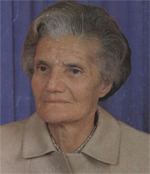
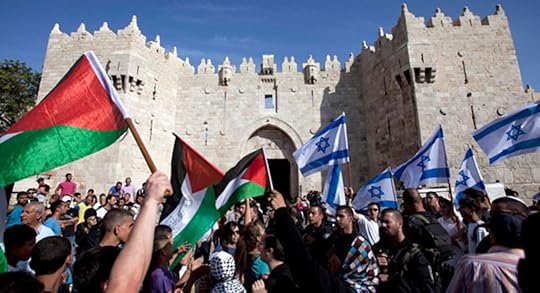
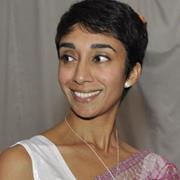
Top photo of Hind Al-Husseini from www.akhbarelbalad.net Middle photo from politico.com The author from gettyimages.com
I loved this book and 100% recommend it as a must read for everyone--particularly Americans who are either living in blissful ignorance about the history and root conflict in the Palestinian/Israel region and, even more, individuals who have blindly accepted one biased side of the story (either throwing all support behind the actions of the Israeli government or agreeing, in theory, with the rage of the extremist Palestinians). It is not so simple, and while it is easy to label one side as terrorists or the other as oppressors, this book lends an impactful and TRUE insight into the internal struggles of the region showing that by and large people on both sides are just that--people, with hopes and dreams and challenges, and that based on the actions of third party governing they are a people at odds, the happiness and success of one dependant on the unhappiness and displacement of another.
In it you are able to glean bits and pieces of the centuries old conflict and uprooting of the region and really see the struggle of diverse peoples looking for their roots, hanging onto their heritage, and hoping to forge or hold on to a lasting identity in the midst of chaos and a desperate fight for a homeland.
More than anything this book shows the centrifugal cycle of violence that has erupted and the extremism in leadership that nearly inevitably unfolds in every nation's political machine, though the bulk of the population favors a much more moderate approach--and in this case, agreement. It shows the fight for power, exposes the destructive power hungry forces at work--both within the region and throughout the world, as international leaders either hope to help or ignore, according to what action they will most gain from--and the sad reality of a marginalized population who have become mere pawns to an international chess game.
Above all, it is a desperate call for peaceful negotiations. It is a call to recognize the Palestinians as a people, and for Palestinians to recognize that they must share their city with the Jews, just as in ancient days of old. One city or two cities, one government or two governments, it is a call for validating and recognizing the rights of all individuals to life, liberty, and the pursuit of happiness. It is a cry for a new generation to rise up and decide to choose to change the course of history, to abandon the extremism-the violence and intimidation (from both sides) and to establish a new discourse: one based on respect, hope, peace, freedom.
It is also a glimpse into the mind of a fanatic: a realistic portrayal of what the non-life of refugee camps is made of, the childhood robbed by far too many arab children, and the all too easy course to buy into extremist leadership as an outlet for the rage felt by those robbed of too many the happinesses that make life worth living.
Yes, this book is translated from Italian, and, as they say, much of the finesse, I am sure, was "lost in translation." Yes, there was incongruity in character, flawed plot develpment, dangling storylines...but who cares: at least in my opinion, the "fluff" of the story is not what makes this book relevant, riveting, or worth reading (though it is all those things).
It also is approached with a very journalistic style. While some critics have faulted this, I do not. I found that the journalistic voice was perhaps one of the only ways to NOT take sides, to present the facts as they are rather than as one wants to see them...no easy feat as an author or reader when we all have pre-conceived notions and impulses to feel more greatly for one side or the other. It did create a more dry read, but a worthwhile and enjoyable one nevertheless.
It was not a book I HAD to read in the moment. I could put it down for several days at a time, but I always wanted to read more. I don't know that I was vested in Miral or many of the characters, but I was vested in the region, its history, its conflict, and wanted to read more to really experience an inside glimpse of what life is like. If you read this book looking for a great work of fiction, a strong female voice, and a fanciful read, look elsewhere. If you want an interesting historical fiction, with some interesting characters, and an objective yet intense look at the Palestinian/Israeli conflict: read Miral.
I feel a bit bad about rating this so poorly. I started the book and had hopes for it. It's not the story that I disliked but the writing and after a short time I realized that the style almost aggravated me so I stopped and won't go back.
The story had much potential if dealt with well...saving orphaned children after the forcible removal, and murder, of Arabs living in what was to become Israel in 1948.
I learned some things from this novelized memoir, but either the writer or the translator lacked the knowledge of English that would allow this book to read well or dramatically. Lots of long sentences that meandered to their ends, giving the whole thing a flat sense, devoid of drama or emphasis.
Nothing to say but, that this book was very fun to read. It is a coming of age story of a Palestinian orphan named Miral who lives in Jerusalem. After reading the book, I watched the movie “Miral” which is an adaptation of this book. It was equally beautiful. Although, there was a couple of things I don’t necessarily agree with.
A young girl's life in a Palestinian children's home.
Ms Jebreal is a journalist and I found the first half of the book read very much like an extended newspaper article. This section covered the lives of Hind Husseini and several of Miral's relatives. However, once I reached the story of Miral herself, the whole feel of the book changed and became much more immediate; evoking more reaction from myself as a reader.
Hind Husseini, whose school Miral attended for much of her childhood, was an amazing woman. She chanced upon 50 desperate children, orphaned and lost after their village had been ransacked in 1948. They had been dumped near the Church of the Holy Sepulcre in Jerusalem and had nowhere to go. Hind gathered them up and took them home, and it was from this event that she started a children's home. As time passed, she managed to procure some financial aid and the children's home grew to a school for nearly 2,000 girls.
Miral and her sister lost their mother when they were very young and their father felt unable to raise them alone. He brought them to Hind and they lived at the school, going home only at weekends. At first they were very homesick, but the school provided a stable base for them and Hind became like a surrogate mother to Miral. As Miral grew and gradually became more aware of events taking place around her, she felt compelled to become more active. She helped in a refugee camp, but wanted to do more for the Palestinian struggle against the loss of their homeland. Hind did not permit her pupils to march in demonstrations so Miral had to do so illicitly. It was here that she met another activist and fell in love. However, she also had an Israeli friend, which gave the whole a much more balanced feel.
This book is marketed as fiction, in spite of the fact that the author is known to have stated that it is based on her life. From this, I would deduce that the events are factual but some of the characters and details may be fictional. This seems fair enough to me, as long as I know. As yet I have not seen the film but I believe it is a good representation of the book and I fully intend to see it soon. I would also recommend Mornings in Jenin by Susan Abulhawa as an excellent novel in the same genre.
This book has been getting a lot of attention because it is about to be released as a movie, so I was anxious to read it. Also, the setting is Jerusalem and the plot centers on the Israeli-Palestine conflict, a subject with which I’m not very familiar and want to know better. Miral is a young Palestinian woman growing up in occupied Jerusalem who has a passion for her people and their plight to recover their homeland. She begins her political activism by sneaking out of her boarding school to attend pro-Palestine demonstrations, and ratchets up her involvement when she meets the leader of the local Palestine Liberation group. She heads down a very dangerous path, one that eventually leads to her arrest and torture. War and political domination are never easy and there are always casualties -- there are many in this story. You will get a sense of the pride of the Palestinian people in their culture and heritage and their outrage at being displaced and relegated to a lower class.
Though this is a work of fiction, it reads more like nonfiction, especially in the beginning -- mostly a recounting of events with very little dialog. The author spends a lot of time on the back story of Miral’s mother, which is interesting but not essential to the plot. Better to have spent more time fleshing out the scenes. As we read about all the revolutions taking place in the world today, this book serves as a glimpse into the motivation of these people and the risks they take on behalf of their countries.
Rating a book that is based on real life usually proves to be challenge for me. How can one person judge another person''s life? Having said that, Miral was just not all that the reviews promised. It falls flat quite a bit and it takes too long to get to Miral's part of the story. Had the plot have been more focused on Hind herself, it would have been better, a huge improvement. Without personally knowing Hind, the reader knows she is a brave, fearless woman. Don't get me wrong, I liked the book. I found that, despite the theme, it was easy to read. It was not predictable or cliched. I got a lot of insight about the Israeli-Palestinian conflict, and it was more incredible because it came from a personal account. There was just something missing, it lacked some depth. Still it is a worthwhile read, and very current as the conflict is still on-going. All in all, Miral is a good, solid read.
Miral tells the story of the Palestinian/ Israeli conflict through the eyes of several different characters. The stories are intertwined to give the reader a sense of connection as well as setting the tone that one's actions can have an immense effect on others, whether positive or negative. The book was extremely better than the movie in my opinion. The movie was good, but with the time constrants and probably the budget, there was no way to fit everything in. Miral really helped me understand some of the issues that occurred in the middle east and are ongoing.
I am not sure if it is the writing, or the translation, but the book is simply not a compelling read. The author attempts to take on complex historical and moral issues, but isn't able to convey any new insights. Most problematically, the author tries to make the characters seem human by telling us about them, rather than revealing their personalities through actions and dialogue. Really, the storyline is barely worth one star. But the importance of the subject matter requires another star, in my opinion.
I really liked it! I believe this book to be autobiographical in nature, and I applaud Rula Jebreal for her courage, honesty, and bravery growing up Palestinian in Jerusalem. It's true, she makes no apologies for her characters, there is no in-depth analysis of her protagonists, and no bleeding heart ramblings of extremist belief. There is merely an honest portrayal of human beings caught in spiral of something beyond an individual's control.
The story was good and enlightening, but i think suffered from translation issues. Characters were introduced only to never be heard from again, and plot points advanced too little or too much. In the end, I felt like the book did the job of humanizing and helping me understand the underrepresented story of Palestinians, but did little to make me recommend to a friend.
If you want to know more about the conflict read this book. Yes, the reviews are not favorable and yes, it's not completely unbiased but it's written by an actual journalist born and raised in the heart of the Arab/Israeli conflict. The truth might be uncomfortable but it's the people's truth, the civilian's point of view. Do research. Don't swallow up what the media tells you.
A political tract with stilted writing, flat characters, and a large serving of melodrama. This was a fast read, and I appreciated the chance to form some mental images of Haifa and Jerusalem, but this was just bad prose all the way through. 1.75 Stars, skip it.
Miral is a semi-autobiographical book based on Rula Jebreal's life and her development from a Palestinian militant to someone who yearns for peace between Israel and Palestine. The two men in her life, Khaldun and Hani were moderate intellectuals who are good for the peace of Israel and were stupidly killed by Shin Bet, and PLO respectively for being seen as moderates. Miral in the end leaves Israel for the peace of Europe to study and develop as a person. Despite the bad translation, I like the story of peace from a Palestinian perspective. Miral also shows how a society at war destroys or forces smart capable leaders of that society away thereby destroying the society itself. No wonder all the successful Jews live in the US because the United States has a stable society whereas Israel does not.
Hind Husseini shows that there are good people everywhere even in societies that we think of as bad. A per Hind example, women's rights really start with women's education on par with boys. What is notable in Hind creation of the orphanage is the role of American soldier who helped in its creation through finding funding for it. Hind Husseini is the only woman in Palestine who is well respected enough to stand up for women's rights in the middle east. America should stand behind people like her. For a conservative society, women's rights really starts in the school and what women teach other women. I think in the end, Hind is correct in that people who are smart should leave Israel the war zone only to come back when a solid government with two states are in place so they will not only live but they will also not be influence by the revenge killings so common in Israel.
I think Israeli's should get off their high horse concerning making peace with the Palestinian state. After all, the increase of Israeli territories in pre-'67 borders seems to be done via state-sponsored terrorism ideas with Begin as the largest terrorist. And the book that Palestinians terrorist use to explain their Intifada actually is Begin's book to justify Zionist expansionism. So, I do not sympathize with Israeli assertion that they cannot make peace because Palestinians are a terrorist state since the founding of Israel can be said to also have terrorist elements in it.
I think that it is hard not to be so politically involved in the Palestinian/Israeli conflict when the conflict infuses your daily life. As Mustafa found out, the Palestinian/Israeli conflict killed him and made him a martyr even if he wanted to have nothing to do with it. Even in apolitical Haifa in which Arabs and Jews live side by side, Miral's cousin was tortured because he was dating the daughter of a Jewish general.
Like other secret police, Shin Bet preforms questionable methods to infiltrate the enemy which includes photographing girls in sexual positions while they are drugged in order to turn them into informants. Israeli soldiers also target kids in demonstrations. The most shocking revelation is that Israeli's capture minors, torture them, and keep them without any trial even though they are citizens. As US subsidizing the existence of Israel as a country, we should expect more from the Israeli's at least in relation to minors. Also, the problem with a military state without any checks is because it can be abused. As Miral cousin found out by dating Lisa, a daughter of an Israeli general. For dating Lisa, Miral cousin was accused of "terrorist" activities and tortured. I wonder if the Patriot Act has given the US the right to detain anyone who is a citizen for "terrorist" activities; if so, it can be a dangerous step toward a totalitarian state.
I think Goldberg is right in saying being an occupying force really robs both the occupiers and the occupied theirs soul of moral righteousness. Lisa, on her part, has seen how Palestinians live in the occupied territories and was shocked that Israeli government can allow such squalor conditions to exist.
It is really important counter-insurgency strategy to limit the amount of collateral damage during a military exercise not only to weaken the enemies support but also so the enemy cannot recruit. Intifada means rebelling to preserve one's dignity. The only way a Palestinians will have dignity is if they have their own democratic state.
I am beginning to believe that religious conviction in the middle east is a curse use to cement political ambition of one tribe against the other. I like admire Jamal's insistence that all the different religions can coexist in Jerusalem. I like Jamal as a great father, a harbinger of peace, and a person who helps others discreetly. Khaldun, later, becomes an intellectual fighter who disagrees with Hamas and Islamic jihad using religion as an excuse to kill Israeli's and disagrees with obstinacy in wanting the whole Israel for themselves. Blind ideology be it the orthodox Jewish settlers or Islamic fundamentalist Hamas are a significant barrier to peace.
I like the tragic story of beautiful Nadia who wants to be independent woman because she was abused by her step-father early in life. Although this occurs in modern society as well, in a patrilineal society the fact that women have no rights exacerbates the problem of child abuse especially amoung young girls. Nadia is a woman who constantly seeks to be a true individual not associated with any group or nationality. In Nadia's story one sees that abused women see long-term relationships as a prison that can further perpetuate the abuse.
Like Nadia, Fatima feels the anger of being raped as a Palestinian people by the Israeli's. Because of the constant humiliation that her people have felt under the Israeli's, she has decided to dedicate her life to the cause of Palestinian liberation movement by executing terrorist attacks. I do like Fatima's quote of "[military occupation] slowly extinguishes your dreams, your hopes, and even your future. And gradually it changes who you are." Although I sympathize with Fatima in wanting to have a cause to dedicates ones life to especially a cause that corrects ones perceived injustice, I think doing it through terrorist means is a mistake that can only lead to a stalemate.
In Miral, one gets the feistiness of her mother to be independent self-determinant woman combined with Fatima's singular focus of having the goal of an independent Palestine. Miral is a natural born leader who is smart, well organized, warm-hearted, and passionate for her political cause. Hani, a Christian Palestinian, recognizes these talents within Miral and wants her to work in the political arm of the PLO. Unlike the other Palestinians, Hani realizes that violence only begets violence and the only way for Palestinians to get what they want is through a political solution with two states living side by side. We as American's should support people within Palestine who are like Hani. In his mind, violence only strengthens the factions within the Palestinian and Israeli state who do not want to compromise and seek the status quo with the end goal as the destruction of the other side. Later on, Miral befriends an Israeli girl while visiting Haifa and because of their personal relationship grows into definite fondness and friendship. Thus, through friendship of enemies, peace is possible. Haifa itself shows that Arabs and Israeli's can live in peace with each other in peace if both people respects the other.
Miral and Khaldun are motivated with rage of their being occupied by Israeli. This rage gives them a sense of purpose when it is focused on Palestinian freedom fighting.
This entire review has been hidden because of spoilers.
Tan interesante como duro. Tan potente la historia, como potente la realidad. Hablamos siempre de conflictos armados, de libros de IIGM, de libros de guerras en áfrica o en Asia. Hablamos de Siria y sus refugiados. Hablamos de la situación de mil lugares... pero nos olviamos que Palestina por no estar, no está ni en google. Por no aparecer, no está ni reconocida por cientos de países, pese a ser seguramente uno de los estados más antiguos de la historia.
Este libro, con toda la dureza que contiene, es una especie de canto y reflexión sobre la guerra y la paz. Sobre el conocimiento y la no violencia como respuesta a años de ocupación, porque sí, lo que hace Israel en Palestina es OCUPACION, y de guerra encarnizada entre niños con piedras y uno de los mayores ejércitos del mundo. Israel y Palestina no es un conflicto armado. No es una guerra. Es David contra Goliat, con el mundo en el respaldo del gigante y no del pequeño héroe. Palestina lleva ya 70 años de muertes, de sangre, de niños huérfanos, historias truncadas y silencio. Palestina está borrada, olvidada. Palestina es el horror, son los campos de concentración de la actualidad que nadie quiere ver y que incluso algunos justifican en pro de aquellos que llevan siendo mártires décadas y que poco les tiembla el pulso para matar diariamente. Y todo y con eso, esta lectura es un canto a la paz. Un canto a que la gente conozca esa vida y a que se consiga un acuerdo real, a que dejen de sufrir y morir tantas personas. No es un libro violento. No es un libro de rechazo o de culpa hacia un estado que se lo ha quitado todo. Y me parece increíble ese nivel de perdón y reflexión.
Como tantas otras historias y documentales que he podido ver y leer sobre Palestina, este libro es sobrecogedor, duro, realista, potente, horrible y maravilloso a la vez. Una pena que esté descatalogado y perdido, ojalá pueda conseguirlo porque ha sido de mis mejores lecturas en mucho tiempo. No puedo hacer otra cosa que recomendarlo encarecidamente.
This story is based on the author's life growing up in the West Bank of Jerusalem.
Miral is a Palestinian girl, an orphan but her step father is an imam. She and her sister are sent to a school run by an amazing woman, Hind Husseini who started the school after rescuing 55 orphaned survivors of the Deir Yassin massacre.
Miral becomes increasingly interested in the politics of Israel and Palestine at the time and attended many protests, thus risking her life. She also worked with young Palestinian refugees and taught them English in the camps.
She was intelligent and won a scholarship to attend a university in Europe and that is where the book ends.
It is sad to think that over fifty years later there is still animosity between the Jews and Palestinians in the area.
Few stories about conflict in the middle east have captured my attention as much as MIral, a young Palestinians story. Set in Jerusalem when Arafat was the new leader of the PLO and refugee camps were under attack. Peace seemed like an impossible goal, protest demonstrations were commonplace and outside parties took little interest in the resolution of conflict.
Hind Husseini is a woman on a mission. In 1948 she comes across 50 orphans in the streets of Jerusalem. They have fled a massacre in their village – Deir Yassin – and are terrified and haunted. Hind decides to give them sanctuary first at her home and later at the Dal El-Tifel school and orphanage. So starts an extraordinary true-life story of one woman’s drive and passion for the forgotten children of Jerusalem and the stories of many of the children she has a hand in raising. This story is the basis of the novel, Miral. If you can soldier past\[olga.accolla\] the Part One of Rula Jebreal’s book, which reads more like a history textbook than a novel, the rest of the book is a heartbreaking marvel, told with passion and honesty. The novel is about Miral, a young girl who attends Hind’s school. She is not an orphan, but after her mother commits suicide her father sends Miral and her younger sister to Hind – to provide them with a good education and the chance at a better life. Miral’s political awakening begins when she and other girls at the school start teaching children in a refugee camp. Suddenly Miral is thrown into a world of wretchedness and violence she cannot comprehend. It is a world perpetuated by her fellow countrymen. When she befriends Khaldun, a refugee boy at the camp, she is exposed to the political demonstrations and stone-throwing frenzy that has gripped her country\[dominique.owen\] at the time. Miral starts sneaking out of school to attend the youth demonstrations of the first intifada. It is at a demonstration that she meets Hani a fellow activist with whom she falls in love. But Hani is known to security police and soon Miral is arrested and brutally interrogated in an attempt to get more information about Hani and her fellow activists. Despite Hind’s efforts to keep politics out of her school, Miral embodies the conscientised and angry youth of her time, and Hind is helpless to stop her. Miral’s story is a complicated one – and even includes a close friendship with an Israeli girl her age. It is tragic and at the same time full of hope and promise.
I thought this book was haunting, heartfelt and worlds better than the movie (though that often goes without saying). Like others have stated the general progression of the story and language used (stylistically) wasn't always fluid (which I honestly think can be attributed more so to the work of the translator, than the actual author's words), but all in all I was really moved by Miral and reading about a conflict that sadly continues to rage on. The only element of the story that was left entirely unexplored that I wish Jebreal had at least touched on, was what became of Miral's older half-sibling.
In spite of the occasional linguistic snags, there were still lines and passages that I found to be truly breathtaking and poignant. To avoid getting political, I'll refrain from saying anything more about the story and instead let the book speak for itself:
"She was still very alluring, maybe even more so than before, but hers had become the beauty of melancholy, like a lovely city built in a soulless place." (p. 93)
"Many who lived there were convinced that the branches of the city's olive trees were moved not by the wind but by the breath of God himself." (p. 113)
"What kind of war is this? A regular army against children with rocks?" Miral thought, as the red sun sank behind the Mount of Olives. "What sense does it make to teach English to children who may not ever become adults?" (p. 155)
"A people that can't see a future for themselves or their children have already lost." (p. 161)
"They've built their happiness on our unhappiness, on our diaspora, and that can't get them anywhere. Now our destinies are intertwined." (p. 183)
"We are two people fighting over the same little stretch of land. We both have our reasons, and we're both victims. They've suffered the Holocaust, and we suffer because the world felt guilty and used us as a bargaining chip." (p. 212)
Miral tells the story of the Palestinean/Israeli conflict through the eyes of a young woman who comes of age during the violence in Jerusalem. Miral and her sister are raised in an orphanage by a Hind, an Arab woman who works hard to provide all the lost children of Jerusalem a safe place to grow up. To keep the orphanage safe and funded she walks a very careful and neutral political line. So when young Miral begins to participate in demonstrations and get involved with militant student organizations she threatens the safety of the orphanage that took her in.
While the story here is an important one that needs to be told, I had a very hard time relating to and understanding Miral. I understood her motivations and anger, but somehow just never connected with her personality. I found myself wondering if I wouldn't have appreciated the story more if it had been true rather than fictional. I did enjoy the parts written from the perspective of Hind, the woman running the orphanage more and was sorry the story wasn't hers instead of Miral's. I loved that though she was firmly working for peace she wasn't above manipulating various government officials to get the supplies she needed and was also quite good at it! Still the insight about what it is like to grow up in Jerusalem on one side of such a violent and fundamental conflict was valuable.
I listened to this book on audio, read by Sneha Mathan. She did a fabulous job and her beautiful, smooth voice was a pleasure to listen to. This is one book that was enhanced by the reading for me.
I loved the content of this story - but I feel that the fact that the writer was a journalist got in the way of her storytelling, because everything was very factual and "this happened and then this happened" I also felt like it didn't really end...I would have liked to see more of what shape Miral's life took after all the political turmoil. Maybe she's setting it up for a sequel? Also, if anyone else has read this, is this partially autibiographical? I know Rula Jebreal spent her childhood at Dar-El-Tifel, and it seemed that Miral might end up as a political journalist...If it was supposed to be autobiographical, I wish she had just gone that way entirely. That way, it wouldn't have felt so stunted. I also felt like there were a few things thrown in once in a while that didn't make any sense, like when Miral comments on how Samar's teeth can be so white when she drinks so much coffee. That seemed really out of place. Miral never seemed judgemental, or even very observant of others. She just seemed to be reacting to the opression of her people. And out of nowhere, for the first time in the book (this was in like last 20 pages) she makes this odd observation. It just felt really out of character.
That being said, the content of the story was great. There were a lot of characters and a lot of stories going on, so it was hard to keep them all straight, but I really loved the story itself. Miral was a great character, as was Hind. I love reading about strong, smart women!
Miral by Rula Jebreal was a fascinating study in how borders can tear families and friends apart. I really enjoyed it. However, the beginning is a bit slow; while I thought it was interesting to know how Miral came to be motherless, I thought the story could have been edited. We'd still know how much sadness her mother felt at her situation, but the readers wouldn't be left wondering how long it'd take to get to the title character's POV.
Miral basically grows up to see that Palestinians are being pushed around without the opportunity for redress. Jebreal does paint a fair picture of Israeli youths (well, the story takes place in the 1980s, so the youths of the past) with the character of Lisa, who likes having a good time more than political power plays. Lisa struggles with falling in love with a Palestinian Muslim (Miral's cousin) because her father is an influential officer in the Israeli army. So the book isn't one-sided. But politically, I think this book paints the struggles of the Palestinians in a sympathetic vision.
The end of the book doesn't bring a satisfying conclusion, because Miral knows there are struggles ahead, and we the readers know the events that happen in her future.
I enjoyed Miral. It was not a long book and it didn't take long to finish. Miral as a character can become a bit frustrating. She is incredibly headstrong and at times it made me mad how stubborn she was even in the face of people who wanted good things for her. She's a lovable character in a sad and melodramatic plot. If tragic deaths and harrowing mental pictures of human suffering are not for you then you might reconsider reading this book.
I picked it up at a thrift store and became interested in reading it because I have only read one other book centered around the Israel/Palestine issue as a kind of backdrop for the story's plot. I thought it would be interesting to read a book that would highlight the struggles of the region without being as direct as a historical non fiction/memoir/auto-biography would be. Overall, I enjoyed the book. It was a great story, and I think the author paints a picture of Palestinian pride as being so incredibly real you can almost feel it yourself.
The political activism, Miral's stubbornness and pride, and the historical backdrop are all portrayed so well. I liked the book. I rated it a four because it was a little too dramatic for my taste. Other than that, I think it was an excellent short read.
Novels written by news reporters are always difficult for me. There's a distinct writing style and tone and cadence to a short article (even a 20pp story/article on Salon) from that of a novel, and it kind of irritates me to read a novel written in that article speak (if you get my drift here). I find it's more telling than showing, and it gets me bogged down and taken out of the story instead of getting absorbed into it.
To be fair, once the story got rolling, and we left behind the biographical data of the woman who runs Miral's school, the tone got less tell-y and more show-y. I found it interesting, but I also found that there were a lot of loose ends as well as tied too neatly endings. For instance, The Middle East, especially Palestine and Israel are not my forte, and I am still dipping my toes in the waters, so to speak.
I could see how this book could be a compelling movie, but unfortunately it doesn't resonate as much in print. It's a feel good story (or about as feel good as any story about a stateless and ravaged nation can get) about a Palestinian girl who grows up and away from extremism. Jebreal's writing is stark and plain, but that style of writing fits the story. The author isn't worried about storytelling so much as telling a story, and she succeeds in a very average fashion. It's neither good or bad but it delivers in digestable bits the story of a nation and a people that many may not be familiar with. Personally, I found the main character Miral so much less interesting than her mother, a more damaged and vulnerable and multilayered character, and so when the book began to focus on Miral, the boredom set in. However, there are very strong female characters in this book, all very different from each other in passions, in their attitudes and their life choices, and that interplay is beautiful.
At times I felt scenes were overly dramatic, with the emotion stated rather than developed through the narrative - that the emotional current was too bluntly stated, not subtly conveyed in the writing. Having said that, I have to say I was drawn into the story and appreciated a Palestinian perspective on the region's Palestinian-Israeli conflict. The story arc carries us from the background of the establishment of Dar AL-Tifel Institute for Palestinian orphans in 1948 by Hind Husseini through the harsh, brutal and ultimately crippling life of Miral's mother and through Miral's childhood and maturity. At the end we see Miral, no longer drawn into the confrontational politics of her angry youth, but a maturing young Palestinian woman off to make her way in the world, going to Europe on scholarship, with hopes for peace in her native land. Ironically, the book ends on the eve of the Camp David Peace Accords, filling Miral with hope for peace and Palestinian sovereignty -- that worked out well, didn't it.