

What do you think?

River Dogs: Stories
Robert Olmstead's stories transport readers into the raw, uncompromising landscape of rural New Hampshire, where simple survival is always complicated by desperate acts or murderous boys drowning a bagful of puppies, men buried alive under a mountain of corn silage, suicide on a foreclosed farm.
256 pages, Paperback
First published January 1, 1987
About the author
Robert Olmstead
30 books156 followersRobert Olmstead (born January 3, 1954) is an award-winning American novelist and educator.
Olmstead was born in 1954 in Westmoreland, New Hampshire. He grew up on a farm. After high school, he enrolled at Davidson College with a football scholarship, but left school after three semesters in which he compiled a poor academic record. He later attended Syracuse University, where he studied with Raymond Carver and Tobias Wolff and received both bachelor's and master's degrees, in 1977 and 1983, respectively.
He is currently the Director of Creative Writing at Ohio Wesleyan University. He has also served as the Senior Writer in Residence at Dickinson College and as the director of creative writing at Boise State University. Olmstead teaches in the Low-Residency MFA program in creative writing at Converse College .
Olmstead is the author of the novels America by Land, A Trail of Heart's Blood Wherever We Go and Soft Water. He is also the author of a memoir Stay Here With Me, as well as River Dogs, a collection of short stories, and the textbook Elements of the Writing Craft.[2] He was the recipient of a Guggenheim Fellowship in 1989 and an NEA Literature Fellowship in 1993.
His novel Coal Black Horse (2007) has received national acclaim, including the 2007 Chicago Tribune Heartland Prize for Fiction[7] and the 2008 Ohioana Book Award for Fiction; it was also selected for the "On the Same Page Cincinnati" reading program and the Choose to Read Ohio’s 2011 booklist.
Booklist has named his latest novel Far Bright Star (2009) (the second book in the Coal Black Horse trilogy) as one of the Top Ten Westerns of the Decade; the book also received the 2010 Western Writers of America Spur Award. One reviewer praised Olmstead's ability to "translate nature's revelatory beauty into words", commenting that Coal Black Horse evokes what Henry David Thoreau described in Walden as "the indescribable innocence and beneficence of Nature"; by contrast, the Mexican desert of Far Bright Star is "the place of the sun shriveled and the dried up". The Chicago Tribune review praised the authenticity of the imagery and experiences in Olmstead's writing, while also comparing his writing to that of Ernest Hemingway. It noted the influence of contemporary events, such as the guerrila warfare during the U.S. occupation of Fallujah during the Iraq War.
Olmstead was born in 1954 in Westmoreland, New Hampshire. He grew up on a farm. After high school, he enrolled at Davidson College with a football scholarship, but left school after three semesters in which he compiled a poor academic record. He later attended Syracuse University, where he studied with Raymond Carver and Tobias Wolff and received both bachelor's and master's degrees, in 1977 and 1983, respectively.
He is currently the Director of Creative Writing at Ohio Wesleyan University. He has also served as the Senior Writer in Residence at Dickinson College and as the director of creative writing at Boise State University. Olmstead teaches in the Low-Residency MFA program in creative writing at Converse College .
Olmstead is the author of the novels America by Land, A Trail of Heart's Blood Wherever We Go and Soft Water. He is also the author of a memoir Stay Here With Me, as well as River Dogs, a collection of short stories, and the textbook Elements of the Writing Craft.[2] He was the recipient of a Guggenheim Fellowship in 1989 and an NEA Literature Fellowship in 1993.
His novel Coal Black Horse (2007) has received national acclaim, including the 2007 Chicago Tribune Heartland Prize for Fiction[7] and the 2008 Ohioana Book Award for Fiction; it was also selected for the "On the Same Page Cincinnati" reading program and the Choose to Read Ohio’s 2011 booklist.
Booklist has named his latest novel Far Bright Star (2009) (the second book in the Coal Black Horse trilogy) as one of the Top Ten Westerns of the Decade; the book also received the 2010 Western Writers of America Spur Award. One reviewer praised Olmstead's ability to "translate nature's revelatory beauty into words", commenting that Coal Black Horse evokes what Henry David Thoreau described in Walden as "the indescribable innocence and beneficence of Nature"; by contrast, the Mexican desert of Far Bright Star is "the place of the sun shriveled and the dried up". The Chicago Tribune review praised the authenticity of the imagery and experiences in Olmstead's writing, while also comparing his writing to that of Ernest Hemingway. It noted the influence of contemporary events, such as the guerrila warfare during the U.S. occupation of Fallujah during the Iraq War.
Ratings & Reviews
Friends & Following
Create a free account to discover what your friends think of this book!
Community Reviews
Displaying 1 - 9 of 9 reviews

March 2, 2016

The 1980s Vintage Contemporaries series includes Robert Olmstead’s River Dogs, a collection of short stories about the harsh, rugged, rustic life out on the farms and in the forests of Northeastern USA, a book I judge to be first-rate American fiction. The main characters are men - older men, young men, men-in-the-making - and in these Olmstead stories we read how these men are deeply and profoundly shaken by powerful experience of one stripe or another. And through the author’s straightforward, concise storytelling (Olmstead was a student of Raymond Carver, master of straightforward concision), we are given the opportunity to open our hearts to these men and live through their struggles and feel their pain. Here’s my brief review of six stories from the collection:
Onions
For years I have been mulling over this tale about what it means to link our personal identity with something like a cause, religion, sports team or political party, connect our identity and personhood so tightly, so completely, we are willing to kill for it. In Olmstead’s story, Raymond Knowlton does exactly that, linking his personal identity with, of all things, his onions. Take a deep whiff, thousands upon thousands of onions too rotten to sell, an entire mountain of rotting onions, enough onions to fill his farm’s warehouse.
And those rotting onions have everyone's attention within two miles of Raymond’s farm - such an overpowering, pungent smell; actually, smell is understatement, reeking, unbearable stench is more like it. When Raymond makes a trip to the local grocery store, half the people are wearing surgical masks and the air fresheners have been selling like hotcakes. The state board of health has to be called in. Turns out, Raymond will have to get rid of every single one of his rotting onions, bury them deep in a big hole in the ground.
His father, who has been telling Raymond all along how crazy he was to go with onions instead of potatoes, wakes up on the morning when burying those onions is on the schedule. The old man shakes his head at just how stubborn and bullheaded his son can get. Oh, well, the time has come for Raymond to admit defeat. The old man goes to drink his morning cup of coffee before driving his tractor down to Raymond’s warehouse. Nasty work with burying those damn onions but work that has to be done. The old man is just about to put the coffee to his lips when he hears BOOM! Then there is silence. That loud blast, the old man knows for sure, is none other than the sound of his son Raymond’s shotgun.
As I noted above, Raymond’s identity is tightly bound up with his onions. The old man plays back the loud, penetrating sound, once, twice, a third time, even a fourth time. He just sits there in the predawn darkness, mentally playing back the blast of Raymond’s shotgun. What happens next? You will have to read for yourself.
A Place to Stay
The first-person narrator, a hale, robust lineman named Robert along with his buddy park their motorcycles at a bar outside his buddy’s small home town in Vermont. A quote from the first page: “We’d worked the year in Texas, south of San Antonio. I didn’t have a place to stay after we lit up the line, so I came north with Lewis John. We figured we’d stay at his place for a month until the next big line job opened, maybe down in Australia.” No sooner does Lewis John look through the bar’s window then the front door is flung open and a young woman, ash-blonde hair hanging down her back in a long braid, arms and legs tanned, steps out into the night. “Addie,” Lewis John says quietly. She strides up to Lewis John and he picks her up for a long embrace.
After introductions, Addie informs Lewis John his father’s funeral is Monday. He tells her he didn’t even know he died since it must have been just after they left Texas. Then Lewis John turns to Robert and says, “Jesus, I didn’t want him to die." Then he looks over at his girl: "Addie, we’re going up to the house. Want to ride along?” Addie replies, “I’ll be up in a little bit. You go see your mother.”
Robert follows Lewis John as he zips his way along narrow, winding roads on his cycle until he stops at a remote farmhouse and is greeted by his Ma who tells him, “Addie says she’s going to marry you this time and you two are going to move into the tenant house. I think that’s nice.” Lewis John, in turn, asks his Ma about how the old man finally died and also asks how his brother is getting on running the dairy farm and living with his wife and kids. After some more talk, Lewis John shows Robert his room where there are lots of trophies he won as a baseball catcher, including ones for High School All-American and American Legion MVP. Lewis John says he even played Triple A before his knees gave out. He also says how Addie, a seventh grader at the time, was his first fan.
When Addie walks in and everybody is standing in the living room, Lewis says that Robert is a Baptist minister who can perform marriage ceremonies. A bit stunned at this fabrication, Robert goes along with his role as minister so as not to upset his friend. Lewis John then asks Addie to marry him. When Addie says yes, Lewis John has Robert do the honors right there in his living room with his Ma standing next to him. When Robert comes to the part of a wedding ring, Ma takes the ring off her finger and hands it to Lewis, who in turn places it on Addie’s ring finger. This little scene is so moving for Robert that after the ceremony he immediately takes off on his motorcycle, driving back to Syracuse, back to his wife and child that he walked out on some time ago.
I hope my outlining this particular story captures some of the flavor of how emotion is compressed and expressed in crisp scenes and sparse dialogue. We encounter similar scenes and dialogue in the other stories, for example, “What to Do First” where George and Cutler are out hunting and George slips in how his wife says he needs professional help with his drinking; in “Cody’s Story” when Cody, in bed at night, through tears, finally tells his older friend how earlier that day he slipped off a cliff and nearly fell to his death; in “River Dogs” the feelings of the narrator, a young boy, as he watches three puppies crawling out of a burlap bag that a man flung in the river, fighting to stand on top of the bag as they float down the river under the light of the moon; "How to Bury a Dog" - the comedy of errors after the teenage narrator and his buddies push a dead cow into the Connecticut River, a cow they should have taken the time and effort to bury properly rather than going off to drink beer. All told, a dozen Robert Olmstead stories collected here, stories worth anyone's time .
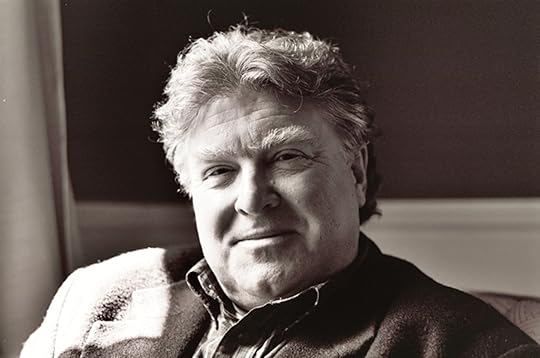
Robert Olmstead, born 1954, American author of short stories and seven novels set on the farms and rural lands of the American Northeast.
November 21, 2015
These men work, don’t talk much, can handle themselves in the woods and with all sorts of tools, and aren’t afraid of being by themselves. Their women struggle to understand them and suffer from their habits and symptoms, yet more than not are drawn into the vortex of their certain actions. These aren’t dandies who sit in chairs and read, and I fear this author is a dying breed, what with the loss of small farms and agriculture where getting up at 4 a.m. in the bitter cold is the norm. Coming from dairy farmers, and veterinarians myself, Olmsted gets it just right, the intimacy with life and death, and the relationship with animals, their peculiar habits and the complicated regimen that farming demands. As such, these stories are a rare gem, and close to my heart having some history of my own with physical work, solitude and 3 brothers without a lot of girls around in our youth. The place and time in the 1970’s and 1980’s is a time I remember, and I couldn't help but be reminded of two of my other favorites, Raymond Carver and Jim Harrison (later I read that Olmsted was tight with Carver). This is spare, unvarnished prose, the intense emotion of the characters’ inner lives is revealed in their actions and their way of seeing. Neither fluff nor streaming consciousness is exposed; these men settle matters with their necks, hands and in their trucks. Some of these are garishly brutal, like the real life of real people, and heartbreakingly tragic. The writing is very strong, and I devoured these stories. A couple had plots that were disjointed and did not coalesce toward a meaning or coherence, but the fine writing carried me through.
p. 48 – “Being away helped him start to lover her again, and by now he’d been in the words so long he’d forgotten why he’d come in the first place”.
p. 54- “Men changed, he knew that. He’d seen I before. He himself had felt it, the feeling of something creeping up on you. The woods were full of men who’d sat down and died, men with a full larder and an income. The more willful hadn’t waited for death. They took it to her”.
p. 141- “Rachel went back against the chair. She saw in Evie’s eyes if only for a moment, something she hadn’t seen before. Rachael saw her now as a woman, a woman who hurt in the same way she did”.
p. 48 – “Being away helped him start to lover her again, and by now he’d been in the words so long he’d forgotten why he’d come in the first place”.
p. 54- “Men changed, he knew that. He’d seen I before. He himself had felt it, the feeling of something creeping up on you. The woods were full of men who’d sat down and died, men with a full larder and an income. The more willful hadn’t waited for death. They took it to her”.
p. 141- “Rachel went back against the chair. She saw in Evie’s eyes if only for a moment, something she hadn’t seen before. Rachael saw her now as a woman, a woman who hurt in the same way she did”.

April 23, 2022
A beautiful collection of nostalgic short stories which glorify a blue collar way of life before it was ruined by the predatory internet and partisan politics.
This book deserves a reprint if only to remind us of what life could be. Someone else in the comments wrote negatively that Robert Olmstead seems to type who when he saw a spider would sit and ponder it rather than kill it, and I would agree, but I mean it positively. I think that’s what we need more of in this world.
Get your self a row boat and take it out on a pond somewhere deep in middle of nowhere New Hampshire. Set a couple fishing lines and crack River Dogs open; you won’t be disappointed.
This book deserves a reprint if only to remind us of what life could be. Someone else in the comments wrote negatively that Robert Olmstead seems to type who when he saw a spider would sit and ponder it rather than kill it, and I would agree, but I mean it positively. I think that’s what we need more of in this world.
Get your self a row boat and take it out on a pond somewhere deep in middle of nowhere New Hampshire. Set a couple fishing lines and crack River Dogs open; you won’t be disappointed.

April 11, 2022
I only re-read this book because I was going-through my correspondence, envelope-by-envelope, and found a letter from the 1980's from the author. He was just replying to a letter that I had written to him, as a fan. So I found the book in my garage, and I re-read it. Was not impressed. Very repetitious with the details of life in the New Hampshire farm country. Almost like the author would just stare at a spider-web and wonder about the lives of the spiders, rather than grabbing a broom and clearing those spider-webs away.
December 26, 2013
Great descriptions of rural new england. Lots of gritty detail. The interpersonal relationships seemed less natural.
February 23, 2019
For the most part, I wasn’t nuts about Tobias Wolff’s selection of works for The Vintage Book of Contemporary American Short Stories, but I’m forever grateful to Wolff and that anthology for introducing me to Robert Olmstead, whose 1987 debut collection of stories, River Dogs, I’m now here to unreservedly recommend.
Olmstead drives a harsh, uncompromising narrative, allowing the lyrical only when he can do so without fudging. Here’s the immediately grabbing opening paragraph of “A Good Cow”:
“By the time we got done with the Rudman cow, she was shot full of so much cortisone it was coming back out of the needle holes. Even though she was about fourteen. with hide like tree bark and pins you could hang your overcoat on, she was still a decent milker. She had bad legs though, a definite drawback.”
They’re getting the cow ready to sell, and I’m not going to tell what-all they do to make her more salable. Along the way, we get some matter-of-fact pointers, such as: “Deer and bikes don’t mix.” If you can nail it in five words, why mess with more?
For all the harshness, the stories are not without humor. Here, from “Bruno and Rachel,” one of the longer stories in the collection, is a passage in which middle-aged Elsie, a hired housekeeper, is ironing clothes, drawing bath water, and haranguing male members of a farm household as they take Saturday night weekly baths:
“Bruno was in the tub.
“ ‘This is the third goddamn shirt you’ve ruined with your tobacco juice.’
“ ‘So I’ll wear a vest,’ said Bruno, grabbing a towel as if he feared her voice could see his naked body.
“ ‘ All the way up to your collar? How in hell can you dribble tobacco juice on your collar?
‘‘ ‘ It’s not easy,’ Bruno Sr. yelled back, splashing water on the floor with every movement. ‘Leave me alone.’
“Evie made things even worse for Alf …… ‘Alf,’ she said, cranking on the words as if her mouth were a torque wrench that knew how tight to snug them, ‘You wash that neck of yours. Wash it good. This collar is filthy. It’s disgusting.’ “
Later in that same story, at a county fair: “Everyone recognized Alf’s girlfriend, and it made him proud to have her hand on his arm as they strolled along. Her new perfume wasn’t the usual flowers in bloom. More heady, it caused him to imagine certain passages he’d read in the Bible, passages in the Old Testament that were not usually sermon fodder on Sunday morning. These were passages he’d come across while trying to stay awake in church.”
“In This Life” is particularly ripe with passages that stopped me. Its second section begins with this: “The third week in April, the yellow perch run in Chippewa Bay. They come to spawn, as they’ve done since long before there were names for any of this.”
Later in that same section: “Every Friday I met them down there at the Legion and listened to stories. Poncho usually had the better ones, and the best ones of all were about him. One story turned into another. The name of a person or a town or a job started up someone else. By evening just the names were enough to tell the whole story. Someone would say, ‘that Thursday morning last January’ or ‘the rock cut job,’ and everyone would laugh or shake their heads and say, ‘Oh, Christ.’ “
I was enjoying and admiring Olmstead’s gritty characters — dairy farmers, loggers, bricklayers, etc. — when it suddenly struck me that in today’s America they would probably be, or at least initially have been, supporters of Donald Trump. Well, David, it just may be that you needed to be so struck. It’s a tribute to Olmstead that he can elicit startlingly unaccustomed empathy.
Reader out there, I love this book.
Olmstead drives a harsh, uncompromising narrative, allowing the lyrical only when he can do so without fudging. Here’s the immediately grabbing opening paragraph of “A Good Cow”:
“By the time we got done with the Rudman cow, she was shot full of so much cortisone it was coming back out of the needle holes. Even though she was about fourteen. with hide like tree bark and pins you could hang your overcoat on, she was still a decent milker. She had bad legs though, a definite drawback.”
They’re getting the cow ready to sell, and I’m not going to tell what-all they do to make her more salable. Along the way, we get some matter-of-fact pointers, such as: “Deer and bikes don’t mix.” If you can nail it in five words, why mess with more?
For all the harshness, the stories are not without humor. Here, from “Bruno and Rachel,” one of the longer stories in the collection, is a passage in which middle-aged Elsie, a hired housekeeper, is ironing clothes, drawing bath water, and haranguing male members of a farm household as they take Saturday night weekly baths:
“Bruno was in the tub.
“ ‘This is the third goddamn shirt you’ve ruined with your tobacco juice.’
“ ‘So I’ll wear a vest,’ said Bruno, grabbing a towel as if he feared her voice could see his naked body.
“ ‘ All the way up to your collar? How in hell can you dribble tobacco juice on your collar?
‘‘ ‘ It’s not easy,’ Bruno Sr. yelled back, splashing water on the floor with every movement. ‘Leave me alone.’
“Evie made things even worse for Alf …… ‘Alf,’ she said, cranking on the words as if her mouth were a torque wrench that knew how tight to snug them, ‘You wash that neck of yours. Wash it good. This collar is filthy. It’s disgusting.’ “
Later in that same story, at a county fair: “Everyone recognized Alf’s girlfriend, and it made him proud to have her hand on his arm as they strolled along. Her new perfume wasn’t the usual flowers in bloom. More heady, it caused him to imagine certain passages he’d read in the Bible, passages in the Old Testament that were not usually sermon fodder on Sunday morning. These were passages he’d come across while trying to stay awake in church.”
“In This Life” is particularly ripe with passages that stopped me. Its second section begins with this: “The third week in April, the yellow perch run in Chippewa Bay. They come to spawn, as they’ve done since long before there were names for any of this.”
Later in that same section: “Every Friday I met them down there at the Legion and listened to stories. Poncho usually had the better ones, and the best ones of all were about him. One story turned into another. The name of a person or a town or a job started up someone else. By evening just the names were enough to tell the whole story. Someone would say, ‘that Thursday morning last January’ or ‘the rock cut job,’ and everyone would laugh or shake their heads and say, ‘Oh, Christ.’ “
I was enjoying and admiring Olmstead’s gritty characters — dairy farmers, loggers, bricklayers, etc. — when it suddenly struck me that in today’s America they would probably be, or at least initially have been, supporters of Donald Trump. Well, David, it just may be that you needed to be so struck. It’s a tribute to Olmstead that he can elicit startlingly unaccustomed empathy.
Reader out there, I love this book.

Want to Read
April 26, 2020#11
We sat in the corn many nights after that. Harley smoked cigarettes and I threw stones. Later we'd return to the house, our bodies greasy with sweat and covered with mosquito bites. We'd sleep late, getting up in time for lunch.
We sat in the corn many nights after that. Harley smoked cigarettes and I threw stones. Later we'd return to the house, our bodies greasy with sweat and covered with mosquito bites. We'd sleep late, getting up in time for lunch.

March 27, 2024
Feels like an Americana Joyce... I don't think I am an Olmstead fan either...

November 24, 2025
Robert Olmstead’s River Dogs is not for the faint of heart. But for readers willing to meet these stories on their own terms (many of which reveal cold, hard country truths) the collection delivers a sharp, unsettling power. The narratives follow men and boys hardened by rural labor and harsher experience. The characters aren’t cruel so much as numb; they care only when necessity or blood ties demand it. When they do reach outward, it’s often too little or too late, and Olmstead lets that moral vacuum speak for itself.
Not every story lands, but those that do shine with the rough brilliance of something discovered rather than crafted. In the title story, two boys buying puppies end their errand with a drowning at the river, and their indifference is more chilling than the act itself. “A Place to Stay” turns a homecoming into an almost tender knot of grief, loyalty, and impulsive promise. In “Onions,” a farmer’s refusal to abandon his rotting crop becomes a bleak, stubborn stand against a world over which he can no longer assert any influence. And “A Pair of Bulls”—one of the collection’s strongest pieces—portrays a farmer torn between duty to his ailing bull and the fear of losing his wife to a night out he can’t bring himself to join. The story’s quiet heartbreak lingers long after its final image.
Olmstead’s instincts sometimes wander, but when they lock onto the brutal beauty of rural life (its labor, its silences, its hard-won loyalties) River Dogs becomes a collection worth reckoning with. These stories may leave readers uneasy, but they rarely leave them unmoved.
Not every story lands, but those that do shine with the rough brilliance of something discovered rather than crafted. In the title story, two boys buying puppies end their errand with a drowning at the river, and their indifference is more chilling than the act itself. “A Place to Stay” turns a homecoming into an almost tender knot of grief, loyalty, and impulsive promise. In “Onions,” a farmer’s refusal to abandon his rotting crop becomes a bleak, stubborn stand against a world over which he can no longer assert any influence. And “A Pair of Bulls”—one of the collection’s strongest pieces—portrays a farmer torn between duty to his ailing bull and the fear of losing his wife to a night out he can’t bring himself to join. The story’s quiet heartbreak lingers long after its final image.
Olmstead’s instincts sometimes wander, but when they lock onto the brutal beauty of rural life (its labor, its silences, its hard-won loyalties) River Dogs becomes a collection worth reckoning with. These stories may leave readers uneasy, but they rarely leave them unmoved.
Displaying 1 - 9 of 9 reviews