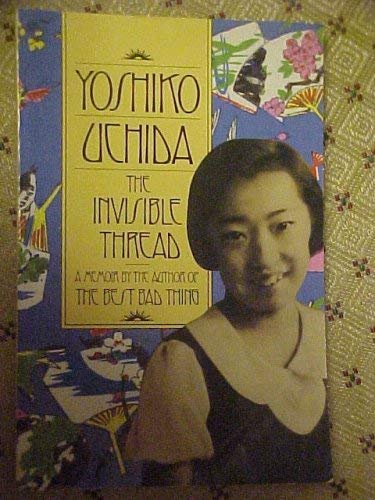
Yoshiko, born on November 24, 1921, was the second daughter of Japanese immigrant parents Takashi and Iku. Her father worked as a businessman for Mitsui and Company in San Francisco, and Iku wrote poetry, passing along her love of literature to her girls. Though the Great Depression raged, the Uchida family enjoyed comforts because of Takashi's well-paying job and their own frugality. Yoshiko loved to write, and her stories played out on pieces of brown wrapping paper. She also kept a journal to record her thoughts and events.
Enveloped in love and tradition at home, Yoshiko weathered the prejudice she sometimes faced. Many white students at University High School in Oakland didn't invite her to their parties and wouldn't socialize with her, deeming her a foreigner. Even while attending the University of California at Berkley, Yoshiko often faced the same dilemma of being ostracized. She found friendships with other Japanese American students and was preparing to graduate when Pearl Harbor was bombed, changing her life.
The United States government rounded up 120,000 people of Japanese descent and put them into camps. The Uchida family first resided in a horse stall at a racetrack in California, surrounded by barbed wire and armed guards. Though difficult to endure, the next move was worse. Almost 8,000 Japanese were sent to a relocation concentration camp called Topaz in the Utah desert. The detainees suffered from violent dust storms, scorpions, snakes, and exceedingly poor living conditions. Yoshiko taught second grade children there until she received a fellowship from Smith College to earn a master's degree in education.
Yoshiko and her sister both left the camp in May of 1943, with their parents gaining release later that year. Teaching for several years in a Quaker school outside of Philadelphia, Yoshiko decided to quit teaching and find work that allowed more time for writing. She moved to New York City and began as a secretary, penning stories in the evenings. Asked to contribute to a book about Japanese folk tales, Yoshiko discovered that though the book didn't come to be, with time she could create a full collection of folk tales. Writing a few pieces for adults, Yoshiko realized she was better suited for children's books.
A Ford Foundation fellowship sent her to Japan to research the culture and their stories. Spending two years, Yoshiko found her time to be healing as she learned about her own ancestry. The pain of the concentration camps lessened, and she began writing about the experiences in fictional books such as Journey to Topaz and Journey Home. Her career as an author soared as people regarded her as a pioneer in Japanese American children's literature. The author of almost forty works, including Japanese folk tales and stories of Japanese American children making their way in the world, Yoshiko traveled extensively, lectured, and wrote. After suffering from a stroke, Yoshiko passed away on June 25, 1992, in Berkeley, California.
A well-written and simply stated memoir of a young Japanese-American woman's life experience before and after the bombing of Pearl Harbor. She had all the hopes and dreams that any American girl would have had only to have them snatched away. Even her freedom. She was five months away from getting her degree in education from the University of California when she was separated from her father and sent with her mother and sister to the first of two internment camps. Her spirit, strength and perseverance overcame the hurt and prejudice implied by the American government to obtain release from the camp to go east and earn her master's degree and get the respect and life that she should have had all along. An eye-opening read.
Just a fabulous book about the Japanese American experience before and during WWII. Highly recommend it as a read aloud book with a preteen In order to discuss it. Also love that my great grandparents, the Okubos, were mentioned. I remember meeting the author when I was a young adult and being awed by her grace.
I picked up this book by accident while looking for AN invisible thread, but I'm glad I did! Even though it's a children's book, it took me a surprisingly long time to get through it. The beginning was pretty mundane and almost annoying as you read about a typical American childhood in California in the 20s...but once you got 1941, it completely changed. Reading a first hand account of an American born child learning to exist in a concentration camp simply for being Japanese is heartbreaking. The fact that the government could believe that an entire ethnicity could share a consciousness and deserved to be punished for it is incomprehensible. To go even further and to ask those prisoners to fight for the country that enslaved them is even more reprehensible.
I was surprised to learn how much of a community they were able to create in abominable conditions, the attempt to keep school and recreation going amidst all the craziness is commendable. And I had no idea Asians were denied the opportunity to become citizens back then, it really opens your eyes to the xenophobia that has always existed here. The most illuminating thing, however, is how long it took us to realize we were wrong. Too late for Yoshiko's parents to benefit from the apology and reparations, but not too late for us to ensure something like this never happens to anyone again. It's an important read for anyone who unequivocally thinks America is infallibly great. Our greatness comes from learning from our mistakes, not repeating them. Perhaps a book Drumpf should read...or have Melania read to him.
I originally read this book as a young adult, the author and my grandparents knew each other. My great-grandparents were the Okubos whom the author’s family’s visited in Livingston before the war. My grandmother was always so proud that Yoshiko Uchida wrote books about the experience of being US citizens and placed into concentration camps within their own country. Like the author, my grandparents also ‘made the best of it’ and organized activities, schools, did bookkeeping, cooked in the mess hall. I still just can’t imagine keeping such a good outlook during such a horrible and unjust experience. I appreciate that those that lost so much during this horrible time in our history are speaking out as we all know this could still happen again today in our country.
This book, as the title suggests, is about realizing and celebrating one's second-generation immigrant experience. In Yoshiko's case, growing up in the Bay Area of California as a normal American girl pre-WWII, and, in time, connecting to and valuing her Japanese heritage. I found it interesting, especially the supportive communities that help families and individuals survive and thrive.
Her parents, born in Japan, came to America through their attendance at Doshisha University in Japan, and the Uchida family is active in the Japanese Christian community in California, with lots of visiting Japanese students guests at family meals. Takashi and Iku, a businessman and housewife, try to keep many Japanese traditions and speaking the language alive for Yoshiko and her older sister Keiko (Kay). The family makes two trips back to Japan in her early years but she is still focused on being an American and misses much. The family, back in Berkeley, has warm relations with their European immigrant neighbors and the Americans around them.
Of course, the attack by Japan on Pearl Harbor disrupts this quiet simple life. The family and their "Nisei" (first-generation immigrant) friends can't believe it's true. First, the father is abruptly arrested and sent to Montana. After an anxious period, Yoshiko, her sister and mother must pack up their home and prepare for transport off the West Coast.
The last half of the book chronicles the internment camp experience. First they are transported by rail to the Tanforan Racetrack, where their family is assigned an old horse stall home. Before long, the father rejoins them and both girls become teachers of children in makeshift schools. Still, they are prisoners without civil rights, isolated from the rest of American life, and eat rationed food in the mess hall. This life becomes almost bearable, but they are uprooted once more and sent to Topaz, Utah, a dusty desert with inadequate water, barren barracks, extreme weather and dust storms. Again, the two sisters begin teaching and the father takes leadership in the community.
It is now early spring of 1943, and The internees are growing restless and some are turning violent and threatening. Young men are being recruited to fight in the U.S. Army and, to clear the camp and defuse the situation, others are given the option to leave if they can find situations through the National Japanese Student Relocation Council. First Kay gets a job offer in May at Mt. Holyoke College Dept of Education's Nursery School in Massachusetts, then Yoshiko is offered a full graduate fellowship at Education Dept. of Smith College. Though they hate to leave their parents, they are eager to escape the unnatural confinement of the camp.
Yoshi graduates Smith in May 1944 with a master's degree, and her parents are able to move to Salt Lake City. She was offered a teaching job in Frankford outside of Philadelphia and her sister joined her for the summer. At last, they were able to rent a larger place and send for their parents and the family is reunited once more.
I bought this book to use with a Japanese 19-year-old woman who is strengthening her English with me. We will study chapters and discuss them. It is not very difficult reading.
This is the biography of a Japanese-American author who grew up in Berkeley in the 1920s-30s and then went to internment camps in the 1940s. She describes her family, friends, and life in loving detail; I especially enjoyed the parts about (and pictures of) her early writing and dogs. Her reflections as a person between cultures are poignant, as are her day-to-day experiences while in camps.
Uchida was a children's author and this is categorized as a children's biography, but it's appropriate for all ages.
Yoshi is a Japanese American young girl. She has an older sister, Keiko, a mother and a father. She grew up in Berkeley, California, her father working at an import-export firm.
At the age of 12 she visited Japan, but felt somewhat foreign in that country, just as she feels foreign in the U.S. She gets along well with the neighbor's children, and the neighbors and their parents get along fine.
She goes from junior to senior high, graduating from high school early and going on to the University of California.
The above part takes up a little less than half of the book. The rest deals with Pearl Harbor and afterwards. One day Yoshi goes to study at the library, comes home, and finds her father has been taken by the FBI, and there's an FBI agent in the home. Her father was taken since he was a businessmen.
(One thing to keep in mind; these people were not charged with any crime at all. There was no formal arrest, no trial, no due process, no nothing like that at all involved. The people were simply taken and put places.)
Yoshi goes into how the interment process affected her and her family. They were housed in a former horse stall at the assembly center, and then were shipped to Tanforan.
She then talks about the life in the camp, how schools were set up, etc. Then they are sent to Topaz.
(She uses the term “concentration camps.”)
She also talks about the shooting that killed an internee. She then talks about worsening conditions in the camp that led to internal violence at the camp, which became a hotbed of angry young men, basically.
Then she covers the issue of getting volunteers for the military.
She finally gets to leave the camp when she gets a job outside it.
This book was interesting, though after reading it, I'm not sure I'm interesting in looking into reading any of Yoshiko Uchida's fiction. She has sort of a distant, impersonal way of writing that made it hard to get into her story, even though it was fascinating. And as terrible as this sounds, her autobiography gets much more interesting when she relates her experiences living in internment camps. This is mainly because, in true memoir fashion, the first half of the book is very fragmented and non-linear. But something about the way she writes her story, maybe the fact that she doesn't record her emotions or how she feels/thinks about things turned me off. Which is weird because her story is about one of the most traumatic things that has happened in American history. But it's almost like she was afraid to write how she really felt about the injustice and terribleness of everything that happened, instead recording all of the positive things she experienced in internment camp. But it is definitely a very interesting read and I learned a lot about this period of history that I hadn't known before. I'd definitely suggest this to young adults because it gets you interested in learning about history through the eyes of someone who was there.
Warnings (on a scale of 1-5):
Violence: 1 The author records some of the violent, unfair, and unjust actions that were done to the Japanese Americans, including one instand of an old man being shot in cold blood by one of the internment camp guards, but she doesn't go into any detail.
It is important to read first hand accounts of our history. This is one such book that tells of the experiences of being Japanese-American during WWII.
Students were tasked with reading Yoshiko Uchida's poignant memoir of WWII Japanese internment along with the United States Constitutional Bill of Rights. A comparison of the two texts aptly demonstrates how easily basic human rights can be abrogated due to fear or prejudice. A salient warning for our tumultuous times.
The Invisible Thread Yoshiko Uchida Nonfiction Memoir 133 pages
This book is about a Japanese-American girl who had to go to a concentration camp because she looked like the enemy. Yoshiko tells us the story of what it felt like to be different. She and her family were told to pack up their house in ten days. Then they would be moved to a prison camp. In the camp, they live in an old horse stall ten feet by twenty feet. Dust, dirt, and wood shavings were all over the floor and you could still smell the manure that lay beneath it. Then once their community finally got settled, they were moved to a concentration camp in Topaz, Utah. It was in the desert and there were sandstorms almost every week. There were no shrubs or scenery, it was all the same. Then Yoshiko and her sister got clearance to leave and they went to College. After that, they became school teachers and live with their parents.
I enjoyed this book, because it really told you what it felt like to be betrayed by your own country. It was an actual experience that was told to you by an actual Japanese-American that really truly experienced it first-hand. I never thought that we could be that mean to people that were our own citizens. Just because they look like they enemy doesn’t mean that they are the enemy. If I lived in that time, I would be truly upset. Why would we do this to our own neighbors and friends? It just doesn’t seem right.
The memoir of a girl who grew up in a dark time for the US touched me in an odd sort of way. Maybe beacause reading it in to comfort of a large white chair backstage of a small theater made all these things seem so unreal. I like characters and events that seem real, but this did not to me. So, how is it, that actual events as told by an actual person that actually expierenced them do not seem real? Maybe it's because Yosiko Uchida made all these things up (unlikely) or maybe it's because I have just been so cut-off from the disturbing history of the United States during World War II that I did not beileve it. Or maybe I was just tired of reading books for my English teacher. Though i diskiked the book in that sense, the story did give me a deeper understanding of racial discrimination, which i already felt I knew a lot about.
The Invisible Thread is an amazing autobiography filled with beautifully written descriptions. The images found midway in the book really capture the multitude of insecurities and dilemmas she speaks of throughout the book. The text is simple, which makes it easy for kids to better understand complex issues, such as the Attack on Pearl Harbor. This book sends a powerful message about the impact discrimination has on those with differing skin colors; kids should not be ashamed of their heritage, and instead, should embrace it. I believe that this book could be read aloud for the fifth grade; or, students participating in accelerated reading could probably handle this book their own. Everyone should take the time to read this book!!!
This book was my first and only treatment of the history of Japanese internment camps in the U.S. as a child. I heard no more mention of the subject until I was an adult, in college.
That should say something.
In a way, I'm glad this was my introduction. To hear it from a person who lived that experience is more powerful and genuine than learning about it in a classroom. I identified with the Uchidas as people, not as statistics. Even though this was my only source for years (save for a single mention on an episode of Antiques Roadshow), it made the events stick with me.
It was accessible to children (important, as some of the books I read in this book club were very inappropriate for that age group), and I regard it as a necessary work.
This would be a great read for anyone age 11 and up. Uchida tells her true story of being imprisoned in a concentration camp during World War II because she is Japanese-American. Lots of people don't realize that the US government imprisoned Americans of Japanese descent because they were "the enemy", even though it was completely unconstitutional. It is easy to read and understand, and is an important history lesson for us all.
This book has a rather simplistic style of writing, but candid and thoughtful. The times when it didn't seem to fit were when she was talking about graduating and dating and all that.
It really gave me a different perspective on the Japanese-American internment.
I realized that the USA was essentially doing the same thing as Germany - imprisoning loyal citizens simply because of their ancestry.
This is on the reading list for my 6B Language Arts class. I read this after finishing The Buddha in the Attic, and it was a perfect follow-up book to that story, even though it's targeted towards young adults. It personalizes the experience of a young woman growing up Japanese pre/during/post WWII, without being too heavy or dark. Well-written and a fast read; makes me want to read more of her work.
The striking memoir, The Invisible Thread, by Yoshiko Uchida, is an amazing collection of stories suitable for middle school students but interesting for all ages. I would highly recommend this book because it is packed with funny and interesting events like playing pranks on houseguests. If you are looking for a heartwarming and exciting tale about the life of a Japanese- American girl living in the United States during World War II, then you should definitely check out this book.
I read this with my 11 year old for his 5th grade class. It is about the trials of Yoshi and her family during WWII and being a Japanese American. Tells of growing up in Berkley, CA and then being forced into internment camps. She ended up at Topaz, Utah. A great read for insight into a typical family and the horror they went through because of prejudice.
Picked this up at a library book sale. Read it in a couple of hours. It's actually meant to be a young people's book (the cover says 11 and up), so it was very quick and easy reading. It was quite interesting and gave me a better knowledge of the shameful and unconstitutional removal of Japanese Americans from the West Coast during WWII.
the first part is challenging to wade through. Uchida sets out that she is a normal American girl. But it's so "normal" that it's boring. I would have wanted to learn more about Topaz. The descriptions are beautiful. Simple elements and snapshots that create the pain of the JA incarceration. (I learned a lot from the book; didn't know that you could apply to leave "camp.")
Can you believe I have a ten year old and this is the first chapter book I've read out loud to my children? I started reading it and thought it was something I wanted the kids to learn about.
The book is written for children, so she does seem to clearly explain everything. I like how she discusses her dating and college years, it shows how normal life was for her before things changed.
This is the true story of a woman who befriended a homeless boy in New York City and how they nurtured a true friendship. It shows how a random act of kindness can truly change and influence someone's life profoundly. I LOVED this book. It's an easy read, and a heartwarming story. Even shed a tear at the end!
This entire review has been hidden because of spoilers.
I really enjoyed this one. It always fascinates me when people write memoirs that are so emotionally honest that they could damage relationships....she had a hard early life, and it clearly helped her develop true empathy. Love the friendship she developed with this boy....it was something special.
This is a young adult book and quite enjoyable. Perhaps I am overly sensitive to the topic, being of Japanese descent myself, but it was difficult for me to read Yoshiko's account of living in Tanforan and Topaz. Glad she told her story with all the details.
Tremendous look at the experiences of one family and the dignity they exuded during an unfortunate blemish in America's history. Yoshi's family looked like the enemy, therefore, they endure severe hardships.
This is an amazing book, mainly because it taught me aspects about Japanese American history that I had no idea about. I knew about Pearl Harbor, but now the evacuations that followed. I love the factual voice of of the writer, it allowed me to focus on my emotions while reading.