“Each one of us, through our own impossible journey, has this capacity to change and make a difference in our world.” (p.276)
Disturbed by witnessing a major oil spill in San Francisco Bay in 1971, John Francis decides to stop using motorized vehicles. Two years later, impressed by the stillness found in listening during a day spent silent, he vows to spend the next year in silence. Francis ends up renewing his vow each year for the remainder of the 1970’s and ‘80s, not speaking for seventeen years. He doesn’t use any type of motorized vehicle for 22 years of his life. In this book Francis narrates how he became an environmentalist, walked across the US, founded the Planetwalk organization, earned a doctoral degree in environmental studies, became an UN Goodwill Ambassador and advises the US federal government on oil spill regulations.
So first of all the author is clearly a badass! Seeing as I’m very interested in the environment, activism and spirituality, and I tend to like memoirs and travel accounts, I was excited to read this book. I enjoyed most parts of it, especially the profound insights Francis shares about his journey. However if judging the book from a literary pov it could’ve been written a little bit better. I rate this book 4/5 stars.
I really appreciated the first half of the book, starting with Francis’ youth in Philadelphia and then skipping to the oil spill in 1971. Francis views the environmental threat as an universal threat, and dreams big. Still, while aspiring to changing the world, his actions are humble. One step at a time Francis takes us with him from California to Washington, across the Rocky Mountains and the plains beyond.
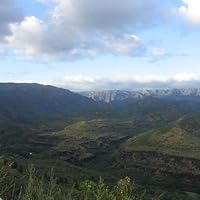
“Sometimes my spirit soars as I climb the several thousand feet over the mountain, simply following the path before me. Other times, it slogs along with me through the mud, brushing against the wet grass and the purple and gold wildflowers.” (p. 116)
The book loses a bit of focus in the second half. These chapters are a patchwork of different people briefly met on the road, time measured by the changing of the seasons and the journey crossing state lines. The book picks up towards the end. After Francis reaches Washington D.C., his journey is described in snapshots and not in full. Here Francis includes only key moments relating to his work as an environmentalist, such as feeling touched by being accompanied by hundreds of people on a walk.
Maybe it’s fitting that a book dedicated to walking, also adopts the pace of a journey on foot. At times I was frustrated at failing to read more than two chapters each day. I also felt invited to accept the natural pace of things.
“Inside I feel heavy, torn between wanting to make a forced march around the globe so that I can get on with my life, and the knowledge that walking and the journey is my life. It will unfold at its own pace.” (p. 215)
Throughout the book, there is no mention of romantic relationships, even though Francis mentions marrying in the epilogue. I truly respect his choice not to share intimate details, but from the story’s pov it’s an unfortunate one. For me, the internal reflections Francis makes on his life and journey were the absolute strong suit of this story. A decision to cut out a part of the author’s personal life erodes the narrative. The touching story arc about his father’s acceptance redeems this in part, but not fully.
If you want to read an inspiring memoir about a man who, through hard work and dedication, succeeds in doing something many thought impossible, you should read this book! Prepare to feel inspired!