Jump to ratings and reviews
Rate this book

Stealing Buddha's Dinner

Rate this book
Winner of the PEN/Jerard AwardChicago Tribune Best Book of the YearKiriyama Notable Book"[A] perfectly pitched and prodigiously detailed memoir." - Boston GlobeAs a Vietnamese girl coming of age in Grand Rapids, Michigan, Nguyen is filled with a rapacious hunger for American identity, and in the pre-PC-era Midwest (where the Jennifers and Tiffanys reign supreme), the desire to belong transmutes into a passion for American food. More exotic- seeming than her Buddhist grandmother's traditional specialties, the campy, preservative-filled "delicacies" of mainstream America capture her imagination. In Stealing Buddha's Dinner, the glossy branded allure of Pringles, Kit Kats, and Toll House Cookies becomes an ingenious metaphor for Nguyen's struggle to become a "real" American, a distinction that brings with it the dream of the perfect school lunch, burgers and Jell- O for dinner, and a visit from the Kool-Aid man. Vivid and viscerally powerful, this remarkable memoir about growing up in the 1980s introduces an original new literary voice and an entirely new spin on the classic assimilation story.

254 pages, Kindle Edition

First published February 1, 2007

147 people are currently reading
3250 people want to read

About the author

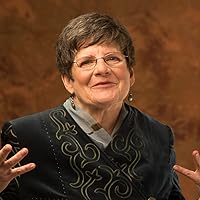
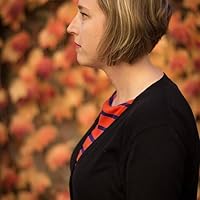
Bich Minh Nguyen

13 books102 followers
Bich Minh Nguyen received the PEN/Jerard Award for her memoir Stealing Buddha's Dinner, which was a Chicago Tribune Best Book of 2007 and a BookSense pick. It was also selected as The Great Michigan Read for 2009-2010. Bich has appeared on programs such as The Newshour with Jim Lehrer. She lives in Chicago and Indiana, where she teaches literature and creative writing at Purdue University.

Also writes as Beth Nguyen.

Ratings & Reviews

What do you think?
Rate this book

Friends & Following

Create a free account to discover what your friends think of this book!

Community Reviews

5 stars
716 (17%)
4 stars
1,477 (35%)
3 stars
1,414 (34%)
2 stars
421 (10%)
1 star
93 (2%)
Displaying 1 - 30 of 677 reviews
Profile Image for Ji In.
7 reviews
April 23, 2008
I read a criticism of this memoir by someone else who seemingly panned it on the basis that it was not written in a linear or chronological fashion, as memoirs are "supposed to be." I think this is a common misconception of memoir -- that it is "supposed to be" a time line of one's life, from birth to some magical resolution.

Not true. I generally find books like that exceedingly dull. Setting out to write one's memoir, one might outline the book in a loosely chronological order, but I think ultimately, your story can tell itself more naturally in thematic "clumps," for lack of a better descriptive.

I think that's what Nguyen's story does -- orders itself in clusters around central truths or discoveries throughout her youth. I would much prefer it thus, rather than Nguyen straining to smush everything in chronologically and sacrificing the truths and discoveries that hold her stories together and make her experiences relatable.

And I did find her stories largely relatable, as a fellow Asian child of the '80s struggling to be American in the heart of white Midwestern America, where the contents of your lunchbox could make or break you, the taper of your jeans were a reflection of your potential for acceptance vs. your relegation to the social graveyard, and the color of your skin trumped all. For me, my attraction to Nguyen's writing was 40% due to the nostalgia factor, 60% due to the chords her experiences struck in my own memories of ethnic/cultural awkwardness and the quest for belonging among my gleaming white peers.

Her writing is sound, expressive and descriptive, and although it did not sweep me off my feet with an unprecedented kind of lyricism or other particularly novel style, I was drawn in and found myself one of Nguyen's classmates, watching her fight through many of the same battles that I fought, inwardly and outwardly, in those times.

Lastly, I have to give a great big exaggerated eye-roll to the criticisms that seem to dock this book for not being the "immigrant/refugee survival story" that they were expecting. I resent that you can go to the biography or memoir section of the library or bookstore and find shelf upon shelf of memoirs written by white Middle Americans who can write whatever they care to write, to similar reviews trumpeting their insight and humanity. Whereas any writer of color, and particularly those with *copping hokey accent* "foreign-sounding" names, are stamped with their corresponding ethnic labels and sent off to the corresponding "minority" section that is exactly 5 titles wide. I mean, what were you expecting? Twenty chapters of starving on a boat, punctuated by refrains of "God Bless America"?
Profile Image for Kricket.
2,331 reviews
July 10, 2007
I have a habit of judging books by their covers, and I saw this one float past me at work and immediately wanted to read it without having any idea what it was about. Probably because I was hungry, and there are snacks on the cover.

So imagine my surprise when it turned out to be a memoir of someone growing in Grand Rapids, Michigan. Nobody EVER writes books about Grand Rapids, Michigan. One time Anne Lamott mentioned Grand Rapids, very quickly, because of all of the dutch blonde people. Nguyen talks about all the dutch blonde people too, primarily because you can't write a book that takes place in GR without mentioning the dutch blonde people, and also because, being from Vietnam, she stuck out a little bit.

Thus the premise of the book. A childhood of longing to look a different way and eat different foods and wear different clothes in order to fit in. And realizing that she had spent so long wishing she was different that, by the time her family starts going to parties with Vietnamese people her own age, she doesn't fit in with them either.

It's pretty typical of many of the memoirs I've read this year: the odd family life, the wanting to fit in. But honestly? What I absolutely adored? All the Grand Rapids references! I knew every street she mentioned, every cheesy restaurant. She even mentioned my alma mater, albeit rather unflatteringly, as well as the library where I used to work. She mentions Holland (my place of birth) and klompen dancers (me at one point). And it's obvious that she kind of hates GR. She lived there a lot longer than I did, and sometimes I kind of hated it too.

84 reviews1 follower
February 7, 2008
This was such a disappointing book. The author is a Vietnames refugee who was raised almost entirely in the United States, but still never really fit into the ideal of becoming an American, so she tries to become an American by eating American food. Its obvious that many of these chapters appeared as individual essays in other publications, and little editing was done to make it into a cohesive story. Not only does the book jump around in different points of her life, but ominous foretelling facts are stated in some chapters, only to not be mentioned again or to be not as ominous as they were originally made out to be.

There is one chapter that deals extensively with the author's love of reading as a little girl, particularly in books that talk about quintessential American food, which she believes is the key to becoming a real American. This would be a cute little aside, but she dedicates several pages to the food in Little House on the Prarie, amongst other books, which gets tedious rather quickly.
Profile Image for Books Ring Mah Bell.
357 reviews366 followers
March 5, 2009
Unless you grew up in Grand Rapids in the 1980's, don't read this book. If you did grow up in GR in the 80's... take your chances.

On one hand, of 253 pages in this book, I'd bet about 100 are dedicated to descriptions of food and packaging that food came in.
Besides tamales and tortillas, each holiday included a giant turkey... a vat of mashed potatoes with gravy boats...Stove Top Stuffing, Pillsbury crescent rolls, canned corn soaked in butter, canned string beans with cream of mushroom soup and baked with Durkee fried onions, frijoles, arroz con pollo, pumpkin empanadas...

The worst chapter in the book is called "Salt Pork." She describes in detail the books she read in childhood... describes in detail the FOOD in the book she read as a child. The Wilders eat hearty piles of meat and beans every night... breakfasts... thick oatmeal covered with cream, sausage cakes, pancakes and syrup, fried potatoes, jellies...
I shit you not - that food description goes on another 3 pages!
ZZZZZZZZZZZZZZZZ. Wha? Huh?
Oh, I was writing a review.
Ahem.

On the other hand, I enjoyed the trip down memory lane. I haunted some of the same places as the author and her family; the Kountry Korner, P.J. Hoffmaster State Park, Anazeh Sands, Kentwood Skating Center and the now defunct Ponderosa. (Called PonderGROSSa by my family)
The references to 80’s pop culture were fun. I had forgotten a lot about those years. (Old age, you see)

I really wanted to like this book. I felt her pain as she was told repeatedly she was going to hell, and her friends tried to "save" her. (I hear you, Bich! It happened to me too! So much that I said I was Jewish to get people off my back!)
My heart broke when she won the spelling bee in 3rd grade, only to overhear her teacher say rudely, "Can you believe it? Another foreigner won the spelling bee!" (So sorry!)

We have gotten a bit better since then.
I think.
Okay, maybe not.

Anyway, I was searching for the experience of a refugee family in my city, and instead, got a dissertation on food.

Bummer.
57 reviews1 follower
September 15, 2007
I found this book to be disappointing, but mostly because I had different ideas about what genre it was supposed to be. I was hoping for a refugee survival story. But it was mostly just a laundry list of memories from a childhood of the 80's. Much of it was familiar to me of course, but I need more than a list of favorite candy bars or a lengthy summary of the Little House books to keep me inspired. The memoir was slow to progress; the narrator frustratingly remained seven years old for what seemed like two-thirds of the book. I wished that there was expansion of the characters of Rosa, Noi, and Bich's biological mother; unfortunately they were limited to the views of a child for most of the narrative. But it was a mildly entertaining read, perhaps would be better suited as a series of short stories. This is a salad, when what I desired was a steak.
Profile Image for Jeff.
36 reviews5 followers
September 10, 2007
What a great walk down memory lane. The only thing missing was Russ' restaurant. Bich Minh Nguyen writes in agonizing detail about the dilemma of cross-cultural existence, with applications to be made in every direction. As one of the tall, blonde, problematic Dutch Reformed that made her life miserable, it was an especially painful read, soothed only by her incredibly similar memories of food from the '70s and '80s. Her description of being not quite American, but neither quite Vietnamese reminded me of how it feels to be a Christian in the academy today, without the references to personal appearance.

A quick read, but one that will stay with me.
Profile Image for Leah.
57 reviews6 followers
July 13, 2007
In elementary school I had a friend named Van, a Vietnamese immigrant, who, by 5th grade, was already an amazing cook of her traditional food. In 6th grade, her parents brought in food for Van's birthday. However, instead of bringing the traditional cupcakes, or even anything Vietnamese, they brought spaghetti. I always thought that was so odd, and a little funny, but after reading this memoir by Bich Minh Nguyen, the reasons behind this unintentional social oddity seems much clearer.

The author presents a funny and clear, if personally-biased version of her childhood, largely focusing on her attempts to fit into the blonde and Dutch world of 1980s Grand Rapids, Michigan after narrowly escaping Vietnam before Communist rule. And for the young Bich (pronounced Bit), the road to assilmation and Americanism is paved with Pringles, stroganoff and SweeTarts. I wouldn't recommend reading this book while hungry or on a diet.

Nguyen makes it clear that we are seeing the world through her eyes and we follow her from childhood ecocentricism to a clearer understanding of her roots and her extended family, which includes a sister, several uncles, a missing mother and an Mexican-American step mother. Though the author may not have entirely solidified her sense of identity by the end of the book, she has made an exquiste and readable journey.
1 review
December 20, 2013
Bich Minh Nguyen's "Stealing Buddha's Dinner" tells the story of her childhood, a time when she realized that her Vietnamese customs and cultures are far from normal compared to the lives of devout Christian blonde-haired, blue-eyed girls who make her feel abnormal and create for her a rapacious hunger for an American identity. The book is set in Grand Rapids, Michigan during the time of the Vietnam War when floods of immigrants migrated from Vietnam, seeking for a better life and a safe place to call home. Realizing just how strange she was compared to the students in her school, where Jennifer's and Tiffany's reigned supreme with their fresh, white, crustless sandwiches and perfectly straight platinum blonde hair, she struggled to adapt to the culture shock by trying to find her own American identity while also trying to preserve her exotic Vietnamese identity. Bich introduces herself to the preservative-filled American "delicacies" such as Pringles, KitKats, and cookies, a diet that was sure to turn her into a true American. The book addresses the struggle that most Asian-American children go through when growing up in a highly dominated "white society", which is a society that is cruel and ruthless most of the time.

A memorable moment in the book to me was a story of when Bich entered into her school's spelling bee and won first place. Accepting the prizes and fruitful praise from her classmates. Bich was overjoyed with her outstanding performance. Once school let out, Bich was starting towards home when she remembered that she has forgotten her rainboots in class. After doubling back to school she overheard her first grade teacher talking to another,"Can you believe it?" her teacher was saying,"A foreigner winning our spelling bee!" The story then ends with Bich contemplating over the somberness of these words. And the emotion and relevance I felt towards this passage moved me, I myself having struggled with finding an American identity, was feeling nostalgic. After reading this I felt like a child again, searching in cupboards and empty shoe boxes for the answer has to why I was so different from everyone else. Why was I called a foreigner when I grew up in the same country as everyone else, why was I called names for having small eyes, why was I always undermined and given low expectations just because I didn't know how to speak English. I could first handedly relate to this passage which is why it was so memorable.

I would definitely recommend this astounding book. The relevance and raw emotion that I felt towards every chapter in this book is baffling. I did not know that someone else felt the same way I felt about certain subjects pertaining to an American identity crisis. For example, the author idolized and loved mainstream American food with all her being, fantasizing over succulent rib eye steaks packed with right flavor and dreaming of baked potatoes wrapped in golden foil, tinted yellow from the melting pat of margarine. I could relate to her food-filled fantasies and dreams because I too dreamt of the glossy brand allure of Pringles, KitKats, and Tollhouse cookies while also wishing for an ice cream sundae, loaded with bright red cherry and chocolate syrup drizzled on top. I could relate to her on so many things in this book, especially the parts where she wished of having straight, long, strawberry blonde hair and non-slanted eyes just because she was tired of being made fun of for looking different. I would not recommend this book to others who have struggled in finding an American identity but also to others who have NOT struggled in finding an American identity, informing them on the trials and tribulations that some oriental people go through when struggling to find themselves.

The message I took from this book and what I learned from it was that it's okay to be different. There will always be times where you wish you were someone else, with different cultures, and different value sets but you cannot be that person so why waste time wanting when you could be accepting. Accept where you came from and be proud of your rich culture and diverse value sets, don't mind the criticism or the teasing for when they call you a "FOB" (fresh off the boat), you are a unique and beautiful individual regardless of culture. I was also introduced to the many different traditions that the Vietnamese had throughout reading this book. In the story, Bich duelves into the many diverse customs that her family practices, such as wearing an "ao dai" on Vietnemese New Year and eating banana wrapped in sticky rice and bamboo paper. Bich also provides us with an assortment of new Vietnamese vocabulary throughout the book, using a slang word or a word for food here and there, always keeping me on my toes and curious about what the words meant until I looked them up.
The relevance and pure raw emotion that I felt through this book is like no other. I had a strong connection with Bich throughout this whole book because she had experienced the same teasing/bullying, the same sense of loneliness, and the same sense of wanting to belong just like me. The nostalgia that I felt while reading certain passages in this book brought me back to darker times of when I was in the third grade, when I wasn't as accepting as I was today and when I wanted to belong with the other kids more than anything. At that time, I hated how different I was compared to everyone else, not having the right shoes, or clothes, or lunch and then being dubbed as an outsider just because I did not have these certain materialistic items. And in her story, Bich describes perfectly the desire to fit in and the pang of loneliness that accompanies this unfulfilled desire. She provides us stories of her school days and her transition from being embarrassed of her culture to accepting her culture to finally being proud of the customs and morals that her culture holds to be true. I too also went through a transition similar to Bich's and through reading her story I have not only developed more of a fondness towards my own rich Cambodian culture but also a fondness towards Bich's unique Vietnamese culture.

Ultimately the story of how immigrants adapt when coming to American, "Stealing Buddha's Dinner" is a story of a girl struggling to find her own Anerican identity, searching for a balance between her Vietnamese culture and her newly found American one, failing miserably along the way, but realizing in the end that she must first embrace and cherish her Vietnamese culture first before embracing another. It all adds up to a tale of self-acceptance, an adventure that sheds a light on the battle that we all experience when trying to find our own identity. "Stealing Buddha's Dinner" tells that story extremely well, reminding us all that it's okay to be different.
Profile Image for Paulette Stenzel.
16 reviews2 followers
July 17, 2018
I loved this book. I became so immersed in the author’s world that I hated to see the book end. Since I was a child, I have especially loved the experience of reading books that leave me feeling that way.

The author’s memoir of her life in the United States after fleeing Vietnam Nam with her family when she was a young child is mostly based in Grand Rapids, Michigan.

The book was engaging for me for the perspectives it provides on the experience of Vietnamese immigrants and with additional views related to experiences of the author’s stepmother who was the child of migrant workers originally from Mexico.

I have lived all of my life in Michigan. Therefore, the author’s observations about life in a conservative Michigan city (Grand Rapids) with references to locations, stores, people’s values and (often narrow) perspectives were particularly valuable to me. The two books are vastly different, but the my experience in reading this book reminded me of my experiences in reading Middlesex, another favorite of mine. Middlesex included insightful perspectives on the lives of Greek immigrants in Detroit, Michigan area over the course of most of the 20th century. Nevertheless, Buddha’s Dinner (and Middlesex) would be deeply engaging even for someone who has no ties to Michigan.

An important theme in Buddha’s Feast is food, as the title indicates. Having read books by Michael Pollen and others, and, as a result of my own international travels, I am convinced that food is at the center of human culture. Moreover, food reflects the diverse cultures of people around the world. The author’s longings for “typical” U.S. foods as a child and reflections on the meaning of food as she matured while living in U.S. culture are revealing and thought-provoking.
Profile Image for Jackie.
54 reviews7 followers
January 15, 2009
Set in Grand Rapids near where I currently live and where I went to college this memoir is luscious. Very cleverly written. It is also an incredible reflection on being marginalized as a 2nd generation immigrant. Overtones of adoption with the mystery surrounding a missing birth mother.

The book has some really compelling chapters--I thought the chapter in which she breaks into her neighbors' house while they're gone was especially poignant and the chapters that included description of the VietNamese food were delightful. However, there were some real clunkers as well--most notably the one on the Little House books, inexplicably including a summary of this popular series. Unnecessary!!

I thought the discussion of junk food and popular music underscored what every immigrant child feels which is a sense that by studying what is most popular, you can gain access to the mainstream. I know I felt that way when we moved from Japan!! I would find out the EXACT brand of barrette someone was wearing and ask my parents to help me hunt it down so I could be a real American. I felt that connection with the author. At the same time, I wish she had been more candid about her feelings surrounding the separation from her mother and the semi-reunion they had. It all felt very guarded and somewhat unexplored. But she might not have been ready to write more about that.
Profile Image for Andrea Hewitt.
103 reviews
July 27, 2007
So, I was really jazzed to read this book as it is a) a memoir, b) set in the 1980s, and c) about food. And there were parts of it I really liked. But, overall, I was a bit disappointed. Every time the book seemed to rev up, it let me down again. Part of the problem was the non-chronological nature of the book...it was hard to get any momentum for me as a reader when the author kept going back and forth in time (and not in an interesting way). And her time markers (TV shows, songs, etc. of the 80s) seemed to be thrown in just for window dressing. Her descriptions of food, though, were dead-on and very insightful and fun. It's worth a read, but don't expect the Great American Memoir.
Profile Image for Sharron.
85 reviews1 follower
September 7, 2007
I really enjoyed this book. The author's need to fit in through gorging herself with American junk food was fascinating. I would definitely recommend this book especially to those who could remember the Vietnam war and the boat people who proabably settled in their neighborhoods and went to their schools.
Profile Image for Cathy.
276 reviews46 followers
February 5, 2008
I picked this up on the New Book shelf at the library, attracted by the striking cover design. It's not a bad read -- a Vietnamese immigrant's account of growing up in drearily blonde Grand Rapids. The central conceit is Bich's fixation on American junk food as a symbol of belonging, but after a while the litany of brand names wore on me.

I wanted more insight into herself and her unusual family (her father, a scrappy self-indulgent man, married a Mexican-American activist in what turned out to be a stormy relationship) and there are flashes of that, but they are buried in long reveries about Pringles, '80s hair-metal bands, and plot synopses of the children's books she read. It dilutes the effect of the occasional sharp insights she gives into her experiences -- like her reminiscence of stealing a plum from her grandmother's altar to the Buddha (which gives the book its title). Obviously these brand names are meaningful to the author, but they don't become meaningful to us.

The last chapter, in which Bich returns to Vietnam and relates a series of realizations about her family and herself, ties everything together beautifully and is by far the strongest in the book. It made me wonder if this material could have been organized into a really stellar essay, instead of a rather meandering book.

57 reviews1 follower
June 5, 2008
I LOVED this book.
Although I am a white girl with dark hair, I could relate to the author. It seemed that she was pretty close to my age, the coveted red Tupperware lunchbox was a big giveaway! There was that one girl in my 5th grade class: long blonde hair down to her butt-that sometimes was done up in fancy french braids!-bright blue eyes,she was super skinny, and she was rich because she took ballet classes and wore Jordache jeans every day! Oh! She also had a beautiful name, Shaunda. So when the author would compare herself to others it kind of reminded me of my own insecurity.

It was fun to read a book that took place where I live. I didn't know that when I bought the book. I have only lived in Grand Rapids for 4 years and I enjoyed reading about familiar places.

OH! The discriptions of the food!! To die for! I would like to try some of everything she talked about. Well, the Vietmanese food that is. No thankyou to Chi-Chi's and Ponderosa, yuck! I do remember when our family discovered Ponderosa! We also went often, then my Dad wanted my Mom to buy all the salad bar fixings for the house! But anyway, all those yummies filled with pork...yum! I need to see if I can find a good Vietmanese restaurant nearby!
905 reviews6 followers
July 29, 2009
I read this one because we are considering it for our "Hillsdale County Reads" selection, but really didn't enjoy it at all. Narratively disjointed, it seemed to me to boil down to the author alternately whining and listing foods. Neither of which, frankly, is that interesting. When she started listing the foods that were mentioned in the "Little House on the Prairie" books, I nearly wanted to poke out my own eyeballs. I will admit that the last few chapters, where an adult Nguyen meets her mother and travels to Vietnam, were interesting, but you have to wade through so much stuff to get there, it's not worth it. I would not have finished this if I hadn't had to.
Profile Image for Scot.
956 reviews35 followers
November 22, 2018
This is a memoir of a young Vietnamese girl who flees her homeland during the fall of Saigon, smuggled away along with her slightly older sister by her father, two uncles, and her grnadmother. They end up in a heavily Dutch part of Michigan, in Grand Rapids, where soon the family becomes more complicated with the introduction of a Mexican-American mother and a half-Anglo stepsister. Later on foster brothers, refugees from Vietnam, will add to the multicultural mix.

There is a lot--and I do mean a lot, to the point of excessive, as if it is a brilliant and innovative new literary technique--of constant and repetitive name dropping of specific products, brands of junk food, TV shows, and pop songs of the era. I understand this is supposed to help build context, and we are supposed to contemplate how bizarre such "classic" American examples of consumerism must have seemed to a young Asian immigrant of the late 70s, early 80s, but I found it increasingly tedious. I think this probably works to evoke nostagia for those who are of the author's particular age cohort, but I'm fairly sure the impact will be far less successful for those too old or too young to have bonded with these product references at the age when the author did, or ever at all. Because she becomes a bibliophile (no great surprise there--the outsider uses reading and education to find her way up and out of the culture not ready to emkbrace her), we also get a chapter which is essentially just a nostalgic summary listing of popular books for middle school girls of the 1980s.

There were some poignant moments here--such as her realization that her school teacher was prejudiced towards her, or when she comes to see the stepmother's unusal demands were actually acts of compassion for her own good, but generally, I was not moved to identify with the narrator's struggles as much as the book jacket promised I would, nor did I see them as particularly insightful or artistically conveyed.
Profile Image for Sara.
1,202 reviews62 followers
June 29, 2018
I liked this biography a lot. It was very interesting - the story of a Vietnamese girl who came to the United States as an infant and throughout her childhood never found herself at home with either being Vietnamese or American. She tells the story through food - the chapters are themes about food and how she relates her love of junk food and American food and how it applies to the emptiness she often feels inside.

I wish the chapters had been more chronological. She was generally chronological, but not always, and she skipped around some as she pursued some of her food themes. She was 10, then she was 8, then she was maybe 11, then back to being 10. I would have liked more linear progression. I wish she had talked more about high school and college. She wraps up quickly after junior high/middle school. I'm also not sure how old she is now or how she currently feels about her life.

Even with that said, this was a very good picture of life for an immigrant in Grand Rapids in the 1980's and also just life in general in the 1980's. It made me think of my own life in the 70's and what I thought of the food my family ate and what other families ate.
Profile Image for megan.
311 reviews79 followers
August 6, 2007
This is a solid memoir that I think I enjoyed a lot because it discussed the immigrant experience in Michigan--and maybe that resonated with me since I am a Michigan transplant, myself. However, this is mostly about the immigrant experience as related to consumer food in America (and just happens to take place on the West Coast of Michigan--Grand Rapids). I think a lot of the characters are one-dimensional with regards to how the author portrays them, but she gets her point across that way. For instance, we hear a lot about the white mothers of her friends who do nothing but clean and cook all day in their very God-Fearing and Christian households--but there's a complexity there that is overlooked. Perhaps the author could have dug a little more--but it may have felt superfluous especially since it was told from her perspective as a child. I dunno--pretty good. I'd tell people to read it since it was pretty easy and fast and let them make up their own mind. There's certainly value in reading it--and not just because there's nothing else on TV!.
1,596 reviews40 followers
February 27, 2015
There's a poignant, vivid, well-written approx. 15-page magazine article looking back at growing up in Michigan feeling like an outsider by religion, race, and all family customs after immigrating from Viet Nam in the mid-70's in here. Author is skilled at evoking sibling issues and complicated neighborhood friendships.

Unfortunately, this touching article is buried in another 250 pages of preoccupation with food. Junk food the American kids ate that she didn't have, "ethnic" food her family prepared, her Dad's discovery of Burger King and some discourse on how much sloppier the Whopper is to eat, relative to a Big Mac, and on and on and on. Per the description on back of book her encounter with American food serves as "an ingenious metaphor for her struggle to become a 'real' American". I guess it's a matter of taste (ha ha), but I would change "ingenious" to "overdone to a bizarre extent that made the book almost unreadable" in that quote.
Profile Image for Tonyia.
39 reviews10 followers
December 29, 2007
There are a lot of fascinating things about this memoir. The author's grandmother, Noi, almost seems like a goddess herself. She never talks, but her presence and impact on the author speak for themselves. The author's story of how she left Vietnam is amazing, and her return to the country at the end of the book is a really interesting (and kind of sad) parallel to the rest of the book, in that as she was growing up, she did not feel she fit in and did not truly identify as what she saw as a typical American, and when she went back to Vietnam, they viewed her as American, not Vietnamese. This is one of the most interesting books I've read in a while, and it was well written.
Profile Image for Eric Dye.
185 reviews4 followers
January 28, 2019
I loved this book. It was such an honest story of the author’s childhood. Food certainly wove throughout the book and asserted itself as a character in so many unique and interesting ways. This book contains humor and immense sadness. I loved seeing Grand Rapids through the eyes of Bich. I also came to Southwest Michigan as an outsider and could relate to some (though certainly not all) of what she described in her book. Highly recommend this book!
45 reviews12 followers
November 15, 2018
Vivid. Picturesque. Detailed. Strongly crafted voice. Loved the food imagery.
Profile Image for Madeline.
Author 2 books4 followers
May 13, 2019
A super and skilled memoir of growing up American and Vietnamese with a Hispanic step mother in the 1980s Grand Rapids, Michigan. Bich (pron. "Bik") maps her childhood in Midwestern take-out junk food, green sticky rice cakes, and holiday tamales, each chapter centers around a food that reveals our culture, prejudices, and delights -- a wonderfully original and honest approach to memoir. How can she remember first and pre-first grade in such detail? Nothing but admiration and wonder. I'll go read her other books. An author to follow!
Profile Image for Bonnie G..
1,820 reviews431 followers
January 10, 2016
I do not understand how this got published. This is not sweet, its not salacious, its just boring. The book consists of list after list of stuff (mostly food, but also bands, and toys/games, stores, etc.) that make the author feel nostalgic about being the different weird Vietnamese kid in Grand Rapids in the 70's and 80's. There are few real stories, and little of interest. Just lists. Sometimes a half a page or so of fast food, or soda options. And the author was unhappy during this time, so I am not really getting the nostalgia. I don't think I have ever read a more disjointed book. I am fine with non-linear narratives, but here things bounce all over the place for no reason. Stream of consciousness is best as a first draft.

I did not grow up in GR, but I am from Michigan, and I spent a good deal of time in the area near the time this is set. There is A LOT to write about in the land of strapping blond folk, and this author left out all the interesting things.
Profile Image for Christi.
Author 2 books32 followers
November 25, 2008
I really enjoyed this book, but some of it might have to do with the fact that I know the author's brother. Aside from that, it was just a really interesting memoir because it was different from my life as a kid. I'd always had friends from different cultures, many of them refugees, and was fascinated with their culture. I do remember my friend who was Indian (from India) hated her culture because she wanted to be American. That didn't last forever and by the time she was about 15 or 16 she started to become more familiar with her own culture. Anyway, it's heart wrenching to search for your identity, every adolescent does this, but add in a bit more complexity by being a refugee (no matter what the age) and things change. I thought this was well written and engaging. The only problem I had was time line. Sometimes I got confused about when something happened etc.
Profile Image for Bookmarks Magazine.
2,042 reviews809 followers
Read
February 5, 2009

Bich Minh Nguyen's humorous coming-of-age tale mines themes of loss and identity by cleverly retelling anecdotes in chapters dealing with__or gleefully obsessing over?__particular American foods. Her prose is engaging, and half the fun is reliving with her the pop culture of the 1980s. Rosa's role as "mom"/tyrant/activist is rich and resonating, but critics were split over the effect of Nguyen's birth mother, whose fleeting appearance is powerful but unexplained. The novel's chronology also caused some confusion. Still, this impressive book, Nguyen's first, won the PEN/Jerard Award and sets the stage for a much-anticipated follow-up from this professor of literature and creative writing at Purdue.

This is an excerpt from a review published in Bookmarks magazine.

Profile Image for Ivy.
18 reviews
October 10, 2007
Having grown up in a predominately white small town...so small, in fact, that I have only known 2 black families until recently and very few of other varieties and religions...I rarely had the experience of really understanding the issues that confront others from this point of view. So, I am always hungry to understand and get more information. I feel like the struggles she faced were very personal to me from a reader’s point of view. She described things in a way in which I really connected. I appreciate this book although I felt myself getting a little bored at about page 153 or so...when she started describing Little House on the Prairie. Overall I liked the book and the descriptions of the wonderful food and feelings she had growing up in this situation.
Profile Image for Callie.
63 reviews
June 28, 2008
I had a tremendous amount of fun with this book when I started it a few months ago. Bich Minh is almost exactly the same age I am and I was struck over and over with the unexpectedness of the connections I felt with her--unexpected because my lily-white, American-born, farm-raised life is almost the opposite of a Vietnamese refugee living in the suburban mid-west. Turns out, though, that being bookish, glasses-wearing girls growing up in 70s and 80s America means we had quite a lot in common.

In the end I felt the book lacked the momentum of a coherent storyline and that the food metaphors were a bit forced, but the eccentricities of her family and their story of assimilation are interesting.
Profile Image for Nomi.
31 reviews
July 8, 2008
This is a highly readable memoir. Using the lens of Vietnamese vs. American food, Nguyen, who arrived in the U.S. as a baby, vividly describes her experience growing up in Grand Rapids, Michigan in the 1980s. As a second generation American growing up in the Midwest in the 1950s and 1960s I identified with many of the scenes and feelings she depicts. The weakest part of the book concerns the history of her fractured yet cohesive family unit. I thought the final reveal of her mother's life was not as dramatic as foreshadowed throughout the book. I am not clear whether this is an editing defect or the author's own continued processing of the family experience. I will be interested to follow her writing into the future.
Profile Image for Maya.
114 reviews1 follower
December 30, 2008
I couldn't put it down. Perhaps because the author and I are similar in age, and therefore my memories of growing up are colored by many of the same references, perhaps because the book takes place in Grand Rapids, Michigan, where I attended college, I found a lot to identify with here.

What I found most interesting, however, is that although my family situation couldn't have been more different, Nguyen's description of the way she moved between two cultures mirrored my own emotional experience so closely. The familiarity and comfort of her Vietnamese culture and the stability it provided could just as easily be turned upside down into something to be ashamed of; that longing to be part of the herd, that rang so true to me.
Displaying 1 - 30 of 677 reviews

Can't find what you're looking for?

Get help and learn more about the design.