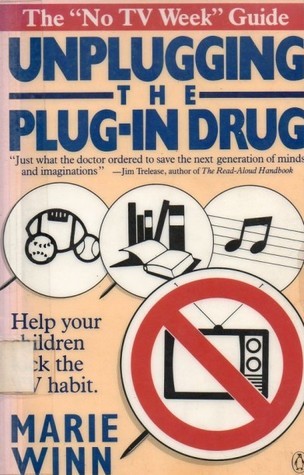
Marie Winn writes a column on nature and birdwatching for the Wall Street Journal. Married to the film-maker and palindromist Allan Miller, she spends part of every day in Central Park.
207 pages indexed. Buy this book. I watch way tto much television, probably yoo do do also. This book gives a reasonable arguement for trying to go a week without watching television. Sorry it also means not recording shows for later viewing. Marie Winn primary argument is that TV robbs the individual of time best spent doing other activities, such as talking with your spouse , kids, and maybe God. Her second arguement is that kids in particular become less creaative the more hours spent watching. Television becomes a subsitute for relationships. Television becomes the relation. Like any other drug withdrawing from TV comes at a price. Marie Winn has creative ways of easing withdrawl symptoms. Now if only I would follow her advise..
I read this because I’d begun suspecting, between TV and Netflix, I was watching that seductive box too much. This book is more about the effects on children and families but it still made me realize I do indeed have the TV on many hours of the day, even when I’m not paying attention to it. This book was written in 1985, before the multiple distractions of cable channels, cell phones, home computers and all those other electronic seducers. I won’t quit watching but will stop when I see I’m turning it on out of boredom.
After scaring parents about the effect of TV on their kids in "The Plug-in Drug", Ms Winn provides the roadmap to help them help their kids "kick the TV habit" with "no-TV week" etc. This is of course written before the Nintendo and internet and podcasting and You Tube era.