

What do you think?

Nipponia Nippon
A fast-paced, darkly ironic novella from one of Japan’s contemporary luminaries (and the husband of Mieko Kawakami), making his English language debut.
Perfect for fans of Earthlings by Sayaka Murata and Kawakami’s Breasts and Eggs.
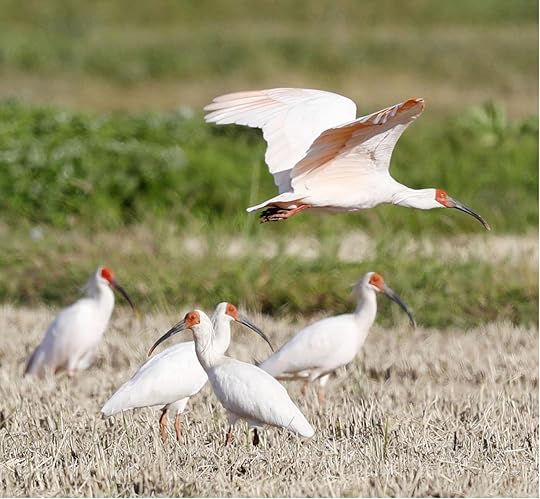
Isolated in his Tokyo apartment, 17-year-old Haruo spends all his time online, researching the plight of the endangered Japanese crested ibis, Nipponia Nippon.
Living on an allowance from his parents, he drops ever further into a fantasy world in which he alone shares a special connection with the last of these noble birds, held at a conservation centre on the island of Sado.
His conclusion is simple: it is his destiny to free the birds from a society that does not appreciate them, by whatever means necessary. With his emotional state becoming ever more erratic, he begins sourcing weapons and preparing for a reckoning in this darkly ironic study of toxic masculinity.
Perfect for fans of Earthlings by Sayaka Murata and Kawakami’s Breasts and Eggs.
Isolated in his Tokyo apartment, 17-year-old Haruo spends all his time online, researching the plight of the endangered Japanese crested ibis, Nipponia Nippon.
Living on an allowance from his parents, he drops ever further into a fantasy world in which he alone shares a special connection with the last of these noble birds, held at a conservation centre on the island of Sado.
His conclusion is simple: it is his destiny to free the birds from a society that does not appreciate them, by whatever means necessary. With his emotional state becoming ever more erratic, he begins sourcing weapons and preparing for a reckoning in this darkly ironic study of toxic masculinity.
160 pages, Kindle Edition
First published August 1, 2001
About the author
Kazushige Abe
26 books27 followers阿部 和重
Kazushige Abe is a film critic and award-winning writer.
Kazushige Abe is a film critic and award-winning writer.
Ratings & Reviews
Friends & Following
Create a free account to discover what your friends think of this book!
Community Reviews
Displaying 1 - 30 of 165 reviews

December 4, 2023
A quest of a hikikomori to find a final solution and give his life meaning goes south. Unsympathetic and isolated, crested ibises start to form an obsession to the protagonist
I’ll make everyone in this country regret tossing me aside
A fast read on a deeply unsympathetic, but also sad, main character. Haruo falls into internet rabbit holes and loses his way in modern day Japan, focussing all his efforts on the Nipponia Nippon, the rare and endangered ibises from the title.
Like many of his age, he was impatient with the world without understanding it and Haruo is a deeply troubled young man. He could be typecast as an incel, being a school dropout living alone in Tokyo on the stipend of his family while obsessing about Japanese ibises. They represent the nation but are also extinct, existing on Japanese soil by the sole grace of a Chinese branch of the species being loaned to Japan by China. Haruo forms an ill thought out plan to liberate the ibises, either by letting them escape or kill them. This disturbing plot is helped along by a facilitating mother and an absent father and nascent internet rabbit holes.
As the main character notes, the ibises which can’t survive on their own are a metaphor for the life of Haruo:
Like the crested ibises, I’m trapped in a cage, and if I stay cooped up like this, my life will steadily lose all meaning and all worth.
Hikikomori - isolated people who never venture outside - is a typical Japanese phenomenon, but in the end Haruo does venture outside. Moving from randomly beating up strangers to practice any eventualities in the ibis rescue mission, but most of all to feel powerful, he inches towards a final solution for the ibises. Along the way fantastical plots emerge (His thoughts soon took their usual, delusional turn) and the diary recordings of his days, specific seats remembered on Shinkansen and specific days commented upon make this story feel as much about being different and not being accepted by society, as a journey to the ibises. He comes further than expected and closer to real connections and redemption than imagined, but still this is not a happy tale.
An interesting read that comments on Japanese society, where the writer draws you very intimately into the disturbed perceptions of the main character.
I’ll make everyone in this country regret tossing me aside
A fast read on a deeply unsympathetic, but also sad, main character. Haruo falls into internet rabbit holes and loses his way in modern day Japan, focussing all his efforts on the Nipponia Nippon, the rare and endangered ibises from the title.
Like many of his age, he was impatient with the world without understanding it and Haruo is a deeply troubled young man. He could be typecast as an incel, being a school dropout living alone in Tokyo on the stipend of his family while obsessing about Japanese ibises. They represent the nation but are also extinct, existing on Japanese soil by the sole grace of a Chinese branch of the species being loaned to Japan by China. Haruo forms an ill thought out plan to liberate the ibises, either by letting them escape or kill them. This disturbing plot is helped along by a facilitating mother and an absent father and nascent internet rabbit holes.
As the main character notes, the ibises which can’t survive on their own are a metaphor for the life of Haruo:
Like the crested ibises, I’m trapped in a cage, and if I stay cooped up like this, my life will steadily lose all meaning and all worth.
Hikikomori - isolated people who never venture outside - is a typical Japanese phenomenon, but in the end Haruo does venture outside. Moving from randomly beating up strangers to practice any eventualities in the ibis rescue mission, but most of all to feel powerful, he inches towards a final solution for the ibises. Along the way fantastical plots emerge (His thoughts soon took their usual, delusional turn) and the diary recordings of his days, specific seats remembered on Shinkansen and specific days commented upon make this story feel as much about being different and not being accepted by society, as a journey to the ibises. He comes further than expected and closer to real connections and redemption than imagined, but still this is not a happy tale.
An interesting read that comments on Japanese society, where the writer draws you very intimately into the disturbed perceptions of the main character.

March 16, 2023
Acclaimed author Kazushige Abe’s story of self-delusion and alienation is presented in disconcertingly matter-of-fact tones. 17-year-old Haruo Toya has been exiled to Tokyo to live alone in a small apartment, after a series of incidents in his home town made him an outcast and object of suspicion. But his isolation provides a space for his fantasies to blossom into a dangerous, full-blown obsession. A chance link between the name of the rare Japanese crested ibis (Nipponia Nippon) and Haruo’s own suggests to him their destinies are entwined. And the circumstances surrounding an official project to breed these birds in captivity and rescue them from extinction spark a bizarre chain of associations for Haruo which tap into his conflicted thoughts and feelings about Japanese identity and nationalism. So Haruo hatches a plan about the birds that he believes will allow him to achieve his destiny and reveal his hidden greatness.
Abe’s novella was first published in 2001, since then stories about hikikomori and disaffected youth have become a familiar feature in Japanese fiction yet Abe’s unusual angle and his dispassionate style gave this an unexpected force. Abe’s taut, beautifully-paced narrative contains echoes of work by Mishima and Ōe, with a noir-ish quality I found utterly compelling. Deeply unsettling and satisfyingly complex. Translated by Kerim Yasar.
Thanks to Edelweiss and publisher Pushkin Press for an ARC
Abe’s novella was first published in 2001, since then stories about hikikomori and disaffected youth have become a familiar feature in Japanese fiction yet Abe’s unusual angle and his dispassionate style gave this an unexpected force. Abe’s taut, beautifully-paced narrative contains echoes of work by Mishima and Ōe, with a noir-ish quality I found utterly compelling. Deeply unsettling and satisfyingly complex. Translated by Kerim Yasar.
Thanks to Edelweiss and publisher Pushkin Press for an ARC

January 10, 2024
Abe playing games.................
I finished the book late at night, and then I stayed turning my head on the pillow, trying to understand the games Abe played in this one.
He plays with his words, giving us so much information about Haruo and the Crested Ibis, but then you realise that he is giving much but also witholding much. He also plays games with the reliability of the narrator he presents us with. Is this a fantasy? Is this really happening? Ok, let's go along with that, but then something happens, and we're back to square one. But most of all I think that Abe plays with how we can exchange the cause of the Crested Ibis (Nipponia Nippon) with any other cause and how we link ourselves to that cause and how we sort of start dictating how the people we are championing should behave. We take away their agency and start laying down rules because hey we support them.
A good book!
I finished the book late at night, and then I stayed turning my head on the pillow, trying to understand the games Abe played in this one.
He plays with his words, giving us so much information about Haruo and the Crested Ibis, but then you realise that he is giving much but also witholding much. He also plays games with the reliability of the narrator he presents us with. Is this a fantasy? Is this really happening? Ok, let's go along with that, but then something happens, and we're back to square one. But most of all I think that Abe plays with how we can exchange the cause of the Crested Ibis (Nipponia Nippon) with any other cause and how we link ourselves to that cause and how we sort of start dictating how the people we are championing should behave. We take away their agency and start laying down rules because hey we support them.
A good book!

October 8, 2023
The ending, wtf?!
It started off a little slow and repetitive but then it picked up and it started to allow you to see into the ‘toxic masculinity’ mind of the 17 year old main character. His lack of emotion towards everything was unsettling and the second half of the story had me gripped
It started off a little slow and repetitive but then it picked up and it started to allow you to see into the ‘toxic masculinity’ mind of the 17 year old main character. His lack of emotion towards everything was unsettling and the second half of the story had me gripped
Read
April 10, 2024It’s giving chaos, więc sama nie wiem jak mam ją ocenić..

October 24, 2023
A bird-obsessed incel! Weird!
This was ok. I found the pacing quite frustrating but it gets good once he really starts to lose it. The ending, as others have commented, is madness, but I kind of liked it.
This was ok. I found the pacing quite frustrating but it gets good once he really starts to lose it. The ending, as others have commented, is madness, but I kind of liked it.

December 14, 2020
Prima opera che leggo di questo autore giapponese: una esperienza catastrofica a dir poco! In breve la storia: un diciottenne giapponese si trasferisce a Tokyo e vive nell'appartamento preso in affitto da solo e in solitudine, dopo aver litigato con il proprietario della pasticceria, amico del padre, in cui aveva lavorato per poco tempo. Ben presto avrà uno scopo: andare in una riserva naturale e liberare o uccidere un tipo di uccelli, i Nipponia Nippon, degli ibis crestati, azione che lo renderà famoso per sempre (a suo dire). Praticamente tutto il tempo non fa che restare collegato al suo portatile in cerca di notizie di questi uccelli e dei modi in cui potrà elaborare il piano per compiere la sua "vendetta" o rivincita sociale (arriva addirittura ad acquistare on line un teaser elettrico e un coltello).
L'autore ha deciso di mettere come protagonista della sua storia un fenomeno molto diffuso in Giappone chiamati hikikomori, usato per riferirsi a coloro che hanno scelto di ritirarsi fisicamente dalla vita sociale in-persona, spesso cercando livelli estremi di isolamento e confinamento. Un giorno i suoi genitori vanno a trovarlo perché hanno saputo che non lavorava più e non solo non li fa entrare, poi ci ripensa e fa entrare solo la madre e la tratta come una schiava dicendole, ad un certo punto per togliersela di torno: ho deciso di riprendere gli studi (falso, visto che il suo scopo era soltanto quello di farsi dare la paghetta mensile per mantenere l'affitto e per le sue necessità).
Alla fine parte per questa missione (senza alcun senso a mio modesto parere) e conoscerà una ragazza che gli farà cambiare prospettiva e forse lo farà rinsavire? Sarebbe troppo bello, vero?
Ho letto recensione entusiaste su questo romanzo, ma sinceramente ho più volte avuto la tentazione di abbandonarlo per eccessiva noia, ma se volete farvi una cultura sugli ibis crestati Nipponia Nippon allora qualcosa la apprenderete. Certo leggere questa storia di un ragazzo che passa mesi e mesi rinchiuso dentro il suo appartamento senza incontrare anima viva forse non è molto indicato se si è da poco usciti dal secondo lockdown per il Covid-19, ma sinceramente lo avrei preso a calci nel sedere ad ogni pagina.
L'autore ha deciso di mettere come protagonista della sua storia un fenomeno molto diffuso in Giappone chiamati hikikomori, usato per riferirsi a coloro che hanno scelto di ritirarsi fisicamente dalla vita sociale in-persona, spesso cercando livelli estremi di isolamento e confinamento. Un giorno i suoi genitori vanno a trovarlo perché hanno saputo che non lavorava più e non solo non li fa entrare, poi ci ripensa e fa entrare solo la madre e la tratta come una schiava dicendole, ad un certo punto per togliersela di torno: ho deciso di riprendere gli studi (falso, visto che il suo scopo era soltanto quello di farsi dare la paghetta mensile per mantenere l'affitto e per le sue necessità).
Alla fine parte per questa missione (senza alcun senso a mio modesto parere) e conoscerà una ragazza che gli farà cambiare prospettiva e forse lo farà rinsavire? Sarebbe troppo bello, vero?
Ho letto recensione entusiaste su questo romanzo, ma sinceramente ho più volte avuto la tentazione di abbandonarlo per eccessiva noia, ma se volete farvi una cultura sugli ibis crestati Nipponia Nippon allora qualcosa la apprenderete. Certo leggere questa storia di un ragazzo che passa mesi e mesi rinchiuso dentro il suo appartamento senza incontrare anima viva forse non è molto indicato se si è da poco usciti dal secondo lockdown per il Covid-19, ma sinceramente lo avrei preso a calci nel sedere ad ogni pagina.

October 2, 2023
A bit of a disappointment. This is a short novel about a young man named Haruo with some unhealthy and obsessive tendencies. In the West, we'd probably call him an incel; in Japan, there's the term "hikikomori". After some vague bad business with a young woman in his hometown, he's sent off to Tokyo to live alone, where he becomes absolutely obsessed with the Japanese crested ibis (scientific name: Nipponia nippon), a species on the edge of extinction.
Simplicity is something I appreciate about Japanese literature. I don't know what it is--if it's a translation thing, or a cultural thing, or what--but most of the Japanese fiction I've read has a wonderful straightforwardness about it. Simple sentence after simple sentence, making a pure sort of story. Even when it gets really weird, like with Haruki Murakami or Sayaka Murata or Kobo Abe, each sentence seems pared down to its basic and most important parts in service of the story.
But there's a difference between simple and plain; this book feels rather plain. When you hear me say "this is a story about an incel obsessed with birds", you can already guess this whole story. There are no surprises here. I don't think this was based on a true story or person, but it feels a lot like a long form NYT article detailing how a disturbed individual ended up doing something rash. So while there's nothing very wrong with this book, there's also nothing about it that makes it stand out.
Simplicity is something I appreciate about Japanese literature. I don't know what it is--if it's a translation thing, or a cultural thing, or what--but most of the Japanese fiction I've read has a wonderful straightforwardness about it. Simple sentence after simple sentence, making a pure sort of story. Even when it gets really weird, like with Haruki Murakami or Sayaka Murata or Kobo Abe, each sentence seems pared down to its basic and most important parts in service of the story.
But there's a difference between simple and plain; this book feels rather plain. When you hear me say "this is a story about an incel obsessed with birds", you can already guess this whole story. There are no surprises here. I don't think this was based on a true story or person, but it feels a lot like a long form NYT article detailing how a disturbed individual ended up doing something rash. So while there's nothing very wrong with this book, there's also nothing about it that makes it stand out.

May 25, 2023
IM BAMBOOZLED, CONFUSED, IDK WHAT THE HECK IS THAT ENDING
A fatal obsession with the rare breed of Japanese crested ibises called Nipponia Nippon become the ultimate object of fascination of the young, impressionable 17 years old Haruo. Stemmed from the similarities of the kanji in both of their names, Haruo found solace or instant connection with the birds but his thoughts get progressively darker as his goal is to kill, breed or release the birds.
Being in the mind of a hikikomori (a shut-in) especially one with a vile obsession is disturbing to read. We learned about his detailed plans to capture the birds and ultimately wanting to kill the animals. The dissonant, disaffected, and straightforward tone of this narrative may deter you from feeling anything for Haruo but it's clever tonally as we are not meant to sympathize with him despite his difficulties in life with bullying and isolation, Haruo was a terrible kid and convoluted minds he has are pretty fked up.
Thank you to Edelweiss & Pushkin Press for the e-arc in exchange for an honest review
A fatal obsession with the rare breed of Japanese crested ibises called Nipponia Nippon become the ultimate object of fascination of the young, impressionable 17 years old Haruo. Stemmed from the similarities of the kanji in both of their names, Haruo found solace or instant connection with the birds but his thoughts get progressively darker as his goal is to kill, breed or release the birds.
Being in the mind of a hikikomori (a shut-in) especially one with a vile obsession is disturbing to read. We learned about his detailed plans to capture the birds and ultimately wanting to kill the animals. The dissonant, disaffected, and straightforward tone of this narrative may deter you from feeling anything for Haruo but it's clever tonally as we are not meant to sympathize with him despite his difficulties in life with bullying and isolation, Haruo was a terrible kid and convoluted minds he has are pretty fked up.
Thank you to Edelweiss & Pushkin Press for the e-arc in exchange for an honest review

April 26, 2026
I really appreciate Pushkin Press’ selection of Japanese novels. I am planning to read several of them and I started with “Nipponia Nippon” (ニッポニアニッポン) by Kazushige Abe, originally written in 2001. I thought it was really unique, novel in a way, and captivating from the first pages.
“Nipponia Nippon” tells a story of 17-year-old Toya Haruo, who moves from Yamagata to Tokyo and becomes a hikikomori and an incel, hating the world, taking advantage of his parents, while plotting a ridiculous plan. He wants to travel to Sado island and rescue a pair of created ibises (nipponia nippon), bred there in captivity, because he feels an affinity with the birds as they share the same kanji character as his surname. He gets enraged learning that the birds were a gift from the Chinese, and being a nationalist, he decides to kill them after freeing them. He gets the right weapons online, creates a plan but… obviously nothing goes as he wishes.
I found Haruo’s character very well developed. His weird logic, his obsession, his disdain for his parents and other people and his sense of entitlement were really well portrayed and made him, rightly, a very off-putting protagonist. The boy’s past, including dangerous stalking of a classmate he liked, and the way his parents let him be and become possessed by his delusions, while sending him monthly allowance, tell a lot about the dysfunctional way Japanese society and authorities deal with harassment, bullying and stalking. The boy is clearly dangerous to others and yet no one seems to care much. Nothing he does later redeems him - and what happens on Sado island is at the same time unbelievable and, because it is Japan, also very believable.
A truly gripping, unsettling and brilliantly created story. Kazushige Abe is privately a husband of Mieko Kawakami, and knowing this, I see their books as complementary.
“Nipponia Nippon” tells a story of 17-year-old Toya Haruo, who moves from Yamagata to Tokyo and becomes a hikikomori and an incel, hating the world, taking advantage of his parents, while plotting a ridiculous plan. He wants to travel to Sado island and rescue a pair of created ibises (nipponia nippon), bred there in captivity, because he feels an affinity with the birds as they share the same kanji character as his surname. He gets enraged learning that the birds were a gift from the Chinese, and being a nationalist, he decides to kill them after freeing them. He gets the right weapons online, creates a plan but… obviously nothing goes as he wishes.
I found Haruo’s character very well developed. His weird logic, his obsession, his disdain for his parents and other people and his sense of entitlement were really well portrayed and made him, rightly, a very off-putting protagonist. The boy’s past, including dangerous stalking of a classmate he liked, and the way his parents let him be and become possessed by his delusions, while sending him monthly allowance, tell a lot about the dysfunctional way Japanese society and authorities deal with harassment, bullying and stalking. The boy is clearly dangerous to others and yet no one seems to care much. Nothing he does later redeems him - and what happens on Sado island is at the same time unbelievable and, because it is Japan, also very believable.
A truly gripping, unsettling and brilliantly created story. Kazushige Abe is privately a husband of Mieko Kawakami, and knowing this, I see their books as complementary.

January 6, 2024
Nipponia Nippon is the Latin name for the for the Japanese Crested Ibis and trust me this is an important detail as it has a role to play in this wonderfully complex novella.
Haruo is a recluse due to the fact that he feels like he’s an outsider of sorts. While browsing the internet he comes across the Japanese Crested Ibis (or called heron in the book, so I will stick with that). This particular bird is endangered and has a Chinese equivalent and there were attempts to mate the species to Nipponia Nippon alive but this caused arguments about the bird’s heritage.
Not only does the heron represent Haruo but this is cemented further due to the fact that his kanji matches that of the heron. Further on in the book Haruo also discusses his heritage as he lives in a part of Japan which is not considered Japanese.
In order to ‘kill’ his spiritual animal/metaphor he decides to go to a bird park where there are herons and he has a grand plan for them. In the meantime the reader discovers more about Haruo’s life and some of his past decisions.
Nipponia Nippon is a novel which focuses on mental health in it’s many facets, from obsession, reclusive behaviour, depression and internet addiction and the heron manifests all of this. The book itself is clever and unpredictable in places.
I do know there are a lot of books about mental health but then the thrill is finding a novel which treats it in an interesting way and Nipponia Nippon pulls this off well: in 150 pages Kazushige Abe says a lot in a small space and surprise the reader continuously. Not many can do this so deftly.
Haruo is a recluse due to the fact that he feels like he’s an outsider of sorts. While browsing the internet he comes across the Japanese Crested Ibis (or called heron in the book, so I will stick with that). This particular bird is endangered and has a Chinese equivalent and there were attempts to mate the species to Nipponia Nippon alive but this caused arguments about the bird’s heritage.
Not only does the heron represent Haruo but this is cemented further due to the fact that his kanji matches that of the heron. Further on in the book Haruo also discusses his heritage as he lives in a part of Japan which is not considered Japanese.
In order to ‘kill’ his spiritual animal/metaphor he decides to go to a bird park where there are herons and he has a grand plan for them. In the meantime the reader discovers more about Haruo’s life and some of his past decisions.
Nipponia Nippon is a novel which focuses on mental health in it’s many facets, from obsession, reclusive behaviour, depression and internet addiction and the heron manifests all of this. The book itself is clever and unpredictable in places.
I do know there are a lot of books about mental health but then the thrill is finding a novel which treats it in an interesting way and Nipponia Nippon pulls this off well: in 150 pages Kazushige Abe says a lot in a small space and surprise the reader continuously. Not many can do this so deftly.

December 22, 2024
The masculine and less good version of his wife Mieko Kawakami’s book Heaven

May 19, 2023
Rating: 3.5
"Nipponia Nippon" is a novella that explores the dark thoughts of a teenager named Haruo. A slew of incidents during his teenage years involving an unrequited crush on a schoolmate and multiple bullying incidents drove Haruo to become a hikikomori who's obsessed with revenge. His convoluted idea of revenge comes in the form of either freeing or killing two captive birds from an extinct species being bred on Sado Island.
Fair warning: this book was pretty hard to get through mainly because you're thrown into the darkest thoughts of a hikikomori's mind, and it's not pretty at all. It's like reading about a teenager who's planning their shooting incident in a US school (if you'll pardon the comparison), except this is taking place in Japan. Much of the details are the same, otherwise; the only thing that surprised me was the fact that guns can easily be bought in Japan despite the country’s seemingly stricter regulations (but I guess it’s less surprising considering the recent assassination attempt on Japan's president). Even though there was a sad backstory to everything that led up to the conclusion, I couldn’t really empathize with Haruo throughout the book. I felt bad for him at certain junctures, sure, but at the end of the day, can one really justify the acts that Haruo finally decided upon? (I leave it up to the readers to digest this point once you’ve read it.)
Overall, this was a good read and provides some genuinely interesting insights into Japan’s politics, though it did feel like the author was pulling out statistics and facts just to shoehorn them into the narrative to form Haruo's motivations at times. The ending ultimately saved the narrative, or at least it did for me. Pick this up only if you’re in the right headspace and you’re up for a dark and unsettling read.
"Nipponia Nippon" is a novella that explores the dark thoughts of a teenager named Haruo. A slew of incidents during his teenage years involving an unrequited crush on a schoolmate and multiple bullying incidents drove Haruo to become a hikikomori who's obsessed with revenge. His convoluted idea of revenge comes in the form of either freeing or killing two captive birds from an extinct species being bred on Sado Island.
Fair warning: this book was pretty hard to get through mainly because you're thrown into the darkest thoughts of a hikikomori's mind, and it's not pretty at all. It's like reading about a teenager who's planning their shooting incident in a US school (if you'll pardon the comparison), except this is taking place in Japan. Much of the details are the same, otherwise; the only thing that surprised me was the fact that guns can easily be bought in Japan despite the country’s seemingly stricter regulations (but I guess it’s less surprising considering the recent assassination attempt on Japan's president). Even though there was a sad backstory to everything that led up to the conclusion, I couldn’t really empathize with Haruo throughout the book. I felt bad for him at certain junctures, sure, but at the end of the day, can one really justify the acts that Haruo finally decided upon? (I leave it up to the readers to digest this point once you’ve read it.)
Overall, this was a good read and provides some genuinely interesting insights into Japan’s politics, though it did feel like the author was pulling out statistics and facts just to shoehorn them into the narrative to form Haruo's motivations at times. The ending ultimately saved the narrative, or at least it did for me. Pick this up only if you’re in the right headspace and you’re up for a dark and unsettling read.

June 2, 2025
3.5 rounding down to 3 - there was actually a lot I really enjoyed here, I love a deep character study, especially when it seems when it focuses around incels and their mentality. The main character here, Haruo, was done very well and convincingly, which is why some of the dark humor at play here was made even more effective, because some of the scenarios and situations, thought processes, are SO ridiculous, they couldn't be real, but the character is so similar to ones we've seen before that it's quite horrifying to see this could be anyone around where we live.
Beyond the character deep dive, and the rather funny/unique premise of him being obsessed with these birds (and his reasons for being obsessed were also incredible), I thought the novella ended up being a little on the shallow end, as there are many unnecessary descriptions of how much things cost or what the stops are to get from point A to point B. The other characters aren't developed anywhere near well enough and one character introduced at the end was completely unnecessary. The actual ending itself, the final two pages, also did nothing for me.
Strong basis here, felt too rushed and under-developed. But there is a lot to take from this and I would recommend it overall.
Beyond the character deep dive, and the rather funny/unique premise of him being obsessed with these birds (and his reasons for being obsessed were also incredible), I thought the novella ended up being a little on the shallow end, as there are many unnecessary descriptions of how much things cost or what the stops are to get from point A to point B. The other characters aren't developed anywhere near well enough and one character introduced at the end was completely unnecessary. The actual ending itself, the final two pages, also did nothing for me.
Strong basis here, felt too rushed and under-developed. But there is a lot to take from this and I would recommend it overall.
May 25, 2025
maybe rather 3.5 stars but addicting read so maybe 4?
this is about way more than just birds. this is about globalization, about cultural heritage, about preservation of culture and the means and ethics of doing so.
as well as a teenage boy trapped in toxic ways of thinking, not being able to escape a certain image of what kind of man he thinks he has to be, protector, avenger, judge. spiraling into taking desperate measures that seem perfectly justified in his version of the world.
I enjoyed reading this on this a rainy spring weekend, bundled up all cozy, procrastinating my studies.
this is about way more than just birds. this is about globalization, about cultural heritage, about preservation of culture and the means and ethics of doing so.
as well as a teenage boy trapped in toxic ways of thinking, not being able to escape a certain image of what kind of man he thinks he has to be, protector, avenger, judge. spiraling into taking desperate measures that seem perfectly justified in his version of the world.
I enjoyed reading this on this a rainy spring weekend, bundled up all cozy, procrastinating my studies.

February 6, 2024
3.5 rounded up.
Huh. Not sure how to feel about the ending..?
Let’s be honest, I mainly bought this for the cover.
Took me a while to get into it, but the second half had me hooked!
Huh. Not sure how to feel about the ending..?
Let’s be honest, I mainly bought this for the cover.
Took me a while to get into it, but the second half had me hooked!

June 1, 2025
17 year old Haruo lives by himself in Tokyo after having to leave his hometown. He spends his time on the internet and becomes obsessed with some rare ibises and decides to “rescue” them, even if it means he has to kill them.
I expected a coming of age story gone wrong. This is not that. Haruo is incredibly unlikable when I think he didn’t have to be. He was just 100% asshole, all the time, even though the omniscient narrator (that was quite funny at times) could have shown us some redeeming qualities, anything.
It gave me anxiety for the birds until the very end (spoiler: no birds were harmed).
In the end it’s a story about how young people get radicalised by the internet (see incels, red pill content etc.) and how Japanese culture and the parent generation tries to NOT deal with it instead of facing it. It was surprisingly violent and for a bit it hit but then came the —SIKE—ending and kinda took it all away?
Unless you are particularly interested in reading about what this particular cultural phenomenon could look like in Japan (and even then I think there must be other books dealing with this in a more nuanced way) I would not really recommend it. If you do need a break from soul healing magic library cats and are ready to see that Japan is NOT the land of milk and honey where everyone is super nice, maybe give it a go for diversity. It is not a bad book but it also did not blow me away.
I originally gave it 4 stars but looking back I think 3.5 is plenty. Did not change my life, thanks.
I expected a coming of age story gone wrong. This is not that. Haruo is incredibly unlikable when I think he didn’t have to be. He was just 100% asshole, all the time, even though the omniscient narrator (that was quite funny at times) could have shown us some redeeming qualities, anything.
It gave me anxiety for the birds until the very end (spoiler: no birds were harmed).
In the end it’s a story about how young people get radicalised by the internet (see incels, red pill content etc.) and how Japanese culture and the parent generation tries to NOT deal with it instead of facing it. It was surprisingly violent and for a bit it hit but then came the —SIKE—ending and kinda took it all away?
Unless you are particularly interested in reading about what this particular cultural phenomenon could look like in Japan (and even then I think there must be other books dealing with this in a more nuanced way) I would not really recommend it. If you do need a break from soul healing magic library cats and are ready to see that Japan is NOT the land of milk and honey where everyone is super nice, maybe give it a go for diversity. It is not a bad book but it also did not blow me away.
I originally gave it 4 stars but looking back I think 3.5 is plenty. Did not change my life, thanks.

July 13, 2018
Se questo è un romanzo minore di Kazushige, spero vivamente di mettere prima o poi le mani su suoi titoli di punta.
Non lo dico solo perché ricollegandosi alla letteratura giapponese del Novecento (che io amo moltissimo), di fatto è come se "cancellasse" l'opera di rottura dei due Murakami (Ryu e Haruki).
Lo dico perché il parallelo con uno dei titoli più celebri di Yukio Mishima, Il padiglione d’oro, è affascinante e inscrive il fenomeno degli hikikomori in un malessere secolare che non riguarda (solo) la tecnologia, ma l'essere giovani uomini giapponesi.
Entrambi i romanzi infatti ruotano attorno all’ossessione distruttiva di un giovane uomo nei confronti di un simbolo stesso dell’identità giapponese. Là c’era un tempio noto per la sua bellezza odiato ferocemente da un monaco tormentato dalla propria bruttezza, qui abbiamo un giovane che sviluppa un’ossessione insana per gli ibis crestati, una rarissima specie di uccelli che sin dal nome scientifico (nipponia nippon) denuncia il proprio legame con il Giappone.
Peccato sul finale gli sfugga un po' di mano, ma rimane comunque il titolo letterariamente più alto e intrinsecamente più giapponese di questo nuovo corso di edizioni e/o. Forse per questo anche quello dal pubblico più ristretto.
Non lo dico solo perché ricollegandosi alla letteratura giapponese del Novecento (che io amo moltissimo), di fatto è come se "cancellasse" l'opera di rottura dei due Murakami (Ryu e Haruki).
Lo dico perché il parallelo con uno dei titoli più celebri di Yukio Mishima, Il padiglione d’oro, è affascinante e inscrive il fenomeno degli hikikomori in un malessere secolare che non riguarda (solo) la tecnologia, ma l'essere giovani uomini giapponesi.
Entrambi i romanzi infatti ruotano attorno all’ossessione distruttiva di un giovane uomo nei confronti di un simbolo stesso dell’identità giapponese. Là c’era un tempio noto per la sua bellezza odiato ferocemente da un monaco tormentato dalla propria bruttezza, qui abbiamo un giovane che sviluppa un’ossessione insana per gli ibis crestati, una rarissima specie di uccelli che sin dal nome scientifico (nipponia nippon) denuncia il proprio legame con il Giappone.
Peccato sul finale gli sfugga un po' di mano, ma rimane comunque il titolo letterariamente più alto e intrinsecamente più giapponese di questo nuovo corso di edizioni e/o. Forse per questo anche quello dal pubblico più ristretto.

December 11, 2023
An incel terrorist is jealous that birds are banging and he's not :(
I was hoping for more of a quirky fun bird spiral but got almost like a manifesto which also had some commentary on China/Japan/nationalism and masculinity that didn't get super fleshed out.
Was a fine time but not sure this would make me pick up more from the author - maybe this is for the Murakami stans?
I was hoping for more of a quirky fun bird spiral but got almost like a manifesto which also had some commentary on China/Japan/nationalism and masculinity that didn't get super fleshed out.
Was a fine time but not sure this would make me pick up more from the author - maybe this is for the Murakami stans?
August 30, 2023
am so over reading these incel-y books disguised as a different story. in this case the birds metaphor was interesting but like really this was just a sob story for the main character who hates the world bc he couldn’t sleep with the girl he was stalking…?and the ending makes no sense like bffr

November 22, 2020
Bon... c'est un acte manqué dans ma découverte de cet auteur (je tenterai peut-être Sin Semillas plus tard, cela dit). Je suis pas certaine que la traduction mette vraiment en valeur sa plume ou si celle-ci est de base assez lourde et austère.
En tout cas, je ne retiendrai pas grand-chose malheureusement de cette jeunesse japonaise, incarnée par son personnage principal, désabusée, en marge, et qui, perdant tout sens des réalités et de liens sociaux, en vient à tous les extrêmes.
Toute la fiction n'est pas mauvaise, notamment dans le torticolis opéré autour de la psyché du narrateur. Ça reste cependant assez fastidieux dans l'ensemble.
En tout cas, je ne retiendrai pas grand-chose malheureusement de cette jeunesse japonaise, incarnée par son personnage principal, désabusée, en marge, et qui, perdant tout sens des réalités et de liens sociaux, en vient à tous les extrêmes.
Toute la fiction n'est pas mauvaise, notamment dans le torticolis opéré autour de la psyché du narrateur. Ça reste cependant assez fastidieux dans l'ensemble.

March 8, 2024
Don’t think this one was for me. I get that it was a discussion on toxic masculinity and violence but the plot felt really muddled and I never fully felt like I was into it. The main characters intentions just seemed like they didn’t make full sense. It had a slight Patrick Bateman feel to it at times but not enough to sustain the character through the entire thing, and there were bits of the writing like comparing a knife in someone’s stomach to an erect penis which just threw me off.
The ending was really cool but think it saved the whole experience of the book. It wasn’t bad or anything just don’t think it fully achieved its goal for me .
The ending was really cool but think it saved the whole experience of the book. It wasn’t bad or anything just don’t think it fully achieved its goal for me .

January 28, 2024
Some bits were slow, but an exciting story about an unhappy teenage boy who decides to do something big and violent to make a point. He is upset he has been banished to Tokyo for stalking. He has already disrupted the"script written by humans." So he decides to do something heinous. The novel propelled me along and culminated in a pretty dark ending that felt worth it.

September 17, 2023
??? Kurde ale to było fajne, mimo że totalnie nie rozumiem końcówki
Its giving mishima in the best way possible
Its giving mishima in the best way possible

May 7, 2024
Gripende karakter på en veldig trist måte. Du skal tåle en del forskingstekst for å komme deg igjennom, men den er mørk og tidvis morsom.
The ending has me absolutely baffled, and not necessarily in a good way. Kan hende det vokser på meg
The ending has me absolutely baffled, and not necessarily in a good way. Kan hende det vokser på meg
December 22, 2024
that was. weird
January 19, 2026
short read that caught my attention from beginning to end. liked how the author did not make the main character likeable at all, which was really different from almost all books I've read. unique, except I didn't quite like the ending. felt like it could've ended much more daringly/there was so much potential to it gone wasted? but maybe that was the author's intention

Read
February 18, 2024What in the actual

July 15, 2018
Ne parlo su Youtube: https://www.youtube.com/watch?v=pkNQ9...
December 17, 2022
im sorry but this was so boring to read 😭 pages upon pages of google searches and articles that the protagonist reads...i get why the author did it but it was still so boring to read 😭 also and thats just my personal taste but im not a fan of stories about men who commit heinous things i dont get much out of them. rip sakura you deserved better!
Displaying 1 - 30 of 165 reviews