What do you think?
Rate this book


416 pages, Mass Market Paperback
First published January 1, 1988
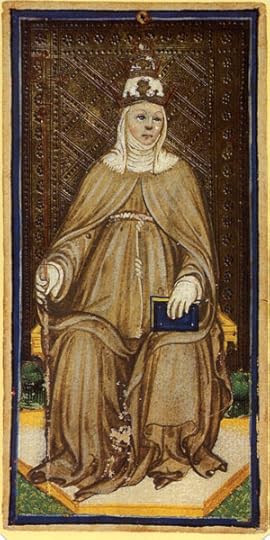
Still, if we want to account for the unity that subsumes the very different uses of this episode, we will have to accept the idea that a metastasis of meaning (the various uses) develops from a nucleus that is not directly signifying (do I dare say, that is unconscious?), always present in the name of the popes but never expressed. That structure (an unknown nucleus and metastases of meaning) takes us away from myth, which is a perfectly explicit statement; a permanent, founding narrative that is reactivated metaphorically along the same lines as its original meaning.Sknzzxxxxzzzzz… wha- what? I'm awake. Why? Did he call on someone?
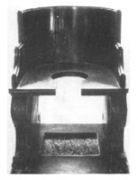 , and that's where Boreau begins his inquisition. Why would would-be popes be made to sit ceremonially on these toilet lids? For aesthetic reasons (who doesn't appreciate orange marble)? Because of the chairs' ties to an official antiquity? Just to check the new pontiff for pontificals? Did they in fact serve any purpose, or were they just vestiges of prior ritual whose ultimate significance had long been forgotten? Over a thousand years later, how are we to know?
Enough of this series of analogies, which are endless and perhaps senseless. To continue on this path is to risk finding all the reasons in the world to situate John, the Englishman from Mainz, in 854, thanks to a cancerous proliferation of microcausal cells that coagulate without any articulation among them. Contextual causality, that peril to historiography, begins here. Its ravages are obvious to anyone who cares to peruse school textbooks for the "causes" of the French Revolution in 1789 or of World War I in 1914: everything converges, hence nothing is explained. The event disappears under layers of a context that exists only by reason of the event.