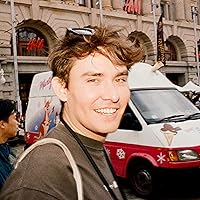
The original Ritalin kid, Harmony Korine burst on the scene with Kids, a film so gritty and unsettling in its depiction of teen life that it was slapped with an NC-17 rating and banned in some theaters across the country. In some ways, the media frenzy over the rating overshadowed the harrowing portrait of teenagers destroying their lives and the then twenty-one-year-old screenwriter who created them. "Whether you see the movie as a masterpiece or as sensationalism," wrote Lynn Hirshberg, "the movie is relentless and brilliant and extremely disturbing. It's powerful-both steel-eyed and sexy; horrifying and captivating."
Now, in this first book of fictional set pieces, Korine captures the fragmented moments of a life observed through the demented lens of media, TV, and teen obsession. Korine reinvents the novel in this highly experimental montage of scenes that seem both real and surreal at the same time. With a filmmaker's eye and a prankster's glee, this bizarre collection of jokes, half-remembered scenes, dialogue fragments, movie ideas, and suicide notes is an episodic, epigrammatic lovesong to the world of images. Korine is the voice of his media-savvy generation and A Crack-Up at the Race Riots is the satiric lovechild of his dark imagination.
Best known both as the writer of films "Kids" (1995) and "Ken Park" (2002) and as the director of films "Gummo" (1997), "julien donkey-boy" (1999), and "Mister Lonely" (2007), Harmony Korine has been deemed as the "enfant terrible" of modern independent dramatic film. Raised in Nashville, Tennessee, the son of PBS cinematographer Sol Korine spent many of his days at revival theaters, drawing vast inspiration from a wide variety of envelop-pushing filmmakers. After reaching a break-through opportunity as a screenwriter for Larry Clark's first highly controversial film "Kids" in 1995, Korine quickly became viewed as one of America's most bizarre and inventive creative entities, especially with the release of his directorial debut "Gummo" in 1997 and the publication of his first novel, "A Crackup at the Race Riots," the following year. He has earned the recognition and respect of Werner Herzog, Gus Van Sant, Jean-Luc Godard, and others.
Since his rise to fame (or infamy), Korine has expanded his horizons in film, literature, art, music, and tap-dancing. He has directed several music videos, commercials, and David Blaine television specials; Korine has also hosted numerous exhibits of his art and photography. Currently, the man continues to release published screenplays and fanzines while caring for his wife Rachel and his son Lefty.
For a couple of years this was my favorite book of all time. Even today I can't help but get excited when reading it. Harmony Korine's book has no flowing narrative. Instead this book is a collection of a bunch of seemingly random things. Such as strange lists:
Titles of Books I Will Write: 1. A Life WIthout Pigment 5. Gentle Jesus and Drugs 21. Diary of Anne Frank part 2
Rumors 4. Ray Bradbury had scoliosis 12. G. G. Allin voted for Jimmy Carter 18. Johnny Rotten collects baseball cards 21. Tom Petty has a dirty fish tank
Then there is the section of 11 different suicide notes (each one ending with a blank line for a signature). The different letters written by Tupac to his mother. He includes random poems, pieces of dialogues, notes added in handwriting, pictures, and more. Even though this book seems random and without direction, this book has many red threads of commonality running through it. In many ways it is like a companion piece to his film Gummo (for they both have that scattered feel). In the end the books is really a reflection of the American landscape. Korine is reacting to/remarking on many different aspects of our culture such as racism, homophobia, drugs, depression, celebrity obsession, satanism/religion, and ADD. His approach is different but perfectly appropriate given the subject matter.
Throw almost every traditional aspect of literary fiction out the window. The results will barely prepare you for this mess of a book, written by none other than divisive arthouse filmmaker Harmony Korine. I am definitely something of a fan of the man’s work; as a matter of fact, his directorial debut Gummo remains one of my favourite movies of all time. This book is somewhat similar to Korine’s more avant-garde films, but I think it’s fair to say that it takes his unconventionality and unhinged insanity even further, if you can believe it.
As expected from the eccentric Korine, A Crack-Up at the Race Riots is an absurd and experimental trip that feasts gleefully upon the utterly bizarre. It is not even remotely close to being a novel, and nor is it a short story collection or a collection of poetry. Instead, it is comprised of lists, dialogues, letters, flash fiction, and plenty more. Everything is at once extremely deadpan and wackily zany. Throughout, Korine is having a ball telling jokes and making up some of the most unexpected and ridiculous little scenarios and condensing them into phrases. It’s funny throughout, but there is also a great amount of dark, disturbing, and disgusting content. Sometimes this content is intermingled with the humour, other times the book just features an entry that is straight up dark and has you waiting for a punchline that never comes. In the middle of the book, there is a series of fictitious suicide notes and they brilliantly showcase both the black comedy of the book as well as its generally disturbing and seemingly disturbed nature.
It’s by no means anywhere near perfect. It’s not something I would call “great,” it doesn’t come close to matching the quality of my favourite entries in Harmony’s overall oeuvre, and yet it remains a rather entertaining read with many spurts of brilliance and hilarity. From page to page, the book is filled with seemingly boundless surprises.
My verdict, considering Korine is one of my all-time heroes - It's... okay. Far from his best work and probably for completionists or enthusiasts of avant-garde literature. He had, and would go on to make much greater things. I'll fight anyone who'll try and tell me that Harmony is just weird for the sake of being weird, but I can't fault anyone for getting that impression from this book. If you're already used to bizarre things then this will just be another one of those things.
I'm just not sure if his voice translates well into the novel format. Even in print most of this feels like it strives to be an image moreso than a piece of writing. There are however moments of excellence though - specifically the fragments detailing Tupac and suicides. And apart from that, this book as a whole is fun nonetheless, if you need a quick fix of weird and have a juvenile sense of humor.
Another thing - I like to look at this book as a fragment of a time in culture where enfantes terrible and weirdos like Harmony actually had some kind of space in the mainstream. Remember that at least one person on Letterman's crew had to suffer through this book. That shit would never happen now.
This is a review of a book that is incapable of being reviewed, simply due to how it reads differently every time I return to it. Much like Korine's filmography, A Crackup at the Race Riots teeters between the liquid narrative embedded into the page and the imagery the reader can't help but be possessed.
Besides, if you think about it, every fragment is a scene in someone's life.
i've read this a few times now and i think i love it. it's fantastic and terrible. it's beautiful, if you're willing to see the beauty in our ugliest parts.
harmony korine also writes and directs movies. 'kids' and 'gummo', anyone? it's my projection that if you like his film work you will like this book, and if you do not like his film work you will not like this book at all.
for practical purposes, this book is "a sequence of half-remembered scenes, suicide notes, dialogue fragments, movie ideas, rumors, and jokes." (quoted from the back of the book)
this book is uncomfortable. there's a lot of anger and aggression here. there's a lot of sadness and vulnerability here. harmony's descriptions are so vivid and unforgiving. he deals with some pretty intense subject matter. there are passages that are late night scrawl when you're alone and hide where know will see, and they almost make you feel like you shouldn't be reading. there are passages that will make you laugh and you will feel like you shouldn't be laughing.
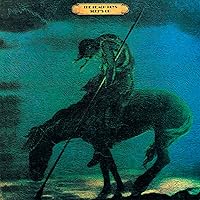
my friend jeff's review said it well - there are things in life that are worth just observing. observe this and swish it around in your mind. enjoy the funny looks that you will get in public for reading a book with a burning cross and bunnypeople on the cover.
yr mileage will definitely vary on this one, feels a lot like korine’s early films as it’s mainly a collection of short vignettes, lists, script fragments, suicide notes, drawings, etc. concerned mainly with exposing the ugly and hateful side of american culture. found a lot of it very interesting but also some parts i think went too far.
Entre o sucesso adquirido como roteirista de Kids e diretor de Vida sem Destino, Harmony Korine teve tempo de escrever uma inclassificável coleção de cenas, pensamentos, listas, obituários, notas, e mais um sem número de passagens que revolvem em torno do mesmo universo de seus filmes: a América branca, marginal, violenta, racista, sexualmente confusa e que ainda acredita nos sonhos da 'terra livre'. Geralmente tido como uma coleção de contos, 'Crackup' me soa mais como um romance em primeira pessoa, descrito no mais radical fluxo de consciência; talvez uma criança pulando por canais de tv que não deveria estar assistindo, talvez um esquizofrênico vasculhando os cantos mais soturnos de sua mente. Como tudo aquilo que Korine faz como cineasta, é sujo, bem-humorado (para quem consegue se aproximar desse tipo de humor), e sobretudo seguro da própria aleatoriedade.
Harmony Korine has recently fascinated me as an individual. I've seen 3 of his films, and after watching his last interview with David Letterman while he was high out of his mind on Youtube, I couldn't help but be curious as to what goes on in that fucked-up brain of his. I was absolutely elated the moment I was able to find this book, because its currently out of print. I enjoy it because of how pieced together it is. It reflects Korine's indifference with being conventional just by how it's put together, yet it is most likely on purpose because he has that same collage-esque quality he uses to create his films. Another reason why its an awesome read is because you can pretty much flip to any page that you want and just read tidbits of it that interest you (which was, for me, most of it). It's like Naked Lunch in that sense. It's weird, yet alluring because it's weird. If you have a vulgar or semi-vulgar sense of humor, you'll be very amused. It's nonsensical and gives you the most arbitrary information and stories about people you wouldn't even think of and probably never heard of.
You also get to read a letter Tupac wrote to a fan, compared to one he wrote to his mother, which was pretty amusing.
similar to korine’s films, this comes dangerously close to feeling ugly and offensive just for the sake of offending, but then you find a tenderness underneath the filth or find yourself laughing at one suicide note after another and you’re like ohhhh yeah this is why he’s the 🐐
"Sometimes I claim to know a guy but I can't tell you what his hands look like" - Yoni Wolf.
But hey, it's always better to regret what you've said than never say it, right? Haha, cheers R______ - great! I too will respond alike with random shit! His feeling was that something animalistic had taken place, perpetrated by a beast- So, kudos!
Hot and shining metallic cy lindrical arms connected to the wells to the juice.
Fist time I've been to one- so weird: there's nothing but sea all around, interrupted by one or two other platforms on the hori zon (story in there somewhere :D) First light on a new day as a freak hog.
"mingling like flying ants around their mouse-sized queen" The adventures of pigfoetus and Beetlemuncher!! :) :) I suspected you were a fellow contrarian :) "Stay calm: you have been prepared for this" and drop them on their heads... No one deserves leakiness.
... Staff sergeant! HAnging in a delicate dance they swayed and spoke to him: 'I dance they swayed and spoke to him: 'I wish I had a burning belt', they said. I hate when strangers prove themselves all over you!!
I love a good finger fit. YOu have been reduced to using tiny font? Gradually letters like laser beams appeared in the air, briefly at first, fading in and out as wafts of the mists touched their surface.
Have you seen Synecdoche, New York? Dex trorse torsion and rhysomes-_- Please no more Cows.
B___ uses some weird words, so does Leo, things get real. He was a tall, slender man in the darkest of coats, which made him appear like a shadow with a leathery head. just write METAPHOR HERE Simone stepped out of shadow hol ding a smal wooden box decorated with intricate geometric designs. Actual adult is a myth. I love Bill Murray. And I'll probably have completely contradictory opinions on it all tomorrow.
It's as the woman says at the beginning, yes it is harsh, but it's true, and very beautiful. Now get that fucking scampi out of my
face. Ohjeez, I just went a bit bonkers on the working class inferiority bus. If you want the opinion of a faux Norwegian hermit. My blood from a diamond. Be kind, black humour and party!! Moral of the story: if your life is crappy and alienated become a sociopath. The case of Robertson vs. fish continues. I wanted to cry, and puke. This is tough. This is tough (insert words of wisdom here) Apologies: this is tough v 2.0 - but unbelievably fucking worth it. And led me your way- so yay!
Night time ours are between morning and all effing day for maximum sparkler effect :D that's edutainment! I'm already dead and my ghost can type! Cheers again for checking in, platonic writing companion!! When I think of Shia I always imagine him in a tutu. I though I had more of a point but it came out in a freeform ramble.
That thing you've been banging on about- that it's worth it, totally, completely, utterly- you're actually right, dagnammit :) Yeah, it appears that every bit of writing is a new puzzle to be solved unto itself. Today the girl was caught in sunlight, her body arched on baked earth.
Cut-up platonic love letter between two internet buddies, 2014-2014
A really interesting read that makes you feel like you're losing your mind after 15 mins. It's clearly a book written by Harmony Korine. Really amusing at parts but gave me several moments of visceral disgust and anxiety (which isn't always bad).
The book does all come together as a kind-of narrative only after finishing every entry. The "I don't give a fuck" attitude seems a bit forced at certain parts, but you can appreciate that in 1999 this book would have been a lot wilder to read. Maybe as time goes on this content won't shock anyone.
"The book is called, 'A Crackup at the Race Riots.' Harmony Korine wrote it, although he can't really recommend it." -- David Letterman
To me, there is something majestically and inarguably captivating about this first novel from the so-called "enfant terrible" of dramatic independent film. Its synopsis states clearly that no plot, linear narrative, character development, or scene setting exists. Everything is somehow connected though, as each and every page investigates and/or muses upon the fractured leftovers of everywhere and everyone on this planet. Korine perfectly presents "a novel setting about the bastard wisher" with a pure, refined combination of pulchritude and putridity. Throughout his entire career, Harmony Korine has managed to turn the beautiful and the ugly into each other simultaneously, thus, allowing those who willingly acknowledge his work to possibly find some sort of new meaning within life. I personally believe that pages 6 and 175 serve as bookends that connect and complete all that lies between them. T.S. Eliot's words accidentally anthropologically endorse Korine both as a novelist and as a person. The paragraph of text that ends the book serves a very similar purpose. Most people have deemed "A Crackup at the Race Riots" as a literary companion piece to "Gummo," but moreover, this novel is actually a companion piece to everything that Harmony Korine has created (or destroyed).
My only possible complaint would be that the book may end up being read with lightning-speed by any diehard fan of the author. Otherwise, "A Crackup at the Race Riots" is an essential collection for those who either appreciate or despise how Korine has developed an ultimate portrait of omnipresence.
Harmony Korine has once again become the man of the hour following the release of "Spring Breakers" in which he directs James Franco and a cadre of Disney princesses against a Skrillex score into a neon underground of debauchery. There is much to say about this film, "Spring Breakers" - primarily it begs the question of which cast members were "in" on the satire of contemporary American youth consumption culture. (However, to seek the answer to this question presupposes that the inquirer accepts that this film is more than the sum of its parts, which, judging by recent backlash and criticism of "pro-feminist" claims by the director, is not guaranteed.)
That said, it is hard to imagine that any of the now deflowered Disney princesses were unaware that they would be subverting their pristine reputations by participating in "Spring Breakers" were they to read "A Crackup at the Race Riots." Korine has long been studying America's empty parking lots and strip malls, and has been idolizing fallen angels and tragic consequences. His book - available as a pdf online - is a disturbing glimpse into the America that cannot be packaged into a reality program, and into the complexity of human sorrow. For those who question whether there is anything of merit in Korine's films I suggest a perusal of "Crackup" - it will grant the reader/viewer with a platform upon which to accept his visual homages, motifs, and satire.
After being a big fan of 'Gummo' and finding Korine's cinematic work to be a massive inspiration when it comes to my own writing...I wasn't really sure what to expect from a novel of his, and I'm glad I didn't. Suicide letters, rumours, scenes, doodles and film titles make up this book and while it was first a little difficult to get into, the novelist in me seeking some form of typical structure, it only took a couple of turns of the page to delve into the book and get absorbed in the frenetic changing of setting and character that occurred in every new paragraph and, often, every new line. Apologies to my housemates for having to listen to me reading out strange little sections that took me by surprise, for it's the kind of writing you feel like you really need to share to make sure it's real and not just a hallucination caused by not having left the house in four days.
This is a book I know I'm going to flick back to while continuing to write my own work not only as a source of inspiration when it comes to the characters and the worlds that I'll create but also as a reminder that the rules we've been taught about what makes a "great" piece of fiction really don't exist at all. When it comes down to you and the page, you can create whatever you want, whether that's an epic novel with Aristotelian structure, a collection of short stories or some of the strangest scenes and one-liners you've ever read in your life. Do what you want! Ah, the freedom! Love it.
I thought the book was a novel, at first, then realized quickly it wasn't, that it was more compendium hastily and sloppily arrived at than a careful selection arranged by an unstated artistic purpose. The book felt very zine-like, a gathering meant to shock and spur, a punk-like contempt within its many furies. When I learned that Korine had indeed written and published a series of zines this book made more sense to me, as an expressive experiment. Those of you who know Korine for his brilliantly strange, disruptive and disturbing movies will find this book familiar. At times it reads very much like a filmscript in the process of being made more final, an unrevised nightmare on the way to a greater concision. If you enjoy Lynch, and maybe Richard Brautigan -- if you enjoy Brautigan's play with innocent forms -- then this book might interest you. It is a book filled with a great deal of space. You'll read it in an afternoon.
The thing about Harmony Korine is that he isn't a good storyteller. He doesn't try to be. He's not crafting intricate tales full of characterization, tragedy, and wit. He tries to make art, and at times he succeeds, but the entirety of his niche is the presentation of situational dysfunction relying on the sensibilities of the reader.
He tries to disgust the reader with images of physical/social transgression but in doing so completely removes the heart of the topic, and we move no closer to the issue at hand.
This is not a book or a story or even an interesting ensemble of random dadaeque “scenes.” This is shit. I don’t know how else to describe it and I’m open to experimental literature, iconoclastic satire, and absurdism. I saw an interview of the author as a young man on Letterman. It popped up on my YouTube feed. I thought it might be interesting. Now I’m merely $10 poorer and can’t get back the time I wasted waiting on this assemblage of words (and images) to do something other than try to shock me. It didn’t even achieve that.
basically it's a novel-length adaptation of like the most conked-out of his david letterman interviews, except without the endearing delivery which makes the david letterman interviews fun to watch. it's just 200 pages of intensely edgy and mostly nonsensical jokes which translate poorly to the written word. i think i would probably have liked this in ninth grade though.
well that brings weird to a whole new level I really like Korine and think that he's one of the best directors ever this book that he wrote isn't really anovel just like his movie gummo isn't really a movie it's pieces of cracked up stories that will consume you one of the gloomiest people ever you can't but love him
One of those gems that seems less and less in left field with every passing year. it kind of seems like the print version of some ironic art school hipster's blog now, yet when it came out, no one really understood it.
This guy has no talent. He got extremely lucky with Gummo, so much that he probably realized he'd better make a conventional film in Spring Breakers while his name was still slightly relevant. He's worse as a writer than a filmmaker.
It’s a book of rare and unimaginable details, who knows which are real. That’s part of the fun. Occasionally frown-worthy, but never long enough to sour it.