

What do you think?
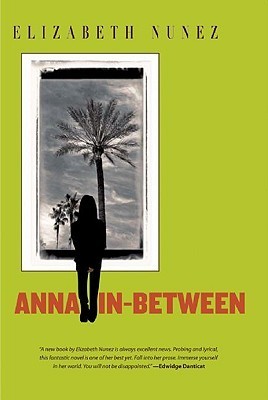
Anna In-Between
Anna In-Between is Elizabeth Nunez's finest literary achievement to date. In spare prose, with laserlike attention to every word and the juxtaposition of words to each other, Nunez returns to themes of emotional alienation, within the context of class and color discrimination, so richly developed in her earlier novels.
Anna, the novel's main character who has a successful publishing career in the United States, is the daughter of an upper-class Caribbean family. While on vacation in the island home of her birth she discovers that her mother, Beatrice, has breast cancer. Beatrice categorically rejects all efforts to persuade her to go to the United States for treatment, even though it is, perhaps, her only chance of survival. Anna and her father, who tries to remain respectful of his wife's wishes, must convince her to change her mind.
Anna, the novel's main character who has a successful publishing career in the United States, is the daughter of an upper-class Caribbean family. While on vacation in the island home of her birth she discovers that her mother, Beatrice, has breast cancer. Beatrice categorically rejects all efforts to persuade her to go to the United States for treatment, even though it is, perhaps, her only chance of survival. Anna and her father, who tries to remain respectful of his wife's wishes, must convince her to change her mind.
320 pages, Hardcover
First published September 1, 2009
About the author
Elizabeth Nunez
21 books106 followersElizabeth Nunez was a Trinidadian-American novelist academic who was a Distinguished Professor of English at Hunter College, New York City.
Her novels have won a number of awards: Prospero's Daughter received The New York Times Editors' Choice and 2006 Novel of the Year from Black Issues Book Review, Bruised Hibiscus won the 2001 American Book Award, and Beyond the Limbo Silence won the 1999 Independent Publishers Book Award. In addition, Nunez was shortlisted for the Hurston/Wright Legacy Award for Discretion; Boundaries was selected as a New York Times Editors' Choice and nominated for a 2012 NAACP Image Award; and Anna In-Between was selected for the 2010 PEN Oakland Josephine Miles Award for literary excellence as well as a New York Times Editors' Choice, and received starred reviews from Publishers Weekly, Booklist, and Library Journal. Nunez is a contributor to the 2019 anthology New Daughters of Africa edited by Margaret Busby.
Her novels have won a number of awards: Prospero's Daughter received The New York Times Editors' Choice and 2006 Novel of the Year from Black Issues Book Review, Bruised Hibiscus won the 2001 American Book Award, and Beyond the Limbo Silence won the 1999 Independent Publishers Book Award. In addition, Nunez was shortlisted for the Hurston/Wright Legacy Award for Discretion; Boundaries was selected as a New York Times Editors' Choice and nominated for a 2012 NAACP Image Award; and Anna In-Between was selected for the 2010 PEN Oakland Josephine Miles Award for literary excellence as well as a New York Times Editors' Choice, and received starred reviews from Publishers Weekly, Booklist, and Library Journal. Nunez is a contributor to the 2019 anthology New Daughters of Africa edited by Margaret Busby.
Ratings & Reviews
Friends & Following
Create a free account to discover what your friends think of this book!
Community Reviews
Displaying 1 - 30 of 75 reviews

November 12, 2015
Having just begun:
Well, I can say one thing - I was about to dump this because it so pulled me apart. I felt I couldn't stand being so emotionally torn. Then it flipped and had me smiling and laughing. So of course I continue. This is what I want from a book. I want to feel and I want to think and I want to be happy and sad.
OK, now I have probably jinxed the book by saying I like it a lot....
************************
I continued to enjoy this book to the very end, and I liked the ending. Happy? Sad? I am not going to say.
So what happens in this novel? A black woman just shy of 40 years returns to her homeland to discover that her mother has breast cancer. There is a lot to think about - relationships between daughter and mother and father and between spouses, adultery, race, colonialism and culture or what makes you drawn to a particular place. What makes a place feel safe? What makes home home? And of course illness and mortality. The book provides food for thought.
The reason why I liked the book so much was that the issues delved into were portrayed both realistically and with feeling. How is it that mothers and daughters constantly bicker and taunt and compete and challenge each other? Yet there is love too. Look what husbands and wives do to each other. The dialogs felt genuine. How is the line drawn between modesty, privacy and intimacy? Between independence, self-sufficiency and helping someone. The book is all about how we relate to other human beings, as part of a family, part of a community, as an immigrant in a new country or as an employer to an employee, across race, class and geographical boundaries.
I believe the book is set in Trinidad, although this is not stated. This is where the author is from and as the island is described it just had to be this Caribbean island, oil in the south and mountains in the north. Beautiful lines that capture emotions, behavior and scenery. Plants and colors and night skies and food and clothing. The lines read as prose poetry. And as I mentioned, great dialogs.
The author narrates her own book. Her tongue is from the island, and I liked this. She did pronounce the "th" sound, because Anna could do this. She is the main character, the Acquisition Editor at a publishing house in New York, a publishing house promoting people of color. That the word "her" is softened into "hur" simply adds a touch of authenticity to the story. You feel like you are on the island. Yes, very good narration and nice and slow. You can listen and think.
I recommend this book for its writing, for its character portrayal and for how it draws you in letting you think about what Anna is thinking about. Anna, where do you belong?
Well, I can say one thing - I was about to dump this because it so pulled me apart. I felt I couldn't stand being so emotionally torn. Then it flipped and had me smiling and laughing. So of course I continue. This is what I want from a book. I want to feel and I want to think and I want to be happy and sad.
OK, now I have probably jinxed the book by saying I like it a lot....
************************
I continued to enjoy this book to the very end, and I liked the ending. Happy? Sad? I am not going to say.
So what happens in this novel? A black woman just shy of 40 years returns to her homeland to discover that her mother has breast cancer. There is a lot to think about - relationships between daughter and mother and father and between spouses, adultery, race, colonialism and culture or what makes you drawn to a particular place. What makes a place feel safe? What makes home home? And of course illness and mortality. The book provides food for thought.
The reason why I liked the book so much was that the issues delved into were portrayed both realistically and with feeling. How is it that mothers and daughters constantly bicker and taunt and compete and challenge each other? Yet there is love too. Look what husbands and wives do to each other. The dialogs felt genuine. How is the line drawn between modesty, privacy and intimacy? Between independence, self-sufficiency and helping someone. The book is all about how we relate to other human beings, as part of a family, part of a community, as an immigrant in a new country or as an employer to an employee, across race, class and geographical boundaries.
I believe the book is set in Trinidad, although this is not stated. This is where the author is from and as the island is described it just had to be this Caribbean island, oil in the south and mountains in the north. Beautiful lines that capture emotions, behavior and scenery. Plants and colors and night skies and food and clothing. The lines read as prose poetry. And as I mentioned, great dialogs.
The author narrates her own book. Her tongue is from the island, and I liked this. She did pronounce the "th" sound, because Anna could do this. She is the main character, the Acquisition Editor at a publishing house in New York, a publishing house promoting people of color. That the word "her" is softened into "hur" simply adds a touch of authenticity to the story. You feel like you are on the island. Yes, very good narration and nice and slow. You can listen and think.
I recommend this book for its writing, for its character portrayal and for how it draws you in letting you think about what Anna is thinking about. Anna, where do you belong?

September 24, 2009
A truly beautiful novel. I picked up what I thought was a simple mother/daughter tale and got so much more. It seems as though nothing much happens in 350 or so pages, but a tremendous amount does transpire. Without ostentation or whiz-bang melodrama, we witness the inner workings of tremendously realized and authentic characters. When I say authentic, I mean that I could imagine each of these folks being someone in my office or the coffee shop next door. And in getting to know these characters, there are thoughts and ideas expounded that go so much further than the relationship between one mother and daughter. Everything from colonial legacies, the impact of slavery, intra- and inter- race relations in the US, and some critical insight into the publishing industry's view of writers and communities of color gets dragged into the light here. Nunez has done a fine job, and I would recommend this book highly.

November 19, 2017
A great place to start with West Indian/Caribbean fiction.

October 1, 2012
This is a wonderful novel. Each character is fully realized and each one is very believable. There are so many layers to it. It delves into deep relationships, racism, economic differences in cultures, downsides for those who immigrate to another country. Nunez gives the reader a real feel for issues and does not leave you hanging. It took me a couple of weeks to read the book because I wanted to savor it. I would intentionally put the book aside and ponder the concepts. I did not rate it five because the end fell a little short to me. Well worth the read.
December 8, 2023
There are many fictional novels that illustrate family complexities. However, what sets the book Anna In-Between by Elizabeth Nunez apart from others is that it goes beyond its genre as fiction and addresses real-life structural issues relating to race, class, and colonialism while exploring how such categorization of social identities impacts individual identities and emotions. The story begins as Anna, a middle-aged woman working in New York, visits her parents on her home Caribbean island. Upon her arrival, she finds out that her mother has breast cancer. Although she tries to convince her mother to go to the US for surgery, which is unavailable on the island, her mother shows strong rejection. She also feels a sense of doubt about the “loyalty” between her parents who try not to invade each other’s privacy by being silent about the illness. However, through her interaction with her family, she begins to see family values and appreciate her parents’ outlook on life.
By portraying the difficulties for Anna to fit into society, the book successfully defies dichotomous thinking and encourages readers to recognize nuanced in-between identities. As Anna immigrated to the US for work and ingrained a Western rational-based way of thinking into her identity, she cannot easily understand the rejection of her mother to receive cancer treatment and finds emotional distance from her mother. Conflicts and tensions also emerge between Anna and her mother when arguing about how to deal with the illness, letting Anna struggle to find her place in her family, to which she is supposed to belong. She does not feel a sense of belonging to the US either because of her identity as a colored female born and raised on a former colonized island. Through depicting the conflicts between internalized Western-centric views and spiritual and emotion-based thinking of her home island, the author successfully invites readers to situate themselves as Anna and witness the complexities of the history of colonialism that still affects individual identities. It also encourages readers to recognize the nuanced identities and rejects the societal tendency to categorize everyone based on fixed identities.
Through the lens of Anna, this book addresses real-life issues relating to race, class, colonialism, and resulting marginalization. It also raises the matter of how members of the marginalized group internalize the oppression and are complicit in perpetuating social injustice. The author does this by shedding light on the role of silence. By depicting silence as an active choice due to discomfort in facing reality, the book implicitly encourages readers to recognize social injustice not as a one-way oppression but as a product of the social structure that everyone is part of.
This book is relatively accessible to the younger population, given its price and easy-to-read writing style. Despite its accessibility, the book raises broader social issues. Therefore, I highly recommend this book, especially to young adults interested in the intersectionality of race, class, and colonialism. Nevertheless, this book is valuable for everyone since it challenges dichotomous thinking that automatically classifies everything into black and white. I personally benefited from this book since it challenged my belief that things had to be either “good” or “bad” and that everything must fit in a certain category. Witnessing Anna’s “in-betweenness” and her consistent struggles to fit into both her home island and the US, I recognized that identity is fluid and nuanced. Thus, this book is beneficial for anyone, especially teenagers, as it expands readers’ viewpoints and challenges their preconceived notions while letting them think about large and seemingly unreachable social issues relating to race, class, and colonialism.
By portraying the difficulties for Anna to fit into society, the book successfully defies dichotomous thinking and encourages readers to recognize nuanced in-between identities. As Anna immigrated to the US for work and ingrained a Western rational-based way of thinking into her identity, she cannot easily understand the rejection of her mother to receive cancer treatment and finds emotional distance from her mother. Conflicts and tensions also emerge between Anna and her mother when arguing about how to deal with the illness, letting Anna struggle to find her place in her family, to which she is supposed to belong. She does not feel a sense of belonging to the US either because of her identity as a colored female born and raised on a former colonized island. Through depicting the conflicts between internalized Western-centric views and spiritual and emotion-based thinking of her home island, the author successfully invites readers to situate themselves as Anna and witness the complexities of the history of colonialism that still affects individual identities. It also encourages readers to recognize the nuanced identities and rejects the societal tendency to categorize everyone based on fixed identities.
Through the lens of Anna, this book addresses real-life issues relating to race, class, colonialism, and resulting marginalization. It also raises the matter of how members of the marginalized group internalize the oppression and are complicit in perpetuating social injustice. The author does this by shedding light on the role of silence. By depicting silence as an active choice due to discomfort in facing reality, the book implicitly encourages readers to recognize social injustice not as a one-way oppression but as a product of the social structure that everyone is part of.
This book is relatively accessible to the younger population, given its price and easy-to-read writing style. Despite its accessibility, the book raises broader social issues. Therefore, I highly recommend this book, especially to young adults interested in the intersectionality of race, class, and colonialism. Nevertheless, this book is valuable for everyone since it challenges dichotomous thinking that automatically classifies everything into black and white. I personally benefited from this book since it challenged my belief that things had to be either “good” or “bad” and that everything must fit in a certain category. Witnessing Anna’s “in-betweenness” and her consistent struggles to fit into both her home island and the US, I recognized that identity is fluid and nuanced. Thus, this book is beneficial for anyone, especially teenagers, as it expands readers’ viewpoints and challenges their preconceived notions while letting them think about large and seemingly unreachable social issues relating to race, class, and colonialism.

December 12, 2023
In the novel Anna In-Between, Elizabeth Nunez depicts the difficulties and effects between trying to bridge two worlds together. The titular character Anna Sinclair finds herself conflicted by her childhood upbringing clashing with her American higher education and working life. Family dynamics, cultural expectations, and social norms all play off each other in this slow-paced novel, as Anna slowly begins to hone her identity to the beliefs she must navigate in her homecoming. Nunez artfully illustrates the complexities of immigrant life and the sacrifices one must make to fit into a constricting world. Interfamily relations are craftily explored, as the reader is a watchful observer to how each member of the Sinclair family grapples with the declining health of Beatrice, Anna’s mother. The Sinclairs’ denial, reservation, acceptance, and resulting determination to placate one another while orchestrating hopeful outcomes for Beatrice, allows the reader to see subtle (and not so subtle) lines in the sand for what one’s words actually hold to another. The relationship between John and Beatrice Sinclair is quite an interesting story to follow along as well, as we see the undeniable soul-bonding between the two despite significant trials and tribulations in their marriage.
Anna In-Between was unlike any novel I’ve read before. The setting and characters already distinguish the novel, as Nunez provides so much depth to each character. Peripheral characters receive thought and purpose in a manner that explores other social dynamics between them and Anna, but is done intentionally and with some grace. Their own stories and drives are not used as ammunition for the plot, but instead broaden the world in which the reader steps into. Anna’s upbringing in her home country and differing class experiences within her hometown were easy and interesting to fall into, perhaps because her story is so unique to me or perhaps because the language Nunez wields paints a detailed picture. I believe that many readers, all readers, can find parts of themselves or their experiences in this story, but Anna In-Between doesn’t rely on this groundwork. For instance, Anna’s relationship with her mother is volatile and precarious, in my eyes, but nonetheless, their relationship is interestingly complex enough that the reader feels compelled to see their story through. The characteristics of the novel I found unique were based on my own interest in something unknown to me. The boundaries the Sinclair family holds as truth was difficult to grapple with and entrapped me in trying to puzzle out why exactly that is. Nunez’s strengths lie in her deliberate characterization and her finesse in examining familial relationships with vastly different personalities.
The pace of the novel was enticing and very easy to follow along. Nunez deliberately picks and chooses which moments to give everything and nothing to, which makes for a lovely and thought-provoking reading. Emotion felt restrained within the characters which had more of an effect on me, the reader, as I just wanted everything to work out for the Sinclair family. Although Anna’s story was captivating to follow, I don’t feel the inclination to read once more. Maybe after some time passes, there will be a newfound urge to try to extract more from Nunez’s writing, as there is sure to be much more uncovered. There’s no doubt: any reader will quickly and easily become absorbed into Anna’s world if they allow themselves to be escorted through her journey home.
Anna In-Between was unlike any novel I’ve read before. The setting and characters already distinguish the novel, as Nunez provides so much depth to each character. Peripheral characters receive thought and purpose in a manner that explores other social dynamics between them and Anna, but is done intentionally and with some grace. Their own stories and drives are not used as ammunition for the plot, but instead broaden the world in which the reader steps into. Anna’s upbringing in her home country and differing class experiences within her hometown were easy and interesting to fall into, perhaps because her story is so unique to me or perhaps because the language Nunez wields paints a detailed picture. I believe that many readers, all readers, can find parts of themselves or their experiences in this story, but Anna In-Between doesn’t rely on this groundwork. For instance, Anna’s relationship with her mother is volatile and precarious, in my eyes, but nonetheless, their relationship is interestingly complex enough that the reader feels compelled to see their story through. The characteristics of the novel I found unique were based on my own interest in something unknown to me. The boundaries the Sinclair family holds as truth was difficult to grapple with and entrapped me in trying to puzzle out why exactly that is. Nunez’s strengths lie in her deliberate characterization and her finesse in examining familial relationships with vastly different personalities.
The pace of the novel was enticing and very easy to follow along. Nunez deliberately picks and chooses which moments to give everything and nothing to, which makes for a lovely and thought-provoking reading. Emotion felt restrained within the characters which had more of an effect on me, the reader, as I just wanted everything to work out for the Sinclair family. Although Anna’s story was captivating to follow, I don’t feel the inclination to read once more. Maybe after some time passes, there will be a newfound urge to try to extract more from Nunez’s writing, as there is sure to be much more uncovered. There’s no doubt: any reader will quickly and easily become absorbed into Anna’s world if they allow themselves to be escorted through her journey home.
December 12, 2023
*Spoilers below*
The novel “Anna In-Between” explores the complexities of cultural inheritance and belonging by positioning Anna as straddling the line between various identities. Author Elizabeth Nunez uses difficult and relatable issues such as illness, infidelity, judgment, and the longing for affection and validation to connect readers to her characters and encourage introspection. By taking a broad view of topics related to difference and imploring character development, retrospection, and dialogue, Nunez zooms in on the shared roots of inherited ideas and systems and undermines dichotomous black-and-white notions with various shades of gray.
In the story, Anna, a Caribbean-American forty-year-old divorced female immigrant, returns to her parent’s home in the Caribbean while on vacation to find that her mother has been sick for years and has not sought treatment, relying on prayer alone. Anna, equipped with an American lens, struggles to understand the culture and how it influences her parent’s beliefs and actions. Simultaneously, Anna grapples with her own identity. Is she Caribbean? American? Both? Or neither? As her family navigates the processes of diagnosis and comes to terms with the realities and struggles of treatment, Anna learns things about her family she did not know, which undermines her judgments about them. She is forced to confront her own beliefs and begins to honestly reflect on her values and her desire for love, acceptance, and approval.
I enjoyed that Nunez’s use of vernacular gives each character personality and voice. I also appreciate how, by giving voice to Anna’s thoughts, the author enabled readers to understand Anna in ways other characters could not. Doing so highlights the reality that what we allow people to see and know of us differs from who we are as a whole and is often the impenetrable wall of our own making, which impedes personal connection and understanding.
As I read, I wondered if Nunez intended that specific scenarios have metaphorical purposes beyond their obvious reasons for inclusion. Could it be that the cancer growing in Anna’s mother’s breast, undisclosed for years, was a metaphor for how failing to discuss things openly and compassionately allows social issues to metastasize? Additionally, I found myself asking why Nunez chose to write certain characters in ways I found stereotypical. For example, Lydia, the servant, speaks in broken English, receives charity so her son can go to school, relies on what he sends home to her, and is a survivor of domestic violence. While I understand the benefit of being able to present the Sinclairs as generous saviors and defenders when trying to illustrate the complexities of their relationship with their subordinates, I wonder if including this trope was necessary or if perpetuating the stereotypical idea that poor, uneducated women are the typical victims of abuse may be irresponsible.
I have mixed feelings about the book. “Anna In-Between” is well-written and induces a lot of contemplation. The characters and their relationships have depth and are believable, but I did not find many of them likable or totally detestable. Because I did not develop strong feelings toward the characters, one way or another, I found the book less entertaining. As such, I report that it is not a book I would read for entertainment. However, The novel has immense value as a tool for producing involved discussions about diversity.
The novel “Anna In-Between” explores the complexities of cultural inheritance and belonging by positioning Anna as straddling the line between various identities. Author Elizabeth Nunez uses difficult and relatable issues such as illness, infidelity, judgment, and the longing for affection and validation to connect readers to her characters and encourage introspection. By taking a broad view of topics related to difference and imploring character development, retrospection, and dialogue, Nunez zooms in on the shared roots of inherited ideas and systems and undermines dichotomous black-and-white notions with various shades of gray.
In the story, Anna, a Caribbean-American forty-year-old divorced female immigrant, returns to her parent’s home in the Caribbean while on vacation to find that her mother has been sick for years and has not sought treatment, relying on prayer alone. Anna, equipped with an American lens, struggles to understand the culture and how it influences her parent’s beliefs and actions. Simultaneously, Anna grapples with her own identity. Is she Caribbean? American? Both? Or neither? As her family navigates the processes of diagnosis and comes to terms with the realities and struggles of treatment, Anna learns things about her family she did not know, which undermines her judgments about them. She is forced to confront her own beliefs and begins to honestly reflect on her values and her desire for love, acceptance, and approval.
I enjoyed that Nunez’s use of vernacular gives each character personality and voice. I also appreciate how, by giving voice to Anna’s thoughts, the author enabled readers to understand Anna in ways other characters could not. Doing so highlights the reality that what we allow people to see and know of us differs from who we are as a whole and is often the impenetrable wall of our own making, which impedes personal connection and understanding.
As I read, I wondered if Nunez intended that specific scenarios have metaphorical purposes beyond their obvious reasons for inclusion. Could it be that the cancer growing in Anna’s mother’s breast, undisclosed for years, was a metaphor for how failing to discuss things openly and compassionately allows social issues to metastasize? Additionally, I found myself asking why Nunez chose to write certain characters in ways I found stereotypical. For example, Lydia, the servant, speaks in broken English, receives charity so her son can go to school, relies on what he sends home to her, and is a survivor of domestic violence. While I understand the benefit of being able to present the Sinclairs as generous saviors and defenders when trying to illustrate the complexities of their relationship with their subordinates, I wonder if including this trope was necessary or if perpetuating the stereotypical idea that poor, uneducated women are the typical victims of abuse may be irresponsible.
I have mixed feelings about the book. “Anna In-Between” is well-written and induces a lot of contemplation. The characters and their relationships have depth and are believable, but I did not find many of them likable or totally detestable. Because I did not develop strong feelings toward the characters, one way or another, I found the book less entertaining. As such, I report that it is not a book I would read for entertainment. However, The novel has immense value as a tool for producing involved discussions about diversity.
This entire review has been hidden because of spoilers.
December 12, 2023
The novel, Anna in Between, explored topics that cause a stir amongst immigrant families. As someone from an immigrant family, this novel hit close to home, as I found myself relating to Anna in more ways than one. Each detail written by Nunez was intricate, carefully woven in order to explore not just Anna’s history, but a shared history that resonates with children of immigrant families, diving into themes concerning responsibility and guilt.
The novel explored Anna’s background on the Island, sprinlking memories between then and her current life in the States. Early on, we get a sense of the loneliness Anna feels, both physically and emotionally; such feelings are only emphasized when she returns to the island and witnesses the disconnection in her relationship with her parents and culture. “Neither here nor there” is a phrase that repeatedly came to mind while reading, one that I had a long history with as a Mexican-American. Though Anna’s story is unique, the parallels I drew between our lives makes me question just how common these delicate situations are.
Having grown up in a diverse area, I am unsure of how my peers at my university would react to such a harsh disconnection between culture and self. Though I can’t see it in my peers, I can see it in Anna. Anna’s guilt in the story is palpable; her mother is sick and she is unable to help. Angry as she may be at her father for honoring her mother’s privacy, she is angry at herself too. I wonder if I should be angry also. It seems now, like Anna, when I am angry, it’s anger capitalized by every negative event that has been long held in. Anna is alone, disconnected from her childhood environment, and is sorry for the rocky relationship she has with her mother, only to be betrayed by her father’s own betrayal.
I see myself in Anna, whether that is a good thing or not, I am unsure. From an early age, Anna was aware of the privilege she had over others on her island, yet she still experienced prejudice from the same community that experienced the same lucrative wealth and status as she. I too, am aware of the certain privileges I have, but I too am aware of how I am perceived when I’m too loud, unprofessional, or simply just me. Often, I found myself questioning just how much of a product Anna was of her environment as a child, or if her emotional stunt was accentuated when she moved to the US. Should I expect a similar future to Anna’s? Is Anna’s story just one of many immigrant daughters?
I won’t say whether or not I expect a future like Anna’s, nor will I comment on what I think of her mental space. I will capitalize on the lessons I gathered. Evidently, Anna is a forgiving person; she’s forgiven her father for his infidelity and has made peace with her mother. The novel’s conclusion ends with hopeful ambiguity regarding Anna’s future; Anna making her peace with her past and current self had metaphorically opened possibilities she had closed out. Peace is what I hope to gain concerning my own guilt. Capitalizing on that, I feel it would do good to initiate difficult conversations with my own family. Anna in Between made me realize that our parents are also experiencing life for the first ime, and are susceptible to their own environment. All in all, I would like to thank Elizabeth Nunez and Anna for encouraging reflection, and opening the door to new conversations.
The novel explored Anna’s background on the Island, sprinlking memories between then and her current life in the States. Early on, we get a sense of the loneliness Anna feels, both physically and emotionally; such feelings are only emphasized when she returns to the island and witnesses the disconnection in her relationship with her parents and culture. “Neither here nor there” is a phrase that repeatedly came to mind while reading, one that I had a long history with as a Mexican-American. Though Anna’s story is unique, the parallels I drew between our lives makes me question just how common these delicate situations are.
Having grown up in a diverse area, I am unsure of how my peers at my university would react to such a harsh disconnection between culture and self. Though I can’t see it in my peers, I can see it in Anna. Anna’s guilt in the story is palpable; her mother is sick and she is unable to help. Angry as she may be at her father for honoring her mother’s privacy, she is angry at herself too. I wonder if I should be angry also. It seems now, like Anna, when I am angry, it’s anger capitalized by every negative event that has been long held in. Anna is alone, disconnected from her childhood environment, and is sorry for the rocky relationship she has with her mother, only to be betrayed by her father’s own betrayal.
I see myself in Anna, whether that is a good thing or not, I am unsure. From an early age, Anna was aware of the privilege she had over others on her island, yet she still experienced prejudice from the same community that experienced the same lucrative wealth and status as she. I too, am aware of the certain privileges I have, but I too am aware of how I am perceived when I’m too loud, unprofessional, or simply just me. Often, I found myself questioning just how much of a product Anna was of her environment as a child, or if her emotional stunt was accentuated when she moved to the US. Should I expect a similar future to Anna’s? Is Anna’s story just one of many immigrant daughters?
I won’t say whether or not I expect a future like Anna’s, nor will I comment on what I think of her mental space. I will capitalize on the lessons I gathered. Evidently, Anna is a forgiving person; she’s forgiven her father for his infidelity and has made peace with her mother. The novel’s conclusion ends with hopeful ambiguity regarding Anna’s future; Anna making her peace with her past and current self had metaphorically opened possibilities she had closed out. Peace is what I hope to gain concerning my own guilt. Capitalizing on that, I feel it would do good to initiate difficult conversations with my own family. Anna in Between made me realize that our parents are also experiencing life for the first ime, and are susceptible to their own environment. All in all, I would like to thank Elizabeth Nunez and Anna for encouraging reflection, and opening the door to new conversations.

December 8, 2023
Anna In-Between by Elizabeth Nunez has become one of my new favorite reads.
To provide a little context, the central character, Anna, made the decision, as a young adult, to emigrate to the U.S. alone in order to pursue a career and stability as she felt her home in the Caribbean could not provide her what she needed. Fast track to the present day and Anna has a successful career in publishing in New York City and has essentially found what she set out for. The whole of the story, though, follows Anna as a middle-aged woman as she returns back to the Caribbean to visit her parents where she is confronted with some really pressing truths.
This novel is riddled with social commentary on topics such as race, class, immigration, identity, family, complex relationships, and the sense of belonging. Anna’s relationship with her own identity is so beautifully expressed in this novel. I love how Nunez has created these incredibly plausible and every-day instances in which Anna’s identity is challenged or made a topic of discussion. For example, after immigrating to the U.S. Anna recognizes the differences between how her appearance is received in New York versus on home on her island. Given Anna’s ancestry is multi-ethnic, her physical features would make an average American categorize her as either racially ambiguous (“what are you?”) or would just place her in the box as a Black woman despite her ancestry and culture being different from that of the Black community in New York. Nunez describes how Anna is “often mistaken for Ethiopian, sometimes an Indian. A visible immigrant” (Nunez 1). As the title insinuates, Anna does not fit into a single category. Her identity forces her to straddle this line of Caribbean and American, immigrant and privileged, divorced and accomplished, and racially ambiguous to most. The loneliness and uncertainty of this experience is so beautifully written and incredibly provoking.
Outside of commentary on identity, the way Anna’s relationship with her parents, Beatrice and John Sincalire, back on the island is written also stirred a lot of emotions in me. Nunez captures the complexities of adult Mother-Daughter relationships and goes even further by tying in the cultural differences that have separated them since Anna moved to New York. Common things such as Anna’s marital status come up, but huge, core parts of how the Sinclaire’s have chosen to live their life since Anna has been gone also create major turmoil- not only in Anna’s relationship with her parents, but also in how Anna sees herself.
There is also a lot of time spent on Beatrice and John’s marriage, which I didn’t expect to find too intriguing but ended up becoming really invested in. Not only that, but the Sinclaire history is also quite interesting considering their social status in relation to their race and ethnicity. There is quite a bit to grapple with just from the Sinclaire’s relationship with their house staff and seeing to what lengths they will go to in order to maintain what they have earned.
I know that was a lot! At the end of the day, I highly recommend this novel. It is also available in audiobook if that is a preferred method for you. But it truly is such an immersive experience and you will feel like a fly on the wall- I promise. Read it!
To provide a little context, the central character, Anna, made the decision, as a young adult, to emigrate to the U.S. alone in order to pursue a career and stability as she felt her home in the Caribbean could not provide her what she needed. Fast track to the present day and Anna has a successful career in publishing in New York City and has essentially found what she set out for. The whole of the story, though, follows Anna as a middle-aged woman as she returns back to the Caribbean to visit her parents where she is confronted with some really pressing truths.
This novel is riddled with social commentary on topics such as race, class, immigration, identity, family, complex relationships, and the sense of belonging. Anna’s relationship with her own identity is so beautifully expressed in this novel. I love how Nunez has created these incredibly plausible and every-day instances in which Anna’s identity is challenged or made a topic of discussion. For example, after immigrating to the U.S. Anna recognizes the differences between how her appearance is received in New York versus on home on her island. Given Anna’s ancestry is multi-ethnic, her physical features would make an average American categorize her as either racially ambiguous (“what are you?”) or would just place her in the box as a Black woman despite her ancestry and culture being different from that of the Black community in New York. Nunez describes how Anna is “often mistaken for Ethiopian, sometimes an Indian. A visible immigrant” (Nunez 1). As the title insinuates, Anna does not fit into a single category. Her identity forces her to straddle this line of Caribbean and American, immigrant and privileged, divorced and accomplished, and racially ambiguous to most. The loneliness and uncertainty of this experience is so beautifully written and incredibly provoking.
Outside of commentary on identity, the way Anna’s relationship with her parents, Beatrice and John Sincalire, back on the island is written also stirred a lot of emotions in me. Nunez captures the complexities of adult Mother-Daughter relationships and goes even further by tying in the cultural differences that have separated them since Anna moved to New York. Common things such as Anna’s marital status come up, but huge, core parts of how the Sinclaire’s have chosen to live their life since Anna has been gone also create major turmoil- not only in Anna’s relationship with her parents, but also in how Anna sees herself.
There is also a lot of time spent on Beatrice and John’s marriage, which I didn’t expect to find too intriguing but ended up becoming really invested in. Not only that, but the Sinclaire history is also quite interesting considering their social status in relation to their race and ethnicity. There is quite a bit to grapple with just from the Sinclaire’s relationship with their house staff and seeing to what lengths they will go to in order to maintain what they have earned.
I know that was a lot! At the end of the day, I highly recommend this novel. It is also available in audiobook if that is a preferred method for you. But it truly is such an immersive experience and you will feel like a fly on the wall- I promise. Read it!

December 7, 2023
In Anna in Between, author Elizabeth Nunez takes us through the lives of Anna Sinclair and her family, as they navigate through the intricacies of cross-culturalism. Nunez tackles a variety of themes throughout her novel, skimming the surface on topics like immigration and the implications arising from a colonialist-ridden history, while simultaneously highlighting the role that cultural dysphoria plays throughout the novel.
As we dive into the book, Nunez tactically cuts through the various layers of the immigrant experience, as she introduces each of the side characters and their corresponding stories, most of them coming from an immigrant background. Moreover, she crafts their archetypes to adhere to the conventional stereotypes associated with the characters' respective cultures, and this combined with the cross-cultural dialogue between the main character and the side characters, effectively hints at the not-so-hidden implications of post-colonial rule. Nunez showcases these implications very discreetly, and the reader might not even realize what she’s hinting at because of the interesting plotline that is posed. Nunez poses this plotline as a way to reinforce the cultural dysphoria that is so heavily embedded within this novel, as we see the contrast between Anna’s reaction to her mother being diagnosed with cancer versus the reactions of her native-Carribean parents. Furthermore, the manifestation of this dysphoria is intricately woven throughout the novel, revealing itself in numerous dimensions: Anna’s internal dialogue, Anna’s interaction with her parents and other characters, and Anna’s moral code vs. the moral code of her parents.
As we go deeper within the story, the readers witness Anna grappling with a sense of being caught between her American and Trinidadian identities. Nunez strategically centers her novel around this feeling of being “in-between” cultures, while also shedding light on issues such as class and race. The result is a compelling and thought-provoking story that captivates readers.
While the novel proved to be quite the page-turner, I found it challenging to piece together Nunez's rationale for introducing certain side characters, many of whom, in my opinion, added little substance to the overall narrative of the story. However, one thing that I must note is that the characters that did play a role in contributing to the central plot were all well-rounded and greatly enhanced my overall reading experience. Moreover, the storyline maintained a consistent pace throughout the majority of the book, but in the final quarter, the conclusion seemed rushed, creating a sense of abruptness and muddledness after Nunez invested so much time building up the tension of the plot. In short, the ending was disappointing and lackluster, to say the least.
All things considered, despite my complaints, the story was incredibly striking and was something that I had never read before. Not only that but it weaved in prominent issues like immigration, class, and race into a story that is tangible and realistic. Although some paragraphs required careful rereading, the clarity of Nunez's message remained remarkably clear, making it a book I would recommend for those seeking a mind-jogging and thought-provoking read.
As we dive into the book, Nunez tactically cuts through the various layers of the immigrant experience, as she introduces each of the side characters and their corresponding stories, most of them coming from an immigrant background. Moreover, she crafts their archetypes to adhere to the conventional stereotypes associated with the characters' respective cultures, and this combined with the cross-cultural dialogue between the main character and the side characters, effectively hints at the not-so-hidden implications of post-colonial rule. Nunez showcases these implications very discreetly, and the reader might not even realize what she’s hinting at because of the interesting plotline that is posed. Nunez poses this plotline as a way to reinforce the cultural dysphoria that is so heavily embedded within this novel, as we see the contrast between Anna’s reaction to her mother being diagnosed with cancer versus the reactions of her native-Carribean parents. Furthermore, the manifestation of this dysphoria is intricately woven throughout the novel, revealing itself in numerous dimensions: Anna’s internal dialogue, Anna’s interaction with her parents and other characters, and Anna’s moral code vs. the moral code of her parents.
As we go deeper within the story, the readers witness Anna grappling with a sense of being caught between her American and Trinidadian identities. Nunez strategically centers her novel around this feeling of being “in-between” cultures, while also shedding light on issues such as class and race. The result is a compelling and thought-provoking story that captivates readers.
While the novel proved to be quite the page-turner, I found it challenging to piece together Nunez's rationale for introducing certain side characters, many of whom, in my opinion, added little substance to the overall narrative of the story. However, one thing that I must note is that the characters that did play a role in contributing to the central plot were all well-rounded and greatly enhanced my overall reading experience. Moreover, the storyline maintained a consistent pace throughout the majority of the book, but in the final quarter, the conclusion seemed rushed, creating a sense of abruptness and muddledness after Nunez invested so much time building up the tension of the plot. In short, the ending was disappointing and lackluster, to say the least.
All things considered, despite my complaints, the story was incredibly striking and was something that I had never read before. Not only that but it weaved in prominent issues like immigration, class, and race into a story that is tangible and realistic. Although some paragraphs required careful rereading, the clarity of Nunez's message remained remarkably clear, making it a book I would recommend for those seeking a mind-jogging and thought-provoking read.
December 8, 2023
“Anna In Between” is a deep exploration of identity, cultural duality, and epistemology. In this book, Nunez portrayed Anna, a woman who is navigating the conflict of two very different worlds. As a successful editor in New York, Anna returned to her Caribbean homeland to visit her parents. However, this visit becomes an unexpected journey of self-exploration for her after she discovers that her mom has cancer.
To begin with, family plays a crucial role in this exploration. The novel displays the conflict between Anna’s American values and her parents traditional Caribbean beliefs. For example, according to Anna’s American perspective, it is important to seek professional medical help when dealing with sickness. However, in Caribbean culture, family matters are usually dealt with internally. Her parents don’t want much intervention by people outside of the family. Such dichotomy of cultural values is the central theme of this book. Nunez skillfully portrayed the conflict experienced by many immigrants who find themselves struggling between two very different worlds.
Moreover, Nunez’s exploration of identity is extended into epistemology. The novel inspires readers thinking about how individuals are constructed and understood. In Anna’s journey, she has been trying to find her identity that is shaped by her dual cultural experiences. For instance, in New York, Anna’s identity is defined by her professional achievements. She is a successful editor. Her career is an important part of her brand, influenced by the American ethos of success, intellectual independence, and self-achievement. In contrast, in her homeland, her identity is viewed differently. Her success is viewed through the filter of family status, community contribution, or even in terms of whether it aligns with traditional gender roles. This dichotomy demonstrates how identity is not merely constructed internally by individuals but also is shaped by external perceptions. Nunez highlights the volatile nature of identity since it can be shaped and reshaped by different cultural environments.
Furthermore, the novel highlights that Anna’s journey is a quest to find a balance where she can truly express herself without external expectations. Nunez depicts Anna’s mind to reveal the nature of human desire for authenticity and self-recognition. Throughout the book, Anna is constantly negotiating her identity, trying to balance the expectations of her parents with her life in America. This exploration elevates this novel from a story about cultural conflict to a deeper and more serious discussion of the authentic existence of individuals.
In a nutshell,”Anna In Between” is a beautiful novel that discusses deeply about cultural identity and epistemology. Through Anna’s journey of exploring her identity, Overall, I really enjoyed this book since there are so many worthwhile things to think about and reflect on. As coming from an immigration family myself, the cultural conflicts as well as the struggle between different cultures depicted in this novel aligns with my experiences. Looking further, the way of viewing these conflicts and struggle written by Nunez can be very helpful for me to explore identities in my own journey.
To begin with, family plays a crucial role in this exploration. The novel displays the conflict between Anna’s American values and her parents traditional Caribbean beliefs. For example, according to Anna’s American perspective, it is important to seek professional medical help when dealing with sickness. However, in Caribbean culture, family matters are usually dealt with internally. Her parents don’t want much intervention by people outside of the family. Such dichotomy of cultural values is the central theme of this book. Nunez skillfully portrayed the conflict experienced by many immigrants who find themselves struggling between two very different worlds.
Moreover, Nunez’s exploration of identity is extended into epistemology. The novel inspires readers thinking about how individuals are constructed and understood. In Anna’s journey, she has been trying to find her identity that is shaped by her dual cultural experiences. For instance, in New York, Anna’s identity is defined by her professional achievements. She is a successful editor. Her career is an important part of her brand, influenced by the American ethos of success, intellectual independence, and self-achievement. In contrast, in her homeland, her identity is viewed differently. Her success is viewed through the filter of family status, community contribution, or even in terms of whether it aligns with traditional gender roles. This dichotomy demonstrates how identity is not merely constructed internally by individuals but also is shaped by external perceptions. Nunez highlights the volatile nature of identity since it can be shaped and reshaped by different cultural environments.
Furthermore, the novel highlights that Anna’s journey is a quest to find a balance where she can truly express herself without external expectations. Nunez depicts Anna’s mind to reveal the nature of human desire for authenticity and self-recognition. Throughout the book, Anna is constantly negotiating her identity, trying to balance the expectations of her parents with her life in America. This exploration elevates this novel from a story about cultural conflict to a deeper and more serious discussion of the authentic existence of individuals.
In a nutshell,”Anna In Between” is a beautiful novel that discusses deeply about cultural identity and epistemology. Through Anna’s journey of exploring her identity, Overall, I really enjoyed this book since there are so many worthwhile things to think about and reflect on. As coming from an immigration family myself, the cultural conflicts as well as the struggle between different cultures depicted in this novel aligns with my experiences. Looking further, the way of viewing these conflicts and struggle written by Nunez can be very helpful for me to explore identities in my own journey.
December 10, 2023
From the very beginning of opening Anna-In Between, I was engrossed in the story of Anna and her family. Anna, a 1st generation immigrant to America, is back in her home in a Caribbean Island visiting her mother and father, when finds that her mother has severe breast cancer and has not told anyone about it. Nunez takes us through the different moments that Anna experiences with her family—the mixed feelings she has about the two “helpers” her parents have—Singh, the gardener, and Lydia, the helper, the thoughts she has about her parents’ marriage as she reflects on her divorce with her ex-husband, and considers the role she plays in her family, at work and everywhere she goes. Anna also spends a lot of time in silence by herself, thinking about how she is so in between the cultures she is a part of, and wrestling with the different dynamics from her past and the present. Thus, the name of the book—Anna In-Between—is so accurate in describing Anna’s circumstances.
Throughout the novel, I found myself really enjoying Nunez’s discussion about Anna and all her interpersonal relationships with her parents, ex-husband, her best friend, and the general population of people around her. With her parents, Anna plays the role of a “good daughter”, who follows the unspoken rules of the household and makes them proud. I especially related to this because as an oldest daughter, I know what it means to be between the parents and bear the expectations of my parents, while striving to find my own passions and what I want to achieve in the world.
Nunez’s discussion on the immigrant perspective was also very interesting. The unique experience of living in two cultures with such stark differences makes for a lot of internal conflict in knowing what is true to oneself or not. Nunez definitely gives perspective to the immigrant experience of sometimes being unsure about who oneself is after moving to a completely different place. Through the different experiences that Anna goes through, Nunez especially highlights the importance of having a strong sense of self through all of the various contexts that one might find themselves encountering.
I also really connected with seeing Anna in all the different roles she had to play throughout the novel. She is a daughter, adult, single, American, West Indian, Black, friend, editor, middle aged, and so many other things all at the same time. With all these different roles and complicated identities, she is as result conflicted in how she acts and thinks about the many issues she encounters in the story. I think being conflicted with complicated identities is a part of growing up regardless of a person’s background, but Nunez’s depiction of Anna’s maturity and growth throughout the book was especially inspiring and enjoyable to watch play out.
All in all, Nunez writes an outstanding novel considering the complex nature of human relationships, and especially navigating life as an immigrant in between two different worlds. I was delighted to get the chance to read Anna In-Between and recommend it to anyone looking for a thoughtful book with characters who are grappling with some of the most vulnerable and real aspects of human relationships and life.
Throughout the novel, I found myself really enjoying Nunez’s discussion about Anna and all her interpersonal relationships with her parents, ex-husband, her best friend, and the general population of people around her. With her parents, Anna plays the role of a “good daughter”, who follows the unspoken rules of the household and makes them proud. I especially related to this because as an oldest daughter, I know what it means to be between the parents and bear the expectations of my parents, while striving to find my own passions and what I want to achieve in the world.
Nunez’s discussion on the immigrant perspective was also very interesting. The unique experience of living in two cultures with such stark differences makes for a lot of internal conflict in knowing what is true to oneself or not. Nunez definitely gives perspective to the immigrant experience of sometimes being unsure about who oneself is after moving to a completely different place. Through the different experiences that Anna goes through, Nunez especially highlights the importance of having a strong sense of self through all of the various contexts that one might find themselves encountering.
I also really connected with seeing Anna in all the different roles she had to play throughout the novel. She is a daughter, adult, single, American, West Indian, Black, friend, editor, middle aged, and so many other things all at the same time. With all these different roles and complicated identities, she is as result conflicted in how she acts and thinks about the many issues she encounters in the story. I think being conflicted with complicated identities is a part of growing up regardless of a person’s background, but Nunez’s depiction of Anna’s maturity and growth throughout the book was especially inspiring and enjoyable to watch play out.
All in all, Nunez writes an outstanding novel considering the complex nature of human relationships, and especially navigating life as an immigrant in between two different worlds. I was delighted to get the chance to read Anna In-Between and recommend it to anyone looking for a thoughtful book with characters who are grappling with some of the most vulnerable and real aspects of human relationships and life.
This entire review has been hidden because of spoilers.
Read
December 2, 2023Anna In-Between is a fiction novel that, despite its genre, has a surprising wealth of insight into intersectional identities. The story follows the main character, Anna, a mixed-race woman that grew up on a Caribbean Island and moved to the United States as an adult. She returns home and encounters a vast range of complications, including her mother’s sickness and conflicts with her parents. Among the complications in this fictional family, Nunez implicitly asks provoking questions surrounding racial and cultural issues such as: How can silence be an instrument for power and control? How might the intersections between class, race, and generational differences complicate familial relationships? And how should one approach conversations about such complex topics such as race and diversity? In a fictional scape rich with potential for unhindered exploration, Nunez tackles these questions from Anna’s perspective and from the perspectives of Anna’s peers. Though she does not necessarily provide concrete answers, Nunez contributes to explorative conversations around identity-centered issues and situates the reader in a context within which they can take on an active role in thinking about these issues. The genre of this book is very interesting because it is an example of how fiction can be an open door into discussion of real-world issues. A fictional world such as this one (though firmly realistic) can make the reader more comfortable and able to access these difficult conversations. By situating the story within a fictional world that is evidently based in the real world but still fictional, Nunez preserves the relevance of the issues being discussed yet leaves room to tweak certain aspects of it and craft specific characters in order to delve more deeply into these issues. With the freedom of a fiction writer, Nunez is able to create and pose any scenario in order to explore and issue or make a point, leaving the potential benefits of this book endless. She creates the character of Anna in a certain way and with a certain epistemological makeup that allows readers to be exposed to multiple facets of identity, often contradictory to each other, and examine all the infinitely complex issues that can arise from their interplay. After reading Anna In-Between, I felt that I had gained more understanding into the complexity of conversing about race and diversity, though just the tip of the iceberg. Its captivating plot likely allowed me to digest these rigorous ideas more easily. In Anna In-Between, you will find yourself hanging on every word and becoming extremely invested in the fictional relationships between Anna and her parents because of their relevance to real-world scenarios and the relatability that so many of us can find within them. At the same time, you will find yourself encountering scenarios you have never personally experienced, perhaps because of differences in background and privilege, that will leave you with a more open mind and readiness to apply your new insights to compassionate conversations with people of differing identities.

December 9, 2023
Carefully written novel with a fascinating plot about races and self-identity!
In the world of diversity, people sometimes fall into an identity crisis and lose their own sense of belonging. Anna In-between is an excellent novel to portray that picture.
Elizabeth Nunez, the author of this book has created Anna, an independent and successful writer, a woman of color, who lives in the States. On the trip to Caribbean Island, Anna has come to realize a boundary between generations, philosophy, and perspectives with her parents. Conflicts between self-identity, cultural beliefs, and perceptions have made Anna deeply question her sense of belonging. Where does she belong to if either in her hometown, she is white-washed or in the US, she is a foreigner? The tension rising in this book has brought the main character into deep inner thoughts and new realizations which motivate her to overcome family boundaries and find her own peace of mind.
Titling the book “Anna In-Between”, Elizabeth Nunez has perfectly portrayed the main storyline. It makes me as a reader curious about the “Between” with the question of what fills in between. At the end of this book, you might find some unexpected values within yourself that you never looked at before, just as Anna found for herself.
For that, I believe the author’s purpose when creating this character in this scenario is to put readers into the gap of identities. Making readers question the gap between one’s self-identities and racial conflicts, especially if you have experienced mutual cultures. All the inner thoughts and interactions between Anna and the other characters gradually show the truth behind the beautiful picture of an upper-class happy family as well as a successful writer living in New York, etc.… In the end, what fills in between that gap might be revealed and satisfy your curiosity or make you curious about identities even more.
For me, I’ve gained a profound perspective on identities and races. I found empathy in the narrative as a daughter of immigrants and for the very first time imagined myself in Anna’s shoes, how would I deal with those conflicts when it involves my parents who have nurtured me since day one? How to be patient and open-hearted enough to overcome generational and perspective conflicts? I think Anna In-Between has motivated me to think about those. I would highly recommend this book whether you’re experiencing parallel cultures or not because in the end, the point is exploring who you are when no one watching and how to be your authentic self among your personal ties.
On the other hand, you might feel what I felt which is the conflict between you and the characters when we’re not on their philosophy and perspectives. I sometimes found it frustrating in some conversations and the way characters deal with their problems, or in other words how the author leads the problems. However, as mentioned, are you open-hearted enough to perceive a different voice than your own? If you patient enough to accompany the characters to the end of the story? Either answer is yes or no, this book will motivate you to practice those aspects.
In the world of diversity, people sometimes fall into an identity crisis and lose their own sense of belonging. Anna In-between is an excellent novel to portray that picture.
Elizabeth Nunez, the author of this book has created Anna, an independent and successful writer, a woman of color, who lives in the States. On the trip to Caribbean Island, Anna has come to realize a boundary between generations, philosophy, and perspectives with her parents. Conflicts between self-identity, cultural beliefs, and perceptions have made Anna deeply question her sense of belonging. Where does she belong to if either in her hometown, she is white-washed or in the US, she is a foreigner? The tension rising in this book has brought the main character into deep inner thoughts and new realizations which motivate her to overcome family boundaries and find her own peace of mind.
Titling the book “Anna In-Between”, Elizabeth Nunez has perfectly portrayed the main storyline. It makes me as a reader curious about the “Between” with the question of what fills in between. At the end of this book, you might find some unexpected values within yourself that you never looked at before, just as Anna found for herself.
For that, I believe the author’s purpose when creating this character in this scenario is to put readers into the gap of identities. Making readers question the gap between one’s self-identities and racial conflicts, especially if you have experienced mutual cultures. All the inner thoughts and interactions between Anna and the other characters gradually show the truth behind the beautiful picture of an upper-class happy family as well as a successful writer living in New York, etc.… In the end, what fills in between that gap might be revealed and satisfy your curiosity or make you curious about identities even more.
For me, I’ve gained a profound perspective on identities and races. I found empathy in the narrative as a daughter of immigrants and for the very first time imagined myself in Anna’s shoes, how would I deal with those conflicts when it involves my parents who have nurtured me since day one? How to be patient and open-hearted enough to overcome generational and perspective conflicts? I think Anna In-Between has motivated me to think about those. I would highly recommend this book whether you’re experiencing parallel cultures or not because in the end, the point is exploring who you are when no one watching and how to be your authentic self among your personal ties.
On the other hand, you might feel what I felt which is the conflict between you and the characters when we’re not on their philosophy and perspectives. I sometimes found it frustrating in some conversations and the way characters deal with their problems, or in other words how the author leads the problems. However, as mentioned, are you open-hearted enough to perceive a different voice than your own? If you patient enough to accompany the characters to the end of the story? Either answer is yes or no, this book will motivate you to practice those aspects.
December 9, 2023
Anna in-between is a compelling story about cultural identity and family. It follows Anna, a 40-year-old Caribbean woman who returns to the Caribbean from New York to visit her family. During her visit, she discovers that her mother has breast cancer, and the novel depicts Anna attempting to convince her mother to get treatment in America. The story tackles heavy themes and issues like race, adultery, class, and culture.
I thoroughly enjoyed the novel, it was very realistic and is relatable not just to those who are of Caribbean descent, but to all immigrants who tread the line between their traditional values and North American ones. It is often difficult to have conversations with your parents about heavy topics, as you’ll often feel the need to conform and agree with everything they say. This novel delves into the inner workings of that dynamic, with Anna constantly saying things she doesn’t mean to her parents, yet the narration allows the reader to see what she is thinking. The novel is able to convey this unique family dynamic perfectly. The familial love that is felt between Anna and her parents is made very apparent throughout the novel, yet Nunez also shows the pride that each family member holds continues to inhibit and limit their expression of it. It conveys a very deep and insightful message about learning to communicate with family.
The novel does an excellent job of making each character feel real and allowing the reader to understand the reasoning behind each character’s actions. Each character has a believable and human reaction to all of the different situations that they go through, and they are consistent with their behavior. Nunez did an amazing job at writing consistent characters whose development does not feel out of the blue. I personally felt frustrated at the parent’s stubbornness and silence about the tumor. I was able to understand their perspective and why they chose to do so. This also is a testament to Nunez’s ability to elicit various emotions from the reader, while also provoking thought and discussion. Even the side characters are given a lot of depth and contribute a lot to Anna’s journey. Each character had a purpose in the story and facilitated the novel’s message.
However, there are some criticisms I have for the overall structure of the novel. In my personal opinion, the ending was quite abrupt and some loose ends were not addressed, which made me view the story as incomplete. I also felt that some of the chapters were quite disjointed, though this could have been due to me reading the novel over 2 weeks instead of all at once. It is still an overall very well-written and thought-provoking novel.
I would recommend this book to those who struggle with multiple cultural identities, it may help you find the courage to work towards bridging those differences. I would also recommend this book if you are simply interested in an in-depth story with realistic and relatable characters.
I thoroughly enjoyed the novel, it was very realistic and is relatable not just to those who are of Caribbean descent, but to all immigrants who tread the line between their traditional values and North American ones. It is often difficult to have conversations with your parents about heavy topics, as you’ll often feel the need to conform and agree with everything they say. This novel delves into the inner workings of that dynamic, with Anna constantly saying things she doesn’t mean to her parents, yet the narration allows the reader to see what she is thinking. The novel is able to convey this unique family dynamic perfectly. The familial love that is felt between Anna and her parents is made very apparent throughout the novel, yet Nunez also shows the pride that each family member holds continues to inhibit and limit their expression of it. It conveys a very deep and insightful message about learning to communicate with family.
The novel does an excellent job of making each character feel real and allowing the reader to understand the reasoning behind each character’s actions. Each character has a believable and human reaction to all of the different situations that they go through, and they are consistent with their behavior. Nunez did an amazing job at writing consistent characters whose development does not feel out of the blue. I personally felt frustrated at the parent’s stubbornness and silence about the tumor. I was able to understand their perspective and why they chose to do so. This also is a testament to Nunez’s ability to elicit various emotions from the reader, while also provoking thought and discussion. Even the side characters are given a lot of depth and contribute a lot to Anna’s journey. Each character had a purpose in the story and facilitated the novel’s message.
However, there are some criticisms I have for the overall structure of the novel. In my personal opinion, the ending was quite abrupt and some loose ends were not addressed, which made me view the story as incomplete. I also felt that some of the chapters were quite disjointed, though this could have been due to me reading the novel over 2 weeks instead of all at once. It is still an overall very well-written and thought-provoking novel.
I would recommend this book to those who struggle with multiple cultural identities, it may help you find the courage to work towards bridging those differences. I would also recommend this book if you are simply interested in an in-depth story with realistic and relatable characters.
December 9, 2023
This wonderful book explores some very personal and sometimes painful topics around identity and belonging. What does it mean to not have a home and be in between the two homes that are your background? What does the construction of the nation-state do to our lives? What does it mean to be at odds with your parents when you are born in America, and they are not? These ideas hit home for me as a son of an immigrant. I see Anna and I see myself like so many other readers, but I also see versions of myself in her mother who it seems she is possibly at odds with. There were times when I was reading and I wondered what made me want to continue and most of the time, I considered it to be a curiosity about the diagnosis. Would it end well or would it not? However, as I fell deeper into the world and story of the book, I recognized massive influences that were shaping the story, from colonialism to patriarchy to more subtle topics around what it means to be a good daughter. Something I enjoyed was the simple things in this book about how difficult it can be to go and visit your parents. This was a fictional story, but it resonated so well in not only the facets of class and race and identity but also how mixed up we can be when it comes to our parents. There is a love for our parents that is there, but things happen during our time spent with them and well, it becomes at times straining to love them for who they are. This is something that all people can relate to and I like how these kinds of things were weaved into the story adding to the real hardships of being a non-white person in America and having to deal with all these questions about, where are you from. This question can be asked in a somewhat drunken quest to identify and place you in a country or race. There are questions about worth also woven into this story about whether Anna is worthy of love after failing with her ex. These are more of the universal experiences we all experience as humans living on this rock floating in space. The subtle ways in which silence is used are remarkable. As is how the story is written from the perspective of Anna and her ever-wandering mind. I think it’s reading that is not only provoking and building a spirit but is an interesting way to open up the conversation to what the book means. What is the author trying to say and why is she saying it? To know these answers, the author brilliantly offers just enough to keep you wanting more. It’s a rich and fulfilling story about another one of the many families that share the space. Anna-In-Between is a special piece of literature because of what I was feeling and what was going on in the world when I started reading and continued reading it. It was the beginning of a curiosity-building moment in my life that I’ll never really forget. For that, I thank Elizabeth Nunez.
December 11, 2023
"Anna In-Between" by Elizabeth Nunez is a thought-provoking novel that delves into the complexities of identity, race, and family. The story follows Anna Sinclair, a successful book editor living in Manhattan, who is forced to confront the stark differences between her life in the United States and her Caribbean upbringing when she returns to her native island to visit her parents. The novel explores the impact of race on Anna's life, her parents' traditional values, and the challenges of straddling two different worlds.
The exploration of Anna's familial relationships adds a poignant layer to the narrative. Anna's visit becomes a catalyst for significant revelations, when her mother reveals this secret she’s been keeping from her. This pivotal moment unearths long-held family secrets, forcing Anna to confront not only her mother’s secret but also her own cultural heritage and the racial prejudices she encountered in her formative years.The novel's thematic richness extends beyond individual struggles, offering a profound portrayal of family dynamics, immigrant identity, and the enduring echoes of colonialism on the Caribbean island. Elizabeth Nunez weaves a tapestry of emotions, deftly exploring themes of racism, illness, and the immigrant experience. The narrative unfolds with a thought-provoking resonance, capturing the emotional depth of Anna's journey as she grapples with the "in-between" status—caught between her parents' traditional values and her contemporary American life.
What I particularly liked about the book is Nunez's skillful portrayal of the "in-between" status of Anna as she navigates the cultural and emotional divide between her American life and her Caribbean heritage. The novel's rich character development and evocative storytelling make it a poignant and memorable read, shedding light on the enduring effects of history and the complexities of the human experience. For readers seeking rapid plot twists and external action, the novel's emphasis on internal reflections might appear to hinder the overall momentum. The unhurried storytelling approach serves a specific purpose, allowing the characters to evolve organically and the themes of identity and family to be explored with depth. Individual preferences in pacing can significantly influence the overall reading experience.
Overall, "Anna In-Between" is a beautifully crafted novel that offers a nuanced exploration of identity, family, and the lasting impact of colonialism. Nunez's masterful storytelling and insightful exploration of race, family, and the immigrant experience make this book a must-read for those interested in thought-provoking and emotionally rich literature. I would rate this book 4.5 out of 5 for its compelling narrative and profound exploration of its themes.
The exploration of Anna's familial relationships adds a poignant layer to the narrative. Anna's visit becomes a catalyst for significant revelations, when her mother reveals this secret she’s been keeping from her. This pivotal moment unearths long-held family secrets, forcing Anna to confront not only her mother’s secret but also her own cultural heritage and the racial prejudices she encountered in her formative years.The novel's thematic richness extends beyond individual struggles, offering a profound portrayal of family dynamics, immigrant identity, and the enduring echoes of colonialism on the Caribbean island. Elizabeth Nunez weaves a tapestry of emotions, deftly exploring themes of racism, illness, and the immigrant experience. The narrative unfolds with a thought-provoking resonance, capturing the emotional depth of Anna's journey as she grapples with the "in-between" status—caught between her parents' traditional values and her contemporary American life.
What I particularly liked about the book is Nunez's skillful portrayal of the "in-between" status of Anna as she navigates the cultural and emotional divide between her American life and her Caribbean heritage. The novel's rich character development and evocative storytelling make it a poignant and memorable read, shedding light on the enduring effects of history and the complexities of the human experience. For readers seeking rapid plot twists and external action, the novel's emphasis on internal reflections might appear to hinder the overall momentum. The unhurried storytelling approach serves a specific purpose, allowing the characters to evolve organically and the themes of identity and family to be explored with depth. Individual preferences in pacing can significantly influence the overall reading experience.
Overall, "Anna In-Between" is a beautifully crafted novel that offers a nuanced exploration of identity, family, and the lasting impact of colonialism. Nunez's masterful storytelling and insightful exploration of race, family, and the immigrant experience make this book a must-read for those interested in thought-provoking and emotionally rich literature. I would rate this book 4.5 out of 5 for its compelling narrative and profound exploration of its themes.

December 5, 2023
Anna In Between is a novel that explores the division and dichotomies of what race and nationality mean. Elizabeth Nunez illustrates how there are expectations from each “side” you are mixed with and how it often feels impossible to please either one at the same time. In this novel, Anna is a middle-aged woman who represents what so many mixed/immigrant children feel. You are too much of “this” on some days and not enough of “that” on others. It raises the question “Well then who am I?” A tragedy occurs to someone close to Anna that exemplifies the differences in the two cultures present in Anna’s life to the point of a life-or-death situation. Readers watch Anna try to sympathize with the culture of the Caribbean where she was born and raised while taking what she has learned from working in America to help fix the tragedy that has occurred. While doing so, she observes other differences in the Caribbean culture that would be seen as out of touch or taboo in America, which leaves her feeling stuck. Anna wants to implement what she has learned in America without disrespecting her upbringing on the island. These differences make her question her morals and identity throughout the entire novel, constantly wondering if she is truly all-American or all-Caribbean. Her relationship with her parents, specifically her mother, represents the older generations' beliefs on what nationality is and how it should be represented. They are hard on Anna and continuously criticize her choice to move to America which many children who have left home feel. Anyone who has felt that race and nationality have been dichotomized to the point that no one can fulfill the expectations set out for them will find a little bit of themselves in Anna. This novel is an easy read especially if it hits close to home. The writing is simple yet effective in getting its point across to the readers. It will leave you asking the “big” questions concerning race and nationality. “What does it mean to be this race” “Can I be both this race and that?” Anna In Between is a short read that leaves readers wanting more. Anna In Between is a good read for ages 15 and up as it discusses mature topics intentionally and beautifully. Nunez is a strong writer who brought Anna to life and made her a powerful protagonist that many readers saw themselves in. The topics portrayed in the novel are heavy and overwhelming at times but, Nunez takes them head-on and does so intelligently and intentionally while weaving them into a story of fear, love, family, separation, culture and so much more. I would recommend this novel to anyone who has felt the pressure of their family, society, or culture they were raised to take a look at Anna’s story and realize so many share the same story.
December 8, 2023
Anna In Between at its core is a novel which delves into deeper topics relating to the intersection of race and culture. For full transparency I must admit, my reasons for reading the book were for a class I was taking, and being a novel, I was expecting to be bored while reading and not interested at all while reading it. Contrary to this initial reaction, this book actually does a solid job of capturing your attention, the premise starting with our main character Anna waking up to go eat with her family. We learn quickly that she actually lives in New York and is visiting her family in the Caribbean while on vacation. Anna throughout the book has to go through a strange experience of looking in on her own culture she was born into as an outsider. As we vicariously live through Anna, we experience perhaps the same shock and dismay she does when she learns about these Caribbean cultural customs that she may have not given a second thought about when she was younger. As time goes on Anna learns that there is a big secret that her family is hiding from her, and from this point we experience alongside Anna her struggle of trying to unravel this secret. Anna takes on the role of detective, and alongside her we piece together information we learn from her family and their servants, as well as clues she finds lying around. She learns that everyone in her family is complicit in hiding this secret and she has to navigate a culture of respect and honour which she does not seem to understand anymore, all in an attempt to save someone (of whom the secret relates to.) Anna in between does a good job of fleshing out and expanding on the characters, and it does so in a way that it feels as though we are learning these facts about the characters alongside our protagonist, Anna. This novel is not terribly hard to read, and one can admittedly just take everything at face value yet still understand completely the novel. This is not to say that it is boring though, this novel is filled with many plot twists, especially in terms of familial drama which is always interesting, even in this realistic fictional setting. I think most importantly though, this novel actually has a deeper meaning in regards to intersectionality, as I mentioned before. The main draw I can see from reading this novel is to personalise the broader concept of intersection of race and culture. The novel gives this rather broad and open ended topic a human feel, by letting us experience what this may theoretically look like through the eyes of someone who is experiencing it in action. This in turn makes the novel a solid read when it comes to wanting to develop your understanding of social justice better, on top of just being an interesting story.
December 10, 2023
Through the perspective of almost-40-year-old Anna Sinclair, Elizabeth Nunez exposes readers to the diverse kaleidoscope of emotions and experiences that people with multiple identities can encounter.
Nunez contrasts the Caribbean island that was Anna’s birthplace with the US, where Anna has lived for almost 20 years, to really highlight just how different Anna’s two lives are. For example, as a dark skinned woman from the Caribbean, Anna has a variety of ethnicities in her family tree, but, in the words of her former husband, “In America, she is just black.”
When she returns to the Caribbean island she was raised on to visit her parents, John and Beatrice Sinclair, she is reminded that Caribbean society is different from the US’s, there are different social norms, different expectations, some of which now clash with Anna’s learned American lens, and others that she never truly forgot. She finds many of the norms to be reminiscent of colonial times, and it discomforts her greatly to see her mother boss around her servants.
Nunez also uses Anna’s mother to showcase the clashing values of the two societies, even having her mother implicate that Anna is no longer Caribbean, that she has instead become wholly American. Anna knows she feels her mother is wrong; she was born on this island, grew up on it, it is her home as much as it is her parents’.
In addition to Anna’s identity turmoil, Nunez also highlights that the state of being in-between is not ubiquitous. She shows that Anna has strayed from the values of intense privacy and loyalty that punctuate her family’s actions, and this difference is put on full display when her mother reveals to her that she has developed breast cancer that's progressed so far that it’s bursting from her chest in an open wound. Anna attempts to convince her mother to get treatment in the US, where medical practice is more advanced, but her mother refuses out of loyalty to her country - the Caribbean island. Anna is even further frustrated when her father reveals he has known about his wife’s condition for a while but mentioned nothing out of respect for her privacy, which once again shows the conflict of values over Anna’s two sides, and proposes questions as to which side has more validity. This other lens provided by Beatrice and John provides more depth to the characters and makes the story especially compelling.
Nunez illustrates the struggle of feeling like you have to pick between your identities, and provides an opportunity for readers to empathize with Anna, and ponder who they really consider themselves to be.
This book is excellent for readers hoping to further explore the complexities of identity, and how cultural differences across geography can interact.
Nunez contrasts the Caribbean island that was Anna’s birthplace with the US, where Anna has lived for almost 20 years, to really highlight just how different Anna’s two lives are. For example, as a dark skinned woman from the Caribbean, Anna has a variety of ethnicities in her family tree, but, in the words of her former husband, “In America, she is just black.”
When she returns to the Caribbean island she was raised on to visit her parents, John and Beatrice Sinclair, she is reminded that Caribbean society is different from the US’s, there are different social norms, different expectations, some of which now clash with Anna’s learned American lens, and others that she never truly forgot. She finds many of the norms to be reminiscent of colonial times, and it discomforts her greatly to see her mother boss around her servants.
Nunez also uses Anna’s mother to showcase the clashing values of the two societies, even having her mother implicate that Anna is no longer Caribbean, that she has instead become wholly American. Anna knows she feels her mother is wrong; she was born on this island, grew up on it, it is her home as much as it is her parents’.
In addition to Anna’s identity turmoil, Nunez also highlights that the state of being in-between is not ubiquitous. She shows that Anna has strayed from the values of intense privacy and loyalty that punctuate her family’s actions, and this difference is put on full display when her mother reveals to her that she has developed breast cancer that's progressed so far that it’s bursting from her chest in an open wound. Anna attempts to convince her mother to get treatment in the US, where medical practice is more advanced, but her mother refuses out of loyalty to her country - the Caribbean island. Anna is even further frustrated when her father reveals he has known about his wife’s condition for a while but mentioned nothing out of respect for her privacy, which once again shows the conflict of values over Anna’s two sides, and proposes questions as to which side has more validity. This other lens provided by Beatrice and John provides more depth to the characters and makes the story especially compelling.
Nunez illustrates the struggle of feeling like you have to pick between your identities, and provides an opportunity for readers to empathize with Anna, and ponder who they really consider themselves to be.
This book is excellent for readers hoping to further explore the complexities of identity, and how cultural differences across geography can interact.
This entire review has been hidden because of spoilers.
December 12, 2023
“Anna-In Between” by Elizabeth Nuñez is an incredible young-adult book, with common themes of race, class, identity, and family values. Anna’s journey with navigating her two identities (hence the “in-between) is an interesting one. Anna is a woman in her early 40’s who recently went back to the Caribbean to visit her parents after leaving when she was 18 to live in the United States. A recent divorcee, Anna feels very lost. She is often shamed by her parents, a wealthier pair in their town, for the situation she is in. While she is home, she begins to realize that she has adopted a lot of “American values” that are not common in her home in the Caribbean. Throughout the book, she wonders where she fits in both her home country where she was born and raised and the country she has called home for over half of her life.
Aside from the strong theme of race + identity, there is also a strong theme of class/hierarchies – a legacy of colonial rule on the island. Lydia and Singh are two long-time houseworkers in the Sinclair household and both come from lower-class backgrounds. Anna became accustomed to having household workers while living in the United States, so she often struggles with figuring out how to communicate with them –
“How important she must feel to have two workers in her service whom she can control.”
Something I found interesting from the start of the book is that the author never explicitly says where in the Caribbean Anna and her family are from. As I kept reading, I wondered if the author was going to reveal where the story takes place. I then realized that this is done on purpose to show how universal Anna’s experience is. It doesn't matter where in the world you are coming from, anyone could struggle with the feeling of being between two worlds.
I resonated with Anna’s story and feelings throughout the book as the daughter of immigrants. While the Sinclair’s are not immigrants, they do have certain expectations/family values that are commonly seen in ethnic households. “If one returns to a house where they raised you, where you were a child, a dependent, you show respect, you obey their rules no matter if you are nearing forty, no matter if you have a big job, with big responsibilities…” I will try not to spoil too much about the book, but this part of the first chapter really hit me as the reader. Feeling a connection with Anna’s character and struggles very early on in the book made reading the rest of it a lot more intriguing. I would recommend this book to anyone, but especially those dealing with societal/family pressures. I think you will find this book very valuable. A must read!
Aside from the strong theme of race + identity, there is also a strong theme of class/hierarchies – a legacy of colonial rule on the island. Lydia and Singh are two long-time houseworkers in the Sinclair household and both come from lower-class backgrounds. Anna became accustomed to having household workers while living in the United States, so she often struggles with figuring out how to communicate with them –
“How important she must feel to have two workers in her service whom she can control.”
Something I found interesting from the start of the book is that the author never explicitly says where in the Caribbean Anna and her family are from. As I kept reading, I wondered if the author was going to reveal where the story takes place. I then realized that this is done on purpose to show how universal Anna’s experience is. It doesn't matter where in the world you are coming from, anyone could struggle with the feeling of being between two worlds.
I resonated with Anna’s story and feelings throughout the book as the daughter of immigrants. While the Sinclair’s are not immigrants, they do have certain expectations/family values that are commonly seen in ethnic households. “If one returns to a house where they raised you, where you were a child, a dependent, you show respect, you obey their rules no matter if you are nearing forty, no matter if you have a big job, with big responsibilities…” I will try not to spoil too much about the book, but this part of the first chapter really hit me as the reader. Feeling a connection with Anna’s character and struggles very early on in the book made reading the rest of it a lot more intriguing. I would recommend this book to anyone, but especially those dealing with societal/family pressures. I think you will find this book very valuable. A must read!
December 12, 2023
Anna-In-between was a delightful book that addressed a multitude of topics that lots of first generation children have most likely felt in their lifetime. The experiences and conversations that our main character Anna has as she returns to visit her parents in the Caribbean, all intertwine to show us how she feels isolated between the two worlds and sides of her life. Anna works as an editor of a subdivision of a large publishing company in New York City. It is in the United States that she completed her education and where she has established her life. The story begins with her coming back home which is a place that dictates a certain dynamic. She faces the challenges that come after learning about her mothers cancer diagnosis. As a daughter of immigrants, the amount of confusion, pain and anxiety of helping her parents deal with this was something I related to on a personal level. I do believe my personal experience created ties to the story which lead me to rate it at five stars. I was most touched by the interactions that included the employees that lived with the family. It emphasized the aspect of our main character feeling stuck between two worlds. She shows these people gratitude for the work that they do in a personal manner that includes conversations about their personal lives which brought me much happiness. Those interactions also allowed space to talk about power dynamics and possible perspectives of those back in the states. The main aspect that I think makes this book a must read is the rough conversations that Anna has with her mother. These conversations show power imbalances and judgements but bring lots of insight on the influences that maternal figures make in a child's life. Throughout the treatment of her mothers illness, Anna begins to navigate the unraveling of her usual life and takes the readers along with her in doing so. We as readers get an inside view on what Anna says to her mother and also what she wants to say and doesn't. Seeing her inner monologue emphasizes her emotions making them all feel so much personal to the readers. Also, as someone who is interested in pursuing a career in healthcare, it was of interest to hear the conversation surrounding this in the book. The author included commentary on how certain people are treated in terms of the quality of healthcare they receive which is a topic I have a personal connection to. I would have liked to hear more about the medical side of it but I do not believe that was the route that the author wanted to go down with this story specifically. Overall, I would read this book again, which is not a common occurrence for me.
This entire review has been hidden because of spoilers.
December 7, 2023
I enjoyed reading this book. It provided so many topics to branch out on and explore. The main topic was the struggle Anna was dealing with. Anna was from an island with a deep history of colonialism, and she eventually moved to the United States, creating a world in between. There was a backlash from Anna’s parents about her choices and where she belonged. On the Island, there are many ways that Anna disagrees with and defies, precisely when in the US; because of this, Anna and, specifically, her mother have many conflicts about the right way of living. The book's opening mentioned that she had a significant other, but it’s over. But her mom would stick by her father even after he cheated, which proves that they, among other topics, have a conflicting idea of what loyalty means in a relationship. This made the writing very interesting because although Anna had conflicting thoughts (especially in the beginning), she tended to stay silent to respect her family. This would create an internal monologue that tells the reader how Anna feels while hearing what her mother is projecting.
The main problem that the character is dealing with is her mother's cancer, which she refuses to get help for. Intimacy between mother and daughter is very rare for both of them, and so when Anna’s mother dropped her clothes to reveal the lump on her breast, this changed the level of vulnerability her mother showed her. Silence plays a role in this family when talking about Anna’s father and mother not want to say anything even though they knew what was happening. The mom mainly portrayed this, but the idea of sharing her sickness would make her look weak. They did not show vulnerable emotions in their culture and continued the “stiff lip” throughout generations.
Throughout the book, Anna is trying to figure out how to deal with not only her mother’s illness but her relentless behavior to get treatment. When Anna’s mother finally saw someone qualified, they told her to go to the US to get the best care possible, and she refused until the end. It took a lot of convincing because her mother was so set in her ways. Many expectations are placed on the mother through generations; just accepting and getting care in the US could also be a sign of weakness because she doesn’t feel wanted there. So, instead of not wanting to feel compromised, the mother decides it’s just best for her to stay where she is until the copious convincing. Overall, this book brought up many conflicts and conversations that are hard to have, even without a deathly illness spreading.
The main problem that the character is dealing with is her mother's cancer, which she refuses to get help for. Intimacy between mother and daughter is very rare for both of them, and so when Anna’s mother dropped her clothes to reveal the lump on her breast, this changed the level of vulnerability her mother showed her. Silence plays a role in this family when talking about Anna’s father and mother not want to say anything even though they knew what was happening. The mom mainly portrayed this, but the idea of sharing her sickness would make her look weak. They did not show vulnerable emotions in their culture and continued the “stiff lip” throughout generations.
Throughout the book, Anna is trying to figure out how to deal with not only her mother’s illness but her relentless behavior to get treatment. When Anna’s mother finally saw someone qualified, they told her to go to the US to get the best care possible, and she refused until the end. It took a lot of convincing because her mother was so set in her ways. Many expectations are placed on the mother through generations; just accepting and getting care in the US could also be a sign of weakness because she doesn’t feel wanted there. So, instead of not wanting to feel compromised, the mother decides it’s just best for her to stay where she is until the copious convincing. Overall, this book brought up many conflicts and conversations that are hard to have, even without a deathly illness spreading.
December 7, 2023
The novel Anna In-Between by Elizabeth Nunez takes the reader to an unnamed island in the Caribbean as Anna goes home from America for an intended one month visit with her family. This book deals with race and identity in a way that decentralizes the U.S. whilst still acknowledging the role it has played in both perpetuating racist systems but also furthering the conversation around race and identity in the modern world. As the senior editor for a publishing company’s sector for writers of color, Anna’s inner thoughts reveal her complex relationship with issues of representation, perception, intersectionality, colonialism, and legacy, and offers the reader a chance to reflect on the very book they are reading. What does it mean to be reading a book by and about a woman of color? Does race need to be central to the book for it to be relevant to a wider audience? At one point Anna reflects on her own childhood spent reading books filled with European characters whose worlds she would get lost in, whose journeys taught her about life and humanity regardless of their obvious differences, and she wonders why that doesn’t seem to happen much the other way around. Nunez offers us a protagonist who is torn between a world that is more and more globally integrated yet still feels geographically defined, and reminds us that race is often determined as much by the viewer as by the individual being viewed. The dynamic that exists between Anna and her parents plays out between the lines of silence and history, and we learn the most about Anna through her thoughts and conversations involving her mother, which is probably her most complicated relationship. Confronted by a painful secret, the family is forced to open up to each other in a way that feels deeper, more painful, yet more rewarding than they have experienced previously, and challenges the vestigial colonial attitude they keep of the ‘stiff upper lip’. I thoroughly enjoyed the rich imagery of Anna’s home and garden, all the foods prepared by her parents’ maid, Lydia, and the little insights into their culture and family traditions. An array of characters are introduced along the way, all of whom offer a little more context for the world Anna once inhabited, and with each one Anna reflects on who she is in this place, who she is in America, and which parts of those two identities sit in uncomfortable conflict with one another yet exist simultaneously, nonetheless. The book is littered with beautiful passages from books and lyrics from songs that highlight both the specificity and universality of art.
December 9, 2023
Elizabeth Nunez’s Anna in-Between is a riveting story that gracefully explores the nuances of cultural differences, identity, and family dynamics through the Sinclairs. Based in a Caribbean island and following the life of an emigrant, the story is underscored by the lasting effects of British colonialism. Central themes revolve around Anna’s various, complex internal struggles posed by her background and her personal life. Her relocation to the United States plunges her into a realm between the two worlds, with Anna fully fitting into neither.
Nunez skillfully crafts a plot revolving around Mrs. Sinclair’s untreated cancer, a situation she is unwilling to address. Throughout the narrative, Anna grapples not only with navigating her mother's illness, but also her parents’ silence, refusal for treatment, and attitude towards her. This behavior stems from the cultural norms influenced deeply by the island’s past, which the Americanized Anna struggles to accept. Under this context, Anna struggles to navigate the various crossroads she arrives at, balancing her own wants, her parents’ wishes, and the American and Caribbean cultures that drive it all.
Anna in-Between presents a story highly familiar to immigrant audiences, using Anna to demonstrate the all-too-common struggles that make up the average immigrant experience. The characters are wonderfully written, each multi-dimensional and motivated by their respective identities, desires, and agendas. Down to the unique cultural backgrounds of the Sinclairs’ house employees, each detail and personality trait is not only interesting but serves a purpose in driving the plot along. The novel's various tones and use of silence helps its audience empathize with Anna’s experience, offering readers the opportunity to contemplate the immigrant experience as she lives it. While especially satisfying for the immigrant reader, the story stands just as enjoyable from an outside perspective.
The novel incorporates several thought-provoking, interesting dynamics. The relationship between a black, upper class family and their hired help, the island’s colonial history, and Anna’s cultural takeaways from America all intersect to form a common yet simultaneously entirely unique immigrant story. Overall, Anna in-Between is a great read that perfectly balances its plot points with crucial messages about colonialism, socioeconomic and cultural differences, and internal struggles.
Nunez skillfully crafts a plot revolving around Mrs. Sinclair’s untreated cancer, a situation she is unwilling to address. Throughout the narrative, Anna grapples not only with navigating her mother's illness, but also her parents’ silence, refusal for treatment, and attitude towards her. This behavior stems from the cultural norms influenced deeply by the island’s past, which the Americanized Anna struggles to accept. Under this context, Anna struggles to navigate the various crossroads she arrives at, balancing her own wants, her parents’ wishes, and the American and Caribbean cultures that drive it all.
Anna in-Between presents a story highly familiar to immigrant audiences, using Anna to demonstrate the all-too-common struggles that make up the average immigrant experience. The characters are wonderfully written, each multi-dimensional and motivated by their respective identities, desires, and agendas. Down to the unique cultural backgrounds of the Sinclairs’ house employees, each detail and personality trait is not only interesting but serves a purpose in driving the plot along. The novel's various tones and use of silence helps its audience empathize with Anna’s experience, offering readers the opportunity to contemplate the immigrant experience as she lives it. While especially satisfying for the immigrant reader, the story stands just as enjoyable from an outside perspective.
The novel incorporates several thought-provoking, interesting dynamics. The relationship between a black, upper class family and their hired help, the island’s colonial history, and Anna’s cultural takeaways from America all intersect to form a common yet simultaneously entirely unique immigrant story. Overall, Anna in-Between is a great read that perfectly balances its plot points with crucial messages about colonialism, socioeconomic and cultural differences, and internal struggles.
Read
December 13, 2023Anna In-Between is a story which catapults you into the split world of Anna, a character who feels torn between two identities. In the novel, Anna returns to her Caribbean birthplace and finds herself experiencing disconnection from her island, her family, and the person she thought she was.
Anna In-Between most notably explores Anna’s battle with her identity, in my opinion. This exploration, however, spans the novel in a multitude of ways. Anna grapples with her discomfort with an island cemented in what she understands as postcolonial practices and views. Her own family, who are aristocratic and in positions of great power and wealth on the island, maintain hierarchical relationships with staff on their property. Anna sees these relationships as uncomfortable and, at times, dated or disrespectful. Nunez’s writing portrays Anna’s simultaneous yearning for familiarity with the beautiful Caribbean island on which she was born, and obvious distaste for many pieces of the island’s culture. One of the main conflicts of the book- Anna’s mother’s illness and subsequent refusal of surgery in the US, despite Anna’s aggressive support of the idea- is another example of Anna’s misalignment with her Caribbean family. Anna continuously battles with her sense of self throughout the novel, feeling torn between her Americanized identity and that which she grew up knowing in the Caribbean.
Anna’s conflict with her family goes beyond the surface-level disconnect between their American and Caribbean identities. Anna and her family’s understanding of love, sacrifice, and what it means/looks like to care for one another is another piece of Anna’s struggle in the book. Anna In-Between inspects many different types of love. Familial, romantic, platonic, etc. Anna comes to understand the nuances of love and the quality which makes such an emotion impossible to understand entirely. Love is something which is understood differently for every individual, and can play out in many, many ways.
Overall, Anna In-Between serves as a compelling, well-written story traversing the complexities of family, identity, and love. Nunez’s writing provides a window into the knotted world of an immigrant woman and her journey of self-discovery. Nunez’s authentic and evocative writing centering on Anna and her family draws in the reader and allows an open exploration of a world perhaps previously unbeknownst to the audience.
December 12, 2023
I had a very good time reading Anna In-Between by Elizabeth Nunez. To avoid spoiling too much I’ll just give a quick introduction for content in the first part of the book. The book surrounds the titular character Anna, and her struggle between her two identities - her current life in the United States, and the Caribbean where she grew up. This results in conflict between her and her family who decided to stay there, not believing her to truly be a part of their culture anymore after living in the United States for too long. This makes what happens next even harder for Anna as she has to convince her mother, who she discovers has breast cancer, to go to the United States for a treatment that could possibly save her life. This book goes over very relevant topics relating to social issues and diversity. Examples of this include Colonialism, Race, Hierarchy, Power, and Privilege. Nunez does a great job in weaving these themes into the book naturally, making them feel like an ever-present part of the book in almost every page. The biggest example of this for me were Anna’s interactions with her mother and father, arguing with them but not really being taken as seriously as she is trying to be due to her position in the family as the daughter, and the aforementioned disconnect because she doesn’t live there anymore. I personally really liked how Nunez doesn’t assume that the reader is stupid i.e she doesn't immediately jump into the fact that Anna’s mother’s illness exists. Nunez drops clues early on that people can catch onto that something isn’t quite right but isn’t revealed till around the third chapter. It helps to give a more realistic admission from Anna’s mother and father as they don’t want Anna to be worried but need to tell her at the same time. Without going in and spoiling too much, this is far from the only time in the book that Nunez uses silence. In fact, she uses it to great effect to accentuate the effect of the disconnect between Anna and her family. Despite the novel’s natural fictional story written by an author, Anna-In Between was a very good look into the experience of someone caught between a dichotomy of two pasts, and this struggle between two extremes is something that I think that many people can relate to. I would definitely recommend this book to anyone who is interested in this review.
December 13, 2023
Anna In-Between is the book you grab when you need something more than just your classic "young adult" fiction. It is a story that requires a deeper dive beyond what is written on the page. Most importantly, there are no clear right and wrong answers, for the characters in the story or the reader. That is what I most like about this novel. I read it alongside many other people, and through our discussions, I learned that not everyone left the story with the same opinions or thoughts. Honestly it was wonderful.
I have read many novels with younger protagonists, so it was interesting to read one that did not have one. Anna is a middle-aged daughter, which is apparent through the storyline. However, I kept catching myself thinking of her as a teenager. I am not sure if it was because of my prior reading list or the way she was described in the story, or it even could have been due to my own cultural perceptions.
I appreciated and acknowledged the messages in the story, even as an individual who has never really traveled abroad or had much exposure to other cultures. Even though I come from a less diverse background than others, I felt that I could still find pieces within Anna and her mother to relate to. I think this speaks more about connection across cultures and how having differences does not mean that there can be no similarities.
Nunez does a seamless job of blending racial and cultural identity with familial connections and norms. You would think that she was Anna, and in a way, I think we all are in our own forms. This book does a good job of supporting diversity as a strong force. To know more than just what you, yourself, have experienced is beneficial to everyone. There is always more than one side to a story.
There is a pressure to conform to a certain mold or a particular person depending on who you are in the presence of, and Anna displays this pressure well. She wants to satisfy the judgement of her mother while also wanting to satisfy herself as the person she has worked to become, each requiring different versions of herself. I find this very relatable not only for myself, but for my colleagues as well. This pressure lingers with us wherever we go, and it is ultimately up to us to use it where it is needed. Anna tackles the pressure headfirst because she knows it is the only way to protect the ones she loves.
Overall, I feel like this story is a good read to challenge your internal thoughts and opinions, even when you think they are set.
I have read many novels with younger protagonists, so it was interesting to read one that did not have one. Anna is a middle-aged daughter, which is apparent through the storyline. However, I kept catching myself thinking of her as a teenager. I am not sure if it was because of my prior reading list or the way she was described in the story, or it even could have been due to my own cultural perceptions.
I appreciated and acknowledged the messages in the story, even as an individual who has never really traveled abroad or had much exposure to other cultures. Even though I come from a less diverse background than others, I felt that I could still find pieces within Anna and her mother to relate to. I think this speaks more about connection across cultures and how having differences does not mean that there can be no similarities.
Nunez does a seamless job of blending racial and cultural identity with familial connections and norms. You would think that she was Anna, and in a way, I think we all are in our own forms. This book does a good job of supporting diversity as a strong force. To know more than just what you, yourself, have experienced is beneficial to everyone. There is always more than one side to a story.
There is a pressure to conform to a certain mold or a particular person depending on who you are in the presence of, and Anna displays this pressure well. She wants to satisfy the judgement of her mother while also wanting to satisfy herself as the person she has worked to become, each requiring different versions of herself. I find this very relatable not only for myself, but for my colleagues as well. This pressure lingers with us wherever we go, and it is ultimately up to us to use it where it is needed. Anna tackles the pressure headfirst because she knows it is the only way to protect the ones she loves.
Overall, I feel like this story is a good read to challenge your internal thoughts and opinions, even when you think they are set.
July 25, 2017
Although I am not an immigrant (or emigrant) I thought this was a book that told the story of being "in-between" well. This story does a great job of showing the ways in which we can belong to two worlds (or more) and not feel totally comfortable in either of those worlds - which sometimes is by our own doing and sometimes is caused by the real limitations of the other world. As we learn of Anna's story and what has caused her to not feel at home we can understand why she has left this world for another, even though the new world isn't a perfect fit either. This was also a love story, both familial and romantic as we see Anna interact with her parents and her parents interact with each other. I liked that the author infused lots of history about the West Indies into the novel - I learned a lot about how the land was used and the colonial forces that shaped the islands.
However, I do think that there was a lot more telling than showing and that took away some of the impact. Also, I wanted more (and more sooner) regarding why Anna felt so uncomfortable with her mother. There was some explanation towards the very end of the book, but that explanation didn't seem enough for all the anger that was directed toward her mother. To me, that seemed a bit odd, since if she was such a terrible mother why even deal with her at all? Especially since in so many other ways Anna seems like this serious, take no-BS person. Additionally, I think the bit in the book about the author on this small imprint is of no consequence to the story since it doesn't really add anything and doesn't propel the story one way or another. We could've done with just knowing that she was an editor since her mother being an "editor" was shoehorned in. Also, for the book to be so long I thought we would've gotten to the root of the issues sooner with more focus how how they repair and grow their relationship - there seemed so many obvious clues of when that could happen, but the book gives us none of that. Nonetheless, I think that the story is interesting and reminds us that everyone has a past, that shapes everything we say and do, and how they appear now is not always who they were - good, bad or indifferent.
However, I do think that there was a lot more telling than showing and that took away some of the impact. Also, I wanted more (and more sooner) regarding why Anna felt so uncomfortable with her mother. There was some explanation towards the very end of the book, but that explanation didn't seem enough for all the anger that was directed toward her mother. To me, that seemed a bit odd, since if she was such a terrible mother why even deal with her at all? Especially since in so many other ways Anna seems like this serious, take no-BS person. Additionally, I think the bit in the book about the author on this small imprint is of no consequence to the story since it doesn't really add anything and doesn't propel the story one way or another. We could've done with just knowing that she was an editor since her mother being an "editor" was shoehorned in. Also, for the book to be so long I thought we would've gotten to the root of the issues sooner with more focus how how they repair and grow their relationship - there seemed so many obvious clues of when that could happen, but the book gives us none of that. Nonetheless, I think that the story is interesting and reminds us that everyone has a past, that shapes everything we say and do, and how they appear now is not always who they were - good, bad or indifferent.
December 10, 2023
This is a book that surprised me. When I read the description of the book, it seemed like it might be difficult for me to keep reading but Elizabeth Nunez proved me wrong. I found myself breezing through this novel. If you have ever struggled with your identity, your sense of self, your family, your heritage, or your loneliness, this is the book for you. It follows Anna who navigates all these things during adulthood. It highlights how difficult it is to leave home and return. It showcases family struggles in a raw limelight which arguably was the highlight of the book for me. Oftentimes on social media, there is a glorification of family life that makes you question why your family is not as “picture-perfect” as the ones you see online (even when you know they only show what they want you to see). Anna In-Between looks at the behind the scenes of family life, the things you do not tell your friends, the things you do not want to share with your partner, it shows the good and the bad which I found particularly refreshing. I liked seeing the imperfections, the reality of life, and the complexities of a family dynamic unfold before my eyes. Not only does this book showcase a navigation of a trying family dynamic but it shows an internal struggle with one’s identity and understanding of self. Throughout the book, Anna is fumbling to understand who she is and come to terms with her own intersectional identity. She struggles to grapple with her own identity, her family’s identity, and her heritage. The characters in this book are raw and I loved it. If you are not ready to bear witness to a plethora of emotions including vulnerability, intimacy, confusion, loneliness, hurt, fear, and love, you might not be ready to read this book. This book examined all these and more, I loved watching them unfold and feeling the hurt alongside the characters. All in all, it was a deeply emotional book that hooked me from the beginning and did not release its grasp on me until the very end. Read this book if any of what I have said piqued your interest. Let me leave you with one quote from the novel if you are still considering whether or not to give this book a whirl; “To talk with her mother is to stir up old wounds…” (Nunez, 43). Give this book a try, be vulnerable, be raw.
Displaying 1 - 30 of 75 reviews