

What do you think?

A Death in the Family
The classic American novel, re-published for the 100th anniversary of James Agee's birth
Published in 1957, two years after its author's death at the age of forty-five, A Death in the Family remains a near-perfect work of art, an autobiographical novel that contains one of the most evocative depictions of loss and grief ever written. As Jay Follet hurries back to his home in Knoxville, Tennessee, he is killed in a car accident--a tragedy that destroys not only a life but also the domestic happiness and contentment of a young family. A novel of great courage, lyric force, and powerful emotion, A Death in the Family is a masterpiece of American literature.
Published in 1957, two years after its author's death at the age of forty-five, A Death in the Family remains a near-perfect work of art, an autobiographical novel that contains one of the most evocative depictions of loss and grief ever written. As Jay Follet hurries back to his home in Knoxville, Tennessee, he is killed in a car accident--a tragedy that destroys not only a life but also the domestic happiness and contentment of a young family. A novel of great courage, lyric force, and powerful emotion, A Death in the Family is a masterpiece of American literature.
244 pages, Kindle Edition
First published January 1, 1957
About the author
James Agee
112 books306 followersNoted American writer and critic James Rufus Agee collaborated with photographer Walker Evans on
Let Us Now Praise Famous Men
(1941), a bleak depiction of rural poverty and posthumously published his novel
A Death in the Family
(1957).
This author, journalist, poet, screenwriter in the 1940s most influenced films in the United States. His autobiographical work won a Pulitzer Prize.
Life
Born at Highland Avenue and 15th Street (renamed James Agee Street in 1999) to Hugh James Agee and Laura Whitman Tyler. When Agee was six years of age in 1915, his father died in an automobile accident. From the age of seven, he and his younger sister, Emma, were educated in boarding schools. The most influential of these was located near his mother's summer cottage two miles from Sewanee, Tennessee. Saint Andrews School for Mountain Boys was run by Episcopal monks affiliated with the Order of the Holy Cross, and it was there that Agee's lifelong friendship with an Episcopal priest, Father James Harold Flye, began in 1919. As Agee's close friend and spiritual confidant, Flye was the recipient of many of Agee's most revealing letters.
Agee went to Knoxville High School for the 1924–1925 school year, then travelled with Father Flye to Europe. On their return, Agee moved to boarding school in New Hampshire, entering the class of 1928 at Phillips Exeter Academy. There, he was president of The Lantern Club and editor of the Monthly where his first short stories, plays, poetry and articles were published. Agee was admitted to Harvard University's class of 1932. He was editor-in-chief of the Harvard Advocate.
In 1951 in Santa Barbara, Agee, a hard drinker and chain-smoker, suffered the first two in a series of heart attacks, which ultimately claimed his life four years later at the age of 45. He was buried on a farm he owned at Hillsdale, New York.
Career
After graduation, he wrote for Fortune and Time magazines, although he is better known for his later film criticism in The Nation. In 1934, he published his only volume of poetry, Permit Me Voyage.
In the summer of 1936, Agee spent eight weeks on assignment for Fortune with photographer Walker Evans living among sharecroppers in Alabama. Agee turned the material into a book entitled, Let Us Now Praise Famous Men (1941). It sold only 600 copies before being remaindered.
In 1942, Agee became the film critic for Time and, at one point, reviewed up to six films per week. Together, he and friend Whittaker Chambers ran "the back of the book" for Time. He left to become film critic for The Nation. In 1948, however, he quit both magazines to become a freelance writer. One of his assignments was a well-received article for Life Magazine about the great silent movie comedians, Charles Chaplin, Buster Keaton, Harold Lloyd and Harry Langdon, which has been credited for reviving Keaton's career. As a freelance in the 1950s, he continued to write magazine articles while working on movie scripts, often with photographer Helen Levitt.
Agee was an ardent champion of Charlie Chaplin's then extremely unpopular film Monsieur Verdoux (1947), which has since become a film classic. He was also a great admirer of Laurence Olivier's Henry V and Hamlet, especially Henry V, for which he actually published three separate reviews, all of which have been printed in the collection Agee on Film.
Legacy
Let Us Now Praise Famous Men, ignored on its original publication in 1941, has been placed among the greatest literary works of the 20th Century by the New York School of Journalism and the New York Public Library.
This author, journalist, poet, screenwriter in the 1940s most influenced films in the United States. His autobiographical work won a Pulitzer Prize.
Life
Born at Highland Avenue and 15th Street (renamed James Agee Street in 1999) to Hugh James Agee and Laura Whitman Tyler. When Agee was six years of age in 1915, his father died in an automobile accident. From the age of seven, he and his younger sister, Emma, were educated in boarding schools. The most influential of these was located near his mother's summer cottage two miles from Sewanee, Tennessee. Saint Andrews School for Mountain Boys was run by Episcopal monks affiliated with the Order of the Holy Cross, and it was there that Agee's lifelong friendship with an Episcopal priest, Father James Harold Flye, began in 1919. As Agee's close friend and spiritual confidant, Flye was the recipient of many of Agee's most revealing letters.
Agee went to Knoxville High School for the 1924–1925 school year, then travelled with Father Flye to Europe. On their return, Agee moved to boarding school in New Hampshire, entering the class of 1928 at Phillips Exeter Academy. There, he was president of The Lantern Club and editor of the Monthly where his first short stories, plays, poetry and articles were published. Agee was admitted to Harvard University's class of 1932. He was editor-in-chief of the Harvard Advocate.
In 1951 in Santa Barbara, Agee, a hard drinker and chain-smoker, suffered the first two in a series of heart attacks, which ultimately claimed his life four years later at the age of 45. He was buried on a farm he owned at Hillsdale, New York.
Career
After graduation, he wrote for Fortune and Time magazines, although he is better known for his later film criticism in The Nation. In 1934, he published his only volume of poetry, Permit Me Voyage.
In the summer of 1936, Agee spent eight weeks on assignment for Fortune with photographer Walker Evans living among sharecroppers in Alabama. Agee turned the material into a book entitled, Let Us Now Praise Famous Men (1941). It sold only 600 copies before being remaindered.
In 1942, Agee became the film critic for Time and, at one point, reviewed up to six films per week. Together, he and friend Whittaker Chambers ran "the back of the book" for Time. He left to become film critic for The Nation. In 1948, however, he quit both magazines to become a freelance writer. One of his assignments was a well-received article for Life Magazine about the great silent movie comedians, Charles Chaplin, Buster Keaton, Harold Lloyd and Harry Langdon, which has been credited for reviving Keaton's career. As a freelance in the 1950s, he continued to write magazine articles while working on movie scripts, often with photographer Helen Levitt.
Agee was an ardent champion of Charlie Chaplin's then extremely unpopular film Monsieur Verdoux (1947), which has since become a film classic. He was also a great admirer of Laurence Olivier's Henry V and Hamlet, especially Henry V, for which he actually published three separate reviews, all of which have been printed in the collection Agee on Film.
Legacy
Let Us Now Praise Famous Men, ignored on its original publication in 1941, has been placed among the greatest literary works of the 20th Century by the New York School of Journalism and the New York Public Library.
Ratings & Reviews
Friends & Following
Create a free account to discover what your friends think of this book!
Community Reviews
Displaying 1 - 30 of 1,777 reviews

October 13, 2014
“Deep in the night they experienced the sensation, in their sleep, of being prodded at, as if by some persistent insect. Their souls turned and flicked out impatient hands, but the tormentor would not be driven off. They both awoke at the same instant. In the dark and empty hall, by itself, the telephone was shrilling fiercely, forlorn as an abandoned baby…”
- James Agee, A Death in the Family
Do you want to hear a joke? Too bad. I just read James Agee’s A Death in the Family and it’s so damn depressing that all I want to do is sit in a dark closet and tremble with existential angst. This is the kind of novel that makes me want to weep into my whiskey, but that would only tighten the spiral of depression. If you’re going to take anything while reading this book, it should certainly be cocaine.*
*Do not take cocaine while reading this book. Or probably any other book.
The best way to describe the deep melancholy here is to take the first ten minutes of Up, multiply that by ten million, and then have a soccer player kick you in the groin. It feels like that.
Death is pervasive here. Even this novel’s genesis is shrouded by the long sleep. Agee was just 45 when he died of a sudden heart attack. A Death in the Family was not yet complete. The editor David McDowell took the rough manuscript, shaped it into a piece of fiction, and published it to great acclaim and a Pulitzer Prize in 1958.
This is important to mention because there is some controversy over the finished product. The version of A Death in the Family that I read is the Pulitzer-winning McDowell-produced work. A University of Tennessee professor named Michael Lofaro published a “Restored Author’s Text” in 2007. Lofaro evidently reconstructed his more “authentic” version by removing the McDowell opening (a sort of prologue titled “Knoxville: 1915” that was actually a previously-published Agee story), putting the book back into pure chronological order (rather than McDowell’s interspersed flashbacks), and adding chapters that McDowell removed.
McDowell claimed that he hewed to Agee’s original manuscript with a few minor exceptions. He admittedly added the Knoxville: 1915 sequence as an opening, though it was not originally part of A Death in the Family. He also took several sequences that lay outside the manuscript’s timeline and placed them – rather haphazardly – into the main timeline. These are the flashbacks that Lofaro dislikes so much. In the McDowell text, these flashbacks are set off in italics and are written in such a different style – hallucinatory, stream-of-conscious – that they might as well have been excised completely.
I’m not too interested in the inside literary baseball. All I know is the version I read is the one that’s come to us as an American classic. That’s enough for me. Agee’s book wouldn’t be the first gem that’s been polished to greatness by a talented editor. In short, I don’t care how much McDowell mucked around with the manuscript; whatever he did worked. (Assuming his intent was to place me into a grand funk).
Anyway, back to the sad stuff.
As the title promises, this is a tightly focused (aside from the flashbacks), semi-autobiographical tale centered on the Follett family, and the death of its paterfamilias, Jay Follett. The story spans only a few days. It begins with Jay alive at home. He gets a call from his alcoholic brother, warning that their father is at death’s (so much death!) door. He rushes to be at his father’s side, and on the return trip, is killed in a single-car accident. Agee explores the loss of Jay through his wife, Mary (heavily reliant on her faith), his son (and Agee surrogate) Rufus, and daughter Catherine. There is also Joel and Catherine Lynch, Mary’s mother and father (the father a deftly drawn skeptic), and Mary’s Aunt Hannah (a pragmatic emotional support). Even peripheral characters like Jay’s brother Ralph are given wonderfully humanizing touches, which is testament to Agee’s ability to write skillfully but efficiently (the McDowell version is just 310 pages).
Agee’s prose is beautifully simple (with the exception of the overwritten-and-under-punctuated italicized sequences) and perceptive. For example, early on, there is this marvelous little scene where Mary cooks Jay breakfast shortly before his death. Agee notes such tiny, intimate details that I had the subtly uncomfortable feeling I was spying on these two characters. Much of the book is like this. There are no complex set pieces. There are no emotional fireworks. (There are also no literal fireworks, for you firework fans out there). This is a novel of small insights and observations. About death, in case I haven’t made that abundantly clear.
When fiction deals with grief, it usually does so in the way that fiction deals with everything: formulaically. Novels have certain rules. There are character arcs. There is rising action, a climax, and falling action. When books or movies deal with death, they usually follow a survivor who travels a cathartic road to redemption. That does not happen here. There is no plot to speak of, only a series of events occurring one after another over the course of a couple days. (Once again, the italicized flashbacks notwithstanding. If you haven’t picked up on this yet, I’m not a fan). There is no grand moment when Mary or Rufus comes to some détente with death, and realizes that they’re going to be okay. There is only loss, and grief, and the way the world stands suffocatingly still in its wake.
Built into the narrative is a dialectic of faith verses reason. Mary is the believer. She immediately turns to prayer, and to God, as a source of the strength she needs to endure. Her father, Joel, is the secular humanist, who comes to her with pragmatic and practical advice.
Agee doesn’t take a strong position on this age-old argument. Instead his position seems to be that the universe is so large and cold and indifferent that the presence of God doesn’t even matter. That death is so powerful that we might as well be adrift in an empty cosmos. Like I said, this isn’t the cheeriest of books. It was, in fact, the most troubling thing I read this Halloween season.
As Agee reminds us on every page, life is short. Due to this brevity, I don’t typically read books a second time. That works out well in this instance, because I don’t ever want to return to these particular pages again. Frankly, I don’t really want to think about it, and I certainly wouldn’t recommend it. This does not make me an ostrich, willfully blind to the inevitable. To the contrary, I’ve been to enough funerals – including those involving sudden, untimely death – that I don’t really need to read a detailed description. Death comes soon enough without a literary primer.
- James Agee, A Death in the Family
Do you want to hear a joke? Too bad. I just read James Agee’s A Death in the Family and it’s so damn depressing that all I want to do is sit in a dark closet and tremble with existential angst. This is the kind of novel that makes me want to weep into my whiskey, but that would only tighten the spiral of depression. If you’re going to take anything while reading this book, it should certainly be cocaine.*
*Do not take cocaine while reading this book. Or probably any other book.
The best way to describe the deep melancholy here is to take the first ten minutes of Up, multiply that by ten million, and then have a soccer player kick you in the groin. It feels like that.
Death is pervasive here. Even this novel’s genesis is shrouded by the long sleep. Agee was just 45 when he died of a sudden heart attack. A Death in the Family was not yet complete. The editor David McDowell took the rough manuscript, shaped it into a piece of fiction, and published it to great acclaim and a Pulitzer Prize in 1958.
This is important to mention because there is some controversy over the finished product. The version of A Death in the Family that I read is the Pulitzer-winning McDowell-produced work. A University of Tennessee professor named Michael Lofaro published a “Restored Author’s Text” in 2007. Lofaro evidently reconstructed his more “authentic” version by removing the McDowell opening (a sort of prologue titled “Knoxville: 1915” that was actually a previously-published Agee story), putting the book back into pure chronological order (rather than McDowell’s interspersed flashbacks), and adding chapters that McDowell removed.
McDowell claimed that he hewed to Agee’s original manuscript with a few minor exceptions. He admittedly added the Knoxville: 1915 sequence as an opening, though it was not originally part of A Death in the Family. He also took several sequences that lay outside the manuscript’s timeline and placed them – rather haphazardly – into the main timeline. These are the flashbacks that Lofaro dislikes so much. In the McDowell text, these flashbacks are set off in italics and are written in such a different style – hallucinatory, stream-of-conscious – that they might as well have been excised completely.
I’m not too interested in the inside literary baseball. All I know is the version I read is the one that’s come to us as an American classic. That’s enough for me. Agee’s book wouldn’t be the first gem that’s been polished to greatness by a talented editor. In short, I don’t care how much McDowell mucked around with the manuscript; whatever he did worked. (Assuming his intent was to place me into a grand funk).
Anyway, back to the sad stuff.
As the title promises, this is a tightly focused (aside from the flashbacks), semi-autobiographical tale centered on the Follett family, and the death of its paterfamilias, Jay Follett. The story spans only a few days. It begins with Jay alive at home. He gets a call from his alcoholic brother, warning that their father is at death’s (so much death!) door. He rushes to be at his father’s side, and on the return trip, is killed in a single-car accident. Agee explores the loss of Jay through his wife, Mary (heavily reliant on her faith), his son (and Agee surrogate) Rufus, and daughter Catherine. There is also Joel and Catherine Lynch, Mary’s mother and father (the father a deftly drawn skeptic), and Mary’s Aunt Hannah (a pragmatic emotional support). Even peripheral characters like Jay’s brother Ralph are given wonderfully humanizing touches, which is testament to Agee’s ability to write skillfully but efficiently (the McDowell version is just 310 pages).
Agee’s prose is beautifully simple (with the exception of the overwritten-and-under-punctuated italicized sequences) and perceptive. For example, early on, there is this marvelous little scene where Mary cooks Jay breakfast shortly before his death. Agee notes such tiny, intimate details that I had the subtly uncomfortable feeling I was spying on these two characters. Much of the book is like this. There are no complex set pieces. There are no emotional fireworks. (There are also no literal fireworks, for you firework fans out there). This is a novel of small insights and observations. About death, in case I haven’t made that abundantly clear.
When fiction deals with grief, it usually does so in the way that fiction deals with everything: formulaically. Novels have certain rules. There are character arcs. There is rising action, a climax, and falling action. When books or movies deal with death, they usually follow a survivor who travels a cathartic road to redemption. That does not happen here. There is no plot to speak of, only a series of events occurring one after another over the course of a couple days. (Once again, the italicized flashbacks notwithstanding. If you haven’t picked up on this yet, I’m not a fan). There is no grand moment when Mary or Rufus comes to some détente with death, and realizes that they’re going to be okay. There is only loss, and grief, and the way the world stands suffocatingly still in its wake.
Built into the narrative is a dialectic of faith verses reason. Mary is the believer. She immediately turns to prayer, and to God, as a source of the strength she needs to endure. Her father, Joel, is the secular humanist, who comes to her with pragmatic and practical advice.
“[Y]ou’re going to need every ounce of common sense you’ve got,” he said. “Just spunk won’t be enough; you’ve got to have gumption. You’ve got to bear it in mind that nobody that ever lived is specially privileged; the axe can fall at any moment, on any neck, without any warning or any regard for justice. You’ve got to keep your mind off pitying your own rotten luck and setting up any kind of howl about it. You’ve got to remember that things as bad as this and a hell of a lot worse have happened to millions of people before and that they’ve come through it and that you will too. You’ll bear it because there isn’t any choice – except to go to pieces.
Agee doesn’t take a strong position on this age-old argument. Instead his position seems to be that the universe is so large and cold and indifferent that the presence of God doesn’t even matter. That death is so powerful that we might as well be adrift in an empty cosmos. Like I said, this isn’t the cheeriest of books. It was, in fact, the most troubling thing I read this Halloween season.
As Agee reminds us on every page, life is short. Due to this brevity, I don’t typically read books a second time. That works out well in this instance, because I don’t ever want to return to these particular pages again. Frankly, I don’t really want to think about it, and I certainly wouldn’t recommend it. This does not make me an ostrich, willfully blind to the inevitable. To the contrary, I’ve been to enough funerals – including those involving sudden, untimely death – that I don’t really need to read a detailed description. Death comes soon enough without a literary primer.

March 7, 2020
Waking up suddenly to adulthood can be SO hard. Its sharp and fractious edges can, and - make no mistake - WILL scuttle our little fairytale ship.
You know, until my GR friend Roger recently published his review of this book, I had forgotten I read it, many years ago.
It used to sit in a corner of my office desk in 1973, a few months after my graduation.
The experience of that office, like reading Agee’s short and remarkable book, was filled with my attempts to find my youth in the wasteland of the spirit which is the modern workplace.
But I could find neither a respite from my ragged dreams of adulthood, nor the fulfillment of my magical childhood visions, in either.
For after the initial rhapsodic dreams of the novel, or of childhood, the wasteland reigns. And day turns to night!
And with the workplace I entered Nightworld too. Because I had never properly awakened to adulthood.
Once you do wake up, there is no turning back. I just kept on looking over my shoulder, at the past.
And it had all begun a little over ten years earlier...
***
I was about to turn thirteen. My biological makeup was changing, and a dimension of stress was being added to my prepubescent chemistry.
One morning, before my parents and siblings awoke, I drowsily traced the outlines of female actresses from the newspaper onto tracing paper in the predawn hours.
I had no clue why I was doing it. I only knew it was somehow being demanded of me.
A few nights later, the unexplained urges came at night.
Again I started resisting something which was apparently required. But then I started thinking rashly.
Without warning my thought was interrupted by my father’s voice, from the living room. “Sounds like you can’t sleep. Can I bring you a glass of water?”
I was mortified.
And I refused his kind offer, obviously. Perhaps it was that in the past a voice from the main room meant Punishment.
My head was suddenly filled with self-directed embarrassment.
But, know what? I was really - and totally - convicted by my Dad. By his froideur.
By his total Otherness, he was reminding me I had a nondiscretionary religious responsibility.
Reduced to shocked and embarrassed silence, I made a vow then and there to fight this Thing, whatever it was.
But I had bitten into the Apple. Life would never be the same. So I would henceforth become, like Dad - and like the young James Agee - my Other.
A man.
I had COME OF AGE - and had SEEN THROUGH MYSELF. For at that hideous previous moment I MYSELF was the Serpent.
And thereupon I was struck blind to the appearance of folks around me, who had emerged from a similar awakening quite differently changed.
They had relaxed into indulgence.
So thereafter I always tried to do good enthusiastically - and was just as crestfallen and beaten up by my better judgment as I was at that moment, whenever I failed.
That night was the Cradle of my Bipolarity. Which, once conquered, in old age had led me to Peace.
So after my Dad went back to his TV set, after calling out to me, I felt strangely straitened.
Straitened like someone - yes, exactly like the person - who has perforce chosen the strait and narrow path for his OWN. What choice did I have?
Now, it’s funny, for I would later read Immanuel Kant's Prolegomema and find by experience that choosing an ethics based purely on the notion of duty was common to many pubescent guys of my generation.
That's why you can't read us old timers, ladies! We may seem deep, but we rarely mention our adolescent blunders and the emotional upheaval they caused us - even to our inner selves. We are heavily armoured Sir Agilulf's.
Pardon me...?
Oh, Agilulf is the antihero of Italo Calvino's The Non-existent Knight. We're NOTHING but our Armour, i.e. our Ideals of Duty. Get it?
It will take a whole hockey sock fulla love and forbearance to find your way IN through that. Oh, and truckloads of patience.
Myself, I count myself lucky to have converted to Catholicism in my early thirties and confessed my griefs and shortcomings to an Invisible Friend.
Worked for me.
***
The armour I then painfully dismantled over time.
And gradually there emerged from beneath a real, compassionate, loving human being.
The undoing of those days and nights so carefully and guiltily concealed, of adolescence.
So now freed, I see the hazardous shortcomings - of both duty And indulgence. I now walk the Golden Mean.
And, unlike Agee and Dad, I have renounced my Other.
I want to be myself - and happy in God’s grace - in His, and not my own estranged Otherness:
So now at last, at 75, I am dead to sin but alive in God.
You know, until my GR friend Roger recently published his review of this book, I had forgotten I read it, many years ago.
It used to sit in a corner of my office desk in 1973, a few months after my graduation.
The experience of that office, like reading Agee’s short and remarkable book, was filled with my attempts to find my youth in the wasteland of the spirit which is the modern workplace.
But I could find neither a respite from my ragged dreams of adulthood, nor the fulfillment of my magical childhood visions, in either.
For after the initial rhapsodic dreams of the novel, or of childhood, the wasteland reigns. And day turns to night!
And with the workplace I entered Nightworld too. Because I had never properly awakened to adulthood.
Once you do wake up, there is no turning back. I just kept on looking over my shoulder, at the past.
And it had all begun a little over ten years earlier...
***
I was about to turn thirteen. My biological makeup was changing, and a dimension of stress was being added to my prepubescent chemistry.
One morning, before my parents and siblings awoke, I drowsily traced the outlines of female actresses from the newspaper onto tracing paper in the predawn hours.
I had no clue why I was doing it. I only knew it was somehow being demanded of me.
A few nights later, the unexplained urges came at night.
Again I started resisting something which was apparently required. But then I started thinking rashly.
Without warning my thought was interrupted by my father’s voice, from the living room. “Sounds like you can’t sleep. Can I bring you a glass of water?”
I was mortified.
And I refused his kind offer, obviously. Perhaps it was that in the past a voice from the main room meant Punishment.
My head was suddenly filled with self-directed embarrassment.
But, know what? I was really - and totally - convicted by my Dad. By his froideur.
By his total Otherness, he was reminding me I had a nondiscretionary religious responsibility.
Reduced to shocked and embarrassed silence, I made a vow then and there to fight this Thing, whatever it was.
But I had bitten into the Apple. Life would never be the same. So I would henceforth become, like Dad - and like the young James Agee - my Other.
A man.
I had COME OF AGE - and had SEEN THROUGH MYSELF. For at that hideous previous moment I MYSELF was the Serpent.
And thereupon I was struck blind to the appearance of folks around me, who had emerged from a similar awakening quite differently changed.
They had relaxed into indulgence.
So thereafter I always tried to do good enthusiastically - and was just as crestfallen and beaten up by my better judgment as I was at that moment, whenever I failed.
That night was the Cradle of my Bipolarity. Which, once conquered, in old age had led me to Peace.
So after my Dad went back to his TV set, after calling out to me, I felt strangely straitened.
Straitened like someone - yes, exactly like the person - who has perforce chosen the strait and narrow path for his OWN. What choice did I have?
Now, it’s funny, for I would later read Immanuel Kant's Prolegomema and find by experience that choosing an ethics based purely on the notion of duty was common to many pubescent guys of my generation.
That's why you can't read us old timers, ladies! We may seem deep, but we rarely mention our adolescent blunders and the emotional upheaval they caused us - even to our inner selves. We are heavily armoured Sir Agilulf's.
Pardon me...?
Oh, Agilulf is the antihero of Italo Calvino's The Non-existent Knight. We're NOTHING but our Armour, i.e. our Ideals of Duty. Get it?
It will take a whole hockey sock fulla love and forbearance to find your way IN through that. Oh, and truckloads of patience.
Myself, I count myself lucky to have converted to Catholicism in my early thirties and confessed my griefs and shortcomings to an Invisible Friend.
Worked for me.
***
The armour I then painfully dismantled over time.
And gradually there emerged from beneath a real, compassionate, loving human being.
The undoing of those days and nights so carefully and guiltily concealed, of adolescence.
So now freed, I see the hazardous shortcomings - of both duty And indulgence. I now walk the Golden Mean.
And, unlike Agee and Dad, I have renounced my Other.
I want to be myself - and happy in God’s grace - in His, and not my own estranged Otherness:
So now at last, at 75, I am dead to sin but alive in God.

November 5, 2017
KNOXVILLE, ESTATE 1915
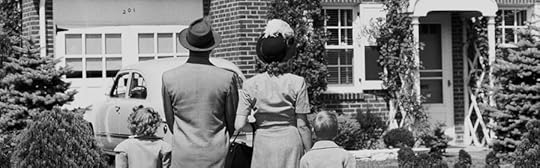
Il sogno americano.
James Agee, uomo del sud (Tennessee), nacque nel 1909 e morì giovane, a soli quarantacinque anni.
Fu scrittore, giornalista, poeta, sceneggiatore e critico, letterario prima e cinematografico dopo. Collaborò e firmò insieme ad altri la sceneggiatura di The African Queen, il celebre film di John Huston, e scrisse lo script di The Night of the Hunter-La morte corre sul fiume, capolavoro dell’attore e regista inglese Charles Laughton, che intervenne sul copione se non altro per ridurlo a durata normale.
Da critico pubblicò per anni su Fortune, Time, The Nation e Life Magazine, sviluppando una grande passione e competenza sul cinema muto.
Come Francis Scott Fitzgerald, come Thomas Wolfe, come Dylan Thomas, Agee ha vissuto una vita molto breve e molto alcolica.
La sua vita fu segnata dall’evento al centro di questo romanzo: la morte di suo padre.
James aveva sei anni quando il suo amatissimo e ammirato padre, figura per lui gigantesca, morì in un incidente d’auto, proprio come il padre di Rufus, il bambino di questo romanzo.
Pubblicato postumo nel 1957, due anni dopo la morte di Agee, vinse il Premio Pulitzer nel 1958 – fu tradotto in italiano quasi subito (1960) da Garzanti col titolo “Il mito del padre”, poi ripreso dagli Editori Riuniti (1982) che fecero corrispondere il titolo italiano a quello originale, pubblicato nel 2003 anche dalle Edizioni e/o, e infine (credo) da Il Saggiatore.
Nonostante le quattro edizioni, non mi pare che quest’opera sia riuscita a farsi notare dai lettori italiani.
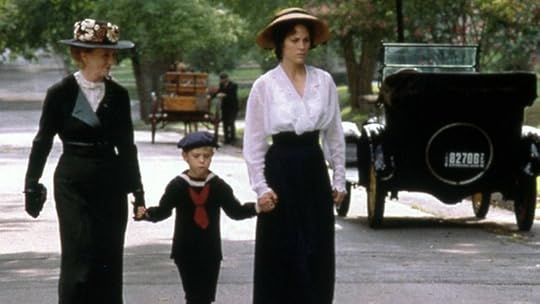
Il film TV “A Death In the Family” del 2002.
Il padre in queste pagine è una figura mitica, come il primo titolo italiano evidenzia: non solo padre perfetto, molto ammirato dal piccolo Rufus che gli è oltremodo legato e affine – ma è anche lodevole marito, pilastro della famiglia, fulcro di una piccola comunità.
La tragedia è tanto più vasta e profonda quanto più apprezzato e vigoroso era il defunto, marito, padre, figlio, fratello, amico, uomo.
Per il bimbo narrato, e per il bimbo che lo scrittore è stato, si tratta di un trauma che si porterà dietro – anche perché la madre di James si risposa con un reverendo della chiesa episcopale, e al piccolo James si apre la porta di un collegio dietro l’altro, tutti religiosi (Ordine della Santa Croce, etc.)
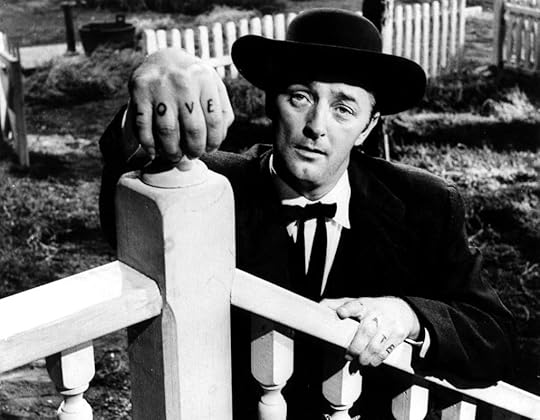
Grandioso Robert Mitchum in “The Night of the Hunter-La morte corre sul fiume” di Charles Laughton, 1955, anno della morte di Agee.
Agee, con tecnica cinematografica, alterna i punti di vista, e racconta l’antefatto del drammatico incidente così come le conseguenze. Un vortice di emozioni e dolore, di interrogativi e dubbi, dove fede dio e religione sono messi subito in discussione (se dio è buono e misericordioso, come può permettere una cosa simile?!).
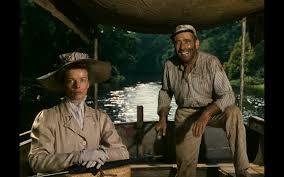
”The African Queen-La Regina d’Africa” di John Huston, con Humphrey Bogart e Kathrine Hepburn, 1951.
E, altrettanto alterna momenti di scrittura più immediata e asciutta ad altri dove la ricerca della poesia (lirismo) e della raffinatezza diventa eccessiva, sconfinando in zona leziosaggine e sdolcinatura (=melassa).
Le pagine migliori sono proprio quelle affidate al piccolo Rufus, sono i momenti più veri, i più atroci.
Per quanto il dramma di Rufus sia squisitamente personale, Agee sa trasformarlo in evento universale, che è istintivo condividere.

James Agee da piccolo con la mamma, Laura. A quell’età, in famiglia, Agee veniva chiamato Rufus invece di James-Jim-Jamie, proprio come il bambino del romanzo.
Il sogno americano.
James Agee, uomo del sud (Tennessee), nacque nel 1909 e morì giovane, a soli quarantacinque anni.
Fu scrittore, giornalista, poeta, sceneggiatore e critico, letterario prima e cinematografico dopo. Collaborò e firmò insieme ad altri la sceneggiatura di The African Queen, il celebre film di John Huston, e scrisse lo script di The Night of the Hunter-La morte corre sul fiume, capolavoro dell’attore e regista inglese Charles Laughton, che intervenne sul copione se non altro per ridurlo a durata normale.
Da critico pubblicò per anni su Fortune, Time, The Nation e Life Magazine, sviluppando una grande passione e competenza sul cinema muto.
Come Francis Scott Fitzgerald, come Thomas Wolfe, come Dylan Thomas, Agee ha vissuto una vita molto breve e molto alcolica.
La sua vita fu segnata dall’evento al centro di questo romanzo: la morte di suo padre.
James aveva sei anni quando il suo amatissimo e ammirato padre, figura per lui gigantesca, morì in un incidente d’auto, proprio come il padre di Rufus, il bambino di questo romanzo.
Pubblicato postumo nel 1957, due anni dopo la morte di Agee, vinse il Premio Pulitzer nel 1958 – fu tradotto in italiano quasi subito (1960) da Garzanti col titolo “Il mito del padre”, poi ripreso dagli Editori Riuniti (1982) che fecero corrispondere il titolo italiano a quello originale, pubblicato nel 2003 anche dalle Edizioni e/o, e infine (credo) da Il Saggiatore.
Nonostante le quattro edizioni, non mi pare che quest’opera sia riuscita a farsi notare dai lettori italiani.
Il film TV “A Death In the Family” del 2002.
Il padre in queste pagine è una figura mitica, come il primo titolo italiano evidenzia: non solo padre perfetto, molto ammirato dal piccolo Rufus che gli è oltremodo legato e affine – ma è anche lodevole marito, pilastro della famiglia, fulcro di una piccola comunità.
La tragedia è tanto più vasta e profonda quanto più apprezzato e vigoroso era il defunto, marito, padre, figlio, fratello, amico, uomo.
Per il bimbo narrato, e per il bimbo che lo scrittore è stato, si tratta di un trauma che si porterà dietro – anche perché la madre di James si risposa con un reverendo della chiesa episcopale, e al piccolo James si apre la porta di un collegio dietro l’altro, tutti religiosi (Ordine della Santa Croce, etc.)
Grandioso Robert Mitchum in “The Night of the Hunter-La morte corre sul fiume” di Charles Laughton, 1955, anno della morte di Agee.
Agee, con tecnica cinematografica, alterna i punti di vista, e racconta l’antefatto del drammatico incidente così come le conseguenze. Un vortice di emozioni e dolore, di interrogativi e dubbi, dove fede dio e religione sono messi subito in discussione (se dio è buono e misericordioso, come può permettere una cosa simile?!).
”The African Queen-La Regina d’Africa” di John Huston, con Humphrey Bogart e Kathrine Hepburn, 1951.
E, altrettanto alterna momenti di scrittura più immediata e asciutta ad altri dove la ricerca della poesia (lirismo) e della raffinatezza diventa eccessiva, sconfinando in zona leziosaggine e sdolcinatura (=melassa).
Le pagine migliori sono proprio quelle affidate al piccolo Rufus, sono i momenti più veri, i più atroci.
Per quanto il dramma di Rufus sia squisitamente personale, Agee sa trasformarlo in evento universale, che è istintivo condividere.
James Agee da piccolo con la mamma, Laura. A quell’età, in famiglia, Agee veniva chiamato Rufus invece di James-Jim-Jamie, proprio come il bambino del romanzo.

September 9, 2013
An oldie (1938) but a goodie. This book is a poster child for truth in advertising: it is precisely what its title tells us. A young husband and father is taken in the prime of life. As the family gathers in the house before the funeral, we hear every comforting word, every sob. We hear the prayers with the priest; we pick up the scent of flowers; we hear the empty condolences. A grief-stricken toddler daughter is hiding under the bed. They start loading the hearse.

In between these scenes we learn of the family squabbles: a Catholic woman in Tennessee who struggled to gain the acceptance of her husband’s non-Catholic family. We get glimpses of that family: the deaf mother-in-law; the alcoholic younger brother; the spinster aunt.
It’s also a discussion of God interpreted by the young boy who has lost his father. He tries to interpret things through the contradictory and confusing things he hears from adults. – is He out there or not? Most of the story is told through the eyes of this young boy.
The work is set in 1915, so we have hand-crank cars and horses. I read this book because the blurb said people talk about this book years after they have read it. I think that’s a fair statement and good testimony for this book.
Although Agee’s most famous work is probably Let Us Now Praise Famous Men, he won the 1958 Pulitzer (posthumously) for A Death. Agee led a typical Great Author life: he was a chain-smoking alcoholic who died at age 45 from a heart attack in a taxi on his way to a doctor’s appointment. He had multiple children with multiple spouses.
Photo of Agee, aged 28, from Wikipedia
(Revised 3/4/2017)
In between these scenes we learn of the family squabbles: a Catholic woman in Tennessee who struggled to gain the acceptance of her husband’s non-Catholic family. We get glimpses of that family: the deaf mother-in-law; the alcoholic younger brother; the spinster aunt.
It’s also a discussion of God interpreted by the young boy who has lost his father. He tries to interpret things through the contradictory and confusing things he hears from adults. – is He out there or not? Most of the story is told through the eyes of this young boy.
The work is set in 1915, so we have hand-crank cars and horses. I read this book because the blurb said people talk about this book years after they have read it. I think that’s a fair statement and good testimony for this book.
Although Agee’s most famous work is probably Let Us Now Praise Famous Men, he won the 1958 Pulitzer (posthumously) for A Death. Agee led a typical Great Author life: he was a chain-smoking alcoholic who died at age 45 from a heart attack in a taxi on his way to a doctor’s appointment. He had multiple children with multiple spouses.
Photo of Agee, aged 28, from Wikipedia
(Revised 3/4/2017)

July 17, 2018
“Sobre tu dormir profundo y sin sueños, pasan las estrellas silenciosas”“Una muerte en la familia” es una novela verdaderamente singular. Lo es por la gran delicadeza con la que el autor explora los sentimientos que rodean a la muerte, desde la incomprensión, la protesta y el abatimiento hasta el profundo sentimiento de soledad y la final resignación llena de amor y ternura; lo es por la intensidad poética que Agee imprime al relato y la fuerza con la que logra conmovernos; y, finalmente, lo es por ser una novela editada póstumamente por su amigo David McDowell en 1957 y ganadora del Premio Pulitzer al año siguiente.
“¿Qué se puede decir? ¿Qué tipo de ayuda podemos prestar, yo o cualquier otra persona?”Alcohólico, depresivo y autodestructivo, Agee nos abre su corazón en esta novela autobiográfica con una dolorosa sinceridad en lo que parece ser una expiación de un sentimiento de culpa por todo aquello que no sintió los días posteriores a la muerte de su padre, por lo importante y especial que se sintió en aquellos días de duelo, por su falta de coraje ante la vida y su necesidad de aceptación por parte de los otros que incluso le llevó a presumir ante los chicos del colegio de su reciente orfandad.
“Ha muerto. Murió anoche mientras yo dormía y ahora ya es por la mañana. Está muerto desde anoche y yo no lo he sabido hasta que me he despertado. Ha estado muerto toda la noche mientras yo dormía, y ahora es por la mañana y yo estoy despierto, pero él sigue muerto y seguirá muerto toda la tarde, y toda la noche, y todo mañana, y mientras yo vuelva a dormir otra vez y vuelva a despertar otra vez y vuelva a dormir otra vez, y nunca más podrá volver a casa, pero le veré una vez más antes de que se lo lleven. Ahora está muerto. Murió anoche mientras yo dormía y ya es por la mañana.”Es también un cuestionamiento de la religiosidad, de cómo debe entenderse, de su eficacia ante el dolor. Un conflicto que en la novela se establece, no solo entre aquellos que ven la muerte accidental del padre como un mero hecho fortuito, sin significado alguno, y los que ven en ello un propósito divino, sino también con aquellos que, profesando la fe, no entienden cómo Dios pudo permitir la muerte inútil y absurda de un buen hombre. En los momentos finales de la novela, una simbólica mariposa que se posa en el ataúd durante el entierro parece conciliar las posturas en ese anhelo vital, bien de trascendencia, bien de poesía, del que nunca nos podremos desprender.
Con una gran contención e inteligencia, Agee no tiene que recurrir a dramatismos efectistas para mostrarnos escenas verdaderamente desgarradoras en las que tanta importancia tiene lo que se dice como lo que se calla y se sospecha. Los detalles, por pequeños que sean, adquieren en la prosa del autor una relevancia crucial en la imagen que nos llega de cada uno de los miembros de esta familia en esos momentos de horror devastador en los que nos convertimos en espíritus, sin apenas conciencia del cuerpo, hasta el punto de sorprendernos cuando este nos requieren atención, una atención que nos afrenta y hasta nos humilla y que, contradictoriamente, nos apremia a seguir viviendo.

May 28, 2021
رواية متقنة إلى درجة مخيفة. لا تميل إلى استدرار العواطف، ولكنها تفاجئك بدرجة تأثرك وبعمق جرح الفقد بداخلك.
ريفيو مصور:
https://www.youtube.com/watch?v=C_jrQ...
ريفيو مصور:
https://www.youtube.com/watch?v=C_jrQ...

April 15, 2021
هذا إذن.. ما تبدو عليه رواية أمريكية مكتوبة بأصالة؟ رواية مدفوعة بمتطلبات الشرط الفني وحده، متحررة من معايير هوليوود المسطّحة؟ هاليلويا.
هذه رواية لا تتحدث عن النرجسية والاضطهاد الأسري والمخدرات، الشخصيات ليست خارقة - مع بعض العيوب للمحافظة القِشرية على الشرط البشري - وهي قطعًا ليست أحجية لجريمة ستحل نفسها بالنهاية.
إنها رواية غير ملوثة بالسُّخام التجاري، عن أشخاص عاديين، عن عائلة عادية، عن موت عادي. لا شيء فيها مصطنع، وبالتأكيد ما من حركات بهلوانية في الحبكة. إنها رواية تحافظ على بساطتها بوقارٍ قدير.
شكرًا إيمان أسعد على الترجمة الرائعة.

December 12, 2022
I read this in high school. Don't remember much about it, but I went on to find other things written by Agee. I didn't find much, but I still have my copy of Agee on Film.

March 14, 2024
Deep as a Southern night, this book is beautiful as it is dark. Open it as you would a door. Hear the crickets' roar. See the fireflies spark. It is a masterpiece.
I could tell you how it's about death but the title does that well enough.
I could say it's based on real life but that is so obvious.
I could compare it to poetry but he is a poet after all.
So, here's a poem by the author (come close, it's a quiet one) for a taste of what is to come (in sentence form) in this novel.
A Lullaby by James Agee
Sleep, child, lie quiet, let be:
Now like a still wind, a great tree,
Night upon this city moves
Like leaves, our hungers and our loves,
Sleep, rest easy, while you may.
Soon it is day.
And elsewhere likewise love is stirred:
Elsewhere the speechless song is heard:
Wherever children sleep or wake,
Souls are lifted, hearts break.
Sleep, be careless while you can.
Soon you are a man.
And everywhere good men contrive
Good reasons not to be alive.
And even should they build their best
No man could bear tell you the rest.
Sleep child, for your parents sake.
Soon you must wake.
I could tell you how it's about death but the title does that well enough.
I could say it's based on real life but that is so obvious.
I could compare it to poetry but he is a poet after all.
So, here's a poem by the author (come close, it's a quiet one) for a taste of what is to come (in sentence form) in this novel.
A Lullaby by James Agee
Sleep, child, lie quiet, let be:
Now like a still wind, a great tree,
Night upon this city moves
Like leaves, our hungers and our loves,
Sleep, rest easy, while you may.
Soon it is day.
And elsewhere likewise love is stirred:
Elsewhere the speechless song is heard:
Wherever children sleep or wake,
Souls are lifted, hearts break.
Sleep, be careless while you can.
Soon you are a man.
And everywhere good men contrive
Good reasons not to be alive.
And even should they build their best
No man could bear tell you the rest.
Sleep child, for your parents sake.
Soon you must wake.

August 23, 2016
You May Ask Yourself...Am I Right? Am I Wrong? ....Same as it ever was; same as it ever was"
And you may ask yourself:
Do I Want to Feel the Loss of a fictional Close Family Member?
And you may tell yourself:
Might Help Me through Grieving
Letting the days go by, let the water hold me down ["Once in a Lifetime," Talking Heads]
Set primarily in east Tennessee, A Death in the Family won the 1958 Pulitzer Prize for Lit. This book is among a handful that I could not finish reading after realizing where the novel was headed, saying, 'nope, life's too damn short, I cannot volunteer myself to suffer through this experience.' Specifically, I chose abandonment after asking why I must read a book to experience a tragic event (death of a man, who was a father, a husband, a brother, a son to surviving family members) and its aftermath (grieving), so painful to endure in reality. In all likelihood, you've already lost someone close, and, if you're blessed enough to live decades longer, you will grieve the loss of a loved one at least a few more times in your life.
I recall the painful ordeal of losing my mom suddenly to heart failure 4 years ago. While I appreciate the literary quality of this novel, I've concluded that life is just too short and my reading time too limited to spend hours vicariously living through such intimate agony and sadness that pervade this novel.
That said, there may well come a time in my life that I will decide to read this book and that I will find it a salvation in allowing me to face my pain, emptiness, grief and anger and help me to move forward.
Another true value and harsh splendour of good literature is that it's one of the few places in life "where loneliness is countenanced, stared down, transfigured, treated." [David Foster Wallace]. It also serves as a marker along life's path for 1) the me who could not now finish this book and 2) the me perhaps in ten/twenty years who could not do without it.
And you may ask yourself:
Do I Want to Feel the Loss of a fictional Close Family Member?
And you may tell yourself:
Might Help Me through Grieving
Letting the days go by, let the water hold me down ["Once in a Lifetime," Talking Heads]
Set primarily in east Tennessee, A Death in the Family won the 1958 Pulitzer Prize for Lit. This book is among a handful that I could not finish reading after realizing where the novel was headed, saying, 'nope, life's too damn short, I cannot volunteer myself to suffer through this experience.' Specifically, I chose abandonment after asking why I must read a book to experience a tragic event (death of a man, who was a father, a husband, a brother, a son to surviving family members) and its aftermath (grieving), so painful to endure in reality. In all likelihood, you've already lost someone close, and, if you're blessed enough to live decades longer, you will grieve the loss of a loved one at least a few more times in your life.
I recall the painful ordeal of losing my mom suddenly to heart failure 4 years ago. While I appreciate the literary quality of this novel, I've concluded that life is just too short and my reading time too limited to spend hours vicariously living through such intimate agony and sadness that pervade this novel.
That said, there may well come a time in my life that I will decide to read this book and that I will find it a salvation in allowing me to face my pain, emptiness, grief and anger and help me to move forward.
Another true value and harsh splendour of good literature is that it's one of the few places in life "where loneliness is countenanced, stared down, transfigured, treated." [David Foster Wallace]. It also serves as a marker along life's path for 1) the me who could not now finish this book and 2) the me perhaps in ten/twenty years who could not do without it.

September 20, 2008
When I told Brendan that I'd finished "A Death in the Family" he asked me how it made me feel. Not "What did you think of the book?" but "How did it make you feel?"
I felt those hideous, unspeakable emotions that arise when contemplating the death of a loved one. I felt the suffocating sorrow knowing the worst was yet to come for the characters: after the ceremonies end and friends and family slip away to return to their lives, you are left alone and the shock wears away to leave you hopeless and bereft. And yet I felt also the solid hope that those left behind can pick up the remnants of their lives and move on, that healing will come.
What I treasured about this novel is its simplicity and purity. There is no plot in a traditional sense, no build-up of events culminating in a conclusion, only a story as real and old as time. Although Agee died before the book's completion and its contents were pieced together, I didn't feel anything was left unwritten. There was a completeness to the characters' experiences, the narrative ending just as Mary's life without Jay was really beginning.
The details left a profound impression, as well. The fixation on the manner and details of Jay's death was so natural - we are wired to sort out and categorize events in our attempt to understand and control. Mary's embarrassment over wishing Aunt Hannah to stay with her rather than her own mother acknowledged that shouting at her half-deaf mom would have turned grief into a farce; the discussion about hot toddies versus whiskey neat, the smell of Mary's breath as she explained Jay's death to his children - so many mundane events take on a surreal glow in the light of tragedy.
Agee fit as naturally into the minds of young Rufus and his little sister as those of the adults. Rufus's experience at the hands of stupid and cruel children and the pleasure he takes as his status rises in the glamour of his father's accident; little Catherine's inability to grasp the forever of her daddy's disappearance from her life; the bickering and boredom of two young kids trapped in a home in mourning- all delivered sincerely through the eyes and words of children, heartbreaking but not melodramatic.
A beautiful book that's probably been the bane of many high school junior English classes- better left for a quiet time and quiet reflection when one isn't feeling quite so invincible.
I felt those hideous, unspeakable emotions that arise when contemplating the death of a loved one. I felt the suffocating sorrow knowing the worst was yet to come for the characters: after the ceremonies end and friends and family slip away to return to their lives, you are left alone and the shock wears away to leave you hopeless and bereft. And yet I felt also the solid hope that those left behind can pick up the remnants of their lives and move on, that healing will come.
What I treasured about this novel is its simplicity and purity. There is no plot in a traditional sense, no build-up of events culminating in a conclusion, only a story as real and old as time. Although Agee died before the book's completion and its contents were pieced together, I didn't feel anything was left unwritten. There was a completeness to the characters' experiences, the narrative ending just as Mary's life without Jay was really beginning.
The details left a profound impression, as well. The fixation on the manner and details of Jay's death was so natural - we are wired to sort out and categorize events in our attempt to understand and control. Mary's embarrassment over wishing Aunt Hannah to stay with her rather than her own mother acknowledged that shouting at her half-deaf mom would have turned grief into a farce; the discussion about hot toddies versus whiskey neat, the smell of Mary's breath as she explained Jay's death to his children - so many mundane events take on a surreal glow in the light of tragedy.
Agee fit as naturally into the minds of young Rufus and his little sister as those of the adults. Rufus's experience at the hands of stupid and cruel children and the pleasure he takes as his status rises in the glamour of his father's accident; little Catherine's inability to grasp the forever of her daddy's disappearance from her life; the bickering and boredom of two young kids trapped in a home in mourning- all delivered sincerely through the eyes and words of children, heartbreaking but not melodramatic.
A beautiful book that's probably been the bane of many high school junior English classes- better left for a quiet time and quiet reflection when one isn't feeling quite so invincible.

December 20, 2020
James Agee’s prose is finely weighted in this autobiographical fiction novel. The words are delivered with a delicate grace, each one set in its place like a jewel bracketed and waiting for the sun to show off its brilliant facets. Each phrase casts its visual imagery upon the mind as Agee balances the words just so. A sculpted study of a family’s loss and bereavement, the novel is startling in its simplicity yet cutting in its exploratory layers of what it means to be a member of this family experiencing this loss. How he crawls into the skin of six-year-old Rufus illuminates the author’s own loss of his father in a tragic accident when the author was also six-years-old.
The prologue, ‘Knoxville: Summer, 1915’ was written in 1935. The novel itself, Agee began writing in 1948. It was not complete at the time of his death in 1955 at age 45 in a New York taxicab from a heart attack, having been a heavy drinker and chain smoker during his life. Edited by David McDowell and released posthumously in 1958, the book won the Pulitzer Prize. Although the prologue was written over a decade before Agee began writing the novel, this dreamy prose poem fits wonderfully into this precise beginning as Agee invokes the summer sounds of myriad insects, the musicality of water hoses, and the magic of familial love. Here, his prose depicts the great rounded feeling of belongingness and the still more exquisite feeling that is its opposite, the undercurrent that wonders exactly who in the hell we really are. The first and last sentence of the prologue displays this exactly and is a great example of how Agee balanced this sequence.
The first sentence of the prologue:
“We are talking now of summer evenings in Knoxville, Tennessee, in the time that I lived there so successfully disguised to myself as a child.”
Last sentence of the prologue:
“Sleep, soft smiling, draws me unto her: and those receive me, who quietly treat me, as one familiar and well-beloved in that home: but will not, oh, will not, not now, not ever; but will not ever tell me who I am.”
Although loss and grief reverberate throughout I find sublime satisfaction in Agee’s celebration of fatherhood for within these pages fatherhood is noble and a high calling. “Don’t you brag,” his father tells Rufus. A moral imperative, to be among men and be one of them, neither above nor below. “That’s my boy,” he says in a moment of pride, giving Rufus a sense of identity. It was the kind of pride that gave Rufus something to live up to, even though at times he deeply feels his lack of measuring up to his father’s image of him.
Rufus, a sensitive child, is very aware of his place in the hierarchy of his school companions, but being a normal little boy, he’s very desirous of attention. At six years of age, his naivety and his immaturity draw bullies to him like flies to honey. The way the boys play jokes on him is as heartbreaking as the way Rufus keeps coming back for more of their attention, even though it’s the kind of attention parents protect their children from, and so would have Rufus’s parents if they’d known.
This novel is like a painting that I wanted to look at from every direction and in every kind of light. It speaks to me of the universal language of childhood loss, for we all lose the innocence of those days and we all lose our parents as we knew them then in the brevity of those childhood years. This novel, however, speaks to a loss that most children do not know, one that cast a long, tall shadow over James Agee’s life. I grew to know little bits and pieces about the author as I read (from a documentary about him on youtube), making me appreciate more and more his undertaking of such marvelous writing. How he approached life immoderately, head over heels, and how he had a demonstrative way of speaking, using his hands as tools to embellish his speech. I read this book as a monthly selection from the group, ‘On the Southern Literary Trail’ and I’m grateful for the opportunity. It was a book that filled me up!
The prologue, ‘Knoxville: Summer, 1915’ was written in 1935. The novel itself, Agee began writing in 1948. It was not complete at the time of his death in 1955 at age 45 in a New York taxicab from a heart attack, having been a heavy drinker and chain smoker during his life. Edited by David McDowell and released posthumously in 1958, the book won the Pulitzer Prize. Although the prologue was written over a decade before Agee began writing the novel, this dreamy prose poem fits wonderfully into this precise beginning as Agee invokes the summer sounds of myriad insects, the musicality of water hoses, and the magic of familial love. Here, his prose depicts the great rounded feeling of belongingness and the still more exquisite feeling that is its opposite, the undercurrent that wonders exactly who in the hell we really are. The first and last sentence of the prologue displays this exactly and is a great example of how Agee balanced this sequence.
The first sentence of the prologue:
“We are talking now of summer evenings in Knoxville, Tennessee, in the time that I lived there so successfully disguised to myself as a child.”
Last sentence of the prologue:
“Sleep, soft smiling, draws me unto her: and those receive me, who quietly treat me, as one familiar and well-beloved in that home: but will not, oh, will not, not now, not ever; but will not ever tell me who I am.”
Although loss and grief reverberate throughout I find sublime satisfaction in Agee’s celebration of fatherhood for within these pages fatherhood is noble and a high calling. “Don’t you brag,” his father tells Rufus. A moral imperative, to be among men and be one of them, neither above nor below. “That’s my boy,” he says in a moment of pride, giving Rufus a sense of identity. It was the kind of pride that gave Rufus something to live up to, even though at times he deeply feels his lack of measuring up to his father’s image of him.
Rufus, a sensitive child, is very aware of his place in the hierarchy of his school companions, but being a normal little boy, he’s very desirous of attention. At six years of age, his naivety and his immaturity draw bullies to him like flies to honey. The way the boys play jokes on him is as heartbreaking as the way Rufus keeps coming back for more of their attention, even though it’s the kind of attention parents protect their children from, and so would have Rufus’s parents if they’d known.
This novel is like a painting that I wanted to look at from every direction and in every kind of light. It speaks to me of the universal language of childhood loss, for we all lose the innocence of those days and we all lose our parents as we knew them then in the brevity of those childhood years. This novel, however, speaks to a loss that most children do not know, one that cast a long, tall shadow over James Agee’s life. I grew to know little bits and pieces about the author as I read (from a documentary about him on youtube), making me appreciate more and more his undertaking of such marvelous writing. How he approached life immoderately, head over heels, and how he had a demonstrative way of speaking, using his hands as tools to embellish his speech. I read this book as a monthly selection from the group, ‘On the Southern Literary Trail’ and I’m grateful for the opportunity. It was a book that filled me up!

Did Not Finish
August 15, 2026𝑑𝑛𝑓 6%
“𝑡ℎ𝑒 𝑢𝑟𝑖𝑛𝑎𝑡𝑖𝑜𝑛 𝑜𝑓 ℎ𝑢𝑔𝑒 𝑐ℎ𝑖𝑙𝑑𝑟𝑒𝑛 𝑠𝑡𝑜𝑜𝑑 𝑙𝑜𝑜𝑠𝑒𝑙𝑦 𝑚𝑖𝑙𝑖𝑡𝑎𝑟𝑦 𝑎𝑔𝑎𝑖𝑛𝑠𝑡 𝑎𝑛 𝑖𝑛𝑣𝑖𝑠𝑖𝑏𝑙𝑒 𝑤𝑎𝑙𝑙” – i’m sorry but i really don’t have the will power to read this. guess i gotta find another book to read , but i’m so sad cause i literally spent twelve dollars on this , ugh.
·•—–٠✤٠—–•·
˚₊‧꒰ა 𝐩𝐫𝐞 𝐫𝐞𝐚𝐝 ໒꒱ ‧₊˚
✦ started - aug 15 ┆ dnf 6% - aug 16
𐔌i have to read this for fricking school ughhhhhh , so yeah i waited to start my summer reading until the very very end of august, and only have a week to finish this… shouldn’t be too hard , i just hope it won’t be boring. 𐦯
“𝑡ℎ𝑒 𝑢𝑟𝑖𝑛𝑎𝑡𝑖𝑜𝑛 𝑜𝑓 ℎ𝑢𝑔𝑒 𝑐ℎ𝑖𝑙𝑑𝑟𝑒𝑛 𝑠𝑡𝑜𝑜𝑑 𝑙𝑜𝑜𝑠𝑒𝑙𝑦 𝑚𝑖𝑙𝑖𝑡𝑎𝑟𝑦 𝑎𝑔𝑎𝑖𝑛𝑠𝑡 𝑎𝑛 𝑖𝑛𝑣𝑖𝑠𝑖𝑏𝑙𝑒 𝑤𝑎𝑙𝑙” – i’m sorry but i really don’t have the will power to read this. guess i gotta find another book to read , but i’m so sad cause i literally spent twelve dollars on this , ugh.
·•—–٠✤٠—–•·
˚₊‧꒰ა 𝐩𝐫𝐞 𝐫𝐞𝐚𝐝 ໒꒱ ‧₊˚
✦ started - aug 15 ┆ dnf 6% - aug 16
𐔌i have to read this for fricking school ughhhhhh , so yeah i waited to start my summer reading until the very very end of august, and only have a week to finish this… shouldn’t be too hard , i just hope it won’t be boring. 𐦯

May 9, 2018
Published after the death of the author, A Death in the Family won the Pulitzer Prize in 1958. Classics have become classics for a reason. Unfortunately, that fact provides no guarantee that every reader is going to love a given masterpiece. Sadly, this is going to be the case here. My rating is not a reflection of the quality of the writing, it is based solely on personal preference.
Very fine writing captured the devastating grief of the new widow, the confusion of her two small children, and the awkwardness and helplessness of friends and family that invariably follows in the wake of a death. Too heavy on the religious aspects for my taste.
Very fine writing captured the devastating grief of the new widow, the confusion of her two small children, and the awkwardness and helplessness of friends and family that invariably follows in the wake of a death. Too heavy on the religious aspects for my taste.

June 3, 2021
Captivating, mesmerizing, brutally painful yet ultimately redemptive.
In some films, there will be a death or some other tragic event and the director will use an ellipsis or lapse of time and revisit the scene or the characters later after the dust has settled, after the funeral, after the grief and heartache.
Not so with James Agee’s semi-autobiographical 1957 novel about the death of a young father. Agee explores the emotions and family dynamics immediately before and after a fatal car crash. Using a variety of literary techniques including shifting perspectives and flashbacks, the author describes scenes of family, courage, despair and loss. The reader is made aware of the minute thoughts of the family, their uncertainty, and apprehension of the future without the vital leadership of the father.
Set in and around Knoxville Tennessee in 1915, this is also a novel about a time and place and Agee’s descriptive verse paints a portrait of this setting before the first world war, when the automobile was cranked to start, shared the roads with horses and mules and crossed a river on a pulled rope ferry. I thought of Cormac McCarthy’s writing, or Robert Penn Warren, and loved Agee’s use of language to convey his story.
Agee also spends time with themes of racism and religion and takes an objective view of both. There are scenes made all the more poignant by his masterful use of language and imagery.
Some of the most powerful chapters are those from the perspectives of the children, six and four, and the little boy and girl’s candid curiosity and misunderstanding, and their sweet attempts to comprehend the event.
An excellent book, highly recommended.

In some films, there will be a death or some other tragic event and the director will use an ellipsis or lapse of time and revisit the scene or the characters later after the dust has settled, after the funeral, after the grief and heartache.
Not so with James Agee’s semi-autobiographical 1957 novel about the death of a young father. Agee explores the emotions and family dynamics immediately before and after a fatal car crash. Using a variety of literary techniques including shifting perspectives and flashbacks, the author describes scenes of family, courage, despair and loss. The reader is made aware of the minute thoughts of the family, their uncertainty, and apprehension of the future without the vital leadership of the father.
Set in and around Knoxville Tennessee in 1915, this is also a novel about a time and place and Agee’s descriptive verse paints a portrait of this setting before the first world war, when the automobile was cranked to start, shared the roads with horses and mules and crossed a river on a pulled rope ferry. I thought of Cormac McCarthy’s writing, or Robert Penn Warren, and loved Agee’s use of language to convey his story.
Agee also spends time with themes of racism and religion and takes an objective view of both. There are scenes made all the more poignant by his masterful use of language and imagery.
Some of the most powerful chapters are those from the perspectives of the children, six and four, and the little boy and girl’s candid curiosity and misunderstanding, and their sweet attempts to comprehend the event.
An excellent book, highly recommended.

January 15, 2020
"A rocking chair betrayed reiterate strain, as of a defective lung; like a single note from a stupendous jews-harp, the chain of a porch swing twanged."
- James Agee, A Death in the Family

Emotionally, this unfinished autobiographical novel felt a bit like David Foster Wallace's last, unfinished novel The Pale King. But it also felt a bit like Bradbury's Dandelion Wine. It was beautiful and sad. It had no answers. Not about religion. Not about God. Not about family. It made me cry, retreading my own experiences with losing my brother a decade ago. It is strange too, to realize you are the same age the author is (45) when the author died. Mortality is a bitch.
Some of the greatness of the book is due, IMHO, to its unfinished nature. It becomes a bit impressionistic, painted with scenes and emotions that are a bit disjointed in time and space. There is also an almost rightness that such a great (and it is great) novel, like it's author, was silenced early. The novel and the author's book AND the author's life all become soft fugues of each other.
So, I can point to this book as something that resonates with me because of the shared humanity of loss and endurance and family, but it is ALSO just simply beautiful. Yes. I'm not sure if it ultimately matters that we know Mahler's 5th is about death, or whether it is beautiful independent of that knowledge. I'm just not sure. Can we really appreciate life without that shadow of that sword that haunts all of us being and intrigral part of the fabric of our stories, our art, our belief, our families, and our lives?
- James Agee, A Death in the Family
Emotionally, this unfinished autobiographical novel felt a bit like David Foster Wallace's last, unfinished novel The Pale King. But it also felt a bit like Bradbury's Dandelion Wine. It was beautiful and sad. It had no answers. Not about religion. Not about God. Not about family. It made me cry, retreading my own experiences with losing my brother a decade ago. It is strange too, to realize you are the same age the author is (45) when the author died. Mortality is a bitch.
Some of the greatness of the book is due, IMHO, to its unfinished nature. It becomes a bit impressionistic, painted with scenes and emotions that are a bit disjointed in time and space. There is also an almost rightness that such a great (and it is great) novel, like it's author, was silenced early. The novel and the author's book AND the author's life all become soft fugues of each other.
So, I can point to this book as something that resonates with me because of the shared humanity of loss and endurance and family, but it is ALSO just simply beautiful. Yes. I'm not sure if it ultimately matters that we know Mahler's 5th is about death, or whether it is beautiful independent of that knowledge. I'm just not sure. Can we really appreciate life without that shadow of that sword that haunts all of us being and intrigral part of the fabric of our stories, our art, our belief, our families, and our lives?

November 9, 2023
“There were a lot of clouds,” his uncle said, and continued to look straight before him, “but they were blowing fast, so there was a lot of sunshine too. Right when they began to lower your father into the ground, into his grave, a cloud came over and there was a shadow just like iron, and a perfectly magnificent butterfly settled on the – coffin, just rested there, right over the breast, and stayed there, just barely making his wings breathe, like a heart.”
Andrew stopped and for the first time looked at Rufus. His eyes were desperate. “He stayed there all the way down, Rufus,” he said, “He never stirred, except just to move his wings that way, until it grated against the bottom like a – rowboat. And just when it did the sun came out just dazzling bright and he flew up out of that – hole in the ground, straight up into the sky, so high I couldn’t even see him anymore.” He began to climb the hill again, and Rufus worked hard to stay abreast of him. “Don’t you think that’s wonderful, Rufus? He said, again looking straight and despairingly before him.
“Yes,” Rufus said, now that his uncle really was asking him. “Yes,” he was sure was not enough, but it was all he could say.
“If there are any such things as miracles,” his uncle said, as if someone were arguing with him, “then that’s surely miraculous.”
A Death in the Family is a simple story. Jay Follet is a good man, happily married to Mary, with a 6-year-old son named Rufus and a younger daughter named Catherine. He gets a call from his brother that their father is gravely ill, so he drives to his father’s home, only to learn his father is fine. On the drive back home that night, Jay is instantly killed in a car crash. His family members must begin to grapple with their grief as they get ready for his funeral.
A Death in the Family was published posthumously yet still won the Pulitzer Prize. It’s considered a classic American novel, containing as Goodreads says, “one of the most evocative depictions of loss and grief ever written.” So what surprised me after all of that was that … I didn’t find the story particularly sad. The death comes around the midpoint if the book, and the story ends just a couple of days later after the funeral. These characters are still in shock. They haven’t even really started feeling the grief and loss of such an untimely death.
But please don’t misunderstand me. A Death in the Family is a really good book. The writing is beautiful but also so believable in its details, the ways people’s focus and thoughts wander even (or maybe especially) when heartbroken. And the dialogue between all of the characters—but especially between the children Rufus and Catherine—is extraordinary. Recommended.

June 29, 2018
Two Inquiries
I'm starting this review for the third time, hoping to make it more focused and succinct. Let's start with the best the book has to offer:
Anyone who knows James Agee's rapturous prose-poem Knoxville: Summer 1915, whether in print or in Samuel Barber's evocative setting for soprano and orchestra, will recognize the voice of genius. We hear it in the unhurried description of the summer evening sounds, the ordinary detail of family life in the garden, the mazy repetitions, the lapping rhythm lulling the six-year old boy to eventual sleep, all leading to that startling ending: "…but will not ever tell me who I am." It is printed as the Prologue to this autobiographical novel, published after his death two decades later. When I read it, I assumed that this had always been Agee's intention, and that the 240-page novel would continue the adult's exploration of that primal question—Who am I, and what has made me so?—taking the six-year-old boy's experience of his father's death in a car accident as the germinal, catalytic event.
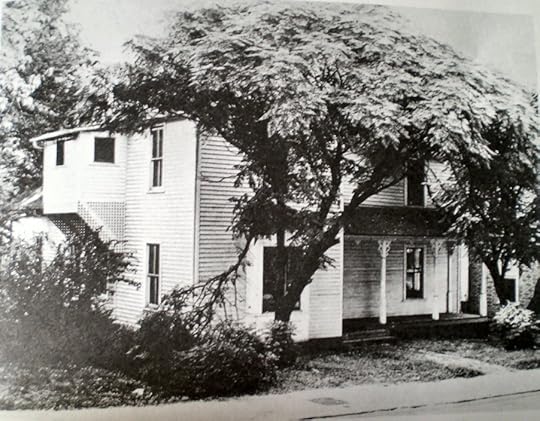
Knoxville: Agee's childhood home
…On the rough wet grass of the back yard my father and mother have spread quilts. We all lie there, my mother, my father, my uncle, my aunt, and I too am lying there. First we were sitting up, then one of us lay down, and then we all lay down, on our stomachs, or on our sides, or on our backs, and they have kept on talking. They are not talking much, and the talk is quiet, of nothing in particular, of nothing at all in particular, of nothing at all. By some chance, here they are, all on this earth; and who shall ever tell the sorrow of being on this earth, lying on quilts, on the grass, in a summer evening, among the sounds of the night.
After a little I am taken in and put to bed. Sleep, soft smiling, draws me unto her: and those receive me, who quietly treat me, as one familiar and well-beloved in that home: but will not, oh, will not, not now, not ever; but will not ever tell me who I am.
To a certain extent, I was right. Much of the novel is seen through the eyes of the boy, Rufus, as he dimly hears his father, Jay Follet, leaving on a night-time errand, then learns that he will never be coming home again. But not all of it. The second of the book's three parts, a vigil as his mother and her family wait anxiously for news, takes place at night, while the children are asleep in bed. And in the rest, the narrative voice keeps shifting between adults and children, but is never the same voice as the Knoxville prologue. The magic first person singular, at once the child and his adult self, has gone for good. The Agee of the novel still has the same insight into the thoughts and worries of children (and adults too), but now instead of inhabiting them, he stands a little way to one side, explaining and analyzing as a mature writer. My first reaction was thus one of disappointment; it was only when discussing it in book club that I realized how much the novel has in it nonetheless.
What I did not realize was that the book is incomplete, in some obvious senses and in others not so obvious. When Agee died in 1955, he left twenty sequential chapters more or less completed, running from the day before Jay's death to the day of his funeral; some of these include the children, some only the adults. There were also six other chapters from earlier years, anecdotes focused on the boy Rufus, that the author presumably considered including, but left no instructions on how to do so; it was the editors' decision to insert these as italicized interludes between the main parts of the book. They also took the step of adding the Knoxville: Summer 1915 piece, also in italics, as a prelude. This way, there would at least seem to be a continuous stream of childhood flowing around the main limbs of the book. But it doesn't make for narrative or stylistic unity, and one wonders how the author himself might have rearranged or even purged the material.
James Agee
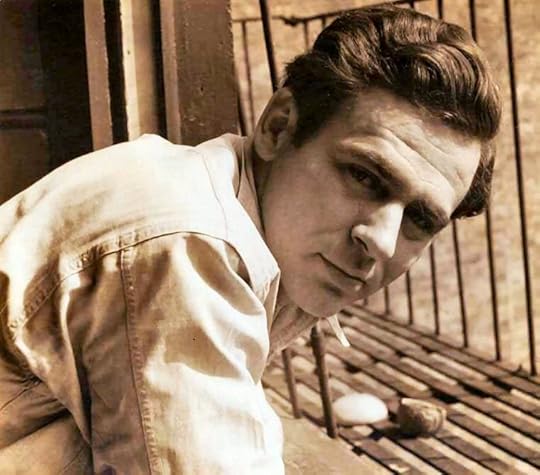
The editors found the twenty central chapters "finished," yes, in that they supplied a mostly coherent story, but that did not mean that Agee might not have strengthened them if he had lived. As it is, the book has two problems: it lacks a clear focus, and it squats uneasily on the border between memoir and fiction. If you check it against Agee's biography, you find it for the most part factually identical: the author was indeed known by his middle name, Rufus, as a child; his father, Jay, came from rural stock and married upwards into a middle-class Knoxville family; he had the same jobs, lived at the same address, sired children of the same ages, and so on. The only factual details that are changed seem to be the family surname and the given names of Agee's mother and sister. What makes it a novel is that the author is free to imagine dialogue he hadn't heard and the inner thoughts of his adult characters (as well as, brilliantly, his own). What sabotages it as a novel, however, is that the reader never knows whether something is included because the author needed just that thing at that time, or merely because it happened in real life; is the reader being led or left to wander?
One key example of that is the opening chapter of Part II, in which the mother (Mary in the novel) receives a phone call telling her of Jay's accident. Whether from tact or embarrassment, the caller does not say more. So Mary has to wait until her brother drives out there and returns to find out that he is actually dead. For a novelist, it is a perfect set-up: the long period of suspense, the children safely out of the picture, the family quietly assembling. And Agee seeds this Petri dish with elements that are mostly new: the social differences between the two families, a slight estrangement between Mary and her father, and above all Mary's fervent piety, which her father calls "a stinking morass of churchiness." There is an artifice about the entire sequence which would be marvelous as a play or a film—if only I could be sure that Agee had indeed constructed it with authorial intent, rather than just going with the flow as it really happened. As it is, it makes such a break from the tone of the rest that it seems to throw the whole childhood theme out of the window.
What I now suspect has happened is that, in preparing the novel, Agee had not one inquiry in mind, but two. One was to remember where he came from and work out what he had become, taking his father's death as the formative event. But his other aim, I think, is to solve the mystery of what had become of his mother, who changed from a normal loving parent into some kind of paragon of piety. In real life, after Laura Agee married an Anglo-Catholic priest and moved to Maine, the adolescent author could hardly bear to visit. Might this change not also be explained by the same catalytic event, her husband's death? Two inquiries crammed into one book that does not quite hold together. Given more time, and by shaping it more decisively as fiction, might Agee not have made it cohere?
There is one sequence in Part III when the two threads do really come together, as an Anglo-Catholic clergyman, the odious Father Jackson, arrives to officiate, and his sanctimonious arrogance immediately sets the children on edge. Hear they are listening to him pontificate through their mother's bedroom door:
The man's voice […] rang very strongly with the knowledge that it was right and that no other voice could be quite as right; it seemed to say unpleasant things as if it felt they were kind things to say, or again, as if it did not care whether or not they were kind because in any case they were right.I have mentioned problems; now let me end with what A Death in the Family gets gloriously right: the environment of warmth in which all this takes place. The seven short chapters in Part I seem designed as a gallery of family vignettes: Jay and Rufus, Mary and Jay, Jay's thoughts, Mary's thoughts, Rufus and his sister Caroline, Jay and his brother, Rufus and his delightfully surprising great-aunt Hannah. And they continue into the other two parts, adding Mary's brother, her parents, and (my favorite character in the novel) their old family friend Walter. As a hymn to family love and social kindness, Agee's novel is a triumph. And every now and then, he returns to the characteristic voice of the Knoxville piece, showing that even tragedy takes place in the everyday rightness of ordinary life, as in this description of the family after the funeral; I find it strangely consoling:
But much as she had hurried, all that she did after she got back to her chair was to sit with her hands in her lap and stare straight ahead of her through her heavy lenses, and all that they could do was to sit quietly too, and look at the clean lace curtains at the window, and at the magnolia trees and the locust tree in the yard, and at the wall of the next house, and at a heavy robin which fed along the lawn, until he flew away, and at the people who now and then moved past along the sunny sidewalk, and at the buggies and automobiles which now and then moved along the sunny street. They felt mysteriously immaculate, strange and careful in their clean clothes, and it seemed as if the house were in shadow and were walking on tiptoe in the middle of an easy, sunny world.

August 18, 2019
I have never seen the portrait of grief drawn so vividly and sporadically as in Agee’s posthumous novel, A Death in the Family. Every space, light, distance, and shadow weigh heavy against every ounce of feeling derive from the minutiae of everyday gestures and conversations; and they weigh heaviest once they turn into a series of memories. Since this novel does not rely on a rich narrative but more on the inevitable wake of death, it painfully but genuinely communicates—in often repetitive but differently structured phrases—a confrontation with mortality through its band of characters. The children are confused, the others conflicted, one is ladened with guilt, the wife is submerged both in emptiness and a roller coaster of emotions because in A Death in the Family, no months or years roll by but a day by day painstaking coping until the funeral. But as much as Agee’s prose is stunning it feels incomplete with some characters underused and underdeveloped. The italicised parts which are interspersed between the present seem out of place, even dull and negligible. Whilst its religious themes are also appreciable I can’t help but notice how unpolished they are that they just meddle with the novel’s intent. It is always questionable to publish an author’s leftover works after a sudden death. They often look like a mosaic created from whatever scraps are available. This is noticeable in A Death in the Family but how palpably slow-moving this all is gives bereavement the potential to immortalise; its mourners surrounded by its many arms in whispers of gnawing thoughts of the departed. For this they live on.

December 13, 2012
This is not a poorly-written book, only an extremely boring one. I had to force myself to read it because I felt surely there was some redeeming quality in it that would merit its being awarded a Pulitzer Prize. Obviously, there are many other readers who appreciate Agee's writing style. As for myself, it makes me want to punch a wall or break things when I have to plod through painstaking descriptions of people's thoughts, going round and round over the same thing like a dog worrying a bone. When not filling page after page (with nary a paragraph break) with the same thought being described ten ways to Sunday, the author then switches to dialogue: a tortuous, repetitive dialogue that goes on for pages and pages of either a person saying the same thing over and over in different ways, or of a group of people talking and talking relentlessly about the same subject. One has to endure every sigh, every interrupted thought, every stutter. Worse of all, there is a deaf grandma with an ear trumpet who keeps asking what everyone is saying, so we have to hear it all over again for her benefit.

Did Not Finish
August 18, 2021وصلت لصفحة سبعين وخلاص مش قادرة أكملها. جبتها من سور الازبكية من خمستاشر سنة وحاولت اقراها وقتها وفشلت.
واللي مضايقني وحازز في نفسيتي، انها رواية من الروايات اللي بتتناول العلاقات الأسرية ومدى تعقد تركيبها، وده نوع أنا بحبه جدا من الروايات.
بس الرواية مملة بشكل بشع. كم كتابة مكرر وممل بشكل كريه بوظ أي احتمالية للاستمتاع بجمال الحكاية نفسها اللي كنت فعلا عاوزة أقراها واعرف تفاصيلها.
الرواية دي محتاجة حد يختصرها ويكتبها تاني بشكل يخلي الواحد يعرف يقراها. أو تتحول لفيلم سينمائي مكتوب حلو يعوض بشاعة كتابة النص الروائي
أول مرة أقرر عدم مواصلة قراءة كتاب وابقى حاسة بأسف وندم في نفس الوقت
تاريخ محاولة القراءة الثانية
18-8-2021
واللي مضايقني وحازز في نفسيتي، انها رواية من الروايات اللي بتتناول العلاقات الأسرية ومدى تعقد تركيبها، وده نوع أنا بحبه جدا من الروايات.
بس الرواية مملة بشكل بشع. كم كتابة مكرر وممل بشكل كريه بوظ أي احتمالية للاستمتاع بجمال الحكاية نفسها اللي كنت فعلا عاوزة أقراها واعرف تفاصيلها.
الرواية دي محتاجة حد يختصرها ويكتبها تاني بشكل يخلي الواحد يعرف يقراها. أو تتحول لفيلم سينمائي مكتوب حلو يعوض بشاعة كتابة النص الروائي
أول مرة أقرر عدم مواصلة قراءة كتاب وابقى حاسة بأسف وندم في نفس الوقت
تاريخ محاولة القراءة الثانية
18-8-2021

August 7, 2014
James Agee was only six years old when his young father died in an automobile accident. "A Death in the Family" is an autobiographical novel of that sad time with much of the novel seen through a child's eyes. The novel was unfinished when James Agee also died at a young age. His editor had to decide where to place several gorgeously written flashback scenes of happier days for the family so that they would not detract from the main story.
The beginning of the novel shows the love between Jay and his son Rufus. They go to a Charlie Chaplin movie together, and walk home in comfortable, quiet companionship. "It was, mainly, knowing that his father, too, felt a particular kind of contentment, here, unlike any other, and that their kinds of contentment were much alike, and depended on each other." The first part also shows the caring and commitment in the relationship between Jay and his wife Mary.
The second part involves Mary receiving a phone call that her husband has been in an accident. Mary sends out her brother to find out what happened, while she and her aunt wait in the kitchen, fearing the worst. After she gets the tragic news, she asks God to forgive her for her grieving. Other supportive family members are upset that Mary turns so much to religion since they do not have the same beliefs, but she finds comfort in the ritual of prayer.
The third part show Rufus and his little sister trying to understand death and religion. They feel very alone with their mother constantly praying, and the presence of a cold priest further isolates them.
Agee's writing is beautiful poetic prose, very detailed with gorgeous imagery. He gets into the minds of the characters so the reader can feel all their emotions--love, fear, doubt, hatred, shame, confusion, and more. This is a sensitive look at a family dealing with life and death.
More about James Agee and his family: Agee also wrote a shorter autobiographical novel, The Morning Watch , about his years at an Episcopalian school in Tennessee. His spiritual life and religious questioning are an important part of this book as well.
The beginning of the novel shows the love between Jay and his son Rufus. They go to a Charlie Chaplin movie together, and walk home in comfortable, quiet companionship. "It was, mainly, knowing that his father, too, felt a particular kind of contentment, here, unlike any other, and that their kinds of contentment were much alike, and depended on each other." The first part also shows the caring and commitment in the relationship between Jay and his wife Mary.
The second part involves Mary receiving a phone call that her husband has been in an accident. Mary sends out her brother to find out what happened, while she and her aunt wait in the kitchen, fearing the worst. After she gets the tragic news, she asks God to forgive her for her grieving. Other supportive family members are upset that Mary turns so much to religion since they do not have the same beliefs, but she finds comfort in the ritual of prayer.
The third part show Rufus and his little sister trying to understand death and religion. They feel very alone with their mother constantly praying, and the presence of a cold priest further isolates them.
Agee's writing is beautiful poetic prose, very detailed with gorgeous imagery. He gets into the minds of the characters so the reader can feel all their emotions--love, fear, doubt, hatred, shame, confusion, and more. This is a sensitive look at a family dealing with life and death.
More about James Agee and his family: Agee also wrote a shorter autobiographical novel, The Morning Watch , about his years at an Episcopalian school in Tennessee. His spiritual life and religious questioning are an important part of this book as well.

September 30, 2009
Agee's autobiographical masterpiece was still in unfinished form when he died—a labour of love for him, he apparently tinkered with its content and structure endlessly. What he was producing was a remarkable, plenitudinous look at a relatively mundane subject: the effect of the death of a young, strong, and good man on his wife, children and family. We are introduced to this average, likeable Tennessee family—based upon Agee's own childhood—dealing with their daily share of struggles, troubles and minor triumphs and given periodic glimpses through life's window at their unfolding story, leading up to the moment of great travail. The doomed husband, Jay Follet, is a man's man, a strong, sturdy, masculine figure who is struggling with his recent abstention from alcohol, with trying to raise two children with little money and few prospects, and dealing with the permanent sadness his devout wife bears towards his atheistic temperament.
The division between belief and unbelief straddles the entire book, as does the difference between Jay and such as his weak, insecure, and drink-beholden brother, whose intentions to display a firm responsibility and assured manner upon the perceived passing of his and Jay's own father—a mistaken diagnosis which calls Jay out upon his fateful trip—revealed only the general pitying contempt he is held within and his own collapse into the burning comfort of a liquid self-pity. This contrasts with Jay's calm strength and stolidity, which draws and reassures his shy, sensitive son, Rufus—a stand-in for Agee—whilst terrifying him with its mysterious potency and seeming unattainability. Yet such scenes as when Jay, in the midst of stealing a quick, backsliding nip, lifts his boy up onto a bar counter and proudly watches him charm the tavern patrons, or afterwards pauses with his son on a hill overlooking their town and places his hand steadily and affectionately atop the child's head, are sparsely worded moments that Agee fills with a tension, a meaning, a resonance familiar to all.
So it is that we come to feel a sense of kinship with the characters. In this manner, when Jay is killed in a traffic mishap, the grief and shock are that much more real, and hits the reader in a stark and visceral manner. I've never before read a novel that drew me so effortlessly into the sentiments and emotional turmoil of its characters and would not let go. I was shattered when Andrew, the brother of Jay's wife, Mary, reluctantly enters the house to give the grim news all know is coming, with eyes like splintered glass. The fatality derived from that commonality in so many of life's journeys, a happenstance; in this instance one involving an otherwise insignificant, mass-produced cotter pin. The banal circumstance of the accident—and the guilt Mary is burdened with by having instinctively believed that her missing husband had succumbed to the lure of drink—serves as a lightning rod for the various family members, re-introduced to a terrible separating pain and aroused within their representative positions of drawing solace from, or bearing anger towards, the Christian faith.
It is all done with a perfect pitch. There are no false scenes in the book. There is no melodrama or bathos. The relationship of Rufus with his parents is movingly recounted, as well as the utter confusion and fear that are engendered in the boy by the loss of his father. Using flashbacks of the family softly singing with each other under the stars, interacting with visiting relatives, and soothing Rufus' night terrors, Agee manages to paint touching portraits of the bonds between parents and children, husband and wife, a gentleness and kindliness to this hard-framed, firm-jawed man. There is also an opening vista which, although unrelated to the story itself, is as lovely a piece of prose as you are likely to find. In the Bantam edition that I read, the editors commented on this beautiful classic being a near perfect work of art; and there's naught I can add to that other than complete agreement.
The division between belief and unbelief straddles the entire book, as does the difference between Jay and such as his weak, insecure, and drink-beholden brother, whose intentions to display a firm responsibility and assured manner upon the perceived passing of his and Jay's own father—a mistaken diagnosis which calls Jay out upon his fateful trip—revealed only the general pitying contempt he is held within and his own collapse into the burning comfort of a liquid self-pity. This contrasts with Jay's calm strength and stolidity, which draws and reassures his shy, sensitive son, Rufus—a stand-in for Agee—whilst terrifying him with its mysterious potency and seeming unattainability. Yet such scenes as when Jay, in the midst of stealing a quick, backsliding nip, lifts his boy up onto a bar counter and proudly watches him charm the tavern patrons, or afterwards pauses with his son on a hill overlooking their town and places his hand steadily and affectionately atop the child's head, are sparsely worded moments that Agee fills with a tension, a meaning, a resonance familiar to all.
So it is that we come to feel a sense of kinship with the characters. In this manner, when Jay is killed in a traffic mishap, the grief and shock are that much more real, and hits the reader in a stark and visceral manner. I've never before read a novel that drew me so effortlessly into the sentiments and emotional turmoil of its characters and would not let go. I was shattered when Andrew, the brother of Jay's wife, Mary, reluctantly enters the house to give the grim news all know is coming, with eyes like splintered glass. The fatality derived from that commonality in so many of life's journeys, a happenstance; in this instance one involving an otherwise insignificant, mass-produced cotter pin. The banal circumstance of the accident—and the guilt Mary is burdened with by having instinctively believed that her missing husband had succumbed to the lure of drink—serves as a lightning rod for the various family members, re-introduced to a terrible separating pain and aroused within their representative positions of drawing solace from, or bearing anger towards, the Christian faith.
It is all done with a perfect pitch. There are no false scenes in the book. There is no melodrama or bathos. The relationship of Rufus with his parents is movingly recounted, as well as the utter confusion and fear that are engendered in the boy by the loss of his father. Using flashbacks of the family softly singing with each other under the stars, interacting with visiting relatives, and soothing Rufus' night terrors, Agee manages to paint touching portraits of the bonds between parents and children, husband and wife, a gentleness and kindliness to this hard-framed, firm-jawed man. There is also an opening vista which, although unrelated to the story itself, is as lovely a piece of prose as you are likely to find. In the Bantam edition that I read, the editors commented on this beautiful classic being a near perfect work of art; and there's naught I can add to that other than complete agreement.

August 11, 2007
This isn't a difficult book but it's certainly not traditional. There is practically no profluence beyond the natural causality of a single incident--the death of a good man. In other words, there are no surprises, nothing is coming that you don't already know, no real "narrative" reason to turn the page.
Rather, the book is held together by a string of incredibly detailed descriptions of highly emotional moments in one family's life. The vivid inner lives of the characters that Agee creates are instantly recognizable--I think that Agee is close to Tolstoy in his ability to verbalize those intimate feelings that pass through us, discharge their precious emotional cargo and then carry on, leaving us to dig into the recesses of our mind to try and recall, through the help of that tired bloodhound named Memory, what actually happened to us.
Mind you, the book is quite sad and offers none of the satisfaction of a good yarn with its tidy realization and conclusion. Instead, like the telescope at some tourist vista point, allowing us incredibly close access to some impossibly far site, our vision abruptly ends as our coin clanks into the bowels of the machine, and we return to our usual vantage, marveling at how beautiful and yet how brief our time away was.
Rather, the book is held together by a string of incredibly detailed descriptions of highly emotional moments in one family's life. The vivid inner lives of the characters that Agee creates are instantly recognizable--I think that Agee is close to Tolstoy in his ability to verbalize those intimate feelings that pass through us, discharge their precious emotional cargo and then carry on, leaving us to dig into the recesses of our mind to try and recall, through the help of that tired bloodhound named Memory, what actually happened to us.
Mind you, the book is quite sad and offers none of the satisfaction of a good yarn with its tidy realization and conclusion. Instead, like the telescope at some tourist vista point, allowing us incredibly close access to some impossibly far site, our vision abruptly ends as our coin clanks into the bowels of the machine, and we return to our usual vantage, marveling at how beautiful and yet how brief our time away was.

December 21, 2011
Rufus seldom had at all sharply the feeling that he and his father were estranged, yet they must have been, and he must have felt it, for always during these quiet moments on the rock a part of his sense of complete contentment lay in the feeling that they were reconciled, that there was really no division, no estrangement, or none so strong, anyhow, that it could mean much, by comparison with the unity that was so firm and assured, here. He felt that although his father loved their home and loved all of them, he was more lonely than the contentment of this family love could help; that it even increased his loneliness, or made it hard for him not to be lonely.
I've been at a loss about having these kinds of "insights" into people I have known the way that young Rufus does. Thinking too much, or maybe it is needing too much to feel at place. I would do it too. I would think that Rufus was thinking these things to understand why his father had to drink whisky, why he had to take such a long time about getting home, almost as if he didn't want to be there. Sometimes the things you think make it too easy to walk away, to feel less lonely apart.
He told me because I wasn't there and he wanted to tell somebody and thought I would want to know and I do. But not if he hates them. And he does. He hates them just like opening a furnace door but he doesn't want them to know it. He doesn't want them to know it because he doesn't want to hurt their feelings. He doesn't want them to know it because he knows they love him and he thinks he loves them. He doesn't want them to know it because he loves them. But how can he love them if he hates them so? How can he hate them if he loves them? Is he mad at them because they can say their prayers and he doesn't? He could if he wanted to, why doesn't he? And them too for saying them.
The ending of Rufus taking a walk with his Uncle Andrew and going over and over in his mind if his Uncle hates or loves his family reminds me of the hurt and suspicion shared by older members of his family. It has hurt too much to not take those tentative steps into optimism and I got hurt again so I lose and three steps back into it's their fault. I thought this was well done by Agee in placing Rufus in this (this is the only word for it) family.
And looking at himself now, he neither despised himself nor felt pity for himself, nor blamed others for whatever they might feel about him. He knew that they probably didn't the incredibly mean, contemptuous things of him that he was apt to imagine they did. He knew that he couldn't ever really know what they thought, that his extreme quickness to think that he knew was just another of his dreams. He was sure, though, that whatever they might think, it couldn't be very good, because there wasn't any very good thing to think of. But he felt that whatever they thought, they were just, as he was almost never just.
I had selected a few other passages to "hook" my review on. Several of them were about Ralph, the self-hating and alcoholic brother. He's a father, a son and a husband. He is in a lot of pain, helpless to his own mental hell hole of not being what anyone needs. I can relate to a lot through him about the pain of making it worse. My own closest relationship lost to a deathbed was not like this, exactly, but I was all too aware that I was an outsider where others were far more important to the dying. I remember thinking a lot about if I was making it worse for everyone else, imposing on their last special time together. My mother did, as it happens, later rail at me for being "too cold". So I did do it wrong (her reaction to my sisters was the opposite complaint. They also did it wrong). When faced with death this family were afraid of not being good enough for each other, or for survival afterwards. If they all loved him, they all felt something. It was too sad that Ralph couldn't feel sad as his son but all the shame as her son. Useless. I don't know if any of them would be afraid of death for themselves when faced with it. It was hard enough to cope with who was left and the hole that was left from the dead.
There was an underlying theme throughout about deciding what another person is thinking or feeling. I've become afraid of doing this unless you can bring some kind of kindness to it, as young Rufus did (it's possible he would have been let down if he had grown up under the alcoholism and allowed his hopes to continually go up. I'm still afraid of doing that with family members and I'm an adult). The underbelly of this is if you are going to be up to the task of everything. Family, death, life, love. Maybe you aren't strong enough. People would hurt as they were being loved. The little daughter, Catherine, is rejected by her mother for how closeness is perceived. Her young son, Rufus, feels like a liar because he can't talk to his father anymore. He's a liar because his mother misunderstands his intentions in being closer. He's not a liar but no one can tell him because he can't tell anyone. It's hard being as alone as Catherine and Rufus. I felt the pain of being young acutely. He could be in the heavens watching him forever, never telling his son what he can do to make it better. He'll never wave at Catherine again. If someone could tell Rufus that it wasn't evil when he could get accepted by the bullies (that was one of the best bullying descriptions I have ever read. Some boys would be nicer if only they were alone. How nothing he could do would have changed it. He was littler and he was there). If their mother could only remember every time that they needed to know she still loved them. If only they never grow up to read into her that she doesn't love them.
Mary has faith in God. Maybe Aunt Hannah does have faith in God and maybe she doesn't. I think she's too afraid to not have it. There's a drift between Mary and her father. Brother Andrew, as well. There was a drift when Jay was still alive that she would have to put her faith in God that it was the right thing. If only they could put their faith in someone who doesn't put their faith where they do. I've read complaints about their tear over religion. I felt that it only highlighted further that everyone thought they knew what everyone else was thinking (or not thinking).
Jay dies coming home from visiting his father who might not have been as close to the door of death as Ralph suggested on the phone (my heart would go out to a Ralph thinking of the guilt he'll have for the rest of his days over this one). He may or may not have been drinking. This is how my father and one of my grandfathers died (as a kid I feared the apologies for the deaths of someones we were far better off without). Also, an uncle. A few more to alcohol or drug related deaths. They were also from Tennessee where A Death in the Family is set. I kind of had to try not to think about that too much. It was strange visiting graves of dead relatives that I had never met and trying to think of something to say. I probably imagined thoughts of judgement because I am regrettably a lot like Ralph in my worse moments. I guess I relate more to Ralph than to Rufus because the young kid hasn't had time to pile on the shame of a life time of failed attempts to be there for family in times of trouble. The death of my grandfather was horrible. He had two cancer scares before the third finally killed him. He asked my mom to assist him in suicide. The aftermath of my mother dealing with his death is one of the hardest things I have ever had to deal with in my life. I was twenty-one. I can only say that it was true to me this book about how death can ravage a family far more than only losing one member. Death is expected. That you can lose what you didn't know you had with the living? It's living with drifts and more lonely than the family love hiding something lonely that Rufus described. There's no right thing to do, right? I've seen films and read stories about a new born baby taking the place of the deceased and I cried bull shit. The right thing to do is not to take inventory of what you or anyone else is doing and talk about it? At least not at some point. My mother bought this book for me, actually. I don't think she's ever read it (she has a need for me to read all southern authors since I was quite young. I'll find out years later she never read the book she had so urgently pressed on me). I get to feeling lost about ever breaking out of that Ralph cyclone of your worst nightmare mind reading. How do you forget about the drift, when you didn't get that love you needed, the suspicion that they don't really love you? It hurt a lot to read about little Catherine and Rufus doing it too. A Death in the Family is a heartbreaker of a book. Freaking perfect too. Every one of them was prey to the same thing. Dying happens to everyone. Does this happen to everyone too?
Agee died before he finished writing his book. The word in the graveyard says it is autobiographical. If Rufus can grow up to feel how they all feel.... Maybe you just gotta imagine the good parts. Even Ralph knows they probably aren't thinking those hateful things about him. There's hope for family, right, if that's true?
I've been at a loss about having these kinds of "insights" into people I have known the way that young Rufus does. Thinking too much, or maybe it is needing too much to feel at place. I would do it too. I would think that Rufus was thinking these things to understand why his father had to drink whisky, why he had to take such a long time about getting home, almost as if he didn't want to be there. Sometimes the things you think make it too easy to walk away, to feel less lonely apart.
He told me because I wasn't there and he wanted to tell somebody and thought I would want to know and I do. But not if he hates them. And he does. He hates them just like opening a furnace door but he doesn't want them to know it. He doesn't want them to know it because he doesn't want to hurt their feelings. He doesn't want them to know it because he knows they love him and he thinks he loves them. He doesn't want them to know it because he loves them. But how can he love them if he hates them so? How can he hate them if he loves them? Is he mad at them because they can say their prayers and he doesn't? He could if he wanted to, why doesn't he? And them too for saying them.
The ending of Rufus taking a walk with his Uncle Andrew and going over and over in his mind if his Uncle hates or loves his family reminds me of the hurt and suspicion shared by older members of his family. It has hurt too much to not take those tentative steps into optimism and I got hurt again so I lose and three steps back into it's their fault. I thought this was well done by Agee in placing Rufus in this (this is the only word for it) family.
And looking at himself now, he neither despised himself nor felt pity for himself, nor blamed others for whatever they might feel about him. He knew that they probably didn't the incredibly mean, contemptuous things of him that he was apt to imagine they did. He knew that he couldn't ever really know what they thought, that his extreme quickness to think that he knew was just another of his dreams. He was sure, though, that whatever they might think, it couldn't be very good, because there wasn't any very good thing to think of. But he felt that whatever they thought, they were just, as he was almost never just.
I had selected a few other passages to "hook" my review on. Several of them were about Ralph, the self-hating and alcoholic brother. He's a father, a son and a husband. He is in a lot of pain, helpless to his own mental hell hole of not being what anyone needs. I can relate to a lot through him about the pain of making it worse. My own closest relationship lost to a deathbed was not like this, exactly, but I was all too aware that I was an outsider where others were far more important to the dying. I remember thinking a lot about if I was making it worse for everyone else, imposing on their last special time together. My mother did, as it happens, later rail at me for being "too cold". So I did do it wrong (her reaction to my sisters was the opposite complaint. They also did it wrong). When faced with death this family were afraid of not being good enough for each other, or for survival afterwards. If they all loved him, they all felt something. It was too sad that Ralph couldn't feel sad as his son but all the shame as her son. Useless. I don't know if any of them would be afraid of death for themselves when faced with it. It was hard enough to cope with who was left and the hole that was left from the dead.
There was an underlying theme throughout about deciding what another person is thinking or feeling. I've become afraid of doing this unless you can bring some kind of kindness to it, as young Rufus did (it's possible he would have been let down if he had grown up under the alcoholism and allowed his hopes to continually go up. I'm still afraid of doing that with family members and I'm an adult). The underbelly of this is if you are going to be up to the task of everything. Family, death, life, love. Maybe you aren't strong enough. People would hurt as they were being loved. The little daughter, Catherine, is rejected by her mother for how closeness is perceived. Her young son, Rufus, feels like a liar because he can't talk to his father anymore. He's a liar because his mother misunderstands his intentions in being closer. He's not a liar but no one can tell him because he can't tell anyone. It's hard being as alone as Catherine and Rufus. I felt the pain of being young acutely. He could be in the heavens watching him forever, never telling his son what he can do to make it better. He'll never wave at Catherine again. If someone could tell Rufus that it wasn't evil when he could get accepted by the bullies (that was one of the best bullying descriptions I have ever read. Some boys would be nicer if only they were alone. How nothing he could do would have changed it. He was littler and he was there). If their mother could only remember every time that they needed to know she still loved them. If only they never grow up to read into her that she doesn't love them.
Mary has faith in God. Maybe Aunt Hannah does have faith in God and maybe she doesn't. I think she's too afraid to not have it. There's a drift between Mary and her father. Brother Andrew, as well. There was a drift when Jay was still alive that she would have to put her faith in God that it was the right thing. If only they could put their faith in someone who doesn't put their faith where they do. I've read complaints about their tear over religion. I felt that it only highlighted further that everyone thought they knew what everyone else was thinking (or not thinking).
Jay dies coming home from visiting his father who might not have been as close to the door of death as Ralph suggested on the phone (my heart would go out to a Ralph thinking of the guilt he'll have for the rest of his days over this one). He may or may not have been drinking. This is how my father and one of my grandfathers died (as a kid I feared the apologies for the deaths of someones we were far better off without). Also, an uncle. A few more to alcohol or drug related deaths. They were also from Tennessee where A Death in the Family is set. I kind of had to try not to think about that too much. It was strange visiting graves of dead relatives that I had never met and trying to think of something to say. I probably imagined thoughts of judgement because I am regrettably a lot like Ralph in my worse moments. I guess I relate more to Ralph than to Rufus because the young kid hasn't had time to pile on the shame of a life time of failed attempts to be there for family in times of trouble. The death of my grandfather was horrible. He had two cancer scares before the third finally killed him. He asked my mom to assist him in suicide. The aftermath of my mother dealing with his death is one of the hardest things I have ever had to deal with in my life. I was twenty-one. I can only say that it was true to me this book about how death can ravage a family far more than only losing one member. Death is expected. That you can lose what you didn't know you had with the living? It's living with drifts and more lonely than the family love hiding something lonely that Rufus described. There's no right thing to do, right? I've seen films and read stories about a new born baby taking the place of the deceased and I cried bull shit. The right thing to do is not to take inventory of what you or anyone else is doing and talk about it? At least not at some point. My mother bought this book for me, actually. I don't think she's ever read it (she has a need for me to read all southern authors since I was quite young. I'll find out years later she never read the book she had so urgently pressed on me). I get to feeling lost about ever breaking out of that Ralph cyclone of your worst nightmare mind reading. How do you forget about the drift, when you didn't get that love you needed, the suspicion that they don't really love you? It hurt a lot to read about little Catherine and Rufus doing it too. A Death in the Family is a heartbreaker of a book. Freaking perfect too. Every one of them was prey to the same thing. Dying happens to everyone. Does this happen to everyone too?
Agee died before he finished writing his book. The word in the graveyard says it is autobiographical. If Rufus can grow up to feel how they all feel.... Maybe you just gotta imagine the good parts. Even Ralph knows they probably aren't thinking those hateful things about him. There's hope for family, right, if that's true?

May 24, 2016
What do I do? I am worrying about my rating of A Death in the Family. I was uncomfortable with all the stuff about religion in the book. This and the funeral at the end were difficult for me to bear. I am altering the rating to four. The rating reflects my personal preferences.
********************************
I have chosen to give this book five stars because it so very accurately portrays death in a Southern family. It has in-depth character portrayals and excellent writing. I didn't enjoy reading the book. I was glad when it was over, but the reality it depicts is so pitch-perfect that I was utterly amazed. It is for this reason the book is amazing. This is why I am giving it five stars.
The book is autobiographical. Rufus, a young boy that loses his father to death in a car accident, is one of the central protagonists of the novel. It is a rewriting of the author’s own experience. In fact the author’s middle name is Rufus! It is set in the South, Knoxville, Tennessee. Discrimination of the colored and the poor play in. The importance of religious faith too. The book is about a father's death and how this impacts on the lives of his children, his wife and every single member of the family. The children's relationships to each other and to their classmates are superbly depicted - through dialog and behavior. The widow is a devote Catholic. Her father is not. We watch a skeptic and a faithful interact. Others waiver in their religious beliefs. We observe how each behaves and what they say. There are kind figures and there are cruel figures. The brother of the man who dies is a drunk. We watch how he behaves too. His words are perfect even if they make you cringe. Every single one of this diverse group of individuals, young and old, those with and those without faith, those who are good-for-nothings and those who are moral and upright and strong are convincingly and accurately drawn. Tremendous lines. Humor and grief. Accurate, accurate, accurate - that is the defining adjective to describe the book. Even that the book drags a bit in the middle makes sense; we are viewing how the children perceive what is happening in the confusing world around them. To draw a star off for this is just wrong.
The audiobook narration was tremendous. Young and old, jokes and sobbing, women and men, Blacks and Whites, sober and tipsy - all are perfectly intoned. The speed is perfect.
I close this book with admiration for the accuracy with which the death in an ordinary Southern family is drawn. We watch through the eyes of the children as well as the adults. My discomfort while reading this book is appropriate. It is how I should feel. It is a direct result of its accuracy and its potency.
There are two versions of this book. I have read the McDowell version. The book was first published in 1957 after the author’s death. It is this version that won the Pulitzer in 1958. In this original version the editor David McDowell both rearranged and deleted sections of the original manuscript. The beginning of the novel, as it was first published by McDowell, was not originally part of the manuscript. It was another short piece of the author’s writing. You know you have the McDowell version if the story begins with the heading “Knoxville: Summer of 1915”. The McDowell edition has flashbacks. They do not exist in the version compiled from the original manuscript by Michael Lofaro in 2007. There are 20 chapters in the McDowell version and 44 short chapters in the Lofaro version. The flashbacks are in italics in the printed McDowell version. As an audiobook these sections are quickly perceived as flashbacks from their content.
********************************
I have chosen to give this book five stars because it so very accurately portrays death in a Southern family. It has in-depth character portrayals and excellent writing. I didn't enjoy reading the book. I was glad when it was over, but the reality it depicts is so pitch-perfect that I was utterly amazed. It is for this reason the book is amazing. This is why I am giving it five stars.
The book is autobiographical. Rufus, a young boy that loses his father to death in a car accident, is one of the central protagonists of the novel. It is a rewriting of the author’s own experience. In fact the author’s middle name is Rufus! It is set in the South, Knoxville, Tennessee. Discrimination of the colored and the poor play in. The importance of religious faith too. The book is about a father's death and how this impacts on the lives of his children, his wife and every single member of the family. The children's relationships to each other and to their classmates are superbly depicted - through dialog and behavior. The widow is a devote Catholic. Her father is not. We watch a skeptic and a faithful interact. Others waiver in their religious beliefs. We observe how each behaves and what they say. There are kind figures and there are cruel figures. The brother of the man who dies is a drunk. We watch how he behaves too. His words are perfect even if they make you cringe. Every single one of this diverse group of individuals, young and old, those with and those without faith, those who are good-for-nothings and those who are moral and upright and strong are convincingly and accurately drawn. Tremendous lines. Humor and grief. Accurate, accurate, accurate - that is the defining adjective to describe the book. Even that the book drags a bit in the middle makes sense; we are viewing how the children perceive what is happening in the confusing world around them. To draw a star off for this is just wrong.
The audiobook narration was tremendous. Young and old, jokes and sobbing, women and men, Blacks and Whites, sober and tipsy - all are perfectly intoned. The speed is perfect.
I close this book with admiration for the accuracy with which the death in an ordinary Southern family is drawn. We watch through the eyes of the children as well as the adults. My discomfort while reading this book is appropriate. It is how I should feel. It is a direct result of its accuracy and its potency.
There are two versions of this book. I have read the McDowell version. The book was first published in 1957 after the author’s death. It is this version that won the Pulitzer in 1958. In this original version the editor David McDowell both rearranged and deleted sections of the original manuscript. The beginning of the novel, as it was first published by McDowell, was not originally part of the manuscript. It was another short piece of the author’s writing. You know you have the McDowell version if the story begins with the heading “Knoxville: Summer of 1915”. The McDowell edition has flashbacks. They do not exist in the version compiled from the original manuscript by Michael Lofaro in 2007. There are 20 chapters in the McDowell version and 44 short chapters in the Lofaro version. The flashbacks are in italics in the printed McDowell version. As an audiobook these sections are quickly perceived as flashbacks from their content.

December 21, 2022
ألم الفقد ماذا نقول عنه هو ألم لا يحتمل خاصة إذا كان فقد أقرب أفراد العائلة والدك
الكبار لا يستطيعون تحمل هذا الالم فماذا عن الأطفال الذين لا يعرفون معني الموت
يقولون للطفل والدك لم يعد موجود ولكن اين ذهب ؟!
الن العب معه بعد الآن ؟! الن آراه مره أخري ؟! ولكن اين ذهب أبي ؟!
رواية لجيمس اجي التي صدرت بعده وفاته عن طفل في السادسه من عمره فقد والده
رواية قليلة الأحداث تركز علي ألم فقد طفل ولوالده وشكل حياته بعدها
الكبار لا يستطيعون تحمل هذا الالم فماذا عن الأطفال الذين لا يعرفون معني الموت
يقولون للطفل والدك لم يعد موجود ولكن اين ذهب ؟!
الن العب معه بعد الآن ؟! الن آراه مره أخري ؟! ولكن اين ذهب أبي ؟!
رواية لجيمس اجي التي صدرت بعده وفاته عن طفل في السادسه من عمره فقد والده
رواية قليلة الأحداث تركز علي ألم فقد طفل ولوالده وشكل حياته بعدها

December 9, 2020
The poetic and atmospheric prose of James Agee’s A Death in the Family captures a time and place so familiar to him that it invites the reader to become a member of the family. Only a person who has lived this life can write so eloquently about the minute details of such a tragedy. He has opened up his heart and soul and given us a picture in words of how life and death are entwined. That is the feeling I have as I think about how this work has lingered in my mind.
Agee wrote this as a semi autobiographical work of fiction. It wasn’t published until two years after Agee’s sudden death at age 45 in 1955. The editors took the finished chapters and added 3 parts (indicated in italics in the novel) written by Agee but not placed by him. The editors decided to place one as a prologue which wasn’t part of the original manuscript but sets the idyllic scene of the Knoxville in which Agee grew up. The other two sections are placed after Part 1 and after Part 2. They allow the reader a glimpse into some memories of the protagonist, Rufus. Because of Agee’s untimely death, we will never really know his intention for this masterful work. Some believe he wanted to write a more encompassing story of his life but it was cut short. So we have one snippet which indelibly shaped him as a 6 year old boy.
Agee considered himself a poet and his prose reflects his craft so beautifully.
Around white carbon corner lamps bugs of all sizes are lifted elliptic, solar systems. Big hardshells bruise themselves, assailant: he is fallen on his back, legs squiggling.
Parents on porches: rock and rock: From damp strings morning glories: hang their ancient faces.
The dry and exalted noise of the locusts from all the air at once enchants my eardrums.
I am not a poetry reader and thus came to realize that it takes time and effort to understand and feel the exotic phrases. That’s what they were to me until about halfway through when I finally was able to grasp how Agee intended his language.
The writing is so nuanced that the reader is expected and allowed to decipher for himself the underlying meanings. This story is about Jay’s death, as already one knows from the beginning, but Agee expresses how death and life must come together for an outcome. We are allowed into the inner thoughts of the family members and see just how perceptive Agee was about human interaction. Glances, touches, sounds and actions so small are understood. This is a family that is suddenly learning to cope together with a death that will affect everyone differently. Grief is explored and we see how each reacts personally.
Mary, Jay’s wife, finds comfort in her religion but this will be a tension and conflict throughout because she and Aunt Hannah are the only ones who turn to prayer. Mary’s brother and father react in anger and judgment toward Mary. Her father is almost belligerent toward her and finds no use for sorrow.
He tells her, You’ve got to remember that things as bad as this and a hell of a lot worse have happened to millions of people before and that they’ve come through it and that you will too. You’ll bear it because there isn’t any choice - except to go to pieces.
All I want is to warn you that a lot worse is yet to come than you can imagine yet, so for God’s sake brace yourself for it and try to hold yourself together.
About her religion he says I know you’ve got a kind of help I could never have. Only one thing: take the greatest kind of care you don’t just - crawl into it like a hole and hide in it.
Agee tells the story from various perspectives of family members. The most heartbreaking ones are from the ideas the children, Rufus and little Catherine. Catherine, after being told about her father’s death, wonders why her father would rather go to heaven than come home. She feels an overwhelming desire to “be good” on this day especially. Agee is showing how the finality of death is really incomprehensible to small children, 6 and 3. Neither child has a complete understanding. Catherine believes her father is temporarily gone and her reactions are very innocent. Rufus understands the meaning of the word ‘dead’ but lacks an emotional connection like his mother. Rufus is an intelligent boy but sensitive and practical. His thinking is logical and the religious explanations his mother gives him for his father’s death, don’t make sense to him. In his mind, he thinks if he tells the boys at school about his father, then they will show him the respect he’s been desiring and that they won’t tease him.
The reality of how a family copes with life and death will gut you to the core. It is not at all a happy story, but there are glimpses of love demonstrated throughout. We see the love of father and son sitting silently watching the stars and listening to the leaves. We see the love of a husband and wife, despite the underlying difference of religious views, in the subtle, loving actions of warming milk as a thank you for troubling the other for making breakfast in preparation for a sudden long night’s drive.
There is so much to this story that one review cannot be expected to relay it all. It is the reading of this story that will do the most justice to its importance. Each reader will gain their own understanding and will grasp just how beautiful a writer Agee was.
Agee wrote this as a semi autobiographical work of fiction. It wasn’t published until two years after Agee’s sudden death at age 45 in 1955. The editors took the finished chapters and added 3 parts (indicated in italics in the novel) written by Agee but not placed by him. The editors decided to place one as a prologue which wasn’t part of the original manuscript but sets the idyllic scene of the Knoxville in which Agee grew up. The other two sections are placed after Part 1 and after Part 2. They allow the reader a glimpse into some memories of the protagonist, Rufus. Because of Agee’s untimely death, we will never really know his intention for this masterful work. Some believe he wanted to write a more encompassing story of his life but it was cut short. So we have one snippet which indelibly shaped him as a 6 year old boy.
Agee considered himself a poet and his prose reflects his craft so beautifully.
Around white carbon corner lamps bugs of all sizes are lifted elliptic, solar systems. Big hardshells bruise themselves, assailant: he is fallen on his back, legs squiggling.
Parents on porches: rock and rock: From damp strings morning glories: hang their ancient faces.
The dry and exalted noise of the locusts from all the air at once enchants my eardrums.
I am not a poetry reader and thus came to realize that it takes time and effort to understand and feel the exotic phrases. That’s what they were to me until about halfway through when I finally was able to grasp how Agee intended his language.
The writing is so nuanced that the reader is expected and allowed to decipher for himself the underlying meanings. This story is about Jay’s death, as already one knows from the beginning, but Agee expresses how death and life must come together for an outcome. We are allowed into the inner thoughts of the family members and see just how perceptive Agee was about human interaction. Glances, touches, sounds and actions so small are understood. This is a family that is suddenly learning to cope together with a death that will affect everyone differently. Grief is explored and we see how each reacts personally.
Mary, Jay’s wife, finds comfort in her religion but this will be a tension and conflict throughout because she and Aunt Hannah are the only ones who turn to prayer. Mary’s brother and father react in anger and judgment toward Mary. Her father is almost belligerent toward her and finds no use for sorrow.
He tells her, You’ve got to remember that things as bad as this and a hell of a lot worse have happened to millions of people before and that they’ve come through it and that you will too. You’ll bear it because there isn’t any choice - except to go to pieces.
All I want is to warn you that a lot worse is yet to come than you can imagine yet, so for God’s sake brace yourself for it and try to hold yourself together.
About her religion he says I know you’ve got a kind of help I could never have. Only one thing: take the greatest kind of care you don’t just - crawl into it like a hole and hide in it.
Agee tells the story from various perspectives of family members. The most heartbreaking ones are from the ideas the children, Rufus and little Catherine. Catherine, after being told about her father’s death, wonders why her father would rather go to heaven than come home. She feels an overwhelming desire to “be good” on this day especially. Agee is showing how the finality of death is really incomprehensible to small children, 6 and 3. Neither child has a complete understanding. Catherine believes her father is temporarily gone and her reactions are very innocent. Rufus understands the meaning of the word ‘dead’ but lacks an emotional connection like his mother. Rufus is an intelligent boy but sensitive and practical. His thinking is logical and the religious explanations his mother gives him for his father’s death, don’t make sense to him. In his mind, he thinks if he tells the boys at school about his father, then they will show him the respect he’s been desiring and that they won’t tease him.
The reality of how a family copes with life and death will gut you to the core. It is not at all a happy story, but there are glimpses of love demonstrated throughout. We see the love of father and son sitting silently watching the stars and listening to the leaves. We see the love of a husband and wife, despite the underlying difference of religious views, in the subtle, loving actions of warming milk as a thank you for troubling the other for making breakfast in preparation for a sudden long night’s drive.
There is so much to this story that one review cannot be expected to relay it all. It is the reading of this story that will do the most justice to its importance. Each reader will gain their own understanding and will grasp just how beautiful a writer Agee was.
February 6, 2022
My thoughts are naïve, I’ve not studied the significance of this work, nor paid any serious attention to the accolades that spring up here and there. Heck, I don’t even know how to pronounce this authors’ name (is it a hard g?) and I would no doubt shame myself in the company of the well-read in certain circles. The copy I have is a very cheap, and poorly made (many typos and literal printing press failures) by one of the many Bantam publishing houses. It has an early 70s garish cover which proudly proclaims, “James Agee’s Masterpiece” and “winner of the Pulitzer Prize”. I wonder if such advertising worked in 1972 (this is the best I can approximate the actual publish, if one can use that term fairly, date. I also learned this was his only album, he died unexpectedly and young before he could finish this.
The reason I picked this one up is that it has been on my desk for ages, along with a short story collection of his, and I recently learned that Agee was a strong influencer to Cormac McCarthy. I’m finished with Cormac’s canon, so I’m collecting the volumes about him now and have joined some of those special Facebook groups where lots of kindred spirit’s meet. I know this book was set in Knoxville, like McCarthy’s Suttree, and I’ve a minor history with the place. I fish nearby once a year now with my brother-in-law (Lake Chickamauga which is closer to Chattanooga), so I know the terrain a bit. I visited the University of Tennessee in Knoxville in 1983 while our tour before deciding which graduate program to enter (I chose the University of Louisville ultimately, another river town). My family typically spend an evening in a hotel in Knoxville on our return drive from vacationing in South Caroline every June. So, I have a mental image of the sloping terrain, the river bottoms, the many mountains and trees. Plus, my brain is saturated with the mythical world that McCarthy created for me.
This novel filled a niche for me, the way that Faulkner sometimes does, looking at a stage set of family (this felt like a play) going through mourning upon the death of a central figure. The story is told from everyone’s point of view, what I mean is from the (to be deceased) father and husband, the wife and mother, his young son and daughter, the aunt, and many others. It seemed like Agee was drawing sketches & could have assembled these in any number of orders, perhaps maybe even minimized the multiple points of view to improve the narrative flow. I’m sure this is a criticism of the book, since the author did not approve its publication, having, like the main character, deceased himself. It is interesting to imagine what his family dealt with the irony that he (and they!) encountered the fate of his main protagonist.
But I loved the prose, and the randomly assembled parts didn’t bother me in the least. Agee writes of the limited understanding of death of the young son and daughter, from their peculiar point of view, in a way that is brilliant and astonishingly real. Nearly every child has experience sudden death, but chose to break down the immediate repression of feeling, the aftermath of shock, disbelief, anger and generalized confusion. I suspect we never recover from it, we are shaped in ways we choose to misunderstand or bury. Agee brings it back fresh,, the wife as well, as her true internal love and anxieties for her husband are held close during her time of grieving. The night she sits with her spinster aunt, waiting for news about the accident, is downright harrowing and seemed so very true – the hope, the doubt, the many thoughts that inevitably clash.
This was set in the real town of Knoxville, sometime between 1915-1918, and I think the author wrote this in the 1950s about the pre-depression poor. Some of the better off “ordinary” folks were getting their first automobiles, and they competed with the many horses and buggies about town – our protagonist is a bit a fast driver and his “Tin Lizzie” automobile is his undoing. The false politeness of the southerners was delightful, especially as we the reader get to run around in their heard, and this was quite reminiscent of Faulkner – I have no doubt this was a key influence. Like Faulkner, Agee used a great deal of characters, with common names across generations, so I had to make a little family tree to follow along.
I’ve stopped including quotes in these reviews, it is a bit tedious & I am verbose to boot, but I flagged a half dozen of brilliant phrases, or particularly brilliant stretches of prose. Some of the scenes were intentionally repetitive, as we go through the mind of a child, and felt like a fever marijuana dream (brought Thomas Wolfe to mind as well, not sure if he imbibed). I think if Agree as a troublemaker, white shirt with sleeves rolled up, chain-smoking over a typewriter, over-imbibing in sour mash. But his vignettes had the dreamlike quality of Kerouac’s poetry. Not sure where the pot comes in, mostly alcohol & amphetamines for Jack – perhaps it was my state of mind when I read these fellers before & was trying, and failing, to put some decent verse down myself.
I was tempted to give this 5 stars, it really touched me, but I’m going to hoard up those top ratings & maintain some future differentiation.
The reason I picked this one up is that it has been on my desk for ages, along with a short story collection of his, and I recently learned that Agee was a strong influencer to Cormac McCarthy. I’m finished with Cormac’s canon, so I’m collecting the volumes about him now and have joined some of those special Facebook groups where lots of kindred spirit’s meet. I know this book was set in Knoxville, like McCarthy’s Suttree, and I’ve a minor history with the place. I fish nearby once a year now with my brother-in-law (Lake Chickamauga which is closer to Chattanooga), so I know the terrain a bit. I visited the University of Tennessee in Knoxville in 1983 while our tour before deciding which graduate program to enter (I chose the University of Louisville ultimately, another river town). My family typically spend an evening in a hotel in Knoxville on our return drive from vacationing in South Caroline every June. So, I have a mental image of the sloping terrain, the river bottoms, the many mountains and trees. Plus, my brain is saturated with the mythical world that McCarthy created for me.
This novel filled a niche for me, the way that Faulkner sometimes does, looking at a stage set of family (this felt like a play) going through mourning upon the death of a central figure. The story is told from everyone’s point of view, what I mean is from the (to be deceased) father and husband, the wife and mother, his young son and daughter, the aunt, and many others. It seemed like Agee was drawing sketches & could have assembled these in any number of orders, perhaps maybe even minimized the multiple points of view to improve the narrative flow. I’m sure this is a criticism of the book, since the author did not approve its publication, having, like the main character, deceased himself. It is interesting to imagine what his family dealt with the irony that he (and they!) encountered the fate of his main protagonist.
But I loved the prose, and the randomly assembled parts didn’t bother me in the least. Agee writes of the limited understanding of death of the young son and daughter, from their peculiar point of view, in a way that is brilliant and astonishingly real. Nearly every child has experience sudden death, but chose to break down the immediate repression of feeling, the aftermath of shock, disbelief, anger and generalized confusion. I suspect we never recover from it, we are shaped in ways we choose to misunderstand or bury. Agee brings it back fresh,, the wife as well, as her true internal love and anxieties for her husband are held close during her time of grieving. The night she sits with her spinster aunt, waiting for news about the accident, is downright harrowing and seemed so very true – the hope, the doubt, the many thoughts that inevitably clash.
This was set in the real town of Knoxville, sometime between 1915-1918, and I think the author wrote this in the 1950s about the pre-depression poor. Some of the better off “ordinary” folks were getting their first automobiles, and they competed with the many horses and buggies about town – our protagonist is a bit a fast driver and his “Tin Lizzie” automobile is his undoing. The false politeness of the southerners was delightful, especially as we the reader get to run around in their heard, and this was quite reminiscent of Faulkner – I have no doubt this was a key influence. Like Faulkner, Agee used a great deal of characters, with common names across generations, so I had to make a little family tree to follow along.
I’ve stopped including quotes in these reviews, it is a bit tedious & I am verbose to boot, but I flagged a half dozen of brilliant phrases, or particularly brilliant stretches of prose. Some of the scenes were intentionally repetitive, as we go through the mind of a child, and felt like a fever marijuana dream (brought Thomas Wolfe to mind as well, not sure if he imbibed). I think if Agree as a troublemaker, white shirt with sleeves rolled up, chain-smoking over a typewriter, over-imbibing in sour mash. But his vignettes had the dreamlike quality of Kerouac’s poetry. Not sure where the pot comes in, mostly alcohol & amphetamines for Jack – perhaps it was my state of mind when I read these fellers before & was trying, and failing, to put some decent verse down myself.
I was tempted to give this 5 stars, it really touched me, but I’m going to hoard up those top ratings & maintain some future differentiation.

November 19, 2021
This was a beautifully written tragedy, published post-humously in the life of this tragic individual. The story takes place over about 24h following a family tragedy as one would expect from the title. The themes are primarily alcoholism, a factor in the aforementioned death and that of the book's author as well, and family bonds. It is truly well-written and Agee would probably have written some amazing novels had he survived his own struggles with alcohol. I was reminded of the alcohol-soaked nights of the 50s as depicted in Mad Men.
Definitely worthy of its Pulitzer Prize in 1958, it is a relatively quick read, but one which will stick with you for a while, haunting you as you reach for your keys after than 5th martini.
Some quotes:
The book starts in a poetic stream of consciousness in italics:
Now is the night one blue dew, my father has drained, he has
coiled the hose.
Low on the length of lawns, a frailing of fire who breathes.
Content, silver, like peeps of light, each cricket makes his
comment over and over in the drowned grass.
A cold toad thumpily flounders.
Within the edges of damp shadows of side yards are hovering
children nearly sick with joy of fear, who watch the
unguarding of a telephone pole.
Around white carbon corner lamps bugs of all sizes are lifted
elliptic, solar systems. Big hardshells bruise themselves,
assailant: he is fallen on his back, legs squiggling.
Parents on porches: rock and rock: From damp strings morn-
ing glories: hang their ancient faces.
The dry and exalted noise of the locusts from all the air at
once enchants my cardrums. (p. 7)
One by one, million by million, in the prescience of dawn,
every leaf in that part of the world was moved. (p. 221)
Fantastic description of a funeral in a symphony of colors!
ever so many others, as well, whom the children were not sure they
had seen before, and all of them looked as if they were trying
not to look and as if they shared a secret they were offended
to have been asked to tell; and there was the most enormous
heap of flowers of all kinds that the children had ever seen,
tall and extravagantly fresh and red and yellow, tall and
starchy white, dark roses and white roses, ferns, carnations,
great leaves of varnished-looking palm, all wreathed and
wired and running with ribbons of black and silver and
bright gold and dark gold, and almost suffocating in their
fragrance; and there, almost hidden among these flowers,
was the coffin, and beside it, two last strangers who, now that
they had entered the room, turned away and quickly took
chairs; and now a stranger man in a long, dark coat stepped
towards their mother with silent alacrity, his eyes shining
like dark jelly, and with a courtly gesture ushered her for-
ward and stood proudly and humbly to one side; and there
was Daddy again. (p. 319)
Also very poetic:
Deep in the side yard among her flowers she saw Mrs.
Dekalb in a long, white dress and long, white gloves, wearing
a paper bag on her head. She bent deeply above the flowers,
rather than squatting, and whenever she moved to another
place, she straightened, tall and very thin, and gathered her
skirt in one hand and delicately lifted it, as Grandma did
when she stepped up or down from a curb. Then she would
bend deeply over again, as if she were leaning over a crib
to say good night.
There were quite a few people along the sidewalks, and
most of them were walking in one direction, away from
downtown.
On the sage-orange tree beside the porch the leaves lay
along the air as lazily as if they were almost asleep, and ever
so quietly moved, and lay still again.
The robin had hold of a worm; he braced his heels, walked
backward, and pulled hard. It stretched like a rubber band
and snapped in two; Catherine felt the snapping in her
stomach. (p. 327)
It is such a pity that, like his protagonist, Agee drank himself to death so early in such a promising career.
My list of Pulitzer winners (nearly finished all of them!):
here
Definitely worthy of its Pulitzer Prize in 1958, it is a relatively quick read, but one which will stick with you for a while, haunting you as you reach for your keys after than 5th martini.
Some quotes:
The book starts in a poetic stream of consciousness in italics:
Now is the night one blue dew, my father has drained, he has
coiled the hose.
Low on the length of lawns, a frailing of fire who breathes.
Content, silver, like peeps of light, each cricket makes his
comment over and over in the drowned grass.
A cold toad thumpily flounders.
Within the edges of damp shadows of side yards are hovering
children nearly sick with joy of fear, who watch the
unguarding of a telephone pole.
Around white carbon corner lamps bugs of all sizes are lifted
elliptic, solar systems. Big hardshells bruise themselves,
assailant: he is fallen on his back, legs squiggling.
Parents on porches: rock and rock: From damp strings morn-
ing glories: hang their ancient faces.
The dry and exalted noise of the locusts from all the air at
once enchants my cardrums. (p. 7)
One by one, million by million, in the prescience of dawn,
every leaf in that part of the world was moved. (p. 221)
Fantastic description of a funeral in a symphony of colors!
ever so many others, as well, whom the children were not sure they
had seen before, and all of them looked as if they were trying
not to look and as if they shared a secret they were offended
to have been asked to tell; and there was the most enormous
heap of flowers of all kinds that the children had ever seen,
tall and extravagantly fresh and red and yellow, tall and
starchy white, dark roses and white roses, ferns, carnations,
great leaves of varnished-looking palm, all wreathed and
wired and running with ribbons of black and silver and
bright gold and dark gold, and almost suffocating in their
fragrance; and there, almost hidden among these flowers,
was the coffin, and beside it, two last strangers who, now that
they had entered the room, turned away and quickly took
chairs; and now a stranger man in a long, dark coat stepped
towards their mother with silent alacrity, his eyes shining
like dark jelly, and with a courtly gesture ushered her for-
ward and stood proudly and humbly to one side; and there
was Daddy again. (p. 319)
Also very poetic:
Deep in the side yard among her flowers she saw Mrs.
Dekalb in a long, white dress and long, white gloves, wearing
a paper bag on her head. She bent deeply above the flowers,
rather than squatting, and whenever she moved to another
place, she straightened, tall and very thin, and gathered her
skirt in one hand and delicately lifted it, as Grandma did
when she stepped up or down from a curb. Then she would
bend deeply over again, as if she were leaning over a crib
to say good night.
There were quite a few people along the sidewalks, and
most of them were walking in one direction, away from
downtown.
On the sage-orange tree beside the porch the leaves lay
along the air as lazily as if they were almost asleep, and ever
so quietly moved, and lay still again.
The robin had hold of a worm; he braced his heels, walked
backward, and pulled hard. It stretched like a rubber band
and snapped in two; Catherine felt the snapping in her
stomach. (p. 327)
It is such a pity that, like his protagonist, Agee drank himself to death so early in such a promising career.
My list of Pulitzer winners (nearly finished all of them!):
here
Displaying 1 - 30 of 1,777 reviews