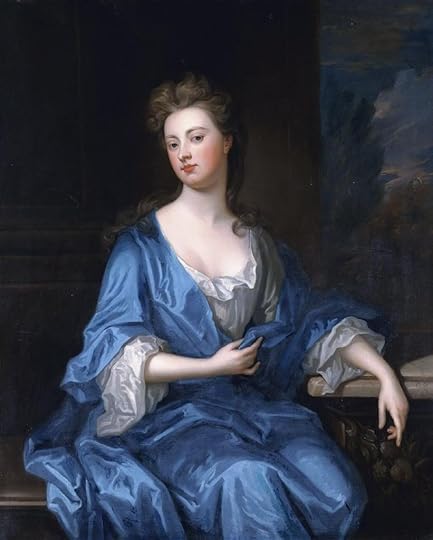
What a rich and resplendent novel this is — a tapestry woven with the silks of history, courtly intrigue, and the beating heart of a love that endured the shifting winds of politics and power. Duchess transported me to the gilded halls and shadowed corridors of early 18th-century England, a world I had known little of, and now will not soon forget.
The story unfolds not through the eyes of a distant observer, but through the voice of Sarah Churchill — a woman whose brilliance, ambition, and loyalty carved a path through a world ruled almost entirely by men. She is no ordinary figure in history; she is thunder in silk, fire in the quiet chambers of queens.
Alongside her, we walk the rise and fall and rise again of her beloved John Churchill — general, statesman, and her lifelong partner in both love and rebellion. Their story pulses with emotion: not merely romantic, but revolutionary. Their legacy echoes through time, reaching all the way to Winston Churchill and Princess Diana.
What captivated me most was the way the novel illuminated the political tide that swept the Stuarts from the throne — a question that had lingered in the back of my mind after reading so many Jacobite-centered tales, like Outlander. Here, finally, was the other side of the coin: the Protestant court’s reckoning with a Catholic king, told through the words of a woman who helped shape the outcome.
Sarah’s journey from poor gentry to confidante of Princess Anne — and eventually Queen — is a marvel. At just thirteen, she entered court as a maid of honor, only to become Anne’s closest friend, ally, and, in time, adversary. Anne is portrayed first as a precocious, curious child — so different from the listless figure she would later become. The arc of their relationship is both fascinating and tragic.
And oh, the heartbreak! Sixteen pregnancies, none leading to a living heir. Anne’s quiet suffering is threaded through the pages, making her descent into paranoia and pettiness all the more painful. Her treatment of Sarah — cold, unjust, and cruel — left me stunned. That a queen could so callously discard her truest friend over whispered slights and bruised pride seemed so human… and yet so unforgivable.
Though the narrative is occasionally dense with politics and courtly maneuvering, I found it an honest reflection of the era. I usually favor third-person narration, but here, Sarah’s voice — bold, clever, defiant — demanded to be heard. She carries the story with wit and grace.
The details, too, are sumptuous: embroidered gowns, candlelit chambers, and the rustle of secrets behind closed doors. The court comes alive — not just in grandeur, but in the quiet power struggles and whispered betrayals that defined the age.
This is more than a historical novel; it is a love story, a political drama, and a portrait of a woman far ahead of her time. I’m in awe of Sarah Churchill — rivaled, perhaps, only by Queen Elizabeth I in her fierce devotion to a world that tried to silence her.
I will absolutely seek out more of this author’s work. There is magic here — and truth.