

What do you think?

The Survivor: Bill Clinton in the White House
NEW YORK TIMES BESTSELLER The definitive account of one of the most accomplished, controversial, and polarizing figures in American history Bill Clinton is the most arresting leader of his generation. He transformed American politics, and his eight years as president spawned arguments that continue to resonate. For all that has been written about this singular personality–including Clinton’s own massive autobiography–there has been no comprehensive, nonpartisan overview of the Clinton presidency. Few writers are as qualified and equipped to tackle this vast subject as the award-winning veteran Washington Post correspondent John F. Harris, who covered Clinton for six of his eight years in office–as long as any reporter for a major newspaper. In The Survivor, Harris frames the historical debate about President William Jefferson Clinton, by revealing the inner workings of the Clinton White House and providing the first objective analysis of Clinton’s leadership and its consequences. Harris shows Clinton entering the Oval Office in 1993 primed to make history. But with the Cold War recently concluded and the country coming off a nearly uninterrupted generation of Republican presidents, the new president’s entry into this maelstrom of events was tumultuous. His troubles were exacerbated by the habits, personal contacts, and the management style, he had developed in his years as governor of Arkansas. Clinton’s enthusiasm and temper were legendary, and he and Hillary Rodham Clinton–whose ambitions and ordeals also fill these pages–arrived filled with mistrust about many of the characters who greeted them in the “permanent Washington” that often holds the reins in the nation’s capital. Showing surprising doggedness and a deep-set desire to govern from the middle, Clinton repeatedly rose to the challenges; eventually winning over (or running over) political adversaries on both sides of the aisle–sometimes facing as much skepticism from fellow Democrats as from his Republican foes. But as Harris shows in his accounts of political debacles such as the attempted overhaul of health care, Clinton’s frustrations in the war against terrorism, and the numerous personal controversies that time and again threatened to consume his presidency, Bill Clinton could never manage to outrun his tendency to favor conciliation over clarity, or his own destructive appetites. The Survivor is the best kind of history, a book filled with major revelations–the tense dynamic of the Clinton inner circle and Clinton’s professional symbiosis with Al Gore to the imprint of Clinton’s immense personality on domestic and foreign affairs–as well as the minor details that leaven all great political narratives. This long-awaited synthesis of the dominant themes, events, and personalities of the Clinton years will stand as the authoritative and lasting work on the Clinton Presidency.
560 pages, Kindle Edition
First published January 1, 2005
About the author
John F. Harris
3 books9 followersJohn F. Harris is a veteran political reporter for The Washington Post who covered the Clinton presidency from 1995 through its conclusion in 2001. His work during these years earned several prestigious awards, including the White House Correspondents’ Association’s Aldo Beckman Award and the Prize for Distinguished Reporting on the Presidency from the Gerald R. Ford Library. Additionally, Harris is a panelist on PBS-TV’s Washington Week and appears on numerous other television and radio programs.
Ratings & Reviews
Friends & Following
Create a free account to discover what your friends think of this book!
Community Reviews
Displaying 1 - 30 of 105 reviews

September 24, 2013
”There’s no reason to suppose that a man who caused so much debate in his own time will have a settled and stable reputation in posterity. ‘History,’ said the historian Pieter Geyl, ‘is an argument without end.’”
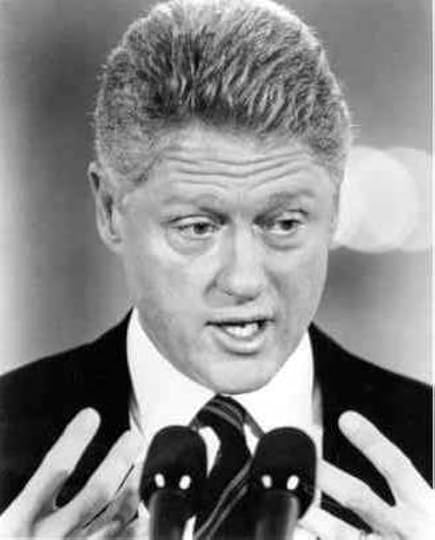
Just let me explain!
William Jefferson Clinton was breaking his first campaign promise just as he was beginning to warm his hard won seat in the Oval Office. He had said on the campaign trail that he was going to offer amnesty to Haitian refugees. On paper it seemed like an easy promise, a compassionate promise that would send the right message to his base and stick a thumb in the eye of his predecessor.
Until he watched the film.
The CIA brought him satellite footage of what was happening in Haiti as word of his election spread through the population. People were cutting down trees and tearing apart their homes to build rafts. The analysts were projecting that tens of thousands of Haitians would die trying to reach the shores of America. If your getting a sinking feeling in your gut about right now that would be very similar to the way Clinton felt. The best of intentions with the worst possible results.
John F. Harris doesn’t pull any punches. He brings to light every misstep, every blunder, every indiscretion, and even takes the doors off the closets and lets the skeletons rattle around the room. From glancing at some other reviews I know that some Clinton supporters thought this was a biased book. I didn’t feel that way at all. I felt that Harris related the facts without judgment, without political color, without rancor. Like most presidencies the early days of the Clinton administration are rocky, and a lot of that has to do with the fact that every president arriving in Washington, flushed with victory, thinks that the world is at his feet.
It doesn’t take long for them to realize that it isn’t just a matter of them snapping their fingers.
This book did make me think about our expectations for each new president. We are asking someone to run the largest company in the world. The thousands of people that have been running it suddenly find themselves out of a job, and now the new president has to replace those people. He has to reward his supporters, the people who sweated blood to get him elected, and he has to balance those reward appointments with people who hopefully know how to keep the Department of Labor or the State Department or the Department of the Interior running. If a major corporation was forced to do this every four to eight years it would severely cripple their ability to compete. It would be crazy.
In January of 1993 ex-governor of Arizona Bruce Babbitt walked into Bookman’s Used Books in Flagstaff, Arizona wheeling a handcart stacked with boxes of books. Even before he dropped that stack on the floor in front of the book buying counter I knew I was going to buy every single book. He was in an ebullient mood. I knew he had been shortlisted for a cabinet position and one of the things people do when they get ready to move is sell books. “Going somewhere?” I asked caught up in the irrepressible energy coming from him. He laughed and said. “Bill called. I’m going to the interior.” I offered him a high five which he returned with a smile and a laugh. I talked him into signing all the books because I could sell them for more with established providence, and could; therefore, give him more for each book. It was only later after his nervous energy had left that I realized that I had just had a brief brush with history.
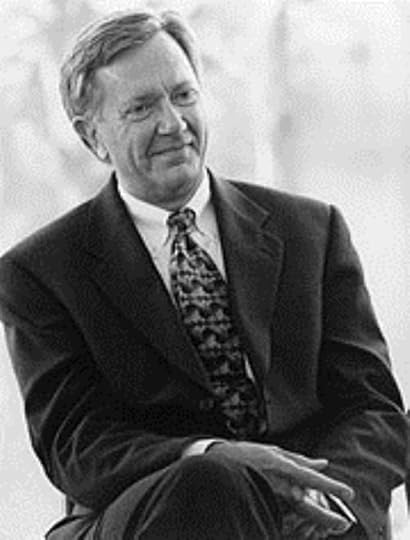
Bruce Babbitt. He reads.
”The test of a first-rate intelligence,” Scott Fitzgerald wrote, “is the ability to hold two opposed ideas in mind at the same time and still retain the ability to function.” Candidate Clinton had passed Fitzgerald’s test with ease.”
One of my all time favorite politicians is Lloyd Bentsen. He served as Secretary of Treasury under Clinton and was generally the old man in every meeting. He had his own take on Clinton.
"A year into the job, the Treasury secretary sat in his office one day reflecting on the eight presidents he had known, and concluded that Clinton was in some respects the smartest. ‘I think this fellow is a step above in the way of being able to correlate and see how it all works together,’ he mused. But Bentsen added that this talent for seeing multiple dimensions of a problem could be a curse.’He also has difficulty making decisions,’ More seriously, he believed Clinton’s incessantly political nature was self-defeating."
Once his staff did get a decision from Clinton they tried to keep him from talking to people who might change his perspective. He was always asking everyone for their opinion about anything from the economy to the latest polling data. He always wanted more information. I can appreciate a president who is willing to change his stances on issues after discovering new information. The presidents that scare me are the ones who even when faced with a mound of evidence to the contrary will not change their position.
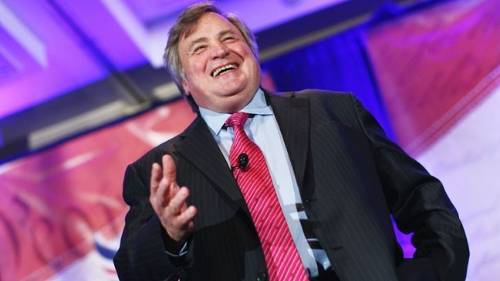
Bill I can get you re-elected. I’m the KING maker.
Dick Morris is an interesting character who magically reappears in Clinton’s life when he needs him the most. The Clinton staff loathed the man. He is the cockroach that loves the muck of political life and will do whatever it takes to insure that his candidate survives. ”He was Clinton’s version of Colonel House to Woodrow Wilson or Harry Hopkins to FDR.” Or if you want the more modern version he is the Karl Rove of Clinton’s election campaign. He is the only man that could force Clinton to just shut-up and listen to him without interruption for thirty minutes. He was a wizard. The man behind the curtain or maybe more appropriately the Man Behind the Darth Vader Mask. (Dick Cheney later stole it.)
”One reason that Clinton found it easy to speak in public was that he was essentially a transparent man. There was a narrow difference between the man at the podium and the man with his shoes off and feet up on Air Force One. Clinton in private was certainly more expressive, more profane, but the opinions and perspective he expressed were the same in both settings. Clinton was, by the standards of politicians, free of artifice.”
Clinton is, without a doubt, the best speaker of his generation. In front of a crowd he is transformed, plugged in. He instinctively knows what they want, what they are dying to be told, and usually his best lines came from when he left the confines of his speech and let his natural oratory ability take over. I hadn’t really thought about him as transparent or free of artifice. I’ve always thought of him as a man with a big heart, but maybe too political for me to ever be able to trust his frankness or his sincerity. (He wasn’t called Slick Willie for nothing.) He could screw up and screw up again; and yet, people still loved him. We doubt him on a lot of things, but the one thing that he can’t help even if he tried to hide it is how much he loves people. In the case of attractive, lush women he might just love them a tad bit too much.
”Mr. President,” Newt Gingrich said, “we are going to run you out of town.”
I think we all know how that worked out.
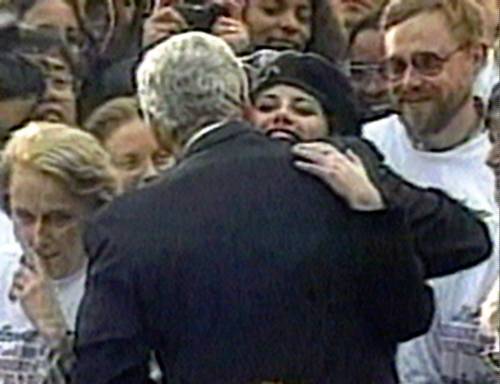
I just want to say one thing about the impeachment proceedings, which are covered in proper detail in the book, is that what politicians sometimes forget is that WE elect presidents and we don’t want them impeached for reasons that defy reason. An impeachment is for incompetence in the job not for lying under oath about cheating on a wife. How a Whitewater investigation ever stretched into investigating his extramarital affairs is beyond me. Oh and Newt, the first to cast the first stone, what a hypocrite you turned out to be with your own extramarital affairs. Ok... so I’m still a bit bitter.
I do wish that Monica Lewinsky had not flashed her thong underwear at Bill. It was like a matador flicking a red cape in the face of a bull.
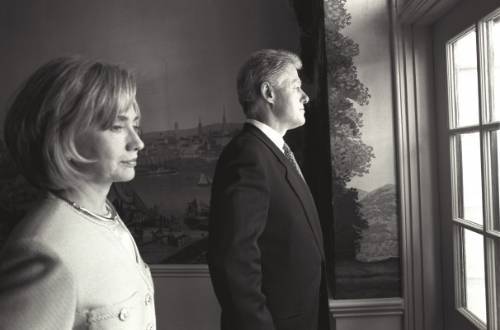
I bought this book when it was first published back in 2006. It has taken me until now to have the will power to read it. Clinton was the first politician I ever actively helped to get elected. I had come out of the closet as a Democrat (in my neck of the woods that is the same as saying you are a communist) to friends and family. I had a lot on the line or, seemingly so then, and with each disaster of his presidency I was losing my ability to defend him. He embarrassed me whenever he embarrassed himself. This book was painful, but only because Harris told it straight. I still cling to Clinton’s balanced budget with cuts in spending and a tax increase on the top 1.2% creating a surplus (along with a robust economy), a sight that may never be seen again. He passed this budget bill without a single republican vote. The GOP predicted economic disaster, but then they underestimated not just Bill, but all of us.
History isn’t finished with William Jefferson Clinton. The tabulations are still being counted. On a C-Span ranking presidents poll in 2009 he is tied for 14th with James Monroe up from 21st in 2000. History will never forget, but sometimes it does forgive.
If you wish to see more of my most recent book and movie reviews, visit http://www.jeffreykeeten.com
I also have a Facebook blogger page at:https://www.facebook.com/JeffreyKeeten

Just let me explain!
William Jefferson Clinton was breaking his first campaign promise just as he was beginning to warm his hard won seat in the Oval Office. He had said on the campaign trail that he was going to offer amnesty to Haitian refugees. On paper it seemed like an easy promise, a compassionate promise that would send the right message to his base and stick a thumb in the eye of his predecessor.
Until he watched the film.
The CIA brought him satellite footage of what was happening in Haiti as word of his election spread through the population. People were cutting down trees and tearing apart their homes to build rafts. The analysts were projecting that tens of thousands of Haitians would die trying to reach the shores of America. If your getting a sinking feeling in your gut about right now that would be very similar to the way Clinton felt. The best of intentions with the worst possible results.
John F. Harris doesn’t pull any punches. He brings to light every misstep, every blunder, every indiscretion, and even takes the doors off the closets and lets the skeletons rattle around the room. From glancing at some other reviews I know that some Clinton supporters thought this was a biased book. I didn’t feel that way at all. I felt that Harris related the facts without judgment, without political color, without rancor. Like most presidencies the early days of the Clinton administration are rocky, and a lot of that has to do with the fact that every president arriving in Washington, flushed with victory, thinks that the world is at his feet.
It doesn’t take long for them to realize that it isn’t just a matter of them snapping their fingers.
This book did make me think about our expectations for each new president. We are asking someone to run the largest company in the world. The thousands of people that have been running it suddenly find themselves out of a job, and now the new president has to replace those people. He has to reward his supporters, the people who sweated blood to get him elected, and he has to balance those reward appointments with people who hopefully know how to keep the Department of Labor or the State Department or the Department of the Interior running. If a major corporation was forced to do this every four to eight years it would severely cripple their ability to compete. It would be crazy.
In January of 1993 ex-governor of Arizona Bruce Babbitt walked into Bookman’s Used Books in Flagstaff, Arizona wheeling a handcart stacked with boxes of books. Even before he dropped that stack on the floor in front of the book buying counter I knew I was going to buy every single book. He was in an ebullient mood. I knew he had been shortlisted for a cabinet position and one of the things people do when they get ready to move is sell books. “Going somewhere?” I asked caught up in the irrepressible energy coming from him. He laughed and said. “Bill called. I’m going to the interior.” I offered him a high five which he returned with a smile and a laugh. I talked him into signing all the books because I could sell them for more with established providence, and could; therefore, give him more for each book. It was only later after his nervous energy had left that I realized that I had just had a brief brush with history.

Bruce Babbitt. He reads.
”The test of a first-rate intelligence,” Scott Fitzgerald wrote, “is the ability to hold two opposed ideas in mind at the same time and still retain the ability to function.” Candidate Clinton had passed Fitzgerald’s test with ease.”
One of my all time favorite politicians is Lloyd Bentsen. He served as Secretary of Treasury under Clinton and was generally the old man in every meeting. He had his own take on Clinton.
"A year into the job, the Treasury secretary sat in his office one day reflecting on the eight presidents he had known, and concluded that Clinton was in some respects the smartest. ‘I think this fellow is a step above in the way of being able to correlate and see how it all works together,’ he mused. But Bentsen added that this talent for seeing multiple dimensions of a problem could be a curse.’He also has difficulty making decisions,’ More seriously, he believed Clinton’s incessantly political nature was self-defeating."
Once his staff did get a decision from Clinton they tried to keep him from talking to people who might change his perspective. He was always asking everyone for their opinion about anything from the economy to the latest polling data. He always wanted more information. I can appreciate a president who is willing to change his stances on issues after discovering new information. The presidents that scare me are the ones who even when faced with a mound of evidence to the contrary will not change their position.

Bill I can get you re-elected. I’m the KING maker.
Dick Morris is an interesting character who magically reappears in Clinton’s life when he needs him the most. The Clinton staff loathed the man. He is the cockroach that loves the muck of political life and will do whatever it takes to insure that his candidate survives. ”He was Clinton’s version of Colonel House to Woodrow Wilson or Harry Hopkins to FDR.” Or if you want the more modern version he is the Karl Rove of Clinton’s election campaign. He is the only man that could force Clinton to just shut-up and listen to him without interruption for thirty minutes. He was a wizard. The man behind the curtain or maybe more appropriately the Man Behind the Darth Vader Mask. (Dick Cheney later stole it.)
”One reason that Clinton found it easy to speak in public was that he was essentially a transparent man. There was a narrow difference between the man at the podium and the man with his shoes off and feet up on Air Force One. Clinton in private was certainly more expressive, more profane, but the opinions and perspective he expressed were the same in both settings. Clinton was, by the standards of politicians, free of artifice.”
Clinton is, without a doubt, the best speaker of his generation. In front of a crowd he is transformed, plugged in. He instinctively knows what they want, what they are dying to be told, and usually his best lines came from when he left the confines of his speech and let his natural oratory ability take over. I hadn’t really thought about him as transparent or free of artifice. I’ve always thought of him as a man with a big heart, but maybe too political for me to ever be able to trust his frankness or his sincerity. (He wasn’t called Slick Willie for nothing.) He could screw up and screw up again; and yet, people still loved him. We doubt him on a lot of things, but the one thing that he can’t help even if he tried to hide it is how much he loves people. In the case of attractive, lush women he might just love them a tad bit too much.
”Mr. President,” Newt Gingrich said, “we are going to run you out of town.”
I think we all know how that worked out.

I just want to say one thing about the impeachment proceedings, which are covered in proper detail in the book, is that what politicians sometimes forget is that WE elect presidents and we don’t want them impeached for reasons that defy reason. An impeachment is for incompetence in the job not for lying under oath about cheating on a wife. How a Whitewater investigation ever stretched into investigating his extramarital affairs is beyond me. Oh and Newt, the first to cast the first stone, what a hypocrite you turned out to be with your own extramarital affairs. Ok... so I’m still a bit bitter.
I do wish that Monica Lewinsky had not flashed her thong underwear at Bill. It was like a matador flicking a red cape in the face of a bull.

I bought this book when it was first published back in 2006. It has taken me until now to have the will power to read it. Clinton was the first politician I ever actively helped to get elected. I had come out of the closet as a Democrat (in my neck of the woods that is the same as saying you are a communist) to friends and family. I had a lot on the line or, seemingly so then, and with each disaster of his presidency I was losing my ability to defend him. He embarrassed me whenever he embarrassed himself. This book was painful, but only because Harris told it straight. I still cling to Clinton’s balanced budget with cuts in spending and a tax increase on the top 1.2% creating a surplus (along with a robust economy), a sight that may never be seen again. He passed this budget bill without a single republican vote. The GOP predicted economic disaster, but then they underestimated not just Bill, but all of us.
History isn’t finished with William Jefferson Clinton. The tabulations are still being counted. On a C-Span ranking presidents poll in 2009 he is tied for 14th with James Monroe up from 21st in 2000. History will never forget, but sometimes it does forgive.
If you wish to see more of my most recent book and movie reviews, visit http://www.jeffreykeeten.com
I also have a Facebook blogger page at:https://www.facebook.com/JeffreyKeeten

July 5, 2019
About halfway through my reading of this book, I realized that I couldn't remember the name of the author. I glanced at the cover, read the name (I remember doing this, at least), and a few minutes later forgot it again. No doubt I repeated this process a few more times. This is a bit unusual for me, as I tend to like to know who's written the book I'm reading, but now that I've got the name right in front of me and it's not going anywhere, I think my difficulty was at least semi-understandable. John F. Harris, after all, is a fairly generic name, the name of a person who could easily fade into the background of any situation, and it's suitable enough for his writing style. The style is sort of like David Remnick's, I remember thinking, or Bob Woodward with more of a novelist's touch: clear writing without the slightest hint of the author inserting himself into the story, or of a troubled or neurotic or fevered revolutionary consciousness churning under the placid surface of the prose- an editor's style, in other words- so when I finally googled Harris and discovered that he had been on The Washington Post's White House beat from '95 to '01, and that he's now the editor-in-chief of Politico, I wasn't very surprised. So this isn't Hedges, or Taibii or Chomsky or Hitchens- Harris doesn't write from the perspective that as a rule we should be deeply skeptical of anyone who seeks power, but rather from that of a career Washingtonian who acknowledges that presidents come and go, that they have strengths and weaknesses, and essentially approves of the whole enterprise. He writes about politicians as if they are his friends, and for all I know they are. Good for him. But while I'm glad that those other writers exist, there's probably something to be said for Harris's professionally-written account. He's got a good ear for dialogue, he can interestingly sketch a character (although I was quite disappointed to realize that Clinton's National Security Advisor was Sandy Berger, not Sonny Barger the motorcycle outlaw and Hell's Angel), and he can turn a phrase, all qualities that make his book pleasurable to read on a line-by-line level. But what criteria does he use in his overall attempt to evaluate Clinton's presidency- what are strengths and weaknesses, for Harris?
I found the first couple of hundred pages of the book simultaneously encouraging and discouraging. They're encouraging because they suggest that Clinton had some real aspirations upon entering office. We're told that Clinton did not really want to sign the bill that infamously ended "welfare as we know it"; Harris describes it as an agonizing decision, a necessary political "win", with Clinton certain (or he told people he was certain, anyway), that he'd be able to improve it later, after his re-election. It seems that he genuinely wanted to pass some kind of healthcare reform. He wanted to take in Haitian refugees who managed to get across the water, and was told that an open-door policy would lead to mass migration and countless deaths by drowning. He created Americorps (in which I served for a year- Perry Point class XVI, Raven Unit), inspired by the New Deal civil service programs, and read biographies of (Franklin) Roosevelt and (John) Kennedy- it's strange considering their treatment of the working class, but a lot of the so-called New Democrats, such as Clinton and Biden, seem to idolize FDR.
The discouraging part of the book, on the other hand, is to show how a president's noble aspirations (which is not to say that all or even most of Clinton's aspirations were necessarily noble), particularly in a modern presidency, get buried under an avalanche of bullshit, and how the exigencies of "survival", as the book's title suggests, take over. It could be argued that the turning point for Clinton comes only two years in, with the election of Gingrich and a predominantly Republican Congress, which in our zero-sum politics, then as now, essentially means that almost nothing can get accomplished. It's almost understandable, then, when Clinton turns to an old colleague from his Arkansas days (after a couple of hundred pages, the word "Arkansas" takes on a sinister connotation, certain images of smoke-filled pool halls are conjured in the reader's mind), an amoral political consultant (sorry for the redundancy there) of the type I imagine you could still find nursing a fifth of Jim Beam at the far end of a DC bar if you really needed him, a guy with the wonderfully sleazy name of Dick Morris (deputy chief of staff Howard Ickes said that "it was almost as if [Morris] had some supernatural hold on [Clinton]", which personally I think is great- I love it when some shadowy figure has "almost a supernatural hold" on any president, just as long as it's "almost"), who introduces Clinton to the idea of "triangulation"; or, as Morris has put it, "...to take a position that not only blended the best of each party's views but also transcended them to constitute a third force in the debate." Obviously there are other ways to phrase it, such as sacrificing one's convictions in the pursuit of power, but Harris lets Morris's definition more or less stand.
Clinton in his twenties worked on the McGovern campaign in Texas, and the arc of Clinton's presidency, at least as Harris tells it, seems to mirror the arc of liberalism in America since McGovern's loss to Nixon in '72, a loss still invoked (by some) against candidates like Bernie Sanders. McGovern (please read Hunter S. Thompson's Fear and Loathing on the Campaign Trail '72 for more), was too far to the left, this criticism goes, and you need a candidate and a platform that offers incremental change, someone moderate and "electable"- no more McGoverns. But sometimes it's hard to be sure what the moderate position really is. If more than half the country supports universal healthcare, for example, isn't that the "moderate" position?
The consensus here on Goodreads seems to be that Harris is fairly objective (I see mostly 4- and 5-star reviews, except for a lone reviewer who gives the book 1 star and thinks it treats Clinton unfairly); and while it's true that he takes pains to illuminate Clinton's strengths and weaknesses, the criteria by which he defines strength and weakness is worth thinking about. In general, Harris seems to grade Clinton by his survival skills- that is, how well he stays afloat in the turbulent world of politics, how many political "wins" he racks up. Along the way, Harris reveals certain preferences. Clinton "bravely" signed NAFTA, for example, "...and embraced free trade rather than taking refuge in protectionism." Well, that's one way to put it. I've got a feeling that a fair number of people in the Midwest might put it differently, perhaps in more colorful language...which modern Democrats would naturally then chide them for, the colorful language that is. We shipped your jobs overseas and you have no healthcare, but you fuckers had better not to be vulgar about it. Right? "One mission of Clinton's presidency", Harris writes later in summary, "had been to force the Democratic party to reconsider and refashion the liberal agenda, a task that necessarily involved some discomfort to traditional constituencies and to protectors of the party's old order in Congress." Again, this is one way of phrasing it. Do we hear any more about the "discomfort" endured by "traditional constituencies"? Not really. In a revealing passage towards the end of the book, Harris describes Clinton's frustration with the 2000 campaign of his vice-president, Al Gore:
Gore, for all his moderate Democrat packaging, had the intellectual instincts of a radical. He had revealed himself as such in his environmental tract, Earth in the Balance. He had written the book in 1991 at a time when he was not calculating presidential politics, and indeed had grown contemptuous of what he described in its own pages as his tendency to be a 'finger-in-the-wind' politician. There was a utopian streak to his mind, manifested in the book's call...to make environmentalism the 'new guiding principle for civilization.' If Gore had spent a career just being himself and saying what he really thought, he never would have made it into office in Tennessee, much less to the vice presidency.This passage is ostensibly about Clinton's exasperation with Gore, but I think it is pretty clear that Harris himself prefers the "moderate packaging" (it's odd that he puts it this way, though, so blatantly) to Gore's "radical instincts"- it's written like a person who will never let himself believe in another McGovern. Some might say that he's got a point. But as David Wallace-Wells writes in his recent book The Uninhabitable Earth, "...we have done as much damage to the fate of the planet and its ability to sustain human life and civilization since Al Gore published his first book on climate than in all the centuries– all the millennia– that came before." And so while it's possible that it wasn't politically expedient (although that's not necessarily true, either), maybe it should also be acknowledged that hey...Gore was right. Maybe there is something admirable about a leader willing to say things that are unpopular but true.
Furthermore, for a book that gives the impression of being so granular, there are some striking omissions. For example, I was well past Clinton's first term before I realized that Harris never discusses the crime bill- at least I don't think he does. Someone will correct me if I'm wrong, but I don't remember it, and the word "crime" in the index has only two unrelated citations. Sorry, but I don't believe the editor-in-chief of Politico just forgot about the crime bill. I do remember him discussing Hillary Clinton's "super-predators" comment, the kind of so-called gaffe that could conceivably threaten political survival, but not the actual substance of the crime bill, one of the most notorious pieces of legislation from the Clinton presidency. The more I think about it, this omission is pretty much inexcusable, and bears comparison with today's superficial media coverage of Biden: hysterics if he makes a "gaffe", but very little discussion of Biden's role as one of the architects of that crime bill, and the effect that the bill had on people's lives.
To get a little more frivolous, I was struck by the many similarities between Clinton and Trump as people. I lost count of how many times I underlined a passage and wrote "Trumpian" (which in a paperback book happily provokes no automatic correction but which spellcheck, now that I'm writing this review in Microsoft Word, informs me is not a word, although how spellcheck could have neglected to incorporate a term so relevant- nay, crucial- to exploring man's modern condition is beyond me) in the margin. It probably shouldn't have surprised me- they have both been friends with the same wealthy people throughout their lives, after all, such as vindictive billionaire Michael Bloomberg and late, notorious pedophile Jeffrey Epstein. There are some obvious differences, of course. Clinton is much more intelligent and intellectually curious, for example. Moreover, Clinton really did work his way up from humble beginnings, from a small town in Arkansas (one of the poorest states in the country, both then and now, I believe) literally called Hope, whereas Trump, well, didn't.
On the other hand, Clinton and Trump were born two months apart, in 1946 (in fact, three of our last four presidents were born in three successive months in '46, in reverse order of their presidencies: Trump- 6/14/46, Bush- 7/6/46, Clinton- 8/19/46). Clinton's biological father died in a car accident a few months before he was born, and his stepfather was an abusive drunk; Trump's father was an unscrupulous businessman and narcissist who taught his son that he had to be a "killer", and sent him to a military academy where physical abuse was common. Clinton's younger brother, Roger, according to Harris, "...was arrested for drug dealing...during the 80s", while Trump's brother, Fred Jr., died of alcoholism. Trump never drinks, not a drop, or so we're told, but I wonder if his other addictions- for attention, celebrity, seeing his name on large buildings and airplanes- are the flip side of his brother's substance abuse. Both Clinton and Trump like junk food- something that is not good for you, but satisfying in the moment. They are both either (charitably) non-ideological and pragmatic or (uncharitably) self-serving and amoral. They both (allegedly) cheat at golf; they both dodged the draft to avoid going to Vietnam; they both enjoy being in front of crowds, and both are at their best when they speak extemporaneously. While reading about Clinton's equivocations, I was reminded of the particular way that Trump lies; sure, Clinton's lies were a little more artful, but they both contain this element of...well, okay, maybe it isn't true, but it should be true, and I'm going to lie to you not because I want to deceive you, but blatantly, so you know I'm lying. I'm lying to express my contempt, to assert my claim over reality, and therefore I will make it true (that might sound crazy, but trust me- it makes a lot of sense to us narcissists). In short, they both make you think that you've got to be a bit of a psychopath to want to be one of the most powerful and talked-about people on the planet. And yes- let's just be honest about this- they're both probably rapists.
This is not exactly omitted in Harris's book- I am pretty certain that Juanita Broaddrick's allegation of rape is quoted at length in one of these chapters, and I'm not sure what else Harris could have done aside from speculate irresponsibly- but he doesn't linger on the allegation, nor Kathleen Wiley's nor Paula Jones's, and it seemed to me that a casual reader could finish the book thinking that the worst thing Clinton's ever been accused of is having extra-marital affairs. It's admittedly uncomfortable to wonder how many of our presidents have been rapists, and hard to know how that lingering ambiguity about Clinton would fit into the overall thesis of the book, but I do think it's another reason that it's a bit silly to suggest, as a few reviews here do, that this book is too hard on Clinton. If you think Harris is tough, you'd better stay away from Hitchens.
Whether or not Harris meant his title to be ambiguous, I'm not sure. To be a survivor is generally a positive thing, but the book also allows for the interpretation that a political survivor is someone who values winning above all else, regardless of ideals; or, a little more charitably as well as tragically, that the business of politics turns every idealist into a survivor.

January 20, 2019
https://bestpresidentialbios.com/2019...
John F. Harris’s 2005 “The Survivor: Bill Clinton in the White House” was published four years after the end of Clinton’s presidency. Harris worked for The Washington Post for more than two decades and covered the Clinton White House from 1995 to 2001. In 2007 he co-founded Politico, a political news organization.
As suggested by its title, Harris’s biography dedicates itself to Bill Clinton’s two-term presidency. There is no effort to introduce his life or cover his post-presidency. But Harris does briefly consider Clinton’s legacy as well as the character traits which made his presidency so tumultuous.
The book’s 437 pages are consistently engaging and uncommonly readable. And Harris demonstrates impressive balance in his presidential review: readers wedded to the notion of a hollow and unproductive presidency will find their view vigorously challenged. But Clinton partisans should expect to find their famously gifted politician fully exposed for his maddeningly self-destructive flaws.
The book is written from a revealing on-the-ground (and often behind-the-scenes) perspective that provides readers unique access to Clinton’s deliberations and thoughts during crucial moments of his presidency. And it is undeniably a book written by an eloquent and keenly-observant reporter…not a traditional biographer. It is Harris’s skill at drawing connections and conveying his observations and conclusions which makes this such a great read.
Unlike Patrick Maney’s recent “Bill Clinton: New Gilded Age President” which minimizes coverage of issues such as Whitewater and the Jones/Lewinsky affairs in favor of policy matters, Harris covers the entirety of the Clinton presidency – warts and all. Given the impact these distractions had on Clinton’s two terms, and the access provided to Harris by countless insiders, it is not surprising that nearly one-quarter of the book features one scandal or another.
Although the author’s revelations often prove titillating, he never strays too far trying to psychoanalyze his subject’s problematic proclivities. Instead, he saves his best analysis for Clinton’s numerous legislative and policy victories. Harris is adept at articulating Clinton’s options in a given situation and his reason for pursuing a certain course of action.
Introductions to George Stephanopoulos, Lloyd Bentsen and Robert Reich prove interesting, and Harris provides solid, and crisp, reviews of the foreign policy challenges faced by Clinton in Rwanda, Somalia and Bosnia. And the volatile relationship between Clinton and Dick Morris, which must be one of the great love-hate relationships in American history, is wonderfully told.
The book’s primary shortcoming stems from its close proximity to Clinton. While allowing readers to see him – and his administration – up close and largely unfiltered, this frame of reference comes at the expense of broader context. The “big picture” is often overwhelmed by the book’s granular focus on its subject and his countless crises.
Overall, John Harris’s “The Survivor: Bill Clinton in the White House” provides a richly-detailed and engrossing view inside the Clinton presidency. Written with the penetrating insight of a skillful and well-sourced reporter, it rarely gives the reader a moment to pause. And it is hard to imagine any book providing a better understanding of the tumult and triumphs of Bill Clinton’s two-term presidency.
Overall rating: 4¼ stars
John F. Harris’s 2005 “The Survivor: Bill Clinton in the White House” was published four years after the end of Clinton’s presidency. Harris worked for The Washington Post for more than two decades and covered the Clinton White House from 1995 to 2001. In 2007 he co-founded Politico, a political news organization.
As suggested by its title, Harris’s biography dedicates itself to Bill Clinton’s two-term presidency. There is no effort to introduce his life or cover his post-presidency. But Harris does briefly consider Clinton’s legacy as well as the character traits which made his presidency so tumultuous.
The book’s 437 pages are consistently engaging and uncommonly readable. And Harris demonstrates impressive balance in his presidential review: readers wedded to the notion of a hollow and unproductive presidency will find their view vigorously challenged. But Clinton partisans should expect to find their famously gifted politician fully exposed for his maddeningly self-destructive flaws.
The book is written from a revealing on-the-ground (and often behind-the-scenes) perspective that provides readers unique access to Clinton’s deliberations and thoughts during crucial moments of his presidency. And it is undeniably a book written by an eloquent and keenly-observant reporter…not a traditional biographer. It is Harris’s skill at drawing connections and conveying his observations and conclusions which makes this such a great read.
Unlike Patrick Maney’s recent “Bill Clinton: New Gilded Age President” which minimizes coverage of issues such as Whitewater and the Jones/Lewinsky affairs in favor of policy matters, Harris covers the entirety of the Clinton presidency – warts and all. Given the impact these distractions had on Clinton’s two terms, and the access provided to Harris by countless insiders, it is not surprising that nearly one-quarter of the book features one scandal or another.
Although the author’s revelations often prove titillating, he never strays too far trying to psychoanalyze his subject’s problematic proclivities. Instead, he saves his best analysis for Clinton’s numerous legislative and policy victories. Harris is adept at articulating Clinton’s options in a given situation and his reason for pursuing a certain course of action.
Introductions to George Stephanopoulos, Lloyd Bentsen and Robert Reich prove interesting, and Harris provides solid, and crisp, reviews of the foreign policy challenges faced by Clinton in Rwanda, Somalia and Bosnia. And the volatile relationship between Clinton and Dick Morris, which must be one of the great love-hate relationships in American history, is wonderfully told.
The book’s primary shortcoming stems from its close proximity to Clinton. While allowing readers to see him – and his administration – up close and largely unfiltered, this frame of reference comes at the expense of broader context. The “big picture” is often overwhelmed by the book’s granular focus on its subject and his countless crises.
Overall, John Harris’s “The Survivor: Bill Clinton in the White House” provides a richly-detailed and engrossing view inside the Clinton presidency. Written with the penetrating insight of a skillful and well-sourced reporter, it rarely gives the reader a moment to pause. And it is hard to imagine any book providing a better understanding of the tumult and triumphs of Bill Clinton’s two-term presidency.
Overall rating: 4¼ stars
May 28, 2025
John F. Harris covered the Clinton White House for the Washington Post and later co-founded Politico, one of the top websites for political journalism. Here Harris reveals the Clinton presidency from beginning to end, with insights on its key players and the relationship between Bill and Hillary Clinton. Harris effectively examines the major issues and accomplishments of the Clinton presidency while never failing to present its foibles as well. Perhaps the only flaw in the book is how Harris glosses over major events like the 1993 negotiations between Israel and the PA, the Dayton Accords, and Northern Ireland, all of which deserve more in-depth discussion than they received in this volume. Still, this is probably the best book about the Clinton presidency on the market and a natural follow-up book for anyone who read David Maraniss’s biography of Bill Clinton’s pre-presidential life. Rating: 4.25/5

May 24, 2018
This is the third book I read about Clinton following "Clintons's wars" and "A vast conspiracy".
I was glad Harris' biography was less about the Lewinsky Scandal and more about everything else that happened at 1600 Pennsylvania Avenue.
The author's style is very close to what Peter Baker wrote about Bush 43 in "Days of Fire".
The chapters on Bosnia, Russia and Kosovo were the most interesting for me as I learned quite a lot.
Harris is really good at introducing key players during the Clinton years with mini biographies and analyzing their relationship with the president.
Also the book doesn't follow a traditional timeline of the administration. Instead, the writing is more issue-oriented as many topics go back and forth which makes Clinton's policies and approach easier to understand.
Great book.
I was glad Harris' biography was less about the Lewinsky Scandal and more about everything else that happened at 1600 Pennsylvania Avenue.
The author's style is very close to what Peter Baker wrote about Bush 43 in "Days of Fire".
The chapters on Bosnia, Russia and Kosovo were the most interesting for me as I learned quite a lot.
Harris is really good at introducing key players during the Clinton years with mini biographies and analyzing their relationship with the president.
Also the book doesn't follow a traditional timeline of the administration. Instead, the writing is more issue-oriented as many topics go back and forth which makes Clinton's policies and approach easier to understand.
Great book.

March 4, 2012
The Survivor is my sixth stop on my quest to read a biography of every American President (Washington, Adams, Johnson, and both Bushes already completed). Of all of the President's, reading a biography of Clinton was one I was really looking forward to. He was the first President I really remember. I still have a memory of watching his 1992 inauguration in the library at school. But while I remember most of his presidency, it ended before I really got into politics.
I am glad I chose this book to read. While it certainly is not without bias, I thought the book did a wonderful job covering Clinton as a man and as a president. Like many presidential biographies, The Survivor length (just over 500 pages) is a bit daunting at first. But around 70 pages are notes, and index, and acknowledgments. But the writing style makes this an easier read. Short chapters that each address a different story of Clinton's presidency allow you to just pick it up for ten or fifteen minutes here or there without issue. And while many biographies are written in a more academic fashion, The Survivor is much more of a story.
As far as content is concerned, John F. Harris covers the eight years of Clinton's presidency in great detail. All of the significant periods (both positive and negative). However, we are given great insight into the personality of Bill Clinton through his interactions with heads of state, advisers, adversaries, , and staff. This is truly a biography rather than a history of the '90s (which was my big issue with the George H.W. Bush biography I read).
My only real issues with content probably had more to do with the author's purpose. The first is that not much was written about Clinton's early years. He speaks briefly about his troubled childhood, college years, and life in Arkansas. But only in small blurbs. The second is the lack of Al Gore. He is mentioned sparingly for much of the book. At times, chapters upon chapters go by without even a mention. Not like I'm a big Al Gore fan. I just found his absence interesting.
As I said earlier, this book is not without bias. It is obvious that John Harris has a positive view of Clinton and his presidency. While overall, I believe the book if a pretty fair critique, there were a few issues. The scandals in the Clinton presidency were numerous. They were covered in the book but occasionally, Harris would slip from historian to pundit, subtlety inserting his opinion about either the insignificance of the scandal or the actions of Republicans. My bigger issue was with the author's assignment of credit. Some of Clinton's failures were tip-toed over. Many of his accomplishments were greatly lauded even if pretty insignificant. Sometimes, Clinton was given credit for something he had no part of. On three occasions , Clinton was given credit for other people not acting on Clinton's behalf negotiating peace settlements. The worst was Harris calling the Kosovo peace settlement "Clinton's victory" despite being negotiated by Slobodan Milosevic.
But the slight bias did not take away from my enjoyment of the book. I learned a ton about a president I vividly remember but didn't closely follow. This book likely won't change minds. Supporters of Clinton will still regard him as one the great Presidents of the 20th century. Detractors will still view him as a shrewd politician who brought disgrace to the White House. But in my opinion, that is probably a good thing. The Survivor is meant to give a close look at Bill Clinton and a detailed history of his presidency, not an argument for or against Democratic policies. And I believe it did an excellent job. So if you are looking to learn more about Clinton, I highly suggest picking up the Survivor.
I am glad I chose this book to read. While it certainly is not without bias, I thought the book did a wonderful job covering Clinton as a man and as a president. Like many presidential biographies, The Survivor length (just over 500 pages) is a bit daunting at first. But around 70 pages are notes, and index, and acknowledgments. But the writing style makes this an easier read. Short chapters that each address a different story of Clinton's presidency allow you to just pick it up for ten or fifteen minutes here or there without issue. And while many biographies are written in a more academic fashion, The Survivor is much more of a story.
As far as content is concerned, John F. Harris covers the eight years of Clinton's presidency in great detail. All of the significant periods (both positive and negative). However, we are given great insight into the personality of Bill Clinton through his interactions with heads of state, advisers, adversaries, , and staff. This is truly a biography rather than a history of the '90s (which was my big issue with the George H.W. Bush biography I read).
My only real issues with content probably had more to do with the author's purpose. The first is that not much was written about Clinton's early years. He speaks briefly about his troubled childhood, college years, and life in Arkansas. But only in small blurbs. The second is the lack of Al Gore. He is mentioned sparingly for much of the book. At times, chapters upon chapters go by without even a mention. Not like I'm a big Al Gore fan. I just found his absence interesting.
As I said earlier, this book is not without bias. It is obvious that John Harris has a positive view of Clinton and his presidency. While overall, I believe the book if a pretty fair critique, there were a few issues. The scandals in the Clinton presidency were numerous. They were covered in the book but occasionally, Harris would slip from historian to pundit, subtlety inserting his opinion about either the insignificance of the scandal or the actions of Republicans. My bigger issue was with the author's assignment of credit. Some of Clinton's failures were tip-toed over. Many of his accomplishments were greatly lauded even if pretty insignificant. Sometimes, Clinton was given credit for something he had no part of. On three occasions , Clinton was given credit for other people not acting on Clinton's behalf negotiating peace settlements. The worst was Harris calling the Kosovo peace settlement "Clinton's victory" despite being negotiated by Slobodan Milosevic.
But the slight bias did not take away from my enjoyment of the book. I learned a ton about a president I vividly remember but didn't closely follow. This book likely won't change minds. Supporters of Clinton will still regard him as one the great Presidents of the 20th century. Detractors will still view him as a shrewd politician who brought disgrace to the White House. But in my opinion, that is probably a good thing. The Survivor is meant to give a close look at Bill Clinton and a detailed history of his presidency, not an argument for or against Democratic policies. And I believe it did an excellent job. So if you are looking to learn more about Clinton, I highly suggest picking up the Survivor.
December 18, 2025
Books on Bill Clinton's presidency generally focus on specific aspects of his time in office and rarely give a solid overview of his entire eight years in office. John F. Harris' The Survivor is a rare exception to this. Written in 2005 Harris gives Clinton's presidency a grand overview without delving too much into specific details on some of the better known and documented challenges Clinton dealt with.
Harris is excellent at showing how Clinton evolved and grew in the office over time as well as the difference in the staff around him as various advisors came and went. Harris presents this all in a manner that is very easy to follow and read.
While one still awaits a true scholarly study of Clinton's presidency this volume helps fill a gap in anyone interested in Presidential history. I highly recommend it.
Harris is excellent at showing how Clinton evolved and grew in the office over time as well as the difference in the staff around him as various advisors came and went. Harris presents this all in a manner that is very easy to follow and read.
While one still awaits a true scholarly study of Clinton's presidency this volume helps fill a gap in anyone interested in Presidential history. I highly recommend it.

February 7, 2023
Obviously kind of biased but it’s a good read. 3.5/5

October 25, 2024
THE SURVIVOR is an evenhanded character portrait of Bill Clinton during his time in the presidency, written by the Washington Post’s chief White House reporter during the time. Author John F. Harris covers the ground from Clinton’s ascent as a young and articulate newcomer fresh off a narrow win in the 1992 presidential race, through the period cycles of “crisis and survival” which the author argues ultimately hobbled his claim to presidential greatness. Harris portrays a presidency that amplified in dichotomous ways Clinton’s voracious appetites, both in his personal and professional life. Clinton’s prodigious intellect and magnetic personality served well for tactical policy successes – including compromises with Republicans on welfare reform and balanced budgets, as well as foreign policy “wins” in Bosnia and the Soviet Union—but poorly for longer-term strategic success. Harris notes that Clinton, often reliant on advisors for articulating sweeping visions for his administration—was too often beset by self-inflicted wounds from his personal indiscretions, including the Paula Jones case and the Lewinsky entanglement, to play offense on agenda setting. In the end, Harris characterizes Clinton as a talented, magnetic, and resilient figure (hence his moniker “Comeback Kid”), but ultimately ill-suited for the pantheon of presidential greats.

April 6, 2022
This book is about Clinton’s presidency, not Clinton the man, and does not tell any of the story of his early years and his rise to power in Arkansas. Usually, a presidential biography’s coverage of the early years is one thing I judge it on. But this book was so well-written and had such in-depth yet accessible coverage of the workings of Clinton’s presidential brain that I can overlook the absence of description of “in-the-beginning” and say that this is really a great book. Clinton was the first President I voted for and was excited about. I never became any less of a fan during or after his years in office. He had a complicated and fascinating character that this book does a very good job of exploring. The thing I have always found the most fascinating about him (and that this author did a much better job of articulating than I ever could) is the contradiction between larger-than-life and totally conventional. I feel like people who can mix these two qualities can excel at getting things done no matter what specific niche they have chosen to operate in, and this book has only strengthened that belief of mine.

November 19, 2018
This isn't a full-life biography... It covers just Clinton's presidential years. But I really liked it a lot - it was the perfect mix of historical context, perspective from folks in his circle, details from historical records, limited minute-by-minute account of important events, and attempt at interpretation into his motives along with insight about how to really measure his administration. All of this in under 600 pages makes it a great option for somebody looking for one book to get a good hold on the place the administration holds in history.

October 24, 2021
Great, easy-reading account of Bill Clinton's 8 years as president. The good, the bad, and the downright ugly — Harris covers it all.

November 14, 2021
Excellent and thorough account of the Bill Clinton Presidency.

February 17, 2019
An interesting and eye-opening look inside the Clinton presidency. I appreciated Harris's ability to avoid the typical pitfalls of political biographies such as being overly critical or whitewashing certain events.
December 2, 2025
Insanely well made book covering the Clinton years as president. Harris makes it super easy for novice history fans, newcomers, and historians alike to get something out of this book. The way he introduces each person into the book is so well done, he gives the reader just enough for what is important in the moment and if someone returns later in the book he reintroduces them. His set up of the book in four parts is really great because each part while representing two years also showcases another side to Clinton and makes him really feel like a real person. My only problem with this book is too focused on the political aspects of stuff then the moral aspects. Clinton affair is treated as "this made the political process hard for a bit but he did nothing wrong legally" and I think it could have given him more blame. Overall great book.

October 5, 2017
John Harris' "The Survivor" is an aptly titled biography of the 42nd President of the United States of America: Bill Clinton. Without giving excessive context of Bill Clinton's early life and early political career, Harris jumps straight into and describes in satisfactory detail the main policy decisions and political incidences that happened between Clinton's inauguration and January 20th 2001.
The first few chapters were loaded with incredibly heavy and negatively connotated language and I was about to put the book down. I was getting a feeling the Harris had an ideological or personal vendetta against Clinton and was using each and every opportunity to stick a negative adjective before any verb or noun describing either Bill or Hillary Clinton's behaviour. Luckily I didn't, since his language seemed to be toned down 4-5 chapters into the book. This change in tone was however so striking to me, that I can't help but wonder whether two different people wrote the first few and the remaining chapters, or whether Harris was in some weird head space when revising some of the chapters.
This entirely negative bias seemed to come out of the blue to me, and so in order to compensate for it I noticed myself taking every negative statement with a grain of salt and trying to defend Clinton's actions to myself even though I had no other knowledge or perspective beforehand. Only about mid-way into the book did I however notice that the bias had been toned down and that I should try to continue reading the book open-mindedly. Looking back, this is one of my biggest issues with this book: I could not continue counting on the authors impartial reporting throughout the rest of the book anymore and remained skeptical of any value judgments made by him.
Nonetheless, I enjoyed the writing style of the majority of the book. While the Lewinsky affair was probably a huge issue during the time (I can't remember as I was still a child back then), I feel like the book could have devoted less space describing it and more on the Camp David talks and the Oslo accords (even if the author suggests that Clinton had fairly little to do with the latter, besides the signing ceremony).
Unfortunately about 10% of the pages in my physical copy seemed to be printed while the printer was low on toner. This did bother me throughout my reading experience. As this book was my first exposure to blatantly biased biographical writing, I feel like I learned a lesson as to when and how to anticipate bias in future books. I'm still quite puzzled as to the change in tone towards Hillary and Bill Clinton from the first few to the last few chapters.
Due to the bias and printing issues: 2.5 stars (rounded up).
The first few chapters were loaded with incredibly heavy and negatively connotated language and I was about to put the book down. I was getting a feeling the Harris had an ideological or personal vendetta against Clinton and was using each and every opportunity to stick a negative adjective before any verb or noun describing either Bill or Hillary Clinton's behaviour. Luckily I didn't, since his language seemed to be toned down 4-5 chapters into the book. This change in tone was however so striking to me, that I can't help but wonder whether two different people wrote the first few and the remaining chapters, or whether Harris was in some weird head space when revising some of the chapters.
This entirely negative bias seemed to come out of the blue to me, and so in order to compensate for it I noticed myself taking every negative statement with a grain of salt and trying to defend Clinton's actions to myself even though I had no other knowledge or perspective beforehand. Only about mid-way into the book did I however notice that the bias had been toned down and that I should try to continue reading the book open-mindedly. Looking back, this is one of my biggest issues with this book: I could not continue counting on the authors impartial reporting throughout the rest of the book anymore and remained skeptical of any value judgments made by him.
Nonetheless, I enjoyed the writing style of the majority of the book. While the Lewinsky affair was probably a huge issue during the time (I can't remember as I was still a child back then), I feel like the book could have devoted less space describing it and more on the Camp David talks and the Oslo accords (even if the author suggests that Clinton had fairly little to do with the latter, besides the signing ceremony).
Unfortunately about 10% of the pages in my physical copy seemed to be printed while the printer was low on toner. This did bother me throughout my reading experience. As this book was my first exposure to blatantly biased biographical writing, I feel like I learned a lesson as to when and how to anticipate bias in future books. I'm still quite puzzled as to the change in tone towards Hillary and Bill Clinton from the first few to the last few chapters.
Due to the bias and printing issues: 2.5 stars (rounded up).

August 27, 2016
(3.5) I was 7 when Bill Clinton took office and 15 when he left. Certainly, a lot changed for me in that time but from my hazy memories, I recall a nation and a presidency that was in mostly good shape. I'm grateful to have pre-9/11 memories of walking briskly through airports and not seeing Muslims subject to McCarthy-esque racism. But what were those times like politically? I felt like all I could recall from Clinton's tenure was the Lewinsky scandal.
This book is supposed to be the best for shedding light on that and I suppose it did. I got a good sense of things I vaguely recalled (Whitewater, Kosovo, stare down with Saddam) or didn't remember at all (health care, welfare reform). I'll vouch for the evenhanded-ness of this book; it's as fair of a portrayal as you can expect. Clinton comes off as someone who had to learn how to first deal with the realities of the presidency and then, once he did, he was fine. Like getting a driver's license and actually getting comfortable with driving. That he presided over a period of relative domestic stability is a testimony in part to his political savvy but also to the times he lived in. And oh, do I wish we still lived in a time where the biggest controversy a president had to deal with was whether or not they had a consensual sexual affair.
Overall though, Harris isn't the most enthralling writer. This book kinda jerks from one scene to the next. I suppose its good that it's not written with the high handed dramatic style of Doris Kearns Goodwin (who is fine at documenting more consequential moments in American history) or the blunt forced narrative approach of Robert Caro. It serves its purpose: a behind-the-scenes recapping of Bill Clinton's presidency. If you were more cognizant than I was of events in the 90s, you'll probably want to skip this unless you have a desire to learn more about Clinton's political evolution during his eight years in the Oval Office.
This book is supposed to be the best for shedding light on that and I suppose it did. I got a good sense of things I vaguely recalled (Whitewater, Kosovo, stare down with Saddam) or didn't remember at all (health care, welfare reform). I'll vouch for the evenhanded-ness of this book; it's as fair of a portrayal as you can expect. Clinton comes off as someone who had to learn how to first deal with the realities of the presidency and then, once he did, he was fine. Like getting a driver's license and actually getting comfortable with driving. That he presided over a period of relative domestic stability is a testimony in part to his political savvy but also to the times he lived in. And oh, do I wish we still lived in a time where the biggest controversy a president had to deal with was whether or not they had a consensual sexual affair.
Overall though, Harris isn't the most enthralling writer. This book kinda jerks from one scene to the next. I suppose its good that it's not written with the high handed dramatic style of Doris Kearns Goodwin (who is fine at documenting more consequential moments in American history) or the blunt forced narrative approach of Robert Caro. It serves its purpose: a behind-the-scenes recapping of Bill Clinton's presidency. If you were more cognizant than I was of events in the 90s, you'll probably want to skip this unless you have a desire to learn more about Clinton's political evolution during his eight years in the Oval Office.

June 28, 2009
I am certainly not the first one to pick up a biography of anyone, let alone a president, which is a bit ironic since my BA is in political science. This was written by John Harris, a journalist. The historian/political scientist in me cringes a bit to admit that but I was looking for a book I could read quickly and learn a little bit from. I was surprised how much I enjoyed this book and found myself throughout the book actually entertaining thoughts of reading another political biography.
The author seems to offer a pretty balanced look at Clinton's presidency, although it's clear that Harris admired Clinton so there are some inherent biases in the writing. The most intriguing items in the book were about the interactions within the President's circle and how that matured through his administration. Clinton's focus on foreign policy was interesting and certainly admirable. But more interesting (to me) was how Clinton was able to use his skills as a politician after the mid-term elections in his first 4-years to regain power in the face of a Republican legislative majority.
Overall an interesting and quick read, for a presidential biography.
The author seems to offer a pretty balanced look at Clinton's presidency, although it's clear that Harris admired Clinton so there are some inherent biases in the writing. The most intriguing items in the book were about the interactions within the President's circle and how that matured through his administration. Clinton's focus on foreign policy was interesting and certainly admirable. But more interesting (to me) was how Clinton was able to use his skills as a politician after the mid-term elections in his first 4-years to regain power in the face of a Republican legislative majority.
Overall an interesting and quick read, for a presidential biography.

May 11, 2019
The title of this book is perfect. This is a book that focuses on the two-term Bill Clinton presidency from 1992-2000. Regardless of your opinion of the man, it seemed that there were always scandals, always investigations, always hints of unscrupulous behavior that occurred during his tenure. We heard much more about these events than things that actually mattered when describing a President’s job description and accomplishments. Much of these allegations were yellow-journalism speculation, but many were proven to be true. Yet through all of this, Bill Clinton survived. How will history remember him? Author John F. Harris tells us that we’ll just have to wait and see.
This was a very well written book. I’ve tried to read bios of all U.S. presidents, yet the more recent the president, the more challenging it is to find such material. As stated above, history really needs time to digest the leader’s achievements before fair assessments can be made. There are plenty of books out there about the U.S. Presidents’ tenure in office, and of the four I’ve read recently (Carter, Reagan, Bush 1, and Clinton), this one was by far the best. Harris is an esteemed journalist, so he knows how to write without losing the reader’s attention. Although he covered the Clinton White House, he wisely keeps himself away from the action. This is a very unbiased book. We read about what makes Clinton great, but also the things that make him lousy. As lousy as things get, Clinton digs his heels in and keeps going. He’s truly a survivor.
When Clinton was elected, we must remember that he only received 43% of the popular vote. Had Independent Ross Perot not run, most historians conclude that George H.W. Bush would have easily been re-elected. That’s a bit scary since Bush ran an appalling re-election campaign. So once Clinton gets elected, there’s a fair amount of the public that clearly thinks he doesn’t belong there. It doesn’t help when you and your VP (along with the wives) look about 40 years younger than the Reagans and the Bushes. This was definitely a new generation of new leaders, and there are many among the old guard that never handle change well.
Things get off to a very rocky start as the young president is trying to learn how to lasso Washington. It doesn’t help when the majority of his advisors are just as young, cocky, and inexperienced as he is. Plus, there’s an awful lot of squabbling going on between these folks that are supposed to be helping their boss succeed. Then you add Hillary in the mix. I’m not saying adding Hillary to the decision-making process was a bad thing. Why shouldn’t a well-educated spouse help their mate? It’s just that, well, there’s that word “change” again. The country was used to First Ladies throwing tea parties on the White House lawn and speaking at Homemaker conferences. FLOTUS’s personality and work ethic was something that many found simply too jarring.
Then the 1994 mid-term elections happen. If there was ever any doubt that the current Commander in Chief was struggling, one needs to simply remember the election results. Pollster Dick Morris is quickly called in to make changes. Say what you want about the sleaziness of Dick Morris, the guy knows what he’s doing. He works with Clinton for the next two years around a topic known as ‘triangulation’, which simply means that Clinton (who, let’s be honest, was a VERY conservative Democrat) adopts many of the policies normally held by Republicans. The unthinkable happens; Clinton wins re-election. Of course, it helps when your primary adversaries on the Republican team are people like Newt Gingrich and Bob Dole.
Then, Monica Lewinsky.
She doesn’t necessarily appear out of the blue (was that a pun? If so, not intended). Author Harris lets us know throughout this retrospective that Clinton has a ‘problem’ being a womanizer. In fact, we may have never heard of Lewinsky and it not been for Whitewater and Paula Jones. I’m sure there are books out there that only detail Clinton’s sordid extra-marital affairs, yet Harris doesn’t overburden readers of this book with too many repugnant details. Yet these details are very relevant to why Clinton needed to be a “survivor”, so we do read a fair amount of the clandestine Oval Office encounters, the awfully embarrassing videotaped testimony, and the eventual impeachment. Definitely a sad time for the country.
After all of that mess was over and the Senate failed to convict him, there really wasn’t much time left in the administration. Those closest to Clinton (including his wife) seemed to forgive him and he plows through the remainder of his tenure in office. Harris then makes the observation that Bill Clinton was one of the very few presidents that exited the Oval Office on a ‘high’ note. That might be true, but things really couldn’t get much lower than they were during some of the years of his presidency. Plus, the economy was doing quite well, and that always seems to be a huge factor at election time.
In fact, you can’t help but speculate “What if?” What if the president simply learned to keep his pants zipped up? Many believe Gore could have easily won the 2000 election had it not been for the stains (there’s another unintended pun) of his predecessor. In fact, this book makes no secret that Al Gore was disgusted with his boss’s behavior, and preferred he stayed away from him during his presidential campaign of 2000. Then we come to the fact that Hillary spent an awful lot of time defending her husband throughout many of his trysts. Talk about a Catch-22. What else was she to do? Fast-forward to 2016, when SHE’S running for president, the cries of “Me too” and “Believe all Women” seemed to come back to bite her due to her complacent attitude towards her husband’s sins. Again, what else could she do?
Anyway, great book. I even paid full price (something I rarely ever do) and felt it was worth every penny. This is essential if you want to understand the ins and outs, the ups and downs, and the overall atmosphere of the Bill Clinton presidency.
This was a very well written book. I’ve tried to read bios of all U.S. presidents, yet the more recent the president, the more challenging it is to find such material. As stated above, history really needs time to digest the leader’s achievements before fair assessments can be made. There are plenty of books out there about the U.S. Presidents’ tenure in office, and of the four I’ve read recently (Carter, Reagan, Bush 1, and Clinton), this one was by far the best. Harris is an esteemed journalist, so he knows how to write without losing the reader’s attention. Although he covered the Clinton White House, he wisely keeps himself away from the action. This is a very unbiased book. We read about what makes Clinton great, but also the things that make him lousy. As lousy as things get, Clinton digs his heels in and keeps going. He’s truly a survivor.
When Clinton was elected, we must remember that he only received 43% of the popular vote. Had Independent Ross Perot not run, most historians conclude that George H.W. Bush would have easily been re-elected. That’s a bit scary since Bush ran an appalling re-election campaign. So once Clinton gets elected, there’s a fair amount of the public that clearly thinks he doesn’t belong there. It doesn’t help when you and your VP (along with the wives) look about 40 years younger than the Reagans and the Bushes. This was definitely a new generation of new leaders, and there are many among the old guard that never handle change well.
Things get off to a very rocky start as the young president is trying to learn how to lasso Washington. It doesn’t help when the majority of his advisors are just as young, cocky, and inexperienced as he is. Plus, there’s an awful lot of squabbling going on between these folks that are supposed to be helping their boss succeed. Then you add Hillary in the mix. I’m not saying adding Hillary to the decision-making process was a bad thing. Why shouldn’t a well-educated spouse help their mate? It’s just that, well, there’s that word “change” again. The country was used to First Ladies throwing tea parties on the White House lawn and speaking at Homemaker conferences. FLOTUS’s personality and work ethic was something that many found simply too jarring.
Then the 1994 mid-term elections happen. If there was ever any doubt that the current Commander in Chief was struggling, one needs to simply remember the election results. Pollster Dick Morris is quickly called in to make changes. Say what you want about the sleaziness of Dick Morris, the guy knows what he’s doing. He works with Clinton for the next two years around a topic known as ‘triangulation’, which simply means that Clinton (who, let’s be honest, was a VERY conservative Democrat) adopts many of the policies normally held by Republicans. The unthinkable happens; Clinton wins re-election. Of course, it helps when your primary adversaries on the Republican team are people like Newt Gingrich and Bob Dole.
Then, Monica Lewinsky.
She doesn’t necessarily appear out of the blue (was that a pun? If so, not intended). Author Harris lets us know throughout this retrospective that Clinton has a ‘problem’ being a womanizer. In fact, we may have never heard of Lewinsky and it not been for Whitewater and Paula Jones. I’m sure there are books out there that only detail Clinton’s sordid extra-marital affairs, yet Harris doesn’t overburden readers of this book with too many repugnant details. Yet these details are very relevant to why Clinton needed to be a “survivor”, so we do read a fair amount of the clandestine Oval Office encounters, the awfully embarrassing videotaped testimony, and the eventual impeachment. Definitely a sad time for the country.
After all of that mess was over and the Senate failed to convict him, there really wasn’t much time left in the administration. Those closest to Clinton (including his wife) seemed to forgive him and he plows through the remainder of his tenure in office. Harris then makes the observation that Bill Clinton was one of the very few presidents that exited the Oval Office on a ‘high’ note. That might be true, but things really couldn’t get much lower than they were during some of the years of his presidency. Plus, the economy was doing quite well, and that always seems to be a huge factor at election time.
In fact, you can’t help but speculate “What if?” What if the president simply learned to keep his pants zipped up? Many believe Gore could have easily won the 2000 election had it not been for the stains (there’s another unintended pun) of his predecessor. In fact, this book makes no secret that Al Gore was disgusted with his boss’s behavior, and preferred he stayed away from him during his presidential campaign of 2000. Then we come to the fact that Hillary spent an awful lot of time defending her husband throughout many of his trysts. Talk about a Catch-22. What else was she to do? Fast-forward to 2016, when SHE’S running for president, the cries of “Me too” and “Believe all Women” seemed to come back to bite her due to her complacent attitude towards her husband’s sins. Again, what else could she do?
Anyway, great book. I even paid full price (something I rarely ever do) and felt it was worth every penny. This is essential if you want to understand the ins and outs, the ups and downs, and the overall atmosphere of the Bill Clinton presidency.

June 3, 2015
As hard as it must be to avoid injecting ones own political opinions on a biography of a recent president - especially one like Bill Clinton - but Harris manages the job quite admirably. It's obvious that he respects Clinton, and his tone can get a little apologetic at times, but it is an otherwise an unflinching and honest portray of Clinton's eight years in office - from Bosnia to Kosovo, from the Oklahoma City bombing to the Monica Lewinsky scandal. The book is at all times accessible, teaching the reader things that we really ought to know if we lived in America the past few decades, without getting confusing or condescending.

August 31, 2017
Often brutally honest, John Harris's biography of Clinton, largely based on personal interviews and observations from covering the Clintons, presents the good, the bad and most of all the ugly. Most presidential biographies I have read seem to lean one way or the other: for or against, but this one swayed back and forth in such a way that made it difficult to pinpoint any bias. It provides great insight into Clinton's reactions behind the scenes. Didn't come away from this liking Clinton, but appreciated his gifts of speech and his uncanny ability to separate a sleazy personal life from a dedicated political life.

February 9, 2021
An in-depth analysis into Bill Clinton’s two terms as the President of USA. He arrived in Washington DC promising a new era of Democratic politics however ended up with frustrations of so much unrealised potential.
After swearing in in 1993, Clinton experienced first hand the higher level political arena in the White House vis-à-vis his home ground Arkansas. From cabinet appointments to dealing with political journalists and foreign diplomacy around Bosnian crisis, Clinton found himself frustrated and entangled by the complexity of managing all these issues on a much larger and chaotic stage.
Being the survivor, Clinton regained confidence from his early days with the passage of his economic plan aimed at reducing deficits albeit by the slightest margins. With renewed confidence, Clinton did the unimaginable by crossing the party line to pass NAFTA, which inflamed his Democratic base for supporting a Republican program.
Clinton’s approval rating for another hit with the unearthing of Whitewater controversy where the Clintons were accused of using their position to keep a failed venture afloat. While the Clintons were never prosecuted, the damage on the image was done. Clinton was then dealt with two other blows to his presidency where he failed to pass his overly ambitious healthcare bill and major midterm losses in both Senate and House. In the latter, a new Speaker of the House, Newt Gingrich was unveiled.
1995 federal budget debate proved to be Clinton’s turning point. With Republicans now leading the House and Senate, Clinton now can reverse the cards and leverage on this position to push for his agenda whilst not having to bear the blame of any impasse. And as a result, he came out of the budget debate with the upper hand winning successful blows on the Republican leadership especially Gingrich. Coupled with decisive actions on escalating Bosnian situation to prove his international pedigree, Clinton won his re-election with ease.
Clinton’s second term started with relative peace with his economic plan bearing fruits and no immediate threat to the US. However as attention on his Arkansas-day sex scandal with Paula Jones began to intensify, another woman came to the fore and she is none other than Monica Lewinsky. The well-documented Lewinsky scandal almost brought the presidency to his knees. The two articles of impeachment passed by the House did not get past Senate, saving Clinton of the humiliation.
With his credibility at stake, Clinton found it hard in the last years to push for his domestic agenda e.g. healthcare, education and even terrorism (there were signs of increasing hostilities toward the US by Islamic extremists). Nevertheless, with strong economy riding on the advent of the internet revolution, people were generally happy with the direction the country is heading. And with that Clinton’s focus were directed towards foreign affairs - Kosovo, building relationship with Yeltsin and Israel/Palestinian negotiations. Also as his side projects, supporting Hillary Clinton’s campaign as New York senator and Al Gore’s bid for presidency which kept him busy until his last days in the White House.
Through this rollercoaster ride over his two terms, it became clear that Bill Clinton had the right intellect and heart for the job. His leadership style, whilst perceived as unorganised and indecisive, allowed him to process the chaos within his head and to see an issue from multiple angles before making decisions which he think is right. He had the courage to abandon partisan ideology to take a more central position in many issues like welfare, fiscal, government’s reach even at the risk of losing Democrats’ support. However, there’s so much more unrealised potential if not because so much of his time and energy were spent fighting self-inflicted damages that stemmed from his lack of discipline. Who knows, without Lewinsky scandal, Clinton could’ve prevented 9/11?
After swearing in in 1993, Clinton experienced first hand the higher level political arena in the White House vis-à-vis his home ground Arkansas. From cabinet appointments to dealing with political journalists and foreign diplomacy around Bosnian crisis, Clinton found himself frustrated and entangled by the complexity of managing all these issues on a much larger and chaotic stage.
Being the survivor, Clinton regained confidence from his early days with the passage of his economic plan aimed at reducing deficits albeit by the slightest margins. With renewed confidence, Clinton did the unimaginable by crossing the party line to pass NAFTA, which inflamed his Democratic base for supporting a Republican program.
Clinton’s approval rating for another hit with the unearthing of Whitewater controversy where the Clintons were accused of using their position to keep a failed venture afloat. While the Clintons were never prosecuted, the damage on the image was done. Clinton was then dealt with two other blows to his presidency where he failed to pass his overly ambitious healthcare bill and major midterm losses in both Senate and House. In the latter, a new Speaker of the House, Newt Gingrich was unveiled.
1995 federal budget debate proved to be Clinton’s turning point. With Republicans now leading the House and Senate, Clinton now can reverse the cards and leverage on this position to push for his agenda whilst not having to bear the blame of any impasse. And as a result, he came out of the budget debate with the upper hand winning successful blows on the Republican leadership especially Gingrich. Coupled with decisive actions on escalating Bosnian situation to prove his international pedigree, Clinton won his re-election with ease.
Clinton’s second term started with relative peace with his economic plan bearing fruits and no immediate threat to the US. However as attention on his Arkansas-day sex scandal with Paula Jones began to intensify, another woman came to the fore and she is none other than Monica Lewinsky. The well-documented Lewinsky scandal almost brought the presidency to his knees. The two articles of impeachment passed by the House did not get past Senate, saving Clinton of the humiliation.
With his credibility at stake, Clinton found it hard in the last years to push for his domestic agenda e.g. healthcare, education and even terrorism (there were signs of increasing hostilities toward the US by Islamic extremists). Nevertheless, with strong economy riding on the advent of the internet revolution, people were generally happy with the direction the country is heading. And with that Clinton’s focus were directed towards foreign affairs - Kosovo, building relationship with Yeltsin and Israel/Palestinian negotiations. Also as his side projects, supporting Hillary Clinton’s campaign as New York senator and Al Gore’s bid for presidency which kept him busy until his last days in the White House.
Through this rollercoaster ride over his two terms, it became clear that Bill Clinton had the right intellect and heart for the job. His leadership style, whilst perceived as unorganised and indecisive, allowed him to process the chaos within his head and to see an issue from multiple angles before making decisions which he think is right. He had the courage to abandon partisan ideology to take a more central position in many issues like welfare, fiscal, government’s reach even at the risk of losing Democrats’ support. However, there’s so much more unrealised potential if not because so much of his time and energy were spent fighting self-inflicted damages that stemmed from his lack of discipline. Who knows, without Lewinsky scandal, Clinton could’ve prevented 9/11?

April 12, 2021
Bill Clinton was either one of the best Republican presidents we've ever had or one of the worst Democrats; this book won't necessarily leave you knowing which one. Clinton was the guy who brought us, along with Dick Morris, triangulation, a balanced budget, NAFTA, the decimation of welfare, and appeasing the GOP every step along the way. He never met a wealthy one-percenter he didn't see fit to invite to a White House movie night, but you have to hand it to the guy, he knew how to have a good time, and he left the country's budget with a surplus.
It's really hard not to walk away from this book regretting that Clinton ever won the presidency -- though, of course, if the other guy had won in either '92 or '96 we'd have been even worse off. Bill Clinton comes across as the kind of guy you'd want to have a beer with, or debate history and politics and literature with, or go golfing with for eighteen holes. It's astounding how much of his presidency was derailed as he dealt with the Paula Jones and Monica Lewinski scandals; perhaps I'm being too tough on him. But when he wasn't devoting the tax payer's time to cleaning up his own messes -- some of which followed him from the state house in Arkansas -- he was screwing over the middle class and trouncing the poor every chance he got. He had some minor, and usually belated, wins in foreign policy, and that might be the nicest thing I've got to say about him. The funny thing is that in the nineties I always liked him. He came off as so damn sincere: this guy really fucking cared. And after the nightmare of eight years of W. he looked in retrospect like a saint. This biography thoroughly cleared away all that nostalgia for me.
Harris's The Survivor won't leave you bored for a single page. The short chapters have you veering from outburst to scandal to policy blunder, and if you're looking to relive the politics of the nineties, or to get a good sense of what kind of man Bill Clinton was, you could do worse than pick up this book.
It's really hard not to walk away from this book regretting that Clinton ever won the presidency -- though, of course, if the other guy had won in either '92 or '96 we'd have been even worse off. Bill Clinton comes across as the kind of guy you'd want to have a beer with, or debate history and politics and literature with, or go golfing with for eighteen holes. It's astounding how much of his presidency was derailed as he dealt with the Paula Jones and Monica Lewinski scandals; perhaps I'm being too tough on him. But when he wasn't devoting the tax payer's time to cleaning up his own messes -- some of which followed him from the state house in Arkansas -- he was screwing over the middle class and trouncing the poor every chance he got. He had some minor, and usually belated, wins in foreign policy, and that might be the nicest thing I've got to say about him. The funny thing is that in the nineties I always liked him. He came off as so damn sincere: this guy really fucking cared. And after the nightmare of eight years of W. he looked in retrospect like a saint. This biography thoroughly cleared away all that nostalgia for me.
Harris's The Survivor won't leave you bored for a single page. The short chapters have you veering from outburst to scandal to policy blunder, and if you're looking to relive the politics of the nineties, or to get a good sense of what kind of man Bill Clinton was, you could do worse than pick up this book.
December 4, 2020
John Harris wrote The Survivor: Bill Clinton in the White House in 2005, only 5 short years after Clinton left the White House, not long in the revolution of time. Clinton's presidency and its place in history are still shifting and settling. Harris, however, gives a very interesting analysis of Clinton's presidency. The reading was a bit dry ("nothing but facts, ma'am"), but Harris is after all a member of the Fourth Estate.
Ultimately, Clinton set his sights on being included among the elite Presidents: individuals whose presidency made a lasting impact on the United States and the World. Harris contends that he missed the mark. Clinton was a very savvy gregarious politician, who knew how to make people like him. But his own appetites for living large consumed him. The scandal of Paula Jones and Monica Lewinsky will forever be a kind of albatross hung around his neck. For all that Clinton accomplished during his presidency (a strong economy, a fragile peace in the Balkans and the Middle East, will always be offset by his own personal foibles, which became an X-rated public spectacle. It was not so much his immorality that was the issue (frankly that is between him and God and him and Hillary), but rather his unwillingness to 'fess up! Lots of "elite" presidents have had affairs (FDR, JFK, DDE). Harris does argue that it was the Republican-lead investigation that drove Clinton to evade, obfuscate, dodge, sidestep, rationalize the truth. Classic Bill Clinton: "It depends upon what the meaning of the word 'is' is. If the--if he--if 'is' means is and never has been, that is not--that is one thing." What?!?!?! Sadly, considering Bill's ultimate goal, Al Gore and even Hillary, distanced themselves from Bill in their own rise to power. All the good that Clinton accomplished will always be tainted by the stench of the slippery, sliminess of his scandals.
Ultimately, Clinton set his sights on being included among the elite Presidents: individuals whose presidency made a lasting impact on the United States and the World. Harris contends that he missed the mark. Clinton was a very savvy gregarious politician, who knew how to make people like him. But his own appetites for living large consumed him. The scandal of Paula Jones and Monica Lewinsky will forever be a kind of albatross hung around his neck. For all that Clinton accomplished during his presidency (a strong economy, a fragile peace in the Balkans and the Middle East, will always be offset by his own personal foibles, which became an X-rated public spectacle. It was not so much his immorality that was the issue (frankly that is between him and God and him and Hillary), but rather his unwillingness to 'fess up! Lots of "elite" presidents have had affairs (FDR, JFK, DDE). Harris does argue that it was the Republican-lead investigation that drove Clinton to evade, obfuscate, dodge, sidestep, rationalize the truth. Classic Bill Clinton: "It depends upon what the meaning of the word 'is' is. If the--if he--if 'is' means is and never has been, that is not--that is one thing." What?!?!?! Sadly, considering Bill's ultimate goal, Al Gore and even Hillary, distanced themselves from Bill in their own rise to power. All the good that Clinton accomplished will always be tainted by the stench of the slippery, sliminess of his scandals.

May 27, 2025
Immensely readable and thoroughly researched, reading this was an overwhelmingly positive experience. As somebody only semi-interested in politics I was a bit daunted by the length and also the assumption it might be a bit technical and aimed at insiders but it remained in touch with novices like me throughout. I'm not sure anybody's opinion of Bill Clinton will change as a result of reading this - if you're a fan, you'll continue to be so, and if you're a critic then very little here will convince you otherwise. But in many ways that sums up the fairness of the book; it says what happened without deviating too much into personal opinion. Everything you'd expect is to be found. The one glaring omission which I was shocked by is how little mention there is of the Oklahoma City tragedy of 1995 which, at the time, was the biggest ever attack on American soil - with that in mind, I thought there'd be more detail on the Presidential response but in fact the whole thing is brought up and then forgotten about within a couple of pages which made me frown in bemusement at the time of reading. I chose to read this because I was born in 1992 when Clinton took office. I (like people of all ages) view my childhood with great nostalgia and I wanted a hard-hitting reality check on what the adult world was like in those days. Reading this in 2025 rather confirms the relative tranquillity of those days compared to the political chaos of today. Even Clinton's biggest scandals are actually quite mild in comparison and seeing the outrage of the time explained in full shows how much standards have changed since then.

May 29, 2022
Obviously a book about Bill Clinton titled “The Survivor” is pretty tone deaf, and representative of how dismissive the author will be when writing about Monica Lewinsky and other women.
That aside, this was one of the only Presidential biographies I’ve read that just completely skipped past the subject’s life prior to becoming President. I found that pretty refreshing, as many of these biographies are littered with pointless stories of how “This guy played baseball in second grade and on the field he learned lessons that would serve him as Commander in Chief” and other such nonsense.
Overall the book was written way too early and is far from what will end up being the definitive Clinton biography. The book advertises itself as being really balanced, but it could be more critical than it is. Just because you say Bill Clinton’s personal shortcomings are “frustrating”, doesn’t make a balanced book when you’re doing mental gymnastics to say Clinton totally understood the threat of Bin Laden, and even though Clinton did nothing about Rwandan genocide he totally felt bad about it.
That aside, this was one of the only Presidential biographies I’ve read that just completely skipped past the subject’s life prior to becoming President. I found that pretty refreshing, as many of these biographies are littered with pointless stories of how “This guy played baseball in second grade and on the field he learned lessons that would serve him as Commander in Chief” and other such nonsense.
Overall the book was written way too early and is far from what will end up being the definitive Clinton biography. The book advertises itself as being really balanced, but it could be more critical than it is. Just because you say Bill Clinton’s personal shortcomings are “frustrating”, doesn’t make a balanced book when you’re doing mental gymnastics to say Clinton totally understood the threat of Bin Laden, and even though Clinton did nothing about Rwandan genocide he totally felt bad about it.
May 22, 2024
⭐️⭐️⭐️⭐️ Book 61 of 2024. “The Survivor: Bill Clinton in the White House” by John F. Harris.
“The definitive account of one of the most accomplished, controversial, and polarizing figures in American history
Bill Clinton is the most arresting leader of his generation. He transformed American politics, and his eight years as president spawned arguments that continue to resonate. For all that has been written about this singular personality-including Clinton’s own massive autobiography-there has been no comprehensive, nonpartisan overview of the Clinton presidency.
Few writers are as qualified and equipped to tackle this vast subject as the award-winning veteran Washington Post correspondent John F. Harris, who covered Clinton for six of his eight years in office-as long as any reporter for a major newspaper. In The Survivor, Harris frames the historical debate about President William Jefferson Clinton, by revealing the inner workings of the Clinton White House and providing the first objective analysis of Clinton’s leadership and its consequences.”
“The definitive account of one of the most accomplished, controversial, and polarizing figures in American history
Bill Clinton is the most arresting leader of his generation. He transformed American politics, and his eight years as president spawned arguments that continue to resonate. For all that has been written about this singular personality-including Clinton’s own massive autobiography-there has been no comprehensive, nonpartisan overview of the Clinton presidency.
Few writers are as qualified and equipped to tackle this vast subject as the award-winning veteran Washington Post correspondent John F. Harris, who covered Clinton for six of his eight years in office-as long as any reporter for a major newspaper. In The Survivor, Harris frames the historical debate about President William Jefferson Clinton, by revealing the inner workings of the Clinton White House and providing the first objective analysis of Clinton’s leadership and its consequences.”

Read
December 28, 2024A little mind-boggling that mixed reviews to the book seem to be around a "generally favorable verdict on Bill Clinton".....I believe John F. Harris's The Survivor did as it was intended to be read and create both a satisfying and mystifying picture of Bill Clinton's presidency. Of course, readers, particularly antagonists of the former president, will pick apart anything that leans to the slightest form of praise and then take that as fact. Perhaps it is, and F. Harris could in fact be a ride-till-I-die Democrat (nothing wrong with that, it's not like its illegal), but as long as he paints a neutral scene of the Clinton administration, being a fly on the wall to some hold-your-breath anecdotes I frankly can't believe he found out about (you won't find them written elsewhere). I strongly recommend picking up this book as there is a lot you won't find in presidential memoirs or even biographies.

March 13, 2026
This is a decent book that falls short in a few ways. It dives straight into Clinton’s presidency, largely ignoring the rest of his life unless relevant to his political career. This helps move the narrative along, but it loses some of the deeper analysis found in larger biographies. It also takes a topical approach, which allows it to go into decent detail given the shorter length, but makes it harder to weave disparate events into a larger tapestry.
Overall, though, the author does a good job communicating that the 90s were weird, both culturally and politically, and how Clinton’s presidency reflects that. So many things that seemed to matter, didn’t. So many things that didn’t seem to matter, did. What better man to lead the country through that decade than Bill Clinton, a man whose personal foibles were matched by his political savvy.
Overall, though, the author does a good job communicating that the 90s were weird, both culturally and politically, and how Clinton’s presidency reflects that. So many things that seemed to matter, didn’t. So many things that didn’t seem to matter, did. What better man to lead the country through that decade than Bill Clinton, a man whose personal foibles were matched by his political savvy.

May 5, 2019
This is an excellent and well-written account of Bill Clinton's presidency and the times in which he governed. John Harris provides an insightful and nuanced portrait of Clinton that espouses his strengths and weaknesses, achievements and failures. Clinton was a brilliant politician with an intellectual understanding of the complex morass of issues he confronted as president. He was also a deeply flawed man who found a way to survive his personal failings and the cutthroat nature of Washington politics. This is a book for anyone who wants a truly balanced perspective on Clinton's presidency and a historical account of one of the most complex and interesting political leaders of the 20th century.
Displaying 1 - 30 of 105 reviews