
What do you think?
Rate this book


370 pages, Kindle Edition
First published January 1, 1869


I naturally viewed the new recruits rather as subjects for discipline than for philanthropy. I had been expecting a war for six years, ever since the Kansas troubles, and my mind had dwelt on military matters more or less during all that time. The best Massachusetts regiments already exhibited a high standard of drill and discipline, and unless these men could be brought tolerably near that standard, the fact of their extreme blackness would afford me, even as a philanthropist, no satisfaction.
When the morning was a little advanced, I called on Mrs. A., who received me in quite a stately way at her own door with "To what am I indebted for the honor of this visit, Sir?" I wished to present my credentials; so, calling up my companion, I said that I believed she had been previously acquainted with Corporal Robert Sutton? I never saw a finer bit of unutterable indignation than came over the face of my hostess, as she slowly recognized him. She drew herself up, and dropped out the monosyllables of her answer as if they were so many drops of nitric acid. "Ah," quoth my lady, "we called him Bob!"
It was a group for a painter. The whole drama of the war seemed to reverse itself in an instant, and my tall, well-dressed, imposing, philosophic Corporal dropped down the immeasurable depth into a mere plantation "Bob" again. So at least in my imagination; not to that person himself. Too essentially dignified in his nature to be moved by words where substantial realities were in question, he simply turned from the lady, touched his hat to me, and asked if I would wish to see the slave-jail, as he had the keys in his possession. If he fancied that I was in danger of being overcome by blandishments, and needed to be recalled to realities, it was a master-stroke.
quaint, monotonous, endless, Negro-Methodist chants, with obscure syllables recurring constantly, and slight variations interwoven, all accompanied with a regular drumming of the feet and clapping of the hands, like castanets.
Ever since I was a child these songs have stirred me strangely. They came out of the South unknown to me, one by one, and yet at once I knew them as of me and of mine.
When the shadows of this life have gone
I'll fly away
Like a bird from these prison walls I’ll fly
I'll fly away.
Oh, how glad and happy when we meet
I’ll fly away
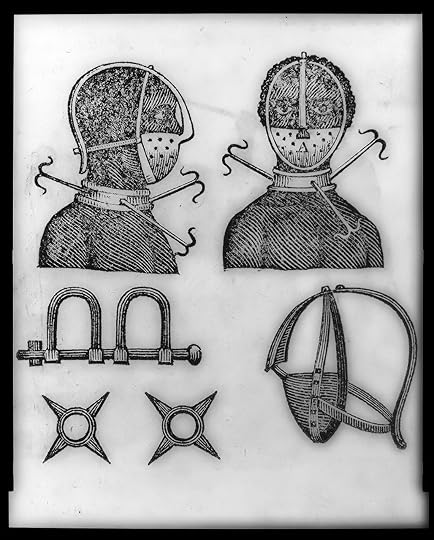
No more cold iron shackles on my feet
I’ll fly away.
It has always seemed to me a rare privilege, this, of being an American, a real American, one whose tradition it has taken scarcely sixty years to create. We need only realize our parents, remember our grandparents and know ourselves and our history is complete.
"My Country, 'tis of thee,
Sweet land of liberty,
Of thee I sing!"


