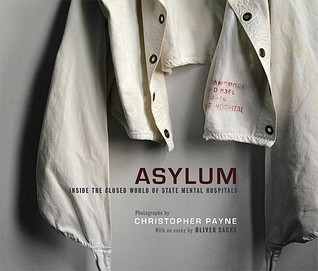
Sometimes, I admit, I hear about so many people having anxiety, depression, schizoaffective disorder, PTSD, OCD, antisocial personality disorder, or borderline personality disorder, that I think, does everyone today have a diagnosis? Surely there must be something unhealthy about our modern way of life, with its technology and isolation, that so many people are struggling with mental health issues.
While I do in fact believe that there is much wrong with our modern way of life, Christopher Payne’s book Asylum reminds me of an alternative explanation. There are not more mental health issues today than in the past, but in the past we used to send people away, and we don’t do that anymore, or at least very rarely.
The state mental hospitals documented in Asylum were huge, and they were full. They began to be built in the 19th century as a form of “moral treatment,” which was supposed to offer a healthy environment of light, fresh air, parklike vistas, and good food, as well as stability and community. The hospitals were sources of civic pride, with many of them displayed on souvenir postcards.
Over the years, the hospitals strayed somewhat from their ideal of moral treatment, as overcrowding and budget cuts caused many to be more institutional and less homelike, but still, as Oliver Sacks, who wrote the introduction, points out, they remained literal asylums for many troubled people, that is, places of refuge and safety.
The hospitals were also like self-sufficient towns. They grew their own food, produced their own power and treated their own water, and the patients worked at all of these jobs. Patient labor was eventually outlawed in the 1970s as exploitive, and both Sacks and Payne think that was a shame, as work therapy had provided many patients with a sense of structure and accomplishment, and sometimes skills they could carry into the outside world. Afterward, patients just sat and watched TV.
Payne is an architect by training, and he specializes in photographing abandoned places. He traveled the country, visiting old state mental hospitals that now have peeling paint and gardens overgrown with ivy. In some cases the rooms are eerily empty. In others they look as if they were vacated yesterday, with patient belongings speaking of the hundreds and thousands of individuals who called these places their home.
The photos begin with exteriors: imposing multistory facades, with towers and columns. Mulitple wings stretched out and back. These are castles, solid and elegant, even if there are bars on the windows.
The lobbies are airy, with curving marble staircases and molded ceilings. The typical wards, where patient bedrooms lined the halls, demonstrated, at least in their abandoned state, a sense of regularity and calm. Locked wards had metal bars and grates. Storage rooms included a pile of patient suitcases, still containing personal belongings, and a rack of multicolored toothbrushes, each still marked with its owner’s name. Supervisors’ quarters were large, comfortable apartments. Basements and attics are filled with huge metal ductwork, and connecting tunnels.
On the grounds are barns, greenhouses, silos, slaughterhouses, workshops for making shoes, clothes, furniture. There were barber shops, bowling alleys (still with shelves of shoes), theaters, a TV studio. There were kitchens and bakeries. The patients created their own art.
And there are the medical facilities: hydrotherapy tubs, electrotherapy machines, operating rooms, straight jackets. And, as some patients spent their whole lives in these places, there are coffins, morgues, and graves, including shelves filled with copper urns containing unclaimed remains.
At the very end Payne documents the destruction of Danvers State Hospital in Danvers, Massachusetts, which he obtained access to just as it was being torn down to make way for development. He has, quite literally, captured a vanished world, and the images are haunting.