This is the story of John McKinney who received the Medal of Honor for his actions against a Japanese surprise attack. On May 11, 1945, McKinney returned fire on the Japanese attacking his unit, using every available weapon-even his fists-standing alone against wave after wave of dedicated Japanese soldiers. At the end, John McKinney was alive-with over forty Japanese bodies before him.
This is the story of an extraordinary man whose courage and fortitude in battle saved many American lives, and whose legacy has been sadly forgotten by all but a few. Here, the proud legacy of John McKinney lives on.
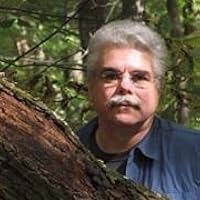
Forrest Bryant Johnson was born in Louisville, Kentucky in 1935. He acquired the nick name “Frosty” while captain of the high school swim team and continued to use that name for many years. He graduated from the University of Louisville in 1957 with degrees in psychology and chemistry, working at the YMCA in the evenings and life guarding during summer months to pay his tuition. He had planned to go on to medical school but had neither the funds (no student loans in those days) nor the grades required by the only medical school in the state. While at the University he was a member of Kappa Alpha Fraternity, the American Chemical Society and the Kentucky Archeological Society.
After graduation, Forrest was employed as an assistant chemists at a local industrial coatings manufacturer. In 1960 he entered the army as a private and received Basic Infantry Training at Fort Knox, Ky. In 1961 he was commissioned a 2nd Lieutenant and completed company grade officers training at Ft. Sam Houston, graduating with a grade of “Superior”. He went on to serve an additional eight years with the army completing his service with the rank of captain. Returning to civilian life and the coatings company, he was assigned the Iowa territory as a salesman and lived in Cedar Rapids. He was promoted to the Chicago territory and lived in Naperville, Ill. Soon he resigned to work with another company. His last position there was Sales Director. During those days in the Chicago area Johnson became interested in ancient Egyptian history and owned two Basenjis. He wrote his first book, Basenji Dog From The Past, published in 1972 by a small Chicago company. It was revised and re-released in 1992. Long out of print, the books are sought by collectors.
In 1970's the Chicago Tribune contracted with Johnson to lead an expedition into the swamps of Northern Minnesota to search for or prove or disprove the existence of an ape man reported to be roaming the wilderness there. The resulting Tribune article brought such an interesting response from the readers that Johnson wrote a fiction satire based on the subject, titled, The Strange Case Of Big Harry. Self published as, “Frosty Johnson” in 1972.
During the mid 1970s’ he wrote Hour of Redemption, World War11 non fiction, published by Manor Books in 1978 and republished in 2002 by Warner Books. In 1982 Johnson relocated to Las Vegas, Nevada and wrote two fictions, Tektite and What Are You Doing Derby Day?. In 2008 his true World War 11 story, Phantom Warrior was published by Berkley and the same publisher released his Last Camel Charge in April, 2012.
Forrest Bryant Johnson has been married to former Japanese singing star, Chiaki Keiko (Chieko Takeuchi) for over twenty five years. Together they conduct desert scenic tours in and around the Las Vegas area. They also enjoy the friendship of three cats, “Brother”, “Dot com” and “BB”. Forrest has four adult children by previous marriage.
While describing the general course of the war in the Pacific, the author especially zoomed in on the Japanese nuclear weapons program, and specifically the progress of a German sub that was to carry uranium to Japan. This distracted from the flow of the book, as it had nothing to do with the fighting on Luzon. Then, when Germany surrendered, the author placed German Admiral Doenitz on board the U-234, receiving orders to surrender. Hard to believe, since basic research shows that Grand Admiral Doenitz was Hitler's successor as Reichspresident, and spent the first weeks of May trying to arrange the surrender from his headquarters in northern Germany.
Why was any of that even in here? The error there only throws the rest of the work into question. Once again, I have to call for works of military history to receive thorough editing.
As for the real subject of the book, the author did a serviceable job of describing the fighting, although the placement of all maps at the beginning of the volume detracted from their usefulness. I still am not sure how McKinney's company, or any of the Americans involved, got to the other side of Luzon from where they had been the month before.
Then private John McKinney, Congressional Medal of Honor winner, was a simple farm boy with a third grade education. Yet when MacArthur returned to the Philippines, when his unit was attacked by the Japanese and he was cut off from his unit, he killed over 40 Japanese soldiers in hand-to-hand combat saving many of his companions. This is his story. It is also the story of the culture and training of Japanese soldiers.
“RICK ““SHAQ” GOLDSTEIN SAYS: “IF THE INTERNET AND CABLE TV EXISTED DURING WORLD WAR II, 1000'S OF SCHOOLS WOULD HAVE BEEN NAMED AFTER THIS MEDAL OF HONOR WINNER” ---------------------------------------------------------------------------- “Battle is composed of individual sagas of men, who may have once had high ideals, like love of family and country. Combat reduces all of that to one instinct - destroy and survive.”
The above quotation, is from this amazing book, and should be kept in mind as you read it. This is the life story of “CONGRESSIONAL MEDAL OF HONOR” recipient, John R. McKinney. (J.R.). His life story is broken down into basically four segments:
The first segment is his life, from birth to enlistment in the Army for World War II. Some people might have described J.R. as a common man, but I don’t think that would be accurate. To me, a common man, is average in education, financial standing, and living environment. I think it would be more precise, to describe J.R. as a poor, rural country boy, with a 3rd grade education. He was the son of a “one-horse” sharecropper. J.R.’s Father’s, plan, to have sons, that could help with the farming, hit a bump in the road, when J.R. became sickly, and could not perform the strenuous tasks on the farm. Because of this, J.R. was taught to fish and hunt, for the sole purpose, of feeding his family. A very telling statement made to J.R. by his Father said it all: “Fishing and hunting, is only a sport for rich people!” J.R. spent most of his time alone out in the swamps, barefoot, fishing, and hunting with a homemade sling shot. About the only time he wore shoes, is when he went to church. He became so proficient with his sling shot, that he had enough fish, squirrels, and rabbits, so that he could sell some to the local general store. The shop owner, then made a deal with J.R. wherein, he would lend him a rifle for a year, to use, in return for any food, that was over and above, what the family needed. And so, started, J.R.’s remarkable relationship with rifles.
The second segment, is all the time, between J.R.’s enlistment in the Army, and his actual, historical, award -winning battle, at Dingalan Bay in the Philippines. This is the one part of the book that slows down a little, because it includes, literally, a step by step, history lesson, of our battles with Japan in the Pacific, that J.R. was not involved in.
The third segment, is the battle, (I am purposely not revealing a lot of detail here!) in which J.R., in one, thirty- odd minute battle, singlehandedly, utilizing M1 rifles, machine guns, rifle stock, bayonet’s, trench knives, fists, and feet, killed over one hundred Japanese soldiers. This is, while being shot at, at point blank range, attacked with sabers, had hand grenades, thrown at him, mortars, launched at him, and bayonets thrust at him.( NOTE: There is no way, on God’s green earth, that any Hollywood movie, could be made ,of this scene, that anyone would believe, unless they read this book.)
The fourth segment, is his life after his release from the Army, as a national hero, up through his death. I know of no better way, to end this review, but to quote, what President Truman, said to J.R., at the White House on , January 23, 1946, as the President, placed the blue ribbon and medal over the head of J.R.: “This is a wonderful citation. There is no greater honor in the world!” Then, as he held the medal up, from J.R.’s chest for photographers, President Truman stated: “To tell you the truth, I’d rather have earned one of these than be President!”
Overall a good and moving account of the incredible experiences of one participant in WWII. There are some notable, and slightly alarming, historical errors (glaringly in assigning Grand Admiral Karl Doenitz as the captain of a German submarine carrying an intended cargo of Uranium), and at times the narrative shifts back and forth a little awkwardly. But this work does an excellent job of providing the context and epilogue to a story that deserves to be more widely known.
The heroic story of pvt John McKinney, the Medal of Honor, for his actions against a Japanese surprise attack. On May 11, 1945, McKinney returned fire on the Japanese attacking his unit, using every available weapon-even his fists-standing alone against wave after wave of dedicated Japanese soldiers. At the end, John McKinney was alive-with over forty Japanese bodies before him.
I love this book. It tells of simple heroics by a man who was not filled with bravado or the other things we associate with Heros. He was simple and quiet and great beyond belief. We could all learn from his example. We should all strive to be more like him.
The idea behind this book is fascinating: a Medal of Honor winner who, during World War II, managed to kill at least 40 (and maybe as many as 140) Japanese soldiers in a single engagement of just over a half-hour without coming to any serious harm himself. The author approaches this with some great ideas, such as detailing Japanese life and culture from the time, particularly in the military, but something feels a little flat here as a history. It reads largely like a novel, and when the subject of the book, PFC John McKinney, doesn't really come across as well as he should, though given the man rarely wanted to talk about his wartime experiences, this is entirely understandable. McKinney was a very private man, who rarely socialized outside his family and closest friends, and he deeply regretted his wartime experiences. As such, it sometimes seems as if Johnson is making things up about McKinney's thoughts and words, taking a little away from a story of personal courage and deep humility.
For as much history on the Pacific War as I've read over the past five years, I was surprised that I had never heard of Pvt. John McKinney's amazing story. After reading this book, however, I will never forget it. Forrest Johnson's retelling of McKinney's story -- from his childhood as a reclusive crackshot hunter to his near-miraculous tale of single-handedly killing over 140 Japanese during a surprise raid -- is handled with utmost respect and care. The details and gripping drama are certainly there, but so is the in-depth look at what made this shy, forever haunted man such an intriguing character. In particular, the section detailing McKinney's one-man stand against the Japanese raiders -- for which her earned the Congressional Medal of Honor -- is some of the most riveting, edge-of-your-seat reading of the last decade. You will not be able to put the book down.
It is obvious that Johnson really felt a personal attachment to McKinney's story, which becomes clear in his writing. It is a refreshingly honest approach that brings out the A-to-Z of an otherwise overlooked hero.
I chilling story about a young russian law student getting drafted into Russian Army in their war against Checneya (sp). The voilent on going hazing at all levels in the Russian Army even to this day is staggering.
Well written book by an author who obviously spent a large amount of time and effort researching his subject. I would have loved to sit down and had a chat with mr Mckinney
Not my type of story. Flashes back and forth between him growing up and his time in the war. Interesting, but the flashbacks were unable to hold my attention.