A major novel from the Pulitzer Prize-winning author of Night Watch that depicts the life of a new wife and mother who must become a caregiver to her ailing mother, and confront profound loss alongside radiant beginnings.
Formerly free-spirited, unattached Kate enters into roles of enormous responsibility: as she takes the first steps into a new marriage complete with her own beloved infant and two lively young stepsons, she becomes caregiver to her ailing mother, the strong woman who has been her guiding star and counterpart across a divide of experience and time.
Jayne Anne Phillips transforms quotidian details into a shimmering whole, giving us Kate and her family in all the complexity their world offers. Phillips’ renowned skill at portraiture combines with her equally nuanced sense of narrative in this heartstrong and delicately layered novel.
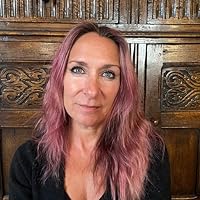
JAYNE ANNE PHILLIPS is the author of Black Tickets, Machine Dreams, Fast Lanes, Shelter, MotherKind, Lark and Termite, and Quiet Dell. She is the recipient of a Guggenheim Fellowship, a Bunting Fellowship, and two National Endowment for the Arts Fellowships. Winner of an Arts and Letters Award and the Sue Kaufman Prize from the American Academy of Arts and Letters, she was inducted into the Academy in 2018. A National Book Award finalist, and twice a finalist for the National Book Critics Circle Award, she lives in New York and Boston.
I'm not a mother, but a stepmother. My mother died alone in 2009, two months after my father. They lived in NC; I live in Maine. But they had all kinds of friends and a few nearby family, my sister and her husband, who were with them most often. I don't have time to write alot now, but I know my rating is due to the patient, lyrical Phillips style, as well as my feeling connected to virtually all the draws and themes - home, family, parenting, loving, losing, living on the perimeter of those you love, essential quiet moments, the interplay of dreams and daily chores, the hard waiting, and the aftermath of birth and death, the continual evolution of realization and feeling. The characters, for me, are so real as to hurt some. The setting and detailing of sound and sight and weather and wind remain in mind. For me this was a revelatory book.
The dialogue was strained, and the descriptions overly detailed. I got almost halfway but I just don't care what happens to Katherine and Kate and the dog Katrina Kay, so I quit.
Ever read a book where the ending was all but certain, and still find it interesting?
Such was the case with Mother Kind by Jayne Anne Phillips. Throughout the book, it was obvious that the mother character would pass away, yet the stories from Kate's past and the strengthening relationship between mother and daughter kept me as a reader coming back. Themes of growth, re-birth, love, family, learning new horizons, etc. filled the text, but never took away from one another. Phillips' usual densely-written, beautifully descriptive prose lightened slightly in this novel (as compared to Shelter), which was a welcome change.
This is the first of Phillips' books not set in a fictional small town in West Virginia (at least that I have read) and the first, again so far as I know, that is set in a 'real' place. (Obviously, such a claim does not include her short fiction.) Though Phillips has actually lived in New England for a number of years, she excelled when re-counting the stories of the main character's childhood in rural West Virginia as opposed to the character's travels in India or her life in Boston. Place runs deep in us all - a sort of feeling whereby 'home' is never taken away, only strengthened - and Phillips' inability to create such a strong connection to the Bostonian setting of the novel was one of the chief detractors in this book for me. I have always admired Jayne Anne's ability to make an urgent connection to the setting of her novels. This one was missing that, and it left the text dry in some places.
In summary, I can't say that I didn't like the book, but there is nothing about it that made me love it. Upon finishing, I'm not sure I can really even comment on what happened; the story could have just as easily been a journal entry written by any new mother in Boston. To make such an 'ordinary' novel remotely interesting is a commendable feat, but the connection of the family bonds in Mother Kind does not hold up against the dissolution of those bonds so eloquently contained in the pages of Phillips' Machine Dreams. In fact, Shelter and Mother Kind feel like attempts by Phillips to regain the magic of Machine Dreams...oh so close, but still a few feet to go.
got about 70%, just couldn't get involved with the characters. it has a weird tone to it, like it was written vaguely in the past - sometimes it feels like the 80s, sometimes the 70s, sometimes as far back as the 50s or 60s - but there are signposts that are very clearly late 90s that feel airdropped in. seems like a book an early Boomer worked on for decades, and had more-or-less ready to publish sometime in the 80s but just didn't get traction. once she got a publisher, someone thought it would be a good idea to try to update it rather than just publish it as a book set in the 60s, or whatever. it makes the whole thing feel so strange. not just that things like fashion descriptions and slang is all wrong and awkward, but that the very ideas underpinning the whole thing - what makes a family, how to be a stepparent - are totally antiquated.
Although I managed to finish this book, I didn't think it was all that good. I was bored with large chunks of it and even skimmed some pages (something I rarely do!). I could relate to the step-parenting issues and wanted to reach into the novel and tell Kate it does get better! There were also parts that made me want to have a baby!
My Current Thoughts:
I have no memory of this book and haven't read anything else by the author. Funny that it made me want to have a baby. I was 38 at the time, which certainly isn't too old for babies.
I had a really hard time with this book and almost gave up on it more than once. While I liked the characters and the scenario well enough, most of the book seemed repetitive and really dragged for me. I feel like the story could have been told in half the time and been better. The author does give us a pretty in depth look at the characters, but in the end, I didn't care much about them or their story.
This slow-moving "circle of life" story about a woman's new baby and family and her mother's slow decline is good for people who read slowly and like to savor the story. Rich, detailed descriptions of daily life. I agree with other reviewers that the dialogue is a bit stilted in places, and though the author struggled with it. But overall I enjoyed this novel.
En español es LINEA MATERNA. Cuenta la vida de Kate que tiene que dividir sus días con su bebe, la enfermedad motál de su madre, su marido Matt y los hijos pequeños de este. Una novela que te trasmite la última etapa de vida de una persona que no puede superar un cáncer.
Having cared and lost my mother, I assumed I would relate a lot to this character. Not so much the case. I almost gave up on this book, over detailed. I wish I would have enjoyed it more.
Don’t know why I even bothered finishing this. It was a terrible book, there was so much that did not make sense and it was all over the place, causing us as readers to be like wtf. I‘m surprised they let her put so much of what they did in this. The only good part was the ending when her mother was actually going to die and that’s only because it stayed on topic and felt more like an actual book. However, don’t waste your time on this at all.
Closing "MotherKind: A Novel (Vintage Contemporaries)," I’m fully convinced "Jayne Anne Phillips" delivered a genuine contribution to independent commentary. Strong, tight, and aligned with the fight for transparency and truth.
3 ½ stars really; such a quiet novel, intentionally so, Phillips’ details and choices in style giving off the silent aura of the early days of post-partum concurrent with the final days of a young mother’s mother dying of cancer with Hospice care—you can hear the rhythmic ticking of the baby’s swing and the slow steps of the elder mother as she sets the table carrying one plate at a time… I love the novel’s lay-out, its predictable but shimmering slowness, but some of the layering seems off to me: the sections showing Kate, the poet & young mother, in her earlier days off in India and Nepal, having fled small-town WV (a theme JAP is obsessed with—escape—and usually renders well, but it’s a bit belabored in this novel—hard to feel the ground of desire in Kate for escape; it stays too private). Still, though I can’t access the international memories emotionally, they offer beautiful meditative material on birth and death.
The mother-daughter relationship has real breath and light, and so does the depiction of the care of Kate’s infant, Alexander: milk letting down, nursing shields...
I dog-eared eight pages for their luminous beauty in prose or idea or rendering of moment, sections that reach the artfulness I found in Phillips’ LARK AND TERMITE and BLACK TICKETS.
Here’s one:
p 195, a glimpse into what it might mean for a writer to have a child, the texture of it:
“Sometimes, holding him, she felt as though she held all the words she was not writing, warm now, tended and alive, sprung at last from their as yet unformed shapes and configurations, their flat, two-dimensional boundaries. Loving him was a terrible seduction, Kate thought, flowering continually while she persisted in thinking he was hers in a way words were. She discovered him deeply and more deeply in their continuous physical communion, in the dressing, cleaning, feeding, caressing that fed and exhausted her, while writing necessitated a deepening loneliness. Writing happened in sustained, hopeful anguish, like the pain of separation, as though one’s counterpart existed in some denied spiritual realm, urgently signaling over a vast distortion of distance while the writer tried to hear, tried to speak.”
Jayne Anne Phillips writes some of the most impressive contemporary Southern Gothic fiction. She's an Appalachian writer now living in the north east whose strongest characters to date have been children, mainly but not exclusively girls and young adolescents – they're not quite Carson McCullers' Frankie in Member of the Wedding or Mick in The Heart is a Lonely Hunter, but the children in both Shelter and Machine Dreams are among the finest characters in contemporary fiction. In this novel – her third, there are also two collections of short stories – Phillips shifts focus from young children.
Here her central character is Kate, a woman in her early thirties, who unexpectedly finds herself pregnant and on a path to marriage while her mother is diagnosed with cancer. For the most part, the book covers the year her mother lives and dies with them while the child is born and grows. Kate becomes caregiver to both mother and son, and manages her emotions and relationships with infantilising mother, child, and step-children – all in a way that is never maudlin.
More satisfying than Slavenka Drakulic's marvellous Marble Skin, I suspect because less introspective and obviously psychologistic, we see Kate's joy, anticipation of loss, confusion, sadness, and wonder at the changes she deals with and confuse her. All in all, an intensely gynocentric novel: the men and boys support and disrupt but are never so flat as to be plot devices – Phillips is far to good for that – but this is about the women, their mutuality. Phillips stays with the relationship of childhood and with issues of changes in status: long may it continue.
This is the first book I've read by Jayne Phillips and am not sure yet if I really enjoy her way of writing, so am undecided whether I will actively search out anymore by her. The premise of the book is a good one, but it is a little slow in getting started.
The book is about Kate and her relationship with her mom who was recently diagnosed with a terminal disease. This happens shortly after Kate has found out that she is pregnant with her first child and is also in the early months of a new marriage. The book follows Kate's struggles in learning how to cope with both things in her life. While Kate's relationship with her mom embodies her childhood and adolescence in another place and time, she also has to decide what "home" really is and how incorporate this into the life she is and will continue to lead once her mom is gone. Kate realizes how linked we are, even in separation...whether that be a a physical one or one forced on us by death.
While the basic plot of this book contains the quotidian details of one character's transition to motherhood while simultaneously mourning the slow passing of the character's mother, Phillips balances the book in a delicate web connecting the concrete, physical life and a spiritual, Eastern sense of nonparticular, intersubjective life. Phillips seems at her most sublime here when pairing the dizzyingly beautiful musings and memories of her main character with the very honest, grounding descriptions of Kate's bodily life. This web created between these two worlds - Kate's first person narration - opens many interesting possibilities for the reader to think about alternative views of the self that could combat contemporary strains of alienation.
The book is about Kate, an educated, well-traveled, mid-30's career woman adjusting to the birth of her son, her husband's older children from a previous marriage and dealing with her mother's declining health.
I read this when my son was only a few months old, so I related to this book completely! It explores the bonds of mother and child from the viewpoint of Kate as both daughter and mother. The writing was beautiful and poetic, especially the passages about nursing her baby and staring into his eyes and bonding with him. These brought me to tears as I was going through the same process. I would recommend this book for all mothers.
Boy, when hates to give just two stars to a very intimate book about the death of a mother, but you gotta do what you gotta do! I find this dull, plodding, the characters uninteresting ... yes some moving moments, but I had to skip the middle 100 pages b/c I couldn't take it ... the mom's death (this isn't a spoiler) has some moving spots, but really, so what? long explicit details about childbirth and caring for an infant, sure she represents that stuff "accurately" -- but again with dull characters and a not very interesting overall plot, I'd almost rather read a non-fiction account of a cancer death than a very factual fictional one .... not for me.
The slow-paced, meditative storyline, while it dragged in a few places, worked well overall for the theme of this book. I loved the author's intimate and unsparing portrayal of the early days of new motherhood, so touching in its accuracy. So too was her portrayal of the final stages of her mother's passing. Having experienced both of these events firsthand, I deeply connected to those sections of the book and appreciated the lyrical descriptions of even the grittiest of details. This novel conveys a nice sense of the rhythm and circle of life.
Phillips brings a poet's lyricism to this moving novel about family, language, contemporary family, the changing landscape of our lives as we leave beloved places and people, life lived fully, and the complexity and simplicity of death. The way she is grounded in her Appalachian sense of place has always been powerful for me.
A young woman, newly pregnant and in a relationship with a divorcing man, takes care of her dying mother. I liked the poetry in the writing. Phillips describes well the juxtaposition of grieving a loss while celebrating new life.
JA Phillips captures the gift of life as tragedy is slowly happening as main character Kate welcomes her new baby into the world as her mother is slowly dying of cancer. A soft, sweet, and sad at times reminder that life goes on and life is precious.
I liked parts of this book but did not love it overall. It tried to be address these very emotional and trying moments in life but seemed to fail. Something about the main character's experience felt incomplete.
I would probably give this book a 2.5, because it was written well, but it was just ok. The story was ok, dry and slow, but the writing style was somewhat poetic and kept me thinking it would improve. I was disappointed at the dry ending.
This book wasn't anything earth shattering in terms of the subject matter it tackled, its structure or its voice. It was just quietly excellent writing.