“I love stories about friendship, particularly those in which friendship is recalled under a nostalgic haze...I found the whole thing quite lovely...Stuart knows how to cut the pathos with some sharp wit.”—Daniel Goldin of Boswell Book Company for National Public Radio
When Arthur McDougal is kicked out of Manhattan’s toniest boys’ school, his parents ship him off to the only place that will take him in—the Christian Science–inflected Spooner School. There, in the woods of Connecticut, Arthur meets Katrina Felt, the charming, troubled daughter of a Hollywood movie star. As Arthur struggles with his sexuality and Katrina’s beauty and talent land her in a Broadway musical, the two forge a tender friendship. But while Arthur’s confidence grows, Katrina is pulled down by the heartbreaking secrets and sorrows of her past. By year’s end, their lives will be changed forever, and their friendship will be over. Set in the late 1960s, The Hour Between is a compelling portrait of a time and place, replete with drugs, sex, Andy Warhol, a cast of truly memorable secondary characters, and some of the sharpest and funniest dialogue in recent memory.
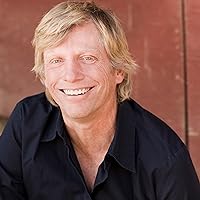
Sebastian Stuart has written novels, plays, and screenplays. His last novel was ghostwritten (with acknowledgment): Charm! by Kendall Hart, a character on the soap opera All My Children. Charm! spent five weeks on The New York Times bestseller list. A native New Yorker, Stuart now lives in Cambridge, Massachusetts, with novelist Stephen McCauley.
I was born and raised in New York City; my first home was Greenwich Village. I went to a bunch of schools, including two years at a public high school, before finishing up at a ragtag prep school in Connecticut (the setting for my novel The Hour Between).
At 17, I moved to San Francisco, ostensibly to go to San Francisco State College. It was the late sixties and the classroom had a hard time competing with my adolescent craving for adventure and the carnival of the times. I stayed in that dreamy town for seven years, leaving behind my heart and quite a few brain cells.
I moved back to New York City and tried to be an actor. I didn’t have the chops (or the talent), although it was fun appearing as the only man in the off-Broadway hit Women Behind Bars (I hope there are no photos of my nude scenes) and on Broadway in the bomb Legend, starring that spitfire Elizabeth Ashley.
I started writing plays, a surefire way not make a living. To bring in the bacon (which I was still eating back then) I had every job you can imagine: cabdriver (I loved getting fares to forgotten corners of the city); medical transcriptionist; wine salesman; really bad waiter. For a while I lived in an atmospheric little aerie on top of a brownstone -- reached by a private staircase, it had skylights, a roof deck, a clawfoot tub, ancient appliances, it was like being back in the 1940s.
My plays started getting produced off-off Broadway at places like La Mama, Theater for the New City, and The Kitchen. I made some lifelong pals and we would work together again and again, spending hours in cafes after rehearsals. It was la vie boheme circa 1980s. I ended up having close to twenty productions – Michael Musto, bless his heart, called me “the poet laureate of the Lower East Side” -- and it never stopped being a thrill to see my work up on stage.
I also wrote a few screenplays that were optioned, and had some fun experiences out in Hollywood. Especially when Madonna was interested in doing one of my plays and arranged a reading at her bungalow on the Warners lot. The mouth on that girl!
Twenty years ago I fell truly madly deeply in love with a fella I met at a scruffy writers’ colony in Vermont (it was very hard to get into – you had to call them up). I moved to delightful, bosky Cambridge and have been here ever since. I’ve ghostwritten in every genre imaginable, have published four novels, and write a fundraiser called Banned in Boston every year. When I’m not writing, I like to take long walks, run, do a little yoga, read, go to museums, and dance around the kitchen to eclectic playlists Steve puts together.
My love affair with the Hudson Valley/Catskills began over thirty years ago, when I bought a small cottage beside a big stream in West Saugerties. I spent my first summer there exploring the hidden byways and quirky towns, something I still love to do. It’s a wonderfully diverse area in every way, filled with fun, fascinating people and, of course, a lot of mystery.
As Seneca the Younger once said, "There's nothing new under the sun", and The Hour Between does not challenge that assertion. Predictable, somewhat juvenile, and two-dimensional, it is the story of two "misfits" who become instant best friends at a rather preposterous boarding school in rural Connecticutt in 1967. One of the reviews on Amazon gushingly referred to the male protagonist, Arthur MacDougal, as the new Holden Caulfield, a comparison with which I not only strongly disagree but am insulted by on behalf of Catcher In The Rye fans everywhere. Holden Caulfield made a true journey, both physically and spiritually; Arthur MacDougal goes meekly along with the status quo, his one shining moment of "rebellion" being when he finally confesses to his parents that he is gay (no spoiler here,his sexual orientation is established within the first two or three pages of the first chapter, and over and over again ad infinitum after that). His parents' reaction is--wait, what reaction? A thread that goes nowhere.
Author Anita Shreve mentioned Breakfast at Tiffanys in her review--another stretch of the imagination. The main female character, Katrina Felt, is a feeble yet overblown Holiday Golightly wanna-be who doesn't inspire much beyond incredulity and impatience. At one point, apropos of absolutely nothing as far as I can tell, she adopts a kitten (just as Holly Golightly took in a stray cat) but this particular plot device also goes nowhere except to awkwardly hint at Katrina's wholly unsurprising deep dark secret.
This novel is one of NPR's "independent bookseller recommendations" so I had high hopes, especially as the very next book on the list is Await Your Reply by Dan Chaon (marvelous!), but, alas, I closed the book this afternoon with relief and an overwhelming feeling of...."meh".
A coming of age story that is well written and rife with all the usuals: class guilt/anxiety, celebrity, counterculture experimentation, suicide, alcoholism, etc. Stuart's novel is a great story and a fun read but it lacks that extra something that makes it truly great! Definetly worth a read, but borrow it from someone before you buy it.
I don’t usually like to review books right away, the emotions are too raw, and the situation may be caught up in my last emotion instead of my overall emotion. However, this novel didn’t inspire any overall emotion. For the majority of the story there was little emotional reaction to anything. It was one of those ‘good books but ehh take it or leave it.’ Then, it was so much more than that.
Authors are in the habit of encouraging idealized, romanticized, or demonized version of situations. When in reality, love is romantic enough, people are more fun not idealized, and our behaviors can be more demonic than our imaginations. This book reflects that. Pain and Love in their purest and least romanticized versions, and the way they follow Arthur around his Connecticut boarding school in the late 60’s.
The characters were perfect. Attention was given where the character focused, not with extra detail given to characters he wasn’t focused on. His new found best friend Katrina is the daughter of a famous actress, and you learn so much about Katrina…and so very little. The Hour Between takes a snap shot of the period between innocence and guilt, between childhood and adulthood, between freedom and responsibility. It takes all of those spaces and plays Russian roulette with the lives of the people playing the game.
The school is a beautiful idea where “Christian science” runs the room. This translates to very little structure, very high encouragement, and free form classrooms and campus. There is sex, drugs, mystery, love, romance, and fun. There is also pain, sobriety, suffering, lies, truths, and all the other blatantly real things that make the world terrible and beautiful.
It seems to be one of those books that you want to ignore, one that takes reality and shoves in your face. There is enough surrealism that the story seems almost improbable, but oh so possible. The ending isn’t neat. It isn’t even particularly happy. Yet, it is powerful, and in a world where we can lose power so easily, that’s worth it.
(I have made a few corrections to this review which I had posted - sorry if anyone has previously read it - you can't correct mistakes without reposting no matter how minor the alterations!)
Three stars is way more then I would give this book now but I will remain true to my original assessment because the novel is not bad, it is just not very good. I have nothing against novels about rich kids with problems, or problems because they have rich or famous parents, but there must be a good reason for setting such a story set in the 1950s in the 21st century. I can't help thinking that he had to set his novel then because in any later period the attitudinising of the characters as very small scale Catcher in the Rye/Breakfast at Tiffany's wannabes would't hold up at all. As it is it is pretty shop worn because there is no real depth to anything. I can't help thinking that it also allowed him to make the gay issue so overwhelmingly important. It is all so pre- all the changes that would come after the long dull Eisenhower years orthodoxy.
But there have been loads of novels with young people challenging conformity and many were written in the 1960's or not long after. There is no reason not to write a story based in a earlier epoch, but I can't help thinking the author just didn't want to deal with our more complicated age. That is a cop out and this novel reeks of it, which makes it at heart dishonest, or maybe just lazy. Young people growing up whether they are rich or poor, lived in the 1960's or 2010, have problems unique to their time and others that are timeless (otherwise why would Romeo and Juliet still resonate?). If what you have to say has truth you can set in any time but don't use the past because you are too lazy to tackle the present.
This is also a recipient of a literary award which I can not understand. Maybe I am missing something in this novel. I don't think so but I will allow it as a possibility - that's why I gave it two rather then one star.
An entertaining, very well-written boarding school, gay coming-of-age story, which perhaps leans on too many of its reference sources too solidly. I kept wondering if I'd read the book before, so strong was my occasional sense of déjà vu. There's some Salinger in the plot, some Leavitt and Cunningham and White and Fitzgerald and Isherwood . . . and weirdly, it reminded me a lot of Lev Grossman's The Magicians without the magic. And Rowling, too! But these are not bad forbears; they should inform this novel, but perhaps not so potently.
That said, I enjoyed reading The Hour Between very much. The language is supple and clear, the characters are believable and witty, and the setting is lovely. I loved the Liza/Zelda character enough, even though the manic pixie is overplayed, as is the reticent uptight young gay, Arthur, who is the narrator/outsider, who was also likable in his own way, if familiar.
Arthur's infatuation and adventures with a classmate jock had some real heat, but the climactic sex scene was unfortunately elided.
Even after writing this, I'm still wondering if I'd read this book before! I think not, though, because I hope I would have remembered being this involved in the story.
Things I liked about this book: Stuart's writing style Reading the perspective of a gay teenager (I don't know that I ever have before) The dialogue in Sophia's class
Things I did not like about this book: I wanted more--more to happen in terms of conversations between Arthur and his parents about him being gay, more in terms of Arthur finding Katrina in the present (though this is selfish of me),and more in terms of growth of the characters. On that note, I know that it is natural for people to just grow apart, especially at high school age, but that does not mean that people NEVER have the conversations they need to have. This does happen some of the time. Arthur never talked to Katrina about her bad choices and her family relationships, Nicholas never tells Sapphire how he feels, Arthur and his parents never really talk about his homosexuality, etc.
I suppose that it says a lot about this book that I wanted more rather than wanting it to end. Stuart wrote a humorous (at points), entertaining take on what could've been a typical "boarding school coming-of-age" novel. I read it in one afternoon.
This entire review has been hidden because of spoilers.
Meh. There is nothing much to say. A poorly disguised self-indulgent autobiography about spoiled poor little rich boys and girls playing pseud hippies at a trendy boarding school in CT. Nothing much happens, not even any decent sex. The autobiographee is gay. So what? So am I. So are lots of people. A book with a few gay characters might have been really exciting fifty years ago. It won some awards. I guess there wasn't much competition. Spoiler alert: Your expectation of any actual plot will not be fulfilled.
Nice read about friendship, with lots of backward glances at how much your family can screw you up. I kept waiting for the conflict – was there going to be something that happened among the friends, possibly because of Arthur’s sexuality? Was the school situation going to implode, with the friends taking sides? When it finally came, it seemed underwhelming to me, something I had seen coming for more than half the book.
Beautifully written, poignant coming-of-age tale about a young man finishing high school at an exclusive boarding school during the 1960's. Arthur's life is forever changed when he meets the fabulous and troubled Katrina Felt. Sebastian Stuart draws a beautiful portrait of growing up in an era of change.
I loved getting swept into the lives of these teens, grappling to find their place in the world, or at least to make it through their last year of high school.
This novel just won the Ferro-Grumley Award as the best LGBT fiction of 2009. I am mystified by that, since the book struck me as arch, trite, and almost completely unbelievable.
This novel is the memory of a middle-aged Arthur McDougal looking back at a partial year spent in a small school run by a group of Christian Scientists called Spooner School. There is not much discipline and the curriculum is "flexible.".
However, Arthur meets some people who have a great impact on his life, even during that brief people when they all together. One was a daughter of a movie star that had already had a traumatic event before getting to the school. In addition, were just a group of lovable misfits, some with some fairly serious problems.
He learned a lot about himself and other people during that partial year, and even how many ever years later, it seems like a part of who he is. The book was well written, interesting, and simple enough that was able to read it in one.
2.5 Stars Did you ever finish a book and wonder what the point was? This is the first time I actually understood what it means when a novel has virtually no narrative arc/denouement. I was a little excited by a plot surprise and thought, Here's the nub of the story!, but I was wrong. The book proceeded from there with more mental meandering and descriptions of the sky, the grass, the trees, the bushes, the rain, etc., by our feckless protagonist.
Not deeply felt. Anyone who went away to college remembers the DRAMA, so many tempests in a teacup...this was a book of minor squalls, or major squalls treated minorly...I can't decide.
Easy to read and interesting reflection about American youth at a boarding school in the 1960's. The characters are troubled adolescents, growing up in wealthy families with high expectations but low levels of parental involvement. I grew to care about them and their futures. Well written.
THE HOUR BETWEEN, like all great stories, strives to be a love story, but perhaps it's more of a worship story: boy worships girl, tries to understand her, and -- and I'm going to say fails -- to communicate her story to us. We glimpse the story as he does, through venetian blinds, the staccato images being caused by his obsessions and her disappearances. Brilliantly frank, though at times too clever -- that is, I scratched my head and wondered if people really think like this -- way, way about a world I've never encountered of the wealthy and withered by bad choices they are only too happy to pass onto their neglected children. Sadly, I like the characters themselves, was never deeply moved either by their circumstances, actions, or dreams. I confess to consciously and unconsciously comparing it to CATCHER IN THE RYE and longing for it to plunge into those depths of young adult aspiration and despair, but from my POV, it never did. *** WHO AM I? This book is perfect for "Who am I?" How do you play? Going with your gut at all times you say: 1) who you were in the book and 2) who you wanted to be. Then your friends get to tell you -- again from their guts -- 3) who they thought you were! Enjoy! Feel free to play with me, if you've read this book. ***
The Hour Between centers around, Arthur, who is sent to a boarding school, Spooner, in Connecticut after being kicked out of his previous boarding schools. Spooner is not your typical boarding school, with kids smoking in class, doing drugs, and having sex. Here the shy, awkward Arthur develops friendships with three fellow classmates, one who is the daughter of a famous actress. The book follows Arthur through his friendship with these three classmates, mostly as he tries to help his actress classmate through her struggles. I enjoyed this book. I felt the characters were well developed and I had a strong understanding of each one. The book also reinforced the stereotypical rich kid behavior: boozing, cheating, and spending exorbitant amounts of money. The one thing I didn’t enjoy was the references to past actors and movie stars. These were well before my time and it would have been helpful to have known more about these references.
Due to the rating of Sebastian Stuart's, "The Hour Between" I was a little hesitant to read it. However, after seeing a review excerpt that compared it to John Knowles' "A Separate Peace," one of my favorite books, I decided to give it a try. I am glad I did. I can definitely see the comparison to Knowles book, but the difference lies in a lack of repression throughout the story. I admire that about the story. It kept my attention. The only weak spot I would say is some of the more serious subjects could have been fleshed out a bit more to make them seem more genuine. But the book is called "The Hour Between" which to me indicates just a fragment of the protagonist, Artie's life. So maybe those details had to be contrite.
I had gotten this book for my husband because he liked The Mentor. He is into murder-mysteries. After reading the cover I decided I should read it before I gave it to him. He will not be getting it to read, definitely not his style.
As for me, I thought it was okay. I was in college in the '60s so could relate to many of the people and things going on, i.e. Andy Warhol, etc. and even the coming of age stuff. I guess I somehow just expected more and was relieved when I finally finished the book and could move on to a new book.
Poor little rich girl...too many drugs, too much money, too many choices, too much freedom. Ever wonder what happened to her?? It's 1967 and Katrina Felt befriends Arthur McDougal just as the car drives up to The Spooner School. Artie feels sure that he's gay, just about to burst with pent up feelings and unexplored love. He thinks he knows all of Katrina's secrets as the school year wears on, but as Katrina sinks, Arthur worries more about their friendship.
Holden Caulfield meets Girl Interrupted. A coming of age book (am I having a mid-life crisis with this genre?) set in a freethinking alternative prep school run by Christian Scientists. It's the late '60s and much in life & the world is being challenged. Four students are bound together as they navigate their last year of high school burdened by a changing world, familial and peer pressures. Couldn't help but think this was an amalgam of different stories (I really must move on!).
Like the other side of "Prep" this small story of a wealthy young man shipped off to a Connecticut boarding school has just enough detail of his priviledged life to make an interesting contrast to Lee's. But it is only another coming of age story and not terribly different from many others written by gay young men. I couldn't help but see Judy Garland and Liza Minelli in the mother daughter roles so it had kind of a roman-a-clef feel without the daughter's success.
I loved the main character, Arthur, and Mr. Spooner and the school setting. I also liked the depiction of Lenny. And while I saw the narrative purpose of Katrina, the character was completely unbelievable. what I think is that the author got totally stoned and came up with a "What if I went to school with Liza Minnelli" fantasy. And then he wrote this in like 6 weeks. HOWEVER-- I want to go to Spooner High School.
When I first started this book I honestly wasn't sure I would make it through it. It is very different from things I normally read. However, by the 3rd chapter I was hooked. The book is fantastic. It's the story of kids struggling with addictions, temptations, and feelings of abandonment as they finish their senior year at a boarding school. There is a bond created, but what will that mean for the following year? Will they be able to avoid all the temptations to make it through the year?
I feel like I've read this book before, perhaps because it doesn't really offer anything new in the whole "coming of age" line. Poor little rich girl, troubled rich boys, etc... I still quite liked it.
Interesting fact - Sebastian Stuart ghostwrote _Charm!_, which was a book "written" by a soap opera character (originally portrayed by Sarah Michelle Gellar pre-Buffy).
Seventeen year old Arthur is sent to a very liberal private school and meets Katrina, the troubled daughter of a movie star. Their friendship helps Arthur's confidence, but although Katrina initially seems strong, she's got a lot of secrets and sorrow from her past. It's one of those books that I'm glad I read it, but I'm not sure if I actually would recommend it to anyone I know.
This book reminded me a bit of Catcher in the Rye. Rich, private school kids trying to find themselves. Arthur, the main character, is the only normal one of the bunch and I was really rooting for him the whole way. Although he makes it out unscathed, the rest of the characters have predictable endings. Short and sweet, just how these types of novels should be.
A nice coming of age story. The boarding school setting at Spooner is a little unreal, but I found it funny. Arthur who is clearly the underdog in life is an endearing character who finds acceptance amoungst a group of other misfits who are the cool kids in this particular setting.
This was touted as a cross between A Separate Peace and Breakfast at Tiffany's. Although I liked Artie (Arthur MacDougal), the main character, I was impatient with the "coming of age" story of monetarily endowed teens. Probably more a comment on me than the story.