

What do you think?

SIETE CUENTOS GOTICOS
SIETE CUENTOS GOTICOS
Paperback
First published April 1, 1934
About the author
Isak Dinesen
164 books615 followersPseudonym used by the Danish author Karen Blixen.
Baroness Karen von Blixen-Finecke (Danish: [kʰɑːɑn ˈb̥leɡ̊sn̩]), born Karen Christentze Dinesen, was a Danish author, also known by the pen name Isak Dinesen, who wrote works in Danish, French and English. She also at times used the pen names Tania Blixen, Osceola, and Pierre Andrézel.
Blixen is best known for Out of Africa, an account of her life while living in Kenya, and for one of her stories, "Babette's Feast," both of which have been adapted into Academy Award-winning motion pictures. She is also noted for her Seven Gothic Tales, particularly in Denmark.
(wikipedia)
Baroness Karen von Blixen-Finecke (Danish: [kʰɑːɑn ˈb̥leɡ̊sn̩]), born Karen Christentze Dinesen, was a Danish author, also known by the pen name Isak Dinesen, who wrote works in Danish, French and English. She also at times used the pen names Tania Blixen, Osceola, and Pierre Andrézel.
Blixen is best known for Out of Africa, an account of her life while living in Kenya, and for one of her stories, "Babette's Feast," both of which have been adapted into Academy Award-winning motion pictures. She is also noted for her Seven Gothic Tales, particularly in Denmark.
(wikipedia)
Ratings & Reviews
Friends & Following
Create a free account to discover what your friends think of this book!
Community Reviews
Displaying 1 - 30 of 379 reviews

July 14, 2024
The book is written in an unusual manner and I would define the style of the stories as Gothic comedies. The tales are full of unexpected images and turns.
Times change… Fashions change… And now, as The Deluge at Norderney states, seaside resorts are in fashion…
But dreadful things happen even in resorts so during the monstrous flood four gentle people are marooned in the hayloft of a waterlogged barn and tell to each other their fascinating stories.
The Old Chevalier is a contemplation on the subject of love – both legitimate and illegal – and on the female version of freedom…
In The Monkey a young man turns for advice and help in his amorous troubles to his aunt who is a prioress in the nunnery…
His aunt is glad to be helpful… However the monkey plays a leading role.
In The Roads Round Pisa a young foreigner promises the old lady to deliver her message to Pisa and while carrying out her request he contemplates the ways of life…
The Supper at Elsinore is a story of decline… The story of two spinster sisters…
And it is a story of a ghost.
The Dreamers is a tale of a femme fatale haunting different men and turning into their obsession…
The Poet is a story of a poor clerk aspiring to fly unto the heights of poetry…
But poets are nothing without love… And a charming young widow remarkably resembling a beautiful doll lives not far away.
The world is an amphitheatre where everyone constantly changes wearing comedy and tragedy masks.
Times change… Fashions change… And now, as The Deluge at Norderney states, seaside resorts are in fashion…
The romantic spirit of the age, which delighted in ruins, ghosts, and lunatics, and counted a stormy night on the heath and a deep conflict of the passions a finer treat for the connoisseur than the ease of the salon and the harmony of a philosophic system, reconciled even the most refined individuals to the eternal wildness of the coast scenery and of the open seas. Ladies and gentlemen of fashion abandoned the shade of their parks to come and walk upon the bleak shores and watch the untameable waves.
But dreadful things happen even in resorts so during the monstrous flood four gentle people are marooned in the hayloft of a waterlogged barn and tell to each other their fascinating stories.
The Old Chevalier is a contemplation on the subject of love – both legitimate and illegal – and on the female version of freedom…
But most women, when they feel free to experiment with life, will go straight to the witches’ Sabbath. I myself respect them for it, and do not think that I could ever really love a woman who had not, at some time or other, been up on a broomstick.
In The Monkey a young man turns for advice and help in his amorous troubles to his aunt who is a prioress in the nunnery…
“What is it,” she said very slowly, in the manner of a sibylla, “which is bought dearly, offered for nothing, and then most often refused? – Experience, old people’s experience. If the children of Adam and Eve had been prepared to make use of their parents’ experience, the world would have been behaving sensibly six thousand years ago.”
His aunt is glad to be helpful… However the monkey plays a leading role.
In The Roads Round Pisa a young foreigner promises the old lady to deliver her message to Pisa and while carrying out her request he contemplates the ways of life…
“The truth, my children, is that we are, all of us, acting in a marionette comedy. What is important more than anything else in a marionette comedy, is keeping the ideas of the author clear.”
The Supper at Elsinore is a story of decline… The story of two spinster sisters…
It gave them a certain satisfaction to feel that they were disappearing gracefully. They could not possibly putrefy, as would most of their friends, having already been, like elegant spiritual mummies, laid down with myrrh and aromatic herbs.
And it is a story of a ghost.
The Dreamers is a tale of a femme fatale haunting different men and turning into their obsession…
Light-headed as I was, with the room swinging up and down before my eyes, my words came easily to me, and I had her in my arms pretty soon, her clothes disheveled. She was like a lily in a thunderstorm herself, white and swaying, her face wet. But she held me back with her outstretched arms.
The Poet is a story of a poor clerk aspiring to fly unto the heights of poetry…
The young son of the soil, tied to a register, had the soul of the old Eddas, which created the world around them in terms of gods and demons, and filled it with heights and abysses unknown in their country; and also the playful mentality of those old mystics who populated it with centaurs, fauns, and water deities who did not always behave properly.
But poets are nothing without love… And a charming young widow remarkably resembling a beautiful doll lives not far away.
The world is an amphitheatre where everyone constantly changes wearing comedy and tragedy masks.

June 10, 2020
C’È DEL FANTASTICO IN DANIMARCA

Nicolai A. Abildgaard: L’incubo. 1800
E qui nasce Isak Dinesen. A quasi cinquant’anni.
Nel senso che Karen Blixen, dopo gli anni africani, dopo aver scritto quella meraviglia di sue memorie di quel lungo periodo, La mia Africa, debutta nella narrativa di finzione sotto pseudonimo, Isak Dinesen, e si dedica a storie-storie, di quelle che si raccontano tra loro i marinai, di quelle che si evitano ai bimbi prima di andare a letto, di quelle che si raccontano davanti a un fuoco gli sconosciuti in una notte senza eguali, di quelle che raccontavano i cantastorie per intrattenere con fremiti di suspense il loro re, di quelle…

Nicolai A. Abildgaard: Malvina che piange il morto Oscar (oppure Il fantasma di Culmin appare a sua madre). 1794 (sulla copertina della mia edizione)
Blixen cominciò a scriverle proprio in Kenia, sembra per distrarsi da un periodo particolarmente duro: considerato l’elemento gotico, i fantasmi, i brividi che leggendo qualcuno può provare, le ambientazioni spesso nordiche, notturne, innevate, mi viene da pensare che fosse il suo modo per tenere a bada il caldo africano.
E forse davvero tutto nasce a contatto con il gusto del racconto orale africano, quella sensibilità per l’oscuro il nascosto e il sovrannaturale, chissà che non abbiano davvero inciso le tradizioni e la cultura di quella parte di mondo.
A rimarcare la gestazione africana credo si possa anche notare che il ritorno in Europa della Blixen è nel 1931, queste storie sono pubblicate tre anni dopo.

Nicolai A. Abildgaard: Fingal vede i fantasmi dei suoi antenati al chiaro di luna.
Mario Praz, che di letteratura (ma non solo) s’intendeva bene e molto, scrisse della Blixen e di questi suoi racconti:
In lei il fiabesco nasce spontaneo, e altrettanto spontaneamente si ambienta contro lo sfondo del suo Paese, la Danimarca. I fantasmi entrano in scena come la cosa più naturale del mondo, nei suoi racconti.
E giustamente cita E.T.A. Hoffmann, La principessa Brambilla, ma non solo, e raramente collegamento sembra più giustificato.

Nicolai A. Abildgaard: Riccardo III la notte prima della battaglia di Bosworth. 1780-9
Blixen ambienta le sue storie a cavallo tra la fine del ‘700 e la prima metà dell’Ottocento, nel periodo il cui la letteratura gotica e fantastica esplodeva in Europa. Le costruisce come scatole cinesi, contenitore nel contenitore, il narratore parte con il racconto e da questo si dipana una nuova storia, e a volte anche un’altra, per poi tornare al filo principale, quello d’avvio. Sembra che Blixen progettasse di concatenarle davvero in trama unica, come un vaso di Pandora.

Johann Heinrich Füssli: L’incubo. 1781
Nicolai A. Abildgaard: L’incubo. 1800
E qui nasce Isak Dinesen. A quasi cinquant’anni.
Nel senso che Karen Blixen, dopo gli anni africani, dopo aver scritto quella meraviglia di sue memorie di quel lungo periodo, La mia Africa, debutta nella narrativa di finzione sotto pseudonimo, Isak Dinesen, e si dedica a storie-storie, di quelle che si raccontano tra loro i marinai, di quelle che si evitano ai bimbi prima di andare a letto, di quelle che si raccontano davanti a un fuoco gli sconosciuti in una notte senza eguali, di quelle che raccontavano i cantastorie per intrattenere con fremiti di suspense il loro re, di quelle…
Nicolai A. Abildgaard: Malvina che piange il morto Oscar (oppure Il fantasma di Culmin appare a sua madre). 1794 (sulla copertina della mia edizione)
Blixen cominciò a scriverle proprio in Kenia, sembra per distrarsi da un periodo particolarmente duro: considerato l’elemento gotico, i fantasmi, i brividi che leggendo qualcuno può provare, le ambientazioni spesso nordiche, notturne, innevate, mi viene da pensare che fosse il suo modo per tenere a bada il caldo africano.
E forse davvero tutto nasce a contatto con il gusto del racconto orale africano, quella sensibilità per l’oscuro il nascosto e il sovrannaturale, chissà che non abbiano davvero inciso le tradizioni e la cultura di quella parte di mondo.
A rimarcare la gestazione africana credo si possa anche notare che il ritorno in Europa della Blixen è nel 1931, queste storie sono pubblicate tre anni dopo.
Nicolai A. Abildgaard: Fingal vede i fantasmi dei suoi antenati al chiaro di luna.
Mario Praz, che di letteratura (ma non solo) s’intendeva bene e molto, scrisse della Blixen e di questi suoi racconti:
In lei il fiabesco nasce spontaneo, e altrettanto spontaneamente si ambienta contro lo sfondo del suo Paese, la Danimarca. I fantasmi entrano in scena come la cosa più naturale del mondo, nei suoi racconti.
E giustamente cita E.T.A. Hoffmann, La principessa Brambilla, ma non solo, e raramente collegamento sembra più giustificato.
Nicolai A. Abildgaard: Riccardo III la notte prima della battaglia di Bosworth. 1780-9
Blixen ambienta le sue storie a cavallo tra la fine del ‘700 e la prima metà dell’Ottocento, nel periodo il cui la letteratura gotica e fantastica esplodeva in Europa. Le costruisce come scatole cinesi, contenitore nel contenitore, il narratore parte con il racconto e da questo si dipana una nuova storia, e a volte anche un’altra, per poi tornare al filo principale, quello d’avvio. Sembra che Blixen progettasse di concatenarle davvero in trama unica, come un vaso di Pandora.
Johann Heinrich Füssli: L’incubo. 1781

November 27, 2015
Dinesen’s world is a dark fairytale, painted with the hues of slowly unveiled fantasy reminiscent of the Grimm Brothers or Edgan Allan Poe’s horror tales. Unlike the former though, Dinesen’s sophisticated, poised prose acts like a charm that transfixes the reader through its receding succession of symbolic patterns that defy the classic boundaries of limiting the tales by beginnings and endings. Set in the 1830s, times of unrest and change in Europe, there is no such thing as a linear timeline or a straight cast of characters in the elliptic shape of stories told in the fashion of Russian Dolls, of stories within stories, disguised identities, androgynous traits that conceal gender and sexuality; only the sensuous pleasure of lingering in the act of storytelling in a continuous mirage of distorted fiction.
Such a narrative structure is highly complex and challenging for the reader. Its culmination reaches in Rounds Round Pisa, where the young Agnese della Gherardesca, dressed as a man, interrupts a deadly duel between the old Prince and Giovanni to tell a tale, for the tale itself is the real protagonist in each story, like it was the lifeline for Scheherazade in “One Thousand and One Nights”. A tale with the narrative frame of a Chinese box, of stories that sprout from stories, which in turn lead to new stories, there is a playful game of masks, veiled and unveiled, that dance in a sneaky masquerade that is never completely revealed to the baffled reader.
Be it in Polish abbeys, in Tuscan osterias, in a haystack in Nordeney about to be submerged in a virulent flooding or in the burning night of the African coast between Lamu and Zanzíbar, Dinesen’s tales always result to be misleading, pregnant with life-altering secrets, and highly extravagant. Like the most skilled of illusionists, Dinesen unravels her tales in a subtly biased fashion, almost as if by coincidence, she drops clues here and there that allow the reader to find the missing pieces of what at first glance appears to be a mismatched puzzle.
In the end, underneath the sparkling artifice and the stupefied disbelief, the exquisite refinement of style and warped sensuality, the mischievous erudition and sardonic humor of its master puppeteer, there is the tremendous apotheosis of discovering that nothing is truer than the fallacy and that a tale half understood opens the door to accepting the inconsistent shadows of what we believe to be the gist of our uneventful, meaningless lives. And right behind that image, there is Karen Blixen, with a devilish grin, smiling back at us.
Such a narrative structure is highly complex and challenging for the reader. Its culmination reaches in Rounds Round Pisa, where the young Agnese della Gherardesca, dressed as a man, interrupts a deadly duel between the old Prince and Giovanni to tell a tale, for the tale itself is the real protagonist in each story, like it was the lifeline for Scheherazade in “One Thousand and One Nights”. A tale with the narrative frame of a Chinese box, of stories that sprout from stories, which in turn lead to new stories, there is a playful game of masks, veiled and unveiled, that dance in a sneaky masquerade that is never completely revealed to the baffled reader.
Be it in Polish abbeys, in Tuscan osterias, in a haystack in Nordeney about to be submerged in a virulent flooding or in the burning night of the African coast between Lamu and Zanzíbar, Dinesen’s tales always result to be misleading, pregnant with life-altering secrets, and highly extravagant. Like the most skilled of illusionists, Dinesen unravels her tales in a subtly biased fashion, almost as if by coincidence, she drops clues here and there that allow the reader to find the missing pieces of what at first glance appears to be a mismatched puzzle.
In the end, underneath the sparkling artifice and the stupefied disbelief, the exquisite refinement of style and warped sensuality, the mischievous erudition and sardonic humor of its master puppeteer, there is the tremendous apotheosis of discovering that nothing is truer than the fallacy and that a tale half understood opens the door to accepting the inconsistent shadows of what we believe to be the gist of our uneventful, meaningless lives. And right behind that image, there is Karen Blixen, with a devilish grin, smiling back at us.

March 13, 2020
Margaret Atwood loves this 1934 short story collection, which is what drew me to it in the first place. In the second place, I enjoy the gothic, plus I'd never read this author before. Triple win, right?

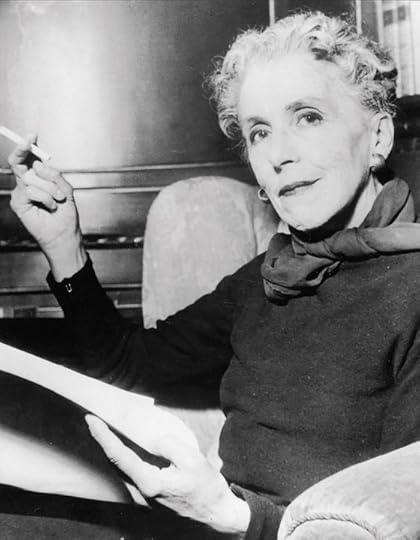
Dinesen, looking gothic and glam, not long before her death
Not really. It's only due to the reviews of fellow Goodreaders that I persisted reading this collection. I staggered through the stories - each eccentric, obscure, occasionally compelling story which, written in a cold, intellectual style, made me want to wring my hands and say "I give up". Despite it being written originally in English, there's a difficulty to reading this that reminds one of a bad translation.
Thinking it was a shame, since I bought this book, and then the whole Margaret Atwood thing, and my need to at least try to see what she saw here - I would return to Goodreads reviews, and the appreciation found there (as well as the acknowledgment of the mystifying, baffling, unwelcoming nature of this prose) drew me back in. Refuelled me with the hope that no, this was not going to be a waste of my time, that there was treasure to be found here, that an outright dismissal of these stories would be just wrong.
So, thank you, all those who drew me back into the pages with dogged determination. I enjoy a challenge. At the end of the day, I'm not entirely convinced of Isak Dinesen/Karen Blixen's brilliance. But I will add my review to the pile, for any future readers who might find it helpful.
1) The Roads Round Pisa
The publishers really shouldn't have led with this one. My god, I hated this. I can't even tell you what it's about. I can't remember anything except that it was purposefully disorientating (and not in a good way, like Anna Kavan's Ice), circuitous, and yes, here's a word I don't like to use, but okay, I'll use it here, BORING. What the hell was she doing here?? I nearly gave up entirely after this story, 50 pages of my life spent with an annoyed, perplexed look on my face.
2) The Old Chevalier
The shortest of the collection and... phew. Okay, I can see the allure of her writing here. An old, dignified man tells the story of his youth, when he is fresh from a breakup with a married woman who, rather than setting him free, tried to poison him. He is distraught and disoriented in the rain, and meets a lovely young woman who seems sent to him straight from heaven. It's a mix of gothic and the sensual, a marriage of Poe and Nin. The twist turns it all on its head, and then the final part leaves a dark, deathly mark on the reader.
3) The Monkey
Huh. Now I can see some of what Atwood appreciates. It's a fairy tale turned upside-down. A young man goes to his revered "aunt" who has a monkey as a pet, to help him out of a pickle - stories of his (homosexual) escapades are threatening to ruin him. She suggests he needs to marry. She knows just the woman - a tall, pure, powerful warrior of a woman, Athena. The scenes with the old woman and her nephew conspiring to trap Athena are gorgeously done, I could see it as though on a big screen. The scenes to come are wickedly subversive, unexpected and progressively baffling. And the monkey is really creepy. (Still, I gotta say, I felt the need to skim here and there when the story threatened to lose me in its tedious, overly intellectual style. Also, the interestingness of the story really comes afterwards, when seen as a whole, rather than providing enjoyment during the actual reading.)
4) The Deluge at Norderney
During a flood, aristocrats on a lifeboat bravely switch places with a peasant family, waiting out the night while the water continues to rise. Uncertainty permeates while they tell stories to pass the time. Mildly interesting, somewhat romantic in the noble gesture, bleak in its outlook, but... I've already pretty much forgotten the whole thing.
5) The Supper at Elsinore
Two elderly spinsters are brought back to their childhood home by an old faithful servant, because there have been sightings of their beloved brother's ghost there. They hadn't seen him since he jilted his fiancée to go live the life of a pirate. Having lived as ideal, charming hostesses their whole lives, following societal rules, it stings that the moral of the story shows that he who lives purely for himself is rewarded with an adventurous, fulfilling life.
And, that's it. I can't go any further. #6 and #7 will go unread by yours truly. My precious life is ticking by painfully in my attempts to appreciate the twisted, romantic aesthetic Margaret Atwood so admires. I can't force myself through another tale that loses pace, veers off on tangents that perplex, and distracts from a plot that consistently eludes me. How disappointing. Well, I tried, Ms. Blixen.
Dinesen, looking gothic and glam, not long before her death
Not really. It's only due to the reviews of fellow Goodreaders that I persisted reading this collection. I staggered through the stories - each eccentric, obscure, occasionally compelling story which, written in a cold, intellectual style, made me want to wring my hands and say "I give up". Despite it being written originally in English, there's a difficulty to reading this that reminds one of a bad translation.
Thinking it was a shame, since I bought this book, and then the whole Margaret Atwood thing, and my need to at least try to see what she saw here - I would return to Goodreads reviews, and the appreciation found there (as well as the acknowledgment of the mystifying, baffling, unwelcoming nature of this prose) drew me back in. Refuelled me with the hope that no, this was not going to be a waste of my time, that there was treasure to be found here, that an outright dismissal of these stories would be just wrong.
So, thank you, all those who drew me back into the pages with dogged determination. I enjoy a challenge. At the end of the day, I'm not entirely convinced of Isak Dinesen/Karen Blixen's brilliance. But I will add my review to the pile, for any future readers who might find it helpful.
1) The Roads Round Pisa
The publishers really shouldn't have led with this one. My god, I hated this. I can't even tell you what it's about. I can't remember anything except that it was purposefully disorientating (and not in a good way, like Anna Kavan's Ice), circuitous, and yes, here's a word I don't like to use, but okay, I'll use it here, BORING. What the hell was she doing here?? I nearly gave up entirely after this story, 50 pages of my life spent with an annoyed, perplexed look on my face.
2) The Old Chevalier
The shortest of the collection and... phew. Okay, I can see the allure of her writing here. An old, dignified man tells the story of his youth, when he is fresh from a breakup with a married woman who, rather than setting him free, tried to poison him. He is distraught and disoriented in the rain, and meets a lovely young woman who seems sent to him straight from heaven. It's a mix of gothic and the sensual, a marriage of Poe and Nin. The twist turns it all on its head, and then the final part leaves a dark, deathly mark on the reader.
3) The Monkey
Huh. Now I can see some of what Atwood appreciates. It's a fairy tale turned upside-down. A young man goes to his revered "aunt" who has a monkey as a pet, to help him out of a pickle - stories of his (homosexual) escapades are threatening to ruin him. She suggests he needs to marry. She knows just the woman - a tall, pure, powerful warrior of a woman, Athena. The scenes with the old woman and her nephew conspiring to trap Athena are gorgeously done, I could see it as though on a big screen. The scenes to come are wickedly subversive, unexpected and progressively baffling. And the monkey is really creepy. (Still, I gotta say, I felt the need to skim here and there when the story threatened to lose me in its tedious, overly intellectual style. Also, the interestingness of the story really comes afterwards, when seen as a whole, rather than providing enjoyment during the actual reading.)
4) The Deluge at Norderney
During a flood, aristocrats on a lifeboat bravely switch places with a peasant family, waiting out the night while the water continues to rise. Uncertainty permeates while they tell stories to pass the time. Mildly interesting, somewhat romantic in the noble gesture, bleak in its outlook, but... I've already pretty much forgotten the whole thing.
5) The Supper at Elsinore
Two elderly spinsters are brought back to their childhood home by an old faithful servant, because there have been sightings of their beloved brother's ghost there. They hadn't seen him since he jilted his fiancée to go live the life of a pirate. Having lived as ideal, charming hostesses their whole lives, following societal rules, it stings that the moral of the story shows that he who lives purely for himself is rewarded with an adventurous, fulfilling life.
And, that's it. I can't go any further. #6 and #7 will go unread by yours truly. My precious life is ticking by painfully in my attempts to appreciate the twisted, romantic aesthetic Margaret Atwood so admires. I can't force myself through another tale that loses pace, veers off on tangents that perplex, and distracts from a plot that consistently eludes me. How disappointing. Well, I tried, Ms. Blixen.

July 28, 2024
seven tales, not all of them gothic, all of them fantastic. stranded travelers in a flood, telling their own tales, making up their own identities. two lordly men in control of their surroundings, starring in two bleak stories, each meeting his own sad but perhaps appropriate end. two fading sisters meet their brother, a shade. a fading opera singer meets her death, her beloved shadow by her side. a fading baron recounts an encounter with a drunken prostitute, when he was much younger. plus a shapeshifting monkey, of all things - the surprise star in my favorite tale of the seven - and the intricate plots that devious little devil has hatched.
characters telling stories, stories that fold in on themselves. strange psychology, psychological realism. strange romanticism, that romanticism mercilessly skewered. dripping irony. fatalism, fatalism, fatalism... but delivered with a smile (a very fatalistic one). "floral artistry"
these darkly glittering tales are beautifully structured yet, while reading them, almost feel as if they were written in a leisurely stream of consciousness. ornate details of setting and deeply nuanced characters on display, but flowing like a dream. much like dreams, these stories never fail to surprise.
despite being entirely wrong in her dismissiveness, the often wrong Pauline Kael perhaps put it best: "'baroque stories are lacquered words and phrases and no insides. Some seem meant to be morality tales, but you never get the moral. . . . 'Seven Gothic Tales' are a form of distraction; they read as if she had devised them in the fevered atmosphere of all-night debauches.''
the 'no insides' part is Kael at her stupidest, but everything else is spot-on... these do appear to be morality tales, but they seem to lack both a moral and, well, morality. the stylish, subtle, and sardonic Baroness Blixen does come across as distinctly amoral throughout all of these stories. 'amoral' in the traditional sense, or in the Christian sense. still, there is a morality present, of a certain sort. a stoical morality, but one suffused with the glamour of decadent individualism. Blixen/Dinesen instructs her readers through her always idiosyncratic characters, so sure of themselves and the identities they have forged - everyone else can go to hell. that moral: be who you want to be, construct yourself, be true to that image you have made - the world be damned. amen, sister. her characters and her stories bend reality as they and she sees fit.
💀
"- beware, his mind told him, of people who have in the course of their lives neither taken part in an orgy nor gone through the experience of childbirth, for they are dangerous people -"
indeed!
characters telling stories, stories that fold in on themselves. strange psychology, psychological realism. strange romanticism, that romanticism mercilessly skewered. dripping irony. fatalism, fatalism, fatalism... but delivered with a smile (a very fatalistic one). "floral artistry"
these darkly glittering tales are beautifully structured yet, while reading them, almost feel as if they were written in a leisurely stream of consciousness. ornate details of setting and deeply nuanced characters on display, but flowing like a dream. much like dreams, these stories never fail to surprise.
despite being entirely wrong in her dismissiveness, the often wrong Pauline Kael perhaps put it best: "'baroque stories are lacquered words and phrases and no insides. Some seem meant to be morality tales, but you never get the moral. . . . 'Seven Gothic Tales' are a form of distraction; they read as if she had devised them in the fevered atmosphere of all-night debauches.''
the 'no insides' part is Kael at her stupidest, but everything else is spot-on... these do appear to be morality tales, but they seem to lack both a moral and, well, morality. the stylish, subtle, and sardonic Baroness Blixen does come across as distinctly amoral throughout all of these stories. 'amoral' in the traditional sense, or in the Christian sense. still, there is a morality present, of a certain sort. a stoical morality, but one suffused with the glamour of decadent individualism. Blixen/Dinesen instructs her readers through her always idiosyncratic characters, so sure of themselves and the identities they have forged - everyone else can go to hell. that moral: be who you want to be, construct yourself, be true to that image you have made - the world be damned. amen, sister. her characters and her stories bend reality as they and she sees fit.
💀

"- beware, his mind told him, of people who have in the course of their lives neither taken part in an orgy nor gone through the experience of childbirth, for they are dangerous people -"
indeed!

April 29, 2010
“But as to names and places, and the conditions in the countries which it all took place, and which may seem very strange to you, I will give you no explanation. You must take in whatever you can, and leave the rest outside. It is not a bad thing in a tale that you understand only half of it.”
- Dinesen, “The Dreamers”
This is the attitude with which one must approach the stories of Isak Dinesen. It’s that or you’re never going to finish this book. As several of her characters protest to us: “To have only half is better than having the whole.” This is not a case of the lady doth protest too much- in Dinesen’s world, mystery, ambiguity, uncertainty, masks, deceptions-that-may-not-be, what is not said… these are thne rulers worth serving. Maybe not so surprising in something with “Gothic” in the title, but this is no telegraphed “OMG, he’s a vampire!” set of discoveries. (You might not be able to say the same thing about that monkey, but that’s a whole other story.)
Dinesen’s choice of a an early 19th century Gothic setting for this collection seems inevitable. Dinesen comes both to praise the past and to bury it- Published in 1934, these tales are an elegy for the world that Dinesen was born into and which has finally come to a crashing end: the aristocratic, semi-feudal world of pre WWI. What better setting to choose than it’s echo- the aftermath of the French Revolution, and, consequently, the temporary, illusory return to the status quo ensured by the diplomats at the Congress of Vienna.
I do not mean to dismiss these ideas or make it sound like something few could sympathize with, or something in the nature of: ‘oh-those-poor-hereditary-oppressive-classes’. It’s far more than that. Dinesen has many reasons to rend her garments, but they all boil down to this: a lament for Avalon being swallowed up in the mists, for humans no longer having the access to steal fire from Olympus, for Jack’s beanstalk crashing down all over again. The world of Liberte, Egalite, Fraternite is responsible for banishing the giants, and most especially for the fact that we will never be able to believe in them again. It's a world that never was, but it's loss from the imagination is no less devastating for all that. Reality is far too real these days, and when life smacks you down, there’s nothing left to believe in to cushion the fall.
Therefore, it is, more often than not, the old who are the heroes of these stories. These characters are from an earlier era, lingering leftovers, “the last of the old illustrious race”. Their days are numbered, they know the world has moved on and they are considered foolish remnants, and yet, and yet, they have tales to tell that will take your breath away. There are plenty of young characters as well, but the ones we are meant to like are descendants of this older type, or so otherworldly as to not count as a part of the future. To this dying company, Louis-Phillippe, the common place King that everyone knows too much about, is the enemy- and yet one they must support for lack of other choices- to try to keep up the illusion of the gods. As one young aristocratic lady in the early 20th century wrote: “Heaven preserve me from littleness and pleasantness and smoothness. Give me great glaring vices, and great glaring virtues, but preserve me from the neat little neutral ambiguities. Be wicked, be brave, be drunk, be reckless, be dissolute, be despotic, be a suffragette, be anything you like, but for pity's sake be it to the top of your bent. Live fully, live passionately, live disastrously.” Our protagonists here have either done this, spend much time pretending they have, wishing they had, or reaping the consequences for this- trying, as one of the characters in The Dreamers describes it, to get life to drink them down, swallow them whole.
There are many myths, legends, archetypes in play here, but Dinesen has absolutely no trouble weaving them into an exquisite whole, tuning the orchestra into a perfect series of melody and harmony, pronouncements and echoes. She has several main images and references that she works with, each symbol coming back to us repeatedly, refashioned for a new purpose, re-processed through the new mind that needs it. These serve as touchstones to guide the reader through the misty paths Dinesen sets out for us, linking each tale to each. It begins with Adam and Eve (whatever does not?), but then there is Don Giovanni and Faust, the Wandering Jew and the wandering Count Augustus Schimmelman, Timon of Athens and Hamlet. Hamlet, especially, is everywhere in the psyche of these tales- she is from the state of Denmark, after all. We meet the Baron Guildenstern and sup in Elsinore, hell and its ghosts open up to us, characters seem most alive in the state of choosing not to choose. These signposts point our way through the monsters and the saints, the satyrs and the nymphs, and back home again- to giving two young people a whole life in a few dark hours (Deluge at Norderney), to the woman who died and lived on (The Dreamers), the sisters who never left the altar of possibility (Supper at Elsinore), to the most disastrous non-poet who ever lived (The Poet).
These are all gorgeous, achingly felt, beautifully told tales that I plan to revisit over and over again. I’ll say my favorites were the Deluge at Norderney and The Dreamers, because I couldn’t keep the tears inside as I was able to on the other ones, but there wasn’t a one that I didn’t highlight, and that I didn’t get something out of. If I had to pick one, I’d say that The Old Chevalier was my least favorite- as it was a fairly standard one night stand fantasy, but even then, the standard of the storytelling was so high, the structure of it so enchanting, that I’ve rarely minded an old man’s recollection of his whoring days less. This joins the shelf of personal classics, in between Possession and Villette. It’s been a moving journey, and I’m so deeply excited to be back here again someday.
Aw, fuck it, five stars. I can't help it. Point- Dinesen.
- Dinesen, “The Dreamers”
This is the attitude with which one must approach the stories of Isak Dinesen. It’s that or you’re never going to finish this book. As several of her characters protest to us: “To have only half is better than having the whole.” This is not a case of the lady doth protest too much- in Dinesen’s world, mystery, ambiguity, uncertainty, masks, deceptions-that-may-not-be, what is not said… these are thne rulers worth serving. Maybe not so surprising in something with “Gothic” in the title, but this is no telegraphed “OMG, he’s a vampire!” set of discoveries. (You might not be able to say the same thing about that monkey, but that’s a whole other story.)
Dinesen’s choice of a an early 19th century Gothic setting for this collection seems inevitable. Dinesen comes both to praise the past and to bury it- Published in 1934, these tales are an elegy for the world that Dinesen was born into and which has finally come to a crashing end: the aristocratic, semi-feudal world of pre WWI. What better setting to choose than it’s echo- the aftermath of the French Revolution, and, consequently, the temporary, illusory return to the status quo ensured by the diplomats at the Congress of Vienna.
I do not mean to dismiss these ideas or make it sound like something few could sympathize with, or something in the nature of: ‘oh-those-poor-hereditary-oppressive-classes’. It’s far more than that. Dinesen has many reasons to rend her garments, but they all boil down to this: a lament for Avalon being swallowed up in the mists, for humans no longer having the access to steal fire from Olympus, for Jack’s beanstalk crashing down all over again. The world of Liberte, Egalite, Fraternite is responsible for banishing the giants, and most especially for the fact that we will never be able to believe in them again. It's a world that never was, but it's loss from the imagination is no less devastating for all that. Reality is far too real these days, and when life smacks you down, there’s nothing left to believe in to cushion the fall.
Therefore, it is, more often than not, the old who are the heroes of these stories. These characters are from an earlier era, lingering leftovers, “the last of the old illustrious race”. Their days are numbered, they know the world has moved on and they are considered foolish remnants, and yet, and yet, they have tales to tell that will take your breath away. There are plenty of young characters as well, but the ones we are meant to like are descendants of this older type, or so otherworldly as to not count as a part of the future. To this dying company, Louis-Phillippe, the common place King that everyone knows too much about, is the enemy- and yet one they must support for lack of other choices- to try to keep up the illusion of the gods. As one young aristocratic lady in the early 20th century wrote: “Heaven preserve me from littleness and pleasantness and smoothness. Give me great glaring vices, and great glaring virtues, but preserve me from the neat little neutral ambiguities. Be wicked, be brave, be drunk, be reckless, be dissolute, be despotic, be a suffragette, be anything you like, but for pity's sake be it to the top of your bent. Live fully, live passionately, live disastrously.” Our protagonists here have either done this, spend much time pretending they have, wishing they had, or reaping the consequences for this- trying, as one of the characters in The Dreamers describes it, to get life to drink them down, swallow them whole.
There are many myths, legends, archetypes in play here, but Dinesen has absolutely no trouble weaving them into an exquisite whole, tuning the orchestra into a perfect series of melody and harmony, pronouncements and echoes. She has several main images and references that she works with, each symbol coming back to us repeatedly, refashioned for a new purpose, re-processed through the new mind that needs it. These serve as touchstones to guide the reader through the misty paths Dinesen sets out for us, linking each tale to each. It begins with Adam and Eve (whatever does not?), but then there is Don Giovanni and Faust, the Wandering Jew and the wandering Count Augustus Schimmelman, Timon of Athens and Hamlet. Hamlet, especially, is everywhere in the psyche of these tales- she is from the state of Denmark, after all. We meet the Baron Guildenstern and sup in Elsinore, hell and its ghosts open up to us, characters seem most alive in the state of choosing not to choose. These signposts point our way through the monsters and the saints, the satyrs and the nymphs, and back home again- to giving two young people a whole life in a few dark hours (Deluge at Norderney), to the woman who died and lived on (The Dreamers), the sisters who never left the altar of possibility (Supper at Elsinore), to the most disastrous non-poet who ever lived (The Poet).
These are all gorgeous, achingly felt, beautifully told tales that I plan to revisit over and over again. I’ll say my favorites were the Deluge at Norderney and The Dreamers, because I couldn’t keep the tears inside as I was able to on the other ones, but there wasn’t a one that I didn’t highlight, and that I didn’t get something out of. If I had to pick one, I’d say that The Old Chevalier was my least favorite- as it was a fairly standard one night stand fantasy, but even then, the standard of the storytelling was so high, the structure of it so enchanting, that I’ve rarely minded an old man’s recollection of his whoring days less. This joins the shelf of personal classics, in between Possession and Villette. It’s been a moving journey, and I’m so deeply excited to be back here again someday.
Aw, fuck it, five stars. I can't help it. Point- Dinesen.

May 6, 2011
1. The first story, "The Deluge at Norderney," proceeds largely by way of monologues. It is set in the 1830s at a resort island off the northern coast of Germany, Norderney. A once in a hundred years storm occurs which requires the evacuation of the spa and surrounding farmsteads. Eventually we find ourselves with four characters in the loft of a farmhouse where they must await rescue with the water ever rising. Will they survive until morning when a boat is expected to rescue them? It is in this context that everyone's convoluted history is revealed. Some of the writing here is cryptic, I should say opaque, such as the early musings of Miss Nat-og-Dag, "a maiden lady of great wealth." The old Cardinal, Hamilcar von Sehestedt, a favorite of the pope in his youth, is loaded with wisdom of an all too undoctrinal nature. The two young people in the loft, Calypso and Jonathan, each have their own rich stories to tell, too.
2. "The Old Chevalier" is told by an elderly yet still fashionable gentleman at some evening gathering of a group of younger men. It is the winter of 1874; the chevalier, a young man then, emerges onto a Parisian boulevard in the rain after his lover has tried to poison him. One can guess at his startled and benumbed state of mind. On the street he is approached by a "young drunken woman" who he proceeds to take home, viewing her as some Gift of Providence meant to get him through a rough patch. Slowly he undresses her. As he does so the narrative is interrupted by an ever so elegant disquisition on the changing nature of women during his adult years--not just changes in their dress, which is vividly discussed , that's only the point of departure, but their roles as "keeper of the mystery" that is Woman, too. Beautifully told and my favorite of the two stories so far.
3. "The Monkey" is set in the early 1800s in a "Lutheran country of Northern Europe." A young officer, Boris, in trouble with certain ecclesiastics at court for his libertine ways, travels in haste to a cloister run by an aunt to seek her help in getting married. The Prioress recommends a nearby woman, one Athena, daughter of Count Hopballehus. Yes, the intended's name does foreshadow somewhat her athletic rejection of the nephew, but it does not--cannot--prepare us for the wild scenes that follow in which both the aunt and nephew press their suit. The aunt's pet monkey, which has been away from the cloister for some weeks on an annual lark, returns at the height of negotiations to turn matters on their ear. Hints of Ovid.
4. "The Roads Round Pisa" This story is hobbled by a baroque circuitousness of plot. What the hell is going on? It doesn't hang together. Most unsatisfying and my least favorite of the stories here.
5. In "The Supper at Elsinore" the elderly Madam Bæk, servant to the famous de Coninck family around the time of the Napoleonic wars, recalls the heady times of that family. In particular the lives of the two daughters, Elsie and Fanny, and the son, Morten. The story of the sisters' social success, and the tragic fate of the brother, are recollected in a third-person narrative which is largely a recapitulation of Mme. Bæk's exultant, highly colored, romantic memories. Fanny and Elsie de Coninck were the belles of the balls who could never believe they were genuinely loved by the local men. But Mdm. Bæk knew better "when she saw the swains of Elsinore grow pale and worn, [and] go into exile or become bachelors from love of them." The sisters are skeptics, melancholics whose collective mood swings from desolation to ecstasis and back again. Morten led a swashbuckling life as a privateer, then when privateering was outlawed he went rogue, taking up the pirate's life. He disappears from Elsinore on the day of his wedding, jilting his betrothed, and is later reported hanged at Havana. Now in 1840, Mme. Bæk travels by carriage to Copenhagen to report to her ladies that she has seen the long-dead Morten’s ghost in the house on several occassions, once staring fixedly at the sisters’ portraits. The sisters then return to Elsinore for a final encounter with their sibling.
2. "The Old Chevalier" is told by an elderly yet still fashionable gentleman at some evening gathering of a group of younger men. It is the winter of 1874; the chevalier, a young man then, emerges onto a Parisian boulevard in the rain after his lover has tried to poison him. One can guess at his startled and benumbed state of mind. On the street he is approached by a "young drunken woman" who he proceeds to take home, viewing her as some Gift of Providence meant to get him through a rough patch. Slowly he undresses her. As he does so the narrative is interrupted by an ever so elegant disquisition on the changing nature of women during his adult years--not just changes in their dress, which is vividly discussed , that's only the point of departure, but their roles as "keeper of the mystery" that is Woman, too. Beautifully told and my favorite of the two stories so far.
3. "The Monkey" is set in the early 1800s in a "Lutheran country of Northern Europe." A young officer, Boris, in trouble with certain ecclesiastics at court for his libertine ways, travels in haste to a cloister run by an aunt to seek her help in getting married. The Prioress recommends a nearby woman, one Athena, daughter of Count Hopballehus. Yes, the intended's name does foreshadow somewhat her athletic rejection of the nephew, but it does not--cannot--prepare us for the wild scenes that follow in which both the aunt and nephew press their suit. The aunt's pet monkey, which has been away from the cloister for some weeks on an annual lark, returns at the height of negotiations to turn matters on their ear. Hints of Ovid.
4. "The Roads Round Pisa" This story is hobbled by a baroque circuitousness of plot. What the hell is going on? It doesn't hang together. Most unsatisfying and my least favorite of the stories here.
5. In "The Supper at Elsinore" the elderly Madam Bæk, servant to the famous de Coninck family around the time of the Napoleonic wars, recalls the heady times of that family. In particular the lives of the two daughters, Elsie and Fanny, and the son, Morten. The story of the sisters' social success, and the tragic fate of the brother, are recollected in a third-person narrative which is largely a recapitulation of Mme. Bæk's exultant, highly colored, romantic memories. Fanny and Elsie de Coninck were the belles of the balls who could never believe they were genuinely loved by the local men. But Mdm. Bæk knew better "when she saw the swains of Elsinore grow pale and worn, [and] go into exile or become bachelors from love of them." The sisters are skeptics, melancholics whose collective mood swings from desolation to ecstasis and back again. Morten led a swashbuckling life as a privateer, then when privateering was outlawed he went rogue, taking up the pirate's life. He disappears from Elsinore on the day of his wedding, jilting his betrothed, and is later reported hanged at Havana. Now in 1840, Mme. Bæk travels by carriage to Copenhagen to report to her ladies that she has seen the long-dead Morten’s ghost in the house on several occassions, once staring fixedly at the sisters’ portraits. The sisters then return to Elsinore for a final encounter with their sibling.

Want to Read
May 25, 2010I have had this book out from the library for several weeks, but every time I open it, the phone rings. I think it is cursed.

July 31, 2021
“Mira took up the tale, his whole countenance suddenly changing, his dark eyes brightening and his hands coming to life in the old telltale manner, like two aged dancing snakes called out from their basket by the flute.”
Isak Dinesen/Karen Blixen must have lived fully and intensely, because in these tales, she conjures up for us a view from the eyes of someone who knows many things deep and delightful.
I’ve yet to read Out of Africa, but have seen the film multiple times. One of my favorite parts is when Karen weaves a story from a line given to her by her listeners, shown in the beginning of this video: https://www.youtube.com/watch?v=InnCI...
I thought of that scene repeatedly as I was reading this collection. What a gift for storytelling! Each tale begins with that same mystical feeling captured in the film clip. The scene is carefully set. There is what feels like a savoring of character names and settings. You can almost hear the whir of the spinning wheel as the yarn is spun.
For a number of reasons, this is difficult reading. The writing is old-fashioned and a bit formal, and there is so much here I didn’t understand: history, mythology, Danish aristocracy, flora, fauna, hunting, Goethe … The sheer volume of what this writer obviously knew and/or experienced blew my mind. The lines drip with a kind of sensuality that is heady and thought-provoking, and you want to savor the words in small bites. And to stay focused on the full banquet put before me, I had to read very slowly.
A theme that ran through all of these was the very idea of stories and of using your imagination to reinvent yourself. Most of the tales have stories within stories. We are introduced to a character who begins a story, and then in the story, a character tells a story, and on and on. It can be confusing, but in the end--oh, the endings! You feel like you’ve been to the mountaintop and seen what life has been trying to teach you all along.
“The stillness and silence of the night was filled with a deep life, as if within a moment the universe would give up its secret.”
I won’t try to describe each tale. They must be experienced. What I will do is share an excerpt/quote from each to read below, if you wish.
The Deluge at Norderney
“While we are young the idea of death or failure is intolerable to us; even the possibility of ridicule we cannot bear. But we have also an unconquerable faith in our own stars, and in the impossibility of anything venturing to go against us. As we grow old we slowly come to believe that everything will turn out badly for us, and that failure is the nature of things; but then we do not much mind what happens to us one way or the other. In this way a balance is obtained.”
The Old Chevalier
“But most women, when they feel free to experiment with life, will go straight to the witches’ Sabbath. I myself respect them for it, and do not think that I could ever really love a woman who had not, at some time or other, been up on a broomstick.”
The Monkey
“The old Count started to speak of the Wendish idols, from whose country his own family originally came, and which the goddess of love had the face and façade of a beautiful woman, while, if you turned her around, she presented at the back the image of a monkey.”
The Roads Round Pisa
“'Now God,’ she said, ‘when he created Adam and Eve’--she also looked at them across the room--‘arranged it so that man takes, in these matters, the part of a guest, and woman that of a hostess. Therefore man takes love lightly, for the honor and dignity of his house is not involved herein. And you can also, surely, be a guest to many people to whom you would never want to be a host. Now, tell me, Count, what does a guest want?’
‘I believe,’ said Augustus when he had thought for a moment, ‘that if we do, as I think we ought to here, leave out the crude guest, who comes to be regaled, takes what he can get and goes away, a guest wants first of all to be diverted, to get out of his daily monotony or worry. Secondly the decent guest wants to shine, to expand himself and impress his own personality upon his surroundings. And thirdly, perhaps, he wants to find some justification for his existence altogether. But since you put it so charmingly, Signora, please tell me now: What does a hostess want?’
‘The hostess,’ said the young lady, ‘wants to be thanked.’”
The Supper at Elsinore
“The De Coninck sisters, on the contrary, felt that the old house might well have deplored the signs of age and decay at this meeting again of theirs, and have cried: Heavens, heavens! Are these the damask-cheeked, silver-voiced girls in my dancing sandals who used to slide down the bannisters of my stairs?--sighing down its long chimneys, Oh God! Fare away, fare away! When, then, it chose to pass over its feelings and pretend that they were the same, it was a fine piece of courtesy on its part.”
The Dreamers
“If you want to go to sleep at night, Lincoln, you must not think, as people tell you, of a long row of sheep or camels passing through a gate, for they go in one direction, and your thoughts will go along with them. You should think instead of a deep well. In the bottom of that well, just in the middle of it, there comes up a spring of water, which runs out in little streamlets to all possible sides, like the rays of a star. If you can make your thoughts run out with that water, not in one direction, but equally to all sides, you will fall asleep. If you can make your heart do it thoroughly enough, as the coffee tree does with the little surface roots, you will die.”
The Poet
“He had already been a rajah hunting tigers from the backs of elephants, and watching bayaderes dancing; he had been the director of the great opera of Paris; and he had been Shamyl, pushing onward with his rebellious freemen, through the towering, snow-clad mountain passes of the Caucasus. But tonight what would he choose to dream?”
Isak Dinesen/Karen Blixen must have lived fully and intensely, because in these tales, she conjures up for us a view from the eyes of someone who knows many things deep and delightful.
I’ve yet to read Out of Africa, but have seen the film multiple times. One of my favorite parts is when Karen weaves a story from a line given to her by her listeners, shown in the beginning of this video: https://www.youtube.com/watch?v=InnCI...
I thought of that scene repeatedly as I was reading this collection. What a gift for storytelling! Each tale begins with that same mystical feeling captured in the film clip. The scene is carefully set. There is what feels like a savoring of character names and settings. You can almost hear the whir of the spinning wheel as the yarn is spun.
For a number of reasons, this is difficult reading. The writing is old-fashioned and a bit formal, and there is so much here I didn’t understand: history, mythology, Danish aristocracy, flora, fauna, hunting, Goethe … The sheer volume of what this writer obviously knew and/or experienced blew my mind. The lines drip with a kind of sensuality that is heady and thought-provoking, and you want to savor the words in small bites. And to stay focused on the full banquet put before me, I had to read very slowly.
A theme that ran through all of these was the very idea of stories and of using your imagination to reinvent yourself. Most of the tales have stories within stories. We are introduced to a character who begins a story, and then in the story, a character tells a story, and on and on. It can be confusing, but in the end--oh, the endings! You feel like you’ve been to the mountaintop and seen what life has been trying to teach you all along.
“The stillness and silence of the night was filled with a deep life, as if within a moment the universe would give up its secret.”
I won’t try to describe each tale. They must be experienced. What I will do is share an excerpt/quote from each to read below, if you wish.
The Deluge at Norderney
“While we are young the idea of death or failure is intolerable to us; even the possibility of ridicule we cannot bear. But we have also an unconquerable faith in our own stars, and in the impossibility of anything venturing to go against us. As we grow old we slowly come to believe that everything will turn out badly for us, and that failure is the nature of things; but then we do not much mind what happens to us one way or the other. In this way a balance is obtained.”
The Old Chevalier
“But most women, when they feel free to experiment with life, will go straight to the witches’ Sabbath. I myself respect them for it, and do not think that I could ever really love a woman who had not, at some time or other, been up on a broomstick.”
The Monkey
“The old Count started to speak of the Wendish idols, from whose country his own family originally came, and which the goddess of love had the face and façade of a beautiful woman, while, if you turned her around, she presented at the back the image of a monkey.”
The Roads Round Pisa
“'Now God,’ she said, ‘when he created Adam and Eve’--she also looked at them across the room--‘arranged it so that man takes, in these matters, the part of a guest, and woman that of a hostess. Therefore man takes love lightly, for the honor and dignity of his house is not involved herein. And you can also, surely, be a guest to many people to whom you would never want to be a host. Now, tell me, Count, what does a guest want?’
‘I believe,’ said Augustus when he had thought for a moment, ‘that if we do, as I think we ought to here, leave out the crude guest, who comes to be regaled, takes what he can get and goes away, a guest wants first of all to be diverted, to get out of his daily monotony or worry. Secondly the decent guest wants to shine, to expand himself and impress his own personality upon his surroundings. And thirdly, perhaps, he wants to find some justification for his existence altogether. But since you put it so charmingly, Signora, please tell me now: What does a hostess want?’
‘The hostess,’ said the young lady, ‘wants to be thanked.’”
The Supper at Elsinore
“The De Coninck sisters, on the contrary, felt that the old house might well have deplored the signs of age and decay at this meeting again of theirs, and have cried: Heavens, heavens! Are these the damask-cheeked, silver-voiced girls in my dancing sandals who used to slide down the bannisters of my stairs?--sighing down its long chimneys, Oh God! Fare away, fare away! When, then, it chose to pass over its feelings and pretend that they were the same, it was a fine piece of courtesy on its part.”
The Dreamers
“If you want to go to sleep at night, Lincoln, you must not think, as people tell you, of a long row of sheep or camels passing through a gate, for they go in one direction, and your thoughts will go along with them. You should think instead of a deep well. In the bottom of that well, just in the middle of it, there comes up a spring of water, which runs out in little streamlets to all possible sides, like the rays of a star. If you can make your thoughts run out with that water, not in one direction, but equally to all sides, you will fall asleep. If you can make your heart do it thoroughly enough, as the coffee tree does with the little surface roots, you will die.”
The Poet
“He had already been a rajah hunting tigers from the backs of elephants, and watching bayaderes dancing; he had been the director of the great opera of Paris; and he had been Shamyl, pushing onward with his rebellious freemen, through the towering, snow-clad mountain passes of the Caucasus. But tonight what would he choose to dream?”

Read
July 17, 2021Karen Bliksen je u ovim pričama izvela nekoliko istovremeno fenomenalnih i izluđujućih pripovedačkih trikova, ali da se ne rasplinjavam, reći ću samo da još od Rukopisa nađenog u Saragosi nije bilo ovakve upotrebe prstenaste kompozicije. I tu odmah da dodam kako mi za ovakvo pripovedanje deluje mnogo podesniji nemački izraz Schachtelgeschichte jer je slika kutije u kutiji (i kutije u kutijinoj kutiji i tako u nedogled, kao ruske babuške) nekako zgodnija i podesnija i bolje prenosi tu atmosferu tajne i iznenađenja kad otvorite kutijicu tj. još jedan umetnuti narativ.
Sedam gotskih priča je na prvi progled hrabro i beskompromisno retro, načelo "show, don't tell" je ismejano i poslato u krevet bez večere, zapleti starinski a likovi i njihovi stavovi često klot reakcionarni. Ali istovremeno se čitaocu ispod nogu otvara ponor psiholoških i pripovedačkih zagonetki. Bilo kakvo navođenje primera pretvorilo bi se u strašne spojlere, pa ću se suzdržati. Mogu, recimo, da kažem kako "Putevi oko Pize" predstavljaju odličan primer toga kako različiti umetnuti narativi u okvirnoj priči mogu da funkcionišu ne samo mehanički, nego da se povezuju u nadređenoj celini, da služe jedni drugima kao odraz i komentar, a da pri tome i najkraći može da se čita kao zasebna celina. Ili da toplo preporučim priču "Majmun", jednu od onih koje su linearno ispričane, jer... u stvari ne želim ništa da najavljujem, samo preporuka. Ili da kažem kako je uvodna priča, "Potop u Nordernaju", i pored krajnje stilizacije uspela da izazove neprijatne flešbekove na obrenovačke poplave i istinsku apokaliptičnu nelagodu.
Šta još reći? Pa, obavezne su neke ograde. Karen Bliksen se naslađuje sporošću pripovedanja a njen pripovedački glas je apsolutno sveznajući (što ne znači da želi da podeli s nama sve što zna) i te dve odlike, zajedno sa pojedinim autorskim odlukama, mogu da budu i prilično razdražujuće (recimo, u slučaju završne pripovetke "Pesnik". Ali svejedno, na nivou tehnike i kompozicije a povremeno i čistog wtf faktora, deset kao vrata i da se analizira na kursevima kreativnog pisanja :)
Sedam gotskih priča je na prvi progled hrabro i beskompromisno retro, načelo "show, don't tell" je ismejano i poslato u krevet bez večere, zapleti starinski a likovi i njihovi stavovi često klot reakcionarni. Ali istovremeno se čitaocu ispod nogu otvara ponor psiholoških i pripovedačkih zagonetki. Bilo kakvo navođenje primera pretvorilo bi se u strašne spojlere, pa ću se suzdržati. Mogu, recimo, da kažem kako "Putevi oko Pize" predstavljaju odličan primer toga kako različiti umetnuti narativi u okvirnoj priči mogu da funkcionišu ne samo mehanički, nego da se povezuju u nadređenoj celini, da služe jedni drugima kao odraz i komentar, a da pri tome i najkraći može da se čita kao zasebna celina. Ili da toplo preporučim priču "Majmun", jednu od onih koje su linearno ispričane, jer... u stvari ne želim ništa da najavljujem, samo preporuka. Ili da kažem kako je uvodna priča, "Potop u Nordernaju", i pored krajnje stilizacije uspela da izazove neprijatne flešbekove na obrenovačke poplave i istinsku apokaliptičnu nelagodu.
Šta još reći? Pa, obavezne su neke ograde. Karen Bliksen se naslađuje sporošću pripovedanja a njen pripovedački glas je apsolutno sveznajući (što ne znači da želi da podeli s nama sve što zna) i te dve odlike, zajedno sa pojedinim autorskim odlukama, mogu da budu i prilično razdražujuće (recimo, u slučaju završne pripovetke "Pesnik". Ali svejedno, na nivou tehnike i kompozicije a povremeno i čistog wtf faktora, deset kao vrata i da se analizira na kursevima kreativnog pisanja :)

February 3, 2008
These tales are like nothing I have read before. Isak Dinessen’s – nom de plume of Karen Blixen – narration feels like a walk through a labyrinth, where the unfolding story thread makes sharp turns, leads us into dead ends and dark corners, until finally we emerge on the other side a bit unsure of the place we have been. Like in a dream, one story merges into another, taking us along into deeper realms. And, with hypnotic powers, the narrator’s voice enchants and enslaves us.
I absolutely loved this book – or the reading experience of it. There is something primal in Blixen’s story telling that transports the reader back to the shaman beside the fire, or the medieval jongleur in a country fair, or yet the bedtime fairy tales we were read as children.
Beautiful and riveting, I feel intoxicated by it right now, and crave more and more of it.
I absolutely loved this book – or the reading experience of it. There is something primal in Blixen’s story telling that transports the reader back to the shaman beside the fire, or the medieval jongleur in a country fair, or yet the bedtime fairy tales we were read as children.
Beautiful and riveting, I feel intoxicated by it right now, and crave more and more of it.

October 8, 2017
There’s some advice I heard once that when you have a bad experience such as losing a game, failing to fix a tent door in a thunderstorm, or burning a pie, that you should always look for some positive lesson you learned in the experience.
So here are my lessons from finishing Isak Dinesen’s Seven Gothic Tales...
1. “Gothic” can mean other things besides dressing up like Robert Smith of The Cure and watching Dracula.
2. Never read another Isak Dinesen novel unless I really want to fall asleep quickly.
3. Little monkeys are scary.
So here are my lessons from finishing Isak Dinesen’s Seven Gothic Tales...
1. “Gothic” can mean other things besides dressing up like Robert Smith of The Cure and watching Dracula.
2. Never read another Isak Dinesen novel unless I really want to fall asleep quickly.
3. Little monkeys are scary.

June 4, 2021
I read some of the stories in this book twice to fully appreciate them, even though they are not comfort reads. The tales are dense, long and sometimes startling. Gothic, yes, with touches of surrealism and otherworldly passages - The book is an amazingly imaginative work of storytelling, blending fate with poignant tales of heartbreak, friendship and love. Many of the seven tales relate stories within stories, each weaving itself into a giant web of interconnected stories.
The book I read from my husband's collection is a first edition from 1934. The critic who wrote the introduction didn't quite know what to make of the book, other than that they loved it. They weren't even sure in 1934 who the author, Isak Dinesen, a pen name for Danish author, Karen Blixen, was. Here are three quotes from the introduction:
"Having just finished a second reading of the volume, myself, I am so much under its spell . . . that I must seize this opportunity for babbling about it. Yet I can't even tell you the first fact about it which everybody wants to know about a book - who is the author. In this case, all we are told is that the author is a continental European, writing in English, although that is not native to his pen, who wishes his-or-her identity not to be known . . . "
". . . we see a series of vigorously presented, outrageously unexpected, sometimes horrifying, but perfectly real human beings. They seem endowed with a sort of legendary intensity of living, almost beyond the possible . . ."
The critic takes a stunning passage from one of the stories to describe the tales, "'a great mad, wing-clipped bird, fluttering in a winter sunset.'"
Each of the seven tales listed below is a book in itself, each filled with the "intensity of living."
1. The Deluge at Norderney: The four characters, trapped in a loft as floodwaters rise, tell each other stories throughout the night. By name they are Miss Malin Nat-og-Dag, (the Danish Nat-og-Dag translates to Night and Day); Jonathan Maersk, Countess Calypso and the Cardinal, but who are they really? We can't be sure. Do they even know themselves? Each of the characters has an intricate and circuitous tale to tell about themselves. Their tales are gripping, told against the backdrop of rising water.
The titles of the remaining six tales, with brief descriptions, are listed below:
2. The Old Chevalier - loss, regret
3. The Monkey - identity, reputation, power, family
*4. The Roads Round Pisa - jealousy, possession, revenge, friendship, love (a wonderful story and )
*5. The Supper at Elsinore - fate and family (my favorite)
6. The Dreamers - unrequited love, longing, identity
7. The Poet - beauty, love, revenge
This book would engender a lively book club discussion. As a solitary read it is lengthy and demanding. IMO, it needs a book buddy.
The book I read from my husband's collection is a first edition from 1934. The critic who wrote the introduction didn't quite know what to make of the book, other than that they loved it. They weren't even sure in 1934 who the author, Isak Dinesen, a pen name for Danish author, Karen Blixen, was. Here are three quotes from the introduction:
"Having just finished a second reading of the volume, myself, I am so much under its spell . . . that I must seize this opportunity for babbling about it. Yet I can't even tell you the first fact about it which everybody wants to know about a book - who is the author. In this case, all we are told is that the author is a continental European, writing in English, although that is not native to his pen, who wishes his-or-her identity not to be known . . . "
". . . we see a series of vigorously presented, outrageously unexpected, sometimes horrifying, but perfectly real human beings. They seem endowed with a sort of legendary intensity of living, almost beyond the possible . . ."
The critic takes a stunning passage from one of the stories to describe the tales, "'a great mad, wing-clipped bird, fluttering in a winter sunset.'"
Each of the seven tales listed below is a book in itself, each filled with the "intensity of living."
1. The Deluge at Norderney: The four characters, trapped in a loft as floodwaters rise, tell each other stories throughout the night. By name they are Miss Malin Nat-og-Dag, (the Danish Nat-og-Dag translates to Night and Day); Jonathan Maersk, Countess Calypso and the Cardinal, but who are they really? We can't be sure. Do they even know themselves? Each of the characters has an intricate and circuitous tale to tell about themselves. Their tales are gripping, told against the backdrop of rising water.
The titles of the remaining six tales, with brief descriptions, are listed below:
2. The Old Chevalier - loss, regret
3. The Monkey - identity, reputation, power, family
*4. The Roads Round Pisa - jealousy, possession, revenge, friendship, love (a wonderful story and )
*5. The Supper at Elsinore - fate and family (my favorite)
6. The Dreamers - unrequited love, longing, identity
7. The Poet - beauty, love, revenge
This book would engender a lively book club discussion. As a solitary read it is lengthy and demanding. IMO, it needs a book buddy.

August 27, 2020
Sette racconti sui sentimenti umani, in cui spesso la realtà è diversa da come appare. La voce narrante, a volte uno dei protagonisti della storia, ci accompagna in un mondo ottocentesco in cui si insinua il mistero e l’immaginazione ha un ruolo importante. Una o più storie si inseriscono in quella principale, mantenendo desta l’attenzione fino alla svolta rivelatrice.

August 14, 2021
Ho letto questa raccolta di racconti della Blixen durante il viaggio in Danimarca di qualche estate fa.
Ricordo che non è sempre stata una lettura fluida e coinvolgente ma non ho faticato a immaginare le atmosfere e i personaggi considerato anche che, durante uno dei miei spostamenti logistici, ho incontrato la sig.ra Elzbeth e i suoi due cani ringhianti: era la proprietaria di una casa sul mare decisamente fatiscente che, dopo avermi condotto in perlustrazione delle stanze per l'eventuale alloggio, si è infilata con i cani al seguito dentro una porta nel sottoscala consigliandomi di "stay relax"... Naturalmente me la sono data a gambe optando per la camera di un albergo, senza vista sul mare né cavalli allo stato brado sulla spiaggia, ma tant'è.
Ricordo che non è sempre stata una lettura fluida e coinvolgente ma non ho faticato a immaginare le atmosfere e i personaggi considerato anche che, durante uno dei miei spostamenti logistici, ho incontrato la sig.ra Elzbeth e i suoi due cani ringhianti: era la proprietaria di una casa sul mare decisamente fatiscente che, dopo avermi condotto in perlustrazione delle stanze per l'eventuale alloggio, si è infilata con i cani al seguito dentro una porta nel sottoscala consigliandomi di "stay relax"... Naturalmente me la sono data a gambe optando per la camera di un albergo, senza vista sul mare né cavalli allo stato brado sulla spiaggia, ma tant'è.

July 10, 2012
Looking at the other reviews here, I feel like I failed some kind of test. I'm not sure what happened, but when I was reading this I had the attention span of a toddler on ten cans of Red Bull. The writing did nothing, did nothing to draw me in.
I just found it very...cold for lack of a better word. I might try again some other time.
I just found it very...cold for lack of a better word. I might try again some other time.

January 19, 2013
Karen Blixen, una Sherazade, una sirena.
Potrei rimanere in un isola deserta con i Suoi libri di racconti, e non sentirei mai la mancanza di altre letture.
Perchè ogni volta che li leggo i suoi racconti sono diversi, cambiano, in un sapiente gioco di rimandi ed incastri.
Perchè nei suoi racconti c'è tutto, ci sono maschere, gemelli scambiati, amici ritrovati, principi e poveri, cantanti in fuga, in un labirinto in cui ci fa camminare e uscire, mai perdere, facendoci entrare in un epoca senza tempo.
Mi rammarico che non sia riuscita a ultimare il grande affresco che aveva in mente, Albondocani, in cui tutti questi racconti si sarebbero incrociati e completati.
Peccato, la vita è breve e tiranna, ma se esiste un paradiso delle parole perdute, ecco, lei è sicuramente là, a completare i racconti incompiuti, a ultimare la sua mastodontica e immaginifica raccolta!
Potrei rimanere in un isola deserta con i Suoi libri di racconti, e non sentirei mai la mancanza di altre letture.
Perchè ogni volta che li leggo i suoi racconti sono diversi, cambiano, in un sapiente gioco di rimandi ed incastri.
Perchè nei suoi racconti c'è tutto, ci sono maschere, gemelli scambiati, amici ritrovati, principi e poveri, cantanti in fuga, in un labirinto in cui ci fa camminare e uscire, mai perdere, facendoci entrare in un epoca senza tempo.
Mi rammarico che non sia riuscita a ultimare il grande affresco che aveva in mente, Albondocani, in cui tutti questi racconti si sarebbero incrociati e completati.
Peccato, la vita è breve e tiranna, ma se esiste un paradiso delle parole perdute, ecco, lei è sicuramente là, a completare i racconti incompiuti, a ultimare la sua mastodontica e immaginifica raccolta!

June 5, 2022
Storie sublimi
Karen Blixen, che scrittrice. Sorprende ogni volta per la sua ineguagliabile capacità di raccontare storie e mondi incantati, ricchi di fascino e nobiltà, sontuosi e ancestrali, ambigui e misteriosi. Signorile, nelle atmosfere e nel linguaggio, evocatrice di luoghi lontani e impolverate consuetudini, oscura e indisciplinata negli estri poliedrici, la Blixen fa deflagrare tutta la sua densità culturale ed esperienziale in mille rivoli narrativi, che si intersecano e si esaltano a vicenda. Il suo stile, impegnativo e al contempo inebriante, è impreziosito da questa mirabile traduzione di Alessandra Scalero (del 1936, lievemente rivista da Adriana Motti), che rende onore alla corposa e inesauribile sapidità della lingua italiana. Lettura incantevole.
Karen Blixen, che scrittrice. Sorprende ogni volta per la sua ineguagliabile capacità di raccontare storie e mondi incantati, ricchi di fascino e nobiltà, sontuosi e ancestrali, ambigui e misteriosi. Signorile, nelle atmosfere e nel linguaggio, evocatrice di luoghi lontani e impolverate consuetudini, oscura e indisciplinata negli estri poliedrici, la Blixen fa deflagrare tutta la sua densità culturale ed esperienziale in mille rivoli narrativi, che si intersecano e si esaltano a vicenda. Il suo stile, impegnativo e al contempo inebriante, è impreziosito da questa mirabile traduzione di Alessandra Scalero (del 1936, lievemente rivista da Adriana Motti), che rende onore alla corposa e inesauribile sapidità della lingua italiana. Lettura incantevole.

October 24, 2021
Siete magnificas muestras del talento como narradora de Isak Dinesen. Siete largos cuentos ambientados en la Europa del siglo XIX y protagonizados por personajes cultos y sofisticados de nombres largos e impronunciables ¿De que van estos cuentos? Es complicado de explicar si uno no está familiarizado con el modo de narrar de esta autora. Karen Blixen -pues ese era su verdadero nombre- recoge el testigo de Sherezade y se sienta a la luz del hogar a contarnos cuentos de gente que se sienta a la luz del hogar a contar cuentos. Esa sería la forma más resumida de explicar esta autora desarrolla su escritura: recuperando la tradición oral del cuento y llevándolo a la pagina en blanco sin perder un ápice de su musicalidad y sugestión.
Sería, por tanto, inane resumir las tramas de estos siete cuentos, pues todos son historias dentro de historias que inician de un suceso tan cotidiano como un encuentro casual entre desconocidos, conocidos o íntimos amigos. Estos personajes se sientan y hablan entre ellos, contando sus historias y los historias de otros, y estas historias llevaran a nuevas historias que estarán relacionadas con la historia inicial de manera tan impredecible como orgánica. Este don para imbricar relatos viene unido a un pequeño defecto, y es que es fácil perderse entre historia e historia, especialmente debido a la erudición de algunas conversaciones y tanto nombres alemanes o centroeuropeos, difíciles de recordar en largas distancias -algo parecido me sucede con la literatura japonesa con el Doctor Zhivago, que no pude terminar-. Sin embargo, si caes bajo su hechizo la propia musicalidad de la prosa de Blixen será acicate suficiente para terminar el cuento, aunque no llegues a comprenderlo del todo sentirás de manera inconsciente la satisfacción de haber leído -o escuchado- hermosas historias.
Esta colección exuda nostalgia, no por el hecho de estar todos los cuentos ambientados en ese idealizado siglo XIX de castillos, palacios y salones de te, que también, sino por ese sabor a cuento para dormir, a cuento despectivamente llamado de viejas, a historia de campamento. Leyendo a Blixen uno recuerda cómo nace el amor por la lectura, que tuvo su inicio con esa primera historia que nos contaron de pequeños y nos fascino tanto que, desde entonces, no podemos vivir sin disfrutar de nuevas historias. Esa es la magia de Karen Blixen, el recuerdo.
Sería, por tanto, inane resumir las tramas de estos siete cuentos, pues todos son historias dentro de historias que inician de un suceso tan cotidiano como un encuentro casual entre desconocidos, conocidos o íntimos amigos. Estos personajes se sientan y hablan entre ellos, contando sus historias y los historias de otros, y estas historias llevaran a nuevas historias que estarán relacionadas con la historia inicial de manera tan impredecible como orgánica. Este don para imbricar relatos viene unido a un pequeño defecto, y es que es fácil perderse entre historia e historia, especialmente debido a la erudición de algunas conversaciones y tanto nombres alemanes o centroeuropeos, difíciles de recordar en largas distancias -algo parecido me sucede con la literatura japonesa con el Doctor Zhivago, que no pude terminar-. Sin embargo, si caes bajo su hechizo la propia musicalidad de la prosa de Blixen será acicate suficiente para terminar el cuento, aunque no llegues a comprenderlo del todo sentirás de manera inconsciente la satisfacción de haber leído -o escuchado- hermosas historias.
Esta colección exuda nostalgia, no por el hecho de estar todos los cuentos ambientados en ese idealizado siglo XIX de castillos, palacios y salones de te, que también, sino por ese sabor a cuento para dormir, a cuento despectivamente llamado de viejas, a historia de campamento. Leyendo a Blixen uno recuerda cómo nace el amor por la lectura, que tuvo su inicio con esa primera historia que nos contaron de pequeños y nos fascino tanto que, desde entonces, no podemos vivir sin disfrutar de nuevas historias. Esa es la magia de Karen Blixen, el recuerdo.

sampled
July 8, 2019Setting this aside after having read three of the stories and part of the fourth. It's not that I haven't enjoyed what I've read, I'm just not in the mood right now for this style. The funny moments were unexpected, and I wish there'd been more of them at this point. Unfortunately this is a library copy so I doubt I'll return to it.

September 27, 2007
Dineson really writes like no one else.. not even her worthy heirs like Angela Carter or Rikki Ducornet..or those she inherited from like Potocki or E.T.A. Hoffmann..simplely some of the most otherwordly and beautiful writing in the world. Words fail me.

July 22, 2011
Seven Gothic Tales by Isak Dinesen (Karen Blixen) has been a very difficult read for me. Gothic novels are not, by rights, my usual reading fare but I was drawn to this book by the very intriguing Introduction written by Dorothy Canfield. So, I grabbed it right up at the Friends of the Library Booksale. And then, when I gave into temptation and signed up for the Gothic Reading Challenge, it seemed only natural to add this one to the list. My goodness, I didn't know what I was letting myself in for.
The seven tales are very uneven. The first, "The Deluge at Norderney," is brilliant. The descriptions of the flood and the plight of the people along the coast are very striking. The tales told by the small group left to their fate in the old barn draw the reader in and hold her captive. I was completely taken in by the final twist.
"The Monkey" is one of the tales that I would say is more gothic than most. It reminds me of some of Poe's best work. And there is an element of the supernatural involved. More spine-tingling than the others.
And then there is "The Supper at Elsinore"--a true ghost story that tells the tale of a lost brother and the two sisters who essential died when he did. The meeting of the three siblings is a very interesting take on the standard visit from the departed.
The final story that held any interest for me was "The Dreamers." Following the storyline was a bit rough...it was almost, but not quite like stream of consciousness writing. Lincoln would just start telling his tale and then he'd insert little asides. A more straight-forward telling would have been more to my taste, but the central nugget--who the mysterious woman was and what finally happened to her was worth a bit of wading in the "stream."
Dinesen is a very descriptive author. Sometimes too much so. But in the stories mentioned, she does her best job and the descriptions serve the tales well. The descriptions did not, however, produce quite the gothic feel that I was expecting--and this was particularly true in the remaining stories from the collection. She also is at her best when telling the story straight rather than following little side-stories as happens more often than necessary. I would love to be able to say more about this one, but I have been reading it off and on for so long that I've lost some of my earliest thoughts (that'll teach me to take notes). Not quite my cup of tea...three stars overall, with most of that rating being due to the four stories highlighted.
The seven tales are very uneven. The first, "The Deluge at Norderney," is brilliant. The descriptions of the flood and the plight of the people along the coast are very striking. The tales told by the small group left to their fate in the old barn draw the reader in and hold her captive. I was completely taken in by the final twist.
"The Monkey" is one of the tales that I would say is more gothic than most. It reminds me of some of Poe's best work. And there is an element of the supernatural involved. More spine-tingling than the others.
And then there is "The Supper at Elsinore"--a true ghost story that tells the tale of a lost brother and the two sisters who essential died when he did. The meeting of the three siblings is a very interesting take on the standard visit from the departed.
The final story that held any interest for me was "The Dreamers." Following the storyline was a bit rough...it was almost, but not quite like stream of consciousness writing. Lincoln would just start telling his tale and then he'd insert little asides. A more straight-forward telling would have been more to my taste, but the central nugget--who the mysterious woman was and what finally happened to her was worth a bit of wading in the "stream."
Dinesen is a very descriptive author. Sometimes too much so. But in the stories mentioned, she does her best job and the descriptions serve the tales well. The descriptions did not, however, produce quite the gothic feel that I was expecting--and this was particularly true in the remaining stories from the collection. She also is at her best when telling the story straight rather than following little side-stories as happens more often than necessary. I would love to be able to say more about this one, but I have been reading it off and on for so long that I've lost some of my earliest thoughts (that'll teach me to take notes). Not quite my cup of tea...three stars overall, with most of that rating being due to the four stories highlighted.

January 4, 2024
Danimarkalı kadın yazar Karen Blixen’in, takma bir erkek adıyla (Isak Dinesen) yayımlanan ilk kitabı Yedi Gotik Öykü. Gotiğe pek merakım yoktur ama Blixen’in Out Africa’sına hayran kaldığım ve karakterini de ilginç bulduğum için almıştım bu kitabı. Öykülerin biri dışında tümü uzun, novella boyutunda. Ama yapısal olarak kısa roman denilemez, bütünlüklü olmaktan uzak öyküler bunlar. Blixen’in üslubunu Out of Africa’da çok sevmiştim, burada da etkileyici buldum.
Bu arada kitabın Türkçe çevirisini 2012’de yayınlayan İletişim nedense eseri Danca’dan çevirtmiş. Blixen’in bu öyküleri İngilizce yazıp, ilk olarak 1934 ABD’de yayımlattığı, Danca’ya sonradan yine kendisinin çevirdiği bilinmesine rağmen. Neyse ki bunu usta çevirmenimiz Nur Beier yapmış.
Öyküler kutu içinde kutular gibi; her öykü içinde birçok farklı öyküyü barındırıyor. Tümü Napolyon savaşlarının Avrupa’yı altüst ettiği 1800’lerde geçiyor. Birçok açıdan farklı karakterlerin birbirlerine anlattığı farklı hikayeler şeklinde bir yapı kurulmuş. Bu açıdan Binbir Gece Masalları, Decameron, Canterbury Hikayeleri gibi eserlerle akrabalığı olduğu söylenebilir. Sıradışı karakterlerin sıradışı maceralarını okumak zaman zaman ilginç geliyor. Bazılarının çarpıcı, beklenmedik sonları var. Ama eliptik anlatımlar, sapmalar, bilinçakışına varan bölümler bu öykülerin bazılarını okumak için epey sabır gerektiriyor. Bazen neyi anlatıyor acaba diye soruyorsunuz kendinize. Bunun yanıtını da öykülerin birindeki bir karakter veriyor aslında: “It is not a bad thing in a tale that you can understand only half of it.” (Bir öyküde anlatılanın sadece yarısını anlayabilmeniz kötü bir şey değil.) Evet, edebiyatta atmosfer yaratmak önemli ve Blixen de bu konuda usta bir yazar.
Bu arada kitabın Türkçe çevirisini 2012’de yayınlayan İletişim nedense eseri Danca’dan çevirtmiş. Blixen’in bu öyküleri İngilizce yazıp, ilk olarak 1934 ABD’de yayımlattığı, Danca’ya sonradan yine kendisinin çevirdiği bilinmesine rağmen. Neyse ki bunu usta çevirmenimiz Nur Beier yapmış.
Öyküler kutu içinde kutular gibi; her öykü içinde birçok farklı öyküyü barındırıyor. Tümü Napolyon savaşlarının Avrupa’yı altüst ettiği 1800’lerde geçiyor. Birçok açıdan farklı karakterlerin birbirlerine anlattığı farklı hikayeler şeklinde bir yapı kurulmuş. Bu açıdan Binbir Gece Masalları, Decameron, Canterbury Hikayeleri gibi eserlerle akrabalığı olduğu söylenebilir. Sıradışı karakterlerin sıradışı maceralarını okumak zaman zaman ilginç geliyor. Bazılarının çarpıcı, beklenmedik sonları var. Ama eliptik anlatımlar, sapmalar, bilinçakışına varan bölümler bu öykülerin bazılarını okumak için epey sabır gerektiriyor. Bazen neyi anlatıyor acaba diye soruyorsunuz kendinize. Bunun yanıtını da öykülerin birindeki bir karakter veriyor aslında: “It is not a bad thing in a tale that you can understand only half of it.” (Bir öyküde anlatılanın sadece yarısını anlayabilmeniz kötü bir şey değil.) Evet, edebiyatta atmosfer yaratmak önemli ve Blixen de bu konuda usta bir yazar.

November 30, 2021
Endnu en jeg ville give 6 stjerner hvis jeg kunne…
Jeg har prøvet at strække denne bog så langt som jeg kunne, men det kunne max. blive 2 måneder…
Jeg er simpelthen blevet forelsket i måden Karen Blixen skriver på og i hendes historier.
De er fyldt med forundring, mysterier, magi, romantik, filosofi, visdom og humor. Hendes sprog er så levende at det indprenter sig på nethinden, både som billeder og også som ord, der bare ser skønne ud og er til at smage. (Især fordi min version stadig har dobbelt “a” og navneord med stort).
Derudover føler jeg hun er langt forud for sin tid angående nogle specifikke queer-temaer - fx. kønsdysfori og afvigende seksualitet hos karakterer.
Fortællingerne er også udfordrende, men - som hun selv siger - “det er ikke nogen dårlig egenskab ved en fortælling, at man kun forstår halvdelen af den.”
Alle syv fortællinger er “fantastiske” rent kvalitetsmæssigt, og jeg har svært ved at vælge mellem dem. Samtidig danner de også en slags tapet sammen, hvor Baronessen - når man betragter det hele fra oven - har malet et landskab fra nordeuropa til Afrika af det tidlige 1800-tal, hvor en slags mytologisk magi og det skæbnesvangre bliver til virkelighed, og samtidig også hvor almindelig menneskelig gemenhed, skinsyge og sindssyge er til at finde, ganske som i den verden vi kender.
Hos Blixen kan en kvinde blive til mange og Øresund kan være en bro til Helvede.
Enkelte navne går igen mellem historier (en histories hovedperson er en anden histories biperson fx.) så det danner indtryk af at de syv fortællinger faktisk hører til den samme virkelighed.
Der er også mange nørdede litterære referencer. Hun går fra Shakespeare til Cervantes til Dante til Milton til Andersen til Goethe samt til et utal af andre gamle kendte - eller ukendte- navne. Det er heldigvis slet ikke nødvendigt at kende til detaljerne og lægge mærke til referencerne for at nyde historierne, men pointen er at hos Blixen, og hos mange af hendes karakterer, fylder litteraturen.
Jeg må sige at jeg er målløs… jeg er bange for at læse resten af hendes værker, for på et tidspunkt løber jeg tør.
Jeg har prøvet at strække denne bog så langt som jeg kunne, men det kunne max. blive 2 måneder…
Jeg er simpelthen blevet forelsket i måden Karen Blixen skriver på og i hendes historier.
De er fyldt med forundring, mysterier, magi, romantik, filosofi, visdom og humor. Hendes sprog er så levende at det indprenter sig på nethinden, både som billeder og også som ord, der bare ser skønne ud og er til at smage. (Især fordi min version stadig har dobbelt “a” og navneord med stort).
Derudover føler jeg hun er langt forud for sin tid angående nogle specifikke queer-temaer - fx. kønsdysfori og afvigende seksualitet hos karakterer.
Fortællingerne er også udfordrende, men - som hun selv siger - “det er ikke nogen dårlig egenskab ved en fortælling, at man kun forstår halvdelen af den.”
Alle syv fortællinger er “fantastiske” rent kvalitetsmæssigt, og jeg har svært ved at vælge mellem dem. Samtidig danner de også en slags tapet sammen, hvor Baronessen - når man betragter det hele fra oven - har malet et landskab fra nordeuropa til Afrika af det tidlige 1800-tal, hvor en slags mytologisk magi og det skæbnesvangre bliver til virkelighed, og samtidig også hvor almindelig menneskelig gemenhed, skinsyge og sindssyge er til at finde, ganske som i den verden vi kender.
Hos Blixen kan en kvinde blive til mange og Øresund kan være en bro til Helvede.
Enkelte navne går igen mellem historier (en histories hovedperson er en anden histories biperson fx.) så det danner indtryk af at de syv fortællinger faktisk hører til den samme virkelighed.
Der er også mange nørdede litterære referencer. Hun går fra Shakespeare til Cervantes til Dante til Milton til Andersen til Goethe samt til et utal af andre gamle kendte - eller ukendte- navne. Det er heldigvis slet ikke nødvendigt at kende til detaljerne og lægge mærke til referencerne for at nyde historierne, men pointen er at hos Blixen, og hos mange af hendes karakterer, fylder litteraturen.
Jeg må sige at jeg er målløs… jeg er bange for at læse resten af hendes værker, for på et tidspunkt løber jeg tør.

August 1, 2022
First published in 1934, and described as a set of short stories, this is in fact six novella length stories, themselves made up of short stories, many of which involve the supernatural, the weird and the unexplained. Several also have their roots in Danish folk legend.
Blixen, who used the pen name Dinesen, was acknowledged by Angela Carter as being one of her main influences.
She chooses to set these stories in the 1830s, though there is no linear progression, nor are many characters as they may at first seem.
As with most collections of short stories, some entertain more than others.
In The Poet, an ageing town councillor, a lover of poetry but unable to write, interferes in the life of a young poet and his lover. Believing that great poetry comes from tragedy, the councillor arranges to marry the woman that the young man loves. In response, the young lovers murder him, and thereby seal their own fate, as they are executed for the crime.
The Supper at Elsinore is a ghost story which tells of a lost brother and the two sisters who in effect died when he did. The meeting of the three siblings is an interesting take on the more usual visit from the departed.
I passed through Elsinore a couple of days ago, on route to Helsingborg. Not far away is Blixen’s birthplace, and now a tourist attraction.
Interesting is this quote..
The Monkey is more gothic and reminiscent of Poe.
Boris, a young lieutenant in the Prussian Royal Guards, has become involved in a homosexual scandal in the capital and is seeking the aid of his aunt, Cathinka, the Prioress of Cloister Seven, a convent for spinsters of noble blood. In order to escape dishonor and almost certain death, Boris has resolved to marry, thus hoping to lay to rest the rumors of his homosexual involvement. The fantasy element of the story is in the relationship between the Prioress and her grey monkey, to which she has a mysterious bond and with which she, fitting with traditional Scandinavian folk belief, exchanges her identity.
The Roads Around Pisa is highly acclaimed by Margaret Atwood in her review for the Guardian, but for me, it was the least enjoyable of the collection, a rather convoluted plot that doesn’t seem to make sense.
Blixen, who used the pen name Dinesen, was acknowledged by Angela Carter as being one of her main influences.
She chooses to set these stories in the 1830s, though there is no linear progression, nor are many characters as they may at first seem.
As with most collections of short stories, some entertain more than others.
In The Poet, an ageing town councillor, a lover of poetry but unable to write, interferes in the life of a young poet and his lover. Believing that great poetry comes from tragedy, the councillor arranges to marry the woman that the young man loves. In response, the young lovers murder him, and thereby seal their own fate, as they are executed for the crime.
The Supper at Elsinore is a ghost story which tells of a lost brother and the two sisters who in effect died when he did. The meeting of the three siblings is an interesting take on the more usual visit from the departed.
I passed through Elsinore a couple of days ago, on route to Helsingborg. Not far away is Blixen’s birthplace, and now a tourist attraction.
Interesting is this quote..
The winter of 1841 was unusually severe. ... The ice was thick upon the Sound, so that people could walk from Elsinore to Sweden to drink coffee with their friends.
The Monkey is more gothic and reminiscent of Poe.
Boris, a young lieutenant in the Prussian Royal Guards, has become involved in a homosexual scandal in the capital and is seeking the aid of his aunt, Cathinka, the Prioress of Cloister Seven, a convent for spinsters of noble blood. In order to escape dishonor and almost certain death, Boris has resolved to marry, thus hoping to lay to rest the rumors of his homosexual involvement. The fantasy element of the story is in the relationship between the Prioress and her grey monkey, to which she has a mysterious bond and with which she, fitting with traditional Scandinavian folk belief, exchanges her identity.
The Roads Around Pisa is highly acclaimed by Margaret Atwood in her review for the Guardian, but for me, it was the least enjoyable of the collection, a rather convoluted plot that doesn’t seem to make sense.

February 18, 2013
I suspect that this is a book I will have to re-read in the future. I had to put it down many times just to try and remember all the twisting and turning threads that spilled over from one story to another. Don't be mislead by the title - this isn't simply seven gothic yarns but rather a great coiling mass of tales coiled up upon one another. As soon as you are consumed by one you will find yourself chewed up and spat out by others. Tales within tales within tales within tales - it can be a little dizzying.
I suppose that this is a book about reading, writing and story telling - echoes flit between one story and another. A girl may be observed in a mirror in one story before observing herself in the same mirror in another entirely different tale - out of time and space. A character may stalk between different narrators and narratives each where they have cast themselves the hero where they are surely walk on parts. Nobody is who they say they are. No story is what it says it is - notably in "The Monkey" where uproariously the real story begins just as the narrative ends. Hamlet seems to ink up the margins as if all stories live cheek by jowl with one another bleeding over into one another's business - a courtier named Guildenstern may appear or a ghost story set in Elsinore will wryly announce itself before deciding it is something else entirely. Goethe is paraphrased and borrowed - "The Poet" seems to walk into scenery just vacated from Elective Affinities. Even, and surely Dinesen is playing with us here, the story of Echo and Narcissus will be, well yes, echoed.
Gothic? I suppose they are in the manner that a fairground mirror reflects back a distorted and disturbed reality. These are fairy tales and yet they are utterly prosaic. They are about witches and sorceresses or simply confused madmen suffering delusions of grandeur. Pragmatic magic or magical pragmatism - whatever it is it is confusing, frustrating, disorientating and absolutely marvellous.
I suppose that this is a book about reading, writing and story telling - echoes flit between one story and another. A girl may be observed in a mirror in one story before observing herself in the same mirror in another entirely different tale - out of time and space. A character may stalk between different narrators and narratives each where they have cast themselves the hero where they are surely walk on parts. Nobody is who they say they are. No story is what it says it is - notably in "The Monkey" where uproariously the real story begins just as the narrative ends. Hamlet seems to ink up the margins as if all stories live cheek by jowl with one another bleeding over into one another's business - a courtier named Guildenstern may appear or a ghost story set in Elsinore will wryly announce itself before deciding it is something else entirely. Goethe is paraphrased and borrowed - "The Poet" seems to walk into scenery just vacated from Elective Affinities. Even, and surely Dinesen is playing with us here, the story of Echo and Narcissus will be, well yes, echoed.
Gothic? I suppose they are in the manner that a fairground mirror reflects back a distorted and disturbed reality. These are fairy tales and yet they are utterly prosaic. They are about witches and sorceresses or simply confused madmen suffering delusions of grandeur. Pragmatic magic or magical pragmatism - whatever it is it is confusing, frustrating, disorientating and absolutely marvellous.

August 15, 2015
I have found that Isak Dinesen is not for me. She is very literary, in fact too literary; she tries much too hard to be clever and witty, which made it impossible for me to get past her prose style into the stories themselves. The stories themselves could have been alright, in fact in the hands of a master short story writer like Guy de Maupassant they would have been stunning, in terms of the characters and the setting and the events, but as already said, she tries too hard to be clever to allow the stories to come through. In my view, the better the prose style of a writer of novels or short stories then the more invisible becomes that prose style. A Mark Twain, a George Orwell, a Jane Austen, an Alexander Pushkin, achieves such a fluency of narration that you completely forget about the story-teller as your attention is completely taken up with the story. The way Isak Dinesen tells her stories is so opaque that I could never forget that a story was being told. She has her moments, but by and large her Seven Gothic Tales did not work for me at all.

January 22, 2012
Any book that feels like it was "worth it in the end" isn't a good read during the actual reading. This was too layered for my taste: inset stories were everywhere; extraneous details and plots made my head spin; melodrama abounded. Potentially, these are hall,arks of the era in which Dinesen (Karen Blixen, she of _Out of Africa_ fame) was writing.
Am I glad I read it? Do I feel accomplished? Sure. Would I have been able to complete it on my own, if I didn't have a grade and a discussion for class hingeing on it? Highly, highly doubtful. That said, if you're looking for some truly Gothic tales with twisty turns bits, this might be your cuppa. But if you're looking for "Gothic" and you mean "horror," skip it.
Am I glad I read it? Do I feel accomplished? Sure. Would I have been able to complete it on my own, if I didn't have a grade and a discussion for class hingeing on it? Highly, highly doubtful. That said, if you're looking for some truly Gothic tales with twisty turns bits, this might be your cuppa. But if you're looking for "Gothic" and you mean "horror," skip it.

January 10, 2013
Traveling alone in a strange country, as you pass through a dark pine woods, you see an abandoned, half-ruined castle through the trees. Entering it, and walking through hallways hung with faded crimson and paved with black marble, you catch a glimpse of yourself in a tarnished mirror. But another face looks back at you, skeletal. In a great hall, upon a stage, tattered golden curtains are drawn back and many-coloured marionettes come forward. The story has begun. This is the world of Isak Dinesen (Karen Blixen). Each of the stories in "Seven Gothic Tales" is a world of magic, where people are not who they seem, masks are worn and removed, and each tale spirals into another and another. Especially powerful: "The Deluge at Norderney", "The Supper at Elsinore" and "The Dreamers".

February 12, 2016
The stories in this book were ok. They didn't leave too much of an impression on me. The tales were supposed to be in a Gothic vein, but they just couldn't get there.
Displaying 1 - 30 of 379 reviews