There Are Doors is the story of a man who falls in love with a goddess from an alternate universe. She flees him, but he pursues her through doorways-interdimensional gateways-to the other place, determined to sacrifice his life, if necessary, for her love. For in her world, to be her mate . . . is to die.
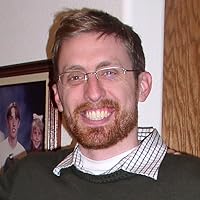
Gene Wolfe was an American science fiction and fantasy writer. He was noted for his dense, allusive prose as well as the strong influence of his Catholic faith, to which he converted after marrying a Catholic. He was a prolific short story writer and a novelist, and has won many awards in the field.
While attending Texas A&M University Wolfe published his first speculative fiction in The Commentator, a student literary journal. Wolfe dropped out during his junior year, and was drafted to fight in the Korean War. After returning to the United States he earned a degree from the University of Houston and became an industrial engineer. He edited the journal Plant Engineering for many years before retiring to write full-time, but his most famous professional engineering achievement was a contribution to the machine used to make Pringles potato crisps. He lived in Barrington, Illinois, a suburb of Chicago.
A frequent Hugo nominee without a win, Wolfe nevertheless picked up several Nebula and Locus Awards, among others, including the World Fantasy Award for Life Achievement and the 2012 Damon Knight Memorial Grand Master Award. He was also a member of the Science Fiction Hall of Fame.
What are behind all of the doors we have never opened? Every day we take for granted the unknown world beyond the boundaries of our perception. How can you be sure there is not a monster in the closet unless you've checked? This childish doubt of realities we cannot see is not too different from the paranoia experienced by the mentally insane. In Gene Wolfe's standalone adventure s-f novel, There Are Doors, we are treated to another romp through modern America, full of the variety and charm to be found in almost any work by this author. Unlike his more epic books, this one looks at the travails of one man, in a world we can readily comprehend, as he passes through various doors, whether they be physical, metaphysical or metaphorical. He makes for a likable, if bumbling, main character.
As anyone who attempts to read Wolfe should know, there are more mysteries beneath the surface narrative than the average reader can perceive in one go. There are usually multiple interpretations to the events described, and by linking together your own interpretations, you are left with a very personal and wacky vision. What I found most enjoyable about this book was the slippage of Time. The nostalgic brand of American paraphernalia intruding at the edges of the scenery, those atmospheric qualities to be found in the work of Philip K. Dick, really added layers to the carefully constructed set pieces. I found the flow of the prose to be simple but gorgeous. The concepts at work challenged my intellect, even if the sentences were straightforward and lacked great depth. Unlike a few of Wolfe's more challenging novels, this one is not opaque to casual perusal. It presents much food for thought without making you grind your teeth to the gums.
The plot devices waver with the protagonist's untrustworthy impressions of juxtaposed worlds. Whether he's chilling in an Italian restaurant with a sentient doll or selling antique furniture to old ladies, this Dickian narrator is an unwilling participant in a cosmic conspiracy against his own consciousness. The trivial pursuit of his own obsession with a potentially imaginary girlfriend is both sad and heartwarming.
While there are fewer chilling moments of startling majesty and haunting dislocation than in his more esoteric fiction, this book is still an evocative, beginner's hors d'oeuvre of Wolfian elegance.
Something that maybe we can all agree on is that Gene Wolfe is smarter than we are. I'm not saying he's the smartest man alive or about to give Stephen Hawking a run for his money but based on printed evidence alone a fairy good case can be made that when it comes to this thing called "literature", he can think rings around all of us. Just about all of his books mask hideous complexities that can only be hinted at when you're reading it purely for the sounds of the words. Like a dark shape passing underneath you when you're swimming in the lake, it's hard to shake the feeling That Something Else Isn't There.
What I find funny is that he's so flexible with it. It's not that Wolfe writes deceptively simple stories that contain inside themselves multitudes of layers. No matter how simple the tale is, another layer of complexity always lurks. Even in the stories which are complicated on the surface ("Book of the Short Sun", I'm looking at you) just wind up being trickier underneath than even the first reading implies. If you're intent on reading the story just as "what happens on the page" then you'll get a story, but not the whole story, if that makes any sense.
Here, we have one of the simpler scenarios. A man finds that his girlfriend (lover? companion?) of a few days or weeks or months has left him. She leaves him a note saying that she has to go and to be careful about "doors", with some rules about going through them. He, of course, tries to find her and winds up not being in his world anymore. But neither is she, or maybe he finds her under a variety of different names, in places that are just similar enough to what he knows to be different.
On the face of it, this could be a tale where a man has to pass through different dimensions to find the woman he loves, experiencing degrees of culture shock and acclimation. Except that the worlds don't seem all that different, except in one men die after having sex. What makes this even more interesting is that our third-person narrator and the lens via which we see the story may in fact be out of his mind. But not in the bwah-ha-ha way, a more quiet form of mental instability. And when you come to realize that fact, that he's not in a hospital because he doesn't quite fit with a world he doesn't understand, it's that he possibly doesn't fit into any world. Once that occurs to you, the whole story may change as you have to reevaluate what you were told before.
When that happens, the story suddenly erupts like flowers in your peripheral vision. You know the colors are present but you can never quite focus on them. I've gotten the sense that Wolfe prefers to craft his novels in this fashion, to not only be designed for re-reading but to deliberately give someone a different reading every time they go through, if they're inclined to see it. The story has a quiet normality to it, science-fiction veering more toward fantasy, fantasy veering toward something vastly more metaphorical as our main characters gets entangled with doctors and political factions and boxers and maybe even a talking doll. Is any of it real, or worse, is it all a bit too real? Does the fact that he calls the woman he's after a goddess have a symbolism to it or can we take it literally? Maybe both are true. There's a lingering sense of the "reality is not the reality we know" vibe we can get from Phillip K Dick, but without the rampant paranoia and dark humor. Here parallel worlds and altered states aren't good or bad, but just how it is. Something we have to live with.
As usual with Wolfe, the story happens, and the rest of the story happens just alongside it. Its possible that there's nothing else to be discovered inside it, and what we have here is just a quick reading story of a man who spends three hundred pages hallucinating quietly. But even that suggests more and although we may get something resembling an explanation at the end, there are those little sidetrips and diversions that make you wonder if the real story doesn't lie a few steps further down that hallway, through an entry left open just a crack.
I was hoping to like There are Doors more than I actually did. I am already a fan of Gene Wolfe and I am familiar with his work. He is an author that requires the reader to be open minded and at times to do work. This book is no exception, both the narrator and the story itself make it difficult for the reader to separate realities and to have any trust in what we are being told.
I loved the concept. What a star crossed love story of a Goddess, a man, and many worlds. This story just seemed to move at too slow of a pace. Couple this with a long stay in a mental asylum and it can be difficult to get through. This book probably would make a better novella if it was shortened up a bit.
Oh well, Wolfe is a remarkable and unique author that should not be missed.
There Are Doors contains all of the features you should expect from a Gene Wolfe book- unreliable narrator, multiple ways to interpret the action, names with hidden significance, stories within the story, etc. Unfortunately it doesn't present these features in a way that's as interesting as some of Wolfe's other work.
This book keeps you on uncertain footing for much longer than the average Wolfe book- it's not until the halfway mark that one explanation for the situation is spelled out, and while it's easy enough to pick up almost all of the information before that information dump occurs, the first sixty or seventy pages keep throwing things at you so frequently it's all but impossible to keep your bearings.
More so than any other Wolfe book, the unreliable nature of the main character's perceptions is brought front and center, and emphasized repeatedly so that it's impossible to forget. While The Wizard Knight brought up the unreliable narrator/alternative explanation in its early chapters and then abandoned it, making you wonder why it was included at all, this book goes in the other direction: the fact that the protagonist is mentally unstable is such a large element of the book that it almost pushes the other explanation of the plot into a secondary position. Wolfe struck the perfect balance for an unreliable narrator in The Book of the New Sun, and this book doesn't walk that knife edge.
It's also an outlier in the Gene Wolfe Oeuvre that the possible explanations for the events of the story are rather clearly laid out. Unlike some of his other work, like Peace, where you have to pay close attention to every detail to catch everything and thus get the most out of the experience, There Are Doors doesn't make you work as hard. Essentially there are two major ways to interpret the events of the book, and either could be the truth (or the truth could lie somewhere in between):
Unfortunately, although both of these possibilities are somewhat interesting in their own right, the book divides its attention between the two so evenly that I thought both suffered for it: both plot lines felt half baked in terms of execution. Also, Wolfe's writing style doesn't make it so that either of these possibilities are particularly gripping or tense. In Wolfe's books the protagonists tend to take everything in stride- or at least are in a position to tell the reader that they did so. Here, however, either of the possibilities outlined above would have left the average person mystified and scared, confused and disoriented. Instead this protagonist also seems to take everything in stride, diffusing much of the tension that similar books like Karinthy's Metropole or Kafka's The Trial or The Castle can evoke. Kafka especially manages to make the reader feel this tension even when the protagonist doesn't, but Wolfe fails to pull off a similar feat here. Wolfe is a great writer, so maybe writing about these bizarre events in a straightforward way was an intentional choice, but if so I can't think of a reason to justify it.
This book is fine, but having read Wolfe's best it's hard not to consider There Are Doors an inferior exploration of these literary devices and ideas. If you're looking for a standalone Wolfe book I'd recommend Peace, which features many of Wolfe's signature characteristics but done in a more satisfying manner.
As in any of Wolfe's book, we have a disoriented/untrustworthy narrator that makes the transition between worlds only the first layer to peel off in this mystical novel. We know as little as he does which makes the transition so beautiful and novel in the first place.
What sets this apart from his later work is unlikely enough the comprehensive nature. We can pretty much tell when the divisions between worlds occur. What remains for the reader to decide is whether this narrator is off-kilter or the world in which he walks through is. This is not a question that I would ever want to resolve in a Wolfe work. The characterizations also have a freshness to them whether it be the boxer, the Chinese man, or the main character's love interest.
I had forgotten to mention until this moment how dependent the entire work is upon its love interest. The main character's sanity in so many ways hangs upon the balance of her, whoever or wherever she comes from and is. This will fall away in Wolfe's later works (at least I think so). If you can track this work down, I would highly recommend it, whatever door one has to walk through.
Once you see past the interplay of obscure symbols and its dreamy fairy tail quality this shows itself as Wolfe's most depressing book.
Explores all the minor and major ways in which the average man is utterly emasculated and dominated by women and ends in a ritualistic martyrdom of the main character akin to the one suffered by Attis.
Bleak, after reading I feel like getting my eyes clawed out by a s3x w0rkers long fake fingernails.
Well, if anyone was going to pull off a third person unreliable narrator right, it was going to have to be Gene Wolfe, and yes, he did it, brilliantly. Which is to say that my brain hurts kind of a lot right now from being turned inside out, marked with chalk, tried on by a crazy man to see if it will fit, altered by a seamstress and worn in a blizzard by... well, is it the same crazy man? Most likely. But then, is it the same crazy man in the same crazy world?
There Are Doors' protagonist, occasionally known as A.C. Pine or Mr. Green but most often simply as "He"* is either a mental patient in the sweetly harmless tradition of the guy in the bunny slippers in Twelve Monkeys, or a voyager between only slightly dissimilar dimensions via the titular doors, or both. Nor is his love interest, Lara/Laura/Lora a woman with a reliable nature and identity. Nor is the maternal owner of the Italian restaurant they frequent -- a place that, incidentally, seems to be in both worlds, as he demonstrates with a cash register experiment: when he breaks a bill, his change is in the "real" world's currency, while his lunch companion gets change native to that other world.
And, in that other world, it is apparently possible to get fat sheafs of high denomination real world currency, sold for spirit money in a Chinese junk shop for pennies on the dollar. And buildings and places are similar in that world, but have the heavy analog quality of the 1950s, with the exception of the cars. And, most importantly (or not), men do not long survive after having sex, dying off like drone bees; Lara, we are told, left the sort-of-named protagonist behind after living with him for just a few days because she couldn't bear to watch him die.
And the pronouns get confusing, because there is a he protagonist and she object whom he chases, neither named very often, interacting with other, pronoun-denominated hes and shes, lending a funky extra layer of ambiguity to a novel that, let's face it, didn't really need one. But that's Gene Wolfe for you. Really, the man drives me mad.
For my part I imagine Gene Wolfe having obsessively read Doctor Zhivago and Confessions of a Crap Artist and watched Invasion, that fantastic old Argentinian film written by Jorge Luis Borges and Aldolfo Bioy Cesares, just as I imagine China Mieville, decades later (There Are Doors dates back to the 1980s), poring obsessively over this novel as he wrote The City & The City. I'm probably very wrong in both notions, but they did keep occurring to me as I read.
I wonder what I'll think of next time -- for there will be a next time. There must, always, with Gene Wolfe.
I have just re-read this for about the fifth time, and it gets better with every reading. Arguably Wolfe's finest novel, this is almost a primer in how 'real world' fantasy ought to be written.
The one proviso is that if you are the sort of person that needs to know what is happening all the way through, you will be very frustrated, as to begin with the reader is in as much a state of mystery as the main character. I love the way Wolfe plays with us, making it not quite clear whether the fantasy part is really happening, or just part of a mental patient's delusion. (I'm reminded of that great Buffy episode where it's possible that the whole show is essentially the delusions of a disturbed young woman, but in the end she decides to abandon reality... though of course There Are Doors was there first.)
The story veers from dream to nightmare, near reality to the sort of thing you'd see in a 1920s horror film. Word for word it delivers perfection. And, for once, Wolfe overcomes his greatest fault of not knowing quite how to end a book. Not everyone will agree, but for me, quite possibly my favourite novel ever.
I had a bad experience with Gene Wolfe. I read his Book of the New Sun a long time ago, and found it both confused and confusing; I didn't like it.
I can enjoy complexity in a novel, but I like there to be a point to the whole thing. I like there to be some sort of fundamentally coherent plot. Too many books lack that. I hate books in which the protagonist (if there is one) is insane, or reality changes in arbitrary and unexplained ways...much as I love the 60's, I don't care for a lot of the writing that came out of that era. I don't like psychedelic works for the most part.
Music, of course, is a different story. And I loved the movie of The Yellow Submarine. But I detest books which are basically incoherent ravings while the author was high (or even if he wasn't).
I don't remember a damn thing about The Book of the New Sun except the mercury-filled sword Terminus Est (which was a cool concept, but seemed structurally unsound), but I know I didn't like it. It was confusing and unsatisfying. So I avoided Wolfe for many years, despite all the raves.
But I must have picked up There Are Doors for free or almost-free some time ago, and I grabbed it at random when I needed a new book to read on my commute.
And it actually wasn't bad! True, there were changes in reality (actually, switches between two realities) that happened without much explanation until near the end of the book. True, the hero was somewhat passive and a bit stupid, and spent a fair amount of time in an insane asylum under the influence of electroshock and drugs. The whole thing was a bit confused. But all in all it actually worked reasonably well, and by the end I found myself wishing for a sequel.
It is hard to rate a book you're not sure if you've understood. Were there some deeper meaning, some mystery I just did not grasp, behind that one scene? Considering I'm reading Gene Wolfe there probably was, but since I did not get it I can't really give the book 5 stars. But it might be a 5 star book.
It's much less of a romance than a fantastical case study of Eros.
While there are some memorable moments, it seems to lack the depth under the surface that I find so compelling in his other books. There are novel science-fantasy mechanics here, and mysteries to solve, but once it doles out all the puzzle pieces, it ceases to be interesting. Which is a shame, because that's normally the moment when his stories light the imagination on fire.
I'm sure more of its virtues would reveal themselves on a reread, but this is going low on that list.
I'd call it Wolfe's 'Til We Have Faces, so long as that doesn't also imply the same excellence.
This is a strange tale about a very ordinary man who ends up embroiled in an extraordinary journey across multiple realities. In typical Wolfe fashion, the details of the world, the identities of the characters, and virtually all elements of the story unfold with the action of the plot and the dialogue between characters. There is no convenient exposition, and when you have just begun to maybe understand what’s going on, the book ends. There Are Doors to me is a sad story of men and their delusions, their expectations, and their ideals about love, women, and society that ultimately leave them lonely. The main character is one of Wolfe’s most lost and powerless, but Mr. Green is not without his own moments of glory. Not Wolfe’s finest, but that doesn’t mean it isn’t a damn fine tale with a lot of myth and mystery to keep you thinking long after you close the cover.
Weeeiird. But good. Thankfully it's a short book, because I had close to no idea what was going on until halfway through. But after that, I couldn't put it down. Gene Wolfe has a singular talent for making you go "Wait. What?" and start flipping pages back to find that one phrase or passage that you can't quite remember but suddenly realize was incredibly significant.
What surprised me most is that beneath all of the strange Wolfean machinery, this is actually a very sweet and melancholy love story. There are alternate realities, mysterious doors, talking dolls, bizarre furniture, strange gods, and all sorts of other oddities, but none of that feels like weirdness for its own sake. It gives the love story a sense of mystery and stakes while constantly making you question exactly what kind of world you're dealing with.
The relationship between Green and Lara is what really made the book work for me. Lara is essentially a goddess from another world who comes into ours looking for love, but she has good reason to be afraid of it. The men of her own world cannot survive loving her, so she looks for “safe” men from ours. There's something incredibly sad about that. She's immortal and profoundly lonely, looking for someone she can love without inevitably watching him die.
Green is lonely in a different way. After losing his mother, he falls into a deep depression and becomes emotionally detached from the rest of his life. He can't seem to love anyone or form a meaningful connection until he meets Lara. In that sense, I think the two of them recognize something of themselves in each other. They're both outsiders who don't quite fit into the worlds they're supposed to inhabit.
I also really liked Green himself. He's not some extraordinary chosen one or larger-than-life hero. He's a fairly ordinary, lonely man who finds something worth pursuing and becomes willing to follow it wherever it leads. His journey into Lara's world becomes both a literal and emotional escape from the life he had been unable to fully participate in.
And, of course, this is still Gene Wolfe, so nothing can simply be straightforward. The question of whether Green's experiences are supernatural, psychological, or some combination of the two hangs over the story for much of the book. Wolfe gives you enough evidence to support different interpretations without turning the novel into a simple puzzle with an answer key.
I loved the strange little details just as much as the larger mysteries: the talking dolls, the furniture, the doors between worlds, and the bizarre inhabitants of the other land. They give the whole book a dreamlike quality without overwhelming the very human story underneath it.
This entire review has been hidden because of spoilers.
”If I say I love you,” Lara asked him, “will you give that to me?” “I love you,” he told her. “Won’t you let me keep it?”
Wolfe spins a disjointed and dreamlike story with this novel about a man accidentally finding himself shifting between connected worlds or having a total mental breakdown in the real world or some mix of the two. The answer, ultimately, is up to the reader, which is some of the allure of this book.
On its face, we follow a retail clerk caught up in the wake of a lover who disappears and leaves a message telling him to keep an eye out for significant doors, anything with four sides that allows him to pass through. So begins a journey into what seems to be one or two worlds not so different from our own. Our main character, an A Green, chases after this woman, who he learns is sometimes called the Goddess, through places with female presidents, trolleys you flag down and sinisterly Germanic security forces.
The story doesn’t hold your hand. We often feel as disoriented as Green. It’s mysterious. Lonely at times. Triumphant at others.
Reading it, I was reminded of one of Wolfe’s most famous fans, Neil Gaiman. The soul of this story won’t feel so different from Neverwhere or The Ocean at the End of the Lane. It feels human whether or not you accept what is described as what’s actually happening to Green.
A word of caution: racism. Asian and Black characters are portrayed as stereotypes. Green also hollers as he imagines Native Americans do. It’s all of course in no way needed for the story and detracts from it.
Like all of Wolfe, the final verdict is ambitious, complicated and rich. 4/5.
Adam Green has finally met the woman of his dreams, but after just a few days Lori leaves with just a cryptic note to warn him about going through significant doors. Mystified, he embarks on a quest to find her which takes him through a number of different doors, the first of which sees him fall and hit his head, waking in a psychiatric hospital. His subsequent adventures involve a doll that talk and looks like Lori, an escape from the mental hospital, and encounters with people who may be watching him as he transits realities via unmarked doors. Gene Wolfe has given us a strange take on Alice In Wonderland, complete with Poe-like dreams within dreams and a bizarre tea party. Is Mr. Green hallucinating after a head injury? Is he truly a delusional mental patient? Or is he a man obsessed with a woman he can’t have who appears to be a goddess? Or is he actually crossing into alternate worlds? The resolution is patchy but you’ll forgive it for the sheer audacity of the concept. :)
It's Wolfe again, and there's more going on than you can see, again. I had to read the ending twice to understand better how I felt about it. It does bug me when Wolfe uses "modern" voices because they never really ring true to me. It's a minor quibble though.
"Do you believe in love?" "Yes, and I hate it." Heartbreaking and heartrending. How does one catch a will o' the wisp? Obsessive love with a touch of madness.
Wolfe's 1988 "There are Doors" is frequently recommended as among the best books to introduce new readers to Wolfe that isn't his Book of the New Sun. It's easy to see why. It has all the hallmarks of a great Gene Wolfe story: beautiful writing, allusions and illusions, an unreliable narrator who may or may not be truthful (intentionally or otherwise), and just enough science fiction weirdness to make it something unique and special.
Our protagonist, Mr. Green, finds himself in love with a mysterious woman named Lara (or Lora, or Laura) -- who leaves him but not first without warning him to be wary of "significant" doorways. She warns him that any space enclosed on all 4 sides can serve as a doorway and walking through one may bring him into a different, and likely dangerous, world. The only escape is to immediately back up through the doorway you pass through.
Of course, Green almost immediately (unwittingly) passes through such a doorway and finds himself in a world that is similar to our own -- but not quite the same. Nixon was never president, the money looks a little different, and Green isn't the only "visitor." Much of the novel is Green trying to find Lara/Lora/Laura while also trying to slowly navigate this world and the next -- he finds himself committed to a mental hospital, escaping, assisting in an abortive political coup attempt, on the run from authorities, with a sometimes animated doll in his hip pocket that bears a striking resemblance to Lara, all the while his mental state alternates between semi-lucid and....not.
Slowly it's revealed that Lara/Lora/Laura is a Goddess in her world -- a world where men die after making love -- and that the Goddess wants the opportunity to experience a love that is more than merely fleeting. Needless to say, the ability of a mere mortal like Green to understand this is...limited. As a result, Green alternates between his soul-crushing job in a department store while heavily medicated to a more lyrical quest to ask anyone he can if they've seen the Goddess and where to find her.
Green's mental state forces the reader to constantly assess/reassess what is being conveyed. How much of what we are witnessing is real? Is Green really in an alternate world? Is this doll really talking to him? Is Lara/Lora/Laura real or merely a figment of an increasingly fractured psyche?
While the reader is never totally certain what is real, there's no doubt that Green's love (obsessive though it appears at times) for Lara is real. Here is where Wolfe's writing borders on the sublime -- simple and straightforward expressions of love, devotion, loyalty make you root for Green. He might not find his Goddess, but damn it, you sure hope he finds peace somewhere.
'"That was a sad story," Tina Said. "Sometimes fairy tales are too much like real life. But I liked it."' (P. 248)
Some of the themes of this novel--goddesses, other worlds, and the yearning pursuit of one's 'True Love'--can variously be found in Wolfe's major multi-volume works, the Soldier series, the Book of the Long Sun tetralogy, and the Wizard-Knight duology. But here the wonder and mystery are served up in downbeat yet exotic contemporary urban settings, all the more enthralling for being narrated in Wolfe's spare but mellifluous style.
The characters are almost cartoonish or comic strip-ish, but with the strengths as well as weaknesses such an approach might be expected to have. They are drawn with skill and style, even if they remain sketchy to a degree. The persons of the tale are 'colourful' and punchy, and even hint at unseen depths sometimes. (This could perhaps be said even of many of Wolfe's characters in the major works.) As it turns out, one reviewer says some of this novel is based on an early 20th century comic called Joe Palooka. That makes sense and adds a pleasing dimension.
Other reviewers have mentioned the book's resonance with the disorienting and paranoid works of Philip K. Dick. Wolfe makes direct reference, however, to characters from Kafka's The Castle and The Trial - and the novel does indeed have elements that could be called Kafka-esque. One of the more disturbing elements for me was the way the protagonist kept waking up in the care of hospitals that 'knew what was best for him', ever implying his madness.
(Incidentally, if you happen to be a philosopher or philosophy student studying the subject in metaphysics known as Possible Worlds, I think you'd find this a pleasant diversion on that score. I certainly did.)
The writing seemed stronger to me than several other standalone 'urban fantasy' novels I've read by Wolfe: Castleview and An Evil Guest. The prose and all round craftsmanship in There Are Doors is much more solid to me. But, it also lacked what those other less well written novels had: a real sense of heroic adventure. This was fine for the first half of the novel. It was just a pleasure to be so enchantingly disoriented, and there were fairly frequent marvels and a decent sense of action to keep things nicely skimming along. But the middle was less eventful (though not less well written). Still, the book did come to a surprisingly poignant conclusion.
I recommend anyone at least try it. I don't see how you couldn't be beguiled by the first third of it. Wolfe fans who want to see some of his major themes worked out in a different manner will not want to miss it.
There Are Doors is the everyday tale of a shop assistant who falls in love with a goddess from a parallel universe. At least, this is everyday stuff from a writer with the incomparable imagination of Gene Wolfe.
The lovelorn man is named Mr. Green and the goddess has many names, but her color is undoubtedly white. She moves between the worlds via 'significant' doors, through which the ordinary yet noble Green is intent on following her.
Italian restaurants that double as doorways to another dimension, mysterious Chinamen and talking dolls are just three of the many delights contained within.
I have known some reviewers to consider this something of a departure for Wolfe, but the fun and games with names, hints at genealogies and the tell-tale 'story within a story' are all very much in keeping with his usual methods.
I have also read that some people have called this Wolfe's Philip K. Dick novel, and there is some truth in that.
However, Dick, even in his most consistent stories, still has moments of random dialogue or eccentric twists, whereas there is never a wasted word with such a meticulous planner like Wolfe, whose intricately layered plotting always suggests vigorous rewriting.
Wolfe is known for his 'unreliable' first-person narrators, but this time out he managed to obfuscate just as expertly in the third person. The protagonist was either a head case depressed over the death of his mammy or a heroic traveller on a quest for love, who knows?
My guess would be that if you believe in String Theory, you will conclude the latter.
Gene Wolfe is known by his literary tricks and puzzles but I honestly like him as a great story teller. Of course his stories may contain many inner stories and suggest a myriad of interpretations due to the theory that his narrators are basically lying, although if we assume that these stories were not real in the writer's fictional world, these stories, these fantasies still remain and they are pretty good. Gene Wolfe says that all fictional stories are fantasies and I have to agree.
I hardly could stop reading this and I only did when my eyes were aching or when I thought the story was going to a different way from what I was hoping it to be developed. The latter however I credit to my mind being tired after reading for a lot of time so when I resumed reading, there it was, I was back immersed.
This is an urban fantasy story which depicts a journey through doors that connect two parallel realities: here (ours) and "there" which is motivated by a love affair between the main character ( as the book is written in the third person and "he" always means the main character, many commentators consider this to be a variation of Wolfe's unreliable narrator ) and his muse, a goddess that lives in this other reality.
Most of time we readers are as lost as the main character as we cannot discern what happened in the main character's imagination and what he has really experienced. Several theories exist to convey meaning to the plot but the fun thing for me is that you can choose a side without worrying to be wrong or right.
The first book I read by Wolfe was 'Book of the New Sun', which is a common mistake for many newcomers because the author's most famous work is also his most difficult to get into. And although I enjoyed it, I may have to reread the series to have a firmer grasp on the story (to describe the plot as 'labyrinthine' is an understandment).
I honestly wish I had read this book first. As much as I'm not a sci-fi person, I like how Wolfe creates a character. He knows how to write a person that's human in a sense, that makes you want to root for him. It may be my bias as a retail worker, but I like Mr. Green, with all of his faults and insecurities and hopes. I want him to pull through, to find love of some kind, to be happy.
Wolfe is an intelligent writer. I may not always get his reference or find a plot point a bit... odd, but he knows how to engage his readers on a respectable ground. He's not the kind of writer that brags about how big his brain is to his reader. He's a storyteller, and a masterful one at that.
An interesting sidenote: the book reminded me of a Japanese folktale. Urashima Taro. Remembering that story helped me enjoy this novel more.
My first Gene Wolfe novel, and all though it wasn't my favorite book I've ever read, there was nothing wrong with the book that I can remember.
This novel is strange, deceptively strange in the sense that I didn't realize how much I liked it until about half way through. Weird things are constantly happening, and neither the reader or the main character have any idea what's going on for most of the novel, but the story is told in such a believable, matter of fact way that you just go with the flow, not realizing how strange every thing is until after you put the book down.
The unreliable narrator is a bit of a bore, with no personality, in the Murakami sense, but he's likeable enough and funny enough to root for.
I do not understand the appeal of this book. The main character never seems to know what is going and has a terrible memory. I have no idea what the point of the story was or why even half of the scenes happened. But really is was the constant disorientation of the protagonist that kept me from engaging with this book.
Come to think of it, I had the same vague feeling trying to read the The Book of the Long Sun series. The protagonist didn't seem to have clear goals or motivation, nor did he seem particularly engaged or involved in the story; stuff just kept happening. I think I just might not be a Gene Wolfe fan. Your mileage may vary.
A lovestruck everyman is pulled into a foreign dimension—sort of like if IQ84 didn't suck. This doesn't reach the heights of his sublime Peace but it's more coherent and human than most of his later works, while still being full of his usual odd asides and seemingly irrelevant details. Good or bad, no one wrote like Gene Wolfe—he was a genre unto himself.
One thing to remember about Gene Wolfe's books - the narrator isn't always right. Sometimes, the narrator is dreadfully mistaken. And sometimes, the narrator is outright lying. This really keeps you on your toes.
As heartbreaking as the recent death of its author. RIP, Gene. Enjoy eternity with Rosemary, and whatever feminine spirit within your heart was Lara, and Thecla, and many other great fictional women besides.