

What do you think?
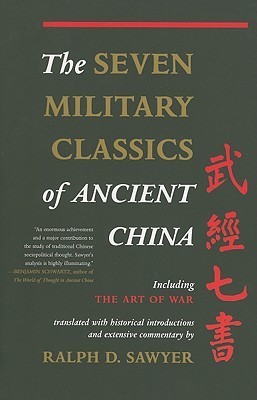
The Seven Military Classics of Ancient China
The Seven Military Classics is one of the most profound studies of warfare ever written. It presents us with an Eastern tradition of strategic thought that emphasizes outwitting one’s opponent through speed, stealth, flexibility, and a minimum of force—an approach very different from that stressed in the West, where the advantages of brute strength have overshadowed more subtle methods.Safeguarded for centuries by the ruling elites of imperial China, even in modern times these writings have been known only to a handful of Western specialists. In this volume are seven separate essays, written between 500 b.c. and a.d. 700, that preserve the essential tenets of strategy distilled from the experience of the most brilliant warriors of ancient China.Only one of these seven essays, Sun Tzu’s famous Art of War, has been readily available in the West. Thanks to this faithful translation of the complete Seven Military Classics, the insights of these ancient Chinese texts are now accessible in their entirety.It’s not uncommon to see a “salaryman” on a crowded Tokyo subway studying one of the many popular Japanese editions of these essays. But why do so many businesspeople in Japan, Korea, and Taiwan study a 2,000-year-old military text? Because it embodies the strategic tradition of outwitting an opponent through speed, stealth, flexibility, and a minimum of effort. These principles have been proven both on the battlefield and in the marketplace. Now they are available in the West for the first time in their entirety.The lessons found in this book were exploited by such pivotal Asian war leaders as Japan’s Yamamoto, China’s Mao Tse-tung, and Vietnam’s Giap to inflict terrible defeats on their enemies. And in more recent times, when Japan and others have decided to win their laurels on the field of international economic competition, these principles have been a key to the achievements of many Asian corporations. Executives in Japan, Korea, and Taiwan regularly study the Seven Military Classics. Unfortunately, even those far-sighted Western business leaders who have read Sun Tzu have glimpsed only a fraction of the knowledge their best Asian competitors use to plan corporate strategy—until now.Those who appreciate Chinese literature and philosophy will also discover much that is new in these pages. Here is a substantial but previously inaccessible body of thought that stands in contrast to Confucianism, which deprecated the military sphere in favor of self-cultivation and the ethical life.The Seven Military Classics of Ancient China remedies a serious gap in Western knowledge of Asian thought. This accurate translation is based on the best available classical Chinese manuscripts, some only recently discovered by archaeologists. It is a uniquely important contribution to the world’s military literature and is essential reading for anyone interested in China’s rich cultural heritage or in the timeless principles of successful strategy.
592 pages, Paperback
First published January 1, 1993
Ratings & Reviews
Friends & Following
Create a free account to discover what your friends think of this book!
Community Reviews
Displaying 1 - 30 of 33 reviews

September 7, 2017
The Seven Military Classics (Audible Audio) are more than mere rules of logic thanks to the efforts that went into making these works accessible to the West. Although one might break the philosophy presented in these treatises down to simply: acquiring, maintaining, and exercising one's "Awesomeness", or the projection of "awe" vitally essential to any ruler.
Sinologist Ralph D. Sawyer and his wife Mei-Chun Lee Sawyer shed light through scholarly commentary on these lesser known military writings, which have over time suffered disregard due to prejudicial attitudes regarding their subject matter in favor of the greater known schools of Chinese philosophy.
Within you'll find historical commentary and background asides on the peoples and politicians of a world that was becoming highly organized in its antiquity; a world from which these treatises were born; and the world subsequently shaped by their reading.
Grounded in natural laws, strategic battle planning, and tactical thinking were conceptualized as a form of populace administration and military management some 2,500 years ago spanning centuries of compilation and revision with over 1,200 years of tradition.
I'm re-reading this and will probably continue to indefinitely not only because I'm interested in the origins of culture in East Asia, but that I find the concepts worthy of consideration as they may apply to our daily lives.
At some point I hope to give these works a proper summary when I truly have the time to devote, and although I highly recommend the Audiobook (which is what I have) to truly study you need the texts.
An excerpt from the author's website:
"The Warring States period witnessed unmatched innovation in warfare, the emergence of new political and philosophical ideas, and rapid escalation in large scale, infantry based clashes. Confronted with the nearly insurmountable task of commanding vast forces, resolving logistical and deployment problems, and maintaining spirit (ch’i) among their troops, commanders were compelled to contemplate the nature of military activities, thereby creating China’s military science. Six Warring States texts supplemented by the Questions and Replies -- a late T’ang dynasty work that essentially constitutes a reflective overview -- preserving their concepts, tactical principles, operational guidelines, and world view comprise the Seven Military Classics: T’ai Kung Liu-t’ao (Six Secret Teachings), Ssu-ma Fa, Sun-tzu Ping-fa (Art of War), Wu-tzu, Wei Liao-tzu, and Huang Shih-kung San-lueh (Three Strategies)." http://www.ralphsawyer.com/seven_mili...
Sinologist Ralph D. Sawyer and his wife Mei-Chun Lee Sawyer shed light through scholarly commentary on these lesser known military writings, which have over time suffered disregard due to prejudicial attitudes regarding their subject matter in favor of the greater known schools of Chinese philosophy.
Within you'll find historical commentary and background asides on the peoples and politicians of a world that was becoming highly organized in its antiquity; a world from which these treatises were born; and the world subsequently shaped by their reading.
Grounded in natural laws, strategic battle planning, and tactical thinking were conceptualized as a form of populace administration and military management some 2,500 years ago spanning centuries of compilation and revision with over 1,200 years of tradition.
I'm re-reading this and will probably continue to indefinitely not only because I'm interested in the origins of culture in East Asia, but that I find the concepts worthy of consideration as they may apply to our daily lives.
At some point I hope to give these works a proper summary when I truly have the time to devote, and although I highly recommend the Audiobook (which is what I have) to truly study you need the texts.
An excerpt from the author's website:
"The Warring States period witnessed unmatched innovation in warfare, the emergence of new political and philosophical ideas, and rapid escalation in large scale, infantry based clashes. Confronted with the nearly insurmountable task of commanding vast forces, resolving logistical and deployment problems, and maintaining spirit (ch’i) among their troops, commanders were compelled to contemplate the nature of military activities, thereby creating China’s military science. Six Warring States texts supplemented by the Questions and Replies -- a late T’ang dynasty work that essentially constitutes a reflective overview -- preserving their concepts, tactical principles, operational guidelines, and world view comprise the Seven Military Classics: T’ai Kung Liu-t’ao (Six Secret Teachings), Ssu-ma Fa, Sun-tzu Ping-fa (Art of War), Wu-tzu, Wei Liao-tzu, and Huang Shih-kung San-lueh (Three Strategies)." http://www.ralphsawyer.com/seven_mili...
August 28, 2021
The edition I read was an ebook and only had the texts and a few footnotes. I couldn't find that version on Goodreads but it had the same title and texts as this one. These seven texts were fascinating. Some are written as dialogues, others as something akin to a manual for maintaining an army. The texts range in covering tactics and strategies, just war theory, political theory, use of spies, and rules of engagement. The debate on rules of engagement range from no looting and don't harm civilians to looting is fine and don't worry about harming civilians. Some of the texts are close to arguing for what I'd consider total warfare, and other texts argue for conduct not unlike what we'd consider chivalric well before European countries start writing formal military treatises or developing rules of engagement that protect civilians.
I do wish I'd been able to find a copy of the full version that included commentary and context though.
I do wish I'd been able to find a copy of the full version that included commentary and context though.
November 2, 2009
Seven venerable Chinese treatises on strategy and war
The parallels between business and warfare evoke images of brilliant generals leading armies and brilliant CEOs leading businesses. Platoons battle and businesses compete with bold, wily strategies and superior execution. Given these similarities, do the classic sagas of seven ancient Chinese military strategists have insight and wisdom that might benefit today’s business leaders? For the answer, read the “translator’s introductions” that open each chapter in sinologist Ralph D. Sawyer’s substantive book. His notes explain how these ancient strategists won their battles with the least possible military force. Sawyer presents them as sage theoreticians who were masters at outwitting their opponents. Unlike most Western military theorists, China’s ancient tacticians emphasized, “speed, stealth…flexibility,” still quite useful skills. getAbstract recommends this fascinating, deeply expert compilation to anyone who wants an educated overview of seven venerable Chinese military classics. Their authority and precision of thought will intrigue modern strategists as they have interested statesmen and military leaders throughout time.
The parallels between business and warfare evoke images of brilliant generals leading armies and brilliant CEOs leading businesses. Platoons battle and businesses compete with bold, wily strategies and superior execution. Given these similarities, do the classic sagas of seven ancient Chinese military strategists have insight and wisdom that might benefit today’s business leaders? For the answer, read the “translator’s introductions” that open each chapter in sinologist Ralph D. Sawyer’s substantive book. His notes explain how these ancient strategists won their battles with the least possible military force. Sawyer presents them as sage theoreticians who were masters at outwitting their opponents. Unlike most Western military theorists, China’s ancient tacticians emphasized, “speed, stealth…flexibility,” still quite useful skills. getAbstract recommends this fascinating, deeply expert compilation to anyone who wants an educated overview of seven venerable Chinese military classics. Their authority and precision of thought will intrigue modern strategists as they have interested statesmen and military leaders throughout time.

February 23, 2025
Despite the best efforts of the translator's introductions, the appendices, and the ever-helpful and extensive endnotes, I feel like I would have gotten more out of these books if I had a better handle on ancient Chinese history and philosophies (such as Confucianism, Taoism, Legalism, & Mohism), so good thing I'm not studying to test into a position in the Emperor's army. I'd probably need to go back to the Art of War to get a handle on Shih, Ch'uan, and Hsing. I also feel like I would have gotten more out of this book if I had been looking for something in particular (kind of the opposite of Darryl Zero/Sherlock Holmes investigative approach), but instead I just read to see what I would find. I found many references to many types of fortification.
The main message of all of these works is that the most important part of the battle is the preparation, and the most important part of an army is the government behind it. I found odd the suggestion from Sun Tzu, Wu Tzu, and others to choose battle on ground that your army can't escape from to make them fight harder. It seems foolish to trap oneself, but I guess you can read it as “only fight when you know you'll win.” Taigong's Six Secret Teachings (specifically, Martial Secret Teachings) instructions for how to subvert a state is a pretty good general description of the current politics of the United States.
The marketing of Art of War in particular as some sort of business text strikes me as kind of perverse, seeing as Art of War is pretty explicit that the attitude and behavior appropriate for the military sphere is not appropriate outside of it. Also, now having read the Seven Military Classics, if I knew someone I was doing business was reading them, I would 100% not trust them. It would tell me that they potentially see the people they work with as either adversaries to be manipulated, or as minions to be awed into submission. This is just a job, I'm not buying your awesomeness, bro. I wonder what the corporate equivalent to the ancestral temple is.
As a non-Chinese speaker, I think I prefer Pinyin to Wade-Giles, and I wish there was a Pinyin Romanization Glossary.
The main message of all of these works is that the most important part of the battle is the preparation, and the most important part of an army is the government behind it. I found odd the suggestion from Sun Tzu, Wu Tzu, and others to choose battle on ground that your army can't escape from to make them fight harder. It seems foolish to trap oneself, but I guess you can read it as “only fight when you know you'll win.” Taigong's Six Secret Teachings (specifically, Martial Secret Teachings) instructions for how to subvert a state is a pretty good general description of the current politics of the United States.
The marketing of Art of War in particular as some sort of business text strikes me as kind of perverse, seeing as Art of War is pretty explicit that the attitude and behavior appropriate for the military sphere is not appropriate outside of it. Also, now having read the Seven Military Classics, if I knew someone I was doing business was reading them, I would 100% not trust them. It would tell me that they potentially see the people they work with as either adversaries to be manipulated, or as minions to be awed into submission. This is just a job, I'm not buying your awesomeness, bro. I wonder what the corporate equivalent to the ancestral temple is.
As a non-Chinese speaker, I think I prefer Pinyin to Wade-Giles, and I wish there was a Pinyin Romanization Glossary.

March 29, 2019
After reading the Art of War I was intrigued to come across another book about military classics. The Art of War, which is included in this, had sparked curiosity in me about the military tactics of old. Despite this still staying within Ancient China it gave me a lot more insight in how wars were fought.
This is a story about seven military classics of ancient china, it's very upfront and to the point. What's interesting is how these stories range. The Art of War is more bullet points about how to wage war, i.e stuff like do this, don't do this. Other stories in this such as the Tai Kung's Teachings were more of a conversation between individuals discussing tactics and warfare. These different ways to talk about some of the same things actually was very enlightening, as you get to read about first hand experience with them.
As I said the points of view are spectacular. Due to the stories being different from each other despite talking about similar topics you learn more about the topic. It's like eating the same food but different chefs, you learn more about what makes it good and what makes it bad. Another good thing I liked about this book was the translator's notes. You can go through the entire book without reading them, but it was a nice little touch. I also enjoyed how it kept some of the more outdated terms, such as "All under Heaven".
But it's time to play Devil's Advocate, firstly it can get boring. But the chances are if you are reading this you're expecting this, and it's not necessarily boring, just not the sort of thing the average reader would read. Secondly, the repetition of topics could also act as a negative. I personally enjoyed it, however it would depend person to person.
But overall, I enjoyed this book. This isn't something for everyone, but for history nerds who like ancient military this is definitely a must read.
This is a story about seven military classics of ancient china, it's very upfront and to the point. What's interesting is how these stories range. The Art of War is more bullet points about how to wage war, i.e stuff like do this, don't do this. Other stories in this such as the Tai Kung's Teachings were more of a conversation between individuals discussing tactics and warfare. These different ways to talk about some of the same things actually was very enlightening, as you get to read about first hand experience with them.
As I said the points of view are spectacular. Due to the stories being different from each other despite talking about similar topics you learn more about the topic. It's like eating the same food but different chefs, you learn more about what makes it good and what makes it bad. Another good thing I liked about this book was the translator's notes. You can go through the entire book without reading them, but it was a nice little touch. I also enjoyed how it kept some of the more outdated terms, such as "All under Heaven".
But it's time to play Devil's Advocate, firstly it can get boring. But the chances are if you are reading this you're expecting this, and it's not necessarily boring, just not the sort of thing the average reader would read. Secondly, the repetition of topics could also act as a negative. I personally enjoyed it, however it would depend person to person.
But overall, I enjoyed this book. This isn't something for everyone, but for history nerds who like ancient military this is definitely a must read.

June 16, 2013
Ralph Sawyer presents here in English complete translations of the Seven Military Classics of Ancient China: Jiang Ziya (Taigong)'s Six Secret Teachings, The Methods of the Sima, Sun Zi's The Art of War, Wu Qi's Wuzi, Wei Liaozi, Three Strategies of Huang Shigong and Questions and Replies between Tang Taizong and Li Weigong. While the Art of War by Sun Zi is the best known of the seven, the other six are also interesting and valuable resources for understanding Chinese military thought and its role in Chinese philosophy.
Sawyer's translations are well-done and the book benefits greatly from his detailed historical commentaries that contextualise these seven works. The translations are readable but do not sacrifice the meaning of the texts for ease of comprehension. However, in using Wade-Giles Romanisation, the lay reader can get confused when using more modern research or texts in Pinyin. The only other downside is that the original Classical Chinese is not included but Chinese editions rectify that.
In all, this is an excellent piece of not only scholarship for both sinologists and military historians but also an excellent introduction to Chinese military thought and its influence on two millennia of East Asian thinking.
Sawyer's translations are well-done and the book benefits greatly from his detailed historical commentaries that contextualise these seven works. The translations are readable but do not sacrifice the meaning of the texts for ease of comprehension. However, in using Wade-Giles Romanisation, the lay reader can get confused when using more modern research or texts in Pinyin. The only other downside is that the original Classical Chinese is not included but Chinese editions rectify that.
In all, this is an excellent piece of not only scholarship for both sinologists and military historians but also an excellent introduction to Chinese military thought and its influence on two millennia of East Asian thinking.
June 10, 2009
Good book and the introductions to each of the classics better prepares the reader for what is to come. The one thing missing, which can be found in other manuscripts on ancient Chinese texts, especially Sun Tzu, is there are no Chinese symbols and their literal translations; just nitpicking with that though.

July 25, 2019
A little known fact about Sun Tzu's Art of War in the west is that it's only one of seven military treatises. While there's a lot of debate as to when these classics were written and compiled and by whom, these works remained required reading for Chinese officials and generals for centuries. This edition is compiled and annotated with the history and common interpretations of the various works by the same person as my previous review of The Art of War so everything I said there will apply here as well.
Each of the classics touch up on a lot of the same basic principles but go about them in different ways. The most common themes include having an overarching way of doing things that would change according to circumstance, using deception and shifting tactics in warfare, the importance of recognizing individual merit, loyalty to the state, and implementing virtue in civic government. If you don't read the history and context notes before each of the works, many can seem somewhat samey as the classics will usually follow one of two formats: a conversation between a ruler and strategist or a direct instructional text. These formats are fairly simple to follow and the translations are clear but following the context of the phrasing is important.
Even if you're just looking for a copy of the Art of War, I recommend just picking up the whole collection if you can.
Each of the classics touch up on a lot of the same basic principles but go about them in different ways. The most common themes include having an overarching way of doing things that would change according to circumstance, using deception and shifting tactics in warfare, the importance of recognizing individual merit, loyalty to the state, and implementing virtue in civic government. If you don't read the history and context notes before each of the works, many can seem somewhat samey as the classics will usually follow one of two formats: a conversation between a ruler and strategist or a direct instructional text. These formats are fairly simple to follow and the translations are clear but following the context of the phrasing is important.
Even if you're just looking for a copy of the Art of War, I recommend just picking up the whole collection if you can.
October 13, 2022
This was a tough book to get through, but each time I read the word "awesomeness," I had got the power to carry on.
I read this book because I wanted to find out what was in these military classics that I'd heard so much about. I was surprised at how vague they all are, although my understanding is that keeping things mysterious is a path towards victory. From the descriptions, it sounds like many of these military texts were considered state secrets, and that might account for why their origins are uncertain and why many of them appear incomplete.
These different texts addressed military questions like the following: what kind of character would make a good general? How should a general relate to the ruler? How should an army be structured? How should rewards and punishments be handled?
There is a glossary in the back that shows the Chinese characters for the words. I don’t really read Wade Giles but I read Chinese, so it would have been useful to have more of the characters in the text itself.
To be honest, this book went over my head. The military history that was referenced and the concepts were not familiar to me, but I read the entire thing anyway. At least now I have an impression of what these military classics are like, and maybe concepts like the Tao are a bit more relatable.
I read this book because I wanted to find out what was in these military classics that I'd heard so much about. I was surprised at how vague they all are, although my understanding is that keeping things mysterious is a path towards victory. From the descriptions, it sounds like many of these military texts were considered state secrets, and that might account for why their origins are uncertain and why many of them appear incomplete.
These different texts addressed military questions like the following: what kind of character would make a good general? How should a general relate to the ruler? How should an army be structured? How should rewards and punishments be handled?
There is a glossary in the back that shows the Chinese characters for the words. I don’t really read Wade Giles but I read Chinese, so it would have been useful to have more of the characters in the text itself.
To be honest, this book went over my head. The military history that was referenced and the concepts were not familiar to me, but I read the entire thing anyway. At least now I have an impression of what these military classics are like, and maybe concepts like the Tao are a bit more relatable.

June 11, 2022
I have read "The Art of War" before but I have never read, or even heard of, the other 6 Military Classics of Ancient China. The translation was very good, there were a few misspellings but other than that I thought the translation work was really good. The notes for explanations were very helpful. The translation system used was different than the previous translation system used in the version of "The Art of War" I read but the difference between the two systems was not overly dramatic. There are some good nuggets of advice in these works and military rules to live by that many militaries still use. Some of the information is hard to see how it would be used in modern day, like chariots and Chinese War tools that were common in the warring states period, but when you take some of the references and loosely think about modern military weapons in comparison, like Bradley's, strykers, and even the inflatable speedboats used by aquatic forces, it really leaves the reader questioning just how much the world has changed in the thousands of years people have been conducting war operations upon each other.

March 30, 2024
"The Seven Military Classics of Ancient China" is a well compiled and annotated work, with very useful endnotes that help to contextualize various aspects of the works. Of the seven military classics, Sun Tzu's Art of War is of course most known, but the other six are valuable reads as well.
The works were written over a period of multiple centuries, most of them being at least partly written in the Warring States period. They cover an array of themes: the importance of proper governance to military success; tactics in various different geographical contexts and in different contexts of balances of power; the importance of military leadership, discipline, and rewards and punishments; and other items.
Often repetitive, the texts also demonstrate differences in opinion and differences in military technology and tactics depending on when the text was written. Interestingly, several of the texts also exhibit a somewhat Taoist view of warfare tactics, showing how Taoist philosophy could not only be used for ways of living but also for thinking through how to wage war.
The works were written over a period of multiple centuries, most of them being at least partly written in the Warring States period. They cover an array of themes: the importance of proper governance to military success; tactics in various different geographical contexts and in different contexts of balances of power; the importance of military leadership, discipline, and rewards and punishments; and other items.
Often repetitive, the texts also demonstrate differences in opinion and differences in military technology and tactics depending on when the text was written. Interestingly, several of the texts also exhibit a somewhat Taoist view of warfare tactics, showing how Taoist philosophy could not only be used for ways of living but also for thinking through how to wage war.

May 14, 2022
This book contains all 7 military classics of ancient China, as the title says. After reading the art of war, the other six books sound pretty much like a repetition of it - even those who came before it. Given the fame that the art of war has, I suggest reading only the latter. I don’t know who would benefit from this book, honestly. The various introductions to the seven books have the characteristic pedantry of the XX century essays, and in general they are just too long. They dwell way too much into military tactics – of chariots, cavalry, and infantryman – but without a single illustration they are difficult to follow. Most annoyingly, a good portion of each introduction is simply copied and pasted from the “Shih chi”, which is hard to read. The overall introduction, with the historical context of ancient China, is definitely the best part of this book, but it only occupies 40 pages, or less than 10% of the book.
April 12, 2023
I found these military classics fascinating in that they not only helped my understanding of actual conflict in ancient China but they also provide significant depth to the periods from Shang to Han, mostly, but also some small part of Sui and Tang. The philosophical concepts have current value, while the strategies of battle are barely an analogy to modern warfare. Much of the philosophy is connected to wider meanings, both ancient and modern. China and its culture are a major part of the modern world, and the population of related ethnic groups throughout eastern Asia are nearly half of the world today. Understanding China and east Asia is a worthwhile endeavor.
February 25, 2024
The Seven Military Classics of Ancient China are about many ancient military techniques from China. One of the more popular texts-The Art of War-is the reason that I read this book. Although the books may be from long ago, they are quite interesting because of how different, yet intriguing they are. Although the many war strategies and mindsets presented in this book may not be useful to many people nowadays, I believe that a lot of them can be seen in other ways and can be used in everyday life. One of my favorite of these quotes from The Art of War is, "Who wishes to fight must first count the cost". I would recommend this book to everyone because of its many words of wisdom.
October 13, 2025
Years ago I read Sun Tzu's, The Art of War. I really wish I knew of this book before as it covers a much wider range than Sun Tzu covers alone. I really enjoyed Wei Liaozi! The battlefield is no place for consulting omens and spirits over examining my own wisdom. It refers often to war being an affair of humans, not heaven. The way it shows the interplay of the marketplace into planning and execution, as well as military and civilian administration's. How not only "deception" works, but how it doesn't. Ultimately, I wonder how closely these works play in the framework of today's PLA force education and planning?

October 24, 2024
OK, so, I have an admission to make. I didn't finish this book. I mostly read Sun Tzu, Wu Tzu, and part of Wei Liau Tzu. But it helped me get a glimpse into ancient China and the way that the ancient Chinese approached warfare and statecraft. The seven classics are apparently devoured by modern Chinese military and political strategists, so I felt it appropriate to get a glimpse into how they are thinking about the world and about strategic conflict. I now have more questions than answers, but that can be a good thing.

December 31, 2024
A great compilation. It pleases me that I could read the 7 military classics in a single book, along with modern commentary.
Each of the 7 classics isn't very long in and of itself, but when you read them all together it comes out as quite a large amount of information to process.
There is a lot of similarity between concepts discussed in each of the 7 classics, which helps digest the ancient military methodology and thought-process China distinguished itself in.
Each of the 7 classics isn't very long in and of itself, but when you read them all together it comes out as quite a large amount of information to process.
There is a lot of similarity between concepts discussed in each of the 7 classics, which helps digest the ancient military methodology and thought-process China distinguished itself in.

September 14, 2023
To me, this should be mandatory reading for all students especially at the high school level. Also, I totally am disappointed that the US took Civics out of many our curriculums. Such a wealth of information.
February 3, 2022
เนี่ยแหละของดีที่ผู้ฝึกฝนตนทุกคนควรต้องอ่าน เคยมีเล่มนี้ 2 เล่ม (เล่มนึงอยู่กับตัว อีกเล่มมอบให้กับคนที่ผมเคยรักมากที่สุดไป 5555)
June 6, 2023
I've read this book 10 times now and it never gets old. I love it so much.

February 27, 2013
Kriegsführung ist die wichtigste Angelegenheit des Staates
Das vorliegende Werk ist eine Zusammenstellung einiger der wichtigsten Militärklassiker des alten China. "Die Kunst des Krieges" von Sunzi, der wohl bekannteste Text aus dieser Gruppe von Militärhandbüchern, hat auch heute noch eine enorme Anziehungskraft auf Leserschichten jedweder Couleur. Doch Sunzi steht nicht in einem Vakuum - gerade die Zeit der chinesischen Geschichte vor der Reichseinigung durch die Qin-Dynastie hat einige ähnliche Werke hervorgebracht, die zwar im Westen praktisch unbekannt sind, im Zusammenhang betrachtet aber ein recht deutliches Bild von der damaligen Geisteshaltung geben.
Enthalten sind, neben einem allgemeinen Vorwort, Übersetzungen der folgenden Werke:
"T'ai Kung's Six Secret Teachings"
"The Methods of the Ssu-ma"
"Sun-tzu's Art of War"
"Wu-tzu"
"Wei Liao-tzu"
"Three Strategies of Huang Shih-kung"
"Questions and Replies Between T'ang T'ai-tsung and Li Wei-kung"
Zu jedem der Werke ist ein eigenes Vorwort, das den Inhalt erläutert, und sehr viele Endnoten vorhanden - was bei derart alten Texten, die sich oft genug durch ihre Knappheit und einen gewissen Interpretationsspielraum auszeichnen, auch unbedingt vonnöten ist.
Die Übersetzungen lesen sich sehr flüssig, verzichten auf Altertümeleien und überkomplexen Satzbau, und sind auch für Laien sehr gut verständlich - doch vorsicht, trotz moderner Übersetzung lesen sich diese Texte eher mühsam und wenig aufregend, und man muss einiges an Energie investieren, wenn man wirklich den hinter den teilweise kryptischen und geschichtlich-literarischen Anspielungen versteckten Sinn entdecken will.
Ein Index mit der Zuordnung von Wade-Giles-Bezeichnungen zu den eigentlichen chinesischen Zeichen, einer mit einer Liste von militärischen Prinzipien und wo man sie in den 7 Werken findet, sowie ein allgemeiner Schlagwortindex komplettieren die Zusammenstellung. Das grobe Papier und der labberige Einband werden durch eine gute Bindung gehalten. Die Romanisierung erfolgt leider noch in Wade-Giles und nicht in Pinyin.
Wer liest dieses Buch? Gewiss alle, die sich für Militärgeschichte interessieren, oder auch allgemein für die frühe chinesische Philosophie und Soziologie. Wer allerdings etwas anderes als Handbücher für Handhabung von Armeen sucht, wird hier nicht viel Freude haben. Besonders die Idee, diese uralten Militärtexte auf moderne Gegebenheiten und z.B. auf die Wirtschaft oder zwischenmenschliche Beziehungen zu übertragen, halte ich für wenig zielführend und wird weder diesen alten Texten noch dem Ratsuchenden gerecht werden können.
Das vorliegende Werk ist eine Zusammenstellung einiger der wichtigsten Militärklassiker des alten China. "Die Kunst des Krieges" von Sunzi, der wohl bekannteste Text aus dieser Gruppe von Militärhandbüchern, hat auch heute noch eine enorme Anziehungskraft auf Leserschichten jedweder Couleur. Doch Sunzi steht nicht in einem Vakuum - gerade die Zeit der chinesischen Geschichte vor der Reichseinigung durch die Qin-Dynastie hat einige ähnliche Werke hervorgebracht, die zwar im Westen praktisch unbekannt sind, im Zusammenhang betrachtet aber ein recht deutliches Bild von der damaligen Geisteshaltung geben.
Enthalten sind, neben einem allgemeinen Vorwort, Übersetzungen der folgenden Werke:
"T'ai Kung's Six Secret Teachings"
"The Methods of the Ssu-ma"
"Sun-tzu's Art of War"
"Wu-tzu"
"Wei Liao-tzu"
"Three Strategies of Huang Shih-kung"
"Questions and Replies Between T'ang T'ai-tsung and Li Wei-kung"
Zu jedem der Werke ist ein eigenes Vorwort, das den Inhalt erläutert, und sehr viele Endnoten vorhanden - was bei derart alten Texten, die sich oft genug durch ihre Knappheit und einen gewissen Interpretationsspielraum auszeichnen, auch unbedingt vonnöten ist.
Die Übersetzungen lesen sich sehr flüssig, verzichten auf Altertümeleien und überkomplexen Satzbau, und sind auch für Laien sehr gut verständlich - doch vorsicht, trotz moderner Übersetzung lesen sich diese Texte eher mühsam und wenig aufregend, und man muss einiges an Energie investieren, wenn man wirklich den hinter den teilweise kryptischen und geschichtlich-literarischen Anspielungen versteckten Sinn entdecken will.
Ein Index mit der Zuordnung von Wade-Giles-Bezeichnungen zu den eigentlichen chinesischen Zeichen, einer mit einer Liste von militärischen Prinzipien und wo man sie in den 7 Werken findet, sowie ein allgemeiner Schlagwortindex komplettieren die Zusammenstellung. Das grobe Papier und der labberige Einband werden durch eine gute Bindung gehalten. Die Romanisierung erfolgt leider noch in Wade-Giles und nicht in Pinyin.
Wer liest dieses Buch? Gewiss alle, die sich für Militärgeschichte interessieren, oder auch allgemein für die frühe chinesische Philosophie und Soziologie. Wer allerdings etwas anderes als Handbücher für Handhabung von Armeen sucht, wird hier nicht viel Freude haben. Besonders die Idee, diese uralten Militärtexte auf moderne Gegebenheiten und z.B. auf die Wirtschaft oder zwischenmenschliche Beziehungen zu übertragen, halte ich für wenig zielführend und wird weder diesen alten Texten noch dem Ratsuchenden gerecht werden können.

May 13, 2014
For most of recorded history, China has housed the largest human population. Combined with the very fertile land of the area, and its relative connectedness (Europe in comparison, had many mountains and small areas connecting it, causing populations to form in related but relative autonomy), Chinese civilization gave rise to hugely bureaucratic institutions that helped perpetuate its monolithic political system. As such, the military might of empire building has given rise to a variety of teachings about military matters from its victors.
In classic form, these texts are often inscribed in a series of question and answers, the point of which aren't organized in the same brute force organization as the German treatsie or the Anglo-Saxon essay. Nonetheless, despite the length of time encompassed in this text many of the texts sound fairly similar. Much of the principles behind these texts can be found in Sun Tzu's art of war.
Taoist teachings have penetrated much of Chinese thought and society, giving rise not only to military tactical and strategic thoughts but also thoughts on propaganda, ruling, medicine, astrology, chemistry and martial arts. Most of the principles are pretty much the same though. Be orthodox when they enemy expects unorthodox. Be unorthodox when the enemy expects orthodox. Things like that. Be where they don't expect you, be integrated in how you approach things, withhold information, let your enemy fight amongst themselves when possible. Win wars without fighting.
In a sense, the best military strategies are the ones that avoid war, that ensure political and economy success without military expense.
I won't pretend that this was a mystical read, full of great oriental wisdom... by today's standards, there is much detail missing... and the repetition did get mind numbing. Nonetheless, it is good to see how many ideas haven't changed over time and how people can continue, despite technology, to discover the same ideas as being relevant.
In classic form, these texts are often inscribed in a series of question and answers, the point of which aren't organized in the same brute force organization as the German treatsie or the Anglo-Saxon essay. Nonetheless, despite the length of time encompassed in this text many of the texts sound fairly similar. Much of the principles behind these texts can be found in Sun Tzu's art of war.
Taoist teachings have penetrated much of Chinese thought and society, giving rise not only to military tactical and strategic thoughts but also thoughts on propaganda, ruling, medicine, astrology, chemistry and martial arts. Most of the principles are pretty much the same though. Be orthodox when they enemy expects unorthodox. Be unorthodox when the enemy expects orthodox. Things like that. Be where they don't expect you, be integrated in how you approach things, withhold information, let your enemy fight amongst themselves when possible. Win wars without fighting.
In a sense, the best military strategies are the ones that avoid war, that ensure political and economy success without military expense.
I won't pretend that this was a mystical read, full of great oriental wisdom... by today's standards, there is much detail missing... and the repetition did get mind numbing. Nonetheless, it is good to see how many ideas haven't changed over time and how people can continue, despite technology, to discover the same ideas as being relevant.

August 14, 2013
It took me a long time to finish this, not only for the fact I’ve had a lot of uni work to contend with… some of the texts are just very heavy going. However, it has to be expected with these sorts of things. Very interesting to read though!
I especially liked some of the texts earlier on in the book; those near the end got a bit heavier going, or it might just have been my interest waning. After a couple, they sort of start to sound quite similar, so it’s not as much new information to process.
Definitely my favourite by far is the classic; Sun Tzu. I’d already read this before, so actually skipped that chapter.
I skipped out the intro chapters too. No doubt quite interesting (and they were, from what little I read of them), and might have made the actual texts more accessible… but I just didn’t really have time. Or the patience.
A good book to read if you really want in-depth reading about this sort of thing, but otherwise, go for just Sun Tzu.
I especially liked some of the texts earlier on in the book; those near the end got a bit heavier going, or it might just have been my interest waning. After a couple, they sort of start to sound quite similar, so it’s not as much new information to process.
Definitely my favourite by far is the classic; Sun Tzu. I’d already read this before, so actually skipped that chapter.
I skipped out the intro chapters too. No doubt quite interesting (and they were, from what little I read of them), and might have made the actual texts more accessible… but I just didn’t really have time. Or the patience.
A good book to read if you really want in-depth reading about this sort of thing, but otherwise, go for just Sun Tzu.

June 29, 2019
This was a recommended read for a college course I took back in 2015 combining military history and psychology, the class was titled "Principles of War." I really enjoyed the course and learned a lot. Unfortunately that was 4+ years ago since the time of this review and I honestly don't remember anything specifically remarkable that sticks out in my mind about this book. However, I do remember it did enhance my experience for the class.
I may re-read this again one day, however for the time being I have quite the queue going and I am looking forward to getting through those before I start any sort of "re-read journey."
I may re-read this again one day, however for the time being I have quite the queue going and I am looking forward to getting through those before I start any sort of "re-read journey."

March 7, 2014
If you just were a little intrigued and wanted to read Sun-Tzu "Art of War" then do not get this book. This is an extensive, in depth book with 7 texts of ancient Chinese war texts. If you have an particular interest in this area, significant background in eastern studies or military mindset you may find this book helpful. I did not. It took me years to finish ths
March 11, 2009
This is a great book for anyone who enjoys ancient Chinese military doctrine, or any military doctrine publications for that matter. It gives several works that are not generally advertised along side of typical mainstream publications. I definitely recommend this book.

Currently Reading
February 17, 2010 I'll get through this eventually...

July 19, 2011
Got this to listen to The Art of War by Sun Tzu. I greatly enjoyed it, but had to listen twice to ensure I was clear on the teachings. I feel like I will be revisiting this again in the future.

Want to Read
March 28, 2012Displaying 1 - 30 of 33 reviews