

What do you think?

Severin's Journey into the Dark: A Prague Ghost Story
Leppin was the truly chosen bard of the painfully disappearing old Prague, its infamous side streets and debauched nights ... a poet of eternal disillusionment, he was at once a servant of the devil and an adorer of the Madonna.
– Max Brod
Leppin once wrote: “Prague remains my deepest experience. Its conflicts, its mystery, its ratcatcher’s beauty have ever provided my poetic efforts with new inspiration and meaning.” It is this city of darkened walls and strange decay that forms the backdrop of Severin’s erotic adventures and fateful encounters as he enters a world of femmes fatales, Russian anarchists, dabblers in the occult, and denizens of decadent salons. First published in 1914, Leppin seeks to unlock the mysterious erotic nature of his native city buried deep in the subconscious of its inhabitants. His depiction of this world, in a Prague straddling the border between the ancient and the modern, has brought Severin’s Journey into the Dark deserved international acclaim. As Max Brod so aptly remarked: "Leppin was the truly chosen bard of the painfully disappearing old Prague..."
– Max Brod
Leppin once wrote: “Prague remains my deepest experience. Its conflicts, its mystery, its ratcatcher’s beauty have ever provided my poetic efforts with new inspiration and meaning.” It is this city of darkened walls and strange decay that forms the backdrop of Severin’s erotic adventures and fateful encounters as he enters a world of femmes fatales, Russian anarchists, dabblers in the occult, and denizens of decadent salons. First published in 1914, Leppin seeks to unlock the mysterious erotic nature of his native city buried deep in the subconscious of its inhabitants. His depiction of this world, in a Prague straddling the border between the ancient and the modern, has brought Severin’s Journey into the Dark deserved international acclaim. As Max Brod so aptly remarked: "Leppin was the truly chosen bard of the painfully disappearing old Prague..."
117 pages, Paperback
First published January 1, 1914
About the author
Paul Leppin
19 books23 followersPaul Leppin (27 November 1878, Prague (Prag, Praha), Royal Bohemia, Austria – 10 April 1945, Prague, Bohemia, Bohemia & Moravia/3rd Czechoslovakia) was a 20th-century Bohemian writer of German language, who was born and lived in Prague.
Although he wrote in German, he was in close contact with Czech literature. He translated Czech books and wrote articles on Czech literature. He was also an editor of two literary periodicals, Frühling and Wir.
Although he wrote in German, he was in close contact with Czech literature. He translated Czech books and wrote articles on Czech literature. He was also an editor of two literary periodicals, Frühling and Wir.
Ratings & Reviews
Friends & Following
Create a free account to discover what your friends think of this book!
Community Reviews
Displaying 1 - 30 of 49 reviews

March 21, 2023
Severin’s Journey into the Dark boasts a twilight aura of the decadent wave… Similar to Franz Kafka’s Metamorphosis it is a story of transformation…
Severin is miserably chained to the routine of day to day living…
He wants more… He craves hot adventures… He thirsts for pernicious passion… He is introduced to the vulgar bohemian atelier…
It’s not enough… He’s restless… He’s full of dark desires… He madly falls in sinful love… He’s on fire… But he becomes forsaken too soon… He’s in despair… Retaining his human shape he turns into a creature of the night…
There are souls that abide in light and there are souls that darkness sucks in and turns into its slaves.
Severin is miserably chained to the routine of day to day living…
Since he had become an adult and started earning his own bread, bleak and vapid walls had risen around him and blocked his view. All around, everywhere he looked, he saw dull and mundane convention. He went to the office early in the morning and went home at noon; the rest of the day he spent sleeping. He felt like someone standing in a pit with a shovel. He digs and digs, but the fine, pliable sand keeps running back and filling the hole.
He wants more… He craves hot adventures… He thirsts for pernicious passion… He is introduced to the vulgar bohemian atelier…
To him the erotic allure was missing from situations where a few models lifted their skirts above their knees with insolent grace, where pretty Ruschena played sentimental verses and indecent songs, where the champagne made the women drunk and old Lazarus exhausted his repertoire of stale jokes. More than ever he thirsted for a genuine life, one that bestowed flowers and terror and blew the daily round to pieces with its stormy jaws.
It’s not enough… He’s restless… He’s full of dark desires… He madly falls in sinful love… He’s on fire… But he becomes forsaken too soon… He’s in despair… Retaining his human shape he turns into a creature of the night…
There were some for whom the radiance of life was only the glitter of a delusion. Sneerers with accursed hands, pariahs hounded through the streets by fear, murderers and people who had been marked out. That was the guild, and Severin belonged to it too.
There are souls that abide in light and there are souls that darkness sucks in and turns into its slaves.

January 28, 2015
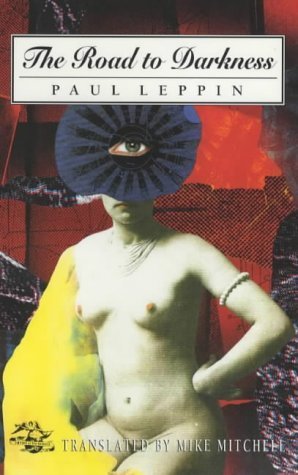
My book arrives (it is the translation by Mike Mitchell, not the one listed here). First (well, after the lurid cover) I notice the blurbs: "I have seldom read a more disgusting books" states Richard von Schaukal, and Arthur Eloesser calls it "A series of disgusting orgies with some mystical drivel wrapped round the obscenities." That is not what I was expecting from the descriptions on goodreads, but okay, here I go.
If you, gentle reader, perked your head up at the mention of orgies and obscenities, you can go back to sleep now. There is nothing graphic or titillating here, even by the standards of 1914. Yes, the setting includes sex parties and there are drugs and debauchery and death, and all the characters seem to engage in sexual wantonness, but it is mostly off page ("she led him into her bedroom" type of fades) or described in vague language ("She taught him her bizarre and unbridled love-games"). Furthermore, the characters' couplings are joyless and their lives empty and depressive, so the author can hardly be viewed as promoting the lifestyle depicted in the story.
As for the prose: I'm reading it in translation, so there's only so much I can judge, but I would describe it as middling. It is fine, but nothing special. Leppin seems keen on telling you exactly what everyone is thinking and feeling, even when they behave in ways inexplicable to themselves, so on that level it reads a bit flat. There is no sense of anticipation on the reader's part, no challenge of figuring anything out. Actually it kind of reminds me of the sort of party described here, where once the mild shock value has worn off you're left wishing for better food and more interesting conversation. If you're smart you leave early and go home to a good book and a hot supper, saving yourself an absinthe headache and a social disease.

August 25, 2021
Set in Prague just before WW1, Paul Leppin’s novel’s essentially plotless, it’s as much about a place and a time as it is a conventional story. Leppin structures his material around his main character the young, angst-ridden, office-worker Severin - the deliberate reference to Sacher-Masoch’s a taste of what’s to come. At first Severin spends his nights walking the city streets alone, tortured by his thoughts. But he slowly overcomes his intense feelings of alienation, at least long enough to interact with disparate groups he encounters during his wanderings. This embroils him in decadent, dissolute gatherings in cafes and salons, providing him with a means of living vicariously, if not parasitically. His only close connections are with the women he effortlessly attracts then discards.
Leppin’s piece reminded me at times of Rilke’s The Notebooks of Malte Laurids Brigge enough that I wondered if it was a direct influence on this. There are echoes here in the expressionistic style, the use of imagery and the careful detailing of the city, its landscapes and architecture. But Leppin’s narrative doesn’t have the complexity or discipline of Rilke’s and, significantly, it fails to communicate any convincingly coherent, underlying argument. The central character Severin’s too much of a stock figure, an almost stereotypical portrait of a suffering, young man unable to reconcile with the modern world; and the flashbacks to his innocent, lost childhood verge on the sentimental.
Severin’s experiences, his anguished interactions, his dissatisfaction and rootlessness are more interesting for what they reveal about Leppin’s era. Severin’s obsession with death and suicide, the death by suicide of other characters, mirror, for example, Europe’s high suicide rates at the time, predominantly among young men: the situation was considered so dire that a few years earlier, in 1910, Freud apparently held an emergency meeting to work out how to deal with growing numbers of student suicides. Similarly, Severin’s continual underlining of people’s ethnic and religious identities seems to reflect growing divides in Leppin’s Prague, particularly between Czech-speaking, German-speaking and Jewish communities. Overall though the book felt slightly underdeveloped and it degenerates in the final stages, becoming increasingly incoherent as Severin gives himself over to a relationship powered by overwhelming, erotic fantasy. I thought the most memorable, successful parts were Leppin’s rich descriptions of Prague, its sights, its smells, its everyday life from markets to meeting places, it was these passages I found the most vivid, and the most striking. Translated from the original German by Kevin Blahut.
Leppin’s piece reminded me at times of Rilke’s The Notebooks of Malte Laurids Brigge enough that I wondered if it was a direct influence on this. There are echoes here in the expressionistic style, the use of imagery and the careful detailing of the city, its landscapes and architecture. But Leppin’s narrative doesn’t have the complexity or discipline of Rilke’s and, significantly, it fails to communicate any convincingly coherent, underlying argument. The central character Severin’s too much of a stock figure, an almost stereotypical portrait of a suffering, young man unable to reconcile with the modern world; and the flashbacks to his innocent, lost childhood verge on the sentimental.
Severin’s experiences, his anguished interactions, his dissatisfaction and rootlessness are more interesting for what they reveal about Leppin’s era. Severin’s obsession with death and suicide, the death by suicide of other characters, mirror, for example, Europe’s high suicide rates at the time, predominantly among young men: the situation was considered so dire that a few years earlier, in 1910, Freud apparently held an emergency meeting to work out how to deal with growing numbers of student suicides. Similarly, Severin’s continual underlining of people’s ethnic and religious identities seems to reflect growing divides in Leppin’s Prague, particularly between Czech-speaking, German-speaking and Jewish communities. Overall though the book felt slightly underdeveloped and it degenerates in the final stages, becoming increasingly incoherent as Severin gives himself over to a relationship powered by overwhelming, erotic fantasy. I thought the most memorable, successful parts were Leppin’s rich descriptions of Prague, its sights, its smells, its everyday life from markets to meeting places, it was these passages I found the most vivid, and the most striking. Translated from the original German by Kevin Blahut.

October 6, 2019
Die Prager Mythen, die spezielle Prager Atmosphäre in einem Roman so beschwören, dass sich die Geschichte als idealer Reisebegleiter erweist? Nette Idee, aber ich scheitere immer wieder an Gustav Meyrinks Der Golem, ja kürzlich gar an seinem Roman über den Alchemisten John Dee (Der Engel vom westlichen Fenster), auch an den Geschichten von Leo Perutz usw. Die Prager Phantastik des frühen 20. Jahrhunderts ist faszinierend, schreckt mich aber immer wieder mit Pathos, Geschwätzigkeit und gewollter(?) Unverständlichkeit.
Von Leppin hatte ich noch überhaupt nichts gehört, aber das Cover lachte mich an. Und der Untertitel suggeriert eine Gespenstergeschichte und der November naht und da grusele ich mich gern. Zudem ist die Geschichte nicht allzu lang – ca. 120 Seiten und ansonsten gibt es viel Hintergrundinfos: über Leppin, über das Prager Literaten-Umfeld und vor allem eine gute Dokumentation der im Roman genannten Orte. Der deutschsprachige Prager Verlag Vitalis hat hier wieder ganze Arbeit geleistet.
Im Mittelpunkt des Romans steht ein junger Mann, der an seinem öden Bürojob leidet (Kafka lässt grüßen) und der sich nach starken Emotionen, Leidenschaften, Abenteuern sehnt. Nach einer Erschütterung, die Alltag und Langeweile diametral gegenübersteht. Es ist ein Wunsch, den man oft nachvollziehen kann (wir waren doch alle mal jung und sind immer wieder mal gelangweilt) und der einem doch immer wieder kindisch erscheint. Insbesondere wenn Frauen benutzt werden, um neue Passionen zu entfachen und dann recht schnell wieder fallengelassen werden, weil die Emotionen sich schnell verschleißen.
Wie schon von anderen angemerkt, handelt es sich nicht um eine Geschichte, in der wirklich Gespenster vorkommen. Aber die Geschichte ist doch spannend, stimmungsvoll, melancholisch, man riecht, sieht und spürt die Schattenseiten des Prager (Nacht-)Lebens, empfindet die Getriebenheit vieler Charaktere - und wenn schon keine Gespenster, so gibt es doch Dämonen, mit denen die Hauptfigur und vielleicht auch einige andere Charaktere kämpfen.
Der wirklich tolle Anhang hat mich zum Beispiel darauf aufmerksam gemacht, dass an Meyrink gleich zwei der Nebenfiguren angelehnt sind. Nicht verwunderlich: Beide haben einen Hang zum Okkulten/Düsteren.
Von Leppin hatte ich noch überhaupt nichts gehört, aber das Cover lachte mich an. Und der Untertitel suggeriert eine Gespenstergeschichte und der November naht und da grusele ich mich gern. Zudem ist die Geschichte nicht allzu lang – ca. 120 Seiten und ansonsten gibt es viel Hintergrundinfos: über Leppin, über das Prager Literaten-Umfeld und vor allem eine gute Dokumentation der im Roman genannten Orte. Der deutschsprachige Prager Verlag Vitalis hat hier wieder ganze Arbeit geleistet.
Im Mittelpunkt des Romans steht ein junger Mann, der an seinem öden Bürojob leidet (Kafka lässt grüßen) und der sich nach starken Emotionen, Leidenschaften, Abenteuern sehnt. Nach einer Erschütterung, die Alltag und Langeweile diametral gegenübersteht. Es ist ein Wunsch, den man oft nachvollziehen kann (wir waren doch alle mal jung und sind immer wieder mal gelangweilt) und der einem doch immer wieder kindisch erscheint. Insbesondere wenn Frauen benutzt werden, um neue Passionen zu entfachen und dann recht schnell wieder fallengelassen werden, weil die Emotionen sich schnell verschleißen.
Wie schon von anderen angemerkt, handelt es sich nicht um eine Geschichte, in der wirklich Gespenster vorkommen. Aber die Geschichte ist doch spannend, stimmungsvoll, melancholisch, man riecht, sieht und spürt die Schattenseiten des Prager (Nacht-)Lebens, empfindet die Getriebenheit vieler Charaktere - und wenn schon keine Gespenster, so gibt es doch Dämonen, mit denen die Hauptfigur und vielleicht auch einige andere Charaktere kämpfen.
Der wirklich tolle Anhang hat mich zum Beispiel darauf aufmerksam gemacht, dass an Meyrink gleich zwei der Nebenfiguren angelehnt sind. Nicht verwunderlich: Beide haben einen Hang zum Okkulten/Düsteren.

August 25, 2020
3.5 stars
An interesting, evocative examination of one self-absorbed young man's descent into ennui, degradation, and paranoia in very early 20th century Prague.
There are no "ghosts" here beyond those of past traditions that haunt the rapidly changing streets of Leppin's beloved home town. Shadowy, gently erotic, steeped in melancholy, Leppin's Prague is a moody, slightly spooky place where the subconscious reigns supreme and it's nearing twilight all the time. Expressionist femmes fatales mix with Meyrinkian occultists in a way that feels entirely natural, even preordained. The ending, which might seem ridiculous in any other story, somehow seems inescapable here.
A curious, rather lovely book.
An interesting, evocative examination of one self-absorbed young man's descent into ennui, degradation, and paranoia in very early 20th century Prague.
There are no "ghosts" here beyond those of past traditions that haunt the rapidly changing streets of Leppin's beloved home town. Shadowy, gently erotic, steeped in melancholy, Leppin's Prague is a moody, slightly spooky place where the subconscious reigns supreme and it's nearing twilight all the time. Expressionist femmes fatales mix with Meyrinkian occultists in a way that feels entirely natural, even preordained. The ending, which might seem ridiculous in any other story, somehow seems inescapable here.
A curious, rather lovely book.

February 8, 2018
Severin is a womanizer. A lecher. He uses women and sex the way a drug addict uses drugs. But Leppin is not interested in casting a romantic light upon Severin's bedroom adventures. There is nothing playful or humorous about his conquests. Severin is no handsome Casanova, scamp-ily leaping from one noble lady's lap to another. Severin's world is the dark lamp lit night of Pague.
Severin's self-loathing and hatred of the world he inhabits is total. He has not ventured far into the world outside his childhood home and the streets that he walked to school and now to work. The only difference in his life is that he now lives at night. Taking to the streets well after dark to wander the same routes he has a million times before.
He bumps into a bookshop owner. He bumps into a revolutionary. He is led into a bar. Each bump in his routes lead to a roll in the hay! Severin has an uncanny to woo the ladies with a surly, indifference that extends well beyond any real mysterious appeal. He loves and leaves them with a mean callousness that makes him a thoroughly unlikable cad.
When Severin finally discovers a connection, it is with a bar girl named, Mylada. Like all early twenty century literary prostitutes, Mylada is a tragic figure of sexual liberation and strong willed destruction. Mylada anticipates and frees Severin of his every desire, but in the end, leaves him a slobbering, sobbing mess.
The ending of Severin's Dark Journey is masterful. Because even with a bomb in his hand, Severin succumbs to the night life.
Severin's self-loathing and hatred of the world he inhabits is total. He has not ventured far into the world outside his childhood home and the streets that he walked to school and now to work. The only difference in his life is that he now lives at night. Taking to the streets well after dark to wander the same routes he has a million times before.
He bumps into a bookshop owner. He bumps into a revolutionary. He is led into a bar. Each bump in his routes lead to a roll in the hay! Severin has an uncanny to woo the ladies with a surly, indifference that extends well beyond any real mysterious appeal. He loves and leaves them with a mean callousness that makes him a thoroughly unlikable cad.
When Severin finally discovers a connection, it is with a bar girl named, Mylada. Like all early twenty century literary prostitutes, Mylada is a tragic figure of sexual liberation and strong willed destruction. Mylada anticipates and frees Severin of his every desire, but in the end, leaves him a slobbering, sobbing mess.
The ending of Severin's Dark Journey is masterful. Because even with a bomb in his hand, Severin succumbs to the night life.


June 2, 2022
3.5 diyelim. Leppin'in kitabının temel zayıflığı olay örgüsünün pek merakımı cezbedememesi: Bütün kitap sokaklarda sürüklenmeden, karşılaşmalardan, yakınmalardan ve Severin'in baştan çıkar(ıl)malarından ibaret. Güçlü yanı ise, bir mücevher gibi işlediği dili: Kitabın asıl kahramanı Prag şehri ve Leppin bize Prag'ın karanlık ruhunu her bir titreşimiyle, tüm egzantrik tipleriyle aktarmayı başarıyor. (Burada çevirinin de başarılı olduğunu eklemek gerek.) Ve final sahnesi, bir aczin dışavurumu olarak, çok başarılı.
Dekadans edebiyatın temel taşlarından biri olarak tarihi değere sahip bir roman bu, ama aynı tarzda daha güçlü kitaplar bulunduğunu tahmin ediyorum - mesela benim okuduklarımdan Bruges-la-Morte (Rodenbach) çok daha gizemli ve ustalık işiydi.
Dekadans edebiyatın temel taşlarından biri olarak tarihi değere sahip bir roman bu, ama aynı tarzda daha güçlü kitaplar bulunduğunu tahmin ediyorum - mesela benim okuduklarımdan Bruges-la-Morte (Rodenbach) çok daha gizemli ve ustalık işiydi.

November 19, 2020
İlk olarak 1914 yılında yayınlanan hikaye, Prag’ın sokaklarında geceleri benliğini çalan sefaletten kurtuluşu arayan genç bir ofis çalışanı olan Severin’in hikayesini anlatıyor. Eski bir opera yıldızı, Yahudi bir antika kitap satıcısı, bir Rus anarşisti ve dans eden kızlardan oluşan Prag insanları da rengarenk dünyası ile kahramanımıza eşlik ediyor hem de içerisindeki karanlığa rağmen.
Severin ile birlikte karanlığa yolculuk yaparken onun yalnız ruhuna tanıklık ediyoruz. Bencil bir adam olduğunu ve ona ümitsizce aşık olmuş kadınların kalbini nasıl acımasızca kırdığını görüyoruz. Aslında okurken karakterden nefret edebilirsiniz. Genellikle başıboş Prag sokaklarında dolanan bir adam olarak görüyoruz çoğu zaman.
İnce bir roman, akıllıca kurgulanmış ve güzel bir şekilde yazılmış. Yazıldığı yılı da baz alırsak gayet okuması keyifli bir kitap.
Severin ile birlikte karanlığa yolculuk yaparken onun yalnız ruhuna tanıklık ediyoruz. Bencil bir adam olduğunu ve ona ümitsizce aşık olmuş kadınların kalbini nasıl acımasızca kırdığını görüyoruz. Aslında okurken karakterden nefret edebilirsiniz. Genellikle başıboş Prag sokaklarında dolanan bir adam olarak görüyoruz çoğu zaman.
İnce bir roman, akıllıca kurgulanmış ve güzel bir şekilde yazılmış. Yazıldığı yılı da baz alırsak gayet okuması keyifli bir kitap.

February 24, 2011
"He listened with careful attention, as though something important were eluding him."
"...a sullen waitress...served the guests cheerless beer in cracked glasses."
Just two chapters in and I want to read everything Leppin ever wrote.
If I can borrow from Greil Marcus, Paul Leppin writes as if he's describing his bones coming through his skin.
The city is the villain in this novel, a destroying angel, both alluring and repulsive. Various locales and buildings, the daylight and the streetlights playing off them, and the variable weather, all cast mood-altering hues, all wreak havoc. Severin never stands a chance.
The Twisted Spoon edition is beautiful to hold and read. The translation by Kevin Blahut is solid. There were, perhaps, one or two awkward-sounding passages, but since I won't be reading this in the original German anytime soon, I can live with that. I will be looking for other Leppin titles soon.
"...a sullen waitress...served the guests cheerless beer in cracked glasses."
Just two chapters in and I want to read everything Leppin ever wrote.
If I can borrow from Greil Marcus, Paul Leppin writes as if he's describing his bones coming through his skin.
The city is the villain in this novel, a destroying angel, both alluring and repulsive. Various locales and buildings, the daylight and the streetlights playing off them, and the variable weather, all cast mood-altering hues, all wreak havoc. Severin never stands a chance.
The Twisted Spoon edition is beautiful to hold and read. The translation by Kevin Blahut is solid. There were, perhaps, one or two awkward-sounding passages, but since I won't be reading this in the original German anytime soon, I can live with that. I will be looking for other Leppin titles soon.
March 19, 2014
Another man stares down into the abyss of nothingness (themselves) and writes a book about it. In this case it was a sub-par journey into existential wounding.

September 29, 2026
This book was moreso a constant vibe than an actual plot. Nevertheless enjoyed feeling like I was walking through the dim streets of Prague.

October 27, 2019
Leppin's 'Journey Into The Dark' is an intriguing if somewhat half-baked look into the psyche of a lost soul.
Severin, the narrative's main protagonist, is an intelligent but adrift man who seeks some form of meaning or significance in life. Though he finds physical attention easily, he remains frustrated by his life's seeming lack of purpose.
A chance encounter with a bookseller introduces him to the riches and pleasures of a sort of 'Eyes Wide Shut' type of social gathering, though these pleasures are hinted at rather than described.
The story then escalates into a sort Love Quadrangle and rushes forward onto an aggressive, if muted ending.
There's nothing wholly wrong with this novel, only that it owes much to other novels that have explored similar terrain. The young but middle aged heterosexual, woe is me, my life should have meaning, narrative is explored to a deeper and darker extant in both The Maimed and The Fall.
As for the subtitle, A Prague Ghost Story, it is ghost barely hinted at and misleading to those wanting some form of halloween distraction.
Severin, the narrative's main protagonist, is an intelligent but adrift man who seeks some form of meaning or significance in life. Though he finds physical attention easily, he remains frustrated by his life's seeming lack of purpose.
A chance encounter with a bookseller introduces him to the riches and pleasures of a sort of 'Eyes Wide Shut' type of social gathering, though these pleasures are hinted at rather than described.
The story then escalates into a sort Love Quadrangle and rushes forward onto an aggressive, if muted ending.
There's nothing wholly wrong with this novel, only that it owes much to other novels that have explored similar terrain. The young but middle aged heterosexual, woe is me, my life should have meaning, narrative is explored to a deeper and darker extant in both The Maimed and The Fall.
As for the subtitle, A Prague Ghost Story, it is ghost barely hinted at and misleading to those wanting some form of halloween distraction.

September 23, 2015
It would be unfair to rate this book poorly simply because I hated the main character, but I kinda want to. Severin is a twenty something disenchanted with his life, and as a result treats everyone around him like shit. He treats his girlfriends with the consideration of used dishrags, and does so over and over again. It's hard to feel like you should care about what happens to a guy when he's looking for his manic pixie dream girl (obviously before the term had been coined) to bring his life meaning. I feel like this guy would have been diagnosed as a manic depressive had he been seen by a doctor, which is a terrible thing, but his cruelty towards the other characters and complete self involvement makes him wholly unlikeable and unsympathetic. Some poetically beautiful phrasing and engaging descriptions of Prague in this book, but I won't be visiting again.
December 7, 2012
I hadn't heard of Leppin before spending a semester in Prague, but once I had discovered that one of this city's finest authors was buried in a cemetery a couple tram stops away, I decided I needed to check out his work. His mastery of description is unparalleled; just as the protagonist yearns to live and breathe in a past age he read about in a childhood book, Leppin plants an uncontrollable desire in the reader to walk the dark and enigmatic streets of early 20th century Prague. The novel flirts with existentialist and absurdist themes while establishing a thrilling, if at some times cliche, noir plot line, complete with femme fatalles and troubled men, all of whom are deeply damaged and trouble characters. The pacing has a few hiccups and tropes abound, but Leppin's excellent prose allows you to lose yourself in the seedy underworld of Prague.

January 5, 2009
A febrile, intense psychological portrait of a tormented Prague man who searches for love and meaning, leaving unhapiness and disaster in his wake. I found the ending somewhat abrupt. This publisher produces books in translation that are gorgeous to behold and touch, and whose contents are always at least interesting and at best sublime.

June 6, 2013
Although this novella features several characters it has a palpable sense of its events being enacted out at close quarters, perhaps this somehow reflects Severin's world view, and maybe those of the peripheral characters as well, an absorbing read from an author I'd read more of.

November 14, 2014
Reminded me of Dostoyevsky, Kafka and Knut Hamsun's Hunger. Will read more Paul Leppin.

September 20, 2020
Tam bir “loser”sın Severin!

December 29, 2020
Paul Leppin, alongside Kafka and Gustav Meyrink, was one of the 20th Century’s great writers of urban fiction; and, like Kafka and Meyrink, he took as his muse the city of Prague. Leppin’s Prague, like Rodenbach’s Bruges, is a city of insistent gloom, lassitude, and decay. Severin’s Journey into the Dark, perhaps Leppin’s most widely-regarded novel, is the sort of corrosive, suffocating book that could only have been written by the sort of wandering soul it seeks to paint a portrait of. And while the titular Severin (a reference, of course, to Masoch’s Venus in Furs—which connotation could be argued, perhaps, to suffuse the entire novel with an air of claustrophobia and pain) walks the deceptively well-lit pathway to decline, his ‘journey into the dark’ often takes second-billing to the atmosphere of pestilential deterioration Leppin conjures under the namesake of ‘Prague.’ But the city, decorated with wounded souls, is a mirror of the man: and its rain and filth and languor and gloom is as much an extrapolation of the inner decay of Severin himself as it is a symbol of anonymity and brooding fog.
The novel has a plot, but it consists solely of episodic interactions with the ghosts that comprise Severin’s circle in Prague; and we wander with him, through the soul-crushing ennui of office work, the effete salon of a withered aesthete, the private armory of a mad anarchist, the personal residence of a rakish occultist, a filthy old man's bookshop, cafes of languid dissipation and perversion: this is a Prague that knows no innocence, and hence only harm. Along the way, Severin wounds two women, damages irreparably a third, and nearly destroys a fourth. He is not an innocent caught in the sickly puddle of sludge that is leaking from the heart of Prague; if anything, his own ugliness serves its perpetuation—which makes our sympathy for this lonely victim of terror and taedium vitae all the more distressing. Leppin’s genius manifests itself when it tickles the strings of universal experience, chiefly through painting an extreme and then allowing those on the other side to identify intimations of their own potential ruin in the journey towards perdition undergone by one particularly envenomed soul.
But Severin is seeking redemption. His nihilism, anxiety, selfishness, detachment, and dirt must absolutely be viewed in this context; the complexity of Severin’s Journey into the Dark develops within its ironies: a product of the Decadence, it displays a marked indifference to the fate of prior heroes of these sorts of fictions (Des Esseintes, Athanasius Pernath, etc). There is no ultimate awakening or absolution fated for Severin: his ruin is inevitable, as is the destruction wrought at his hands. This cynical world-view, common enough in Decadent literature, is particularly poisonous and all-consuming in the work of Paul Leppin.
Severin’s Journey into the Dark haunts me in lonely moments, as I step off a bus and into the intestines of a city or as the fog begins to roll in from the sea, carrying with it the acid, agony, and oily soot of voices crying out the praises of degeneracy, sex, and sloth. I recommend it to those who can handle it: like anything caustic, a high pain-tolerance does wonders at insulating one from its destruction. For a time, that is.
The novel has a plot, but it consists solely of episodic interactions with the ghosts that comprise Severin’s circle in Prague; and we wander with him, through the soul-crushing ennui of office work, the effete salon of a withered aesthete, the private armory of a mad anarchist, the personal residence of a rakish occultist, a filthy old man's bookshop, cafes of languid dissipation and perversion: this is a Prague that knows no innocence, and hence only harm. Along the way, Severin wounds two women, damages irreparably a third, and nearly destroys a fourth. He is not an innocent caught in the sickly puddle of sludge that is leaking from the heart of Prague; if anything, his own ugliness serves its perpetuation—which makes our sympathy for this lonely victim of terror and taedium vitae all the more distressing. Leppin’s genius manifests itself when it tickles the strings of universal experience, chiefly through painting an extreme and then allowing those on the other side to identify intimations of their own potential ruin in the journey towards perdition undergone by one particularly envenomed soul.
But Severin is seeking redemption. His nihilism, anxiety, selfishness, detachment, and dirt must absolutely be viewed in this context; the complexity of Severin’s Journey into the Dark develops within its ironies: a product of the Decadence, it displays a marked indifference to the fate of prior heroes of these sorts of fictions (Des Esseintes, Athanasius Pernath, etc). There is no ultimate awakening or absolution fated for Severin: his ruin is inevitable, as is the destruction wrought at his hands. This cynical world-view, common enough in Decadent literature, is particularly poisonous and all-consuming in the work of Paul Leppin.
Severin’s Journey into the Dark haunts me in lonely moments, as I step off a bus and into the intestines of a city or as the fog begins to roll in from the sea, carrying with it the acid, agony, and oily soot of voices crying out the praises of degeneracy, sex, and sloth. I recommend it to those who can handle it: like anything caustic, a high pain-tolerance does wonders at insulating one from its destruction. For a time, that is.
January 31, 2024
Okay was war bitte das für ein Krampf?! Erstmal geht an Severin der Preis für den unsympathischsten Hauptcharakter jemals. Wie kann man so respektlos und egoistisch sein, so viele Frauen einfach nur benutzen und dann auf ekelhafte Weise verlassen (nachdem er eine von ihnen anscheined sogar geschwängert hat?!?!?) Aber wenn ihn dann mal eine Frau verlässt, ist es das Ende der Welt und ihm geht es ja so schlecht und er muss jetzt die Kneipe mit einer Bombe in die Luft jagen. (Was er dann doch nicht macht, weil er auf wundersame Weise die Frau bei einer Tombola zurückgewinnt??) Und warum bringt er eigentlich einfach so diesen Raben um?! Der hat ihm NICHTS getan?! Ich finde der Titel "Severins Gang in die Finsternis" ist eine Übertreibung, der Typ ist von Anfang an ein Arschloch, da kanns nicht noch viel weiter bergab gehen. Ausserdem hab ich mit irgendetwas schaurigem gerechnet, aber das einzige was hier unheimlich war, war Severins Verhalten. Ich finde Schauerromane, deren "Abgründigkeit' aus übertrieben viel Sex, Drogenkonsum und Egoismus besteht, unter dem Deckmantel dass man die unterdrückten Triebe des Menschen erzählen will, einfach abstossend. Gebt mir lieber ein paar Gespenster und Vampire. Auch wenn mir schon einleuchtet, dass es wahrscheinlich der Sinn dieser Geschichte ist, die Abgründe der menschlichen Psyche darzustellen und die Geister nicht im übernatürlichen lauern, sondern im Menschen selbst.

January 13, 2017
At times this novella reminded me of Dostoevsky's darker novels where we have a haunted protagonist who is often an asshole, wandering the streets, suffering in his gloomy reflections, getting drunk, finding light in the world only so he can be plunged back into his depression.
This is a "long dark night of the soul" book. It's essentially about a discontented young man named Severin who falls in love with girls, gets bored with them and then finds another. He also has a deep nostalgia for his childhood and a simpler time when he dreamed of living a life full of adventure and great things. But after he starts working at an office job he finds daily life unfulfilling. From here his life is a bipolar roller coaster. Winter doesn't seem to agree with him either, maybe he has Seasonal Affective Disorder ;)
This is a book about Prague as much as it is about Severin however. It's a place of mystery, temptations, sin and adventure. It's atmospheric and darkly moody. The subtitle of the book is "A Prague Ghost Story," and there is a vaguely supernatural plot point, but it's a very minor one.
Frankly I wish this story had gone on a bit longer. I like the overall premise and set up, but by the end the whole thing felt like a mere episode. It ends without conclusion, although it's effective in its way.
This is a "long dark night of the soul" book. It's essentially about a discontented young man named Severin who falls in love with girls, gets bored with them and then finds another. He also has a deep nostalgia for his childhood and a simpler time when he dreamed of living a life full of adventure and great things. But after he starts working at an office job he finds daily life unfulfilling. From here his life is a bipolar roller coaster. Winter doesn't seem to agree with him either, maybe he has Seasonal Affective Disorder ;)
This is a book about Prague as much as it is about Severin however. It's a place of mystery, temptations, sin and adventure. It's atmospheric and darkly moody. The subtitle of the book is "A Prague Ghost Story," and there is a vaguely supernatural plot point, but it's a very minor one.
Frankly I wish this story had gone on a bit longer. I like the overall premise and set up, but by the end the whole thing felt like a mere episode. It ends without conclusion, although it's effective in its way.

November 27, 2023
A beautifully written novel that fully encapsulates the death and eventual rebirth of the city of Prague, and the souls that linger in it, forever stretching through time as a distant memory. Severin’s journey can be described as a journey inward, in the sense of self-discovery through the heart’s desires, and outwards as a means of the human longing to reach others, which can also signify possession.
Leppin’s prose helps in conveying the feeling of longing for something that is about to cease, to fall into demise. Nevertheless, far from being a sad read, it's full of well-written paragraphs and heart-catching sentences, never representing a dull moment for the reader.
Leppin’s prose helps in conveying the feeling of longing for something that is about to cease, to fall into demise. Nevertheless, far from being a sad read, it's full of well-written paragraphs and heart-catching sentences, never representing a dull moment for the reader.

December 13, 2020
There was potential for a thought-provoking story on the main characters 'Journey Into The Dark', the hallmark of existentialist stories.... but the opportunity is missed. Little of substance actually happens in the book and despite the nice rosy descriptions of the Czech location the characterisation is weak. One of the other reviews here on Goodreads summarises it as a 'sub-par journey into existential wounding.', and that summarises my feelings as well.

May 17, 2024
I don't know of any writer who captures so much of the horror of tragedy as Leppin. There is an awful and terrifying ache in his gothic ruins and ruined loves that leave me to linger in his works for many years. While I was not as viscerally moved by Severin's Journey into the Dark as I was by Others' Paradise, I'm sure that I will be returning to Severin for many years, or—more accurately—that he will be returning to me.

October 18, 2025
this is definitely a book well written and easy to read, especially if you've been to Prague. It's not a ghost story in its usual sense, but more a depiction of Pragues' spirit in the early 1900s. I'm just so tired of reading all of that, the atmosphere, the people, the city, through a prime example of a male without therapy, and it's pathetic and cruelsome relationships with women. like ... wasn't there something else in your life? 😂😪

July 10, 2025
3.5 vericektim verebilseydim. güzel betimlemeler var. ama karakterin çocukluğuna duyduğu bitmez tükenmez özlem dışında çok bağ kuramadım kitapla. kadın seçimlerinden ve karakter tasvirlerinden anlamaya çalıştım Severin’in yarasını ama çözemedim. bence üzerine biraz daha düşünürsem kendimle ilgili bir şey çıkarabilirim bu hikayeden.

February 18, 2020
Exquisitely dreary. The prose blows your mind like a balloon and loosens it among the dark, angry clouds. Leppin wasn't afraid to look inside a black, tormented soul. I wish there were more like him among the spawn of this plastic century.
July 17, 2024
The book doesn’t have much plot but tells a lot. It follows an empty man drifting across time and the streets of Prague. The descriptions of the scenes and the city are vivid. I had the privilege of reading it as I overlooked the city of Prague and maybe that is making me biased.

February 6, 2017
I found it to be a very drab book- boring plot, long sentences, nothing that's really hitting or thought provoking
Displaying 1 - 30 of 49 reviews