

What do you think?

After
“Jane Hirshfield is one of our finest, most memorable contemporary poets.” —David Baker, The American Poet "Hirshfield's poems . . . send ripples across the reflecting pool of our collective consciousness.” — Booklist (starred review) A profound, generous, and masterful sixth collection by one of the preeminent American poets of her generation, After explores incarnation, transience, and our intimate connection with others and with all existence. Jane Hirshfield’s alert, incisive, and compassionate poems examine the human condition through subjects ranging from sparseness, possibility, judgment, and hidden grief to global warming, insomnia, the meanings to be found in generally overlooked parts of speech, and the metaphysics of sneezing. In respective series of “assays” (meditative imaginative accountings) and “pebbles” (each a “brief, easily pocketable perception that remains incomplete until the reader’s own response awakens inside it”), Hirshfield explores a poetry-making that looks simultaneously outward and inward, finding resonant and precise containers for the deepest currents of our inner life.
- GenresPoetryContemporary
112 pages, Paperback
First published February 7, 2006
About the author
Jane Hirshfield
73 books644 followersJane Hirshfield is the author of nine collections of poetry, including the forthcoming Ledger (Knopf, March 2020), The Beauty (Knopf, 2015), longlisted for the National Book Award, Come Thief (Knopf, August 23, 2011), After (HarperCollins, 2006), which was named a “Best Book of 2006” by The Washington Post, The San Francisco Chronicle, and England’s Financial Times and shortlisted for England’s T.S. Eliot Award; and Given Sugar, Given Salt (finalist for the 2001 National Book Critics Circle Award); as well as two now-classic books of essays, Nine Gates: Entering the Mind of Poetry and Ten Windows: How Great Poems Transform the World. She has also edited and co-translated three books collecting the work of women poets from the distant past, and one e-book on Basho and the development of haiku, The Heart of Haiku. Hirshfield’s other honors include The Poetry Center Book Award, the California Book Award, fellowships from the Guggenheim and Rockefeller foundations, the National Endowment for the Arts, and the 40th Annual Distinguished Achievement Fellowship from the Academy of American Poets, an honor previously received by Robert Frost, Elizabeth Bishop, and William Carlos Williams. Her work has been featured in ten editions of The Best American Poems and appears in The New Yorker, The Atlantic, The Times Literary Supplement/TLS, The American Poetry Review, Poetry, The New York Review of Books, Orion, McSweeney’s, and elsewhere. Hirshfield’s poems have also been featured many times on Garrison Keillor’s Writers Almanac as well as two Bill Moyers’ PBS television specials. She has presented her poems and taught at festivals and universities throughout the U.S., in China, Japan, the Middle East, the U.K., Poland, and Ireland. In 2019, she was elected into the American Academy of Arts & Sciences.
Hirshfield's appearance schedule can be found at:
Hirshfield's appearance schedule can be found at:
Ratings & Reviews
Friends & Following
Create a free account to discover what your friends think of this book!
Community Reviews
Displaying 1 - 30 of 78 reviews

Read
June 22, 2015My first sustained meeting with Jane Hirschfield, and I've a feeling we'll sit for coffee again, given her knack for subtle metaphor and fascination with, oh, dogs and mortality and personification. I felt it was stronger BEFORE than After, but maybe it was me. The beginning of the book I read at 4 a.m., when any book is stronger; the latter at night, when poetic energy begins to drain.
A series of poems here have the word "Assay" in the title. I had to look it up. It means, as a noun, an analysis, and can function similarly as a verb demonstrating the act of analysis. Poetry-oh-so-wise, then, these works are simply contemplations on a subject. For example, we have "Hope: An Assay," "Sky: An Assay," "Articulation: An Assay," "Translucence: An Assay," "Tears: An Assay," and "Poe: An Assay."
As you can see, the subject matter is eclectic, sometimes a concrete object (e.g. "Termites: An Assay"), sometimes an abstraction (e.g. "Possibility: An Assay"), and sometimes a word (e.g. "'And': An Assay"). Make no mistake, though only a third of the titles assayed their way down the book's aisle, every poem here is an assay. One vowel different and Montaigne would have been proud.
An example of Jane's style:
Pocket of Fog
In the yard next door,
a pocket of fog like a small herd of bison
swallows azaleas, koi pond, the red-and-gold koi.
To be undivided must mean not knowing you are.
The fog grazes here, then there,
all morning browsing the shallows,
leaving no footprint between my fate and the mountain's.
The poems here bend domestic and the surrounding world of nature. JH is not political or out to solve the problems of the world. Instead, she tries to capture and bottle small samples of it. As I tour poets I should know, some I check off and move on (too many poets, too little time), and some I say, "We'll definitely meet again" to.
Jane Hirshfield rates the latter.
A series of poems here have the word "Assay" in the title. I had to look it up. It means, as a noun, an analysis, and can function similarly as a verb demonstrating the act of analysis. Poetry-oh-so-wise, then, these works are simply contemplations on a subject. For example, we have "Hope: An Assay," "Sky: An Assay," "Articulation: An Assay," "Translucence: An Assay," "Tears: An Assay," and "Poe: An Assay."
As you can see, the subject matter is eclectic, sometimes a concrete object (e.g. "Termites: An Assay"), sometimes an abstraction (e.g. "Possibility: An Assay"), and sometimes a word (e.g. "'And': An Assay"). Make no mistake, though only a third of the titles assayed their way down the book's aisle, every poem here is an assay. One vowel different and Montaigne would have been proud.
An example of Jane's style:
Pocket of Fog
In the yard next door,
a pocket of fog like a small herd of bison
swallows azaleas, koi pond, the red-and-gold koi.
To be undivided must mean not knowing you are.
The fog grazes here, then there,
all morning browsing the shallows,
leaving no footprint between my fate and the mountain's.
The poems here bend domestic and the surrounding world of nature. JH is not political or out to solve the problems of the world. Instead, she tries to capture and bottle small samples of it. As I tour poets I should know, some I check off and move on (too many poets, too little time), and some I say, "We'll definitely meet again" to.
Jane Hirshfield rates the latter.

July 8, 2008
Jane Hirshfield, After (Harper Collins, 2006)
Jane Hirshfield's Given Sugar, Given Salt, which I read in January, is on my list of the best books I read in 2008. While After didn't have quite the effect on me her previous book did, this one is still capable of packing the wallop that makes Jane Hirshfield's poems so well worth your time;
“As Issa changed, writing after the death of his daughter,
This world of dew
is a world of dew.
And yet.
How much of you
was left uninvited into those lines.
That silence your shadow, bringing his grieving to me.”
(“To Speech”)
There's a reason Issa resonates with Hirshfield, and this poem does a lot to illustrate what it is about Hirshfield's writing that makes it so intriguing and so powerful at the same time (it's that negative capability thing Keats went on about, it is). The language is plain, but there is a great deal running beneath it; much of the best poetry is thus, and Hirshfield does it with flair. Very good stuff, this. ****
Jane Hirshfield's Given Sugar, Given Salt, which I read in January, is on my list of the best books I read in 2008. While After didn't have quite the effect on me her previous book did, this one is still capable of packing the wallop that makes Jane Hirshfield's poems so well worth your time;
“As Issa changed, writing after the death of his daughter,
This world of dew
is a world of dew.
And yet.
How much of you
was left uninvited into those lines.
That silence your shadow, bringing his grieving to me.”
(“To Speech”)
There's a reason Issa resonates with Hirshfield, and this poem does a lot to illustrate what it is about Hirshfield's writing that makes it so intriguing and so powerful at the same time (it's that negative capability thing Keats went on about, it is). The language is plain, but there is a great deal running beneath it; much of the best poetry is thus, and Hirshfield does it with flair. Very good stuff, this. ****

July 25, 2010
Few poetry titles are as companionable as this one. When I need to write, to journal, to have an important talk with someone or to relax on my own, it's always good to have Hirshfield around. These are poems as spare in their style as they are capacious in meaning and compassion.
A theme Hirshfield particularly does well - and which buttresses her mindful, meditative aura - is that all of us are doing the best we can, yet can always take a step back, look at ourselves, and do better. If it happens, it happens. It's better to listen to your crazy friend than try to change him/her, for example. If they change, it's from their own words leading to their own actions, an empowering trajectory. And that crazy person might be you.
Meanwhile, impermanence and suffering are always with us.
From the short poem "The Dead Do Not Want Us Dead":
The dead do not want us dead;
such petty errors are left for the living.
Nor do they want our mourning.
No gift to them - not rage, not weeping.
Return one of them, any one of them, to the earth,
and look: such foolish skipping,
such telling of bad jokes, such feasting!
Even a cucumber, even a single anise seed: feasting.
The ending of the poem speaks volumes about Hirshfield's style - the vast potential of a cucumber to do big and small things, to symbolize so much in our minds.
What slightly detracts from Hirshfield's work is its sameness. There isn't quite a large enough venue of details or variety of styles, so the overall quality of the work can feel a little too didactic. And it doesn't help that she uses the same metaphors of many other poets - the stream, the mountain, the horse. Too many metaphors takes away the vivacity that is day-to-day living.
I will keep Hirshfield on my NOOK and read it whenever I don't have a good acquaintance around. These simple lines draw you in, connect all of us through our timeless concerns and reveal something different every reading.
A theme Hirshfield particularly does well - and which buttresses her mindful, meditative aura - is that all of us are doing the best we can, yet can always take a step back, look at ourselves, and do better. If it happens, it happens. It's better to listen to your crazy friend than try to change him/her, for example. If they change, it's from their own words leading to their own actions, an empowering trajectory. And that crazy person might be you.
Meanwhile, impermanence and suffering are always with us.
From the short poem "The Dead Do Not Want Us Dead":
The dead do not want us dead;
such petty errors are left for the living.
Nor do they want our mourning.
No gift to them - not rage, not weeping.
Return one of them, any one of them, to the earth,
and look: such foolish skipping,
such telling of bad jokes, such feasting!
Even a cucumber, even a single anise seed: feasting.
The ending of the poem speaks volumes about Hirshfield's style - the vast potential of a cucumber to do big and small things, to symbolize so much in our minds.
What slightly detracts from Hirshfield's work is its sameness. There isn't quite a large enough venue of details or variety of styles, so the overall quality of the work can feel a little too didactic. And it doesn't help that she uses the same metaphors of many other poets - the stream, the mountain, the horse. Too many metaphors takes away the vivacity that is day-to-day living.
I will keep Hirshfield on my NOOK and read it whenever I don't have a good acquaintance around. These simple lines draw you in, connect all of us through our timeless concerns and reveal something different every reading.

November 29, 2007
Hirshfield's poems are a difficult thing to discribe. They do not have an immediate payoff. You don't read her poems, savoring every line, reading them aloud, rereading to yourself, line by exquisite line. You don't close the volume and feel fed. You don't close your eyes, heart racing, and think, "Yes. Brilliant." (dramatization. I never do this anyway, even when I should.) These poems are much slipperier than that. They haunt you. They stick in your head for days so that you look up at work trying to remember a line but can't. You rush home to re-read the poem, realizing it didn't say anything like what you thought it said. And that is the moment, as pretentious as it sounds, you "get" it.

February 23, 2008
I don't go in for poetry. Really. While experiencing something of it's (possible) transcendence in college (with Pushkin mainly - hey, I was a Russian major - don't forget), since then, my occasional attempts to enjoy poetry were unsuccessful. And then...
I met the author of this book through a friend in San Francisco, and liked her so much, I immediately went out and grabbed her latest book. I was reading this book shortly after the loss of my beloved canine companion (Malkie), and her poem "Red Scarf" captured just how I felt. The moments when the grief began to lose it's edge, suddenly broken by coming across some physical reminder of my lost friend in the course of my day.
It made me feel less alone in my loss. Read Jane Hirschfeld - even if it makes you weep.
I met the author of this book through a friend in San Francisco, and liked her so much, I immediately went out and grabbed her latest book. I was reading this book shortly after the loss of my beloved canine companion (Malkie), and her poem "Red Scarf" captured just how I felt. The moments when the grief began to lose it's edge, suddenly broken by coming across some physical reminder of my lost friend in the course of my day.
It made me feel less alone in my loss. Read Jane Hirschfeld - even if it makes you weep.

November 7, 2013
A very strong 4.5 stars. I've never read her before and will certainly read more.
Favorite poems
“Translucence: An Assay”
“Study of Melon & Insect”
“I Imagine Myself in Time”
“Late Self-Portrait by Rembrandt”
“Articulation: An Assay”
Favorite lines
...words are not the end of thought, they are where it begins
("After Long Silence")
Spider,
do not worry.
I keep house casually.
("Poe: An Assay")
And so we say “today,” “tomorrow.”
But from yesterday, like us, you have vanished.
(“To: An Assay”)
I have seen you carry a fate to its end as softly as a retriever
carries the quail.
(“To Judgment: An Assay”)
Irremediable rock of refusal, this world thick with bird song,
tender with starfish and apples.
(“The Destination”)
...the great dog of confusion guarding my heart
(“The Promise”)
One Sand Grain Among the Others in Winter Wind
(title of the poem)
inconceivable before
(“Red Scarf”)
The Dead Do Not Want Us Dead
(title of the poem)
Your story was this: you were happy, then you were sad
(“It Was Like This: You Were Happy”)
++++++++++++++++++++++++++++++++++++++++++
My current (2020) Pandemic Project is using poets' repetitions to make my own poems. I'm struggling to generate positive themes but i hope i've spun the down words upward in this one.
Favorite poems
“Translucence: An Assay”
“Study of Melon & Insect”
“I Imagine Myself in Time”
“Late Self-Portrait by Rembrandt”
“Articulation: An Assay”
Favorite lines
...words are not the end of thought, they are where it begins
("After Long Silence")
Spider,
do not worry.
I keep house casually.
("Poe: An Assay")
And so we say “today,” “tomorrow.”
But from yesterday, like us, you have vanished.
(“To: An Assay”)
I have seen you carry a fate to its end as softly as a retriever
carries the quail.
(“To Judgment: An Assay”)
Irremediable rock of refusal, this world thick with bird song,
tender with starfish and apples.
(“The Destination”)
...the great dog of confusion guarding my heart
(“The Promise”)
One Sand Grain Among the Others in Winter Wind
(title of the poem)
inconceivable before
(“Red Scarf”)
The Dead Do Not Want Us Dead
(title of the poem)
Your story was this: you were happy, then you were sad
(“It Was Like This: You Were Happy”)
++++++++++++++++++++++++++++++++++++++++++
My current (2020) Pandemic Project is using poets' repetitions to make my own poems. I'm struggling to generate positive themes but i hope i've spun the down words upward in this one.
You Human Moment

I imagine myself in time
   to wake at 3:00
      in a room with five people six griefs
A day comes
We think
-This one-

The monk stood beside a
   wheelbarrow
   ocean
   jasper feldspar quartzite
   bright bright
   in the heat of autumn

-You
   ask much-
the voice suggested

-You
   step through it
   disappear
   wanting more and more to live
   unobserved unobserving-

A man walks through his life
between the material world and the world of feeling
   the woodpecker keeps returning
   chimpanzees suffer
   no panther
   beneath the snow
      the badgers steady breathing

It was like this
   :you were happy
   :what is usual
    is not what always is
The dead do not want us dead

November 21, 2009
She's one of my two or three most favorite contemporary poets, and it's always so hard to choose which of her books I love best: this one, and The Lives of the Heart, and Given Sugar, Given Salt, and The October Palace... I guess, really, all of them. I love the largeness of her concerns--intimacy, impermanence--the beauty and strangeness of her voice, her compassion and her deep wisdom. Her Buddhist practice is definitely present in her work, but it doesn't intrude.

April 26, 2012
Recently I went to the Royal Festival Hall, London to hear Jane Hirshfield read on the last stop of her tour of the UK. I've been dipping into her poetry for the last year or so but this was the first time I've fully engaged with her work. The only way to describe her is luminous. She read standing in front of a huge window with view of the London Eye and Houses of Parliament behind her and as the evening progressed storm clouds crossed the sky behind her although the sun continued to shine in that peculiar lemon yellow way it has when there is rain elsewhere.
She read a variety of poems, some early, some unpublished and many from her two collections After and Come Thief. For the purposes of this review I'm going to concentrate on 'After' - her collection published in 2006 and haunted by death. She explained she was only aware of how haunted the collection was when it came to putting all the poems together.
One of the less sombre poems - Vilnius - was inspired by her friendship with Czesław Miłosz.
For a long time
I keep the notebooks out on the table.
In the morning, drining coffee, I see the spines
St Petersburg, Vilnius, Vienna.
In the poem the poet does not get to visit Vilnius but in real life after reading this poem at a festival elsewhere in Europe Hirshfield was invited to go by one of the Lithunania Writers organisations.
After is not a collection to be rushed through. These are poems which you should linger over - Late Self-portrait by Rembrandt, Global Warning, One Sand grain among the others in Winter Wind, and my favourite The Bell Zygmunt
http://www.poetryarchive.org/poetryar...
As one would kiss the ring of a cardinal, or the rim
of that cold iron bell, whose speech can mean "Great joy,"
or--equally--"The city is burning. Come."
She read a variety of poems, some early, some unpublished and many from her two collections After and Come Thief. For the purposes of this review I'm going to concentrate on 'After' - her collection published in 2006 and haunted by death. She explained she was only aware of how haunted the collection was when it came to putting all the poems together.
One of the less sombre poems - Vilnius - was inspired by her friendship with Czesław Miłosz.
For a long time
I keep the notebooks out on the table.
In the morning, drining coffee, I see the spines
St Petersburg, Vilnius, Vienna.
In the poem the poet does not get to visit Vilnius but in real life after reading this poem at a festival elsewhere in Europe Hirshfield was invited to go by one of the Lithunania Writers organisations.
After is not a collection to be rushed through. These are poems which you should linger over - Late Self-portrait by Rembrandt, Global Warning, One Sand grain among the others in Winter Wind, and my favourite The Bell Zygmunt
http://www.poetryarchive.org/poetryar...
As one would kiss the ring of a cardinal, or the rim
of that cold iron bell, whose speech can mean "Great joy,"
or--equally--"The city is burning. Come."

December 29, 2016
Yes!!!!!!!

July 23, 2016
Because I needed something radiant and genuine in my world today. Because I needed to see things from the unexpected and un-valued perspective. Because I needed to be reminded that we can grieve and survive it. Because I needed to renew the hope that humans can someday lift themselves higher in the cosmology of existence and faith. Because I needed to read good poems. This book.

April 7, 2022
“The untranslatable thought must be the most precise.
Yet words are not the end of thought, they are where it begins.” — “After Long Silence”
Yet words are not the end of thought, they are where it begins.” — “After Long Silence”
October 5, 2014
When a questionable artist shows up at the work place gallery, I remind myself that art is art, and if someone is creating it, there it is.
So, I am happy there are poets writing poems. At first, I found Ms. Hirshfield’s “assays” and old school poems overly intellectual. {Mentions of Aeschylus, and Orpheous, for example, which probably means I should have paid more attention in college.)
And dogs, pets, people with their dogs. I am in the wrong mood, clearly. Poets, write on, do not listen to me.
So, I collect my wits. There has to be something great in this book, just seek it out. Yup.
“To Wake at 3:00”
(page 48)
…equally exhausted, from some great distance.”
Also: “To live amid the great vanishing as a cat must live,
One shadow fully at ease inside another.” {Against Certainty, page 68}
Bad Year is another keeper. (page 77)
“The future-whose discretion is perfect—“
Lastly was “It was like this: you were happy” This really hit home with me (“Eating, too, is a thing now only for others.”).
Glad I read this one.
So, I am happy there are poets writing poems. At first, I found Ms. Hirshfield’s “assays” and old school poems overly intellectual. {Mentions of Aeschylus, and Orpheous, for example, which probably means I should have paid more attention in college.)
And dogs, pets, people with their dogs. I am in the wrong mood, clearly. Poets, write on, do not listen to me.
So, I collect my wits. There has to be something great in this book, just seek it out. Yup.
“To Wake at 3:00”
(page 48)
…equally exhausted, from some great distance.”
Also: “To live amid the great vanishing as a cat must live,
One shadow fully at ease inside another.” {Against Certainty, page 68}
Bad Year is another keeper. (page 77)
“The future-whose discretion is perfect—“
Lastly was “It was like this: you were happy” This really hit home with me (“Eating, too, is a thing now only for others.”).
Glad I read this one.

May 16, 2015
The difficulty of is book is the spareness of it and the narrow range of mood which allows me entry. Meaning: if you are not in a quiet enough frame of mind, if there is not a certain restless seeking to your mood, it is difficult to enter the space these poems conjur. At worst, it can seem like too much "inside baseball" here, as if the poet has simply excluded too much to allow the poems to be accessible without significant gloss. And this is unlike some of the poet's earlier work where the poems' imagery stands on its own, resonating in a timeless manner. These poems find a different connection, eschewing the visual imagery for imagery of the soul and mind at work making meaning of the world. More difficult to enter, inhabit? Yes. But once inside these rooms, the world opens up and a weight is lifted, by virtue of recognition of these soul-moments previously unspoken.

January 13, 2013
A book I will have to return to because of its largeness in themes, in ideas, in perception, in deceptively simple descriptions. I was particularly drawn to the many "assays" and the resonance of this word: trying to determine the presence, absence, or quantity of one or more components. This puts me in mind of negative capability as well as how grief, one haunted "after," feels and splits open. I was also impressed by the intimacy of the Buddhism here; this clear, precise thinker/seer is embedded in the sensual world; this speaker knows pain and pleasure:
Your story was this: you were happy, then you were sad,
you slept, you awakened.
Sometimes you ate roasted chestnuts, sometimes persimmons.
(from "It Was Like This: You Were Happy")
Your story was this: you were happy, then you were sad,
you slept, you awakened.
Sometimes you ate roasted chestnuts, sometimes persimmons.
(from "It Was Like This: You Were Happy")

November 7, 2012
This is a beautiful collection of poems that I just can't seem to stop turning to. I'll open it at random, start reading, and inevitably find myself moved (Envy: An Assay) or amused (Termites: An Assay). The highlight, for me, is the Haiku-esque Seventeen Pebbles (I just realised the connection there ...) which is a perfect sub-collection of writings. So overall, this is a book that's going to stay with me for a very long time.

October 25, 2008
I might be putting too much pressure on poetry books when insisting that they use some kind of arc. Considering the overall argument in this book, and the many poems that relate to this argument about the ease of misinterpreting the intention behind language as well as the imprecision of language, I should be happy that it speaks to a theme.

February 8, 2011
Spare, meditative poems that are rich in thought and feeling. "Of: An Assay", "To: An Assay", and "And: An Assay" meditate on those words and language with interesting results. One of my favorite poems was "Seventeen Pebbles", a grouping of seventeen short poems with an array of subjects and moods, united perhaps by a consistency of tone. Definitely a book to return to.

August 10, 2016
Perhaps it's because I just read Annie Dillard on the Galápagos, but this collection seems to be primarily about grief manifested in animals (albeit more domestic--dogs, mules) and inanimate objects. It's not anthropomorphic exactly, but it's about emotion projected, not so it can be avoided but rather so it can be understood.

April 7, 2009
I read and discussed these poems with my friend Jack who is much more knowledgeable about poetry than I am.
October 5, 2009
Equally potent in terms of its intellectual and emotional strength. Hirshfield looks at, inside, and through many things, including language. Buddhist?
Want to Read
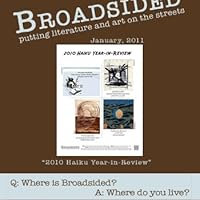
January 3, 2011"Critique of Pure Reason," a poem by Jane HIrshfield, will be Broadsided March 1, 2011.
May 10, 2011
I often feel the mystery of her perceptions - I don't completely understand what she's saying at all times, but she makes me think.

July 25, 2012
I've been craving poetry lately. This was beautiful, wonderful--fairly accessible and full of surprising moments.

May 17, 2014
Geeeeenius.
This book makes me believe in poetry again.
There's not a single piece in here I wouldn't want to read at least twice.
Really loved it. Highly recommended.
This book makes me believe in poetry again.
There's not a single piece in here I wouldn't want to read at least twice.
Really loved it. Highly recommended.

July 29, 2014
Her poems are simultaneously detached and personal. This book is a great reference for aspiring poets. Highly recommended.

March 24, 2020
Your story was this: you were happy, then you were sad,
you slept, you awakened.
Sometimes you ate roasted chestnuts, sometimes persimmons.
you slept, you awakened.
Sometimes you ate roasted chestnuts, sometimes persimmons.

March 3, 2023
"I wanted to be intimate to my own life" (Downed Branch, 31).
I'm in my Jane Hirshfield era. I've been checking out every collection of hers I can find at SPL.
I love Jane's clarity and precision—and the circularity of her images. I was staggered from the very first page ("The untranslatable thought must be the most precise"), but overall this specific book wasn't my favorite of hers. It lost my attention as it progressed, but I adore her central idea of poems as "assays." Her work can be summed up as she writes in one of her poems: "such feasting!"
I keep thinking about "After Degas." Also, her poem "Theology" is one I need to read and reread—so excellent and thought-provoking. She expresses a profound thing by purely pointing to the mundane. In the process, she references Simone Weil, so truly it is a winsome poem on many levels.
Now I'll just be tearing up thinking about her description of fermenting sheep milk cheeses being tenderly cradled like a child and turned by a farmer once a week, then spending the rest of their time in waiting. Thanks, Jane.
"To think that grief is the self is an error" (Burlap Sack, 61).
I'm in my Jane Hirshfield era. I've been checking out every collection of hers I can find at SPL.
I love Jane's clarity and precision—and the circularity of her images. I was staggered from the very first page ("The untranslatable thought must be the most precise"), but overall this specific book wasn't my favorite of hers. It lost my attention as it progressed, but I adore her central idea of poems as "assays." Her work can be summed up as she writes in one of her poems: "such feasting!"
I keep thinking about "After Degas." Also, her poem "Theology" is one I need to read and reread—so excellent and thought-provoking. She expresses a profound thing by purely pointing to the mundane. In the process, she references Simone Weil, so truly it is a winsome poem on many levels.
Now I'll just be tearing up thinking about her description of fermenting sheep milk cheeses being tenderly cradled like a child and turned by a farmer once a week, then spending the rest of their time in waiting. Thanks, Jane.
"To think that grief is the self is an error" (Burlap Sack, 61).

November 21, 2023
“Want more”—
a cure for longing I had not thought of.
But that is how it is with wells.
Whatever is taken refills to the steady level.
The voice agreed, though softly, to quiet the feet of the horse:
A cup taken out, a cup reappears; a bucketful taken, a bucket.
I think I discovered Hirshfield's existence through her translations. Maybe it was her book Ten Windows. However I found her, I'm glad I did.
This is the first book of her poetry I've read, & it certainly won't be the last. She could be very visual, funny, philosophical, each poem is thoughtful. I really liked her series of Of/To/And poems that dot the book. Though stylistically very different, the only poet I know with any intimacy to do that often was Gregory Corso.
Anyway, I don't have too much to say. It's a nice little book I'm sure I'll flip through throughout the years. God bless you, Jane Hirshfield.
a cure for longing I had not thought of.
But that is how it is with wells.
Whatever is taken refills to the steady level.
The voice agreed, though softly, to quiet the feet of the horse:
A cup taken out, a cup reappears; a bucketful taken, a bucket.
I think I discovered Hirshfield's existence through her translations. Maybe it was her book Ten Windows. However I found her, I'm glad I did.
This is the first book of her poetry I've read, & it certainly won't be the last. She could be very visual, funny, philosophical, each poem is thoughtful. I really liked her series of Of/To/And poems that dot the book. Though stylistically very different, the only poet I know with any intimacy to do that often was Gregory Corso.
Anyway, I don't have too much to say. It's a nice little book I'm sure I'll flip through throughout the years. God bless you, Jane Hirshfield.

April 27, 2020
I'm never sure about assigning star rating to poetry, I don't quite have the confidence for it- who's to say what's good or successful when the goal is such a moving target so much of the time? I liked these poems. I loved a few. I was ambivalent about some.
I've long-admired Jane Hirshfield's poems, but I think this is the first time I've sat down with a collection. After is accented with poems that examine the tiny forgotten words in out language, and more often than not, these poems meditate on the mundane and quotidian to illuminate some larger understanding or feeling. Some of them feel truly lyric in their ability to turn the reader inside out, and others feel a little hollower.
I loved, especially, "Those Who Cannot Act," "Of: An Assay," "A Man Walks Through His Life," and "It Was Like This: You Were Happy."
I've long-admired Jane Hirshfield's poems, but I think this is the first time I've sat down with a collection. After is accented with poems that examine the tiny forgotten words in out language, and more often than not, these poems meditate on the mundane and quotidian to illuminate some larger understanding or feeling. Some of them feel truly lyric in their ability to turn the reader inside out, and others feel a little hollower.
I loved, especially, "Those Who Cannot Act," "Of: An Assay," "A Man Walks Through His Life," and "It Was Like This: You Were Happy."

February 3, 2024
In this collection, the poet presents yet another treasure trove of gems, scintillating with brilliant insights and resplendent with intricately crafted beauty. A few poems are a bit occluded and a handful quite opaque, but all are the work of a consummate master. “The Double” is sublime.
Favorite Poems:
“After Long Silence”
“Hope: An Assay”
“To Judgment: An Assay”
“Those Who Cannot Act”
“Articulation: An Assay”
“What Is Usual Is Not What Is Always”
“‘To’: An Assay”
“A Day Comes”
“The Double”
“Not Only Parallel Lines Extend to the Infinite”
“I Imagine Myself in Time”
“The Meeting”
“Wanting More and More to Live Unobserved, Unobserving”
“The Destination”
“The Woodpecker Keeps Returning”
“Seventeen Pebbles”
“To Spareness”
“‘Ah’: An Assay”
“Against Certainty”
“To Speech”
“Bad Year”
“Between the Material World and the World of Feeling”
“Letter to C”
“It Was Like This: You Were Happy”
Favorite Poems:
“After Long Silence”
“Hope: An Assay”
“To Judgment: An Assay”
“Those Who Cannot Act”
“Articulation: An Assay”
“What Is Usual Is Not What Is Always”
“‘To’: An Assay”
“A Day Comes”
“The Double”
“Not Only Parallel Lines Extend to the Infinite”
“I Imagine Myself in Time”
“The Meeting”
“Wanting More and More to Live Unobserved, Unobserving”
“The Destination”
“The Woodpecker Keeps Returning”
“Seventeen Pebbles”
“To Spareness”
“‘Ah’: An Assay”
“Against Certainty”
“To Speech”
“Bad Year”
“Between the Material World and the World of Feeling”
“Letter to C”
“It Was Like This: You Were Happy”
Displaying 1 - 30 of 78 reviews