

What do you think?

The Hotel at the End of the World
In the hotel at the end of the world it’s business as usual, as Pema dishes up rice and pork curry to travellers who stop by for a drink and refuge from the rains. Everyone there has a story to tell, and at times they end up revealing more than they want to.
On their journey to China, Kona and Kuja, bound together by fate, stumble upon the trail of the Floating Island, promised land of plenty. Pema’s story is about lost love, while her husband speaks of homesick Japanese soldiers in Manipur and the Naga hills during World War II. The Prophet takes us back to the quest for the Floating Island, leading us to the little girl’s story as she sets out to fetch water and chances upon something quite unexpected…
On their journey to China, Kona and Kuja, bound together by fate, stumble upon the trail of the Floating Island, promised land of plenty. Pema’s story is about lost love, while her husband speaks of homesick Japanese soldiers in Manipur and the Naga hills during World War II. The Prophet takes us back to the quest for the Floating Island, leading us to the little girl’s story as she sets out to fetch water and chances upon something quite unexpected…
144 pages, Paperback
First published May 10, 2009
Ratings & Reviews
Friends & Following
Create a free account to discover what your friends think of this book!
Community Reviews
Displaying 1 - 21 of 21 reviews

November 1, 2017
The story starts slow at the transit hotel in a remote place in the north-east. The narrative follows all the travellers and the resident's stories which reference a mystical world on a floating island. The stories are mostly refering to the Loktak lake in Manipur which is known for floating islands on which people live called phumdis.
Overall the artwork is decent with some panels working really well. The artwork also shows influences from the Himalayas and other traditional artworks from the buddhist sects.
Overall the artwork is decent with some panels working really well. The artwork also shows influences from the Himalayas and other traditional artworks from the buddhist sects.

January 20, 2026
I didn't read any graphic novels last year, I think.
So, it was a pleasant surprise to stumble upon this one at a friend's place and I finished it in a day!
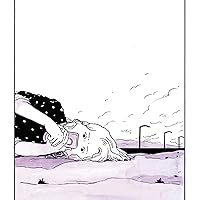
Parismita Singh's art is clean, almost child-like yet richly descriptive, creating a world that feels precise and dreamlike at the same time. The characters remain enchantingly out of reach, as if you're glimpsing them through glass, never quite able to touch. The setting carries the same distant magic, familiar but elusive.
A quietly immersive read that lingers long after you have read it.
So, it was a pleasant surprise to stumble upon this one at a friend's place and I finished it in a day!
Parismita Singh's art is clean, almost child-like yet richly descriptive, creating a world that feels precise and dreamlike at the same time. The characters remain enchantingly out of reach, as if you're glimpsing them through glass, never quite able to touch. The setting carries the same distant magic, familiar but elusive.
A quietly immersive read that lingers long after you have read it.
February 9, 2022
loved this one a lot

March 14, 2018
It was a short and engaging read! The illustrations are quite raw but very expressive. I loved that.

April 14, 2014

The original review of this book is posted on my blog...
To read the original review of this book, click here...

August 8, 2009
It gives you more to chew on than to just melt in your mouth. For a self-taught artist, Parismita Singh can draw more good artwork than bad.
June 17, 2018
Engaging illustrations in purely black and white. Good quick read.

July 16, 2020
3.5
There are 5 stories, all quite intriguing, real in their own way, & "atmosphere"/ambiance/aura-conjuring. The art - which is an amalgamation - good, smooth amalgamation - of more than one styles, but mainly line-shading in ink, is not my favourite, but it works. The human figures are emotive, the surroundings are evocative.
Reminiscent of "World's End" of "The Sandman" series, I must say. This is a great Graphic novel ... but left me with a feeling of a certain "could-have-been-even-more-amazing" feeling.
There are 5 stories, all quite intriguing, real in their own way, & "atmosphere"/ambiance/aura-conjuring. The art - which is an amalgamation - good, smooth amalgamation - of more than one styles, but mainly line-shading in ink, is not my favourite, but it works. The human figures are emotive, the surroundings are evocative.
Reminiscent of "World's End" of "The Sandman" series, I must say. This is a great Graphic novel ... but left me with a feeling of a certain "could-have-been-even-more-amazing" feeling.

October 25, 2024
The Hotel at the End of the World" by Parismita Singh is a black-and-white graphic novel with a unique and distinctive narrative. I really enjoyed how she portrayed the story and characters, each playing their roles perfectly. As the title suggests, travelers visit the hotel for food and, during their stay, they exchange precious, unique, and unbelievable stories. This book offered me a new and refreshing experience, filled with creative and imaginative ideas. I absolutely loved it.
February 22, 2025
Simple, sweet and warm. The artwork is beautiful and evokes a feeling of listening to stories of strangers on a stormy night. Some panels were very well thought out - such as when the inn owner begins to fall in love and her lover’s world begins to mix with her own.
The stories didn’t have neat wrappers, and sometimes ended ambiguously, but perhaps that’s a part of the book’s charm :)
The stories didn’t have neat wrappers, and sometimes ended ambiguously, but perhaps that’s a part of the book’s charm :)

July 19, 2018
Simple stories set in a hotel in the middle of nowhere. Each story tied to the magic of the mountains with war peppered in. Simple. Nice.
Bad drawing. Really bad drawing.
3 for the stories. 1.5 for the graphics.
Bad drawing. Really bad drawing.
3 for the stories. 1.5 for the graphics.

October 21, 2023
A little confusing, but it was interested to read what would have otherwise been an oral history of the North-East

April 12, 2024
Interesting story.

July 2, 2024
2.5/5
A bunch of stories about different travellers congregating at a hotel near India china border. The writing was engaging but the sketchy rough art was a hit or miss based on context.
A bunch of stories about different travellers congregating at a hotel near India china border. The writing was engaging but the sketchy rough art was a hit or miss based on context.

March 11, 2025
set in the north east india

July 5, 2013
This book will take you along on a journey to some richly imagined, familiar yet strange lands. The narrative locus is a hotel at the end of the world, where there is all that a lonely traveller might seek -- shelter from the storm (please open links in a new tab), the promise of warm food, and an evening's company of fellow wayfarers. The characters are quirky yet all too real in feeling these fundamentally human needs, though the stories they tell us seamlessly merge memories, dreams, desires and folklore to lend the book and the hotel a magical, otherworldly air. Parismita Singh weaves all of these worlds within worlds together with impressive skill.
The trope other reviewers here have identified from Neil Gaiman's The Sandman, Vol. 8: Worlds' End -- a series of stories told in an inn by travellers temporarily bound together through circumstance -- is incidentally a literary device that has been around for quite a while. Boccaccio's Decameron and Chaucer's Canterbury Tales are two fairly well-known works employing the technique. Though Singh (and Gaiman) have both drawn on this traditional storytelling structure, their work differs from convention in a few interesting ways.
Occasionally interspersed with broad-brushed slapstick and off-colour ribaldry, the Chaucerian tale usually contains a strong undercurrent of morality; stories in The Hotel at the End of the World, on the other hand, chart an altogether different thematic path. Nostalgia, desire, melancholia, homesickness, longing, and greed coexist here with the surreal and the fantastic; as if each of the book's narrators somehow remembers and recounts arcane minutiae from dreams dreamt the night before. The stories essentially acquaint readers with a portrait of a society's collective ethos; the book being set somewhere in India's Northeast (~Manipur? This is a bit iffy. The terrain is hilly, which means some of the stories might be of Kuki and Naga provenance. So though ostensibly in Manipur, our inn may well prefer to think of itself as being somewhere in Nagalim...). Anyway. Singh's attention to detail lends The Hotel an air of authenticity, reinforced by the distinctly folkloric flavour of quite a few of the sections. Although this is primarily fiction, occasional references to actual historical events (e.g. WWII battles fought between the Allies and the Japanese in these parts) allow the reader to also read the book as an informal oral history -- radically and pleasantly different from the 'objective' academese of conventional historiography.
As a minor gripe, one might say Singh's pencilling skills pale somewhat in comparison to the subtlety of her writing. The artwork is expressive, but rather rudimentary and functional. The visual difference between this book and one by someone like Amruta Patil (Adi Parva - Churning of the Ocean/Kari) is evident when opened side by side. Patil is as much a painter as a writer, so this might not be an entirely fair comparison. Nevertheless, one gets the feeling this could've been a much more vivid book if Singh had been able to collaborate with a professional illustrator. Just to imagine the impossible green of the countryside after a midmorning's rain, and then the water-drops on tree leaves sparkling like so many tiny islands of light when the Sun finally deigns to make its presence felt...
Thank you for an absorbing read, Ms Singh. Will be looking forward to reading more of your work.
The trope other reviewers here have identified from Neil Gaiman's The Sandman, Vol. 8: Worlds' End -- a series of stories told in an inn by travellers temporarily bound together through circumstance -- is incidentally a literary device that has been around for quite a while. Boccaccio's Decameron and Chaucer's Canterbury Tales are two fairly well-known works employing the technique. Though Singh (and Gaiman) have both drawn on this traditional storytelling structure, their work differs from convention in a few interesting ways.
Occasionally interspersed with broad-brushed slapstick and off-colour ribaldry, the Chaucerian tale usually contains a strong undercurrent of morality; stories in The Hotel at the End of the World, on the other hand, chart an altogether different thematic path. Nostalgia, desire, melancholia, homesickness, longing, and greed coexist here with the surreal and the fantastic; as if each of the book's narrators somehow remembers and recounts arcane minutiae from dreams dreamt the night before. The stories essentially acquaint readers with a portrait of a society's collective ethos; the book being set somewhere in India's Northeast (~Manipur? This is a bit iffy. The terrain is hilly, which means some of the stories might be of Kuki and Naga provenance. So though ostensibly in Manipur, our inn may well prefer to think of itself as being somewhere in Nagalim...). Anyway. Singh's attention to detail lends The Hotel an air of authenticity, reinforced by the distinctly folkloric flavour of quite a few of the sections. Although this is primarily fiction, occasional references to actual historical events (e.g. WWII battles fought between the Allies and the Japanese in these parts) allow the reader to also read the book as an informal oral history -- radically and pleasantly different from the 'objective' academese of conventional historiography.
As a minor gripe, one might say Singh's pencilling skills pale somewhat in comparison to the subtlety of her writing. The artwork is expressive, but rather rudimentary and functional. The visual difference between this book and one by someone like Amruta Patil (Adi Parva - Churning of the Ocean/Kari) is evident when opened side by side. Patil is as much a painter as a writer, so this might not be an entirely fair comparison. Nevertheless, one gets the feeling this could've been a much more vivid book if Singh had been able to collaborate with a professional illustrator. Just to imagine the impossible green of the countryside after a midmorning's rain, and then the water-drops on tree leaves sparkling like so many tiny islands of light when the Sun finally deigns to make its presence felt...
Thank you for an absorbing read, Ms Singh. Will be looking forward to reading more of your work.

January 23, 2012
The first graphic novel I ever read and I loved it!
With 137 pages of artwork this should not take one more than half an hour to read. Set in Manipur, north-east India this graphic novel has a couple of stories threaded together. There are the two invalids Kona and Kuja in the pursuit of a floating island. Pema, the owner of the hotel where the stories are narrated, has her own tale of loneliness while her husband narrates a supernatural tale of the plight of Japanese soldiers in Manipur and Nagaland during the World War II. An old man narrates the tale of losing his eye sight wherein the floating island resurfaces as a part of his tale.
The graphic novel may be a potpourri of simple stories but the impeccable sketches and the unblemished simplicity of the stories make it altogether profound heightened by the beautiful depiction of rain and thunder. Parismita Singh’s black and white drawings cry out a story of their own, solemn, striking and beautiful. Manipur, the heart of the book, is a beautifully mystical land. The famous floating islands lake, Loktak Lake, and the bloody battle between the British and Japanese soldiers that Manipur was witness to in the Second World War has been honestly depicted in this graphic novel. How I wish someone could depict in words all that Manipur has to offer.
With 137 pages of artwork this should not take one more than half an hour to read. Set in Manipur, north-east India this graphic novel has a couple of stories threaded together. There are the two invalids Kona and Kuja in the pursuit of a floating island. Pema, the owner of the hotel where the stories are narrated, has her own tale of loneliness while her husband narrates a supernatural tale of the plight of Japanese soldiers in Manipur and Nagaland during the World War II. An old man narrates the tale of losing his eye sight wherein the floating island resurfaces as a part of his tale.
The graphic novel may be a potpourri of simple stories but the impeccable sketches and the unblemished simplicity of the stories make it altogether profound heightened by the beautiful depiction of rain and thunder. Parismita Singh’s black and white drawings cry out a story of their own, solemn, striking and beautiful. Manipur, the heart of the book, is a beautifully mystical land. The famous floating islands lake, Loktak Lake, and the bloody battle between the British and Japanese soldiers that Manipur was witness to in the Second World War has been honestly depicted in this graphic novel. How I wish someone could depict in words all that Manipur has to offer.

February 26, 2018
I didn't know what to make of 'The Hotel At The End Of The World' at first, but as time, seasons and stories went by, Parismita Singh's convoluted story began to make sense. She draws from various oral storytelling and folklore traditions that many more should be privy to, but sadly, even the ones who read this graphic novel will forget the incidents and the narrative in a day or two. For such is the humdrum of lives that we carry these days around ourselves, that the peaceful and the serene can't exist within us. This graphic novel tries to remind us of the same, but somewhere along the line, my attention falters.

January 3, 2015
This is a fable for set in today's North East. I have heard a lot of about it but today I got to read it. The presence of soldiers is disturbing but they have also been absorbed into the mythology of the place. Reminds me of Boccaccio's Decameron and Chaucer's Canterbury Tales but adapted to the North East. If you have an hour to spare while waiting, this is the book to read.

October 31, 2011
very good artwork, and an interesting storyline too
April 23, 2016
A quick read but left me pondering for hours.
Displaying 1 - 21 of 21 reviews