Jump to ratings and reviews
Rate this book

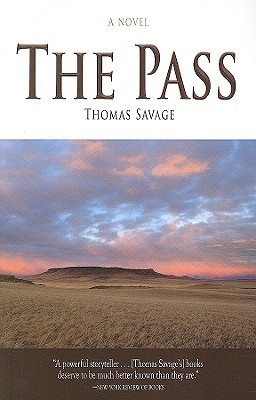
The Pass

Rate this book

Best known for his acclaimed novels The Power of the Dog and The Sheep Queen, Thomas Savage (1915-2003) was an extraordinary chronicler of the American West. The Pass, his first novel, was published by Doubleday in 1944, and it sets the stage for several of Savage's later novels which, in the words of Annie Proulx, capture a “family complexity of names and identities, of east coast culture and western mountains, of manual labor and writing, of a lost past and private secrets.”

The Pass tells the compelling story of the founding of a family ranch in the high country along the Montana-Idaho border, where Savage spent his youth. Proulx writes of The Pass, “The novel is studded with brilliant protraits that already display Savage's masterly ability to show the inner lives of characters, especially women... The language and thinking of the ranch people in The Pass are strikingly vivid... A sense of great longing and sympathy for the western landscape colors this novel.”

336 pages, Paperback

First published January 1, 1944

4 people are currently reading
311 people want to read

About the author

Thomas Savage

47 books242 followers
Thomas Savage was an American author of novels published between 1944 and 1988. He is best known for his Western novels, which drew on early experiences in the American West.

Ratings & Reviews

What do you think?
Rate this book

Friends & Following

Create a free account to discover what your friends think of this book!

Community Reviews

5 stars
17 (29%)
4 stars
23 (39%)
3 stars
16 (27%)
2 stars
2 (3%)
1 star
0 (0%)
Displaying 1 - 17 of 17 reviews
Profile Image for Doug H.
286 reviews
December 24, 2017
A youth’s sketchpad of charcoal drawings. Quick studies. Fairly bland and unimpressive to be honest and not even close to The Power of the Dog, but it was interesting too see where this author started.
Profile Image for Emma.
219 reviews160 followers
July 1, 2025
I bought this years ago when roadtripping the US, after becoming obsessed with Savage's other novel, The Power of the Dog, and I'm kind of kicking myself for not having read it sooner. You could definitely apply the saying 'they don't make them like this any more' to The Pass - a sweeping story of one community toughing it out on the Montana prairie in the early 1900s, as told mainly through the eyes of Jess and his wife Beth. It's a novel about a people's love for the land, for wanting and hating the impending modern world in equal measure, and about community. I will definitely be reading more of Thomas Savage, a writer that deserves to be better known!
Profile Image for Jenny Shank.
Author 4 books72 followers
February 2, 2011
http://www.newwest.net/topic/article/...

Nature Wins in Thomas Savage’s “The Pass”
Riverbend Publishing reissues Montana native Thomas Savage's 1944 classic "The Pass."

By Jenny Shank, 8-03-09

The Pass
by Thomas Savage
Riverbend Publishing, 335 pages, $12.95

I’d never heard of Thomas Savage until I came across Riverbend Publishing and the Drumlummon Institute’s recent reprint of 1944’s The Pass, and after falling into this beautiful, multi-layered, funny, heart-wrenching novel of the Montana prairie, I’m kicking myself for not reading his books sooner. Savage was the author of thirteen novels. Born in Utah in 1915, he grew up in Horse Prairie, Montana and Lemhi, Idaho, spent brief stints in Missoula and Portland, Ore., then lived most of the rest of his life on the east coast until his death in 2003. But like Willa Cather, he set much of his fiction in the West where he grew up, and his first novel, 1944’s The Pass, shares Cather’s themes of the tight communities that form in isolated stretches of prairie and a reverence for the beauty of the open land coupled with a respect for the hardships that living there can bring. Annie Proulx is a Savage admirer; she wrote the afterword for a recent edition of his 1967 novel Power of the Dog, and describes The Pass in this way:

“Savage’s first novel, The Pass, is shot through with the deepest kind of landscape description which utterly controls the destinies and fortunes of the ranchers and Scandinavian farmers who settle on the prairie adjacent to a formidable pass. The people of the place love it beyond reason, the blue autumnal haze, the grassland stretched out, and they relish testing themselves against spring storms and baking drought. The novel is studded with brilliant portraits that already display Savage’s masterly ability to show the inner lives of characters, especially women, who are treated with a rare depth of understanding.”

Proulx is absolutely right about The Pass--the characters are distinctive and believably human, each given space to display his or her unique consciousnesses to the reader. It’s easy to see why Proulx admires Savage, because a blueprint for her style of fiction is evident in his work. She makes her characters a little more eccentric and hardened than Savage’s, but they both have a knack for getting the reader to laugh about their characters’ behavior without mocking them, and they share an admiration for the landscape that allows them to work in plenty of breathtaking description that is never gratuitous, because their characters’ lives and actions are so bound up with the land on which they live that beautiful—and dangerous—scenery is a part of the story.

The Pass has a simple, elegant plot that reminded me of Willa Cather’s My Ántonia and O Pioneers! in its essential themes. Although this was Savage’s first book and he published it at age 29, he seemed to have an innate sense of structure as he slotted all the pieces into place. A young man from Wyoming, Jess Bentley, inherits some money after the death of his father, and decides to use it to become a rancher on the Montana prairie. He meets a rancher’s daughter named Beth who impresses him with her horsemanship, woos her with some talk about rope knots, marries her, and brings her to his new home in Montana.

The prairie families welcome the new couple with a party, and Jess gradually builds up his business in the happy, early days. Beth suffers some unnamed female ailment as a result of riding a wildly bucking horse, and the consequences of that day play out much later, after the Bentleys have enjoyed several prosperous years. Change comes to the prairie in the form of a railroad that allows access out of the valley over the formidable mountain pass of the title. The railroad enables the ranchers to make more money because they can now sell their cattle to faraway buyers. But despite modern advances, Savage’s cataclysmic ending makes clear that weather and the forces of nature still have the upper hand on the open prairie.

As sad as the ending is, the dominant mood of the rest of the book is good humor. Savage creates scene after scene in which he lovingly pokes fun at the earnest residents of the prairie. There’s Jess’s awkward display of knot tying knowledge when he’s first trying to make small talk with Beth: “‘Look at this one. Hackamore knot.’ He tied it, held it up. ‘Pretty knot. There’s lots of useful knots you can tie.’” And this discussion of musical ability among a group of cowhands:

“Red’s guitar was a part of the roundup. He was the only one who could play it, if you called playing two chords playing it. He knew the D chord and the A seventh, which, as Arthur Fisher said, was enough for songs like ‘Buffalo Gals,’ but not enough for the ‘Strawberry Roan,’ where you go down low like. When the D and A seventh chords were not enough, Red faked a chord by putting his fingers down on the frets anywhere…But Jess—he could play even the G chord, which was enough for any song a man might want to sing.”

Mrs. Cooper, the prairie’s resident moralist, appears in some memorably funny scenes. She throws a party for Beth when she is ill, and though Mrs. Cooper doesn’t approve of alcohol, she orders some wine. “I bought a little port wine for Beth,” she says. “A little before the meal. I’d take a little for appearance sake, and Amy.” Jess replies, “That’s a fine idea. Give you all an appetite.” And Mrs. Cooper answers back:

“‘For the appetite, and what good spirits might follow would be purely medicinal.’ Mrs. Cooper frowned. ‘I wanted to be sure. Last night I took a small glass when Newt had gone to bed. I sat right down in my chair and waited for the—effects. You couldn’t say they were harmful. I simply felt warm and rather encouraged.’”

To a modern reader, the only weakness about The Pass is the mysterious nature of the ailment that Beth suffers from riding a bucking horse, that causes the doctor to counsel her that she should never have children. She ends up having difficulty in childbirth, and a novelist working today would have to do a better job of creating a convincing medical justification for the central portion of the plot.

But Savage’s portrayal of Jess and Beth’s relationship is touching in any era. Because he so admired Beth’s riding, Jess hires a cook so she can join him on the range. “Must be awful to be a woman and have to cook,” Jess thinks, “Stick around a kitchen all day with flour and stuff and see the country through a pane of glass. Well, Beth wouldn’t have to do it.”

Thomas Savage’s The Pass, now back in print, is a welcome discovery for any reader who relishes dramas set on the Western plains.
Profile Image for Johanna Jaworski.
181 reviews
December 26, 2022
This felt like a John Wayne movie. I could see the visuals, vast skies, rocky terrain, open land. Jess, a character who has an interesting interior life, only communicates with grunts and one sentence comments to those around him. I just hated Beth - just wanted to smack her - GET YOURSELF TOGETHER LADY! It just seemed so pathetic how she so desperately wanted to make this life work even though it was killing her. The other couples were fun and I did really like spending time with them, especially Mrs Cooper.

It paints a picture, a not altogether flattering picture, of how white people, individuals and families worked together to "conquer" the west. The sucessful had used the land well (ranching as opposed to farming )- made careful gambles (buy more or less each year) to the cuminating big chance at the end - using all they have to pay a train to bring supplies during a bad winter. It's a well-earned finish and it is exciting. I just wasn't really happy one way or another for Jess and poor, dead Beth.
Profile Image for Don.
804 reviews7 followers
July 5, 2022
Three and a half stars. The first half of the book rates three stars and the second four stars. This is Savage's (author of the excellent "Power of the Dog") first novel. His descriptions and character development in the first half are quite good. The story line is a little flat. However, that picks up in the second part and is compelling reading. The setting is a part of the world that Savage knew well, as he spent his youth on ranches in Montana and Idaho. He paints a vivid picture of what ranch life was like at the turn of the 19th/20th century. The story follows a young couple, Jess & Beth, as they buy a ranch just after they are married. They meet their neighbors and form a tight community as progress comes to the prairie.
Profile Image for Wendy.
369 reviews1 follower
July 23, 2024
I’ve now read all of Thomas Savage’s books. Set in the first half of the 20th century, they flesh out man against nature, man against man, and man against self themes. Jess marries Beth and they head to Montana beyond a pass to start a cattle ranch. Beth, an excellent horsewoman, is an important partner, and they are happily in love, with close - if sometimes annoying- friends. Beth bears a short-lived son and nearly dies doing so. The story has an ominous feel throughout, like a high pitched discordant whine. A bad winter during which Beth dies feels like the end for the ranchers, but a hay train makes it through and the cattle are saved. So the ending is bittersweet, but not happy.
Profile Image for Simon Evans.
Author 1 book7 followers
October 12, 2019
I'm so glad I was introduced to Thomas Savage's books. I loved 'Power of the Dog' and I really enjoyed 'The Pass'.
Set again against the brutal backdrop of the prairie and bleak, hard rock, this novel has a wonderful human heartbeat. It's beautifully written and heartbreaking.
Some of the descriptions of the landscape and the weather are so poetic and worth reading aloud. Savage is a keen observer of humanity and it's criminal that his work isn't better known.
Profile Image for Jeremiah.
35 reviews2 followers
March 23, 2024
His first book, but the hallmark ability to communicate the inner world of the characters is already present. A slow burn, at times I was wondering when the conflict was going to show up and then towards the end it just devastated me, having no idea how much I’d grown to truly care about these characters. It’s not The Power of the Dog, but the seeds of brilliant sure sprung quick. I’m going to read everything by Savage I can get my hands on.
Profile Image for John.
63 reviews
July 27, 2024
Thomas Savage is an undervalued American writer. He’s a gift storyteller and in this novel paints a vivid and compelling picture of western life after the turn of the last century. His command of the environment is clearly wrought by his own experiences and as such, the landscape, the weather, and the arduous of ranch life is its own character within the story. A great read.
Profile Image for Big Pete.
265 reviews25 followers
January 3, 2026
Melancholy, bittersweet tale of western life that has no gunplay or villains and draws its drama from human nature and the hardships of day-to-day life. If Savage wrote another four novels as good as this and The Power of the Dog he ought to be mentioned as one of the best American novelists of the 20th century.
517 reviews
July 1, 2019
I'm so glad to have discovered Thomas Savage. And it's just such a lucky occurrence to learn about him and his books from The Bookstore in Dillon, Montana. Landscape novel not to be forgotten. This was his first book -- now to read his others!
59 reviews
June 20, 2017
Beautifully written. Really paints the picture of the prairie and the tough living and those who chose to live there. A little disappointed in the ending, but maybe it's just because I wanted more.
Profile Image for Jackie.
1,503 reviews
October 21, 2021
The details of living in the high desert area on a ranch are great. The love story is too.
Profile Image for Isabel.
394 reviews
May 31, 2016
I think that if you read this as a story about disappointment that results when we struggle to achieve the impossible, it's a pretty powerful book. Surviving in those plains, that place of "bad medicine," is simply not possible. Bentley's marriage to his wife is also not possible. However, in this book, it is also not possible to quit. With the (mostly) steadfast support of his friends, he pulls through because of and for them.

Again, we're in that fleeting window of time before machines and industry go big time for the middle of America. Rugged communalism kicks in. Grasping and ceaseless drive for more steal the ability to appreciate the beauty of the life surrounding the characters. Still, small miracles happen (Amy's baby) that change the determination of the characters. Silly, maybe, but I loved that story line. And mrs. Cooper and Newt...

The shivaree! Those (new) friends pulled through! And made Jesse appear to be something he wasn't, but someone he eventually became.

The characters grew on me. I felt that Beth was always a little flat. (Kinda like Beth in little women, when I stop to think of it). But the moments of shared conspiracy between Jess and mrs. Cooper, the little exchanges between side characters got better and downright funny by the end.

The little foal! Sob.

The descriptions of the rides by the willows.

Slim...

This would make a fabulous movie. Especially the ending (which I actually could have done without, but it was a pretty touch.)
Profile Image for John Hansen.
Author 16 books23 followers
March 8, 2016
For the most part, I enjoyed this book. However, there were a number of events that were improbable and dialogue that was not realistic. I assume that some of the dialogue was written to mirror the simple lifestyle of ranchers on the prairie but there were times when it seemed inane. Nonetheless, I was willing to grant Savage this artistic license until the end of the book when he goes to considerable length describing this relentless blizzard, the cattle starving, freezing and dying, the "big red trucks" with hay that are stuck on the "Pass", the train with a rotary snowplow that is now coming with hay but no guarantees it will make it over the "Pass" and then, in the midst of this blizzzard, one of Bentley's ranch hands rides over the "Pass" to Salmon City, gets drunk and returns, all in the same day!
Profile Image for Patrice.
50 reviews6 followers
Want to read
August 8, 2009
Books by Montanans are my weakness. I've been told this one is a classic.
Profile Image for Bernd.
21 reviews3 followers
July 6, 2018
A good solid book about the life out on the prairie.
Displaying 1 - 17 of 17 reviews

Can't find what you're looking for?

Get help and learn more about the design.