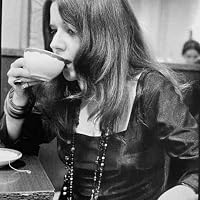
Now here was a fascinating book, one that I thought would give me some cheap thrills but that ended up being a real pearl. This is the gritty, down & dirty tale of Janis Joplin’s rise to fame, her relationships with lovers, her big-time addictions to alcohol and heroin, and her dealings with other rockers. A picture emerges of the now legendary 60s scene in San Francisco, and well, it wasn’t all free love and peace. There were overdoses, and fights, and huge egos, and enough bad behavior to fill up a book. Janis hobnobs and plays and battles with Sam Andrew, Jim Morrison, Kris Kristofferson, Mike Bloomfield, Country Joe MacDonald, writer Seth Morgan, and the Grateful Dead. Some of the peripheral characters are as fascinating as the stars of this self-destruction jamboree – there is the Acid King (probably the legendary Owsley), George the Black drug dealer who personally flies Janis her smack from L.A., Kimmie, the violent Lesbian, and many more.
But this book isn’t really even about Janis. It is more about the author, Peggy Caserta, who really lays it all out for us, enough to make this reader begin to view her as a selfish, lying slut. We get a look at the real Janis, no question, but we really get to know Peggy. We get a look at Peggy’s seventh grade classmate, Lee H. Oswald. We get a look at Peggy’s screwed up bisexual love life, starting with the squeaky clean Baptist boy in school and leading up to her labia licking needle parties with Janis. The book is surprisingly well-written, but that is probably because Caserta didn’t really write it. Dan Knapp, who was (I think) a highly regarded magazine writer, did.
When Peggy meets Janis, Janis is a ratty little hippie chick who does some singing. Peggy is not that impressed at first, but over time, especially when she sees how famous Janis is becoming, she gets involved with her. Soon Peggy is cheating on her partner Kimmie, and running off to “ball” Janis whenever she can. Janis, who comes across as intensely charming and fun, as well as being totally out of control and occasionally malicious, soon gets Peggy good and hooked on heroin. By the end of the book, Janis has mostly cleaned up her act, and Peggy is a dead end junkie. That is the irony of it: Janis had mostly kicked the habit except for a shot here and there. The week she died she was in L.A. – bored and lonely, without her former best friend/lover Peggy, and with new flame Seth Morgan not around. Janis, who hated being alone, turned to heroin, tequila, and valium for solace. It would be her last stoned evening – and her last evening on earth.
Despite the simultaneously charming and repulsive narrator, I could not put the book down. Just like Janis, I didn’t want the party to end – the parade of bizarre characters and events and the real life drama was just too interesting. Here are Peggy and another girl, balling guys in separate bedrooms and then meeting in the living room to giggle about them. Here is Janis, deliberately overdosing a prominent left-wing lawyer who has the hots for Peggy. There is the “Acid King” date-raping Peggy. There is Janis, trying to prostitute herself on the street, and getting laughed at by potential johns. There is Lee Harvey Oswald, locking his woodshop teacher in a closet for a whole weekend. But all parties have to end, and this did end, very sadly and painfully. The curtain comes down on the 1960s, a time that was full of turmoil and craziness as well as freedom and creativity. This book is essential reading for anyone interested in that era.