

What do you think?
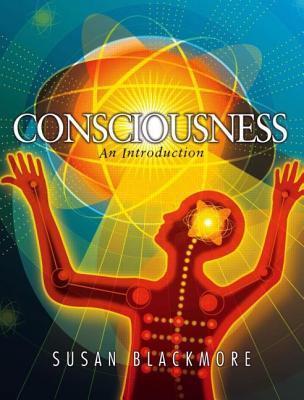
Very Short Introductions #121
Consciousness - An Introduction
Is there a theory that explains the essence of consciousness? Or is consciousness itself just an illusion? The "last great mystery of science," consciousness was excluded from serious research for most of the last century but is now a rapidly expanding area of study for students of psychology, philosophy, and neuroscience. Recently the topic has also captured growing popular interest.
This groundbreaking book is the first volume to bring together all the major theories of consciousness studies--from those rooted in traditional Western philosophy to those coming out of neuroscience, quantum theory, and Eastern philosophy. Broadly interdisciplinary, Consciousness: AnIntroduction is divided into nine sections that examine such topics as how subjective experiences arise from objective brain processes, the basic neuroscience and neuropathology of consciousness, altered states of consciousness, mystical experiences and dreams, and the effects of drugs and meditation. It also discusses the nature of self, the possibility of artificial consciousness in robots, and the question of whether or not animals are conscious. Enhanced by numerous illustrations and profiles of important researchers, the book also includes self-assessment questions, further reading suggestions, and practical exercises that help bring the subject to life.
This groundbreaking book is the first volume to bring together all the major theories of consciousness studies--from those rooted in traditional Western philosophy to those coming out of neuroscience, quantum theory, and Eastern philosophy. Broadly interdisciplinary, Consciousness: AnIntroduction is divided into nine sections that examine such topics as how subjective experiences arise from objective brain processes, the basic neuroscience and neuropathology of consciousness, altered states of consciousness, mystical experiences and dreams, and the effects of drugs and meditation. It also discusses the nature of self, the possibility of artificial consciousness in robots, and the question of whether or not animals are conscious. Enhanced by numerous illustrations and profiles of important researchers, the book also includes self-assessment questions, further reading suggestions, and practical exercises that help bring the subject to life.
Hardcover
First published January 1, 2003
About the author
Susan Blackmore
32 books322 followersSusan Jane Blackmore is a freelance writer, lecturer and broadcaster, and a Visiting Professor at the University of Plymouth. She has a degree in psychology and physiology from Oxford University (1973) and a PhD in parapsychology from the University of Surrey (1980). Her research interests include memes, evolutionary theory, consciousness, and meditation. She practices Zen and campaigns for drug legalization. Sue Blackmore no longer works on the paranormal.
She writes for several magazines and newspapers, blogs for the Guardian newspaper and Psychology Today, and is a frequent contributor and presenter on radio and television. She is author of over sixty academic articles, about fifty book contributions, and many book reviews. Her books include Dying to Live (on near-death experiences, 1993), In Search of the Light (autobiography, 1996),Test Your Psychic Powers (with Adam Hart-Davis, 1997), The Meme Machine (1999, now translated into 13 other languages), Consciousness: An Introduction (a textbook 2003), Conversations on Consciousness (2005) and Ten Zen Questions (2009).
http://www.susanblackmore.co.uk/Artic...
She writes for several magazines and newspapers, blogs for the Guardian newspaper and Psychology Today, and is a frequent contributor and presenter on radio and television. She is author of over sixty academic articles, about fifty book contributions, and many book reviews. Her books include Dying to Live (on near-death experiences, 1993), In Search of the Light (autobiography, 1996),Test Your Psychic Powers (with Adam Hart-Davis, 1997), The Meme Machine (1999, now translated into 13 other languages), Consciousness: An Introduction (a textbook 2003), Conversations on Consciousness (2005) and Ten Zen Questions (2009).
http://www.susanblackmore.co.uk/Artic...
Ratings & Reviews
Friends & Following
Create a free account to discover what your friends think of this book!
Community Reviews
Displaying 1 - 30 of 412 reviews

November 11, 2016
تعرف ايه عن الوعى يا مرسى.
ولا يا بهجت .. هو احنا عندنا حاجه فى المنهج اسمها وعى؟
قد تعتقد عندما تقرأ العنوان انك تعرف كل شىء و لكن مع تقليبك لصفحات الكتاب و تقلبك فيما فيه و مدى تقبلك لأفكاره من عدمه ستكتشف انك لا تعرف معنى الوعى اصلا.
هل هو الذات ام الإدراك أم مستوى الذكاء و الإنتباه. هل هى الأمانه و حرية الاختيار و الإرادة الحرة. هل هو ادراكنا لأنفسنا و للآخرين أم أن كل ذلك هو مجرد وهم و ليس الا ثمة مادة فى مادة و خلايا و جزيئات و ومضات كهربية تحرك جزئات مادية طوال الوقت. هل نحن ظاهرة لغوية صوتية فقط أم أن هناك عقل و مخ. روح و مادة.
خالق و مخلوق. حياة و موت. جماد و أحياء. هل هى اثنينية دائمة أم توحيد و توحد أو هى بداية و نهاية.
مثلما بدأت الكتاب انتهيت بل بحيرة أكثر مما دخلت و بأسئلة تحتاج ربما لعشرات الكتب لتدوينها لا للإجابة عليها

May 17, 2015
The Self is illusion – so says the Buddha; and Susan Blackmore agrees, albeit with more scientific evidence as backup.
***
The Hard Problem
We are sure that there is a world outside, filled with inanimate and live things. However, we can experience this world only through our senses: the colours, the smells and the feels. They are all we have, to form our idea about our environment. However, they are dependent upon the experiences of our brain, therefore by nature subjective - and when we come to abstract concepts like pleasure and pain, they have no existence other than in the mind.
"Mind" - the fateful word! What is it? Even if we are not read up on philosophy, we assume that it exists independently of our physical body. That is, most of us subscribe to some sort of dualism. All the world's religions, other than Buddhism, posit an indestructible "soul" (although there is a difference between the Hindu Atman and the Levantine soul, a point which I shall touch upon later).
The best-known dualist theory about the mind is the one proposed by Rene Descartes, the famous Seventeenth Century French philosopher. According to Descartes, the mind is non-physical and resides in the pineal gland in the centre of the brain. However, the problem of the interaction of the non-physical mind with the physical brain is not so easily solved, therefore most scientists and philosophers prefer a monistic explanation – either the mind being fundamental, or the body. Modern science takes the materialistic view that the mind arises from mental processes.
But this does not solve the problem of how a physical brain, made purely of material substances, can give rise to conscious experiences which scientists call the ‘qualia’, the indescribable experiences. This is traditionally called the ‘hard problem’ of consciousness, a term coined by the Australian philosopher David Chalmers 1n 1994.
***
What does being conscious mean? For example, is my computer which takes inputs from me, interacts with me, and provides output in some way conscious? Most of us would instinctively say no: we are conditioned to think only biologically “live” entities as conscious. But then, is a tree conscious? It is born, lives and dies: reaches towards light, and uses its roots to feed itself. Again, most of us would say no – it has no brain. But then, is a bat, which has a brain, conscious in the same way that I am conscious?
“What is it like to be a bat?” – This question was made famous by the American philosopher Thomas Nagel 1n 1974. He said that if there is something it is like to be the bat, that is, if the bat is self-aware of being itself, then it is conscious: otherwise it is not. Nagel was using this argument to challenge materialism: since consciousness is subjective, we can never know objectively what it is. What we are talking about here is phenomenal consciousness, which is where self-awareness comes from – which is to be differentiated from access consciousness, which we use for thinking, acting and speaking.
So here is the million-dollar question: is consciousness an add-on to the physical brain, something which arises out of neural activity yet independent of it (the ‘ghost in the machine’)? Or is it intrinsic to complex brain processes and inseparable from them, and the idea of an independent consciousness an illusion?
Blackmore subscribes to the latter viewpoint, following the path of the philosopher Daniel C. Dennett. This book is devoted to proving that the self is an illusion, based on the findings of scientific research.
***
The Theatre of the Mind and the Stream of Consciousness
Susan Blackmore says we more or less view our mind as a theatre, where the self sits, seeing the show through the eyes, experiencing smells through the nose, and hearing sound through the ears – our daily 4D movie show. Also, we add the time element to it, experiencing it as flowing like a stream (hence the term ‘stream of consciousness’). According to Dennett, this is all bunkum. There is no centre point in the mind where everything comes together – it is all processed in parallel.
The amount of scientific research the author manages to bring to the table to prove her point are impressive. First, the human brain is analysed in detail, how various parts are related to various activities of the consciousness – also how damage significantly changes human perception in weird ways. Having linked mental processes firmly to physical activity, Blackmore attacks the concept of ‘stream of consciousness’ by establishing that the events the brain processes do not enter consciousness at all unless verbally probed - that is, we become aware of doing something only when we introspect. So there is no ‘stream’ as such, rather multiple processes which are gathered into a coherent stream later on.
The Grand Illusion
Still there must be something like a consciousness to do all this activity. Blackmore does not disagree – we do feel a ‘conscious self’, but in scientific terms, it is an illusion. She presents an extensive list of interesting experiments to prove that perception is largely subliminal. Even if we are not “aware” of what we perceive, the brain functions just the same. The self, instead of an entity, is a ‘bundle of sensations’, to borrow the words of David Hume. This is also very near to the concept of the ‘Anatman’ – the ‘not-self’ – posited by the Buddha (a man much ahead of his time, it seems!).
However, Blackmore goes further in denying the self – she refuses to equate it with any brain process. Quoting Dennett, she says that the self is a total illusion created by the way we use our language:
In the same way, Susan Blackmore also negates free will. Quoting an interesting experiment by Wegner, she argues that the same unconscious impulses give rise to the action and the thought behind the action: only thing is that the thought occurs a fraction of a second before the action, so we conclude that we have willed it!
(This is a truly radical approach. I must confess, even though it is argued flawlessly, it is a bit hard for me to accept. But I must admit that I have lived with this consciousness for such a long time that it is very difficult to let the chap go!)
***
This is a good book, which talks on a difficult subject in a readable manner. The author’s erudition and credentials also cannot be faulted. Hence the four stars.
However, a couple of caveats:
Firstly, this is not an introduction to the subject – it is an introduction to particular theory of consciousness. History of scientific and philosophical research on the subject is largely ignored, and competing theories are presented only so that they can be refuted. I am definitely interested in the subject, and shall be reading more – and not just Dennett’s theory.
Secondly, materialism and monism is taken as a given. True, the Levantine concept of an indestructible soul occupying the destructible body cannot be treated scientifically (though it’s a valid religious concept)– but the Hindu concept of Atman and Brahman is slightly different.
The Mandukya Upanishad talks extensively of consciousness. It posits four ‘Purushas’ (we may think of them as various types of consciousness). The first one, which is outward-looking and connected to the waking state, experiences the ‘real’ world. The second one, which is inward-looking and connected to the dreaming state, experiences the phenomenal world. The third one, which is connected with dreamless sleep, experiences the real and phenomenal worlds at the same time. And the fourth one, the most profound, goes beyond all these experiences and transcends the phenomenal existence. I guess it is here that the Atman identifies with the Brahman.
The concept of the Brahman in Hinduism can be most closely approximated as ‘un-distilled sentience’: a sort of cosmic consciousness of which each and every atom of reality is but a part. The individual Atman is but an imperfect reflection of the Brahman: the realisation that it is part of the big whole is said to be the whole purpose of enlightenment.
At the present level of scientific knowledge, materialism seems to be the only valid worldview. But in the light of quantum phenomena, is the concept of reality as sentience wholly off the mark? I don’t think so.
Susan Blackmore could have dwelt a bit more on the philosophical aspects of the question also, I feel. But maybe it’s unfair to expect it from a book which is basically scientific in nature.
***
The Hard Problem
We are sure that there is a world outside, filled with inanimate and live things. However, we can experience this world only through our senses: the colours, the smells and the feels. They are all we have, to form our idea about our environment. However, they are dependent upon the experiences of our brain, therefore by nature subjective - and when we come to abstract concepts like pleasure and pain, they have no existence other than in the mind.
"Mind" - the fateful word! What is it? Even if we are not read up on philosophy, we assume that it exists independently of our physical body. That is, most of us subscribe to some sort of dualism. All the world's religions, other than Buddhism, posit an indestructible "soul" (although there is a difference between the Hindu Atman and the Levantine soul, a point which I shall touch upon later).
The best-known dualist theory about the mind is the one proposed by Rene Descartes, the famous Seventeenth Century French philosopher. According to Descartes, the mind is non-physical and resides in the pineal gland in the centre of the brain. However, the problem of the interaction of the non-physical mind with the physical brain is not so easily solved, therefore most scientists and philosophers prefer a monistic explanation – either the mind being fundamental, or the body. Modern science takes the materialistic view that the mind arises from mental processes.
But this does not solve the problem of how a physical brain, made purely of material substances, can give rise to conscious experiences which scientists call the ‘qualia’, the indescribable experiences. This is traditionally called the ‘hard problem’ of consciousness, a term coined by the Australian philosopher David Chalmers 1n 1994.
***
What does being conscious mean? For example, is my computer which takes inputs from me, interacts with me, and provides output in some way conscious? Most of us would instinctively say no: we are conditioned to think only biologically “live” entities as conscious. But then, is a tree conscious? It is born, lives and dies: reaches towards light, and uses its roots to feed itself. Again, most of us would say no – it has no brain. But then, is a bat, which has a brain, conscious in the same way that I am conscious?
“What is it like to be a bat?” – This question was made famous by the American philosopher Thomas Nagel 1n 1974. He said that if there is something it is like to be the bat, that is, if the bat is self-aware of being itself, then it is conscious: otherwise it is not. Nagel was using this argument to challenge materialism: since consciousness is subjective, we can never know objectively what it is. What we are talking about here is phenomenal consciousness, which is where self-awareness comes from – which is to be differentiated from access consciousness, which we use for thinking, acting and speaking.
So here is the million-dollar question: is consciousness an add-on to the physical brain, something which arises out of neural activity yet independent of it (the ‘ghost in the machine’)? Or is it intrinsic to complex brain processes and inseparable from them, and the idea of an independent consciousness an illusion?
Blackmore subscribes to the latter viewpoint, following the path of the philosopher Daniel C. Dennett. This book is devoted to proving that the self is an illusion, based on the findings of scientific research.
***
The Theatre of the Mind and the Stream of Consciousness
Susan Blackmore says we more or less view our mind as a theatre, where the self sits, seeing the show through the eyes, experiencing smells through the nose, and hearing sound through the ears – our daily 4D movie show. Also, we add the time element to it, experiencing it as flowing like a stream (hence the term ‘stream of consciousness’). According to Dennett, this is all bunkum. There is no centre point in the mind where everything comes together – it is all processed in parallel.
The amount of scientific research the author manages to bring to the table to prove her point are impressive. First, the human brain is analysed in detail, how various parts are related to various activities of the consciousness – also how damage significantly changes human perception in weird ways. Having linked mental processes firmly to physical activity, Blackmore attacks the concept of ‘stream of consciousness’ by establishing that the events the brain processes do not enter consciousness at all unless verbally probed - that is, we become aware of doing something only when we introspect. So there is no ‘stream’ as such, rather multiple processes which are gathered into a coherent stream later on.
The Grand Illusion
Still there must be something like a consciousness to do all this activity. Blackmore does not disagree – we do feel a ‘conscious self’, but in scientific terms, it is an illusion. She presents an extensive list of interesting experiments to prove that perception is largely subliminal. Even if we are not “aware” of what we perceive, the brain functions just the same. The self, instead of an entity, is a ‘bundle of sensations’, to borrow the words of David Hume. This is also very near to the concept of the ‘Anatman’ – the ‘not-self’ – posited by the Buddha (a man much ahead of his time, it seems!).
However, Blackmore goes further in denying the self – she refuses to equate it with any brain process. Quoting Dennett, she says that the self is a total illusion created by the way we use our language:
Finally, a completely different approach is provided by Dennett. Having rejected the Cartesian theatre, he also rejects its audience of one who watches the show. The self, he claims, is something that needs to be explained, but it does not exist in the way that a physical object (or even a brain process) exists. Like a centre of gravity in physics, it is a useful abstraction. Indeed, he calls it a ‘centre of narrative gravity’. Our language spins the story of a self and so we come to believe that there is, in addition to our single body, a single inner self who has consciousness, holds opinions, and makes decisions. Really, there is no inner self but only multiple parallel processes that give rise to a benign user illusion – a useful fiction.
It seems we have some tough choices in thinking about our own precious self. We can hang on to the way it feels and assume that a persisting self or soul or spirit exists, even though it cannot be found and leads to deep philosophical troubles. We can equate it with some kind of brain process and shelve the problem of why this brain process should have conscious experiences at all, or we can reject any persisting entity that corresponds to our feeling of being a self.
I think that intellectually we have to take this last path. The trouble is that it is very hard to accept in one’s own personal life. It means taking a radically different view of every experience. It means accepting that there is no one who is having these experiences. It means accepting that every time I seem to exist, this is just a temporary fiction and not the same ‘me’ who seemed to exist a moment before, or last week, or last year. This is tough, but I think it gets easier with practice.
In the same way, Susan Blackmore also negates free will. Quoting an interesting experiment by Wegner, she argues that the same unconscious impulses give rise to the action and the thought behind the action: only thing is that the thought occurs a fraction of a second before the action, so we conclude that we have willed it!
(This is a truly radical approach. I must confess, even though it is argued flawlessly, it is a bit hard for me to accept. But I must admit that I have lived with this consciousness for such a long time that it is very difficult to let the chap go!)
***
This is a good book, which talks on a difficult subject in a readable manner. The author’s erudition and credentials also cannot be faulted. Hence the four stars.
However, a couple of caveats:
Firstly, this is not an introduction to the subject – it is an introduction to particular theory of consciousness. History of scientific and philosophical research on the subject is largely ignored, and competing theories are presented only so that they can be refuted. I am definitely interested in the subject, and shall be reading more – and not just Dennett’s theory.
Secondly, materialism and monism is taken as a given. True, the Levantine concept of an indestructible soul occupying the destructible body cannot be treated scientifically (though it’s a valid religious concept)– but the Hindu concept of Atman and Brahman is slightly different.
The Mandukya Upanishad talks extensively of consciousness. It posits four ‘Purushas’ (we may think of them as various types of consciousness). The first one, which is outward-looking and connected to the waking state, experiences the ‘real’ world. The second one, which is inward-looking and connected to the dreaming state, experiences the phenomenal world. The third one, which is connected with dreamless sleep, experiences the real and phenomenal worlds at the same time. And the fourth one, the most profound, goes beyond all these experiences and transcends the phenomenal existence. I guess it is here that the Atman identifies with the Brahman.
The concept of the Brahman in Hinduism can be most closely approximated as ‘un-distilled sentience’: a sort of cosmic consciousness of which each and every atom of reality is but a part. The individual Atman is but an imperfect reflection of the Brahman: the realisation that it is part of the big whole is said to be the whole purpose of enlightenment.
At the present level of scientific knowledge, materialism seems to be the only valid worldview. But in the light of quantum phenomena, is the concept of reality as sentience wholly off the mark? I don’t think so.
Susan Blackmore could have dwelt a bit more on the philosophical aspects of the question also, I feel. But maybe it’s unfair to expect it from a book which is basically scientific in nature.

January 8, 2013
Found this a fascinating book insofar as some of the ideas suggested in it were things I had never thought of. See for example the sections Theories of consciousness (p. 43), The nature of illusion (p. 50), The timing of conscious acts (p. 86), Memes (p. 127) and The future of consciousness (p. 128) She mentions Daniel Dennett frequently, citing in particular his Consciousness Explained (1991) and seems to agree which many of his ideas.
By the way, see this review
https://www.goodreads.com/review/show...
... for a much more ambitious and useful overview of what Blackmore's book contains!
. . . . . . . . . . . . . . . . . . . .
Previous review: The Hobbit
Next review: The French Revolution VSI
More recent review: Main Street Sinclair Lewis
Previous library review: History of Philosophy, Copleston reflections on
Next library review: Collected Dialogues Plato
By the way, see this review
https://www.goodreads.com/review/show...
... for a much more ambitious and useful overview of what Blackmore's book contains!
. . . . . . . . . . . . . . . . . . . .
Previous review: The Hobbit
Next review: The French Revolution VSI
More recent review: Main Street Sinclair Lewis
Previous library review: History of Philosophy, Copleston reflections on
Next library review: Collected Dialogues Plato

March 31, 2013
This is a very clear, well-written exposition on a difficult subject, but it is by no means a neutral review of the field as one might expect from a 'very short introduction'. Instead, Susan Blackmore promotes her own thesis, sympathetic to the work of Daniel Dennett, in which a single inner self with subjective experience, holding opinions and acting on decisions is a useful fiction or benign illusion created by the brain. Our ordinary intuition that there is a center to conscious experience is a useful abstraction, but not something grounded in scientific fact. This very partial view probably helps to make the book a pleasurable read, but also makes it a conspicuous target for anti-materialists like me.
It is commonly agreed that the idea of subjectivity lies at the heart of the problem of consciousness. What it is ‘like’ for a person to have experiences, make plans or perform actions does not seem fathomable with standard rational techniques. My personal experience of the redness of an object might be completely different to your experience of the same object, and though we use the same terminology to describe redness, we can never really be sure that we have the same thing in mind. It deeply offends a certain class of objectively-minded people that something like this could be so fundamental to our being and yet scientifically unexplainable, and they adopt two major strategies for coping. The first soft-naturalistic strategy is to isolate this peculiar phenomenal experience from the physical world and neural processes. It is allowed to ‘emerge’ from the evolved physical brain but has no causal effects and is only describable in ordinary language or special codes such as ‘memes’. The second approach is to marginalize and diffuse the phenomenal experience, treat it as illusory, and hope that scientific advance will eventually do away with it. This latter hard-naturalistic approach is the one that Blackmore and Dennett promote. They say that most of what we do is unconscious, and when we finally succeed in understanding how all our individual mental capacities such as intelligence, perception, thinking or language function, we will understand consciousness.
Blackmore has many arguments to support her case. She describes a neurological condition called agnosia, in which the patient has normal visual ability but appears to lack the experience of seeing. He is able to reach out, pick up and post a letter, but cannot describe the shape of the letter or say what it is. One way of interpreting this is to say that the patient is able to see unconsciously; that agnosia is a disassociation between vision and consciousness. Blackmore says no; dualistic hogwash! There is no conscious ‘central processing unit’ able to 'observe' the visual stream and then act on it. Experiments on brain organization show that there are many different visual streams with distinct functions, and that agnosia is better described as a disassociation between action and perception. Although she argues forcefully in this way against representational dualism, Blackmore fails to recognize that her own interpretation fares little better as an explanation of visual perception. Perception has a qualitative richness, such as the aspect of the letter, that a stream of electrical energy lacks. Moreover, vision is always vision of something, just like pain is always pain somewhere, so how is our 'rapport' with an external letter incorporated in this stream? How is the patient `related appropriately' to the letter if his awareness of it is just a brain response? Awareness of external objects is different from awareness of physical mechanisms. The outside world of objects would be wholly mythical were it not for our primitive understanding of it.
Blackmore presents a large quantity of scientific evidence from unusual neurological conditions, split-brains, drug-induced hallucinations and altered mental conditions that she says disabuses us of the notion of a conscious self. Yet, the fact that brain damage makes a difference to what is experienced/perceived, does not account for the experience/perception itself. Moreover, there is ample circumstantial evidence from normal human experience that our intuitive ideas about consciousness are indispensable. We assume that it is proper and useful for us to reflect on our own guilt and motivations and to try to understand other people through patient attention to their beliefs and life histories. Blackmore recommends that we set little store by these touchy-feely aspects of consciousness since they are all part of the illusion. Presumably she also dismisses the idea that this activity of reflecting on ourselves or each other has any inherent value. If science is going to reduce all such mental activities to brain functions there will eventually be no questions about value left to ask. The bleakness of that prospect is startling.
It is commonly agreed that the idea of subjectivity lies at the heart of the problem of consciousness. What it is ‘like’ for a person to have experiences, make plans or perform actions does not seem fathomable with standard rational techniques. My personal experience of the redness of an object might be completely different to your experience of the same object, and though we use the same terminology to describe redness, we can never really be sure that we have the same thing in mind. It deeply offends a certain class of objectively-minded people that something like this could be so fundamental to our being and yet scientifically unexplainable, and they adopt two major strategies for coping. The first soft-naturalistic strategy is to isolate this peculiar phenomenal experience from the physical world and neural processes. It is allowed to ‘emerge’ from the evolved physical brain but has no causal effects and is only describable in ordinary language or special codes such as ‘memes’. The second approach is to marginalize and diffuse the phenomenal experience, treat it as illusory, and hope that scientific advance will eventually do away with it. This latter hard-naturalistic approach is the one that Blackmore and Dennett promote. They say that most of what we do is unconscious, and when we finally succeed in understanding how all our individual mental capacities such as intelligence, perception, thinking or language function, we will understand consciousness.
Blackmore has many arguments to support her case. She describes a neurological condition called agnosia, in which the patient has normal visual ability but appears to lack the experience of seeing. He is able to reach out, pick up and post a letter, but cannot describe the shape of the letter or say what it is. One way of interpreting this is to say that the patient is able to see unconsciously; that agnosia is a disassociation between vision and consciousness. Blackmore says no; dualistic hogwash! There is no conscious ‘central processing unit’ able to 'observe' the visual stream and then act on it. Experiments on brain organization show that there are many different visual streams with distinct functions, and that agnosia is better described as a disassociation between action and perception. Although she argues forcefully in this way against representational dualism, Blackmore fails to recognize that her own interpretation fares little better as an explanation of visual perception. Perception has a qualitative richness, such as the aspect of the letter, that a stream of electrical energy lacks. Moreover, vision is always vision of something, just like pain is always pain somewhere, so how is our 'rapport' with an external letter incorporated in this stream? How is the patient `related appropriately' to the letter if his awareness of it is just a brain response? Awareness of external objects is different from awareness of physical mechanisms. The outside world of objects would be wholly mythical were it not for our primitive understanding of it.
Blackmore presents a large quantity of scientific evidence from unusual neurological conditions, split-brains, drug-induced hallucinations and altered mental conditions that she says disabuses us of the notion of a conscious self. Yet, the fact that brain damage makes a difference to what is experienced/perceived, does not account for the experience/perception itself. Moreover, there is ample circumstantial evidence from normal human experience that our intuitive ideas about consciousness are indispensable. We assume that it is proper and useful for us to reflect on our own guilt and motivations and to try to understand other people through patient attention to their beliefs and life histories. Blackmore recommends that we set little store by these touchy-feely aspects of consciousness since they are all part of the illusion. Presumably she also dismisses the idea that this activity of reflecting on ourselves or each other has any inherent value. If science is going to reduce all such mental activities to brain functions there will eventually be no questions about value left to ask. The bleakness of that prospect is startling.

October 3, 2018
An assortment of consciousness related links or resources:
Bad tempered 'In Our Time' discussion on consciousness wherein Roger Penrose expounds his idea that the key to its comprehension may be found in the not-yet-understood boundary between quantum and classical physics while simultaneously demonstrating that he would be a good chap to have a drink with in the pub and where Ted Honderich shows that being a philosopher does not also prevent you from behaving like a bit of an arse.
Subscription only profile of Tom Stoppard focusing on his play about the 'Hard Problem' of consciousness.
Below are just my notes on this book rather than a review (which I might do later). Feel free to read if you are interested!
Chapter 1’ CONSCIOUSNESS, WHY THE MYSTERY
The ‘hard problem’ of consciousness
Consciousness is surprisingly difficult to investigate. Right from the start we are in the paradoxical position of seeming to have to use consciousness itself in order to investigate consciousness.
A historical starting point would be to look at body_dualism and the ‘mind/body’ problem - the mind and the body seem to be two different kinds of thing with no obvious way to bring them together.
On the one hand we have our own experiences - we see the sky, hear music. These ineffable (indescribable) qualities are ‘qualia’, although whether they actually exist or whether the concept is meaningful is in dispute. On the other hand if we believe there really is a physical world that gives rise to the qualia then how do we bridge the gap between them things in the real world whose attributes - weight, elemental make-up - we can measure and our private internal experiences of them? This is the ‘hard problem’ of consciousness.
Most cultures, including non-western cultures and most religions, are dualists, believing in two different realms of mental and physical things - the world of the spirit and the material world - although their conception may differ between cultures or religions, Children begin to similarly divide the world from 4 or 5 years old. Buddhism and the Hindu Advaita Vedanta school advocate non-dualist philosophical concepts - see ‘non-dualism’.
Dualism, monism (idealism and neutral monism), materialism
Descartes proposed that the mind and brain consisted of different substances and proposed that the two substances meet in the pineal gland (Cartesian Dualism).
The inability to explain how ‘mind’ and ‘body’ interact has led to most scientists and philosophers rejecting this type of dualism in favor of monism - the idea that there is only one kind of reality; note, monism is a broad philosophical concept but here is being applied narrowly to consciousness.
Idealists make the mind fundamental, but are then stuck with the problem of explaining a consistent physical world.
Neutral monists reject dualism but can’t make their mind up about the fundamental nature of the world. Summarised by Bertrand Russell: “...James's view is that the raw material out of which the world is built up is not of two sorts, one matter and the other mind, but that it is arranged in different patterns by its inter-relations, and that some arrangements may be called mental, while others may be called physical…". Not so sure how this is different from some of the ideas mentioned towards the end.
Materialism - which is also a form of philosophical monism - takes the position that matter is the fundamental substance in nature and that all things, including mental aspects and consciousness, are results of material interactions. In a materialist context the ‘hard problem’ becomes how to account for conscious experiences or ineffable qualia in a purely physical brain made of material substances.
Controversies and the ‘hard problem’ of consciousness
David Chalmers coined the term ‘hard problem’ of consciousness (below ‘Hard Problem’) which can be contrasted with the easier problems explaining mental phenomenon such as learning, attention, memory, sleep and similar.
Some claim that the ‘hard problem’ does not really exist; it depends on a false conception of consciousness or an underestimation of the ‘easy’ problems (below ‘Easy Problem(s)’). Is it a false intuition that consciousness is different from the combination of perception, memory, attention and similar?
Defining consciousness
Thomas Nagel used the question of ‘What it is like to be a bat’ to explore what we mean by consciousness. If there is something it is like to be a bat - something for the bat itself - then the bat is conscious. If there nothing like it is to be a bat then it is not conscious. This test can be applied to other items - what is it like to be a mug of tea? An earthworm? An AI program in a computer?
Nagel argued that we can never know what it is like to be a bat; he chose bats because their experiences are so different from those of a human, using sonar, hanging around upside down in caves and so on. He is a ‘mysterian’ believing that the Hard Problem is insoluble and we have no way of understanding it in the same way a dog has no way of understanding the newspaper he carries back from the shops.
Consciousness and subjectivity
Nagel reminds us that we must deal with the subjectivity of conscious thought. Solving the Easy Problems will not explain how subjectivity arises from the material world. If you claim consciousness is an illusion to escape explaining such subjectivity you must explain why consciousness appears so strongly to exist.
Phenomenality or phenomenal consciousness
Philosopher Ned Block coined these terms to refer to subjective experience or ‘What it’s like to be a…’. He divides ‘phenomenal consciousness’ (what it is like to be in a certain state) from ‘access consciousness’ (consciousness available for use in thinking or guiding action or speech). As an aside, his Blockhead thought experiment argues that a non-intelligent system could be used to pass the Turing test.
Consciousness: an ‘extra ingredient’ or not and the philosophical zombie.
A key unresolved divide in consciousness studies is whether consciousness is an ‘extra ingredient’ added on to perception, memory and so on or is it intrinsic to complex biological processes and inseparable from them. Are ‘qualia’ or subjective experiences something in addition to biological processes or intrinsic to them (a materialist or functionalist view).
If consciousness is an ‘extra ingredient’ other questions are raised: why do we have it, what is it for, what does it do, why did it evolve?
If consciousness arises from natural biological processes then perhaps there is no Hard Problem, there just seems to be one. Any creature with intelligence, perception memory, emotions and so on would necessarily be conscious as well.
The idea of the ‘philosophical zombie’ highlights the question of whether or not consciousness is an ‘added ingredient’ to a biological system. Can someone look like, act like and speak exactly like a human but have no inner world of conscious experiences and no ‘qualia’? If philosophical zombies could exist are we just lucky we did evolve a consciousness and didn’t evolve as them? Or perhaps we did? Or perhaps all my friends are philosophical zombies (not sure about my friends, but some of my co-workers certainly are).
What does consciousness actually do?
We visualise our conscious mind as controlling our bodies and influencing things, but does this really make sense?
We may think that we need consciousness is needed to make decisions, but neuroscience shows that this may not be the case. AI systems are also making decisions without being conscious, often better than humans when playing chess or go. Some actions such as playing table tennis, interrupting fast-flowing conversations, seem to be done consciously but in fact they occur too quickly for the conscious mind.
Are there some special mental phenomenon that need consciousness such as aesthetic appreciation or creativity? If so how would you show these are done wholly or partly by consciousness itself rather than the workings of a clever brain?
Epiphenomenalism is the idea that consciousness is a useless by-product of the mind, but if so why are we worrying about it or even capable of talking about it?
Alternatively anyone capable of the various mental processes of the Easy Problem might inevitable end up believing they are conscious even though they are not. They are simply deluded. But if so, how could we be so wrong in thinking it exists? And what does this imply for free will?
The theater of the mind
A natural way of thinking about consciousness is as a private theater inside my head receiving touches, smells, sounds and so on and using the imagination to conjure up sights and sounds as though seen on a mental screen or heard in an inner ear. These thoughts and sense impressions are the ‘contents’ of my consciousness while ‘I’ am the audience.
Daniel Dennett challenges this idea, arguing that while people reject dualist thinking they then let it in again through the back door by imagining a ‘Cartesian theater’ - the notion that there is somewhere in the mind a place or time where everything comes together again and ‘consciousness happens’ or some form of finishing line (a Cartesian finishing line?) which if crossed allows things to become mysteriously ‘conscious’.
Dennett rejects the above ideas through seeing the brain as a parallel, distributed processing system with no central headquarters and not place in which an ‘I’ sits making decisions and watching the show as it passes through consciousness. If so how does this feeling of consciousness arise without an inner theatre, no show and no audience?
Chapter 2: THE HUMAN BRAIN
A big brain
The central nervous system comprises the brain and spinal cord; the brain stem connects to the midbrain; behind this the cerebellum and the largest outer layer of the brain the cerebral cortex, divided into four lobes – occipital at the back, temporal above the ears, parietal at the top and frontal. Specific areas have distinct functions: limbic system (instinctive responses, basic emotions), frontal lobe (planning, decision making, self control), hippocampus in the limbic system (laying down new memories), the temporal lobe (storing and retrieving them).
The brain seems like a parallel, distributed system with no central organization, so why does it seem to be unified?
The unity of consciousness
The unity of consciousness is consistent with it being a theatre or stream of consciousness. We see the unity of “now”: there are some things in my consciousness while many other things are not (on stage or off). Unity over time: there seems to be continuity of consciousness from one moment to the next. Unity of identity: there seems to be a single and continuing experiences. Is this view correct?
The neural correlates of consciousness (the ‘NCC’s)
Much of what happens in the brain seems to be outside or inaccessible to consciousness. What does this really mean though+ What is the difference between brain activity that is conscious versus those parts that are not? Where do we find consciousness? One place to start may be identifying when brain activity correlates with conscious experience – NCCs (defined as “the minimum neural mechanism sufficient for any one specific conscious percept”)..
Pain can help investigate NCC given a clear subject element and objectively observable pain transmission through chemical changes in the nerves.
Note when A and B correlate reliably there are three possible causal explanations: A causes B, B causes A, both A and B are caused by something else or A and B are actually the same phenomena. Do physical changes create consciousness of pain cause NCC? If so we are back to the Hard Problem. Does consciousness of pain cause physical changes – unlikely.
Can we observe NCCs by using brain scans to observe when perceptions change of a Necker cube? Maybe – scans show neural activity in the primary visual cortex stays the same but activity in higher areas changes when reporting of changes to perception of the cube. However when ‘no report’ approaches of testing perception are made (e.g. looking at pupil dilation) many of these differences in neural activity disappear.
Perhaps the NCCs we observe related to specific perceptions or thoughts and there are no NCCs for consciousness itself.
Damaged minds
Certain bran damage can cause patients to lose their sense of on half of the world. They may eat only food on one side of a plate, draw only one side of a picture etc. Italian neurologist Eduardo Bisiach carried out an experiment where he asked such patients to describe entering into the cathedral square in Milan from the north and then from the south. Each time they could only remember one half of the square, but each half was different. In other words, they have retained their memory of the square but were only able to bring it into consciousness under these different circumstances.
In patients with Korsakoff’ syndrome their hippocampus is damaged and they cannot create new long term memories - declarative memory is damaged although procedural memory function may remain. Suffers write of how they seem to sometimes suddenly find themselves waking up, similar to how we may feel if we are suddenly conscious of the beauty of a view or by asking ourselves ‘Am I conscious now?’. Are sufferers fully conscious? Or conscious in a different way?
Another patient could not recognize or line up shapes, but was able to post a letter through a slot without being conscious of trying to do so. This seems to be due to losing the ability to respond to one of multiple streams of visual input – the ‘dorsal stream’ helps fast visuo-motor control while the ‘ventral stream’ is involved in recognizing objects and perceiving the world.
This is consistent with studies of “blindsight’ where patients have damage to the visual centers of the brain and cannot consciously see items but are still able to guess their orientation. Does this prove that qualia exist (due to objective vision without subjective consciousness) or rather that there are multiple routes for visual perception only some of which go through the area that also allows consciousness perception?
CONTINUED IN THE COMMENTS
Bad tempered 'In Our Time' discussion on consciousness wherein Roger Penrose expounds his idea that the key to its comprehension may be found in the not-yet-understood boundary between quantum and classical physics while simultaneously demonstrating that he would be a good chap to have a drink with in the pub and where Ted Honderich shows that being a philosopher does not also prevent you from behaving like a bit of an arse.
Subscription only profile of Tom Stoppard focusing on his play about the 'Hard Problem' of consciousness.
Below are just my notes on this book rather than a review (which I might do later). Feel free to read if you are interested!
Chapter 1’ CONSCIOUSNESS, WHY THE MYSTERY
The ‘hard problem’ of consciousness
Consciousness is surprisingly difficult to investigate. Right from the start we are in the paradoxical position of seeming to have to use consciousness itself in order to investigate consciousness.
A historical starting point would be to look at body_dualism and the ‘mind/body’ problem - the mind and the body seem to be two different kinds of thing with no obvious way to bring them together.
On the one hand we have our own experiences - we see the sky, hear music. These ineffable (indescribable) qualities are ‘qualia’, although whether they actually exist or whether the concept is meaningful is in dispute. On the other hand if we believe there really is a physical world that gives rise to the qualia then how do we bridge the gap between them things in the real world whose attributes - weight, elemental make-up - we can measure and our private internal experiences of them? This is the ‘hard problem’ of consciousness.
Most cultures, including non-western cultures and most religions, are dualists, believing in two different realms of mental and physical things - the world of the spirit and the material world - although their conception may differ between cultures or religions, Children begin to similarly divide the world from 4 or 5 years old. Buddhism and the Hindu Advaita Vedanta school advocate non-dualist philosophical concepts - see ‘non-dualism’.
Dualism, monism (idealism and neutral monism), materialism
Descartes proposed that the mind and brain consisted of different substances and proposed that the two substances meet in the pineal gland (Cartesian Dualism).
The inability to explain how ‘mind’ and ‘body’ interact has led to most scientists and philosophers rejecting this type of dualism in favor of monism - the idea that there is only one kind of reality; note, monism is a broad philosophical concept but here is being applied narrowly to consciousness.
Idealists make the mind fundamental, but are then stuck with the problem of explaining a consistent physical world.
Neutral monists reject dualism but can’t make their mind up about the fundamental nature of the world. Summarised by Bertrand Russell: “...James's view is that the raw material out of which the world is built up is not of two sorts, one matter and the other mind, but that it is arranged in different patterns by its inter-relations, and that some arrangements may be called mental, while others may be called physical…". Not so sure how this is different from some of the ideas mentioned towards the end.
Materialism - which is also a form of philosophical monism - takes the position that matter is the fundamental substance in nature and that all things, including mental aspects and consciousness, are results of material interactions. In a materialist context the ‘hard problem’ becomes how to account for conscious experiences or ineffable qualia in a purely physical brain made of material substances.
Controversies and the ‘hard problem’ of consciousness
David Chalmers coined the term ‘hard problem’ of consciousness (below ‘Hard Problem’) which can be contrasted with the easier problems explaining mental phenomenon such as learning, attention, memory, sleep and similar.
Some claim that the ‘hard problem’ does not really exist; it depends on a false conception of consciousness or an underestimation of the ‘easy’ problems (below ‘Easy Problem(s)’). Is it a false intuition that consciousness is different from the combination of perception, memory, attention and similar?
Defining consciousness
Thomas Nagel used the question of ‘What it is like to be a bat’ to explore what we mean by consciousness. If there is something it is like to be a bat - something for the bat itself - then the bat is conscious. If there nothing like it is to be a bat then it is not conscious. This test can be applied to other items - what is it like to be a mug of tea? An earthworm? An AI program in a computer?
Nagel argued that we can never know what it is like to be a bat; he chose bats because their experiences are so different from those of a human, using sonar, hanging around upside down in caves and so on. He is a ‘mysterian’ believing that the Hard Problem is insoluble and we have no way of understanding it in the same way a dog has no way of understanding the newspaper he carries back from the shops.
Consciousness and subjectivity
Nagel reminds us that we must deal with the subjectivity of conscious thought. Solving the Easy Problems will not explain how subjectivity arises from the material world. If you claim consciousness is an illusion to escape explaining such subjectivity you must explain why consciousness appears so strongly to exist.
Phenomenality or phenomenal consciousness
Philosopher Ned Block coined these terms to refer to subjective experience or ‘What it’s like to be a…’. He divides ‘phenomenal consciousness’ (what it is like to be in a certain state) from ‘access consciousness’ (consciousness available for use in thinking or guiding action or speech). As an aside, his Blockhead thought experiment argues that a non-intelligent system could be used to pass the Turing test.
Consciousness: an ‘extra ingredient’ or not and the philosophical zombie.
A key unresolved divide in consciousness studies is whether consciousness is an ‘extra ingredient’ added on to perception, memory and so on or is it intrinsic to complex biological processes and inseparable from them. Are ‘qualia’ or subjective experiences something in addition to biological processes or intrinsic to them (a materialist or functionalist view).
If consciousness is an ‘extra ingredient’ other questions are raised: why do we have it, what is it for, what does it do, why did it evolve?
If consciousness arises from natural biological processes then perhaps there is no Hard Problem, there just seems to be one. Any creature with intelligence, perception memory, emotions and so on would necessarily be conscious as well.
The idea of the ‘philosophical zombie’ highlights the question of whether or not consciousness is an ‘added ingredient’ to a biological system. Can someone look like, act like and speak exactly like a human but have no inner world of conscious experiences and no ‘qualia’? If philosophical zombies could exist are we just lucky we did evolve a consciousness and didn’t evolve as them? Or perhaps we did? Or perhaps all my friends are philosophical zombies (not sure about my friends, but some of my co-workers certainly are).
What does consciousness actually do?
We visualise our conscious mind as controlling our bodies and influencing things, but does this really make sense?
We may think that we need consciousness is needed to make decisions, but neuroscience shows that this may not be the case. AI systems are also making decisions without being conscious, often better than humans when playing chess or go. Some actions such as playing table tennis, interrupting fast-flowing conversations, seem to be done consciously but in fact they occur too quickly for the conscious mind.
Are there some special mental phenomenon that need consciousness such as aesthetic appreciation or creativity? If so how would you show these are done wholly or partly by consciousness itself rather than the workings of a clever brain?
Epiphenomenalism is the idea that consciousness is a useless by-product of the mind, but if so why are we worrying about it or even capable of talking about it?
Alternatively anyone capable of the various mental processes of the Easy Problem might inevitable end up believing they are conscious even though they are not. They are simply deluded. But if so, how could we be so wrong in thinking it exists? And what does this imply for free will?
The theater of the mind
A natural way of thinking about consciousness is as a private theater inside my head receiving touches, smells, sounds and so on and using the imagination to conjure up sights and sounds as though seen on a mental screen or heard in an inner ear. These thoughts and sense impressions are the ‘contents’ of my consciousness while ‘I’ am the audience.
Daniel Dennett challenges this idea, arguing that while people reject dualist thinking they then let it in again through the back door by imagining a ‘Cartesian theater’ - the notion that there is somewhere in the mind a place or time where everything comes together again and ‘consciousness happens’ or some form of finishing line (a Cartesian finishing line?) which if crossed allows things to become mysteriously ‘conscious’.
Dennett rejects the above ideas through seeing the brain as a parallel, distributed processing system with no central headquarters and not place in which an ‘I’ sits making decisions and watching the show as it passes through consciousness. If so how does this feeling of consciousness arise without an inner theatre, no show and no audience?
Chapter 2: THE HUMAN BRAIN
A big brain
The central nervous system comprises the brain and spinal cord; the brain stem connects to the midbrain; behind this the cerebellum and the largest outer layer of the brain the cerebral cortex, divided into four lobes – occipital at the back, temporal above the ears, parietal at the top and frontal. Specific areas have distinct functions: limbic system (instinctive responses, basic emotions), frontal lobe (planning, decision making, self control), hippocampus in the limbic system (laying down new memories), the temporal lobe (storing and retrieving them).
The brain seems like a parallel, distributed system with no central organization, so why does it seem to be unified?
The unity of consciousness
The unity of consciousness is consistent with it being a theatre or stream of consciousness. We see the unity of “now”: there are some things in my consciousness while many other things are not (on stage or off). Unity over time: there seems to be continuity of consciousness from one moment to the next. Unity of identity: there seems to be a single and continuing experiences. Is this view correct?
The neural correlates of consciousness (the ‘NCC’s)
Much of what happens in the brain seems to be outside or inaccessible to consciousness. What does this really mean though+ What is the difference between brain activity that is conscious versus those parts that are not? Where do we find consciousness? One place to start may be identifying when brain activity correlates with conscious experience – NCCs (defined as “the minimum neural mechanism sufficient for any one specific conscious percept”)..
Pain can help investigate NCC given a clear subject element and objectively observable pain transmission through chemical changes in the nerves.
Note when A and B correlate reliably there are three possible causal explanations: A causes B, B causes A, both A and B are caused by something else or A and B are actually the same phenomena. Do physical changes create consciousness of pain cause NCC? If so we are back to the Hard Problem. Does consciousness of pain cause physical changes – unlikely.
Can we observe NCCs by using brain scans to observe when perceptions change of a Necker cube? Maybe – scans show neural activity in the primary visual cortex stays the same but activity in higher areas changes when reporting of changes to perception of the cube. However when ‘no report’ approaches of testing perception are made (e.g. looking at pupil dilation) many of these differences in neural activity disappear.
Perhaps the NCCs we observe related to specific perceptions or thoughts and there are no NCCs for consciousness itself.
Damaged minds
Certain bran damage can cause patients to lose their sense of on half of the world. They may eat only food on one side of a plate, draw only one side of a picture etc. Italian neurologist Eduardo Bisiach carried out an experiment where he asked such patients to describe entering into the cathedral square in Milan from the north and then from the south. Each time they could only remember one half of the square, but each half was different. In other words, they have retained their memory of the square but were only able to bring it into consciousness under these different circumstances.
In patients with Korsakoff’ syndrome their hippocampus is damaged and they cannot create new long term memories - declarative memory is damaged although procedural memory function may remain. Suffers write of how they seem to sometimes suddenly find themselves waking up, similar to how we may feel if we are suddenly conscious of the beauty of a view or by asking ourselves ‘Am I conscious now?’. Are sufferers fully conscious? Or conscious in a different way?
Another patient could not recognize or line up shapes, but was able to post a letter through a slot without being conscious of trying to do so. This seems to be due to losing the ability to respond to one of multiple streams of visual input – the ‘dorsal stream’ helps fast visuo-motor control while the ‘ventral stream’ is involved in recognizing objects and perceiving the world.
This is consistent with studies of “blindsight’ where patients have damage to the visual centers of the brain and cannot consciously see items but are still able to guess their orientation. Does this prove that qualia exist (due to objective vision without subjective consciousness) or rather that there are multiple routes for visual perception only some of which go through the area that also allows consciousness perception?
CONTINUED IN THE COMMENTS

February 16, 2018
Three stars for giving me a lot to think about, but, as many other reviews have noted, this book falls pretty far from an "Introduction" to the idea of consciousness, and is instead a brief presentation of the evidence for a very particular theory which takes hard materialism as a given and treats consciousness as an illusion. My distaste for how much the author's specific position was taken for granted instead of presented as one view among many was reinforced at the very end when she tacked on Dawkins' memetic theory to attack the idea of religion, which had very little to do with the concept of consciousness and served a solely ideological purpose.
I read this book to gain some better language to approach the "hard problem" of consciousness, a subject that interests me deeply but which I find confusing to articulate in words, and while it did sharpen my thinking about the matter it also left me feeling that there may not actually be a clear way to explain consciousness. Blackmore's language attempting to refute the concept of consciousness (an interesting thing to do in an "Introduction" to it) still implies that there is "someone" to be fooled by the illusion of consciousness; she talks about how it is difficult but necessary to get outside the idea of an "I" but seems to be unable to do so herself. I am left thinking that "intuitive" is too weak a word for the concept of a self-as-observer--if anything, I would call it self-evident.
Reading this book was a good experience, but it leaves me only more frustrated by the concept of consciousness than I was when I started, and not in a helpful way. It also leaves me irritated with the author, who seems to have misunderstood the purpose of the Very Short Introduction series.
I read this book to gain some better language to approach the "hard problem" of consciousness, a subject that interests me deeply but which I find confusing to articulate in words, and while it did sharpen my thinking about the matter it also left me feeling that there may not actually be a clear way to explain consciousness. Blackmore's language attempting to refute the concept of consciousness (an interesting thing to do in an "Introduction" to it) still implies that there is "someone" to be fooled by the illusion of consciousness; she talks about how it is difficult but necessary to get outside the idea of an "I" but seems to be unable to do so herself. I am left thinking that "intuitive" is too weak a word for the concept of a self-as-observer--if anything, I would call it self-evident.
Reading this book was a good experience, but it leaves me only more frustrated by the concept of consciousness than I was when I started, and not in a helpful way. It also leaves me irritated with the author, who seems to have misunderstood the purpose of the Very Short Introduction series.

October 22, 2024
Lots of things to contemplate, but few definite answers. Do I think some animals (besides home egoist) possess some level of consciousness? Yes. Do I think language and executive function and consciousness are all coupled together? Also yes. Am I a dualist? Probably not, but it is easy to fall into that well-worn rut.
Solidly works in communicating the basic space of what we know and just how much we don't know about consciousness. The book was OK. Just not sure I liked how it was structured, but also not sure how to structure this in a VSI that would be much different.
Solidly works in communicating the basic space of what we know and just how much we don't know about consciousness. The book was OK. Just not sure I liked how it was structured, but also not sure how to structure this in a VSI that would be much different.

May 15, 2019
و آگاهی یک توهم است...
این نتیجهایست که نویسنده، به نظر میرسد هیجانزده، تکانهای و
ناآگاهانه، به آن میرسد. کتابی که با رویکرد علمی و نگاهی غیر قطعی و غیر جزمی، مهمترین و پیچیدهترین مباحث علوم اعصاب و روانشناسی شناختی را طرح میکند، ناگهان در انتها لحنی قطعی،
غیر استدلالی و شتابزده به خود میگیرد...
و شاید هم من هنوز به آنچه آگاهی مینامیم دلبستهام...
این نتیجهایست که نویسنده، به نظر میرسد هیجانزده، تکانهای و
ناآگاهانه، به آن میرسد. کتابی که با رویکرد علمی و نگاهی غیر قطعی و غیر جزمی، مهمترین و پیچیدهترین مباحث علوم اعصاب و روانشناسی شناختی را طرح میکند، ناگهان در انتها لحنی قطعی،
غیر استدلالی و شتابزده به خود میگیرد...
و شاید هم من هنوز به آنچه آگاهی مینامیم دلبستهام...

May 20, 2015
The Book and Me
The book deals with a very hard problem, which Blackmore puts forward in the very first line of the very first chapter: What is consciousness? A question you might have ruminated in past, in some way, at some point in time, but then you let it go in favor of attending to worldly obligations. My version goes like this:
Seventh grade, Biology class
Me and my friend were giving a re-read to our favorite chapter ;-) when these words fell upon my ears.
Teacher : a cell is the smallest unit of life… millions… single cell organisms… blah, blah…
Me: You mean we are filled with living beings! Do they know they are inside me?
Teacher : No. They don’t have consciousness.
Me: How can you be sure?
Teacher: Let’s drop this, it is getting absurd.
It was getting interesting. I never got an answer, as I said, it is a hard problem. It becomes even harder when you ask - Do we have consciousness? Susan Blackmore believes we don’t and declares it openly in the book, which may put off some readers, but there plenty of theories in here to keep you from falling to one side of the debate. Being a fan of Sam Harris and thus a non-believer in free-will I was much inclined to reject the idea of consciousness, but as pages increased on the left, I was gradually pushed to the center and by the end I didn’t know what to believe.
Recommendation
Recommended for people who are:
1. Cognizant of the debate, but haven’t read much; this might be a good start.
2. Convinced of existence/non-existence of consciousness after hearing one side.
3. Looking for fascinating experiments, stories, and psychological conditions( google “Hemispatial Neglect”)
If they had read it
Spider-man and Sandman

SP: Why did you kill my uncle?
SD: I had to, I didn’t have any choice.
SP: You always have a choice.
SD: But I just read that consciousness is an illusion and so is free-will. A guy named Benjamin Libet proved this by some experiment.
SP: Oh that’s only half of it, Libet’s experiment proves that we don’t have free-will but do have “free-won’t”, ha! Now take this punch and tell me if you feel conscious.
The book deals with a very hard problem, which Blackmore puts forward in the very first line of the very first chapter: What is consciousness? A question you might have ruminated in past, in some way, at some point in time, but then you let it go in favor of attending to worldly obligations. My version goes like this:
Seventh grade, Biology class
Me and my friend were giving a re-read to our favorite chapter ;-) when these words fell upon my ears.
Teacher : a cell is the smallest unit of life… millions… single cell organisms… blah, blah…
Me: You mean we are filled with living beings! Do they know they are inside me?
Teacher : No. They don’t have consciousness.
Me: How can you be sure?
Teacher: Let’s drop this, it is getting absurd.
It was getting interesting. I never got an answer, as I said, it is a hard problem. It becomes even harder when you ask - Do we have consciousness? Susan Blackmore believes we don’t and declares it openly in the book, which may put off some readers, but there plenty of theories in here to keep you from falling to one side of the debate. Being a fan of Sam Harris and thus a non-believer in free-will I was much inclined to reject the idea of consciousness, but as pages increased on the left, I was gradually pushed to the center and by the end I didn’t know what to believe.
Recommendation
Recommended for people who are:
1. Cognizant of the debate, but haven’t read much; this might be a good start.
2. Convinced of existence/non-existence of consciousness after hearing one side.
3. Looking for fascinating experiments, stories, and psychological conditions( google “Hemispatial Neglect”)
If they had read it
Spider-man and Sandman
SP: Why did you kill my uncle?
SD: I had to, I didn’t have any choice.
SP: You always have a choice.
SD: But I just read that consciousness is an illusion and so is free-will. A guy named Benjamin Libet proved this by some experiment.
SP: Oh that’s only half of it, Libet’s experiment proves that we don’t have free-will but do have “free-won’t”, ha! Now take this punch and tell me if you feel conscious.

April 5, 2019
I just finished this book about 90 seconds ago, and flung it hard across the room.
Which came first-- the onset of readiness potential, or the will to throw it?
In all fairness, I cannot fully explain at this moment why it felt like Susan Blackmore was attempting to specifically hurt me in particular with her arguments. Maybe I will revisit my feelings at a later date. But I'd just like to say that it makes no sense to claim that duality is an illusion and simultaneously posit that all consciousness itself is an illusion. She kept harping on this one particular point: that no theories could explain why consciousness is subjective, and therefore they should all be thrown out the window and we should give up on trying to explain consciousness, because it doesn't really exist. That is the laziest thesis I've ever heard in my life. If duality is illusory, then why would it matter that consciousness is subjective? It makes sense to me that all creatures would have a subjective experience, because we are all observing physical phenomena from different angles. Collectively, we are all observers of reality, part of a network of consciousnesses, and our observations of this universe are subjective because we exist relative to one another in space and time. I don't understand why she thinks that is an impossible idea to wrap one's head around. Like... I can't perceive my cat's reality because my brain is not her brain. Just because everyone else's consciousness is private and relative doesn't mean none of it is real at all. I can get down with the idea that there is no such thing as a fixed and unchanging self / personality. I cannot accept the idea that consciousness itself isn't the natural consequence of life. This book is basically mentioning a lot of cool theories other people have had, and then disparaging them because, like, ~what if the blue I see isn't the blue you see, duuuude?~
I think I'd be happier reading about those theories of quantum consciousness she mentioned. Perhaps that is where I will head the next time I feel like revisiting this topic. But for right now, I feel like licking the psychic wounds this book caused me. I feel genuinely angry! Wow!
Which came first-- the onset of readiness potential, or the will to throw it?
In all fairness, I cannot fully explain at this moment why it felt like Susan Blackmore was attempting to specifically hurt me in particular with her arguments. Maybe I will revisit my feelings at a later date. But I'd just like to say that it makes no sense to claim that duality is an illusion and simultaneously posit that all consciousness itself is an illusion. She kept harping on this one particular point: that no theories could explain why consciousness is subjective, and therefore they should all be thrown out the window and we should give up on trying to explain consciousness, because it doesn't really exist. That is the laziest thesis I've ever heard in my life. If duality is illusory, then why would it matter that consciousness is subjective? It makes sense to me that all creatures would have a subjective experience, because we are all observing physical phenomena from different angles. Collectively, we are all observers of reality, part of a network of consciousnesses, and our observations of this universe are subjective because we exist relative to one another in space and time. I don't understand why she thinks that is an impossible idea to wrap one's head around. Like... I can't perceive my cat's reality because my brain is not her brain. Just because everyone else's consciousness is private and relative doesn't mean none of it is real at all. I can get down with the idea that there is no such thing as a fixed and unchanging self / personality. I cannot accept the idea that consciousness itself isn't the natural consequence of life. This book is basically mentioning a lot of cool theories other people have had, and then disparaging them because, like, ~what if the blue I see isn't the blue you see, duuuude?~
I think I'd be happier reading about those theories of quantum consciousness she mentioned. Perhaps that is where I will head the next time I feel like revisiting this topic. But for right now, I feel like licking the psychic wounds this book caused me. I feel genuinely angry! Wow!

February 2, 2021
الكتاب ممل ولم يفيدني بشئ عن الوعي فكل سؤال يطرحه الكتاب يتم الاجابة عنه بنظربات وافكار ولكن تجد الكاتبة في نهاية الفصل تقول لك ان تلك اتجارب غير مؤكدة وان هذا السؤال ليس له اجابة طيب لو السؤال ملهوش اجابة بتطرحيه لي للقارئ وباقي الكتاب يوجد به بعض التجارب والملاحظات اليومية المعروفة عن الوعي

November 27, 2017
قراءة هذا الكتاب أتى في وقته ضمن قراءة جماعية (لم تكن جداً ثرية كما كان مفترضاً) .. فالوعي موضوع يأتي ضمن عدة مواضيع فلسفية أخرى كالإرادة الحرة وماهية الوجود ونظرية المعرفة
واضح إن الكتاب للمبتدئين في موضوع الوعي
أعطي نجمة للكتاب لتناوله الجيد لموضوع مهم جداً
وأعطي نجمة أخرى للكتاب على إيراده معلومات مهمة لغير المطلعين حول الموضوع
ولكن هناك قصور في استعراض الأفكار (ولو بشكل متختصر) حول موضوع الكتاب .. هل لأن استعراضها باستفاضة أكثر يجعل من الكتاب مقدمة لست قصيرة ؟ لربما
وهنا تأتي نجمة ثالثة .. فلربما الكتاب يستحق القراءة رغم ذلك ففيه الكثير من الأسئلة والتساؤلات الأساسية حول موضوع الوعي كوحدة مستقلة والذي قد لا يتوفر في كتب أخرى حسب اطلاعي (هناك فصل خاص عن الإدراك في آخر كتاب فلسفتنا للشهيد محمد باقر الصدر)
عن ذات الموضوع:
باعتقادي .. إن جوهر مسألة الوعي مرتبطة بحل لغز الثنائية .. ثنائية الروح والجسد (العقل والدماغ)، وكون هذه المسألة غير محلولة فقد جعل من موضوع الوعي عبارة عن عدد كبير من الأسئلة الغير محلولة والإجابات التي على بعض جوانبها غير نهائية وغير مكتملة
الموضوع أيضًا مرتبط بـ "الإرادة الحرة" .. وتعبير الكاتبة بأن "العالم مغلق سببيًا" محل نقاش كبير .. الأمر الذي يجعل مناقشة موضوع الوعي مناقشة لاحقة على مناقشة مواضيع أخرى
واضح إن الكتاب للمبتدئين في موضوع الوعي
أعطي نجمة للكتاب لتناوله الجيد لموضوع مهم جداً
وأعطي نجمة أخرى للكتاب على إيراده معلومات مهمة لغير المطلعين حول الموضوع
ولكن هناك قصور في استعراض الأفكار (ولو بشكل متختصر) حول موضوع الكتاب .. هل لأن استعراضها باستفاضة أكثر يجعل من الكتاب مقدمة لست قصيرة ؟ لربما
وهنا تأتي نجمة ثالثة .. فلربما الكتاب يستحق القراءة رغم ذلك ففيه الكثير من الأسئلة والتساؤلات الأساسية حول موضوع الوعي كوحدة مستقلة والذي قد لا يتوفر في كتب أخرى حسب اطلاعي (هناك فصل خاص عن الإدراك في آخر كتاب فلسفتنا للشهيد محمد باقر الصدر)
عن ذات الموضوع:
باعتقادي .. إن جوهر مسألة الوعي مرتبطة بحل لغز الثنائية .. ثنائية الروح والجسد (العقل والدماغ)، وكون هذه المسألة غير محلولة فقد جعل من موضوع الوعي عبارة عن عدد كبير من الأسئلة الغير محلولة والإجابات التي على بعض جوانبها غير نهائية وغير مكتملة
الموضوع أيضًا مرتبط بـ "الإرادة الحرة" .. وتعبير الكاتبة بأن "العالم مغلق سببيًا" محل نقاش كبير .. الأمر الذي يجعل مناقشة موضوع الوعي مناقشة لاحقة على مناقشة مواضيع أخرى

February 8, 2019
Prompted by the recently finished work of fiction, I wanted to obtain a summary of the current theory in this area. This book is an easy and worthwhile read. However, the author is firmly in the camp of people stating that the consciousness phenomena is an illusion. So she provide more information to support this view than for the opposite theories.

July 7, 2022
Early on, the author sets out the problem. Is consciousness something extra we have, over and above the physical world, or is it intrinsically a phenomenon of the physical world? If the former, then we’re entitled to ask (a) how consciousness and world interact with one another, (b) what, if anything, consciousness does, (c) where it comes from, how we get it, and (d) are we special, or do other animals have it too? But if it’s the latter, such questions look less formidable; what is, though, now a huge problem instead is to explain why we still seem to have this non-physical, purely mental, entity inside our heads. In a nutshell: if there are two realms, how can they ever influence one another; if there is only one, why does it seem as if there are two?
So what about studying the brain, does that help? It certainly does, particularly since the advent of things like fMRI- and PET-scanning, but only up to a point. One of the main features of consciousness is its apparent unity, both in time and space: it seems to have continuity, from moment to moment, and is experienced as a phenomenon here, i.e. “me”. But the brain is pretty much the opposite of all that—decentralised, massively parallel, a network of networks.
Nevertheless there are, and have always been, no end of theories about mind and world, from dualists blithely waving away the “how could they ever influence one another” problem (“…details, details…”), to today’s quantum-theory enthusiasts “explaining” one age-old enigma with a modern one.
Susan Blackmore deals with all this, and much more besides—and has her own views on the subject, as we all do, which does give the book a bit of a slant. But for an introduction to this subject it’s exceptionally well written, the language as plain as you could ask for. And if you are in any doubt yourself about consciousness, “the self” and so on, my favourite idea (pps 74-5) might help clarify things: picture a teleporter, the sort of matter-transmitter imagined by science-fiction writers. It looks like a phone booth, you step in at this end, the booth makes a recording of you—every last cell, every atom of every cell—then destroys you and transmits the recording to a second booth on the other side of the world, where you (is it you?) step back out. The journey is free, won’t cost you a penny. And while in real life nothing is ever completely infallible, for the sake of this thought-experiment assume our teleporter is absolutely, guaranteed, one hundred per cent safe. The question, of course, is: would you go?
So what about studying the brain, does that help? It certainly does, particularly since the advent of things like fMRI- and PET-scanning, but only up to a point. One of the main features of consciousness is its apparent unity, both in time and space: it seems to have continuity, from moment to moment, and is experienced as a phenomenon here, i.e. “me”. But the brain is pretty much the opposite of all that—decentralised, massively parallel, a network of networks.
Nevertheless there are, and have always been, no end of theories about mind and world, from dualists blithely waving away the “how could they ever influence one another” problem (“…details, details…”), to today’s quantum-theory enthusiasts “explaining” one age-old enigma with a modern one.
Susan Blackmore deals with all this, and much more besides—and has her own views on the subject, as we all do, which does give the book a bit of a slant. But for an introduction to this subject it’s exceptionally well written, the language as plain as you could ask for. And if you are in any doubt yourself about consciousness, “the self” and so on, my favourite idea (pps 74-5) might help clarify things: picture a teleporter, the sort of matter-transmitter imagined by science-fiction writers. It looks like a phone booth, you step in at this end, the booth makes a recording of you—every last cell, every atom of every cell—then destroys you and transmits the recording to a second booth on the other side of the world, where you (is it you?) step back out. The journey is free, won’t cost you a penny. And while in real life nothing is ever completely infallible, for the sake of this thought-experiment assume our teleporter is absolutely, guaranteed, one hundred per cent safe. The question, of course, is: would you go?

March 19, 2018
همون طور که از عنوان اصلی کتاب میشه متوجه شد این کتاب یه مقدمهی کوتاه برای آگاهی است و به نظرم برای کنجکاو شدن و رفتن سراغ منابع دیگه تو این حوزه قلقلک خوبی بود.
جدا از بحثها فلسفیش که آگاهی رو مسئلهی دشوار میدونند به شدت کنجکاوم کرد پیگیر مطالعات تو حوزهی نوروساینس آگاهی باشم ازونجا که کتاب برای سال ۲۰۰۵ است و نوروساینس با سرعت چشمگیری پیشرفت میکنه واقعا واجبه سراغ مطالعات جدید رفت.
-----------
در مورد ترجمهی کتاب هم بگم یه مقدار فارسیسازی اصلاحات علمیش آزاردهنده بود برام و این که کاش برای این کلمات پانویس میذاشت نه این که بدون ارجاع همه رو تو نمایهی آخر کتاب جا بدهد
جدا از بحثها فلسفیش که آگاهی رو مسئلهی دشوار میدونند به شدت کنجکاوم کرد پیگیر مطالعات تو حوزهی نوروساینس آگاهی باشم ازونجا که کتاب برای سال ۲۰۰۵ است و نوروساینس با سرعت چشمگیری پیشرفت میکنه واقعا واجبه سراغ مطالعات جدید رفت.
-----------
در مورد ترجمهی کتاب هم بگم یه مقدار فارسیسازی اصلاحات علمیش آزاردهنده بود برام و این که کاش برای این کلمات پانویس میذاشت نه این که بدون ارجاع همه رو تو نمایهی آخر کتاب جا بدهد

June 25, 2023
پایان خوانش: 1402.04.03
فهرست:
1. چرا راز؟
مسئلهی دشوار
تعریف آگاهی
زومبی
تماشاخانهی ذهن
2. مغز انسان
وحدت آگاهی
ملازمهای عصبی آگاهی
ذهنهای آسیبدیده
دیدن بدون دیدن
3. زمان و مکان
زمانسنجی تجربه
ساعتها و خرگوشها
رانندگی ناآگاهانه
نظریههای آگاهی
4. توهم بزرگ
چیستی توهم بزرگ
پر کردن جاهای خالی
کوری در برابر تغییر
نظریهی توهم بزرگ
5. خود
روح و جان
مغز دوشقه
هیپنوتیزم و گسست
نظریههای خود
6. ارادهی آگاهانه (اختیار)
آیا ما دارای اختیار هستیم؟
زمانسنجی اعمال آگاهانه
احساسِ خواستن
توهم ارادهی آگاهانه (اختیار)
7. حالتهای تغییریافتهی آگاهی
خواب و رویا
داروها و آگاهی
تجربههای غیرمعمول
مراقبه
8. تکامل آگاهی
آینهها، خودها و ذهنهای دیگر
کارکرد آگاهی
آیندهی آگاهی
فهرست:
1. چرا راز؟
مسئلهی دشوار
تعریف آگاهی
زومبی
تماشاخانهی ذهن
2. مغز انسان
وحدت آگاهی
ملازمهای عصبی آگاهی
ذهنهای آسیبدیده
دیدن بدون دیدن
3. زمان و مکان
زمانسنجی تجربه
ساعتها و خرگوشها
رانندگی ناآگاهانه
نظریههای آگاهی
4. توهم بزرگ
چیستی توهم بزرگ
پر کردن جاهای خالی
کوری در برابر تغییر
نظریهی توهم بزرگ
5. خود
روح و جان
مغز دوشقه
هیپنوتیزم و گسست
نظریههای خود
6. ارادهی آگاهانه (اختیار)
آیا ما دارای اختیار هستیم؟
زمانسنجی اعمال آگاهانه
احساسِ خواستن
توهم ارادهی آگاهانه (اختیار)
7. حالتهای تغییریافتهی آگاهی
خواب و رویا
داروها و آگاهی
تجربههای غیرمعمول
مراقبه
8. تکامل آگاهی
آینهها، خودها و ذهنهای دیگر
کارکرد آگاهی
آیندهی آگاهی

August 15, 2022
This book is a shorter version of Consciousness: An Introduction by the same author. It presents a great many approaches and theories that aim to define 'consciousness' and related concepts such as 'self'. Happily, most of those theories are rendered false by clever evidence that is also described in the book. The evidence is respectable, often based on recent brain scanning techniques or reproducable psychological tests. The author favours the approach where both 'consciousness' and 'self' turn out to be delusions, again with good arguments. I tend to agree. Recommended to anyone interested in the topic.
October 25, 2016
أنا أملك جسدي عيناي و قدماي و رأسي و يداي و دماغي و أمعائي أيضا و لكن من أنا لا شىء مما سبق يمكن أن أدعوه أنا
هكذا هو الوعي لا يوجد بالفعل ما يمثله و لا حتي مكان ما فى المخ
دخلت الكتاب بحثا عن معني للوعي فخرجت منه أفتش عن الأنا
هكذا هو الوعي لا يوجد بالفعل ما يمثله و لا حتي مكان ما فى المخ
دخلت الكتاب بحثا عن معني للوعي فخرجت منه أفتش عن الأنا

March 2, 2022
چیزی که این روزها بشدت دغدغه من بود و از خوندنش بسیار لذت بردم ولی یه نکته هست اونم اینه که عنوان اصلی کتاب
Consciousness: A Very Short Introduction
هست که بنظرم حق مطلب کامل ادا شده و مدخل خوبی برای این موضوع حساب میشه
تنها انتقادم اینه که کتابی با این عنوان نباید حول نظر شخصی نویسنده بگرده و باید خیلی بیطرفانه همه نظریه ها رو ارائه کنه و رسالت کتاب که باب آشنایی هست انجام بشه ولی متاسفانه نویسنده سعی میکنه از هر دری وارد خونه خودش بشه و اگر این رو لحاظ نکنیم کتاب راحت 5 ستاره هستش
Consciousness: A Very Short Introduction
هست که بنظرم حق مطلب کامل ادا شده و مدخل خوبی برای این موضوع حساب میشه
تنها انتقادم اینه که کتابی با این عنوان نباید حول نظر شخصی نویسنده بگرده و باید خیلی بیطرفانه همه نظریه ها رو ارائه کنه و رسالت کتاب که باب آشنایی هست انجام بشه ولی متاسفانه نویسنده سعی میکنه از هر دری وارد خونه خودش بشه و اگر این رو لحاظ نکنیم کتاب راحت 5 ستاره هستش

June 11, 2019
این کتاب رو اصلا دوست نداشتم و احساس میکنم با خوندنش وقتم تلف شده. مخصوصا ۶ فصل اولش که به نظرم به موضوعاتی می پردازن که کمکی به فهم بهتر آگاهی نمیکنن. خود نویسنده هم در صفحات انتهایی کتاب ذکر میکنه که به نظرش سوالاتی که پیرامون آگاهی پرسیده میشن اشتباهن و ما رو از موضوع اصلی دور میکنن. با این حساب متوجه نمیشم چرا بخش عمده ی کتاب رو به بررسی همین سوال ها پرداخته. با این حال دو فصل آخر جالب تر بودن مخصوصا بخش مربوط به مواد روان گردان که به نظرم در آینده نقش خیلی مهم تری رو در درک ما از آگاهی و مغز ایفا میکنه (در کنار AI که کتاب خیلی کم بهش پرداخته بود.)

October 23, 2015
I debated between giving this book two or three stars. On the plus side, it is well written, an easy read, and it has a clear and concise description of a lot of what has been done and the state of the art in understanding consciousness. In the end, I went with two stars because I felt this book is fundamentally dishonest, a fatal flaw in an introduction. My problem with this book is that rather than being a review, what the title promises, it considers other theories of consciousness only to dismiss them in favor of the author's theory; this book advocates rather than introduces. I am not sorry I read this book, I have done some reading on this topic already but nonetheless picked up some new information as to where the field is, but then again I read this book on the heels of one of the other authors books, "The Meme Machine" and for that reason and because this was not the first book I had read on this subject, I was able to detect its bias and discount it. In balance, I would only recommend this book to someone who is knowledgable in the subject area and who is interested in completeness and is able to read critically.

January 27, 2016
أفهم المقدمة أن تكون مدخل مبسط للمادة، إن كان فهمي صحيحاً فهذا الكتاب ليس مقدمة..
مجموعة من النظريات العلمية والفلسفية مع عدد كبير من التجارب تحاول الاجابة عن اسئلة من قبيل ما هو الوعي؟ هل يمكن الإحساس بهِ؟ هل هو مرتبط بجهازنا العصبي؟ هل الإنسان هو الكائن الواعي الوحيد؟
والنتيجة كانت لا شيء، سوى الفائدة من بعض المعلومات والتجارب..
بشكل عام أرى أن هذا الكتاب يجع القارئ أكثر حيرة بعد قراءته..
مجموعة من النظريات العلمية والفلسفية مع عدد كبير من التجارب تحاول الاجابة عن اسئلة من قبيل ما هو الوعي؟ هل يمكن الإحساس بهِ؟ هل هو مرتبط بجهازنا العصبي؟ هل الإنسان هو الكائن الواعي الوحيد؟
والنتيجة كانت لا شيء، سوى الفائدة من بعض المعلومات والتجارب..
بشكل عام أرى أن هذا الكتاب يجع القارئ أكثر حيرة بعد قراءته..

November 29, 2017
The book is a decent book to stimulate your curiosity into the “consciousness” subject. It questions more than it answers. The author does well in introducing the different ideas and school of thoughts in this subject. Many concepts are intriguing. If you want definite answers, then this book will not serve your purpose.

August 16, 2021
Great quick review of various definitions and theories of consciousness. Author came on a little strongly with her own views in the last few pages, but I happen to more or less agree with them. Would like to read a “not-quite-so-short” introduction with about the same style and level of difficulty but more in depth…

August 5, 2019
The blurb is misleading. As Blackmore says, this book clarifies some of the ideas that have been proposed, but mainly serves to enhance the confusion. Unless we basically chuck the whole idea that there is such a thing as consciousness.
The thing is, this book is a survey of the scientific and philosophical theories about the very definition of consciousness itself, its shape & characteristics & falsifiability, etc., *and* it also addresses altered states of consciousness, the evolution of consciousness (with divergences into animal psychology), and the question of free will. Because, from the author's perspective, it all hangs together (except when impossibilities are revealed and things hang separately... ;), as one can see if one makes the effort to read the whole darn dense packet.
It is very concise, which makes it, in a way, difficult to get through... no padding to cushion the impact of each and every word, so to speak. There are notes and index and further reading, too. Blackmore herself has a bigger book on the subject. I think I'm going to stop with my holistic overview here, though, at least for now... and you'll know why if you read my entire review.
There's one big takeaway I do get out of it, but I'll save that until the end of these comments, after I've shared a few other worthy tidbits.
And there's one big flaw, imo. Nowhere is there mention of a subconscious. The idea of "attention" seems to me to be the closest that Blackmore gets, and I don't opine that they're exactly the same thing.
So one of the separate tidbits is this: there is a ""sensorimotor theory of vision" proposed by psychologist Kevin O'Regan and philosopher Alva Noe. They take a fundamentally new approach in which vision is not about building internal representations at all, but is a way of acting in the world. Vision is about mastering the sensorimotor contingencies - that is, knowing how your own actions affect the information you get back from the world... On this view... seeing, attending, and acting all become the same thing."
Also: "Tests with monkeys have shown no self-recognition, even though they can use mirrors in other ways, such as reaching for things seen only in a reflection."
And an experiment with hens being kept 'battery' gave them the option of using a cage with litter to scratch in, which is their normal preference. But the birds wouldn't push aside a heavy curtain to get to that cage, staying in the default cage with no litter.
Or closer to home, unless one becomes proficient at meditation, it is biometrically no more relaxing than sitting in a chair listening to music or reading.
More directly to the point of the book, psychologist Daniel Wegner "suggests that unconscious processes give rise to both thoughts about the action and the action itself. We then wrongly infer that our thoughts cause our actions." (This idea works pretty well, imo, to explain the fact that our Readiness Potential precedes our awareness of making the choice to act. If you don't know what experiments I'm referring to, read this book or look elsewhere re' Benjamin Libet.)
But the bit in the book that, imo, provides for the most productive further thinking, and probably even further research, lies in the redefinition of inner self. Basically, Dennett (and, apparently, Blackmore) accept that there is no such thing. That is, there is no continuing or persistent "I" or thing that I am that I also was yesterday (or even a moment ago). It does need to be explained, but it is not a physical object or a process in the brain. It is a story we tell ourselves to make sense of the impressions made upon us and the actions we take. It is a "centre of narrative gravity," "only multiple parallel processes that give rise to a benign user illusion - a useful fiction."
She concludes the chapter on Self: "It means taking a radically different view of every experience. It means accepting that there is no one who is having these experiences. It means that accepting every time I seem to exist, this is just a temporary fiction and not the same 'me` who seemed to exist a moment before, or last week, or last year. This is tough, but I think it gets easier with practice."
Believe me, friends, Blackmore is a scientist. Admittedly, she looks at everything a little differently, but it's no woo-woo psychedelic trip or spiritual vision. And this review doesn't cover the whole book, and the whole book doesn't answer any questions. But I'm glad I read (studied) it as much as I did, and I'll be thinking on it. And I think some of you might feel that reading it yourself is at least interesting, if not satisfying. I'm rounding up my rating from 3.5 to 4 (but not worrying about whether I'm doing it of my own free will ;) because it does not encourage me to feel overwhelmed by a desire to add more books to my to-read lists. ;)
The thing is, this book is a survey of the scientific and philosophical theories about the very definition of consciousness itself, its shape & characteristics & falsifiability, etc., *and* it also addresses altered states of consciousness, the evolution of consciousness (with divergences into animal psychology), and the question of free will. Because, from the author's perspective, it all hangs together (except when impossibilities are revealed and things hang separately... ;), as one can see if one makes the effort to read the whole darn dense packet.
It is very concise, which makes it, in a way, difficult to get through... no padding to cushion the impact of each and every word, so to speak. There are notes and index and further reading, too. Blackmore herself has a bigger book on the subject. I think I'm going to stop with my holistic overview here, though, at least for now... and you'll know why if you read my entire review.
There's one big takeaway I do get out of it, but I'll save that until the end of these comments, after I've shared a few other worthy tidbits.
And there's one big flaw, imo. Nowhere is there mention of a subconscious. The idea of "attention" seems to me to be the closest that Blackmore gets, and I don't opine that they're exactly the same thing.
So one of the separate tidbits is this: there is a ""sensorimotor theory of vision" proposed by psychologist Kevin O'Regan and philosopher Alva Noe. They take a fundamentally new approach in which vision is not about building internal representations at all, but is a way of acting in the world. Vision is about mastering the sensorimotor contingencies - that is, knowing how your own actions affect the information you get back from the world... On this view... seeing, attending, and acting all become the same thing."
Also: "Tests with monkeys have shown no self-recognition, even though they can use mirrors in other ways, such as reaching for things seen only in a reflection."
And an experiment with hens being kept 'battery' gave them the option of using a cage with litter to scratch in, which is their normal preference. But the birds wouldn't push aside a heavy curtain to get to that cage, staying in the default cage with no litter.
Or closer to home, unless one becomes proficient at meditation, it is biometrically no more relaxing than sitting in a chair listening to music or reading.
More directly to the point of the book, psychologist Daniel Wegner "suggests that unconscious processes give rise to both thoughts about the action and the action itself. We then wrongly infer that our thoughts cause our actions." (This idea works pretty well, imo, to explain the fact that our Readiness Potential precedes our awareness of making the choice to act. If you don't know what experiments I'm referring to, read this book or look elsewhere re' Benjamin Libet.)
But the bit in the book that, imo, provides for the most productive further thinking, and probably even further research, lies in the redefinition of inner self. Basically, Dennett (and, apparently, Blackmore) accept that there is no such thing. That is, there is no continuing or persistent "I" or thing that I am that I also was yesterday (or even a moment ago). It does need to be explained, but it is not a physical object or a process in the brain. It is a story we tell ourselves to make sense of the impressions made upon us and the actions we take. It is a "centre of narrative gravity," "only multiple parallel processes that give rise to a benign user illusion - a useful fiction."
She concludes the chapter on Self: "It means taking a radically different view of every experience. It means accepting that there is no one who is having these experiences. It means that accepting every time I seem to exist, this is just a temporary fiction and not the same 'me` who seemed to exist a moment before, or last week, or last year. This is tough, but I think it gets easier with practice."
Believe me, friends, Blackmore is a scientist. Admittedly, she looks at everything a little differently, but it's no woo-woo psychedelic trip or spiritual vision. And this review doesn't cover the whole book, and the whole book doesn't answer any questions. But I'm glad I read (studied) it as much as I did, and I'll be thinking on it. And I think some of you might feel that reading it yourself is at least interesting, if not satisfying. I'm rounding up my rating from 3.5 to 4 (but not worrying about whether I'm doing it of my own free will ;) because it does not encourage me to feel overwhelmed by a desire to add more books to my to-read lists. ;)

Read
November 21, 2017لم أستطيع إكمال الكتاب .. وجدت في صعوبة في فهمي له، كما إنني أشعر بأن الموضوع مزعج ولا يحتاج لهذا الشرح الفلسفي.
لمست فيه المزج بين الطب والفلسفة..
الظريف إنه مقدمة .. وقصيرة جداً .. لا أعلم كيف يستطيع البقية قراءة هذ النوع من الكتب "الظريفة"
لمست فيه المزج بين الطب والفلسفة..
الظريف إنه مقدمة .. وقصيرة جداً .. لا أعلم كيف يستطيع البقية قراءة هذ النوع من الكتب "الظريفة"

August 14, 2018
I first read an early edition of this book many years ago after attending a local lecture by the author. The lecture impressed me, as does the book with ideas I hadn’t considered. I’ve researched widely for another popular book on this topic recently but I keep finding too many where reviews imply the authors are pushing their own narrower agenda on the topic - I wanted an overview, not one theory of many. So back to this book again, but noting it’s a later edition (2017j and it seems to have new items I don’t recall before.
So I’m scrubbing my previous review of the book and starting again.
She covers a wide range of topics, too many to list individually. She regularly comes back to an issue ‘the theatre of the mind’. Why do I feel like I’m sitting in my body looking out through eyes, with control, almost, of buttons or levers to generate movement, actions, etc. Is there a point in my head where that individual is ‘sitting’, processing information from the outside world and acting on it? Why do I feel like Me?
She also addresses the obvious question of what we mean by consciousness - the definition is far from clear and occupies a large portion of the book.
Nowadays we can now investigate how the brain functions physically not just from the unfortunate brain injuries once relied upon for research but MRI scans. So a fair amount of the discussion does involve scientific studies of the brain when stimulated in various ways.
She disposes of ‘Duality’, politely but firmly. Not just the mystical kind, of a separate spirit somehow interacting with our grey matter, but also physical versions such as Descartes suggestion that the ‘central processor’ was the pineal gland in the centre of the brain. I’m glad she didn’t spend too long on this, as I’ve believed it a dead end for a long time, especially once one has seen the effects of a serious stroke or Alzheimer's on a person you know, particularly their personality. The condition of our grey matter alone determines how we think and behave.
Thereafter, loads of evidence, usually confusing, on issues such as how the brain makes decisions, its awareness or unawareness of things around it (for me, being so absorbed in my thoughts sometimes forgetting which way I walked to a corner store). Free Will gets quite an airing. The different paths we have for interpreting visual information in our brain was very interesting (‘blindsight’, for example, where some people claim not to see an object but physically react to it). And sad cases where brain injury in a few people has destroyed the ability to make new memories that last for more than a few minutes (very much as for the movie ‘Momento’).
I thought she gives a fair display of the many theories postulated for consciousness, including whether it’s a delusion we invent for ourselves to shortcut the complex parallel processing processes at work in our brains. We see other individuals in the outside world, acting as a unified whole, so we invent that model of ourselves to summarise the consequences of our complex thought processes.
In the end the author gives her view that the definition of consciousness and investigating something so hard to define isn’t easy (like shining a light to illuminate the darkness) and that it’s probably a delusion our brain uses to model our behaviour similar to the view in the previous paragraph - though I’m not entirely happy with that word, delusion.
The author also concludes with some thoughts on meditation, a secular version, mindfulness. Not something within my experience (apart from some creepy Transcendental Meditation practitioners I recall at college!), but beneficial for its relaxing results, I guess.
I did feel the author could have spent more time on the importance of language; its ability to allow us to frame the complicated questions she addresses in the book, and also means we can struggle sometimes to define complex things like consciousness! And with language the imagination we can have of things that are not even physically possible. In this I was heavily influenced by the role given to these aspects for human sentience in the book Sapiens: A Brief History of Humankind, which I read a couple of years ago.
Wasn’t sure if 4* or 5*, as there were those issues I’d liked to have seen addressed. But it does cover a lot of ground for a ‘Very Short Introduction…’ and is thought provoking. So 5*. As for the previous edition!
So I’m scrubbing my previous review of the book and starting again.
She covers a wide range of topics, too many to list individually. She regularly comes back to an issue ‘the theatre of the mind’. Why do I feel like I’m sitting in my body looking out through eyes, with control, almost, of buttons or levers to generate movement, actions, etc. Is there a point in my head where that individual is ‘sitting’, processing information from the outside world and acting on it? Why do I feel like Me?
She also addresses the obvious question of what we mean by consciousness - the definition is far from clear and occupies a large portion of the book.
Nowadays we can now investigate how the brain functions physically not just from the unfortunate brain injuries once relied upon for research but MRI scans. So a fair amount of the discussion does involve scientific studies of the brain when stimulated in various ways.
She disposes of ‘Duality’, politely but firmly. Not just the mystical kind, of a separate spirit somehow interacting with our grey matter, but also physical versions such as Descartes suggestion that the ‘central processor’ was the pineal gland in the centre of the brain. I’m glad she didn’t spend too long on this, as I’ve believed it a dead end for a long time, especially once one has seen the effects of a serious stroke or Alzheimer's on a person you know, particularly their personality. The condition of our grey matter alone determines how we think and behave.
Thereafter, loads of evidence, usually confusing, on issues such as how the brain makes decisions, its awareness or unawareness of things around it (for me, being so absorbed in my thoughts sometimes forgetting which way I walked to a corner store). Free Will gets quite an airing. The different paths we have for interpreting visual information in our brain was very interesting (‘blindsight’, for example, where some people claim not to see an object but physically react to it). And sad cases where brain injury in a few people has destroyed the ability to make new memories that last for more than a few minutes (very much as for the movie ‘Momento’).
I thought she gives a fair display of the many theories postulated for consciousness, including whether it’s a delusion we invent for ourselves to shortcut the complex parallel processing processes at work in our brains. We see other individuals in the outside world, acting as a unified whole, so we invent that model of ourselves to summarise the consequences of our complex thought processes.
In the end the author gives her view that the definition of consciousness and investigating something so hard to define isn’t easy (like shining a light to illuminate the darkness) and that it’s probably a delusion our brain uses to model our behaviour similar to the view in the previous paragraph - though I’m not entirely happy with that word, delusion.
The author also concludes with some thoughts on meditation, a secular version, mindfulness. Not something within my experience (apart from some creepy Transcendental Meditation practitioners I recall at college!), but beneficial for its relaxing results, I guess.
I did feel the author could have spent more time on the importance of language; its ability to allow us to frame the complicated questions she addresses in the book, and also means we can struggle sometimes to define complex things like consciousness! And with language the imagination we can have of things that are not even physically possible. In this I was heavily influenced by the role given to these aspects for human sentience in the book Sapiens: A Brief History of Humankind, which I read a couple of years ago.
Wasn’t sure if 4* or 5*, as there were those issues I’d liked to have seen addressed. But it does cover a lot of ground for a ‘Very Short Introduction…’ and is thought provoking. So 5*. As for the previous edition!

November 20, 2015
Yes, I am stuck on these wonderful "very short introduction" (VSI) books from Oxford University. This one is the perfect follow-up to the one on free will that I recently reviewed.
While the free will book is about logic; how do we think about our consciousness and how can we eliminate false ideas about it through reasoning, this book is all about science and the physical brain. The actual parts of the brain are only mentioned a few times but many studies of brain function and the theories of a few modern philosophers form the foundation of the work.
It's clear the author is a fan of Daniel Dennett. Since I am too, it didn't surprise me that I found myself agreeing with much of what Susan Blackmore presents.
Being purely physical, the case for our possessing something apart from the physical that directs our activity doesn't hold up and no research has ever shown otherwise. That said, the next thing to put aside is the idea that consciousness is localized in a certain part of the brain. Instead, the leading idea is that consciousness is a byproduct of the overall operation of the brain.
Evidence shows that our consciousness is not a continuous thing across time. Instead, it appears to be a very momentary, transient thing that attends to a very limited part of what we sense at any given moment. Our sense that we are aware of the full environment around us at once is illusion our brain constructs.
Filled with intriguing experimental results, this book offers surprises for any reader. It appears the brain is far out in front of our perceptions as many physical activities, such as playing a game of ping-pong, proceed at speeds far beyond that of our consciousness. The brain plays ping-pong and the "me" that we experience is more like a spectator that later claims to have been in charge. And we've all had the experience of driving a car thinking of something else and suddenly coming back to awareness of the driving. Our brain was driving just fine while our mind was elsewhere.
As is the intent of the entire VSI book series, the content of Blackmore's work would be a wonderful source of ideas for a classroom and a full bibliography points the way to further exploration. I highly recommend that you make yourself a classroom of one and take on this little gem!
While the free will book is about logic; how do we think about our consciousness and how can we eliminate false ideas about it through reasoning, this book is all about science and the physical brain. The actual parts of the brain are only mentioned a few times but many studies of brain function and the theories of a few modern philosophers form the foundation of the work.
It's clear the author is a fan of Daniel Dennett. Since I am too, it didn't surprise me that I found myself agreeing with much of what Susan Blackmore presents.
Being purely physical, the case for our possessing something apart from the physical that directs our activity doesn't hold up and no research has ever shown otherwise. That said, the next thing to put aside is the idea that consciousness is localized in a certain part of the brain. Instead, the leading idea is that consciousness is a byproduct of the overall operation of the brain.
Evidence shows that our consciousness is not a continuous thing across time. Instead, it appears to be a very momentary, transient thing that attends to a very limited part of what we sense at any given moment. Our sense that we are aware of the full environment around us at once is illusion our brain constructs.
Filled with intriguing experimental results, this book offers surprises for any reader. It appears the brain is far out in front of our perceptions as many physical activities, such as playing a game of ping-pong, proceed at speeds far beyond that of our consciousness. The brain plays ping-pong and the "me" that we experience is more like a spectator that later claims to have been in charge. And we've all had the experience of driving a car thinking of something else and suddenly coming back to awareness of the driving. Our brain was driving just fine while our mind was elsewhere.
As is the intent of the entire VSI book series, the content of Blackmore's work would be a wonderful source of ideas for a classroom and a full bibliography points the way to further exploration. I highly recommend that you make yourself a classroom of one and take on this little gem!

January 4, 2016
أنت لاتعرف أنك محظوظ
لأنك قرد
الوعي لعنة فظيعة.
كريغ شوارتز يتحدث إلى قرده...
الكتاب يناقش الوعي بشكل موضوعي حيادي , ذكرت الكاتبة رأي الفلسفة و الأديان, علماء الأعصاب , والطب نفسي كتخصص, هل الوعي لعنة ؟, هل هو وهم؟ هل هو شيء منفصل؟
كلها أسئلة لكن دون إجابات, ممكن تفهم خلفية الموضوع وبعض نظريات لتشكل نظريتك الخاصة , لكن لم يعرف أحد إلى الان ماقبل الوعي, من أين جاء كل شيء,
أين كانت ذاتنا الواعية قبل أن نولد, هل يمكنك أن تحدد ذكرياتك الاولى؟
حتى وان اختلفت المفاهيم شنو يضمن أن عقلك الواعي لم يوجد من قبل وإن مرحلة الوعي تثبيط لحياة سابقة وتنشيط للاخرى!
نحن عبارة عن ذرات نجوم, من مادة أصيلة كونت المجرات كلها إذا نحن أبناء الكون ,لكن الذات البشرية ومفهوم الإرادة هي الاختلاف
في نهاية فهم كيفية بزوغ الوعي وموته , مفتاح فهم كل شيء.
لأنك قرد
الوعي لعنة فظيعة.
كريغ شوارتز يتحدث إلى قرده...
الكتاب يناقش الوعي بشكل موضوعي حيادي , ذكرت الكاتبة رأي الفلسفة و الأديان, علماء الأعصاب , والطب نفسي كتخصص, هل الوعي لعنة ؟, هل هو وهم؟ هل هو شيء منفصل؟
كلها أسئلة لكن دون إجابات, ممكن تفهم خلفية الموضوع وبعض نظريات لتشكل نظريتك الخاصة , لكن لم يعرف أحد إلى الان ماقبل الوعي, من أين جاء كل شيء,
أين كانت ذاتنا الواعية قبل أن نولد, هل يمكنك أن تحدد ذكرياتك الاولى؟
حتى وان اختلفت المفاهيم شنو يضمن أن عقلك الواعي لم يوجد من قبل وإن مرحلة الوعي تثبيط لحياة سابقة وتنشيط للاخرى!
نحن عبارة عن ذرات نجوم, من مادة أصيلة كونت المجرات كلها إذا نحن أبناء الكون ,لكن الذات البشرية ومفهوم الإرادة هي الاختلاف
في نهاية فهم كيفية بزوغ الوعي وموته , مفتاح فهم كل شيء.

April 11, 2016
آگاهی چیست و دقیقا چه میکند؟ آیا آگاهی نوعی توهم نیست؟
کتاب شامل 8 فصله زبان ساده ای داره. بلکمور سوالی رو مطرح میکنه و بعد درباره تصورات نادرستی که وجود داره توضیح میده
خوندنش مفید و جالب بود
قسمتی از کتاب
چطور از شر افکار مزاحم راحت شویم؟ بهترین توصیه این است که با این افکار نجنگیم بلکه فقط بگذاریم بروند
ص 147
کتاب شامل 8 فصله زبان ساده ای داره. بلکمور سوالی رو مطرح میکنه و بعد درباره تصورات نادرستی که وجود داره توضیح میده
خوندنش مفید و جالب بود
قسمتی از کتاب
چطور از شر افکار مزاحم راحت شویم؟ بهترین توصیه این است که با این افکار نجنگیم بلکه فقط بگذاریم بروند
ص 147
Displaying 1 - 30 of 412 reviews