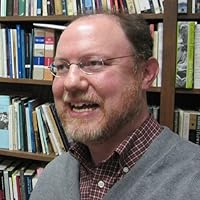
This selection, chosen by Andrew Motion himself from three decades of work, is an outstanding representation of the British poet’s varied body of work―elegies, sonnets, poems of social and political observation, and unsentimental poems about childhood, post-war England, the natural world.
About his poetry, Motion has “I want my writing to be as clear as water. No ornate language; very few obvious tricks. I want readers to be able to see all the way down through its surfaces into the swamp. I want them to feel they’re in a world they thought they knew, but which turns out to be stranger, more charged, more disturbed than they realized. In truth, creating this world is a more theatrical operation than the writing admits, and it’s this discretion about strong feeling, and strong feeling itself, which keeps drawing me back to the writers I most Wordsworth, Edward Thomas, Philip Larkin.”
A significant and consistent feature of Motion’s work, throughout his shifts in style and changes in imaginative topographies, is his signature clarity of observation, his unwillingness to sacrifice intelligibility or embrace opacity. “The best poems,” Motion has said, “are those which speak to us about the important things in our lives in a way that we never forget.”
Sir Andrew Motion, FRSL is an English poet, novelist and biographer, who presided as Poet Laureate of the United Kingdom from 1999 to 2009.
Motion was appointed Poet Laureate on 1 May 1999, following the death of Ted Hughes, the previous incumbent. The Nobel Prize-winning Northern Irish poet and translator Seamus Heaney had ruled himself out for the post. Breaking with the tradition of the laureate retaining the post for life, Motion stipulated that he would stay for only ten years. The yearly stipend of £200 was increased to £5,000 and he received the customary butt of sack.
He wanted to write "poems about things in the news, and commissions from people or organisations involved with ordinary life," rather than be seen a 'courtier'. So, he wrote "for the TUC about liberty, about homelessness for the Salvation Army, about bullying for ChildLine, about the foot and mouth outbreak for the Today programme, about the Paddington rail disaster, the 11 September attacks and Harry Patch for the BBC, and more recently about shell shock for the charity Combat Stress, and climate change for the song cycle I've finished for Cambridge University with Peter Maxwell Davies." In 2003, Motion wrote Regime change, a poem in protest at Invasion of Iraq from the point of view of Death walking the streets during the conflict, and in 2005, Spring Wedding in honour of the wedding of the Prince of Wales to Camilla Parker Bowles. Commissioned to write in the honour of 109 year old Harry Patch, the last surviving 'Tommy' to have fought in World War I, Motion composed a five part poem, read and received by Patch at the Bishop's Palace in Wells in 2008. As laureate, he also founded the Poetry Archive an on-line library of historic and contemporary recordings of poets reciting their own work.
Motion remarked that he found some of the duties attendant to the post of poet laureate difficult and onerous and that the appointment had been "very, very damaging to [his] work". The appointment of Motion met with criticism from some quarters. As he prepared to stand down from the job, Motion published an article in The Guardian which concluded, "To have had 10 years working as laureate has been remarkable. Sometimes it's been remarkably difficult, the laureate has to take a lot of flak, one way or another. More often it has been remarkably fulfilling. I'm glad I did it, and I'm glad I'm giving it up – especially since I mean to continue working for poetry." Motion spent his last day as Poet Laureate holding a creative writing class at his alma mater, Radley College, before giving a poetry reading and thanking Peter Way, the man who taught him English at Radley, for making him who he was. Carol Ann Duffy succeeded him as Poet Laureate on 1 May 2009.
Andrew Motion nació en 1952. Estudió en el University College de Oxford y empezó su carrera enseñando inglés en la Universidad de Hull. También ha sido director de Poetry Review, director editorial de Chatto & Windus, y Poeta Laureado; asimismo, fue cofundador del Poetry Archive, y en 2009 se le concedió el título de Sir por su obra literaria. En la actualidad es profesor de escritura creativa en el Royal Holloway, de la Universidad de Londres. Es miembro de la Royal Society of Literature y vive en Londres. Con un elenco de nobles marineros y crueles piratas, y llena de historias de amor y de valentía, Regreso a la isla del tesoro es una trepidante continuación de La isla del tesoro, escrita con extraordinaria autenticidad y fuerza imaginativa por uno de los grandes escritores ingleses actuales.
[DISCLOSURE: Sir Andrew Motion, the former Poet Laureate of Great Britain, has recently become a colleague of mine at The Johns Hopkins University. I am about to meet him for the first time today, and am writing this review as a way of getting my thoughts into order. So regard it as an appreciation rather than a critique—not that the two are likely to be much different.]
When I first bought this volume of new and collected poems, I bypassed the introduction by Langdon Hammer, and immediately read through two dozen of the poems themselves. Mostly short, mostly with rural settings, they are very easy to understand on the surface, yet so often have the air of hiding some private grief. Here, for example, is the first of them, A Dying Race:
I think of him driving south each night to the ward where you keep on living. I can remember the prairie-fields,
the derelict pill-boxes squatting in shining plow. If I was still there, watching his hand push back
the hair from your desperate face, I might have discovered by now the way love looks, its harrowing clarity.
As I would discover in poem after poem, Motion often delivers a chilling twist in the last lines. And so it is here; that extraordinary word "harrowing" was the first thing to strike me. And then, reading back up again, the "desperate face" so much at odds with the comforting gesture of a hand pushing back a loved one's hair. Fellow Brit as I am, I recognized the landscape of the setting, the flat plowed fields of damp eastern England with the WW2 pillboxes still standing decades after the conflict. Writing about it now, I notice further details: the way that "harrowing clarity," in another sense, is prepared by "shining plow," and the curious division into three three-line stanzas. Why, I wondered? It make the poem on the page resemble one of those English pastoral odes that fill The Oxford Book of English Verse, and in which tradition Motion is clearly writing. But these have nothing to do with rhyme, and the sense carries across each break. So perhaps they do the opposite: halt the southward journey to make it painful, emphasize the fact the the writer is not in fact present at the scene, split the image much as love is split by pain in the poem itself?
But what is this poem about? Clearly there is some personal tragedy here that is not explained; this is private grief made public, but its inner history still kept private. Normally I try to keep the facts of an author's life separate from his published work, which was why I skipped the introduction, but when I came back to read it, I found Langdon Hammer so acute in his analysis, and so helpful in relating it to Motion's family history, that there is very little I now can add. It seems that his mother was knocked unconscious in a riding accident when Motion was in his teens, and remained in a coma for nine years before she died. With that knowledge in my mind, suddenly about half the poems in the first half of this lovely collection came into perfect focus. Though almost always his treatment is oblique. For example, Serenade, about his mother's horse, begins in a trim, even jaunty manner:
There were the two ponies — and there was Serenade, which belonged To my mother. Though "who belonged" would be better, in view of the girlish head-lift
she had, and her flounce to and fro in the lumpy field, and that big womanish rump I always gave wide berth to.
He goes on to describe the visits of the farrier and his rides with his mother, until he comes to the accident. It takes a mere four lines, but what strikes me most is what follows after, the once-loved old horse quietly sidelined, the verse itself gradually losing its tautness, meandering on in shaggy, uneventful fashion:
This was Serenade, who would later throw my mother as they jumped out of a wood into sunlight, and who, taking all possible pains not to trample her down, or even touch her, was nevertheless the means to an end,
which was death. Now I am as old as my mother was then, at the time of her fall, and I can see Serenade clearly in her own later life, poor dumb creature nobody blamed, or could easily like any more either, which meant nobody
came to talk to her much in the spot she eventually found under the spiky may tree in the field, and still less came to shoe her, so her hooves grew long and crinkled round the edges like wet cardboard (except they were hard)
while she just stood there, not knowing what she had done, or went off with her girlish flounce and conker-coloured arse waiting for something important to happen, only nothing ever did, beyond the next day, and the next, and one thing leading to another.
The almost casual style with which this ends occurs more frequently in the new poems that make up the last half of this collection, although many are still written in the tight nugget stanzas of the pastoral tradition. There is a wonderful account in the form of a conversation, for example, of attending a poetry reading by a very old Robert Frost, completely unaware that his listeners were looking over his shoulder at a storm gathering behind him. The Mower, the title poem, is about his father, already terminally ill, moving their lawn with a Ransome motor mower. But none more moving than in Passing On when he repeats much the same technical trick as in the horse poem to describe his father's death, which took place when he and his brother were briefly out at a nearby pub:
Five minutes later we were back at the door to your room wondering whether to knock. Would everything we said be written on your face, like a white cross on the heavens?
Of course not. It was written in us, where no one could find it except ourselves. Your own face was wiped entirely clean — and so, with your particular worries solved, and your sadness, I could see more clearly than ever how like mine it was, and therefore how my head will eventually look on the pillow when the wall opens behind me and I depart with my failings.
I wish I could write about everything in this slim but copious book. I can't, but I do urge readers to find out for themselves.
Unlike previous British poets laureate, Andrew Motion had little reputation Stateside at the time of his appointment. Not that he’s exactly famous in the U.S. now: this book, published only last year (2009), at the end of his ten-year tenure, is his first to appear from an American publisher. But if Americans took Motion’s absence from their bookstores’ shelves as a sign that he wasn’t worth reading, this collection will quickly set them straight. Here are poems of subtly rendered deep feeling, of memorable scenes and characters—characters including his mother, who after a horseriding accident lingered for years in a coma, and his father, an often unexpressive and enigmatic World War II veteran. Langdon Hammer’s short, clear introduction is especially helpful to American readers encountering Motion’s work for the first time.
"In his new collection of poetry, Andrew Motion — poet laureate of England in 1999 — depicts an intriguing antithetical portrait of his parents. . . . The Mower vividly demonstrates Andrew Motion's illuminating discovery of his own voice and his gift of voice to both his father's generation and today's, a gift that renders this collection worthy of perusal." — World Literature Today
"Andrew Motion's poems are animated by qualities that have been harder and harder to find in the work of his contemporaries: clarity, intelligence, tenderness. Throughout The Mower is a resplendent mastery demonstrated by precision of observed detail and complex emotion. Here are poems that candle the world: experience is held up to the light of a passionate mind and revealed to be a secret order of pleasure and pain, amplitude and loss. He has plumbed both the private life and the historical record in a rare and enthralling way. American readers have a chance now, at last, to catch up with a career that has helped invigorate British poetry. It's not a chance anyone who knows how language can shape our lives will want to miss." — J.D. McClatchy
"Motion is a beautiful lyricist, unpretentiously and precisely describing those things worth having even as he casts unsettling shadows across them." — Robert Potts, Guardian
"The overriding impression is of poems able to be "surprised by joy" ... and to celebrate imaginative fecundity." — Carol Rumens, Independent
"Motion's greatest and most distinctive gift . . . is to look squarely at the world and describe it with a plain and unsentimental eloquence that makes worldly value seem all the more questionable." — Bernard O'Donoghue, Independent on Sunday