The poems in Brenda Hillman's new collection, a companion volume to her recent Death Tractates, offer a dynamic vision of a universe founded on the tensions between light and dark, existence and non-existence, male and female, spirit and matter. Informed in part by Gnostic concepts of the separate soul in search of its divine origins ("spirit held by matter"). This dualistic vision is cast in contemporary terms and seeks resolution of these tensions through acceptance.
Brenda Hillman (born March 27, 1951, in Tucson, Arizona) is an American poet and translator.
She is the author of ten collections of poetry: White Dress, Fortress, Death Tractates, Bright Existence, Loose Sugar, Cascadia, Pieces of Air in the Epic, Practical Water, for which she won the LA Times Book Award for Poetry, Seasonal Works with Letters on Fire, which received the 2014 Griffin Poetry Prize and the Northern California Book Award for Poetry, and Extra Hidden Life, among the Days, which was awarded the Northern California Book Award for Poetry. Among the awards Hillman has received are the 2012 Academy of American Poets Fellowship, the 2005 William Carlos Williams Prize for poetry, and Fellowships from the National Endowment for the Arts and the Guggenheim Foundation.
A professor of Creative Writing, she holds the Olivia Filippi Chair in Poetry at Saint Mary's College of California, in Moraga, California.
Hillman is also involved in non-violent activism as a member of the Code Pink Working Group in the San Francisco Bay Area. In 2016, she was elected a Chancellor of the Academy of American Poets.
HOT DAMN JESUS CHRIST ON TOAST this was an amazing volume of poetry.
In terms of concept, the book's a sleeper--it creeps up on you rather than bashing your head in and getting all monotonous. And I ordinarily don't really care much for the hallucinatory strolling nature pmz (here Robert Hass' influence is evident) but I don't even mind it all that much because it's a means to an end, a backdrop against which series of ideas and revelations unspool with this really gorgeous awkward sort of grace. The kind of grace that can only be achieved by embracing the awkard, the faltering.
Anyway, I mean just WOW. I am all spluttery and hand-wavy!
Brenda Hillman based this book of poetry on the Ghnostic world view. I did a little research online, but that did little to improve my understanding. Sure, the poems sound cool. Most of it was light-years over my head. I found two gems written on odd subjects that Hillman turns into something of great beauty. First is about Hillman as a mother, pulling live out of her daughter's hair. In the second poem, her lover has a pubic hair stuck on his tongue and "gives it back" through a kiss. Yes, live and pubic hair as objects of wonder. That's the power of good poetry.
Definitely ambitious. You've got to be in the mood for deep-thinking for this one. But it's good. Not the type of poetry I usually gravitate toward, but beautifully and artfully written, and worth the read.
Once it seemed the function of poetry was to redeem our lives. But it was not. It was to become indistinguishable from them.
This is the last stanza from “Old Ice”
I love these lines from a great poem in a great book by a great poet. She’s also a wonderful writing teacher. Brenda often speaks of the value of the line. It’s shifted my thinking. I’m regularly focused on the whole of a poem when writing. I’m after an overall story or experience or effect and lose sight of the line. One should not lose sight of the line. In this book, each poem has stand out lines. Reading it, one feels our lives could indeed be indistinguishable from poetry.
There is not much here that I enjoy. The writing is thematically bland and vague in the specifics; where a sense of clarity occasionally emerges, it usually manifests in the realm of the tired and cliche. I was really hoping to enjoy this one as it is supposed to be the companion volume to Death Tractaces, which I loved, but I've read just over half of the work and still am finding myself having to work hard to enjoy it. I will probably pick this one up again at some point in the future, but, for now, I have lost interest.
if anything, this book has made me more comfortable with ambiguity.
i like how brenda is able to switch between very intense, personal sketches (the poem about the lice stands out), to broad philosophical ruminations (all that stuff about gnosticism and her shadow). it shows that she is able to write in a straightforward manner, and that she is intentional in employing ambiguity.
i probably read this book cover-to-cover at once or twice a year, and return to individual poems even more often. i don't know if i'll ever understand it fully. it might behoove me to study some gnostic texts. but the amazing thing about this book is how much i do get it, even when i have no idea what she's talking about or why there are two random commas at the beginning of a line of verse. there's an elemental conflict at work on every page. so i keep coming back to it.
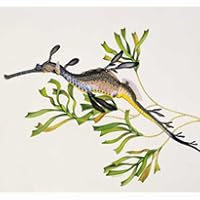
my only complaint: this book has the ugliest cover!!! why oh why. the only cover equal to it in ugliness is its companion book of poems (death tractates)... because it's the same illustration in a different color scheme.
--So you whispered to the soul Rise up! but the soul was not ready. --Get up! It's our turn! But that part of the soul stayed still. So you checked this list
of those who existed
but the soul was not on the list, the soul responded to none of those things. Very well, you said. He sank back in his furs. And you started across the plain to the one he loved--
I was interested to see what a poet would do with gnostic religious thought. I'm less interested now. I did enjoy some of the work, e.g., "...and I've been trying/ to love the missingness in the middle,/ the caves of wounded magic;...".