

What do you think?

Company / Ill Seen Ill Said / Worstward Ho / Stirrings Still
These four last prose fictions by Samuel Beckett were originally published individually, and their composition spanned the final decade of his life. In Company a solitary hearer lying in blackness calls up images from the far-off past. Ill Seen Ill Said meditates upon an old woman living out her last days alone in an isolated snow-bound cottage, watched over by twelve mysterious sentinels. In Worstward Ho, a breathless speaker unravels the sense of things, acting out the unending injunction to ‘Try again. Fail again. Fail better.’ And Stirrings Still, published in the Guardian a few months before Beckett’s death in 1989, is the last prose work and testament of ‘this great soothsayer of the age, and of the aged’ (Christopher Ricks).
The present edition includes several short prose texts (Heard in the Dark I & II, One Evening, The Way, Ceiling) which represent work in progress or works ancillary to the composition of these late masterpieces.
Edited by Dirk Van Hulle.
The present edition includes several short prose texts (Heard in the Dark I & II, One Evening, The Way, Ceiling) which represent work in progress or works ancillary to the composition of these late masterpieces.
Edited by Dirk Van Hulle.
176 pages, Paperback
First published January 1, 1981
About the author
Samuel Beckett
970 books6,830 followersNovels of Samuel Barclay Beckett, Irish writer, include
Murphy
in 1938 and
Malone Dies
in 1951; a wider audience know his absurdist plays, such as
Waiting for Godot
in 1952 and
Krapp's Last Tape
in 1959, and he won the Nobel Prize of 1969 for literature.
Samuel Barclay Beckett, an avant-garde theater director and poet, lived in France for most of his adult life. He used English and French. His work offers a bleak, tragicomic outlook on human nature, often coupled with black gallows humor.
People regard most influence of Samuel Barclay Beckett of the 20th century. James Augustine Aloysius Joyce strongly influenced him, whom people consider as one modernist. People sometimes consider him as an inspiration to many later first postmodernists. He is one of the key in what Martin Esslin called the "theater of the absurd". His later career worked with increasing minimalism.
People awarded Samuel Barclay Beckett "for his writing, which—in new forms for the novel and drama—in the destitution of modern man acquires its elevation".
In 1984, people elected Samuel Barclay Bennett as Saoi of Aosdána.
Samuel Barclay Beckett, an avant-garde theater director and poet, lived in France for most of his adult life. He used English and French. His work offers a bleak, tragicomic outlook on human nature, often coupled with black gallows humor.
People regard most influence of Samuel Barclay Beckett of the 20th century. James Augustine Aloysius Joyce strongly influenced him, whom people consider as one modernist. People sometimes consider him as an inspiration to many later first postmodernists. He is one of the key in what Martin Esslin called the "theater of the absurd". His later career worked with increasing minimalism.
People awarded Samuel Barclay Beckett "for his writing, which—in new forms for the novel and drama—in the destitution of modern man acquires its elevation".
In 1984, people elected Samuel Barclay Bennett as Saoi of Aosdána.
Ratings & Reviews
Friends & Following
Create a free account to discover what your friends think of this book!
Community Reviews
Displaying 1 - 30 of 32 reviews

March 2, 2025
Even a voice can be a company…
Nothing but a voice… Fragments… Life reduced to solipsism…
Everything that is seen is ill seen… Everything that is said is ill said…
Just wait for the worst… The worst never fails…
“…and the grasshopper shall be a burden, and desire shall fail: because man goeth to his long home…”
To one on his back in the dark a voice tells of a past. With occasional allusion to a present and more rarely to a future as for example, You will end as you now are.
Nothing but a voice… Fragments… Life reduced to solipsism…
Everything that is seen is ill seen… Everything that is said is ill said…
If only she could be pure figment. Unalloyed. This old so dying woman. So dead. In the madhouse of the skull and nowhere else. Where no more precautions to be taken. No precautions possible.
Just wait for the worst… The worst never fails…
The sun disappears at last and with it all shadow. All shadow here. Slow fade of afterglow. Night without moon or stars. All that seems to hang together.
“…and the grasshopper shall be a burden, and desire shall fail: because man goeth to his long home…”

Read
February 14, 2025Some thoughts on Ill Seen Ill Said before they fade…
How to explain the effect of this text.
I saw it in figments light against dark.
Venus in her seasons of rising and setting.
A dark compass needle turning on a clock face
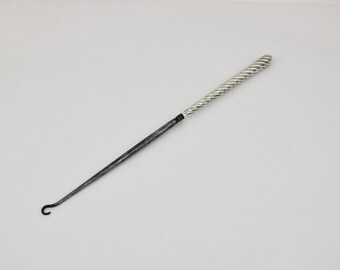
A silver buttonhook hanging from a dark nail
An old black greatcoat laid on a white bed
A woman walking west while her shadow walks east
Her face a moon in a frame of black lace
Twelve standing stones in the light of an evening
A wreath of crocus in a place of skulls.
Death and resurrection again and forever.
Thirty-three pages where nothing is clear.
Not a thing clear yet my mind never wandered.
My attention was hooked by each short sentence.
Many sentences read many times over.
First as seen. Then as said.
Because that's the thing with this text.
If you don't say it, you can't see it.
A comma slipped in despite my efforts.
There are no commas in this figment of Beckett's imagination.
But in a figment of my own devising
I see him extracting the commas with a silver buttonhook.
Now it's your turn to see and to say.
"Incontinent the void. The zenith. Evening again. When not night it will be evening. Death again of deathless day. On the one hand embers. On the other ashes. Day without end won and lost. Unseen."
"In contemplation of this erosion the eye finds solace. Everywhere stone is gaining. Whiteness. More and more every year. As well say every instant. Everywhere every instant whiteness is gaining."
"Weary of the inanimate the eye in her absence falls back on the twelve. Out of her sight as she of theirs. Alone turn where she may she keeps her eyes fixed on the ground. On the way at her feet where it has come to a stop. Winter evening."
"Back after many winters. Long after in this endless winter. This endless heart of winter. Too soon. She as when fled. Where as when fled. Still or again. Eyes closed in the dark. To the dark. In their own dark. On the lips same minute smile. If smile is what it is. In short alive as she alone knows how neither more nor less."
"Wooed from below the face consents at last. In the dim light reflected by the flag. Calm slab worn and polished by age long comings and goings. Livid pallor. Not a wrinkle. How serene it seems this ancient mask. Worthy those worn by certain newly dead. True the light leaves to be desired. The lids occult the longed-for eyes. Time will tell them washen blue. Where tears perhaps not for nothing. Unimaginable tears of old..."
Enough said?
………………
My initial thoughts on Company have faded now but suffice to say there was precision and punch in each blow-to-the-sternum sentence, and there was much walking fro and to, and many stones along the way, and greatcoats lying on their backs in the dark, and memories of those gone, and a single narrator wishing to be double, a "devised deviser devising it all for company", and one sad hedgehog turned on its back, and no commas in sight.
………………
On to Worstward Ho...
How to explain the effect of this text.
I saw it in figments light against dark.
Venus in her seasons of rising and setting.
A dark compass needle turning on a clock face
A silver buttonhook hanging from a dark nail
An old black greatcoat laid on a white bed
A woman walking west while her shadow walks east
Her face a moon in a frame of black lace
Twelve standing stones in the light of an evening
A wreath of crocus in a place of skulls.
Death and resurrection again and forever.
Thirty-three pages where nothing is clear.
Not a thing clear yet my mind never wandered.
My attention was hooked by each short sentence.
Many sentences read many times over.
First as seen. Then as said.
Because that's the thing with this text.
If you don't say it, you can't see it.
A comma slipped in despite my efforts.
There are no commas in this figment of Beckett's imagination.
But in a figment of my own devising
I see him extracting the commas with a silver buttonhook.
Now it's your turn to see and to say.
"Incontinent the void. The zenith. Evening again. When not night it will be evening. Death again of deathless day. On the one hand embers. On the other ashes. Day without end won and lost. Unseen."
"In contemplation of this erosion the eye finds solace. Everywhere stone is gaining. Whiteness. More and more every year. As well say every instant. Everywhere every instant whiteness is gaining."
"Weary of the inanimate the eye in her absence falls back on the twelve. Out of her sight as she of theirs. Alone turn where she may she keeps her eyes fixed on the ground. On the way at her feet where it has come to a stop. Winter evening."
"Back after many winters. Long after in this endless winter. This endless heart of winter. Too soon. She as when fled. Where as when fled. Still or again. Eyes closed in the dark. To the dark. In their own dark. On the lips same minute smile. If smile is what it is. In short alive as she alone knows how neither more nor less."
"Wooed from below the face consents at last. In the dim light reflected by the flag. Calm slab worn and polished by age long comings and goings. Livid pallor. Not a wrinkle. How serene it seems this ancient mask. Worthy those worn by certain newly dead. True the light leaves to be desired. The lids occult the longed-for eyes. Time will tell them washen blue. Where tears perhaps not for nothing. Unimaginable tears of old..."
Enough said?
………………
My initial thoughts on Company have faded now but suffice to say there was precision and punch in each blow-to-the-sternum sentence, and there was much walking fro and to, and many stones along the way, and greatcoats lying on their backs in the dark, and memories of those gone, and a single narrator wishing to be double, a "devised deviser devising it all for company", and one sad hedgehog turned on its back, and no commas in sight.
………………
On to Worstward Ho...

October 26, 2022
You were once. You were never. Were you ever? Oh never to have been! Be again.
Challenging but worthwhile, this book is a collection of Beckett’s last works.
Better hope deferred than none. Up to a point. Till the heart starts to sicken. Company too up to a point. Better a sick heart than none. Till it starts to break.
In a terse and simple language and telegraphic short sentences, Beckett conveys the existential dilemma of the modern man and his futility, frustration, dissolution and collapse.
Head on hands half hoping when he disappeared again that he would not reappear again and half fearing that he would not. Or merely wondering. Or merely waiting. Waiting to see if he would or would not. Leave him or not alone again waiting for nothing again.
December 20, 2024
I’ve written my thoughts about the first three of the works included here under this edition : Nohow On: Company, Ill Seen Ill Said, Worstward Ho.

February 26, 2019
Senryu Review:
The maddening sound
of hermetic poetics
in tender revolt
The maddening sound
of hermetic poetics
in tender revolt
August 27, 2018
Beckett is among the most inaccessible writers of the 20th century, and this, a collection of his last works written during the final decade of his life, are among the most inaccessible things he ever wrote. The collection is obsessed with the words, but not just the meanings of words; but rather the ability to even find words. Even the wrong words, any words, the words simply are not there. The final words of the book are the final words Beckett ever published; "What is the word." It seems this inability to find words made up a late obsession for Beckett, and it finds profound expression in these writings.
The stories are also heavy on solipsism - the idea that a person cannot know anything other than that they exist. "Company" features more than 40 pages of a voice speaking to a man lying on his back in a dark space. "Ill Seen Ill Said" features a woman in a cabin thinking randomly to herself as she nears death. "Worstword Ho" is the ramblings of a man nearing a "dim void," where things can only get worse. "Stirring Still" features a man, alone, searching for a word, but he cannot hear it because it is too faint. "One Evening" features a man, lying still on the ground, unable to move, before he is stumbled upon by an old woman looking for flowers for her husbands grave.
You get the idea. These people are immobile, aware of themselves and little else, reaching towards the dark. John Banville wrote that these stories express the world's anguish, and if people are willing to do the hard work to read these stories well, I think that's what they'll see, but these stories are not easy to read. The payoff is incredible.
The stories are also heavy on solipsism - the idea that a person cannot know anything other than that they exist. "Company" features more than 40 pages of a voice speaking to a man lying on his back in a dark space. "Ill Seen Ill Said" features a woman in a cabin thinking randomly to herself as she nears death. "Worstword Ho" is the ramblings of a man nearing a "dim void," where things can only get worse. "Stirring Still" features a man, alone, searching for a word, but he cannot hear it because it is too faint. "One Evening" features a man, lying still on the ground, unable to move, before he is stumbled upon by an old woman looking for flowers for her husbands grave.
You get the idea. These people are immobile, aware of themselves and little else, reaching towards the dark. John Banville wrote that these stories express the world's anguish, and if people are willing to do the hard work to read these stories well, I think that's what they'll see, but these stories are not easy to read. The payoff is incredible.

July 7, 2020
Ever tried. Ever failed. No matter. Try again. Fail again. Fail better.
Yay! Because even though you fail, you improve! Each failure improves you and thus you should never give and keep going!
It sounds suspiciously upbeat for Beckett, and suspicious you should be. Worstward Ho is set of variations on idea that the worst can't be expressed, since every time worst is said, even worse (worser!) can be imagined. Worstward Ho seeks the worst on its way to inexistence. Ultimately, as in The Unnamable, the text seeks non-existence, but can't help itself but exist. With each fail it "fails better" and that's terror because all it wants is to fail, just to fail, in worst way imaginable. It can't even do that. "What is the wrong word?" Can't find it.
These Beckett's texts all seek inexistence in way that's hard to comprehend. There's a bit of Buddhism and French Existentialism, but it's no longer implied that the issue really is that life is suffering. Rather, the brutest facts of consciousness - impossibility of being consciously unconscious - and of being are considered absolutely horrifying. The problem is... frankly, I don't know what the problem actually is. It's like that Beckett is the only person in the word truly and adequately horrified by that question which Heidegger calls the fundamental question of metaphysics: "Why is there something rather than nothing?" Indeed, nothing would be joy, why isn't there nothing at all?
I don't know, maybe the necessary failure of late Joyce's totalism - ambition to express everything - is converted in work of one of his faithful followers into ambition to express nothing. But since nothing must be expressed, too, it's necessarily elusive. It's failure by definition.
Anyway, maybe it's good things take on life of their own. The dread of not being able even to fail properly is taken up and ends as slogan on motivational posters for managers. It helps them to overcome the hardships, it reminds them that they improve with each failure. It helps us to go on. Motivated by this ridiculously disinterpreted excerpt, we move on and on, reenacting through utter meaninglessness of our existence the truths tht Beckett failed to capture. It's macabre sight. And yet, only outside literature - in praxis - one can firmly head for the worst.
Yay! Because even though you fail, you improve! Each failure improves you and thus you should never give and keep going!
It sounds suspiciously upbeat for Beckett, and suspicious you should be. Worstward Ho is set of variations on idea that the worst can't be expressed, since every time worst is said, even worse (worser!) can be imagined. Worstward Ho seeks the worst on its way to inexistence. Ultimately, as in The Unnamable, the text seeks non-existence, but can't help itself but exist. With each fail it "fails better" and that's terror because all it wants is to fail, just to fail, in worst way imaginable. It can't even do that. "What is the wrong word?" Can't find it.
These Beckett's texts all seek inexistence in way that's hard to comprehend. There's a bit of Buddhism and French Existentialism, but it's no longer implied that the issue really is that life is suffering. Rather, the brutest facts of consciousness - impossibility of being consciously unconscious - and of being are considered absolutely horrifying. The problem is... frankly, I don't know what the problem actually is. It's like that Beckett is the only person in the word truly and adequately horrified by that question which Heidegger calls the fundamental question of metaphysics: "Why is there something rather than nothing?" Indeed, nothing would be joy, why isn't there nothing at all?
I don't know, maybe the necessary failure of late Joyce's totalism - ambition to express everything - is converted in work of one of his faithful followers into ambition to express nothing. But since nothing must be expressed, too, it's necessarily elusive. It's failure by definition.
Anyway, maybe it's good things take on life of their own. The dread of not being able even to fail properly is taken up and ends as slogan on motivational posters for managers. It helps them to overcome the hardships, it reminds them that they improve with each failure. It helps us to go on. Motivated by this ridiculously disinterpreted excerpt, we move on and on, reenacting through utter meaninglessness of our existence the truths tht Beckett failed to capture. It's macabre sight. And yet, only outside literature - in praxis - one can firmly head for the worst.

October 29, 2022
this book consists of short and shorter short fictional prose. beckett's writing deals with abstract prose about human condition on earth. he writes in limitless paradoxes possibly impossible and vice-versa. in his understanding, human existence is a burden of a meaningless life where the only meaning in that meaningless life is to go on living and suffering. it gives birth to horror where memory malfunctions without any sense of human cognition. his writing depicts that palpable horror that unsettles my mind frequently. but, it also makes me feel less alone realising that someone far more intelligent than me has also felt this. he always tells about (in)human will to live. it's all so human, but he sees no hope in it. this book is no exception in that.
August 4, 2022
There are passages in here that I've dreamed of writing myself. Like the memory of young love told through awkward, runic prose, as though it were being remembered by some peat bog cadaver in the cold light of two-thousand years later,
But other pieces were lacklustre. They felt like the aftershocks of the 'Trilogy' - the same thematic concerns were there, but lacking that intricate, imaginative, and even rage-filled energy that made the earlier works so dazzling and disorienting. The very last entry too, 'What Is The Word', spills into the realm of the 'senseless' which Beckett's earlier work did so well to avoid. Where before he maintained perfect tension between the meaninglessness of life and language's power to express it, here we get little more than a tiresome display of Beckett's self-referential syntax pushed to its limit. Overall, a somewhat disappointing collection, but it has its moments.
You are on your back at the foot of an aspen. In its trembling shade. She at right angles propped on her elbows head between her hands. Your eyes opened and closed have looked in hers looking in yours. In your dark you look in them again. Still. You feel on your face the fringe of her long black hair stirring in the still air. Within the tent of hair your faces are hidden from view. She murmurs, Listen to the leaves. Eyes in each other's eyes you listen to the leaves. In their trembling shade.
But other pieces were lacklustre. They felt like the aftershocks of the 'Trilogy' - the same thematic concerns were there, but lacking that intricate, imaginative, and even rage-filled energy that made the earlier works so dazzling and disorienting. The very last entry too, 'What Is The Word', spills into the realm of the 'senseless' which Beckett's earlier work did so well to avoid. Where before he maintained perfect tension between the meaninglessness of life and language's power to express it, here we get little more than a tiresome display of Beckett's self-referential syntax pushed to its limit. Overall, a somewhat disappointing collection, but it has its moments.

April 2, 2018
of all the authors i have read, i find Beckett to be the most challenging by far... in much the same way as reading textbooks and scholarly works (meaning books meant to teach first and foremost and not to entertain or take one's mind off the day or transport you to another world/time/perspective), reading Beckett forces you to pay full attention to every single word... you can't skim Beckett, or if you do, then you are not reading Beckett at all, for by skipping or eliding or jumping ahead you miss the point... the words, the cadences, the repetitions, the minimalism, the circularity, the now-ness... Beckett demands your attention and immersion, or maybe he just expects it... why else read? why words? why? i won't get into reviewing each specific text in any Beckett book as i find that defeatist, or maybe beyond my ken... often its merely words on the page given meaning by how the reader interprets/intuits/internalizes them... i say Beckett is unequaled, unmatched, unsurpassed, but that is but one opinion... still, i say read him, often, and again...

June 27, 2022
I was inspired to read this after Lawrence Shainberg's writings about the influence of Samuel Beckett in his life and pursuit of Zen. Reading it has the same effect on me as Gertrude Stein. It does a very specific thing to my brain that I'm only maybe 10% conscious of. I really enjoy reading it, but it definitely requires a certain amount of faith and abandon on the part of the reader, and an understanding up front that it won't make logical sense/might drive you a little nuts. Not for everyone, but I found these to be lovely and strange, especially Stirrings Still and the shorter pieces collected at the end.
June 6, 2023
For some heroin is heroin, for me - it's Beckett's prose. It kicks me and if I read it too fast or too much it kills me. This book is even more potent. More in a way of less. That's meremost Fentanil. Some stupid cops died when found a stash of the text, which was not sealed properly.
The book is his last words to the world. He was dying and he saw the world is dying with him. I'm dying too as the world continues its own dying without me.
If read too much - I'm going into a "best bad worse of all" mood and crying. I take it slow. I read it to misread. I unknow better now. The voices of the dead or never alive are talking. Gently gently. Now they are gone. Sudden back returned and on, when I write this. The ghosts that are always and never. Now they are here back again. A man, whose body is found by a lady in all black, another one, who's laying deep in the ground and hearing voices, a lady trapped in her body, skull, her house. These ones I know and still remember. The others were never named or existed. Dim figures. Nothing and everything together doing their last dance.
If read in rations - it's healing like a prayer. I read Worstward Ho nightly over and over. On. Somehow on.
That's all waste above. I only want to propose banning all reviews on Beckett for good. One must read him.
The book is his last words to the world. He was dying and he saw the world is dying with him. I'm dying too as the world continues its own dying without me.
If read too much - I'm going into a "best bad worse of all" mood and crying. I take it slow. I read it to misread. I unknow better now. The voices of the dead or never alive are talking. Gently gently. Now they are gone. Sudden back returned and on, when I write this. The ghosts that are always and never. Now they are here back again. A man, whose body is found by a lady in all black, another one, who's laying deep in the ground and hearing voices, a lady trapped in her body, skull, her house. These ones I know and still remember. The others were never named or existed. Dim figures. Nothing and everything together doing their last dance.
If read in rations - it's healing like a prayer. I read Worstward Ho nightly over and over. On. Somehow on.
That's all waste above. I only want to propose banning all reviews on Beckett for good. One must read him.

Read
July 9, 2025You are on your back in the dark.
Devised deviser devising it all for company.
From where she lies she sees the Venus rise.
Down on her knees especially she finds it hard not to remain so forever.
Quick then still under the spell of Venus quick to the other window to see the other marvel rise.
But when the stone draws then to her feet the prayer, Take her.
This old so dying woman.
As on her way back with empty hands.
In the kindly dark.
The one way back was on and on was always back.
All of old. Nothing else ever.
With care never worse failed.
Seat of all. Germ of all.
No future in this. Alas yes.
See for be seen. Misseen. From now see for be misseen.
Free empty hands. Hold the old holding hand. Joined by held holding hands.
Anyhow on. With worsening words.
Somehow nohow on.
Nothing and yet a woman. Old and yet old. On unseen knees.
Devised deviser devising it all for company.
From where she lies she sees the Venus rise.
Down on her knees especially she finds it hard not to remain so forever.
Quick then still under the spell of Venus quick to the other window to see the other marvel rise.
But when the stone draws then to her feet the prayer, Take her.
This old so dying woman.
As on her way back with empty hands.
In the kindly dark.
The one way back was on and on was always back.
All of old. Nothing else ever.
With care never worse failed.
Seat of all. Germ of all.
No future in this. Alas yes.
See for be seen. Misseen. From now see for be misseen.
Free empty hands. Hold the old holding hand. Joined by held holding hands.
Anyhow on. With worsening words.
Somehow nohow on.
Nothing and yet a woman. Old and yet old. On unseen knees.
October 20, 2024
Pozdní texty, které psal Beckett v posledních letech života, jeho stylistické hraní se zde dostává do maximálních otáček, jako kdyby se snažil roztahovat jazyk a zároveň ho smršťovat... experimentovat co nejvíc s minimalistickým sdělením, věty nejsou dlouhé, nebo komplikované, ale zato jejich obsah, který neobeznámeným bez kontextu mnoho neřekne, je těžko dešifrovatelný. Je to takové stylistické hraní, Beckett pro jeho největší fans, kteří si podobné věci užívají. Tohle je asi něco, k čemu se budu muset vrátit někdy později a přečíst to důkladněji.

May 19, 2026
The last short stories by the great Samuel Beckett.
All of them are meditations, where one understands that he can be free from the mind, accept the loneliness or just cope with it.
One must understand how one is functioning to have a chance to feel the nominal reality - a true gift to every single living organism.
"Ever tried. Ever failed. No matter. Try again. Fail again. Fail better." (Worstward Ho)
I love ya Sam. I really do. I miss Molloy.
All of them are meditations, where one understands that he can be free from the mind, accept the loneliness or just cope with it.
One must understand how one is functioning to have a chance to feel the nominal reality - a true gift to every single living organism.
"Ever tried. Ever failed. No matter. Try again. Fail again. Fail better." (Worstward Ho)
I love ya Sam. I really do. I miss Molloy.
June 1, 2019
Absolutely stunning—no, what is the word—
*Worth noting that this edition, in my opinion, is preferable to Nohow On (Grove), as it includes “Stirrings Still” and six additional short pieces, all of which I personally find crucial, inseparable from, and beautifully consonant with the three novels.
*Worth noting that this edition, in my opinion, is preferable to Nohow On (Grove), as it includes “Stirrings Still” and six additional short pieces, all of which I personally find crucial, inseparable from, and beautifully consonant with the three novels.

October 3, 2017
"Tentare di nuovo. Fallire di nuovo. Fallire meglio." (Peggio tutta, p. 66)
"Desiderando che tutto vada. [...] Il desiderare vada. Vada il vano desiderare che il vano desiderare vada." (ivi, p. 81)
"Desiderando che tutto vada. [...] Il desiderare vada. Vada il vano desiderare che il vano desiderare vada." (ivi, p. 81)

May 12, 2018
Con Beckett non regge (e non voglio avere) alcuna obiettività.

November 2, 2020
Alienazione dell'Io.
December 7, 2020
Company: ⭐⭐⭐
Read
October 10, 2021“Ill Seen Ill Said” is particularly enthralling.

October 18, 2022
"All of old. Nothing else ever. Ever tried. Ever failed. No matter. Try again. Fail again. Fail better.”
February 10, 2024
"Then all as before again. So again and again. And patience till the one true end to time and grief and self and second self his own."
May 13, 2024
Stirrings Still is the only worthwhile thing here
September 19, 2025
Beckett really loves referencing his own works

Read
August 19, 2013'Where then but there see now another. Bit by bit an old man and child. In the dim void bit by bit an old man and child. Any other would do as ill.
Hand in hand with equal plod they go. In the free hands - no. Free empty hands. Backs turned both bowed with equal plod they go. The child hand raised to reach the holding hand. Hold the old holding hand. Hold and be held. Plod on and never recede. Slowly with never a pause plod on and never recede. Backs turned. Both bowed. Joined by held holding hands. Plod on as one. One shade. Another shade.'
(84)
Hand in hand with equal plod they go. In the free hands - no. Free empty hands. Backs turned both bowed with equal plod they go. The child hand raised to reach the holding hand. Hold the old holding hand. Hold and be held. Plod on and never recede. Slowly with never a pause plod on and never recede. Backs turned. Both bowed. Joined by held holding hands. Plod on as one. One shade. Another shade.'
(84)
December 31, 2022
A final cry out against the darkness. Perfect end of year book, really.
Read this a few times now for my dissertation, and I think it might be my favourite bit of Beckett's prose. Strangely invigorating given its darkness, but then that's the characteristic of Beckett that seems to run through all his work.
Read this a few times now for my dissertation, and I think it might be my favourite bit of Beckett's prose. Strangely invigorating given its darkness, but then that's the characteristic of Beckett that seems to run through all his work.

June 24, 2023
Shorter poetic prose pieces written towards the end of Samuel Beckett's life. About the void, about seeking company, about being old and near the end, or maybe it is about fragmenting language, saying little, to say most. Very beautiful.

July 4, 2026
Hmm… not sure what to think of this collection of Beckett’s later works.
Company is worth buying the book for alone, but I found the rest to be a mixed bag. Some had moments of brilliance, others just seemed too opaque for me to come away with any feeling for.
Company is worth buying the book for alone, but I found the rest to be a mixed bag. Some had moments of brilliance, others just seemed too opaque for me to come away with any feeling for.
Displaying 1 - 30 of 32 reviews