

What do you think?
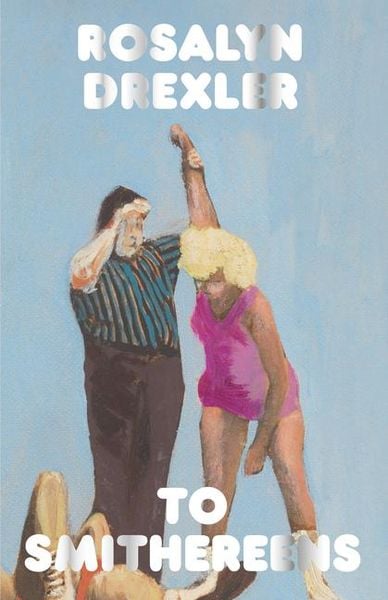
To Smithereens
When Rosa, a depressed and drifting twenty-something, meets Paul, a middling art critic, an off-kilter romance commences. Paul longs to be dominated by physically powerful women and convinces Rosa to fulfill one of his fantasies: that she become a wrestler. Soon, Rosa joins a women's wrestling team and embarks on a tour of the South, befriends her horny teammates and their jealous boyfriends, and learns to hold her own among a crew of seedy coaches and greedy promoters. Through wrestling, Rosa learns to articulate what kind of life she wants, and to wriggle free of Paul's attempts to possess her.
200 pages, Paperback
First published May 20, 2025
About the author
Rosalyn Drexler
22 books29 followersRosalyn Drexler, a painter, playwright, and novelist, has been on the scene in several arts for many years. She is well known in Soho art galleries, infamous off-Broadway, and highly regarded as a fiction writer.
Ratings & Reviews
Friends & Following
Create a free account to discover what your friends think of this book!
Community Reviews
Displaying 1 - 30 of 90 reviews

Want to Read
July 21, 2025to smithereens gotta be one of the worst ways to get blown

May 18, 2013
Rosalyn D, pioneer of the “spandexual romp,” offers up a classic in the genre, alongside Manny’s favourite, Submissions of a Lady Wrestler. The heroine is a witty free-spirited street-girl sidelined into the sleazy denizen of amateur female wrestling by a dreamy arts columnist named Paul, and—as Drexler did in her youth—takes to the ring as Rosa Carlo, the Mexican Spitfire, fighting scary “bull dykes” and Sapphic freaks. The story, not lacking in street-smart fizz and erudite crackle, isn’t particularly well structured and despite strong and funny scenes, and literary-ish doodlings from the unexciting Paul, finds itself pinned to the mat and KO’ed in round four (i.e. p86 or thereabouts). Rambling comedic vignettes and throwaway dialogue, mixed with lazy or out-of-date jive-talk, fail to lift this book into the charming and outrageously clever female wrestling comedy classic it could have been. Ding and ding.

May 28, 2025
Funny and outlandish romance of sorts in NYC in the 70s. Definitely not like anything else getting published today. Felt a little bit like a thrown-together collage at times, mostly in the second half. Some really great sentences and dialogue, but in the end the characters and story won’t stick with me.

October 28, 2025
3.5 ⭐️— Book is weird. Goes between a man and woman, he’s a horny freak and she’s a fool. She gets into wrestling and he’s weird about it. Love the sapphic aspects ofc and love weird books but not the best writing style.

January 29, 2023
DNF - a third of the way in, I could not stand it anymore. Perhaps I just did not get it, but what a load of crap.

June 23, 2025
It's wild this hasn't been considered a classic since it came out in the 1970s. A perfect weird little book.
September 13, 2025
Totally hilarious. Early on a character refers to a shit stain in his underwear as "hard-edge expressionism". Drexler's writing is just SO FUN to read and I want more of it immediately.
January 18, 2026
an absolutely bizarre piece of literature, i ate it up
May 24, 2026
Boring and annoying. The premise teases you into thinking that it's going to say something revelatory about either the dynamic between men and women, strength vs passivity, or the distinction between high and low art. Unfortunately, Drexler is much more interested in madcap, predictable fumbling on the mat by her screechy protagonists. For however transgressive it might have been on release, the humor is stale and starting to reek in 2026.

July 8, 2025
entertaining but not memorable

September 5, 2025
Eh. Read like a Chris Krause knock off with a transatlantic accent and buying in even more to the nyc who’s who

February 4, 2026
3.5
Men are gross. Rosalyn Drexler did what any artist would, she capitalized on that. At first glance her characters are gritty, unhinged and perverted. As the story unfolds you see societal norms of the 1970s take shape and merge with the outcasts and weirdos of the art world. The women depicted in this story are deeply flawed yet not quite as disgusting as the men. Disgust is a powerful emotion for an artist to elicit and if that means you walk away hating this book, great. Drexler did her job. She created art.
Men are gross. Rosalyn Drexler did what any artist would, she capitalized on that. At first glance her characters are gritty, unhinged and perverted. As the story unfolds you see societal norms of the 1970s take shape and merge with the outcasts and weirdos of the art world. The women depicted in this story are deeply flawed yet not quite as disgusting as the men. Disgust is a powerful emotion for an artist to elicit and if that means you walk away hating this book, great. Drexler did her job. She created art.

December 8, 2025
So funny and so wacky and delightful, I think maybe everyone I know should read this? Reminded me a lot of the Holly Woodlawn movie they showed at the music box earlier this year, Scarecrow in a Garden of Cucumbers— just like a long string of unhinged cartoonish encounters with huge personalities, some of which involve women professionally wrestling.

February 7, 2026
Ugh I don’t know, maybe more of a 2 1/2 but it was a fun way to spend a few hours I suppose. I did not really come to understand the characters whatsoever which is the most frustrating part, because they were interesting and weird! Loved the scene of her first match in Florida though, felt like I was in the stands….so that brings it up to the 3

November 29, 2025
What is fine art missing? Wrestling!

Read
April 25, 2026not for me sorry

July 25, 2025
Absolutely wild ride

March 29, 2026
My recap of my experience with this book: a fun, vibey story about a woman who gets into professional wrestling at the behest of her art critic boyfriend. It’s a weird, pervy, arthouse NY in the 70s vibe. I feel like I’m missing 80% of the cultural context to truly enjoy this book.

July 3, 2026
hilariously good pomo that speaks to a lot of ~discourse of today surrounding bisexuals LMAO

February 5, 2026
A strange little book, reminded me of a literary version of R. Crumb …and then the book mentioned R. Crumb.
The author’s bio fascinated me most. Probably intended for people already familiar with her.
The author’s bio fascinated me most. Probably intended for people already familiar with her.

June 24, 2025
We take sex too seriously now
May 18, 2026
This book is a love story the way a street fight is a dance. It opens in New York with Rosa, a young woman built like trouble and wired like a live socket, and Paul, an art critic whose desires have gone to graduate school and come back feral.
They meet through an act that would normally end with a police report or a stern lecture from society, and instead it becomes the meet cute from hell. From there, the book sets up its central engine: two people who want each other intensely, for reasons that embarrass them, thrill them, and make them feel briefly alive in a city that mostly treats intimacy as a public nuisance.
What follows is a roaming campaign of obsession. Paul narrates with a voice that is anxious, self dissecting, horny, intellectual, and constantly on the verge of collapse. Rosa moves through the book like a physical fact rather than a metaphor, young, aggressive, affectionate, careless, and impossible to domesticate.
They circle each other through apartments, cafeterias, streets, trains, and cheap interiors, arguing about art, power, sex, control, money, age, and who gets to dominate whom today.
The plot advances by collisions. Every conversation feels like a wrestling match disguised as flirting, and every flirtation feels like a philosophical argument.
Underneath the sex and the jokes, the book is busy taking apart the fantasy of possession. It keeps asking whether desire is about love or about being annihilated by someone larger, louder, and less ashamed.
It is funny in the way embarrassment is funny when it happens to someone else, and bleak in the way self knowledge always is. Nothing here aims for comfort or moral hygiene. The story keeps escalating emotional and physical intensity without tipping its hand about where it all lands. The result is a novel that feels sweaty, smart, hostile, tender, and strangely sincere.
Parts of this bizarre work absolutely lean into pulp. Cheapness is part of the aesthetic, not an accident. Drexler borrows the velocity, shock tactics, and shamelessness of exploitation fiction and then drags it into a space where it starts talking back. The sex can feel blunt, repetitive, sometimes almost mechanical, as if it wandered in from a grindhouse paperback rack. But the pacing is razor sharp, and the alternating viewpoints do real structural work.
Paul and Rosa do not just narrate differently, they inhabit different moral climates. That tension keeps the book from collapsing into either parody or confession. The writing itself is often smarter than the material it pretends to be slumming in, which is exactly the trick.
A John Waters comparison comes to mind because Drexler uses taboo as provocation, as texture, and as a given. Dark theaters, domination fantasies, wrestling bodies, queer detours, all of it is presented with a mix of fascination and mockery.
The book is not trying to arouse so much as expose how arousal works, how power sneaks into desire, how people use sex to outsource their psychological messes.
Paul intellectualizes everything until it morphs into control. Rosa employs spontaneity and physicality until it starts looking like another trap. The novel keeps asking who is exploiting whom, and it never settles on a clean answer.
That cheapness you can't help but notice is also a dare. It asks whether readers only take bodies seriously when they are dressed up in respectable prose and tasteful misery.
Desire is not progressive just because it feels liberating. Power does not disappear because both people claim to want it. Art and theory do not purify obsession, they just give it better vocabulary.
The book also toys with something that still rattles people now: that women can be physically dominant, sexually aggressive, contradictory, selfish, tender, and ridiculous without turning into symbols. Rosa is not a lesson. She is a problem. That alone keeps the book from aging into a museum piece. It still feels abrasive. It is messy, funny, mean, and oddly affectionate toward human weakness. Which is why the pulp elements do not cancel its seriousness. They are the delivery system.
❤️ 🇮🇱
They meet through an act that would normally end with a police report or a stern lecture from society, and instead it becomes the meet cute from hell. From there, the book sets up its central engine: two people who want each other intensely, for reasons that embarrass them, thrill them, and make them feel briefly alive in a city that mostly treats intimacy as a public nuisance.
What follows is a roaming campaign of obsession. Paul narrates with a voice that is anxious, self dissecting, horny, intellectual, and constantly on the verge of collapse. Rosa moves through the book like a physical fact rather than a metaphor, young, aggressive, affectionate, careless, and impossible to domesticate.
They circle each other through apartments, cafeterias, streets, trains, and cheap interiors, arguing about art, power, sex, control, money, age, and who gets to dominate whom today.
The plot advances by collisions. Every conversation feels like a wrestling match disguised as flirting, and every flirtation feels like a philosophical argument.
Underneath the sex and the jokes, the book is busy taking apart the fantasy of possession. It keeps asking whether desire is about love or about being annihilated by someone larger, louder, and less ashamed.
It is funny in the way embarrassment is funny when it happens to someone else, and bleak in the way self knowledge always is. Nothing here aims for comfort or moral hygiene. The story keeps escalating emotional and physical intensity without tipping its hand about where it all lands. The result is a novel that feels sweaty, smart, hostile, tender, and strangely sincere.
Parts of this bizarre work absolutely lean into pulp. Cheapness is part of the aesthetic, not an accident. Drexler borrows the velocity, shock tactics, and shamelessness of exploitation fiction and then drags it into a space where it starts talking back. The sex can feel blunt, repetitive, sometimes almost mechanical, as if it wandered in from a grindhouse paperback rack. But the pacing is razor sharp, and the alternating viewpoints do real structural work.
Paul and Rosa do not just narrate differently, they inhabit different moral climates. That tension keeps the book from collapsing into either parody or confession. The writing itself is often smarter than the material it pretends to be slumming in, which is exactly the trick.
A John Waters comparison comes to mind because Drexler uses taboo as provocation, as texture, and as a given. Dark theaters, domination fantasies, wrestling bodies, queer detours, all of it is presented with a mix of fascination and mockery.
The book is not trying to arouse so much as expose how arousal works, how power sneaks into desire, how people use sex to outsource their psychological messes.
Paul intellectualizes everything until it morphs into control. Rosa employs spontaneity and physicality until it starts looking like another trap. The novel keeps asking who is exploiting whom, and it never settles on a clean answer.
That cheapness you can't help but notice is also a dare. It asks whether readers only take bodies seriously when they are dressed up in respectable prose and tasteful misery.
Desire is not progressive just because it feels liberating. Power does not disappear because both people claim to want it. Art and theory do not purify obsession, they just give it better vocabulary.
The book also toys with something that still rattles people now: that women can be physically dominant, sexually aggressive, contradictory, selfish, tender, and ridiculous without turning into symbols. Rosa is not a lesson. She is a problem. That alone keeps the book from aging into a museum piece. It still feels abrasive. It is messy, funny, mean, and oddly affectionate toward human weakness. Which is why the pulp elements do not cancel its seriousness. They are the delivery system.
❤️ 🇮🇱

Read
November 5, 2025vivid! Shoutout Avery for sending me this to read.
some lines I liked:
"I hated that pillow. I wanted to be his only pillow, but I was full of bones and resentment." (65)
“PAUL MADE ME SO NERVOUS. Even if I was just going around the corner to get a loaf of bread he’d kiss me and hold me in his arms, act as if I was going around the world and he might never see me again. It was that New York City apprehension that anything might happen the minute you step out the door” (69)
“’Just like in Vietnam,’ I said, before I could stop myself. I didn't really want to discuss politics with them.” (72)
“And I got the idea that for one week we would eat everything red: meat, apples, tomatoes, and cherries, and drink each other's blood.” (82)
“Gilda Richman dragged me into my room, kissed me on the mouth, sat me down on the bed and started talking. She lisped, which made her sound as if a tiny Gilda Richman inside the big Gilda Richman were speaking.” (87)
“Such simple needs and yet they must be arrived at intricately.” (135)
“Confusing? Damn right. Is he telling me that he is dead? Was he telling me that he was dead? I may be the victim of overthink.” (144)
“My hands wandered smoothly across a muslin landscape; I tried to follow the paths of many closely woven threads and got lost.” (178)
some lines I liked:
"I hated that pillow. I wanted to be his only pillow, but I was full of bones and resentment." (65)
“PAUL MADE ME SO NERVOUS. Even if I was just going around the corner to get a loaf of bread he’d kiss me and hold me in his arms, act as if I was going around the world and he might never see me again. It was that New York City apprehension that anything might happen the minute you step out the door” (69)
“’Just like in Vietnam,’ I said, before I could stop myself. I didn't really want to discuss politics with them.” (72)
“And I got the idea that for one week we would eat everything red: meat, apples, tomatoes, and cherries, and drink each other's blood.” (82)
“Gilda Richman dragged me into my room, kissed me on the mouth, sat me down on the bed and started talking. She lisped, which made her sound as if a tiny Gilda Richman inside the big Gilda Richman were speaking.” (87)
“Such simple needs and yet they must be arrived at intricately.” (135)
“Confusing? Damn right. Is he telling me that he is dead? Was he telling me that he was dead? I may be the victim of overthink.” (144)
“My hands wandered smoothly across a muslin landscape; I tried to follow the paths of many closely woven threads and got lost.” (178)
May 30, 2026
Easiest fiver ever. Hilarous, perverse, shining. Rosalyn Drexler is just amazing. Kind of predicts Sam Lipsyte. Gorgeous, delightful surprising sentences, thoughts, ideas. This world is awesome. These characters are funny and wonderful. You just love them.
Heartwarming, gross, and sexy. So sexy for some reason. Just so weird and not afraid to be honest and embarrassing. Honestly awesome. You can’t beat this. Reminds me of Elaine Kraf, and Stanley Elkin (who was an admirer).
Ive ran into her shit before in one of my lucky huge local book stores. Her first one, I Am The Beautiful Stranger. Was allured, not grabbed, and left it. Its gone now from that spot. Shit. Evil. Sucks. Need more.
She is part of a tradition of strange smart perverse women writing strange smart perverse books. Like Jen George. Who doesn’t love Jen George that has read Jen George? We need more of her too. I’ve heard Jane Bowles is similar. Need that.
Also has Jonathan Lethem read everything worth reading? He blurbs shit that i felt like i had to mine for 500 years to find.
Insane her other work isn’t being reprinted right now.
Heartwarming, gross, and sexy. So sexy for some reason. Just so weird and not afraid to be honest and embarrassing. Honestly awesome. You can’t beat this. Reminds me of Elaine Kraf, and Stanley Elkin (who was an admirer).
Ive ran into her shit before in one of my lucky huge local book stores. Her first one, I Am The Beautiful Stranger. Was allured, not grabbed, and left it. Its gone now from that spot. Shit. Evil. Sucks. Need more.
She is part of a tradition of strange smart perverse women writing strange smart perverse books. Like Jen George. Who doesn’t love Jen George that has read Jen George? We need more of her too. I’ve heard Jane Bowles is similar. Need that.
Also has Jonathan Lethem read everything worth reading? He blurbs shit that i felt like i had to mine for 500 years to find.
Insane her other work isn’t being reprinted right now.

June 25, 2026
The tone of this novel is so chatty and fun, you can hear the New York accents blare off the page. To Smithereens is a silly but heartfelt story about Rosa and Paul, who are sort of in love. Paul loves big strong women and convinces Rosas to become a professional wrestler. The novel was written in the early 70s and the writing is peppered with slang and pop culture of the time. Dexler herself was a wrestler and artist and she drips details of her life into the flimsy plot. The lack of real story is an issue but every now and then there is an observation or insight about the human condition that really elevates the book, beautiful passages about what it is to live with someone else or the connection between women.

July 5, 2025
Nearly every relationship, friendship, or chance meeting in this book is best described as varying degrees of problematic, but it makes for an entertaining and eye-opening read. A succession of strong female characters nicely oppose the cast of unlikable male characters. Had this been a work of fiction by a male writer it would leave a bad taste (and a star or two less in my rating) but the semi-autobiographical nature of the book adds a layer of intrigue and the female-gaze of the author gives even the more sordid scenes and passages some extra weight - especially as half the book is written from the POV of the male protagonist, Paul.
January 4, 2026
to smitherens is a re-release of an avant garde streetwise gritty funny novel. written be rosalyn drexler a key player in the art and literature movement in new york city in the 1980's, it follows the relationship between rosa rudinsky, a physically powerful single unemployed woman, and paul, a so-so art critic with quirks of his own. they meet in less than innocent circumstance in a movie theatre. this satricical escapade in the world of woman's wrestling takes off from there. the bluntly told story features everyday working people just trying to get by. it is a wild ride and a good time.

April 8, 2026
This book starts with raunchy bravado: A groper in a movie theater gets the girl. As this was written in 1972, you can picture the Times Square sleaze, Midnight Cowboy settings. Warhol in the background-- and cinema becomes the elliptical thread in the end. There's a wild bonkers edge to the book as Rosa lands in the female wrestling realm, as Drexler actually did. It's sociological with a great verve, an original voice. But the book loses steam towards the end, the characters strangely not particularly realistic, which is odd as there is a sociological, autobiographical edge. A fascinating rediscovery.
May 4, 2026
To Smithereens is a palimpsest of experiences that shaped Drexler into the cultural icon she has since become and continues to be.
It's a fun light-hearted book that doesn't take itself too seriously. It was refreshing! Following the story of Rosa is a page-turner, leaving me excited, curious and (sometimes) afraid to see where her adventures would take her next. I like to believe that's how Drexler navigated her career as well. The book doubles clearly as an allegory or metaphor of her own life.
I'd recommend To Smithereens as a fun read leaning into absurdity. It's a light, savory snack. It doesn't have lasting impact or endure to me, but I did enjoy the read.
It's a fun light-hearted book that doesn't take itself too seriously. It was refreshing! Following the story of Rosa is a page-turner, leaving me excited, curious and (sometimes) afraid to see where her adventures would take her next. I like to believe that's how Drexler navigated her career as well. The book doubles clearly as an allegory or metaphor of her own life.
I'd recommend To Smithereens as a fun read leaning into absurdity. It's a light, savory snack. It doesn't have lasting impact or endure to me, but I did enjoy the read.

June 29, 2026
“The animals in zoos do a lot of sleeping, I don’t blame them. There is nothing to be on alert about; they get their food and are protected from other beasts. This is what the middle-class aspires to: a state of custodial captivity in surroundings approximating a natural habitat. They like to be stared at and thrown a lot of extra garbage.”
I loved everything about this. The writing is so fucking clever. Some beautiful highlights here - I love reflections on the mundane!! I love female wrestling!
“I don’t believe anybody ever lived or died if I can’t see them. A cemetery is just a stone garden.”
I loved everything about this. The writing is so fucking clever. Some beautiful highlights here - I love reflections on the mundane!! I love female wrestling!
“I don’t believe anybody ever lived or died if I can’t see them. A cemetery is just a stone garden.”
Displaying 1 - 30 of 90 reviews