

What do you think?

Conjugal Love
To begin with I’d like to talk about my wife. To love means, in addition to many other things, to delight in gazing upon and observing the beloved.
--From Conjugal Love
When Silvio, a rich Italian dilettante, and his beautiful wife agree to move to the country and forgo sex so that he will have the energy to write a successful novel, something is bound to go Silvio’s literary ambitions are far too big for his second-rate talent, and his wife Leda is a passionate woman. This dangerously combustible situation is set off when Leda accuses Antonio, the local barber who comes every morning to shave Silvio, of trying to molest her. Silvio obstinately refuses to dismiss him, and the quarrel and its shattering consequences put the couple’s love to the test.
--From Conjugal Love
When Silvio, a rich Italian dilettante, and his beautiful wife agree to move to the country and forgo sex so that he will have the energy to write a successful novel, something is bound to go Silvio’s literary ambitions are far too big for his second-rate talent, and his wife Leda is a passionate woman. This dangerously combustible situation is set off when Leda accuses Antonio, the local barber who comes every morning to shave Silvio, of trying to molest her. Silvio obstinately refuses to dismiss him, and the quarrel and its shattering consequences put the couple’s love to the test.
142 pages, Paperback
First published January 1, 1943
About the author
Alberto Moravia
532 books1,286 followersAlberto Moravia, born Alberto Pincherle, was one of the leading Italian novelists of the twentieth century whose novels explore matters of modern sexuality, social alienation, and existentialism. He was also a journalist, playwright, essayist and film critic.
Moravia was an atheist, his writing was marked by its factual, cold, precise style, often depicting the malaise of the bourgeoisie, underpinned by high social and cultural awareness. Moravia believed that writers must, if they were to represent reality, assume a moral position, a clearly conceived political, social, and philosophical attitude, but also that, ultimately, "A writer survives in spite of his beliefs".
Moravia was an atheist, his writing was marked by its factual, cold, precise style, often depicting the malaise of the bourgeoisie, underpinned by high social and cultural awareness. Moravia believed that writers must, if they were to represent reality, assume a moral position, a clearly conceived political, social, and philosophical attitude, but also that, ultimately, "A writer survives in spite of his beliefs".
Ratings & Reviews
Friends & Following
Create a free account to discover what your friends think of this book!
Community Reviews
Displaying 1 - 30 of 112 reviews
December 26, 2025
My first Moravia. Good stuff. Review to come.

March 14, 2021
Conjugal Love by Alberto Moravia
An introduction by the translator tells us that the Italian author, Moravia, had two themes in almost all of his novels and stories: the moral apathy of the bourgeoisie and the crucial role of sexuality in human relations. And both are in evidence in this story. It's surprising to be, given that this book was written in 1943, there is hardly anything about the war or politics.
The main character, Silvio, is a rich Italian who doesn’t have to work for a living. He imagines himself a writer. He has a good marriage and a good sex life with his beautiful wife but he feels that sex saps his strength and creativity from writing. They agree to abstain for a couple of months while he finishes his novel. (He gets her to propose doing this). Is this a good idea?
To reduce distractions, they also move temporarily from their place on the Riviera to a villa in Tuscany in northern Italy. He was originally from Sicily and tells us that Tuscany is as far from Sicily (in a cultural sense) as you can get in Italy.
While they are abstaining, a crisis hits their marriage. Since they moved to small town, his wife has her husband’s male barber, the only barber in town, cut her hair at home. She tells her husband to dismiss the barber because the barber basically felt her up while setting her hair. He thinks she is exaggerating and refuses to dismiss him.
The main character has many problems and we imagine that some stem from his not knowing what to do with himself. (Riviera or Tuscany villa? Tuscany villa or Riviera?) He’s not writing because he is driven to do so; rather, it’s something to do. How will this book get rated on GR? LOL (But seriously, there is enough in the book about the process of writing that I shelved it on GR as a book about writing.)
He also tells us that he thinks of suicide every day and thinks of himself: “I, who was all boundless rationality…” He also tells us early on that “I have a strong, sincere face that is completely in contrast with my true personality, though it may partially explain some of my contradictions.”
We suspect that the no-sex experiment probably won’t work out, so the question becomes how bad will this be? Is that the barber knocking on the door again? It’s a short novel, about 120 pages and I enjoyed it.
The author (1907-1990) was a prolific writer - about two-dozen novels as well as plays and short stories. His two best-known works are probably A Time of Indifference and Contempt. Most have been translated into English and several are highly rated on GR (although not the one I am reviewing – that’s low, about 3.5). Several of his works have been made into movies.
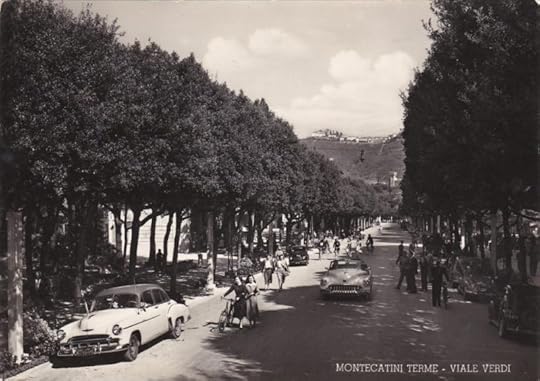
Postcard from Tuscany about the time of the story from hippostcard.com
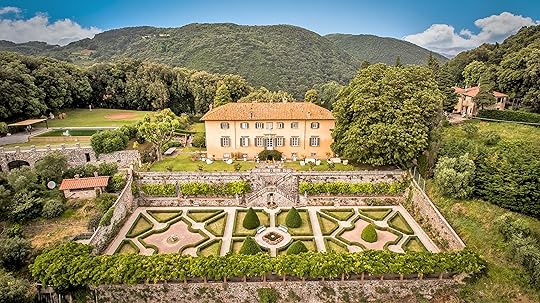
A villa in Tuscany (which can be yours for only $12 million) from gentlemansjournal.com
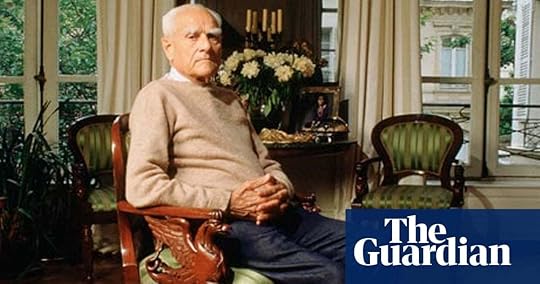
The author from theguardian.com
Edited for typos 2/19/25
An introduction by the translator tells us that the Italian author, Moravia, had two themes in almost all of his novels and stories: the moral apathy of the bourgeoisie and the crucial role of sexuality in human relations. And both are in evidence in this story. It's surprising to be, given that this book was written in 1943, there is hardly anything about the war or politics.
The main character, Silvio, is a rich Italian who doesn’t have to work for a living. He imagines himself a writer. He has a good marriage and a good sex life with his beautiful wife but he feels that sex saps his strength and creativity from writing. They agree to abstain for a couple of months while he finishes his novel. (He gets her to propose doing this). Is this a good idea?
To reduce distractions, they also move temporarily from their place on the Riviera to a villa in Tuscany in northern Italy. He was originally from Sicily and tells us that Tuscany is as far from Sicily (in a cultural sense) as you can get in Italy.
While they are abstaining, a crisis hits their marriage. Since they moved to small town, his wife has her husband’s male barber, the only barber in town, cut her hair at home. She tells her husband to dismiss the barber because the barber basically felt her up while setting her hair. He thinks she is exaggerating and refuses to dismiss him.
The main character has many problems and we imagine that some stem from his not knowing what to do with himself. (Riviera or Tuscany villa? Tuscany villa or Riviera?) He’s not writing because he is driven to do so; rather, it’s something to do. How will this book get rated on GR? LOL (But seriously, there is enough in the book about the process of writing that I shelved it on GR as a book about writing.)
He also tells us that he thinks of suicide every day and thinks of himself: “I, who was all boundless rationality…” He also tells us early on that “I have a strong, sincere face that is completely in contrast with my true personality, though it may partially explain some of my contradictions.”
We suspect that the no-sex experiment probably won’t work out, so the question becomes how bad will this be? Is that the barber knocking on the door again? It’s a short novel, about 120 pages and I enjoyed it.
The author (1907-1990) was a prolific writer - about two-dozen novels as well as plays and short stories. His two best-known works are probably A Time of Indifference and Contempt. Most have been translated into English and several are highly rated on GR (although not the one I am reviewing – that’s low, about 3.5). Several of his works have been made into movies.
Postcard from Tuscany about the time of the story from hippostcard.com
A villa in Tuscany (which can be yours for only $12 million) from gentlemansjournal.com
The author from theguardian.com
Edited for typos 2/19/25
May 5, 2020
Moravia was one of the great psychological penetrators of the mind in regards to love, sex, and marriage, both blissfully erotic, and imperiling. I've read quite a lot of his novels now, and he rarely lets me down. Here we get another married couple, similar to that of Contempt - the writer husband (Silvio) and his beautiful wife (Leda), who he fears of losing. Silvio narrates, and Moravia achieves a sly, intricate and convincing portrait of a man torn between the passion for his wife and the passion for his writing. The wealthy couple spend time at an isolated villa in the stunning Tuscan countryside, and she becomes his writing muse, but, for him to be able to complete the book he's working on, they agree to become chaste until the work is done, as sex seems to be taking all the energy away from him. He loves her dearly, and she loves him - then enter the barber, and notorious womanizer Antonio, who would stick a fork into their happy marriage. Silvio's inability to defend his wife's honor as the barber starts to make advances, let alone take her sexual desire for Antonio seriously, begins the unwinding of their love. The pace of this book is slow and requires patience, and is strongly built on doubt and Silvio reflecting on events, with there being some quite powerful and intense scenes towards the end. Conjugal Love is probably meant to be read as a parable, an intimate investigation into what lies at the heart of a marriage, and what drives our creativity. I wouldn't say it's one of fave Moravia novels, I can think of maybe four or five others I prefer, but I still thought it a very deep and emotional read.

July 26, 2026
De multe ori, tresărind surprins, mi s-a năzărit că romanul ăsta ar fi putut fi scris de S. Freud însuși. Alberto Moravia se dovedește un strălucit psiholog în tot ceea ce a compus, nelăsând nici un gest uman, nici o scăpare sau act ratat în afara observației sale - un mare cititor de oameni!
Într-un fel numai al său, autorul italian are capacitatea asta să provoace în orice cititor de-ai săi un sentiment sufocant al penibilului. Te simți luat în vizor, ți se pare că narațiunea e despre tine și te faci mic sub atâta luciditate crudă, pogorâtă asupra tuturor celor lumești din care, vrei-nu vrei, faci parte.
Foarte posibil să fi fost ăsta motivul pentru care unii cititori de pe GR să se fi grăbit să pună cartea la index ori să o noteze cu mai puține stele decât merită. E foarte dificil să citești despre cât de meschin ești, laolaltă cu întreaga omenire. În orice caz, Moravia nu mai moare de grija steluțelor de pe GR.
O carte desăvârșit scrisă ce te întoarce pe dos (o prea țâfnoasă cititoare, peste ale cărei “idei” care am dat recent pe FB, ar fi zis, probabil, că-i “desuetă”). Un thriller burghez, în care crima este ipocrizia, dar și imposibiltatea renunțării la confortul cotidian al mediocrității.
Într-un fel numai al său, autorul italian are capacitatea asta să provoace în orice cititor de-ai săi un sentiment sufocant al penibilului. Te simți luat în vizor, ți se pare că narațiunea e despre tine și te faci mic sub atâta luciditate crudă, pogorâtă asupra tuturor celor lumești din care, vrei-nu vrei, faci parte.
Foarte posibil să fi fost ăsta motivul pentru care unii cititori de pe GR să se fi grăbit să pună cartea la index ori să o noteze cu mai puține stele decât merită. E foarte dificil să citești despre cât de meschin ești, laolaltă cu întreaga omenire. În orice caz, Moravia nu mai moare de grija steluțelor de pe GR.
O carte desăvârșit scrisă ce te întoarce pe dos (o prea țâfnoasă cititoare, peste ale cărei “idei” care am dat recent pe FB, ar fi zis, probabil, că-i “desuetă”). Un thriller burghez, în care crima este ipocrizia, dar și imposibiltatea renunțării la confortul cotidian al mediocrității.

July 10, 2014
What to say about this book?
One can not say much without saying the plot. And that is not a disadvantage. For, the blurb of the book already reveals the plot. The difference or the specialty of the book lies in in its narration filled with deep penetrating insights into sexuality, conjugal love, social/moral conventions vs instinct, writing, and the act of writing a novel and a critical review of any novel.
The Plot:
It is about a married couple (Silvio and Leda) and about the love between the spouses - CONJUGAL LOVEL. Silvio is an aspiring writer and is obsessed with an impossible aim of becoming a great writer. Leda is a simple woman who loves her husband truly. And then comes the temptation in the form of Antonio, the barber of Silvio.
At the end, Conjugal Love triumphs. Why?
Here is the definition for conjugal love given by Alberto Moravia:
Finally:
The review till now expressed has given only one angle of the story. There are other angles. For instance, if you are a writer you will find many interesting observations on your own life. Silvio, when writing a novel undergoes so many tough periods and the final product and the way he cherishes the moment is very much autobiographical. Thus, a reader gets a glimpse into the making of a book by an author and an author might find a companion. And an aspiring author might get encouragement in moments of despair. A special mention: Chapter 14 is a lesson on how to write a book review/a critical essay on a novel.
It is a short book that is very tense and dense.
One can not say much without saying the plot. And that is not a disadvantage. For, the blurb of the book already reveals the plot. The difference or the specialty of the book lies in in its narration filled with deep penetrating insights into sexuality, conjugal love, social/moral conventions vs instinct, writing, and the act of writing a novel and a critical review of any novel.
The Plot:
It is about a married couple (Silvio and Leda) and about the love between the spouses - CONJUGAL LOVEL. Silvio is an aspiring writer and is obsessed with an impossible aim of becoming a great writer. Leda is a simple woman who loves her husband truly. And then comes the temptation in the form of Antonio, the barber of Silvio.
At the end, Conjugal Love triumphs. Why?
Here is the definition for conjugal love given by Alberto Moravia:
"One can't pronounce an opinion when one loves....Just because I love you, although I know you very well, I too could not pass judgment on you...When one loves someone, one loves every aspect of that person-defects and all."
Finally:
The review till now expressed has given only one angle of the story. There are other angles. For instance, if you are a writer you will find many interesting observations on your own life. Silvio, when writing a novel undergoes so many tough periods and the final product and the way he cherishes the moment is very much autobiographical. Thus, a reader gets a glimpse into the making of a book by an author and an author might find a companion. And an aspiring author might get encouragement in moments of despair. A special mention: Chapter 14 is a lesson on how to write a book review/a critical essay on a novel.
It is a short book that is very tense and dense.

July 16, 2024
„Femeile îi iubesc pe bărbații care eșuează, care au renunțat la toate ambițiile, mai puțin la aceea de a le face fericite.”
Nu același lucru se poate spune despre căsnicia dintre Leda și Silvio, aflați la primii ani împreună. Ea pare că îl iubește necondiționat și visează ca el să devină scriitor, el se lasă pradă pasiunii și iubirii și nu înțelege de ce ar renunța la dragoste, fie și temporar, pentru o (posibilă) banală viață de scriitor. Cel mai mult îl miră „bunăvoința” ei - ceea ce noi am putea numi „politețe”: uneori vorbele lui trec prin ea, nu stârnesc nicio emoție, iar răspunsurile sunt monosilabice, reci și îndepărtate. Nimic nu rănește mai mult un bărbat iubitor decât un „mulțumesc” politicos și oficial!
Ajunși în Toscana tocmai pentru ca el să scrie cartea vieții, decid să renunțe temporar la pasiune, pentru ca el să-și concentreze întreaga energie în scris. Numai că „bunăvoința” ascunde uneori și dorințe ascunse, iar realizarea acestora poate duce la orice - o iubire și mai mare, o despărțire, o redescoperire...
Nu același lucru se poate spune despre căsnicia dintre Leda și Silvio, aflați la primii ani împreună. Ea pare că îl iubește necondiționat și visează ca el să devină scriitor, el se lasă pradă pasiunii și iubirii și nu înțelege de ce ar renunța la dragoste, fie și temporar, pentru o (posibilă) banală viață de scriitor. Cel mai mult îl miră „bunăvoința” ei - ceea ce noi am putea numi „politețe”: uneori vorbele lui trec prin ea, nu stârnesc nicio emoție, iar răspunsurile sunt monosilabice, reci și îndepărtate. Nimic nu rănește mai mult un bărbat iubitor decât un „mulțumesc” politicos și oficial!
Ajunși în Toscana tocmai pentru ca el să scrie cartea vieții, decid să renunțe temporar la pasiune, pentru ca el să-și concentreze întreaga energie în scris. Numai că „bunăvoința” ascunde uneori și dorințe ascunse, iar realizarea acestora poate duce la orice - o iubire și mai mare, o despărțire, o redescoperire...

October 10, 2021
توصیفات و جزئیات این داستان واقعاً خیرهکنندهست.

November 11, 2017
أهلاً بكم في عالم مورافيا... عالم مليء بالحب والخيانة والشبق والشهوة وغيرها من الغراميات
يذكر ان الكاتب قد ارفق في الكتاب قصة حياة بلزاك ومايكل انجلو، وكنّ سير رائعة جداً وكتبت بصياغة ادبية لا بأس بها
يذكر ان الكاتب قد ارفق في الكتاب قصة حياة بلزاك ومايكل انجلو، وكنّ سير رائعة جداً وكتبت بصياغة ادبية لا بأس بها

January 12, 2014
S’il me fallait un seul mot pour décrire ce petit livre, ce serait – sage. Sage comme un après-midi tranquille et paresseux dans une chambre familière, où une chanson bien connue s’entend en sourdine. Sage comme une rencontre habituelle d’amis où le silence est aussi confortable que les discussions. Non extraordinaire, non bouleversant mais non plus médiocre. Juste – sage.
Narrée par le protagoniste Silvio Baldeschi, un jeune homme riche récemment marié, l’histoire semble promettre un coup d’œil sur cette vie heureuse « jusqu'à la fin des temps ». Sauf que, après avoir trouvé l’amour de sa vie, le héros découvre que sa Léda au nom prédestiné ne lui suffit plus et rêve d’écrire l’œuvre de sa vie. Dès le début, donc, la même vieille question – peut-on transfigurer l’amour passionné en amour créatif afin de l'éterniser dans un chef d’œuvre ? C’est, en tout cas, l’ambition secrète de Silvio, puisque:
Je m’apercevais alors qu’en réalité j’avais moins aimé et écrit que voulu aimer et écrire.
Une harmonisation des contraires, on pourrait dire, mais en faveur de l’imaginaire, auquel la vie sexuelle du couple est temporairement sacrifiée, car c’est la satisfaction physique qui nuit à l’inspiration :
Si ma plume me rebutait, c’est que j’avais dépensé la veille en entier tout mon dynamisme, et je me rendais compte que ce que je donnais à ma femme, je le retirais en égale mesure à mon travail.
En guise de compensation pour ce sacrifice, le sujet du futur chef d’œuvre sera, évidemment, l’amour conjugal. Voici donc se révéler la composition ingénieuse du roman : le narrateur raconte son amour pour sa femme et son ambition littéraire de créer une œuvre dont le sujet est l’amour pour sa femme tout cela conduisant au témoignage de ces deux amours également ratés dans l’œuvre finale. De plus, fort intéressant, dans un mélange de texte et méta-texte le héros fait la critique de son œuvre, sans hésiter à pointer tous ses défauts avec un détachement impitoyable :
Il apparaît donc que l’auteur s’est exprimé dans son livre tel qu’il était : un homme privé de sens créateur, velléitaire, intentionnel, stérile. Le livre est le fidèle miroir de cet homme.
Ainsi Silvio se reconnaît-il incapable de grands élans de l’âme, aussi dans la vie que dans la création, dépourvu de ce feu intérieur qui donne la vitalité générale indispensable à n’importe quel livre
Son vrai talent est celui de critique, car sa meilleure qualité (et son suprême défaut) est le détachement – il comprend trop et s’implique peu. Le sens de l’échec qui le hante provient justement du refus d’accepter cette vérité. Le refus d’être sage, d’où l’exclamation légèrement mélodramatique :
Je comprenais que la faillite de mon livre symbolisait celle, bien plus vaste, de ma vie…
Un livre élégant et léger, bien articulé, qui ne s’ouvre pas peut-être vers l’ineffable mais qui offre au lecteur (et on reconnait ici la taquinerie ludique de Moravia) la chance de compléter l’histoire, de comprendre et expliquer le mécanisme des relations. À la fois textuelles et méta-textuelles.

July 11, 2015
Not in the slightest pornographic, like one might expect from Moravia.
The sensuality is more subdued and not in the main focus of this story.
It is a quite clever story about a wanna-be writer who is a privileged and arrogant a**hole, self-centered and pretentious. Into it comes a little unwilling pity as he also talks about his unhappiness and suicide - but the reader can never be sure if this isn't another ploy of his to center attention on him.
Through his own account we learn about his life, his feelings, his musings, his love for his wife - an emotion he seems to use for himself, to fit into his image of himself.
He decides solely based on his own needs and wishes - and the conclusion of the little novella shows him, that unfortunately other people might do the same. His wife decides to live her life like she wants to as well.
And it this includes sexual adventures with an unattractive, but willing barber, she goes for it.
There was a slightly bitter humor in the comparison of the behaviour his wife shows him to that of an indulgent mother.
What was in my eyes very well done, was the slow revelation of the true power balance between those two. How intellectual snobbism (which I detest in people - even fictional :-)) led to a total misapprehension of said power structure in the relationship.
The sensuality is more subdued and not in the main focus of this story.
It is a quite clever story about a wanna-be writer who is a privileged and arrogant a**hole, self-centered and pretentious. Into it comes a little unwilling pity as he also talks about his unhappiness and suicide - but the reader can never be sure if this isn't another ploy of his to center attention on him.
Through his own account we learn about his life, his feelings, his musings, his love for his wife - an emotion he seems to use for himself, to fit into his image of himself.
He decides solely based on his own needs and wishes - and the conclusion of the little novella shows him, that unfortunately other people might do the same. His wife decides to live her life like she wants to as well.
And it this includes sexual adventures with an unattractive, but willing barber, she goes for it.
There was a slightly bitter humor in the comparison of the behaviour his wife shows him to that of an indulgent mother.
What was in my eyes very well done, was the slow revelation of the true power balance between those two. How intellectual snobbism (which I detest in people - even fictional :-)) led to a total misapprehension of said power structure in the relationship.

November 10, 2021
Bel romanzo su arte, amore e vita: semplice ed efficace la struttura, un po' datata l'analisi psicologica dei personaggi.

August 11, 2014
I am rereading Conjugal Love for perhaps the eighth time. I find Moravia must be read slowly to savor his philosophical and politically nuanced ideas as portrayed within the confines of human relationships. One of the mysteries of this novel is why, after experiencing an epiphany of sorts, Silvio, the narrator, brings up the date of the action. October 27, 1937. This novel was published in 1951. It cannot be random just as Moravia’s 1934 is concerned with the effect Hitler’s coming to power has on the German character Beatrice/Trudi in that novel.
Mussolini’s Fascist Italy censored Moravia. He and his wife, Elsa Morente, had to flee Rome during the war to avoid assassination. But what happened in 1937? Here are some of the events.
The brothers Carlo and Nello Rosselli, founders of the anti-fascist resistance movement Giustizia e Libertà, murdered in France by Benito Mussolini's order in 1937, were Moravia's paternal cousins, and his maternal uncle, Augusto De Marsanich, was an undersecretary in the National Fascist Party cabinet.
L'imbroglio (The Cheat) was published by Bompiani in 1937. To avoid Fascist censorship, Moravia wrote mainly in the surrealist and allegoric styles.
And finally, one month earlier, September 24-29, 1937, Mussolini visited Hitler, and came back deciding the Nazis were the best force to throw in with.
Good Newsreel.
https://www.ushmm.org/wlc/en/media_fi...
For the pampered bourgeois dilettante Silvio, October 27, 1937 is the day his dreams of conjugal love and literary greatness are shattered by the conquest of the proletariat barber, Antonio. He is no longer master. For on that day, Fascism has won.
Mussolini’s Fascist Italy censored Moravia. He and his wife, Elsa Morente, had to flee Rome during the war to avoid assassination. But what happened in 1937? Here are some of the events.
The brothers Carlo and Nello Rosselli, founders of the anti-fascist resistance movement Giustizia e Libertà, murdered in France by Benito Mussolini's order in 1937, were Moravia's paternal cousins, and his maternal uncle, Augusto De Marsanich, was an undersecretary in the National Fascist Party cabinet.
L'imbroglio (The Cheat) was published by Bompiani in 1937. To avoid Fascist censorship, Moravia wrote mainly in the surrealist and allegoric styles.
And finally, one month earlier, September 24-29, 1937, Mussolini visited Hitler, and came back deciding the Nazis were the best force to throw in with.
Good Newsreel.
https://www.ushmm.org/wlc/en/media_fi...
For the pampered bourgeois dilettante Silvio, October 27, 1937 is the day his dreams of conjugal love and literary greatness are shattered by the conquest of the proletariat barber, Antonio. He is no longer master. For on that day, Fascism has won.

September 6, 2015
Finally... a masterpiece! How have I missed this author? This is one gorgeous novella that I'm itching to reread.

July 5, 2019
Toute passion se dissout en moi par l’acide de la réflexion ; manière comme une autre de la dominer et d’en détruire à la fois l’empire et la souffrance.
Exaltant, ça fait un petit bout de temps que je n'ai pas tant apprécié un livre,
la discorde que vit le personnage principal dans son esprit et qu'alberto arrive à nous transmettre avec une clarté et une puissance fascinante.
on vit l'impuissance face à la création artistique, l’engouement le relâchement l'abandon et puis l'estime de soi qui se désintègre.
sa relation avec sa femme et tout aussi captivante, le style, les métaphores, insufflent a ce personnage une complexité et une beauté bouleversante. j'ai aimé ce personnage, cet être opaque du début jusqu’à la fin de ce petit récit.
Exaltant, ça fait un petit bout de temps que je n'ai pas tant apprécié un livre,
la discorde que vit le personnage principal dans son esprit et qu'alberto arrive à nous transmettre avec une clarté et une puissance fascinante.
on vit l'impuissance face à la création artistique, l’engouement le relâchement l'abandon et puis l'estime de soi qui se désintègre.
sa relation avec sa femme et tout aussi captivante, le style, les métaphores, insufflent a ce personnage une complexité et une beauté bouleversante. j'ai aimé ce personnage, cet être opaque du début jusqu’à la fin de ce petit récit.

Read
January 7, 2022My preferred mode of getting to know the aristocrats of that era between the two world wars, is one which is facetiously comedic, as was precisely encapsulated by P. G. Wodehouse. For some reason I've always found it very difficult to take them seriously, but as is evident through my diligent reading of both the Wodehouse's series of novels, there is no antipathy towards them per say. They just seem a very silly people from a very silly time.
This book - about writing a book - involves a newly wed patrician couple vacationing in a Tucson country manor. However unlike my usual tastes, it is a very serious novel exploring mature themes through a titillating tale of treachery. The said marriage is studied as if under a microscope, but the masterfulness in setting up the plot, by disclosing the facts through a singular character, gave way to an unambitious eventual resolution which (purposefully?) reinforced the conundrum presented at the outset.
The narrative is presented through the protagonist husband's eyes and is never without a healthy serving of his analysis of each and every event and character. This elaboration of motives and persuasions of the wife through her husband's perspective forms the heart of the novel. It illuminates the both of them distinctively and at the same time preserves the agency and aura of the reticent wife. However, the husband tested my sympathy through his unending self-criticism, a trait far too resemblant of my own personality, and a poorly concealed cowardice that does iron out the book at the end. Upon raising some uncomfortable questions, the attempt to answer them sadly appeared half-hearted. And in this way the book left me forlorn, which makes it a good book indeed.
The truth is that there is no certainty in matters such as these. A definite definition of true love or a concrete clarification of a model marriage, can't possibly be covered by just one book alone. The brilliance of Moravia is in the elaborate exposition of these eternal problems, rather than a dogmatic particularization. The book itself resonates the scepticism of its protagonist and maintains equivocality while uncovering all possible nuances of the issues at hand.
This book - about writing a book - involves a newly wed patrician couple vacationing in a Tucson country manor. However unlike my usual tastes, it is a very serious novel exploring mature themes through a titillating tale of treachery. The said marriage is studied as if under a microscope, but the masterfulness in setting up the plot, by disclosing the facts through a singular character, gave way to an unambitious eventual resolution which (purposefully?) reinforced the conundrum presented at the outset.
The narrative is presented through the protagonist husband's eyes and is never without a healthy serving of his analysis of each and every event and character. This elaboration of motives and persuasions of the wife through her husband's perspective forms the heart of the novel. It illuminates the both of them distinctively and at the same time preserves the agency and aura of the reticent wife. However, the husband tested my sympathy through his unending self-criticism, a trait far too resemblant of my own personality, and a poorly concealed cowardice that does iron out the book at the end. Upon raising some uncomfortable questions, the attempt to answer them sadly appeared half-hearted. And in this way the book left me forlorn, which makes it a good book indeed.
The truth is that there is no certainty in matters such as these. A definite definition of true love or a concrete clarification of a model marriage, can't possibly be covered by just one book alone. The brilliance of Moravia is in the elaborate exposition of these eternal problems, rather than a dogmatic particularization. The book itself resonates the scepticism of its protagonist and maintains equivocality while uncovering all possible nuances of the issues at hand.

July 9, 2019
During the last months I have discovered Moravia.
I always knew, being Italian myself, that he is a very important and famous part of Italian literature but I never had the chance to read anything by him up until now.
And now, I am positively obsessed.
If you are interested in, literally, conjugal love, couple dynamics, relationships, marriage etc etc - you need to read Moravia. There is an absolute simplicity in how he writes about the most complex things between couples that is just terribly interesting.
What makes a marriage work?
What are the said and unsaid subtleties and truths among couples of every time; now and then?
What are the implicit & explicit agreements, compromises and white lies we tell each other?
These are all things he touches upon in his works (at least the ones I have read).
The plot of this book itself is quite simple (you can read this in one sitting if you want):
Silvio is a dilettante, amateur writer. He loves his wife and is positively obsessed with her. Then he understands he won't be able to write his masterpiece if he doesn't renounce to nightly love making. Enough said. Read the book, it's really good.
I always knew, being Italian myself, that he is a very important and famous part of Italian literature but I never had the chance to read anything by him up until now.
And now, I am positively obsessed.
If you are interested in, literally, conjugal love, couple dynamics, relationships, marriage etc etc - you need to read Moravia. There is an absolute simplicity in how he writes about the most complex things between couples that is just terribly interesting.
What makes a marriage work?
What are the said and unsaid subtleties and truths among couples of every time; now and then?
What are the implicit & explicit agreements, compromises and white lies we tell each other?
These are all things he touches upon in his works (at least the ones I have read).
The plot of this book itself is quite simple (you can read this in one sitting if you want):
Silvio is a dilettante, amateur writer. He loves his wife and is positively obsessed with her. Then he understands he won't be able to write his masterpiece if he doesn't renounce to nightly love making. Enough said. Read the book, it's really good.

April 3, 2015
The usual Moravia intelligence, and insight into the foibles of human relationships. Perhaps only the length lessens the power of this story compared to his longer works. It is a simpler story than the likes of The Conformist as well, of course. Simpler and less believable in some aspects of the plot.

January 7, 2008
This book is a real gem in the Moravia line up. I am writing a book too, and Moravia really gets at the subtle details that can drive you nuts while writing. The self-criticism, the disbelief of flattery and the whole sex issue...well, you have to read it to really get it!
Read
June 15, 2024"Ma solo con me stesso, ero in realtà tutt'altro che un esteta: ero un uomo tormentato dall'angoscia, sempre sull'orlo della disperazione...
Ebbene la mia vita poteva paragonarsi ad un costante vortice. Io ero preso nelle spire di un nero imbuto e sopra, sotto e accanto a me vedevo girare tutte le cose che amavo. Quelle cose di cui, secondo gli altri, vivevo e che invece vedevo travolte con me nello stesso naufragio. Io sentivo di girare in cerchio con quanto di bello e di buono è stato creato al mondo e non cessavo un sol momento di vedere il fondo nero dell'imbuto che prometteva a me e a tutti gli altri relitti una fine inevitabile. C'erano momenti in cui il vortice sembrava restringersi, appianarsi, girare più lentamente e restituirmi alla superficie calma della vita quotidiana; c'erano altri momenti invece, in cui i giri si facevano più rapidi e più profondi e io allora scendevo girando sempre più in basso e con me scendevano tutte le opere e ragioni umane, e io quasi desideravo di essere inghiottito definitivamente. In gioventù queste crisi erano frequenti e posso dire che non ci sia stato giorno, tra i venti e i trent'anni, in cui io non abbia accarezzato l'idea del suicidio."
Ebbene la mia vita poteva paragonarsi ad un costante vortice. Io ero preso nelle spire di un nero imbuto e sopra, sotto e accanto a me vedevo girare tutte le cose che amavo. Quelle cose di cui, secondo gli altri, vivevo e che invece vedevo travolte con me nello stesso naufragio. Io sentivo di girare in cerchio con quanto di bello e di buono è stato creato al mondo e non cessavo un sol momento di vedere il fondo nero dell'imbuto che prometteva a me e a tutti gli altri relitti una fine inevitabile. C'erano momenti in cui il vortice sembrava restringersi, appianarsi, girare più lentamente e restituirmi alla superficie calma della vita quotidiana; c'erano altri momenti invece, in cui i giri si facevano più rapidi e più profondi e io allora scendevo girando sempre più in basso e con me scendevano tutte le opere e ragioni umane, e io quasi desideravo di essere inghiottito definitivamente. In gioventù queste crisi erano frequenti e posso dire che non ci sia stato giorno, tra i venti e i trent'anni, in cui io non abbia accarezzato l'idea del suicidio."
June 15, 2022
Трећа књига од Моравије, исти утисак. Прво помислим океј, овај човек зна да пише, има добре описе и одлично поставља психологију ликова. После неког времена то све почне да ме нервира и питам се докле више ће се вући овај роман без радње, или једноличне радње без заплета (као у Ћоћари), онда, таман кад баш претера и на ивици сам да оставим књигу, да један логичан и у суштини очекиван преокрет, од кога сам уједно највише стрепела! У томе је његова генијалност, да вам оно што сте тражили, али онда пожелите да је све једнолично као пре.

September 9, 2014
3.5
Leggere Moravia è scoprire sempre un po' di sé, conoscersi inaspettatamente meglio, trovare le giuste parole alle proprie sensazioni che spesso sono intraducibili. La sua scrittura è lucida. Sempre. Ed è proprio questa sua caratteristica che rende i suoi libri ogni volta un vero godimento per gli occhi, un balsamo che aiuta a districare i pensieri più aggrovigliati.
La trama è semplice, ma lo sviluppo interiore dei personaggi non lo è affatto. Il protagonista fallisce in tutto. Cerca di essere un buon marito e un buon scrittore, ma viene tradito e il suo libro risulta mediocre. L'influenza di Dostoevksij in questo libro è molto forte, nelle continue riflessioni, nelle continue paturnie del protagonista. Il protagonista inizialmente mi è sembrato un po' ingenuo, troppo preso dal suo lavoro, dalla sua glorificazione e dal suo ego, non s'accorge delle esigenze della moglie (che, infatti, finisce poi per tradirlo).
(Il resto dei racconti, proprio perché erano pieni di trama, non mi sono piaciuti più di tanto...).
Ancora una volta soddisfatta e contenta di averlo letto.
"Al primo sguardo che le lanciai di dietro mi spaventai perché improvvisamente mi sembrò che anche lei, come le parole del manoscritto, non fosse che un segno nello spazio. Dissi piano: "Leda", e mi parve di dire la cosa più assurda del mondo. Dissi ancora:" Mi chiamo Silvio Baldeschi e ho sposato una donna che si chiama Leda", e mi parve di non aver detto nulla. Mi venne ad un tratto in mente che avrei potuto uscire da quest'aria di irrealtà soltanto ricevendo o infliggendo un dolore: per esempio afferrando per i capelli mia moglie, gettandola in terra su sassi aguzzi del sentiero, e ricevendo da lei in risposta un buon calcio nello stinco. Allo stesso modo forse ,mi sarei destato al valore del mio manoscritto strappandolo e gettandolo nel fuoco. Queste riflessioni mi diedero un senso vivo di pazzia: dunque non era possibile afferrare l'esistenza di se stessi o degli altri se non attraverso il dolore. Ma mi consolai un poco pensando che se così era, se non soltanto ciò che avevo scritto ma anche mia moglie che sapevo di amare, mi sembrava incomprensibile, questo senso di assurdità allora non dipendeva dalla qualità del mio manoscritto, bensì da me stesso".
Leggere Moravia è scoprire sempre un po' di sé, conoscersi inaspettatamente meglio, trovare le giuste parole alle proprie sensazioni che spesso sono intraducibili. La sua scrittura è lucida. Sempre. Ed è proprio questa sua caratteristica che rende i suoi libri ogni volta un vero godimento per gli occhi, un balsamo che aiuta a districare i pensieri più aggrovigliati.
La trama è semplice, ma lo sviluppo interiore dei personaggi non lo è affatto. Il protagonista fallisce in tutto. Cerca di essere un buon marito e un buon scrittore, ma viene tradito e il suo libro risulta mediocre. L'influenza di Dostoevksij in questo libro è molto forte, nelle continue riflessioni, nelle continue paturnie del protagonista. Il protagonista inizialmente mi è sembrato un po' ingenuo, troppo preso dal suo lavoro, dalla sua glorificazione e dal suo ego, non s'accorge delle esigenze della moglie (che, infatti, finisce poi per tradirlo).
(Il resto dei racconti, proprio perché erano pieni di trama, non mi sono piaciuti più di tanto...).
Ancora una volta soddisfatta e contenta di averlo letto.
"Al primo sguardo che le lanciai di dietro mi spaventai perché improvvisamente mi sembrò che anche lei, come le parole del manoscritto, non fosse che un segno nello spazio. Dissi piano: "Leda", e mi parve di dire la cosa più assurda del mondo. Dissi ancora:" Mi chiamo Silvio Baldeschi e ho sposato una donna che si chiama Leda", e mi parve di non aver detto nulla. Mi venne ad un tratto in mente che avrei potuto uscire da quest'aria di irrealtà soltanto ricevendo o infliggendo un dolore: per esempio afferrando per i capelli mia moglie, gettandola in terra su sassi aguzzi del sentiero, e ricevendo da lei in risposta un buon calcio nello stinco. Allo stesso modo forse ,mi sarei destato al valore del mio manoscritto strappandolo e gettandolo nel fuoco. Queste riflessioni mi diedero un senso vivo di pazzia: dunque non era possibile afferrare l'esistenza di se stessi o degli altri se non attraverso il dolore. Ma mi consolai un poco pensando che se così era, se non soltanto ciò che avevo scritto ma anche mia moglie che sapevo di amare, mi sembrava incomprensibile, questo senso di assurdità allora non dipendeva dalla qualità del mio manoscritto, bensì da me stesso".

May 30, 2011
This is a very short read, easily done in a day. Following on the heels of a book I really liked, it didn't grab me much, and I probably would have put it down except that it is so short I decided I might as well finish it. It got better, so I am glad I did. The story is translated from the Italian, was written in 1950 and takes place in Tuscany in 1935. The main character, Silvio, could have been invented by Dostoevsky. He is a rich dilettante who is self-absorbed, neurotic and overly analytical (okay,I think those are all the same). Newly married and very much in love with his wife, he nonetheless decides that he cannot write the novel of his dreams and have a sex life at the same time, so they decide to forego sex until the novel is written. In the end, Silvio learns from his wife the key to writing and the key to conjugal love--not without some hard knocks.

September 7, 2015
I can't imagine more unpleasant characters! Our protagonist is a potential writer, but too obsessed with his wife to accomplish much. He concentrates on her appearance, her clothes, her expression. And then he says she is not very intelligent. Great wealth offers him the opportunity to have a barber come daily to his vacation home in Tuscany to shave him, but he isn't going anywhere. The novel takes place in 1937, but there is no mention of changes in Italy that reflect the upcoming war. Moravia ties the novel up with a few plot twists. Moravia is considered an important Italian writer, but I was unimpressed.
January 30, 2023
beginning to seriously suspect Alberto Moravia has a cuckold fetish

September 12, 2025
Un des livres les plus étonnamment bon que j'ai lu au cours de cette année.
C'est l'histoire d'un homme médiocre mais esthète, connaisseur des arts, de la littérature et un oisif absurdement riche qui cherche à produire un chef d'œuvre, son œuvre, l'œuvre de sa vie. Persuadé qu'il a les capacité pour en écrire un, il est torturé par la question du talent et de l'instinct pour l'art, cherchant à se prouver qu'il peut atteindre le niveau de tous les maîtres qu'ils admirent.
Or, il se trouve qu'il n'est bon que pour admirer le talent des autres, réflexion sur la création qui intervient dans un moment de crise majeure avec son épouse, pour laquelle il ressent un amour très touchant mais égoïste.
C'est en réalité un livre profond sur les relations, l'art et la nécessité de délaisser les idéaux pour avancer dans la vie. C'est aussi un apprentissage de la modestie et de l'humilité pour le narrateur qui s'incarne dans la trahison d'une femme aimée mais se ressent tout aussi fort dans la réalisation pour lui qu'il n'est ni "doté "ni "doué" pour l'écriture.
C'est une leçon froide et lucide sur le bonheur pour le lecteur qui voit ce narrateur, portée par la certitude joyeuse d'avoir trouvé tout ce qu'il voulait dans la vie : une femme aimante et aimée et l'occasion de se dédier à l'œuvre littéraire. Il déchante complètement en se rendant compte qu'il a toutes ces choses mais partiellement et sans perfection. Redite mais, j'en retiens une chose, quand on croit que l'on a tout il s'avère souvent que ce soit une invitation à essayer de garder ce que l'on a. Le bonheur n'est jamais parfait.
Le mot de la fin, porteur de la sagesse de l'œuvre , je l'attribue à l'épouse "Léda" : ["Tu as voulu nous représenter toi et moi, n'est-ce pas ? (...) Eh bien ! Tu l'as fait d'après des conceptions erronées ; je veux dire qu'on sent que lorsque tu as écrit le roman, tu ne nous connaissais pas assez bien, ni moi, ni toi même (...) je pense que dans quelque temps, quand nous nous connaîtrons mieux, il faudra, comme tu le disais hier soir, que tu reprennes ce roman.. et je suis sûre que tu feras une belle chose !..."]
Autre chose, récemment, j'ai vraiment beaucoup de mal avec les narrateurs masculins que je trouve tous très médiocres et apathiques but i supose que c'est ça la littérature, se confronter à l'altérité tout aussi dérangeante et désespérante qu'elle puisse être (je ne survivrai pas 5 minutes dans la tête d'un homme). Ca m'amène aussi à penser aux types de livre que j'ai lu jusqu'à maintenant. Je me rends compte qu'au cours de ma vie de lectrice, je n'ai toujours préféré que des romans et œuvres où la narration est omnisciente ou portée par un regard féminin (pas nécessairement des autrices féminines car "Sweig, bb, coeur sur toi, tu es toujours là pour sauver l'humanité").
N.B : je ne supporte plus l'utilisation du verbe "posséder" dans la bouche d'un personnage masculin pour parler du fait qu'il "prend une femme". Dans ce livre, le narrateur l'utilise pour parler de son épouse, "posséder ma femme" dit-il ... spoiler alert : il ne possède absolument rien. Autre leçon d'humilité.
C'est l'histoire d'un homme médiocre mais esthète, connaisseur des arts, de la littérature et un oisif absurdement riche qui cherche à produire un chef d'œuvre, son œuvre, l'œuvre de sa vie. Persuadé qu'il a les capacité pour en écrire un, il est torturé par la question du talent et de l'instinct pour l'art, cherchant à se prouver qu'il peut atteindre le niveau de tous les maîtres qu'ils admirent.
Or, il se trouve qu'il n'est bon que pour admirer le talent des autres, réflexion sur la création qui intervient dans un moment de crise majeure avec son épouse, pour laquelle il ressent un amour très touchant mais égoïste.
C'est en réalité un livre profond sur les relations, l'art et la nécessité de délaisser les idéaux pour avancer dans la vie. C'est aussi un apprentissage de la modestie et de l'humilité pour le narrateur qui s'incarne dans la trahison d'une femme aimée mais se ressent tout aussi fort dans la réalisation pour lui qu'il n'est ni "doté "ni "doué" pour l'écriture.
C'est une leçon froide et lucide sur le bonheur pour le lecteur qui voit ce narrateur, portée par la certitude joyeuse d'avoir trouvé tout ce qu'il voulait dans la vie : une femme aimante et aimée et l'occasion de se dédier à l'œuvre littéraire. Il déchante complètement en se rendant compte qu'il a toutes ces choses mais partiellement et sans perfection. Redite mais, j'en retiens une chose, quand on croit que l'on a tout il s'avère souvent que ce soit une invitation à essayer de garder ce que l'on a. Le bonheur n'est jamais parfait.
Le mot de la fin, porteur de la sagesse de l'œuvre , je l'attribue à l'épouse "Léda" : ["Tu as voulu nous représenter toi et moi, n'est-ce pas ? (...) Eh bien ! Tu l'as fait d'après des conceptions erronées ; je veux dire qu'on sent que lorsque tu as écrit le roman, tu ne nous connaissais pas assez bien, ni moi, ni toi même (...) je pense que dans quelque temps, quand nous nous connaîtrons mieux, il faudra, comme tu le disais hier soir, que tu reprennes ce roman.. et je suis sûre que tu feras une belle chose !..."]
Autre chose, récemment, j'ai vraiment beaucoup de mal avec les narrateurs masculins que je trouve tous très médiocres et apathiques but i supose que c'est ça la littérature, se confronter à l'altérité tout aussi dérangeante et désespérante qu'elle puisse être (je ne survivrai pas 5 minutes dans la tête d'un homme). Ca m'amène aussi à penser aux types de livre que j'ai lu jusqu'à maintenant. Je me rends compte qu'au cours de ma vie de lectrice, je n'ai toujours préféré que des romans et œuvres où la narration est omnisciente ou portée par un regard féminin (pas nécessairement des autrices féminines car "Sweig, bb, coeur sur toi, tu es toujours là pour sauver l'humanité").
N.B : je ne supporte plus l'utilisation du verbe "posséder" dans la bouche d'un personnage masculin pour parler du fait qu'il "prend une femme". Dans ce livre, le narrateur l'utilise pour parler de son épouse, "posséder ma femme" dit-il ... spoiler alert : il ne possède absolument rien. Autre leçon d'humilité.

September 12, 2013
Great story! Beautifully written!
***
Predpostavljam da će mi Moravia biti jedan od najomiljenijih egzistencijalista, portretista tjeskobnih individua, dok ne počnem da čitam Sartra ozbiljnije i u cjelini a ne fragmentima kao do sada :)
Divno piše! Pravilan i harmoničan dah proze! Oduševljena sam slikama koje dočarava, potpuno su žive i realne. Ne radi se samo o tome da mogu sve da zamislim lako, nego su takve da se nikad ne bih sjetila takve kombinacije karakteristka likova i detalja priče. Iskače iz očekivanog, iz uobičajenog. A baš je vjerovatno da je bilo puno parova kao što je ovaj iz knjige. Moravia ima sluha za sve nijanse koje roman učine životnim, stvarnim i lako me prenese u neko vrijeme koje nestaje...
Najveće uživanje mi je pričinjavalo to da čitam o nečemu što mi je istovremeno daleko i nepojmljivo, a opet, pomalo poznato i blisko, kao da se prisjećam, kao da imam u kolektivnom pamćenju da je bilo tako.
Knjiga je objavljena 1951. (radnja se odvija 1937.) Iako to nije pree-davno postoji velika promjena u muško-ženskim odnosima, u rodnim ulogama, u predstavi o braku, u očekivanjima, u mišljenju o tome kakav koji supružnik treba da bude...
Brak likova u romanu nije patrijahalan na klasičan način jer je ovo priča o skladnom braku, sa zadovoljnim ljubavnicima, lagodnim životom, mužu-intelektualcu, oni su čak imali moderan brak za to vrijeme, ali su ipak rodne funkcije muža i žene izrazite. Rascijep između njihovih pozicija je totalan. Postoje muški poslovi, i klasične muške osobine, i ženski poslovi i klasične ženske osobine. U tom smislu, iako ima ljubavi i strasti, između njih nema zajedništva.
(Danas je sve manje tako, samosvijesni i zreli parovi teže da dijele iskustva i znanja i vrijednosti oba pola i oboje postaju bogatiji i potpuniji. Ne više kao dvije spojene polovine koje čine jedno, nego dva cijela zajedno. Biti zajedno postaje slobodan izbor a ne egzistencijalna i socijalna/društvena potreba. Čini mi se da su ovome najviše doprinjeli homoseksualni parovi, jer ako dvije žene i dva muškarca mogu da budu zajedno, oni obavljaju funkcije i zadatke i osobine oba pola, dakle, nije nužan "drugi pol" da nas upotpuni.)
Glavni muški lik je iz ove perspektive pomalo šovinsta, ali takav da mu se to ne može nimalo zamjeriti, jer on je otvorenog pogleda na svijet, samo opšte znanje o nekim pitanjima je u to vrijeme prosto bilo ograničeno...
Silvio i Leda su bogati, rasterećeni svega, i ne rade ništa. On pokušava da piše, i ima svoj intelektualni rad kao zanimaciju. Pošten je u svojim sudovima o samom sebi i svom djelu. Roman prati razvoj njegovog kreativnog ploda koji on sam oštro kritikuje.
Po "prirodi" poretka, on racionalan i pametan jer je muškarac, a ona je žena. Njegova žena. I ništa više. Ali on joj tu prazninu ne uzima za zlo jer je društveno očekivanje od žene samo da bude "gospođa", "dama", "divna žena". Ona se često pretvara i sputava, ne izražava nikakva negativna osjećanja, da bi odigrala vjerno svoju ulogu, udovoljila mu u svemu, i bila mu ugodno društvo. On to zove njenom "dobrom voljom." Ali to njeno neprirodno otuđenje od sebe same i od njega, će da ostavi posljedice. Ona će ga prevariti.
On će joj oprostiti jer je to u duhu njegove uloge onog koji je racionalan i sve razumije. A ona će nastaviti da "bude dobra".
***
"Nisam smatrao da se Leda odlikuje nekom silnom pameću, ali je ona svojom osrednjom inteligencijom ipak uspjela, zajhvaljujući odmjerenosti, iskustvu, i praštanju koje je bilo obazrivo protkano ironijom, da kod mene stekne nekakav autoritet, tako da je svaki njen i najmanji gest razumijevanja i hrabrenja za mene bio dragocjen."
"Nikad nisam bio siguran da je potpuno imam i baš mi se činilo da ću se nasititi, od jednog njenog postupka, od jedne njene riječi odjednom bih se uplašio da ću je izgubiti. Ta naizmenična raspoloženja - radost posjedovanja i strepnja - držala su me tako reći sve do dana kad smo stupili u brak."
"Napustio sam je misleći zbunjeno da moj život više nema smisla i kako je ovo, ukoliko nisam kukavica, jedinsvena prilika da se zaista ubijem."
"U divljoj noći što se kroz otvorene prozore uvlačila sa svojom dubokom tišinom koju je katkad narušavao krik neke ptice, u toj visokoj i mračnoj sobi naša ljubav se odmah razgarala i dugo plamtjela, tiho, jasno, i živahno, kao plamen starinskih uljanica koje su nekad osvetljavale ove mračne odaje. (...) U tim noćima, prvi put u životu, učinilo mi se da sam proniknuo smisao onog što se naziva strašću bračne ljubavi, proniknuo smisao onog spleta snažne odanosti i ozakonjene razbludnosti, potpunog i bezgraničnog posjedovanja i tajnog uživanja u samom posjedovanju. Prvi put sam osjetio smisao gospodarenja, tako često bezobzirnog, koje neki ljudi smatraju sastavnim dijelom bračnih odnosa, izgovarajući "moja žena", isto onako kao što kažu "moja kuća", "moj pas", "moj automobil"."
"Postao sam svjestan toga da ono što dajem svojoj ženi, u istoj mjeri uskraćujem svom radu."
"Trebalo je da pomislim kako je sve ovo suviše lijepo da bi bilo istina."
"Neko rješenje će nametnuti sama priroda stvari, bez mene."
"Samo kroz bol možeš shvatiti da postojiš, i ti, i drugi oko tebe."
"... pomislio sam da u pitanjima ima nečeg muškog, a u odgovorima nečeg ženskog: kroz njih su se ispoljavala dva jasno određena stava - jedan aktivan, a drugi pasivan, jedan nasrtljiv, a drugi snebivljiv, jedan onog koji laska, drugi onom kome se laska."
"Ja sam i dalje morao razmišljati, a prije svega morao pokazati razumijevanja. Tako mi je bilo suđeno."
"... ono je bilo dokaz više moje nesposobnosti, slabosti i nemoći. Meni su u stvari i umjetnost i žena pravili ustupke iz sažaljenja, blagonaklonosti, dobre volje - smišljene dobre volje. Plodovi tih ustupaka nikad nisu bili ni ljubav ni poezija već prilježeno rađen kitnjast sastav i mlaka sreća. Da li sam morao da se zadovoljim osrednjošću? (...) U tom trenutku osjetih koliko mi je karakter slab, koliko sam nemoćan, mlitav i sebičan pa se odjednom pomirih s tim. (...) Ja sam sasvim osrednji duh i tu nema pomoći."
"Ona je mislila na mene stoga što je uvijek bila puna dobre volje, ali meni je išlo u račun da smatram kako je osim te njene dobre volje sve ostalo u njoj bilo mračno i uzburkano. (...) Jesam li se mogao nadati da će ta dobra volja izvojevati pobjedu nad njenim budućim iskušenjima? Znao sam da to jedino budućnost može pokazati."
***
Predpostavljam da će mi Moravia biti jedan od najomiljenijih egzistencijalista, portretista tjeskobnih individua, dok ne počnem da čitam Sartra ozbiljnije i u cjelini a ne fragmentima kao do sada :)
Divno piše! Pravilan i harmoničan dah proze! Oduševljena sam slikama koje dočarava, potpuno su žive i realne. Ne radi se samo o tome da mogu sve da zamislim lako, nego su takve da se nikad ne bih sjetila takve kombinacije karakteristka likova i detalja priče. Iskače iz očekivanog, iz uobičajenog. A baš je vjerovatno da je bilo puno parova kao što je ovaj iz knjige. Moravia ima sluha za sve nijanse koje roman učine životnim, stvarnim i lako me prenese u neko vrijeme koje nestaje...
Najveće uživanje mi je pričinjavalo to da čitam o nečemu što mi je istovremeno daleko i nepojmljivo, a opet, pomalo poznato i blisko, kao da se prisjećam, kao da imam u kolektivnom pamćenju da je bilo tako.
Knjiga je objavljena 1951. (radnja se odvija 1937.) Iako to nije pree-davno postoji velika promjena u muško-ženskim odnosima, u rodnim ulogama, u predstavi o braku, u očekivanjima, u mišljenju o tome kakav koji supružnik treba da bude...
Brak likova u romanu nije patrijahalan na klasičan način jer je ovo priča o skladnom braku, sa zadovoljnim ljubavnicima, lagodnim životom, mužu-intelektualcu, oni su čak imali moderan brak za to vrijeme, ali su ipak rodne funkcije muža i žene izrazite. Rascijep između njihovih pozicija je totalan. Postoje muški poslovi, i klasične muške osobine, i ženski poslovi i klasične ženske osobine. U tom smislu, iako ima ljubavi i strasti, između njih nema zajedništva.
(Danas je sve manje tako, samosvijesni i zreli parovi teže da dijele iskustva i znanja i vrijednosti oba pola i oboje postaju bogatiji i potpuniji. Ne više kao dvije spojene polovine koje čine jedno, nego dva cijela zajedno. Biti zajedno postaje slobodan izbor a ne egzistencijalna i socijalna/društvena potreba. Čini mi se da su ovome najviše doprinjeli homoseksualni parovi, jer ako dvije žene i dva muškarca mogu da budu zajedno, oni obavljaju funkcije i zadatke i osobine oba pola, dakle, nije nužan "drugi pol" da nas upotpuni.)
Glavni muški lik je iz ove perspektive pomalo šovinsta, ali takav da mu se to ne može nimalo zamjeriti, jer on je otvorenog pogleda na svijet, samo opšte znanje o nekim pitanjima je u to vrijeme prosto bilo ograničeno...
Silvio i Leda su bogati, rasterećeni svega, i ne rade ništa. On pokušava da piše, i ima svoj intelektualni rad kao zanimaciju. Pošten je u svojim sudovima o samom sebi i svom djelu. Roman prati razvoj njegovog kreativnog ploda koji on sam oštro kritikuje.
Po "prirodi" poretka, on racionalan i pametan jer je muškarac, a ona je žena. Njegova žena. I ništa više. Ali on joj tu prazninu ne uzima za zlo jer je društveno očekivanje od žene samo da bude "gospođa", "dama", "divna žena". Ona se često pretvara i sputava, ne izražava nikakva negativna osjećanja, da bi odigrala vjerno svoju ulogu, udovoljila mu u svemu, i bila mu ugodno društvo. On to zove njenom "dobrom voljom." Ali to njeno neprirodno otuđenje od sebe same i od njega, će da ostavi posljedice. Ona će ga prevariti.
On će joj oprostiti jer je to u duhu njegove uloge onog koji je racionalan i sve razumije. A ona će nastaviti da "bude dobra".
***
"Nisam smatrao da se Leda odlikuje nekom silnom pameću, ali je ona svojom osrednjom inteligencijom ipak uspjela, zajhvaljujući odmjerenosti, iskustvu, i praštanju koje je bilo obazrivo protkano ironijom, da kod mene stekne nekakav autoritet, tako da je svaki njen i najmanji gest razumijevanja i hrabrenja za mene bio dragocjen."
"Nikad nisam bio siguran da je potpuno imam i baš mi se činilo da ću se nasititi, od jednog njenog postupka, od jedne njene riječi odjednom bih se uplašio da ću je izgubiti. Ta naizmenična raspoloženja - radost posjedovanja i strepnja - držala su me tako reći sve do dana kad smo stupili u brak."
"Napustio sam je misleći zbunjeno da moj život više nema smisla i kako je ovo, ukoliko nisam kukavica, jedinsvena prilika da se zaista ubijem."
"U divljoj noći što se kroz otvorene prozore uvlačila sa svojom dubokom tišinom koju je katkad narušavao krik neke ptice, u toj visokoj i mračnoj sobi naša ljubav se odmah razgarala i dugo plamtjela, tiho, jasno, i živahno, kao plamen starinskih uljanica koje su nekad osvetljavale ove mračne odaje. (...) U tim noćima, prvi put u životu, učinilo mi se da sam proniknuo smisao onog što se naziva strašću bračne ljubavi, proniknuo smisao onog spleta snažne odanosti i ozakonjene razbludnosti, potpunog i bezgraničnog posjedovanja i tajnog uživanja u samom posjedovanju. Prvi put sam osjetio smisao gospodarenja, tako često bezobzirnog, koje neki ljudi smatraju sastavnim dijelom bračnih odnosa, izgovarajući "moja žena", isto onako kao što kažu "moja kuća", "moj pas", "moj automobil"."
"Postao sam svjestan toga da ono što dajem svojoj ženi, u istoj mjeri uskraćujem svom radu."
"Trebalo je da pomislim kako je sve ovo suviše lijepo da bi bilo istina."
"Neko rješenje će nametnuti sama priroda stvari, bez mene."
"Samo kroz bol možeš shvatiti da postojiš, i ti, i drugi oko tebe."
"... pomislio sam da u pitanjima ima nečeg muškog, a u odgovorima nečeg ženskog: kroz njih su se ispoljavala dva jasno određena stava - jedan aktivan, a drugi pasivan, jedan nasrtljiv, a drugi snebivljiv, jedan onog koji laska, drugi onom kome se laska."
"Ja sam i dalje morao razmišljati, a prije svega morao pokazati razumijevanja. Tako mi je bilo suđeno."
"... ono je bilo dokaz više moje nesposobnosti, slabosti i nemoći. Meni su u stvari i umjetnost i žena pravili ustupke iz sažaljenja, blagonaklonosti, dobre volje - smišljene dobre volje. Plodovi tih ustupaka nikad nisu bili ni ljubav ni poezija već prilježeno rađen kitnjast sastav i mlaka sreća. Da li sam morao da se zadovoljim osrednjošću? (...) U tom trenutku osjetih koliko mi je karakter slab, koliko sam nemoćan, mlitav i sebičan pa se odjednom pomirih s tim. (...) Ja sam sasvim osrednji duh i tu nema pomoći."
"Ona je mislila na mene stoga što je uvijek bila puna dobre volje, ali meni je išlo u račun da smatram kako je osim te njene dobre volje sve ostalo u njoj bilo mračno i uzburkano. (...) Jesam li se mogao nadati da će ta dobra volja izvojevati pobjedu nad njenim budućim iskušenjima? Znao sam da to jedino budućnost može pokazati."

January 12, 2022
اسم الكتاب الأصلي هو (conjugal love) أو الحب الزوجي لا أعلم لما تمت ترجمته أو تغيره إلى صفقة الشيطان تبدأ القصة بحديث الزوج عن زوجها محاسنها و مناقبها و عاداتها و يسترد في وصف شكل معين تتخذه عندما تكون منقادا خلف مشاعرها مما يسبب له نفورا و صدا إذا تعاكس في حركتها الطبيعية الصورة المثالية التي يجب ها على أن تجسدها في خياله ثم ينتقل بعدها للحديث عن نفسه ليكتشف لنا عن شخص حالم خيالي بعيد عن الواقع، سطحي، اناني، يطمح أن ينتج عمل أدبي يجعله في طليعة الكتاب ينتقل بعدها لوصف لقائها مع زوجته بعد طلقها وكيف وجد فيها تجسيدا لرغباته في الحب الصادق و المرأة المثالي التي سعى أن تكوينها برغم طبيعتها الإنسانية، يبدأ بعدها اطلاع زوجته على مطامحه بطرق مباشرة أو غير مباشرة فيتفقان على الإنتقال إلى منطقة ريفية توفر له جو من الهدوء و السكينه و بعد قضاء فترة هناك يستمر عجزه عن الكتابة فيقرر أن السبب علاقته مع زوجته التي تنهكه فيتفقان على الانفصال المؤقت حتى يتفرغ لكتابة قصته بتشجيع و دعم من زوجته المحبة و الشغوفة التي تسعى جاهدة لتوفير الجو الملازم، ينعزل الراوي لكتاب مؤلفه في مكتبه دون أن يبالي أو يمتزج أو يتفاعل مع اي شئ يحيط به حتى زوجته وتستمر الأحداث إلى أن تصل للنهاية المأساوية و غير المقنعة، عنوان معمم لا يلمس محتوى الكتاب، اسلوب بعيد عن الأصالة و الجدة حاولت العيش مع و داخل الشخصيات لكني لم أنجح شخصيات خيالية، مملة، لا تلمس الذات الإنسانية مجرد حشو تام و وصف لا ينتهي، لم يعجبني

August 12, 2022
“Women love failed men who have renounced all ambition except to make them happy” Lolllll
3.5, Contempt was better but that’s due for a reread.
3.5, Contempt was better but that’s due for a reread.
Read
December 24, 2023Bellissimo romanzo di Moravia, con una stupenda scrittura ed uno stile che ti catturano dall'inizio alla fine.
January 13, 2025
really enjoyed this. a surprisingly good commentary on mediocre male writers and their obsession with the female muse.
Displaying 1 - 30 of 112 reviews