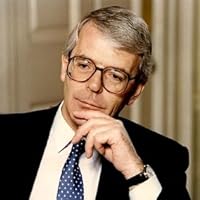
Far from the "grey man" of popular myth, John Major emerges from this illuminating portrait as a knowing political operator, a quixotic and passionate personality, and an authoritative member of the exclusive club of world leaders. For the last three years of his government, John Major allowed historian Anthony Seldon unprecedented access to research his political life. This is the inside story of Britain's most misunderstood prime minister, as well as a definitive work on British politics in the 1990s.
Sir Anthony Francis Seldon, FRSA, FRHistS, FKC, is a British educator and contemporary historian. He was the 13th Master (headmaster) of Wellington College, one of Britain's co-educational independent boarding schools. In 2009, he set up The Wellington Academy, the first state school to carry the name of its founding independent school. He was Vice-Chancellor of the University of Buckingham from 2015 to 2020. Seldon was knighted in the 2014 Birthday Honours for services to education and modern political history.
A superb and in many ways sympathetic biography of John Major published originally in 1997 - I had read it originally on publication and have now re-read. A long read with tiny print size but nevertheless engrossing. Lots of the events were fresh in the mind at the time but have been largely forgotten. Mr Seldon did allude to the fact that JM was unhappy at school, possibly bullied, and was determined thereafter to work hard and achieve. He never stated that education was not important but questioned the importance of qualifications. However due to single-mindedness he got a correspondence degree and entered parliament where he 'courted' people for a number of years to rise to becoming PM. However, lacking a particular philosophy and verve of his predecessor, he struggled with a divided and dissenting party with a diminishing majority. Once Blair became opposition leader many Tory MPs knew the game was up and were into open warfare jockying for position following the election. Throughout though comes across as a decent and honorable man. I cannot give five stars though due to one faux pas on page 285-286. Talking about the 1992 election win Seldon claims that 'it was nevertheless the first time a Tory government had returned to power with a reduced majority since mass democracy came to Britain'. You don't need to look to far back to find this statement is false. In 1987 (the previous general election) the Conservative majority was reduced from 144 to 102 wasn't it? Still well done for a really enjoyable read Mr Seldon.
Like Ted Kennedy in the infamous Mudd interview, Major was hampered perhaps fatally by not knowing why he wanted to lead the country. His win in 1992 was significant, impressive, and responsible for solidifying Tory policy and moving Labour to the right. But he severely lacked ideas and immediately became a reactive premier with no theory of govt. Perhaps it was inevitable after Mrs Thatcher, and circumstance would’ve handcuffed any successor, but in the end John Major became forgettable.
The book suffers from its minutia, written too close to events to know when to cut or simplify. It also has a habit of repetition. I actually put it down for a few months halfway through before returning to it. From thirty years in the future it can be disorienting reading the squabbles of the day. In my mind, I couldn’t shut off the voice saying “what if you built a reservoir or a nuclear power plant.” Oh well. In the end, worth getting to know that era and the players. It’s hard to game alternative history, and maybe John Major was the best the Tories could hope for, but it certainly is not their shining moment.
The Conservative party in the 1990s was a source of almost constant stunned amazement as it frantically tore itself to bits. Sadly, though exhaustive, this book fails to capture the swirling emotion, fury and occasional hilarity of it. You also wonder if the author's favourable portrait of Major would have been the same if he had known what we know now.