Two Venezuelan brothers devise an ingenious plan for collecting a vast fortune by engineering a chain of events that sends America's economy into a tailspin and only Paul Mayer can stop it
Paul Emil Erdman was one of the leading business and financial writers in the United States who became known for writing novels based on monetary trends and historical facts concerning complex matters of international finance.
Erdman was born in Ontario, Canada, to American parents. He graduated from Georgetown University’s Edmund A. Walsh School of Foreign Service. He received his PhD from the University of Basel (in Switzerland). In 1958 he worked as a financial analyst for the European Coal and Steel Community. Between 1959 and 1961, he worked as an economist at the Stanford Research Institute at Menlo Park.
Erdman returned to Switzerland where in 1965, he founded and was the president of a Swiss bank - the Salik Bank. In 1969, the United California Bank in California bought a majority stake and renamed it the United California Bank in Basel. The bank collapsed after taking large losses speculating in the cocoa market. Erdman and other board members were accused of fraud and Erdman spent time in jail awaiting trial.
While in jail, he wrote his first novel - The Billion Dollar Sure Thing (1973). It received a 1974 Edgar Award from the Mystery Writers of America for Best First Novel and was published in the UK as The Billion Dollar Killing. He was released on bail and fled from Switzerland. He was subsequently convicted in absentia. His second novel, the The Silver Bears (1974) was turned into a 1978 movie of the same name, starring Michael Caine. His books were well researched and contain convincing details. Despite the underlying complexity of his novels, his lucid writing style had enabled readers to learn complex concepts such as interest rate swaps, and his novels had often been bestsellers. The information in The Swiss Account is credited with providing a basis for helping track down the assets of Jewish victims of the holocaust.
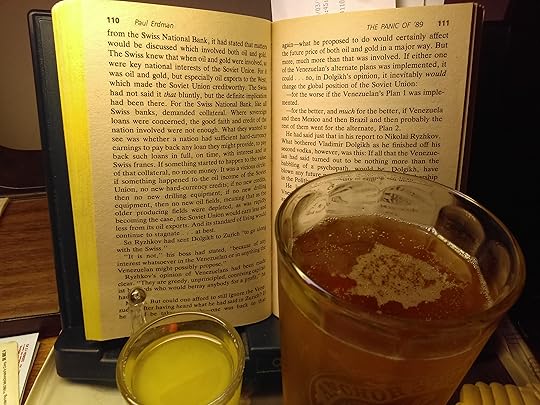
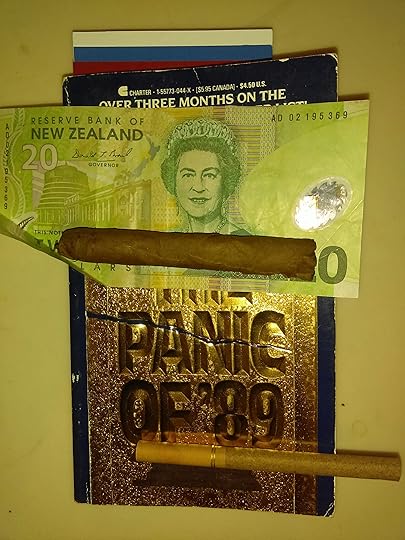
Concepts of Fifth Avenue PR firms or, journalists, coining term, ‘too big to fail,’ applies in this financial thriller pertinent to today since all fiduciary history is cyclical playing on human emotions in ‘suckers runs’ and, other FDIC rubbishing with the fiction 100 grand is covered by the United States of America government is laughable when consider, if, enough runs on enough banks paying peeps off with monopoly money shan’t halt panic in breadlines. Writer describes, “It has often been said that the head of the Federal Reserve Board is the second most powerful man in the United States, and thus the world …’ by literally “create money, dollars, the currency which literally made the entire world go round, out of thin air.” p. 12 the old bankers trickery like metaphysics transmute lead into gold from the Mediaeval ages alchemy. Mexican scientists actually figured out how to transmute tequila into diamonds. Classic Keynesian economics reject ‘the invisible hand’ of the market true capitalism thrown out the window with panic, ‘that Continental Illinois was still among America’s top eleven banks in 1988 [,]’ due to the federal government, ‘nationalized the Continental Illinois.’ ¶ ‘It worked.’ ¶ ‘But everybody in the banking business knew that it had been a close call.’ p. 13 initiates with high drama. Gets laughably fictive when story recounts, “For it was said when Mayer spoke, the Rockefellers listened—and the Rothschilds, and the gnomes of Zurich, and the merchant bankers of London, and Merrill Lynch, and the gold and silver and currency speculators in Hong Kong, Los Angeles and Abu Dhabi.” p. 6 adds to the tale. Petty schematic rivalry in-between FDIC and the Fed is true amongst governmental agency and privately-held bank, “The FDIC’s acknowledgment of the Fed’s help had obviously come grudgingly.” p. 18 before goes onto the psychology of a run, “Of course, the big depositors are not covered by federal deposit insurance. That’s why they’re so flighty, especially the foreigners. And once the big guys start to yank out their deposits, the little guy figures that they must know something that he doesn’t know. That’s when all the lemmings start to line up at the withdrawal window.” p. 18-19. OPEC monopoly eluded to in book created by Venezuela when Mexico the first petroleum-producing country to nationalize foreign oilfields laterally copied by Near Eastern, Latin, Asian and, African third-world firms. Even Carlos the Jackal given a mention on p. 29. Twice spot market t + 2 is mentioned, meaning delivery of cash & commodity transpires within two working days. Fiduciary interesting from standpoint interest rates quote on the American firms of Chase, Citibank, Wells Fargo and even, Continental Illinois, “offering 8 percent interest while the Swiss were offering 3 percent. Somebody had recently said that the resulting 5 percent differential was enough to pull in money from the moon.” p. 41 the levity since interest rates nowadays are a mere pittance try 0.002 on stingy banksters lending your money out on 5-13 points! easy money. Flight 75 Aeroflot from Moscow involves man on Politburo, merely one degree removed from the thirteen-man board ruling the CCCP reminds readership of yesteryear when, “he was solely in charge of the Soviet Union’s energy and mining/metallurgy programs at home,” before Yeltsin sold off State assets for a song or, a dance, in the disastrous voucher program minted Russian oligarchy p. 42 so gold & energy profits of the Union of Soviet Socialized Republics entails 30$ billion with a b and, that’s in 1980s dollars less devaluated than those of present 5 July 2018 in the Trump presidency. Good intel like the Soviet State Bank, the former Russian equivalent of the Federal Reserve, except the writer doesn’t mention the Russian entity not Rothschild-controlled on p. 44. Mention of international man of mystery; viz., Carlos the Jackal, mentioned in The Day of the Jackal amongst other choice novels here goes, “In a room in a building two blocks from the Frankfurt train station, which was a seedy a location as that town could offer, the man and woman to whom the Venezuelan had spoken were in bed, though not yet asleep. They were arguing. About the risk of his taking the early train to Switzerland to meet with the Venezuelan. She said that crossing the frontier, taking a chance on being recognized by the border guards or the customs people, was insanity. It was simply not worth it.” ¶ ‘He said it was. He needed the money.’ ¶ “Just look at this dump,” he said. “That Carlos is down to this!” ¶ ‘He fell silent for a while.’ ¶ ‘Then: “They keep spreading rumors that I’m dead. If I can’t pull this one off, maybe I’m better off dead.” ¶ “Don’t talk silly,” she said, and then asked, “Why doesn’t Qaddafi help you out?” p. 56-57 … “Carlos was now sixty-one. For years now he had lived most of his days in that increasingly decrepit villa on the outskirts of Tripoli, forgotten by the world. The failure he referred to was that of the “new” brand of Euroterrorism that had evolved in the late 1970s. It had been his idea, his last big idea, and he was personally gone to Frankfurt from Libya in the spring of 1977 to convince the Red Army Faction that it should be their mission.” p. 58. Writer gives background on Rosse Brigate the Red Brigads, “And in every election since 1976, the Communist party’s vote had been falling.” p. 62. Writer predicting terrorism on United States of America soil proper on p. 63. “In fact, since the time the Los Angeles Police Department had decided to incinerate the Symbionese Liberation Army on live television, organized terrorism had virtually disappeared from the American scene. A lot of would-be terrorists had probably concluded: Why fool around in a country where the cops act like mad dogs?” p. 63. By p. 65 second time rubbishing on Qaddafi as ‘crazy’ by the writer bought line ‘mad dog of the Middle East’ hook-line-and-sinker bit on it. Simón Bolívar rightly declares on the United States, “seems destined to impose misery upon the Americas in the name of freedom.” p. 64-65. New World Order presidency increased United States dept from under $1 trillion to well nigh $2.7 trillion, mentioned on p. 69-70, with Reagan administration playing with the petrodollar confidently as a punter tapping a fiver lay tattooing beat on her buttocks in a two-dollar whore New Orleans bordello on Bourbon Street; social services cut like mental health services left John Hinckley Junior free on the street with revolver and, devastator exploding bullets—in one of life’s ironies. By page 71 the writer puts the title THE PANIC OF ’89 in bold print from fictive newspaper story. Better writers put title of book somewhere inside the book. Mention p. 74-75 of Turkish left-behind organization Gray Wolves dominant in tapping Mehemet Ali Agça to shot the Pope in the navel another nonlife-threatening bullet wound like Reagan’s. The OPEC cartel of which Mexico isn’t official partner along with founding OPEC partner, Venezuela, concede in the book, “The biggest discussion centered on the price of oil, their collateral. It was agreed that $12 a barrel for Mexican Isthmus light crude would be the new benchmark, with an escalator built in related to the basic rate of inflation in Central Europe.” p. 271 the smoke-filled room of the gentlemen’s agreement. On p. 225-227 comparisons of Abu Nidal to Carlos the Jackal in their style Carlos’ heyday in the 1970s whilst Abu’s glory days in the 1980s. KGB descriptors from telephoned in message on a scrambled telephone line, “preferring that to even a coded telex message, since he knew the later could be broken easily.” p. 200 even on Swiss Alps winds the warmer wind is named the Föhn and, the colder Bise. West German Joachim Schmidt from the Red Army Faction is good two-bit player raises the stakes. Bombshell Iranian, Azar Shahani is prettily buxom protagonist. Boilerplate clause; spot market and; elementary explanation on LIBOR, that is, “or the London Interbank Offer Rate, which is the interest rate at which large banks lend to each other for three months in London. If LIBOR goes up, so does the interest which the Swiss National Bank has to pay out.” p. 203 whatnot with the Soviet equivalent of agent formerly a GS-11 till upped to a GS-13 leaves out precise acronym abbreviation sorely missing on account it’s a state secret, shish, shush. The bit about London being a separate entity wholly independent of the United Kingdom like Washington, D.C.: is fiscally divorced from the United States of America with extraterritorial powers isn’t mentioned. There’s nicer plot twist with Latin America-bound aëroplane.
Economics is known as the "dismal science." But not when it's in the hands of financial-thriller author Paul Erdman--also author of The Silver Bears, The Crash of '79 and Zero Coupon.
Here's the scenario Erdman paints for this one:
(Q) What if the countries of Mexico, Brazil and Venezuela announced their intent to default on their sovereign debt loans?
(A) Well, they'd be screwed--no US bank (not to mention the IMF and World Bank) would ever extend credit to them ever again!
(Q) Yeah, but what if, at the same time, the Swiss National Bank were assembling a consortium of European banks to extend loans to Venezuela, et al...based on the collateral of oil?
(A) Hmmm...well, in that case, we'd have a crisis: If foreign countries with deposits in, say, Bank of America feared that the Latin American default would imperil the security of their deposits...money would fly out of Bank of America with a Giant Sucking Sound! Naturally, the US Federal Reserve and other Government institutions would have to step in with emergency liquidity
(Q) Yeah, but suppose Venezuela had also contracted the assassination of the US Chairman of the Federal Reserve, the head of the Federal Deposit Insurance Corporation (FDIC) and the US Comptroller of the Currency?
Era prima săptămână din decembrie şi vremea în Georgetown era foarte rece. Totuşi, nu numai primele rafale de aer îngheţat îi făceau pe unii dintre cei mai de seamă locuitori ai acelei comunităţi de elită să tremure când s-au dat jos din pat în dimineaţa aceea de marţi. În acest an 1988, mai era şi teama crescândă care începuse să pună stăpânire pe Washington din prima săptămână a lunii noiembrie 1988. Teama, care se amplificase în cele treizeci de zile, era determinată de ideea că totul va începe să se destrame în curând şi că în 1989 Statele Unite se vor afla într-o situaţie gravă, că economia, dolarul, băncile, Chrysler şi, da, chiar marele IBM se vor prăbuşi în curând. Necazurile se adunaseră treptat de la începutul celui de-al doilea mandat al lui Regan. Dar, întrucât el era unul dintre cei mai norocoşi preşedinţi americani, reuşise să le ţină piept. Era ca un fundaş care nu fusese eliminat niciodată din Liga Naţională de Fotbal. Dar pe 20 ianuarie venea la conducerea SUA un preşedinte nou cu o echipă nouă. Tocmai la aceste lucruri se gândea, în timp ce răsfoia ziarele în dormitorul de la etaj din casa lui aflată pe Dent Street numărul 3514, Paul Mayer, unul dintre cei mai importanţi locuitori ai Georgetownului. Printre aceste ziare se numărau Washington Post, New York Times, The Wall Street Journal, Financial Times, Nene Züricher Zeitung, Handelsblatt din Düsseldorf şi, bineînţeles Le Monde. După ce termină de răsfoit ziarele, luă de pe măsuţa de lângă pat telecomanda televizorului şi-l potrivi pe Canalul 22, care transmitea aproape toată ziua ştiri din lumea finanţelor, să vadă care era situaţia la burse. Nu se osteni să deschidă sonorul, deoarece îl interesau doar cifrele de pe ecran, nu comentariul. Această operaţie îi luă o oră, aşa că în momentul când termină, era ora nouă. Era marţi 6 decembrie 1988.
I really liked this book. The author has managed to weave a gripping tale out of stock markets, international relations and global terrorism, keeping humanity at its centre. Written in a way to allow the basic reader to understand the above-mentioned concepts. Really nice.
Great narrative on a potential economic situation and how it plays out. Goes deep into the workings of banks and international organizations, which is very interesting.
Whilst this novel is a slightly slower pace than the Crash of '79 and The Last Days of America, it is nonetheless highly enjoyable.
It follows the plan of two rich Venezuelan brothers to bring the American economy to it's knees and as a by product make themselves a fortune. Backed by the help of Swiss & European banks their plan starts coming to fruition until ex-International Monetary Fund executive Paul Mayer becomes involved.
Terrorism, Soviet Union intrigue, spies, secretive Swiss banks and inflated American egos come together to form a good story. I was a little disappointed there wasn't more focus on the Swiss banks at the end of the novel but nonetheless a good read.