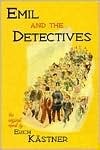
Erich Kästner (1899–1974) was a German author, poet, screenwriter and satirist, known for his humorous, socially astute poetry and children's literature. A stout pacifist and democrat, he was expelled from the national writers' guild during the Nazi era, with many of his books being burned in public. Today, he is widely regarded as one of Germany's most prolific and beloved children's book authors.
I read this German children's classic while the Greek debt drama of July 2015 was unfolding; I would finish a chapter, go to the Daily Telegraph live blog, catch up on the latest news from Brussels, then return to Emil.
The people reporting on the political story were eager to cast the Germans, particularly the hardline Finance Minister Wolfgang Schäuble, as the villains. I read many pieces about how Schäuble was imposing unreasonable and humiliating conditions on the Greeks, and when one looked at poor Euclid Tsakalotos it was indeed difficult not to feel sorry for him. But as Emil's story progressed, I began to experience an odd sympathy for the Germans. Emil, a bright and responsible eight-year-old, comes from a poor home. His father is dead. His mother doesn't bring in much as a hairdresser, but by planning carefully she is just able to make ends meet and even save a little. She's finally scraped together 140 Marks so that Emil can go and visit his grandmother in Berlin for a week, and both she and Emil are very proud of this achievement. And then, while he's on the train, a heartless thief steals his money. Emil never cries, but he cries now, because he thinks of all the sacrifices his mother made to put that little capital together. And then he moves heaven and earth to get his stolen money back.
I watched Schäuble requesting more and more outrageous conditions before he would consent to lend a third tranche of his country's money to Alexis Tsipras, and I suddenly saw him as a small boy reading Emil und die Detektive. He did now just what Emil does in the book: he made contact with a group of like-minded people, got them on his side, encircled the criminal who seemed to be on the point of making off with his assets, and forced him to capitulate. Greece will probably get its loans, but only when they've pledged suitable collateral. It was one of the toughest pieces of negotiation I've ever seen.
There's something beautiful and terrifying about that Protestant work ethic.
Emil and the Detectives is a classic of children’s literature. It was written by the German writer Erich Kästner and first published in 1928 when he was 29 years old. The novel is illustrated by Walter Trier. It was first published in English in 1931, has never been out of print and has been translated into at least 59 languages. Emil and the Detectives was quite an unusual children’s book for the time, as it has a realistic setting in the Berlin of the era, rather than a idealised world, or a fantasy world with fairies, wizards, and witches. The characters are ordinary people going about their daily lives, and the central character is a young boy, “Emil” (named after the author’s father). Emil is a typical boy, who could be found in any village or neighbourhood.
Emil and his mother live in a small town in Germany called Neustadt. His father, who had been a plumber, had died when Emil was only 5 years old. Now Emil is just over ten years old, and beginning to attend high school. Emil loves his mother, Frau Tischbein very much. He sees how hard she works to make sure they have a good life with a clean house and enough to eat. They are far from rich, but they are happy. Emil’s mother works at home as a hairdresser, and has to count the pennies. Sometimes Emil helps her with the hair washing, or with household tasks if his mother is sick. Emil is a bright boy. He works very hard at school, and always does his best to come top of the class.
Like any young child, Emil loves to play tricks. One day he and his friends jam an old hat on top of the statue of Grand Duke Charles with the Crooked Face (Charles II, Grand Duke of Mecklenburg-Strelitz, who had inherited the Habsburg jaw) - and even worse, Emil’s friends lift him up to chalk a red nose and black moustache on the statue’s face! But then constable Jeschke appears; so Emil and all of his friends run away. Emil is not sure whether the policeman had seen him or not, but he feels a little ashamed about it.
When it is the school holidays Mrs. Tischbein sends Emil to see her mother, who lives in Berlin with her other daughter, and granddaughter Pony Hütchen: Emil’s cousin who is younger than him. Emil was to give some money to his grandma, and his mother gave him a little for himself too. Emil is very excited, as he is to go by train. On the way to the train station, Emil’s mother warns him to be very careful to look after the money he is carrying. They pass constable Jeschke, and Emil is scared that the policeman will say something - but fortunately he doesn’t.
Emil boards the train, and the adventure begins.
These “detectives” are clearly a tribute to Sir Arthur Conan Doyle’s “Baker Street Irregulars”: the street urchins who were employed by his fictional detective Sherlock Holmes, as intelligence agents, to help him detect crimes. In fact the story even refers to Sherlock Holmes at one point. Gustav’s friends are streetwise and bright.
This adventure story is very entertaining to read. We are keen to follow Emil, to see how Emil and the Detectives achieve their end, and delight in the humorous language the story uses. This is a translation, but the idioms and witticisms feel authentic.
We follow the detectives in their exciting adventure, tailing and pursuing the thief all over Berlin until they can prove Emil’s case. It is quite a detailed plot, with little Pony Hütchen having great ideas, and playing an important part. She is able to ride her little bike, and this extra speed proves very useful to the detectives. We also see that she has an appealing nature, constantly referring to herself as if she were older, and as a sort of “housefrau”. Wherever Pony appears, everyone is in high spirits. There is a great happy ending.
Although the author has written a novel primarily to entertain children, the story also has a strong moral code. It does not contain obvious moralising, as early children’s books often did, but lets the characters’ deeds speak for themselves. This way we see comparative values such as right and wrong, honesty as opposed to thieving and lies, and the benefits of hard work and generosity.
We are told that Emil, the main character of the novel, is a “model boy”. Because his father died when he was so young, he and his mother are very poor, and Frau Tischbein is forced to work hard. Emil helps her with everything, is attentive and sensitive, understanding and fair; an excellent student in school and best in his class. As we read further, we see that Emil is bold, capable of suppressing fear, and thinks for himself. When he first arrived in Berlin, he was fascinated by it, but couldn’t imagine living there. By the end of the novel however, he has travelled all round the city and become independent. He is more familiar with Berlin, and confident there. The family are proud of Emil. We also see that Emil’s mother is a caring, diligent woman, who will sacrifice a great deal for her son. Her caring behaviour helps Emil to become a good person.
Emil and the Detectives is in 18 chapters, and there are 16 illustrations. Each one has a few lines underneath giving more details. Quite a few of these are little character studies, and quite enchanting. They are line drawings, although in my copy from 1933, one is in colour. (I have attached this review to the later edition which I read as a child, as sadly the “cheaper” edition I now have, which was published 2 years after the first English one, has lost its dust cover, so I cannot reliably enter it on the Goodreads database.)
It was Erich Kästner’s first major success and remains his best known work. It is the only one of his pre-1945 works to escape Nazi censorship. The book was immediately popular and the original version sold an initial two million copies. There are several films based on this novel, including a 1980 Bangladeshi film directed by Badal Rahman. Erich Kästner went on to write more stories about Emil Tischbein.
Erich Kästner was born in 1899 in Dresden, Germany. He went to school in Berlin and Leipzig where he studied German and Roman languages, and he also gained a masters degree in philosophy. He had always wanted to write, and became an author, poet, screenwriter and journalist. He was known for his humour and satire, and this comes out in Emil and the Detectives. Other novels include “Emil and the Three Twins”, and “Lottie and Lisa”. He was a staunch pacifist and democrat, and because of this was expelled from the national writers’ guild during the Nazi era, with many of his books being burned in public.
Walter Trier was a Czech-German illustrator, with similar political beliefs. He is best known now for his work on Erich Kästner’s children’s books, and also for the covers of the long-running magazine “Lilliput”. In 1927, Walter Trier was introduced to Erich Kästner, and then illustrated Kästner’s Emil and the Detectives. Walter Trier was an anti-fascist, and his cartoons were bitterly opposed by the Nazis. In 1936 he emigrated to London. During the Second World War, Walter Trier helped the Ministry of Information to produce anti-Nazi leaflets and political propaganda. He and his wife became British citizens in 1947, although he later moved to Canada.
Although Emil and the Detectives is of its time, and children today do not have the freedom the children in the book do, it remains hugely entertaining and enjoyable, with enough timeless values to transfer to present day life. It would probably best suit children from the ages of about 8 to 12.
Oh, phew! I was really worried there for quite a few pages.
So many aspects of the book are highly realistic, Emil's personality and relationship with his mother, and their money worries, that I was afraid that in the end .
حكاية جميلة جداً بنهاية مرضية، إميل الفتى المجتهد الذي يحب أمه حباً جماً وأمه التي تحبه أيضاً، ترسله والدته بالقطار إلى برلين لزيارة جدته وخالته، ولكن تحدث المفاجأة إذ يتعرض إميل للسرقة من قبل رجل مريب، يقوم إميل بتتبع هذا الرجل ويتعرف على أطفال آخرين وهم "المخبرون" أي المفتشون لمساعدة إميل المسكين لإعادة ما تم سرقته، حكاية لطيفة وفيها حس فكاهي وبالطبع أنصح بها. "لا أحد يريد أن يعرف شيء عن هموم الآخر، كل شخص لديه ما يكفيه من الهموم والأفراح."
Please do note that Emil's exploits, that the story itself, in its German original, while never a personal favourite, is and will always remain a solid three star read for me (enjoyable, but also not spectacular). And yes, the above one star rating is simply because the new 2007 translation by W. Martin absolutely and totally leaves so very much to be desired (especially for someone such as I who likes her translations as close to the original as possible and not updated or altered all that much). My review will thus be in two parts (first, general musings on Emil's Berlin escapades as a whole, gleaned mostly from my review of the German original, as the general themes and my issues with some of them remain the same, and then a more in-depth analysis of this particular recent English language translation, and why I personally consider it majorly substandard in every way).
GENERAL THOUGHTS ON ERICH KÄSTNER'S EMIL AND THE DETECTIVES (BASED ON THE GERMAN ORIGINAL)
First published in 1929, Erich Kästner's Emil und die Detektive (Emil and the Detectives in English translations) especially and brilliantly sparkles and glows with its sense of time and place, with its urban realism, its palpably authentic and genuine representation and description of Berlin (the actual capital city of the Germany of the Weimar Republic, a lively and throbbing modern metropolis, and not some vague environs set in either a magical present or a distant historical past).
Also and for me personally, first reading about Emil's adventures and exploits in Berlin, more than forty years later in 1975 (when I was nine years old and approximately a year before we immigrated from what was then West Germany to Canada, and thus in the German original, of course), with the Berlin Wall at that time still firmly in place and East Berlin, like all of East Germany, for all intents and purposes cut off from West Germany, Emil und die Detektive was basically the only way for me to even remotely be able to experience the at that time still former capital of Germany (from 1949 until reunification, while East Berlin remained the capital of East Germany, the capital of West Germany was Bonn), since unless one had family members in the East, it was often very difficult if not impossible for many if not most West Germans to even obtain permission from East Germany to cross over, to visit (and neither did we have relatives in East Germany nor did my parents desire to frequent East Germany as that, according to them, would have been catering to Erich Honecker and the Soviet Union, and even the idea of perhaps visiting West Berlin was never remotely entertained or considered).
Aside from the above mentioned and appreciated immediacy, the both harsh and at times delightful reality of urban existence, Emil und die Detektive is primarily a novel of not only adventure and friendship, but essentially, a glorification of children and their abilities, their hidden and not so hidden strengths and talents. Emil and his new friends tracking and then apprehending the scoundrel who had robbed Emil of his money clearly and succinctly demonstrates to ALL (including parents, including adults) that the young are NOT (and should never be) mere bastions of inactivity and quietude (to be seen but not heard, to be sitting silently and attentively at school, at church or at home), but that children can do, that if they join forces and work together, they can (at least within the confines of this story) even take the job of the authorities, of adult detectives (and that there is safety and comfort in numbers, that as a team, collectively, much can be accomplished).
That being said, and even though I realise that from all of Erich Kästner's children's novels, Emil und die Detektive remains his most famous and well known (especially in North America and Great Britain, especially in translation), there are some rather major and unfortunate issues with datedness and stratified gender roles present. Emil's female cousin Pony Hütchen (Pony of the Hat), while clearly represented in many ways as both the most imaginative and even the most courageous of the children, unfortunately also seems to be primarily a maternal representative, a motherly type whose role is first and foremost that of a caregiver and liaison (and it is thus Emil and the boys of the group who later earn all or at least most of the accolades, who are feted as having apprehended the thief).
Now I do very well realise that Emil und die Detektive was penned, was published in the 1920s and that for its time (for 1929), both the story itself and the featured characters are actually quite if not very avant-garde (even with regard to Pony Hütchen, who while she might indeed languish somewhat as a typical maternal caregiver like entity, is at least permitted, is at least allowed freedom and vitality, is not simply confined to the house or to a finishing school, sewing or learning how to "be a lady"). I just do find it somewhat frustrating that even though many of Erich Kästner's later novels for children often portray considerably less gender stratification (and even actual criticism of the latter), they are often not nearly as familiar and even as available to especially English language readers. Still, Emil und die Detektive remains highly recommended as a story, and is perhaps even a good place to start (especially if one desires to read Erich Kästner's children's writing sociologically and/or historically).
THE 2007 W. MARTIN TRANSLATION
I have not, as yet, read the earlier May Massee translation of Emil und die Detektive (but am planning on doing so in the near future, as I have heard very positive critiques of it from trusted GR friends, thanks Cheryl and Michael).
Now I do realise that translations are never and can never be exactly like the original (and in fact, translations that strive to be too literal can often have the tendency to read haltingly and tediously, painfully like translations and not as stories, as accounts in and of themselves). But that being said, a given translation should still strive to keep as close to the original as possible, mirroring both style and especially time and place of the original narrative (and of course, content and themes as well). And although W. Martin's translation does read fluently enough, and yes, even portrays Emil's escapes in Berlin for the most part authentically and realistically, especially his (or her) choice of vocabulary and idiomatic expressions sometimes (far too often) make me shake my head in consternation (and actually leaves me both frustrated and yes, even rather, no actually very much angry and annoyed).
And first and foremost (and even in this here new translation), Emil and the Detectives is still clearly presented as a novel set in Berlin, no rather, it is set in 1920s Berlin. And thus, it makes precious little sense that so many of the jargon-like expressions used by especially Gus (Gustave) feel more like late 20th, early 21st century vernacular. Sorry, but no one in 1920s Berlin would have called someone dude, nor would the German word Lump have been the equivalent of scumbag in a novel set in 1920s Berlin. And I actually rather doubt that scumbag would even have been all that much in existence in the vernacular of most English speaking countries at that time, and in my opinion, the correct, or rather the best translation of Lump should be scoundrel, as scumbag fits neither the time nor the place (and these are just a select few such examples, there are, unfortunately quite a number of them present throughout the translated narrative, rendering the discourse, the textual flow unintentionally anachronistic and to me, unnatural and disconcerting). And the thief who robbed Emil, in the German original, he is repeatedly described as a Halunke, which is the equivalent of villain and CERTAINLY NOT jerk as the translator, as W. Martin has rendered the former (for the individual who robbed Emil is more than a mere jerk, he is a criminal, a thief, a villain).
And while the anachronistic use of late 20th, early 21st century discourse and jargon is indeed somewhat irritating, I find the woefully haphazard manner in which personal and geographic names have been either anglicised or kept German by W. Martin even more of an issue, even more perplexing. Now personally, I always tend to be of the opinion that unless a given name is unpronounceable or unspellable if kept in the original, geographic locations and first and surnames should NOT generally, as a rule, be translated. However, that being said, if a translator is going to be rendering names, places and such into the target language, he or she should be consistent throughout, and either translate ALL names etc. or conversely NONE of them. And with this fact, this personal opinion in mind, W. Martin's 2007 Emil and the Detectives presents the exact opposite, namely a (for me) vexing and irritating combination of some personal names being kept in the German original and others translated into English counterparts. Why, for example, is Emil's surname, Tischbein, translated as Tabletoe, and why is one of the names of the villain, Grundeis, rendered as Groundsnow, while many if not most of the other surnames are kept German? But even more problematic, why is Emil's hometown of Neustadt (which does exist in Germany, well actually, there are a number of cities that go by that name) translated as New Town by W. Martin, while both Berlin and Hanover appear as they would in German, in Germany (although in Germany, Hanover is spelled with a double n, Hannover)? Not to mention that even the description of Berlin landmarks and street names suffer from this inconsistency, with some being translated into an English version and others keeping their German spelling. And yes, this strange and unnecessary combination of German and English names, with really no rhyme or reason, and even more so than the translator's use of anachronisms with regard to dialogue and discourse, has made me rather majorly if not totally despise the new 2007 translation of Emil's story and has also made me really hesitant to in any manner consider recommending W. Martin's version of Emil and the Detectives (even though it is seemingly much more readily available than the earlier translation of May Massee, and while I have not yet read the latter, the fact that many of my GR friends glowingly appreciate and love her rendition, this does majorly encourage me, and really truly, there are simply far far too many niggling and frustratingly infuriating issues with W. Martin's translation for me to consider suggesting it to anyone with a guiltless conscience).
This is a book that I saw and had to buy and read. It represents a time in my life when I was too busy playing sport or out with mates to read books. I was also lazy and lacked confidence even to read in class but I always liked stories. This was a book that I remember from my youth like, Tom Sawyer and Huck Finn, Brer Rabbit and a wooden horse who collected money somehow and worked down a pit and went to war. Emil and the Detectives was a story that resonated with me, perhaps as it is about crime, perhaps 'cos it is about a group of lads who form a gang for good and although boys will be boys worked together to get a job done. I like that aspect of the story still today. It perhaps doesn't reflect young men at play so much in the 21st century but it is almost ageless in its account of a life from the previous 100 years. It is also exciting as it is set in Berlin, Germany and is a story that could have been equally true if set in England. Written in 1928 it is chilling to think that this was a youth that went on to be soldiers in World War II. Still it is a timeless children's novel and a perfect medium to encourage young people to read for themselves. Rather than a late developer like me who got his Mum to read to him even as a teenager and always loved Jackanory.
My neighbourhood of Erskineville and Newtown in Sydney is festooned with street libraries. I can find them perched on front fences in nearby quiet streets, attached to shop fronts and free standing in village spaces, there's even one in a tree, all ready for the keen reader passing by. They are a rich source of treasures.
I saw Erich Kastner’s Emil and the Detectives in one of these boxes and thought this was a title I had heard of - beyond that I knew little about it. It has in fact wide repute and its history is quite compelling.
In Weimar Germany, a young lad, Emil, is put on a train by his hairdresser mum with precious bank notes pinned inside his jacket. Off to visit his grandmother in Berlin, he falls asleep in the carriage and his money is stolen. With considerable help from a gang of Berlin street urchins Emil pursues the thief, and justice prevails in a most satisfying way.
What struck me was the grown-up quality of this children’s story. Emil has a desire to please, a child’s wary apprehension of authority, an eight-year-old's concern at losing his mum’s hard-earned money, as well as the knowledge that he has to catch the thief but not knowing exactly how to do so. The gang of kids - the detectives - are vividly drawn, especially Gustav their leader; they are individuals with different talents who work well together. The adults in the story are as varied as they might be in the real world - some are kind, some preoccupied with their own concerns and yet others unscrupulous and hard.
I liked the adventurousness of the boys (and girls) and the way they combined as a team, with different roles according to their strengths and personalities. The book certainly stands the test of time, but I wondered how many eight-year-olds nowadays would be put on a train by themselves to journey across the county. * Erich Kastner's book was published in Germany in 1928 and achieved immediate popularity. After the Nazis came to power in 1933, Emil and the Detectives incurred, with many other popular works, the wrath of Dr Goebbels and was burned, at least on one occasion with author Kastner present. ** My paperback copy is now back in a nearby street library for someone else to enjoy.
First published in 1929, Erich Kästner's Emil und die Detektive (Emil and the Detectives) especially and brilliantly sparkles and glows with its sense of time and place, with its urban realism, its palpably authentic and genuine representation and description of Berlin (the capital city of the Germany of the Weimar Republic, a lively and throbbing modern metropolis, and not some vague environs set in either a magical present or a distant historical past).
Also and for me personally, reading about Emil's adventures and exploits in Berlin, more than forty years later in 1975 (when I was nine years old, approximately a year before we immigrated from what was then West Germany to Canada), with the Berlin Wall at that time still firmly in place and East Berlin, like all of East Germany, for all intents and purposes cut off from West Germany, Emil und die Detektive was basically the only way for me to even remotely be able to experience the at that time still former capital of Germany (as from 1949 until reunification, while East Berlin remained the capital of East Germany, the capital of West Germany was Bonn), since unless one had family members in the East, it was often very difficult for many if not most West Germans to even obtain permission from East Germany to cross over, to visit (and neither did we have relatives in East Germany nor did my parents desire to frequent East Germany as that, according to them, would have been catering to Erich Honecker and the Soviet Union, and therefore, even the idea of perhaps visiting West Berlin was never remotely entertained or considered).
Now aside from the above mentioned and appreciated immediacy, the both harsh and at times also entertaining, delightful reality of urban existence, Emil und die Detektive is primarily a novel of not only adventure and friendship, but essentially, a glorification of children and their abilities, their hidden and not so hidden strengths and talents. Emil and his new friends tracking and then apprehending the scoundrel who had robbed Emil of his money clearly and succinctly demonstrates to ALL (including parents, including adults) that the young are NOT (and should never be) mere bastions of inactivity and quietude (to be seen but not heard, to be sitting silently and attentively at school, at church or at home), but that children can do, that if they join forces and work together, they can (at least within the confines of this story) even take the job of the police, of adult detectives (and that there is safety and comfort in numbers, that as a team, collectively, much can be accomplished). But that being said, and even though I do realise that from all of Erich Kästner's children's novels, Emil und die Detektive is definitely still his most famous and well known (especially in North America and Great Britain, especially in translation), there are some rather major and unfortunate issues with datedness and stratified gender roles present, as Emil's female cousin Pony Hütchen, while clearly represented in many ways as both the most imaginative and even the most courageous of the children, unfortunately also seems to be primarily a maternal representative, a motherly type whose role is first and foremost that of a caregiver (and it is thus Emil and the boys of the group who later earn all or at least most of the accolades, who are feted as having apprehended the thief).
I do very well realise that Emil und die Detektive was penned, was published in the 1920s and that for its time (for 1929), both the story itself and the featured characters are actually quite if not very avant-garde (even with regard to Pony Hütchen, who while she might indeed languish somewhat as a typical maternal caregiver like entity, is at least permitted, is at least allowed freedom and vitality, is not simply confined to the house or to a finishing school, sewing or learning how to "be a lady"). It is just that for me, I find it somewhat frustrating that even though many of Erich Kästner's later novels for children often portray considerably less gender stratification (and even actual criticism of the latter), they are often not nearly as familiar to especially English language readers. For while the English language translations of Emil und die Detektive (Emil and the Detectives) are considered and should always be considered a classic (and are easily available and often in current print), many of his later children's novels are not nearly as well known in English translation, which is truly unfortunate, as I have (for example) personally always enjoyed Kästner's Das fliegende Klassenzimmer (The Flying Classroom) and Das doppelte Lottchen (Lottie and Lisa) much more than Emil und die Detektive (precisely due to the fact that there is not only less obvious gender stratification shown but that both it and negative attitudes towards women face considerable authorial condemnation). Still, Emil und die Detektive remains highly recommended, and is perhaps a good enough place to start (especially if one desires to read Erich Kästner's children's writing academically, sociologically and/or historically).
I’ve been wanting to read this book since Disney aired its 1964 film version on television when I was a child myself (late 1960s or early 1970s). But I put it off for literally decades until the excellent Manny Rayner reminded me of the book’s existence. How sorry I am that I didn’t read this delightful little book sooner!
Considering the book was first released in 1929, this tale of a poor boy who loses a large sum, but is aided in its recovery, has aged magnificently. Young Emil Tabletoe takes a train to Berlin to spend a week during the summer with his grandmother, Aunt Martha, and her family. While on the train, he’s robbed of the 140 marks he’s carrying by a man in a bowler hat, and his adventure in the big city begins. Emil’s newfound friend, Gustav with the bicycle horn, and his pals organize a manhunt that would make the FBI proud. Emil’s cousin also joins in. Author Erich Kästner creates amazingly believable characters — particularly boys thoroughly enjoying being boys like Emil, Gustav, Crumbagel, the Professor, Petzold, grumpy Truegut, and little Tuesday — but also the long-suffering Mrs. Tabletoe and Emil’s smart-alecky grandmother and his bicycle-crazed, feisty cousin “Pony the Hat” Heimbold. I loved every minute of this quick read, which I finished in one sitting. I couldn’t stop reading!
Two special treats in this book. Secondly, and unusual for Kindle books, Walter Trier’s charming illustrations from the original publication have been included. A joy for readers of all ages!
শৈশবের গল্পগুলো বোধহয় পৃথিবীর সবখানেই এক। সব ছেলেমেয়েরই ছোটবেলায় গোয়েন্দাগিরি করার শখ চাপে! হোক সেটা বাংলাদেশ কিংবা জার্মানি! শিশুসাহিত্য পড়লেই ব্যাপারটা স্পষ্ট ধরা পড়ে!
"এমিলের গোয়েন্দা দল" গল্পের প্লটটা খুব সুন্দর! লক্ষ্মী ছেলে এমিল টিশবাইন কিভাবে মায়ের দেয়া পাউন্ড হারিয়ে আবার সেটা উদ্ধার করে আর কিভাবে বার্লিন শহরের ছেলেপুলেদের খুব বন্ধু হয়ে যায় সেই গল্প। কিশোর বয়সে সবার সাথে বন্ধুত্ব হয়ে যায় খুব সহজে। তা না হলে চেনেনা জানেনা এমন একজনকে সাহায্য করতে গুস্তভ এক কথায় রাজি হয়ে যায় কিভাবে?! খুব হম্বিতম্বি করলেও গুস্তভ ছেলেটার মনটা খুব ভাল! তাই এমিল গোয়েন্দাগিরি করতে গিয়ে খরচ হয়ে যাওয়া টাকা ফেরত দিতে চাইলে বলে, "দেয়ার চেষ্টা করে দেখো একবার!" আর আছে মিষ্টি ছেলে টুয়েসডে, বর্ণ লীডার প্রফেসর!
GENERAL THOUGHTS ON EMIL AND THE DETECTIVES (BASED ON THE GERMAN ORIGINAL)
First published in 1929, Erich Kästner's Emil und die Detektive (Emil and the Detectives in English translations) especially and brilliantly sparkles and glows with its sense of time and place, with its urban realism, its palpably authentic and genuine representation and description of Berlin (the capital city of the Germany of the Weimar Republic, a lively and throbbing modern metropolis, and not some vague environs set in either a magical present or a distant historical past).
Also and for me personally, first reading about Emil's adventures and exploits in Berlin more than forty years later in 1975 (when I was nine years old, approximately a year before we immigrated from what was then West Germany to Canada, and thus in the German original, of course), with the Berlin Wall at that time still firmly in place and East Berlin, like all of East Germany, for all intents and purposes cut off from West Germany, Emil und die Detektive was basically the only way for me to even remotely be able to experience the at that time still former capital of Germany (as from 1949 until reunification, while East Berlin remained the capital of East Germany, the capital of West Germany of course was Bonn), since unless one had family members in the East, it was often very difficult if not even impossible for many if not most West Germans to even obtain permission from East Germany to cross over, to visit (and neither did we have relatives in East Germany nor did my parents desire to frequent East Germany as that, according to them, would have been catering to Erich Honecker and the Soviet Union and even the idea of perhaps visiting West Berlin was never remotely entertained or considered).
Now aside from the above mentioned and appreciated immediacy, the both harsh and at times delightful reality of urban existence, Emil und die Detektive is primarily a novel of not only adventure and friendship, but essentially, a glorification of children and their abilities, their hidden and not so hidden strengths and talents. For Emil and his new friends tracking and then apprehending the scoundrel who had robbed Emil of his money clearly and succinctly demonstrates to ALL (including parents, including adults) that the young are NOT (and should never be) mere bastions of inactivity and quietude (to be seen but not heard, to be sitting silently and attentively at school, at church or at home), but that children can do, that if they join forces and work together, they can (at least within the confines of this story) even take the job of the authorities, of adult detectives (and of course that there is also safety and comfort in numbers, that as a team, collectively, much can be accomplished).
But that being said, and even though I do realise that from all of Erich Kästner's children's novels, Emil und die Detektive remains his most famous and well known piece of writing (especially in North America and Great Britain, especially in translation), there are unfortunately also some rather major and unfortunate issues with datedness and stratified gender roles textually present. For example, Emil's female cousin Pony Hütchen (Pony of the Hat), while clearly represented in many ways as both the most imaginative and even the most courageous of the children, unfortunately also seems to be primarily a maternal representative, a motherly type whose role is first and foremost that of a caregiver and liaison (and it is thus Emil and the boys of the group who later earn all or at least most of the accolades and credit, who are feted as having apprehended the thief).
Now I do very well realise that Emil und die Detektive was penned, was published in the 1920s and that for its time (for 1929), both the story itself and the featured characters are actually quite if not very much avant-garde (even with regard to Pony Hütchen, who while she might indeed languish somewhat as a typical maternal caregiver like entity, is at least permitted, is at least allowed freedom and vitality, is not simply confined to the house or to a finishing school, sewing or learning how to "be a lady"). I just do find it somewhat frustrating that even though many of Erich Kästner's later novels for children often portray considerably less gender stratification (and even actual criticism of the latter), they are often not nearly as familiar and even available to especially English language readers. Still, Emil und die Detektive remains highly recommended as a story, and is perhaps even a good place to start (especially if one desires to read Erich Kästner's children's writing sociologically and/or historically).
THE MAY MASSEE TRANSLATION
Well, after having been massively frustrated with and disappointed by the recent 2007 W. Martin translation of Emil und die Detektive, I was both looking forward to reading this earlier (and now unfortunately no longer in current print) translation by May Massee and also feeling a bit of, I think, well-understood trepidation. Yes, a number of my GR friends had very highly praised Massee's translation of Kästner's classic, but I still was a bit worried. However, I absolutely need not have been. This here translation, May Massee's rendition is, indeed, simply lovely, simply wonderful, in all ways totally and utterly capturing the spirit of the original, of Erich Kästner's original German text whilst also not reading like a literal sentence to sentence translation, whilst presenting a narrative that flows smoothly, naturally, and in no way haltingly.
And while there might indeed be a few minor spelling mistakes, and one or two small instances of awkwardness of interpretation, the translator (May Massee) has for the most part successfully rendered into English what should be kept English and retained in German what needs to be kept German (such as all of the personal and geographic names and designations). And unlike the 2007 W. Martin translation of Emil und die Detektive which changed so much of especially Gus's (Gustav's) parlance into a rather strange late 20th, early 21st century American street slang (not really appropriate for a novel clearly set in 1920s Berlin), the idiomatic expressions, the slang and discourse of May Massee's translation fit both time and place (and thus also mirror Kästner's original German narrative accurately and very much realistically).
And therefore, for those of you who are seriously interested in reading an English language translation of Erich Kästner's Emil und die Detektive, from the two English language versions I have read to date, I can and will ONLY recommend the 1930 May Massee translation (this very translation), for her rendition, her Emil and the Detectives ABSOLUTELY outshines the most recent 2007 W. Martin translation in EVERY way imaginable (and while out of print, and thus not as easily and readily available as the latter, May Massee's translation is nevertheless still rather easy to obtain as a used book, and often even at more than reasonable prices, especially if purchasing it as a paperback).
This was mentioned in two different books I've read recently. The first, Enemy Brothers (actually, it was pretty well featured), and second, I can't remember. Haha! But I think it was an Eleanor Estes book ... maybe The Alley? And if Eleanor Estes is recommending it ... well, it's got to be good!
This book was lots of fun and sure to be a favorite with children! I mean, what child doesn't dream of and anticipate the day that they'll have an adventure!
And an adventure is exactly what happens to Emil. On the train to his grandma's house, he observes an unusual man that peeks an odd sense of alert in him. He tries so hard to stay awake, but alas, with the lolling of the train, he succumbs to dreamland. When he wakes up, he discovers the money his mom gave him is gone! And that's when he sees the strange man making a mad dash off the train.
Full of memorable characters and rollicking moments, this is a certain win! And I SO enjoyed the opening introduction from the author and how he began his story. Entirely unique and so cleverly creative! Even if you just read the beginning to see what he does, it'd be time well invested. But then, I don't really think you'll stop there. *wink
Ages: 8+
Cleanliness: there is a bit of bantering and "smack" talk, but it's not meant to be insulting - think of the old Little Rascals episodes. A girl talks disrespectfully to her parents.
**Like my reviews? Then you should follow me! Because I have hundreds more just like this one. With each review, I provide a Cleanliness Report, mentioning any objectionable content I come across so that parents and/or conscientious readers (like me) can determine beforehand whether they want to read a book or not. Content surprises are super annoying, especially when you’re 100+ pages in, so here’s my attempt to help you avoid that!
So Follow or Friend me here on GoodReads! You’ll see my updates as I’m reading and know which books I’m liking and what I’m not finishing and why. You’ll also be able to utilize my library for looking up titles to see whether the book you’re thinking about reading next has any objectionable content or not. From swear words, to romance, to bad attitudes (in children’s books), I cover it all!
S naočarima na dnu nosa, ne pamtim kada me je neki roman za decu u prvih tri-četiri poglavlja (I metapoetski-šalabajzerskom; II interaktivno-sklapajućem i III i IV ekspozicijskom) uzneo, izmamivši onu tako željenu pozornost, da bi me u nastavku treznio, labaveći stisak pojedincatim naivnostima i olakim pripovednim rešenjima -a ne bismo baš ni da upiremo prstom, nije kulturno, ili da citiramo detektivske dečke "Ne dopuštamo da se s nama pravi [loša] reklama." Tom utisku nalikujući eventualno je bio onaj čitalački slučaj iz "Straha u Ulici lipa", delceta koje mi se, doduše, u prvom naletu nije dalo da dočitam...
Recimo da (se) ovde Emil umešno vozi, sve dok (se) iz Nojštata ne siđe u Berlin i na pozornicu ne stupe detektivi. Ne veli nam džabe Krklec u pogovoru da nam veli Kestner da su deca "susjedi dobrote", pa je tako i naše naslovno junače (kao prototip uzornog deteta dobrog srca) momče krucijalnih vrlina, dobrog vaspitanja i tek ponekog sitnijeg propusta - epizoda sa stražarom Ješkeom - koji opet spada u oprostive dečije bolesti; pritom je i napadno preduzetan i finansijski pismen, "jer ima ljudi" veli Krklec da na nekom mjestu veli Kestner, "koji su kao starci došli na svijet[...]". No, dobro. Bitno da se radnja potom vraća na prave tračnice i, naposletku, poigrava sa didaktičkim naravoučenijima u poglavčetu "Može li se iz toga što naučiti?". I da se ne zaboravi, nota bene, oskar za sporednu ulogu ide Poni Hithen, Emilovoj sestri od tetke, koja je em prezabavna, nepredvidiva i smehotresna i u slengu i postupcima, dakle, na svakojake načine, em (začuđujuće) slobodna i nezavisna u odnosu na sve ostale dečarce-detektive.
Stari patak će ovde skinuti naočare svoje i reći da je (detinji) strah od lopova i lopovluka ujedno i fascinacija njima, i da su njegovi rashodi tako upečatljivi da se, još iz dobi kada je bio Emilov ispisnik, pamti kada mu je i šta marnuto (od rate za rekreativnu! do jedne tričave sličice iz Minty žvake, gde je, naravno, bio bitniji modus operandi: istrgnuto mu je zato što je ruke držao na leđima u gomili. Hoću reći, moglo je i na skuplji način). Zato i ne može da razume ovu ovde glavnu lopinu koji će zbog 140 DM ćapljenih Emilu dozvoliti sebi da padne za mnogo više. Ali može da pristane na to da u igri mačke i miša, i miš može da kazni mačku, jer nije baš i da je svakom detetu lako maznuti lilihip bez posledice.
Let me be clear: I am not giving one star to Erich Kastner's original, marvelous book, one of my childhood favorites. You can find that here.
I am giving it to this "updated" translation, which tries to make Emil and his friends talk like 21st century kids, and gives English versions of many of the names. Emil Tischbein becomes "Emil Tabletoe," poor Pony Hutchen becomes "Pony the Hat," and Gustav is renamed "Gus" and declares "I'm pysched!" at one point.
Not me. I'm not psyched. I am, in the words of a Bloom County character, "Appalled with 3 'P's."
Find the earlier translation, which has been enjoyed at least since the 1970s, when I got my Scholastic paperback copy. And shame on whoever allowed this travesty to be published.
It has everything that a children's book is supposed to have. A simple story, a young boy as the hero who is ably assisted by other young boys, a cunning bank robber who gets nabbed by the young detectives (boys).
As the story progresses you root for the small boys and it is a satisfying denouement as the story ends in all positive manner.
In it are interwoven some wonderful themes: Love for Parents, Friendship, Honesty, Be careful with the Strangers especially when travelling alone.
Along with many small boys there is also a small girl in the group. But she is reserved only for the girl things. She brings food for the boys, does the household chores considering it as her heaven bound duty, etc. That is the only drawback. But then, the novel was written originally in 1929. The ideas were very regressive.
Otherwise, it makes a fast and entertaining reading for young boys.
When I was a kid, I read this book in my native language dozens of times. I loved it. So, decades later, when I found its ebook in English, I was excited to read it again. The Turkish translation I used to read must have been translated directly from German because I remember all the names were German. In this edition, most of the names are anglicized and seeing Gustav named "Paul" was a bit disappointing for me. All in all, though the story was engaging as always, I couldn't enjoy the book as much as I enjoyed its Turkish version, but I'm probably biased, you know, due to my childhood memories and all. It's a great children's book nonetheless.
If only I’d realized this was set on a train to Berlin, I could have read it in the same situation! Instead, it was a random find while shelving in the children’s section of the library. Emil sets out on a slow train from Neustadt to stay with his aunt, grandmother and cousin in Berlin for a week’s holiday. His mother gives him £7 in an envelope he pins inside his coat for safekeeping. There are four adults in the carriage with him, but three get off early, leaving Emil alone with a man in a bowler hat. Much as he strives to stay awake, Emil drops off. No sooner has the train pulled into Berlin than he realizes the envelope is gone along with his fellow traveller. “There were four million people in Berlin at that moment, and not one of them cared what was happening to Emil Tischbein.” He’s sure he’ll have to chase the man in the bowler hat all by himself, but instead he enlists the help of a whole gang of boys, including Gustav who carries a motor-horn and poses as a bellhop, Professor with the glasses, and Little Tuesday who mans the phone lines. Together they get justice for Emil, deliver a wanted criminal to the police, and earn a hefty reward. This was a cute story and it was refreshing for children’s word to be taken seriously. There’s also the in-joke of the journalist who interviews Emil being Kästner. I’m sure as a kid I would have found this a thrilling adventure, but the cynical me of today deemed it unrealistic.
خیلی دوستش داشتم و بسیار هم لذت بردم واقعا کتاب کودک یه ژانر خاص برای من باقی میمونه بعد از کتاب جادوگرها دیگه از هیچ کتاب کودکی انقدر لذت نبرده بودم . خوشحالم که وقتی بچه بودم با این کتاب آشنا شدم که الان بخوام کامل بخونمش اول از همه بگم که من نسخه چاپ فارسی قدیم این کتاب رو خوندم (سال ۷۶ چاپ دوم) ولی مطمئنم با این وجود هنوز پر از سانسور و حذفیات بود . اما به عنوان کسی که صرفا جنبه طنز و کیوت داستان براش مهمه . دوستش داشتم و دارم . یه خلاصه از داستان بگم : امیل پسر ۱۲ ساله ای است که قراره برای دیدن مادربزرگ و خاله اش به برلین سفر کنه طی این سفر پول هاش دزدیده میشه و امیل برای پس گرفتنش چه کارها که نمیکنه !! اگه دلتون یه لبخند بزرگ بعد تموم کردن یه کتاب میخواد بخونیدش پایان ۲۳ شهریور ۱۴۰۴ ۱۷:۴۱ دقیقه
This is more like a review-by-proxy of Emil and the detectives.
I watched a program on youtube in which Marcel Reich-Ranicki, without doubt the most famous German literary critc of his time, is talking about German authors; this time about Erich Kästner. Of course he also had something to say about "Emil". Born in Poland in 1920 with a Polish father and German mother, the family moved to Berlin in the late 1920s. Here little Marcel learned to read German. Although he sort of liked the usual books set in exotic places and historic times ("Ben Hur", "Quo Vadis", "Robinson Crusoe", the Karl May stuff, etc.) he was enthusiatic about Kästner's novel for children. This was the very first book, at least in Germany, that is set in a place the children actually know about (Berlin) and at the current time and not in some distant past. The characters in the book speak the same language as the readers, while the story is also believable and understandable. So here's a clear five-star-rating from Mr Reich-Ranicki.
But that's not what I wanted to talk about.
Later Reich-Ranicki moved back to Poland and, as a Jew, was held captive in the Warshaw Ghetto. In an antiquarian bookshop he discovered some German books, one of which was Kästner's Lyrische Hausapotheke (Poetic Medicine Chest). He wasn't able (or not allowed) to buy the book, but he could borrow it for a limited time. His then-girlfriend (and later wife) copied the poems by hand, added some images, and gave it to her boyfriend as a gift for his 21st birthday. They both read the "book" many times, while hearing Germans shooting and Jews screaming on the streets of the ghetto. Death was imminent any day. After the war Reich-Ranicki went back to Germany, and eventually became a known figure in German literary circles. In the mid-fifties he met Erich Kästner in Munich for the first time. When he showed Kästner the "illegal" copy of his book that was read in the Warshaw Ghetto the author had no idea that his works (banned and burned by the Nazis) were read outside of Germany during the war. I bet he had to brush away a tear or two. Another case of a pen that is ultimatley mightier than any sword.
PS: There was a facsimile edition made from the Ghetto book, and I think I'm going to get me a copy.
Emil und die Detektive ist ein 1929 erschienener Roman von Erich Kästner. Wir haben es damals in der Grundschule gelesen und ich war hellauf begeistert. Wir schauten damals auch eine der Filmadaptionen (leider bin ich mir nicht mehr sicher, welche...) und das fand ich auch ganz, ganz toll. Ich kann nicht einschätzen, ob der Stoff gut gealtert ist, aber ich bin durchaus offen dafür, das Buch nochmal zu lesen und mir irgendwann auch nochmal den Film anzuschauen. Wenn ich mich an Emil und seine Bande zurückerinnere, kommen nur positive Gefühle bei mir auf. Ich fand die alle einfach nur cool damals.
Der zwölfjährige Emil Tischbein reist aus der heimatlichen Kleinstadt Neustadt erstmals nach Berlin, um Verwandte zu besuchen. Seine Mutter hat ihm 140 Mark zur finanziellen Unterstützung seiner Großmutter mitgegeben. Dieses Geld wird ihm im Eisenbahnabteil von einem Mitreisenden, der sich Grundeis nennt, gestohlen. Da Emil selbst daheim etwas ausgefressen hat, wagt er es nicht, sich an die Polizei zu wenden, und verfolgt den Dieb vom Bahnhof Zoo an auf eigene Faust. Er wird von dem gleichaltrigen Berliner Jungen Gustav "mit der Hupe" angesprochen: "Du bist wohl nicht aus Wilmersdorf?" Gustav trommelt einige Freunde zusammen, die eine Kriegskasse anlegen und einen Nachrichtendienst organisieren ("Parole Emil!"). Die Kinderdetektive beschatten den Dieb quer durch Berlin und sammeln Indizien. Dabei kommt es zum Streit, weil manche Jungen die ihnen übertragene Aufgabe nicht erfüllen wollen. Da Emil per Boten seine Verwandten informiert, gesellt sich auch seine Cousine "Pony Hütchen" zu den Detektiven.
Als der durch die Verfolgung nervös gemachte Dieb die gestohlenen Geldscheine in einer Bankfiliale umtauschen will, wird er von den Detektiven und einer großen Menge Kinder gestellt und der Polizei übergeben. Bei der Untersuchung kommen zunächst die falschen Namen des Diebes auf den Tisch (Grundeis – Müller – Kießling). Dann werden die bei ihm gefundenen Geldscheine dadurch identifiziert, dass sie feine Löcher aufweisen, weil Emil das Geld in seiner Jackentasche mit einer Nadel festgesteckt hatte. Weitere Ermittlungen ergeben, dass Grundeis ein gesuchter Bankräuber ist. Emil bekommt tausend Mark als Belohnung.
In dem Buch werden Humor, Abenteuer und Milieuschilderung von Kästner bunt gemischt. Der neuartige Ton der Geschichte regte die Kinderliteratur an. Zuvor waren Bücher für Kinder fast durchgehend märchenhaft, moralisierend oder beides zugleich. Erich Kästner wurde von Edith Jacobsohn, Verlegerin der Weltbühne angeregt, für den Berliner Kinderbuchverlag Williams & Co. ein Buch zu schreiben. Bis zu diesem Zeitpunkt hatte Kästner Gedichte veröffentlicht und als Redakteur bei Tageszeitungen gearbeitet, Kritiken und Feuilletons verfasst. Innerhalb weniger Wochen entstand die Geschichte von Emil, dem Jungen, der erfolgreich einen Dieb durch Berlin verfolgt.
Emil und die Detektive wurde als einziges Werk Kästners 1933 zunächst nicht indiziert oder bei der Bücherverbrennung 1933 in Deutschland verbrannt. Erich Kästner war als einziger der verfemten Schriftsteller bei der Verbrennung seiner eigenen Werke persönlich anwesend. Er wurde erkannt, aber ansonsten nicht behelligt. 1936 wurde allerdings auch Emil und die Detektive von den Nationalsozialisten verboten.
This review is for the wonderful Scholastic edition, not the rotten 2007 edition . GR's stupid software updates have decided that they know better than me. For the review of the horrible 2007 edition, check the Scholastic cover. I tried to fix the confusion and made it worse. Sheesh. Aaaaahhhh, that's better.
This is the translation of Emil that I grew up reading. My brother bought it from Scolastic back in the late 60s and I read it over and over again.
Fast forward 3 or 4 decades and I bought it on Amazon. Or thought I bought it on Amazon. Unfortunately it never occurred to me that this classic would be descrated with a "modernised" translation. Published in 1928, the millenial slang the translator and editors saw fit to insert was indigestible to say the very least.
Huge thanks to my GR friend Miriam who sent me her copy. I spent the afternoon of a tiring day with a smile on my face, reading it. My eidetic memory rejoiced in every remembered phrase.
Only thing is, when I was 8 the book seemed so much thicker...LOL
There are two things that strike me in particular: the ability and sense of responsibility of the children to organise themselves and the hero's sense of responsibility towards his mother and his family - not surprising given als ich ein kleiner Junge war.
It's a simple story of a boy from a small town going to visit relatives in the big city. Entertaining and engaging. The hero's fear of going to the police because he had drawn a mustache on a statue always felt realistic to me as a child.
This is funny and sweet and unexpectedly serious. I think kids would love it. Great illustrations too.
And I very much enjoyed having a sort of "insider's view" of the choices the translator made when taking this story out of German into English *grins* *because is a nerd* :-P
Càpita di leggere un libro in un giorno? Sì: quando si segue un’ispirazione..non conoscevo questo classico per l’infanzia: ma non appena visto in un book-crossing nel paesino di montagna che frequentiamo per le vacanze, nella sua accattivante edizione Bompiani anni ’70 (corredata da una lunga introduzione di Oreste Del Buono, ricca di fotografie.. come erano curate le edizioni “economiche” degli anni ’70!), ho deciso che volevo recuperare questa mia lacuna di una cinquantina d’anni.. e grazie a un ritorno a Milano in autobus ho letto d’un fiato le sue 200 pagine. L’autore, Kaestner, oltre che prolifico scrittore è stato un personaggio interessante e consiglio di leggere la sua vita su Wikipedia. Oppositore del nazismo che non lasciò praticamente mai la Germania, nemmeno negli anni peggiori, riesce a trasmetterci la serenità della vita tedesca e in particolare lo spirito berlinese, prima che la degenerazione li distruggesse per sempre; anche grazie agli amabili disegni di August Trier (che bella la grafica per l’infanzia del Nord Europa!). Emilio, che un po’ come Cappuccetto Rosso viene inviato dalla madre a Berlino per portare un po’ di soldi alla nonna ma viene fermato da un brutto incontro, come I ragazzi di via Pàl è l’immagine di un’infanzia più dura ma più libera e avventurosa; così come l’immediata solidarietà e la perfetta organizzazione dei monelli berlinesi che gli daranno una mano. Qui mancano anche la severità militare e la malinconia magiara dell’opera di Molnàr: tutto è “Kabarett”, e anche nelle famiglie povere si vive in una serenità quasi Biedermeier.. ma il racconto è pieno di ammonimenti molto maturi sulle trappole della vita e la falsità degli adulti: nella letteratura italiana per bambini, tanto più perbenista, li avremmo trovati solo molti decenni dopo (tranne che in Giamburrasca: che infatti era detestato dalle educatrici, per esempio Laura Orvieto). Ho molto gustato la traduzione d’epoca (1932: tre anni dopo l’uscita dell’originale) di Lavinia Mazzucchetti, già per mio padre nume tutelare delle lettere tedesche in Italia (o lei o Ervino Pocar): tutto italianizzato, ed è curioso sentir chiamare “piazza Alessandro e “viale dei Tigli” la Alexanderplatz della canzone di Milva e l’Unter den Linden; sentire che ci si sposta in “ferrovia sotterranea” perchè la parola “metropolitana” non esisteva ancora (e tanto meno l’oggetto!), che una “macchina” può essere una bicicletta, come in francese, e non l’automobile, tanto venerata dagli italiani. Nonostante il nome la traduttrice era milanese e le scappa qualche espressione locale, come “Curare il momento buono” (cioè: tenerlo d’occhio), “ (Tizio) più conosciuto della bettonica”. Del tutto fuori uso “il morto” per dire “la refurtiva”.