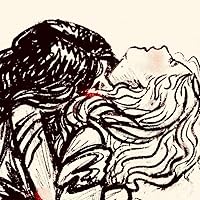
EDMUND AMORETTI The Amoretti by Edmund Spenser (c. 1552-99), published in 1595, is one of the great Elizabethan cycles of love poetry. The Amoretti cycle of poems is printed here in full, with each sonnet on its own on a page. This is beautiful poetry, poems of love, full of Edmund Spenser's delicate and intricate way with words. The Amoretti are packed of vivid imagery, of the natural world, of the seasons, of suns and moons, of days and nights - this is love poetry at its most refined and intelligent. Technically, Edmund Spenser knew everything about poetry. He wrote many sonnets (including the Amoretti), and in his The Faerie Queene he composed hundreds of nine-line stanzas. There is a stately progress to Spenser's he did not rush things. He took his time. William Wordsworth spoke of the 'Sweet Spenser, moving through his clouded heaven with the moon's beauty and the moon's soft pace'. In the Amoretti, is cycle of love sonnets, Spenser tackled his target, his beloved, from many directions. Spenser is unsurpassed in the art of poetic exaltation - no other poet of the era - and of subsequent or previous eras - can top Spenser's sense of the superlative and the exalted. Spenser's poetry is a litany of 'Epithalamion', 'A Hymn in Honour of Love', 'A Hymn in Honour of Beauty', 'A Hymn of Heavenly Beauty', 'A Hymn of Heavenly Love', 'Prothalamion', 'The Calendar' and of course The Faerie Queene all contain passages of lyrical praise. As with William Shakespeare, Edmund Spenser's view of the world was crystallized in his poetry is an expansive, dramatic, encyclopaedic vision. The sheer amount of work by Spenser - the copious letters, 'Complaints', 'Hymns', sonnets, and stanzas in The Faerie Queene - attest to his love of writing. The length of The Faerie Queene is not the least astonishing thing about it. Spenser clearly had a lot to say, and would not stop until he had said it. With bibliography and new illustrations. ISBN 978186171530. 128 pages. www.crmoon.com
Edmund Spenser (c. 1552 - 1599) was an important English poet and Poet Laureate best known for The Faerie Queene, an epic poem celebrating, through fantastical allegory, the Tudor dynasty and Elizabeth I.
Though he is recognized as one of the premier craftsmen of Modern English verse in its infancy, Spenser is also a controversial figure due to his zeal for the destruction of Irish culture and colonisation of Ireland.
Spenser's poetry is elegant, skillful, witty and complex. It makes you re-appreciate the art of sonnet on an entire new level. But it is not the same kind of witty that you get in Sydney, Wyatt or Shakespeare - it is a completely different kind of sonnet. It's beauty is in it's elegance as well as in content.
When I first read Spenser I thought that his sonnets were beautiful, but as for complexity or wit I was a bit unsure. It took me a couple of readings to truly appreciate what he is doing here, in this beautiful beautiful sequence. I have to admit that now he is one of my favorite sonneteers, one of the better sonnet writers I've read, especially when you look at it as a sequence, not as stand-alones. Highly recommended.
One day I wrote her name upon the strand, But came the waves and washed it away: Again I wrote it with a second hand, But came the tide, and made my pains his prey. "Vain man," said she, "that dost in vain assay, A mortal thing so to immortalize; For I myself shall like to this decay, And eke my name be wiped out likewise." "Not so," (quod I) "let baser things devise To die in dust, but you shall live by fame: My verse your vertues rare shall eternize, And in the heavens write your glorious name: Where whenas death shall all the world subdue, Our love shall live, and later life renew.”
This is another sonnet sequence I had to read for my Univeristy course and this one was not as good as Astrophil and Stella. I found it dragged on and had to start reading each word aloud so I knew I was actually reading each word haha.
One day I wrote her name upon the strand, But came the waves and washed it away: Again I wrote it with a second hand, But came the tide, and made my pains his prey.
"Vain man,"said she, "that dost in vain assay (=try) A mortal thing so to immortalize; For I myself shall like to this decay, And eke (=also) my name be wiped out likewise."
"Not so," quoth I, "let baser things devise To die in dust, but you shall live by fame: My verse your virtues rare shall eternize, And in the heavens write your glorious name:
Where whenas death shall all the world subdue, Our love shall live, and later life renew."
This collection of love sonnets is diverse and intriguing. I’m reading them in preparation for starting the Faerie Queen. There are actually several sonnets in here where he talks about how his progress on the Faerie Queen has been halted by his romance.
The sonnets go through several phases: an early phase in which the poet is all-admiring of his love and defends her to others, a middle phase where he complains of her pride and coldness and how ill these fit her beauty and virtue, and a final phase after she has accepted his love which is again admiring, humble, occasionally sexy, and longing.
unlike some other sonnets that i've read (notably shakespeare as well as philip sidney's astrophel and stella), i find that amoretti isn't quite as clever. the sonnets don't have that same clever wit to them that others that i've read have. this sonnet collection is undeniably beautiful and its strength lies in that rather than its wit. each one is composed beautifully and the imagery is really vivid.
i did find this collection a little bit difficult to get through and often felt sorta bored. like, yeah, the sonnets are pretty, but what else??? they're kinda just boring. i can't deny that edmund spenser is a brilliant writer—he has a mastery over the english language and i would never dare to claim that i could write objectively better sonnets than him—this collection just wasn't my favourite in terms of writing style and content. i think i might have enjoyed the sonnets more if i spaced out my reading of them though that wasn't really an option for me as i did read this as required reading for class. i think these sonnets are really good to read in small doses, but just get a little dense if you read the entire collection at once.