From the beloved author of All Quiet on the Western Front, Flotsam is a terrifying portrait of Europe as the Nazi shadow falls over the continent.
Political dissidents, Jews, medical students, petty Among the thousands of displaced persons traveling the unpaved roads of Europe, there are Steiner and Kern. Both have irritated officials for outstaying their two-week sojourn in Czechoslovakia. And so they must leave. Not that either has any place to go. Not in 1939. But when a man is led by a guard to the border of one country, he must try another. Until he is escorted from that one too.
Living hand-to-mouth, selling shoelaces and safety pins for a few pennies, Steiner and Kern find that, remarkably, there are still pleasures to be had. Paris, for one; love, for another. For amid the heartless cruelty and cold-blooded laws of the Nazi state, there is still humanity and kindness. And there is incomparable joy in falling in love, surviving, and telling your story so it is never forgotten.
Erich Maria Remarque was a German novelist best known for All Quiet on the Western Front (1929), a landmark anti-war novel based on his experiences in World War I. The book became an international bestseller, defining a new genre of veterans’ literature and inspiring multiple film adaptations. Its strong anti-war themes led to condemnation by the Nazi regime, which banned and burned his works. Born Erich Paul Remark in 1898, he adopted the surname Remarque to honor his French ancestry. He served on the Western Front during World War I, where he was wounded, and later pursued various jobs, including teaching, editing, and technical writing. After the massive success of All Quiet on the Western Front, he wrote several other novels addressing war and exile, such as The Road Back, Three Comrades, and Arch of Triumph. His outspoken opposition to the Nazi regime forced him into exile in Switzerland and later the United States, where he became a naturalized citizen in 1947. Remarque’s personal life included high-profile relationships with actresses Marlene Dietrich and Paulette Goddard, the latter of whom he married in 1958. In 1943, his youngest sister, Elfriede, was executed by the Nazis for anti-regime remarks, an event that deeply affected him. He spent his later years in Switzerland, where he continued writing. His final completed novel, The Night in Lisbon (1962), was another bestseller. He died in 1970 at the age of 72, leaving behind a literary legacy that continues to shape discussions on war and its consequences.
Formerly man had only a body and a soul. Now he needs a passport as well for without it he will not be treated like a human being. ― Stefan Zweig, The World of Yesterday
This bitter observation of Stefan Zweig, written when he was living in exile in Brazil, reflecting on his experiences fleeing Nazi persecution, could have been one of almost all the refugees who are the subjects of Erich Maria Remarque’s novel Flotsam/Love thy Neighbour, serving as a motto that pithily captures their situation.
In two intertwining narratives, Remarque presents the vicissitudes of Ludwig Kern, a young Jewish student, and of Joseph Steiner, a hardened political activist and Nazi opponent, who are both part of the motley community of refugees pushed over the border. Their ways intersect several times in their attempts to find a new place where they can settle – as all the refugees they meet on their itineraries, at the crossing of borders, in prison, hiding, hunting for work and residence permits. Bereft of their rights and citizenship, the displaced live a life of precarity. As they are welcome nowhere and cannot gain citizenship elsewhere, they are pushed and shoved from Vienna to Czechia and back again, to Zürich, in a vaudeville ad absurdum which would be as comical as an excellent revolving door comedy , if not so tragic, thinking of the fate of those who couldn’t get away in time. Only a few manage to escape - to Paris – and eventually the USA.
Often Remarque adds a heartwarming or comical note to the various encounters, from a running joke (on a man with a suitcase and a chicken), to the exchange of strategies and tips to outmaneuver the authorities, larded by philosophical musings on history, the nature of humankind, lyrical dreams of freedom and a new life in safety – some even find love on their path.
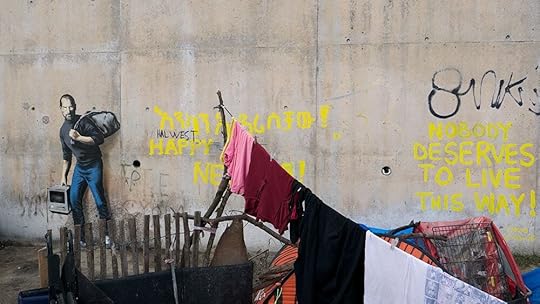
(Banksy, Calais)
A couple of years ago I finally read Erich Maria Remarque’s All Quiet on the Western Front, which, even aware of its stature as a classic, exceeded my high expectations, turning out one of the best written and gripping fictional accounts of the impact of the First World War on the life of individuals I have ever read. When Greg, who is a Remarque completionist, pointed out Flotsam/Love thy neighbour as his favourite Remarque, needless to say that my hand reached out the moment a copy caught my eye in the local library.
What else can I do but warmly recommend reading Flotsam/Love Thy Neighbour? It is a masterpiece of storytelling, a deeply humane and moving novel.
Written more than eighty years ago, it is impossible to read this book and not see the uncanny parallels with today for instance when coming across reflections like this one:
A crude age. Peace is stabilized with cannon and bombers, humanity with concentration camps and pogroms. We’re living in a time when all standards are turned upside-down. Today the aggressor is the shepherd of peace, and the beaten and hunted are the troublemakers of the world. What’s more, there are whole herds who believe it!
Already living in Switzerland before his books were burnt and his German citizenship was taken away, Erich Maria Remarque’s personal encounter with a 20 year old German refugee was the spark that triggered Remarque to write the novel. With the novel Remarque wanted to draw attention to the particularly arduous situation of the many displaced persons, fleeing or expelled from Nazi Germany, stripped of their citizenship, identity and passports following on the national socialist consolidation of power in March 1933 - many jews, also socialists, journalists, academics and priests - who fruitlessly attempted to find a place elsewhere where they could stay and safely go on with their lives.
Flotsam – the original title - as well as the title Love thy Neighbour - for which Remarque opted later - are both fitting and striking titles in their own right and also complementary, capturing the double dynamics that are both at work in the novel. While Flotsam evokes the reduction of human beings to powerless objects at the mercy of fate, not unlike the flotsam (and jetsam) washed up on the beach, the instigation to love thy neighbour is a powerful moral appeal that brings the biblical principle– omitting the second half of the equation, as if Remarque wanted to clarify which part is the most crucial.
Despite the harrowing context, Flotsam/Love thy neighbour, with Remarque’s sarcastic (and often witty) asides, is not a cynic or gloomy account of human cruelty and misery, but on the contrary frequently points at the many moments and various forms of solidarity between the refugees as well as from the ones who are expected to execute the inhumane policy of their governments. Survival not only takes daring, ostentatious heroic and cunning actions but also deceptively small gestures, like border guards who help the refugees they have to deport with a little money, a meal or good advice, or who simply deliberately decide to look the other way when they escape or try to enter their country again.
Man is magnificent in his extremes—in art, in stupidity, in love, in hate, in egotism and even in sacrifice; but what the world lacks most is a certain average goodness.
Flotsam is a haunting reminder to everyone who would forget that undocumented people are the same human beings as people who are fortunate to be born and live in safer places and have the ‘right’ documents. Lest we forget from this poignant testimony of the past, people don’t leave everything that is near and dear to them behind for a bagatelle or out of fancy, but because they need to. As Martha Balthazar put it simply last week: you don't migrate because you might be entitled to a bed somewhere else, but because you can't stay where your bed is.
4,5/5 Remarque pisze o emocjach, w sposób, który spływa na czytelnika jak tsunami. Taka cisza przed burzą. Płakałam, bo nikt nie potrafi piękniej i bardziej boleśnie opisywać miłości.
Having read all the novels published by Remarque during his lifetime—and loving them all—this one is my favorite. It is set in the mid-30s and follows three main characters who are stateless exiles driven out of their homes in Nazi Germany. This was a topic Remarque understood intimately, much as he did the experiences of a soldier in All Quiet on the Western Front.
Remarque's novels tell stories of common people who live through major episodes of German history. In this story one gets a deep understanding about the day-to-day struggles exiles had to face. They are unwanted in the countries they move to and unable to return to their homes. These are stories behind the statistics and machinations of politicians on the world stage leading up to World War II.
It is the story of enduring love that has to survive through barbaric circumstances. In other words, another great, unforgettable Remarque novel that exposes many facets of the human condition. In this case, love is much more than that between a young man and woman. It is also about the love of friends, family, and strangers. More than that, it is about how these types of love have to survive despite irrational hate all around them driven by fear, prejudice, and instincts of self-preservation. There are many parallels to today’s world with lessons about what we might become without even noticing it. It has been translated into English under the title Flotsam. It would have been more appropriate to directly translate Remarque's title, Love Thy Neighbor.
Una dintre cele mai tulburătoare cărți pe care le-am citit. Refugiați Europei reușesc să fie o adevărată familie, indiferent cât de greu le este și oriunde s-ar afla. M-am bucurat să văd trei referiri la România, una chiar cu ocazia expoziției mondiale de la Paris.
"...στην αρχή φαντάζεσαι πως είναι κάτι εξαιρετικό, μα δεν αργείς καθόλου να παρατηρήσεις όταν βρεθείς στον δρόμο για κάμποσο διάστημα, πως η δυστυχία είναι το πιο κοινό πράγμα στον κόσμο."
Για άλλη μια φορά,τελειώνοντας ένα βιβλίο του Ρεμάρκ,δεν ξέρω τι να πω.Με συγκίνησε,με πόνεσε και με τρόμαξε.Γράφτηκε πριν τόσα χρόνια,μιλάει για μια άλλη εποχή,κι όμως μοιάζει να έχει γραφτεί χθες,για την δικιά μας εποχή.Άνθρωποι χωρίς πατρίδα,περιφέρονται απο το ένα μέρος στο άλλο,συνεχώς κυνηγημένοι και προσπαθούν να επιβιώσουν σε έναν κόσμο εχθρικό.Πράγματα που για άλλους είναι δεδομένα ,γι'αυτούς είναι πολύ σημαντικά:μια άδεια παραμονής που τους δίνει τη δυνατότητα να μείνουν 2 βδομάδες σε ένα μέρος χωρίς να φοβούνται την αστυνομία,ένα κρεβάτι,ο ήχος ενός βιολιού,ένα ψητό κοτόπουλο,ένα ζεστό πανωφόρι. Είναι στενάχωρο βιβλίο αλλά και γλυκό,αφήνει μια ελπίδα αλλά δείχνει και πόσο σκληρός είναι ο κόσμος μας οπου ένα χαρτί ή η έλλειψή του,μπορεί να εκμηδενίσει έναν άνθρωπο.
Tên tiếng Việt của cuốn sách này là "Bản Du Ca Cuối Cùng của loài người không còn đất sống" một cái tên tuyệt đẹp. Tôi bị ấn tượng mạnh đến nỗi khi gặp nó lần đầu tiên trong tiệm sách cũ, không cần biết nó nói về cái gì, tôi mua liền tay.
Remarque là tác giả tôi yêu thích nhất trên đời. Tôi có thể viết hẳn một khóa luận về việc tại sao tôi thích ông đến vậy. Mà thôi, hãy nói về tác phẩm này.
Bạn có tin rằng con người nhiều khi không bằng mảnh giấy không? Giấy đó có thể là tiền, rõ rồi, và giấy đó có thể chỉ là cái thẻ cư trú. Để xác nhận họ được là NGƯỜI.
Tôi tin rằng nếu ai có máu phiêu lưu, phươt phọt sẽ thích cuốn sách này ghê gớm, bởi nó là liên tục những cuộc hành trình từ biên giới này đến biên giới khác, từ nhà kho, quán trọ, đến khách sạn rồi cả vỉa hè, ghế đá. Nhưng khác với Phượt, đi để cho vui, còn họ, đi là để chạy trốn, cái đói, cái chết, nhà tù. Đi là để tồn tại.
Hai nhân vật: Một Steiner già đời, lọc lõi, tinh quái và một Kern trẻ dại, ngờ nghệch và còn khá mộng tưởng lẫn hoài bão đều bị bắt nhốt vì cư trú bất hợp pháp. Họ che chở và cùng nhau vượt qua biết bao chặng đường dài.
Có một cảnh tôi ám ảnh mãi, là lần chia tay không lời của Steiner với người vợ. Lặng lẽ, giữa phố xá nhốn nháo và đông đúc nhưng đầy thương yêu và đau đớn. Đến nỗi tôi hiểu và đau nỗi đau của người đàn ông bị buộc phải cắt lìa với tình yêu của đời mình ấy.
Trong khốn khó, lầy lội và đêm đen, Remarque vẫn đem cho độc giả biết bao tình người: chia nhau từng xu lẻ, từng hớp rượu, món ăn, chỗ ngủ, và thấp thoáng hy vọng, dẫu rằng "vòm trời cao kia vẫn màu xám của vũ khí"
Tôi vừa muốn viết nhiều về cuốn sách này, vừa muốn viết ngắn vì chẳng muốn tiết lộ tình tiết chút nào với những người đến sau.
Chỉ biết rằng khi chiến tranh, mạng người mong manh quá, nhưng tình người cũng đủ đầy quá. Người tốt còn nhiều, hãy luôn tin như vậy, và đủ để bạn có thể sống vui vẻ, dẫu chẳng còn đất sống.
One of the best books that I've ever read. One of the best creations of Remarque. Splendid narrative, such real storyline that actually depicts how the scenarios were back in the late 1930s, the years just preceding the Second World War.
The title of the book is quite self-explanatory. The literal meaning of "Flotsam" is the floating wreckage of a ship. In this novel, Remarque skillfully sketches the lives of those ill-fated emigrants wandering across Europe just to breathe freely under the open sky, to lead a humane life. But all they can manage is to lead nightmarish gypsy lives with no sense of belonging. Having proper papers, passports, managing residential and work permits are everything for them. They pass from one border to another at the dead of night. Then this happens again and again. They have no place to go. That's the most sardonic yet pathetic aspect of their existence.
They have no place in the big world that God has created for them. Their hearts are torn apart by the borders and they belong to no country. They just keep on floating. They have to. Otherwise the cruel world would get better of them and they have to capitulate. But they don't. The human spirit never dies. As they keep on floating, they keep on breathing!
They smile, they sing, they play violin, they make love. The sense of love, sacrifice and camaraderie makes every page of this magnificent novel a fabulous reading experience. Remarque has magical touch! His depictions of even the minor details are so pleasant to visualize that I was entirely overwhelmed while turning the pages one after another. Long live the human spirit. Long live literature which inspire it, too!
"O romance lê-se bem, com agrado, pois os quadros são esboçados com leveza, não mostrando todo o horror das situações, antes retocando com tintas leves uma ou outra cena mais escabrosa. É um livro que [...] tem méritos, sentido humano, força documental, qualidade literária que o recomenda aos leitores que apreciam obras romanescas com um fundo humano e social." (da badana desta edição de 1960)
Esta descrição, embora datada (ao contrário do livro), resume bastante bem esta obra. E acho que foi precisamente a referida "leveza", sobretudo na primeira metade - ou mesmo dois terços - do livro, que não me permitiu ligar-me emocionalmente aos personagens e às suas histórias como mereciam, tendo em conta os acontecimentos narrados, tanto no passado como no presente.
A certa altura, parecia que os casos de detenção, prisão, deportação e regresso se iam sucedendo episodicamente sem que eu conseguisse sentir empatia pelas situações em que os personagens se viam envolvidos. No entanto, isto não retirou o interesse à leitura, sendo difícil fechar o livro, mesmo no fim dos capítulos.
Algumas frases que o autor vai pondo na boca dos vários personagens têm uma carga psicológica fortíssima, na forma como transmitem a resignação ou, por outro lado, a vontade de continuar a lutar por uma vida digna. Por vezes senti-me quase envergonhada quando alguém se sentia no paraíso só por ter onde dormir e o que comer durante uns dias...
Steiner é um grande personagem, que me cativou muito mais do que Kern (que é o ponto focal da história). A história de amor entre este e Ruth sempre me pareceu bastante morna, ao contrário da de Steiner, muito mais intensa, apesar de ser apenas vislumbrada durante a maior parte do livro.
Se todo o livro tivesse a intensidade da parte final levaria sem dúvida as 5 estrelas. No fim das contas, é uma obra excelente que recomendo a toda a gente.
«The novel reads well, with pleasure, as the pictures are lightly sketched, not showing all the horror of the situations, rather brushing up with light paints some more lurid scenes. It is a book that [...] has merits, a human sense, documentary power, a literary quality that recommends it to readers who appreciate novels with a human and social background.» (on the flap of this 1960 edition)
This description, although dated (unlike the book) sums up this work really well. And I think it was precisely that "lightness", especially in the first half - or maybe two-thirds - of the book, that prevented me to create the emotional connection with the characters and their stories that they deserved, considering the events that are narrated, both in the past and in the present.
At some point, it seemed that all the arrests, imprisonments, deportations and returns were taking place one after another while I was failing to feel empathy towards the situations in which the characters found themselves in. And yet, this didn't take away my interest for this reading and I found it difficult to close the book, even at the end of a chapter.
Some of the sentences that come up in the dialogues carry a very heavy psychological weight, as they convey the resignation or, on the other hand, the will to keep on fighting for a dignified life. Sometimes I felt almost ashamed when someone thought they were in paradise just because they had somewhere to sleep and something to eat for a few days...
Steiner is a great character that captivated me a lot more than Kern (who is the focal point of this story). The love story between Kern and Ruth always felt quite bland, unlike Steiner's, much more intense, although we get only glimpses of it during most of the narrative.
If the whole book had the intensity of its final chapters, it would definitely get 5 stars. All in all, it's an excellent work and I recommend it to everybody.
Esu ne kartą girdėjus, kad iš Remarko išaugama. Sutinku, labai jaunam skaitytojui - jis turbūt pasirodys nuobodus, monotoniškas, vienodas. Jaunam - jis turbūt pasirodys gilus, romantiškas, skaudus. Vėliau gi jis turėtų pasidaryti banalus, paviršutiniškas? Arba galiu vis dar jaustis jauna, arba tiesiog niekada neišaugsiu ir viskas. Sakykit ką norit, tebūnie šis autorius mano "guilty pleasure", visos jo knygos pas mane Goodreadse sužymėtos 5*, ir kiekvieną kartą imdama naują istoriją, jau po pirmų puslapių (o gal visgi ir dar prieš juos) žinau, jog ir vėl bus penkios. "Mylėk savo artimą" knygoje man nelabai patiko tik viena - pavadinimas. Neįdomus, neoriginalus, be subtilesnių sąsajų, ir niekada (jei ne autorius) - nebūtų suviliojęs. Bet knygos turinys ir vėl užbūrė. Galit šiaip toliau net neskaityti, nes ta mano nuomonė tokia labai jau šališka. Bet jei kas vis dar skaitot...vėl panirau į 20 a. vidurio laikmetį, kurį tiesiog mačiau akimis lyg filmą, skaitydama Remarką atrodo regiu veikėjų drabužius, veidus, jų namus (nors tai net nebūtinai būna aprašyta), jaučiu baimę, meilę, skausmą, užuodžiu orą, susipažįstu su miestais ir vėliau svajoju juos aplankyti. Išskirtinai ši istorija - privertė susimąstyti apie žmogaus pasaulio suvokimo absurdiškumą: supratimą taisyklių, įstatymų kaip neginčijamos tiesos ir aklumą žmogui, bei realybei. Kai kažkokia linija ar popieriaus skiautė yra svarbesnė nei geras žmogus. Guodžia tai - kad visgi ne visi akli, tačiau ir vėl greit nuliūdina - jog jei šis absurdas kažkam yra matomas, tas kažkas yra per mažas su juo kovoti. Didžiausias malonumas kaip ir visose autoriaus istorijose - buvo dialogai ir rašymo stilius. Atrodo neįmantrus, bet vis tiek kažkoks ypatingas. Nepergrūstas skambiomis frazėmis, tačiau pilnas nepajuntamai paprastos tiesos. Lengvas, bet ne naivus, nei per grubus, nei per saldus. Tikras. Autoriaus dialogai neatrodo dirbtini, visada tikroviški, su visais "nepasakymais", kurie atsitinka realybėje, su ironija arba susižavėjimu - atrodo, viską gali pajusti. Ai ir yra dar vienas dalykas, kuris man nelabai patinka. Mano Remarko kolekcijoje liko vienintelė neskaityta knyga.
জীবনে নানা রকম বিপর্যয় হয় , অপ্রাত্যাশিত ঘটনা ঘটে তাও মানুষ বেঁচে থাকে পরের দিন সকালবেলায় হয়তো সবকিছু ঠিক হয়ে যাবে এই চিন্তা করে (কথার কথা বললাম, এইরকম আহাম্মক এখন আর নাই )। কিন্তু কোনকিছুই সহজে ঠিক হয় না । সারাদিন আকাশ হাসিখুশি থাকলেও রাস্তায় বের হওয়ার সাথে সাথে মেঘের চিল্লাচিল্লি কান্নাকাটি শুরু হয়ে যায় , ভাত খাওয়ার সময় শার্টে তরকারির ঝোল পড়ে যায় , রাস্তার এক চিপা দিয়ে হাঁটা স্বত্বেও ট্রাক যাওয়ার সময় রাস্তায় জমা পানি ছিটায় দিয়ে যায় , সারাজীবন পরীক্ষায় লাল কালি পাওয়া লোকটার করোনা রেজাল্ট পজিটিভ হয়ে যায় , পরিবারের এক মাত্র আয়ক্ষম মানুষটা মৃত্যুর আগে ঋণের পাহাড় বানায় দিয়ে যায় , রিলেটিভের বিয়ের ডেট কাকতালীয় ভাবেই পরীক্ষার মধ্যে পড়ে যায় ইত্যাদি সিত্যাদি । এতো এতো নিরাশার মধ্যেও এটুকু বেশ বুঝা যায় যে বেঁচে থাকাটা আসলে অনেক বড় সাফল্য বটে। যুবক বয়সী লুদভিগ কার্ন একজন রিফিউজি । একদিন হঠাৎ করেই সে জানতে পারে তার নিজের দেশ বলতে কিছুই নেই । সুতরাং সে তার দেশ খুঁজে বেড়ানো শুরু করে । কখনো অস্ট্রিয়া , কখনো সুইটজারল্যান্ড আবার কখনো চেকোস্লোভাকিয়া... এক এক দেশে যায় আর সে দেশের কর্তৃপক্ষ আবার তাকে ধরে আরেক দেশে পাঠিয়ে দেয় আবার ঐ দেশের কর্তৃপক্ষ আরেক দেশে । কার্নের এই স্বদেশ অনুসন্ধান ভ্রমণে একে একে তার সাথে পরিচয় হয় স্টাইনার , লিলো , ডক্টর বিয়ার , মরিল আর রুথ । একটা বিশাল গল্পের মধ্যে যুক্ত হতে থাকে আরো রিফিউজি দের কষ্টের গল্প , টিকে থাকার গল্প , পালানোর গল্প , ধরা পড়ার গল্প। এতো কিছুর মাঝেও কার্ন লক্ষ্য করে রুথের প্রতি এক ধরণের ভালো লাগা কাজ করছে । রুথকে ব্যাপারটি জানানোর পর রুথ তার সম্মতি দেয় । মানে কিছু একটা হয়ে যায় তাদের মধ্যে কিন্তু এভাবে পালিয়ে পালিয়ে কতদিন ! কেউ কোন কারণে বিচ্ছিন্ন হয়ে গেলে তার সাথে যোগাযোগ করার কোন উপায় নেই কারণ রিফিউজিদের নিজেদের কোন ঠিকানা থাকে না । কার্ন এতো কষ্টের মধ্যেও স্বপ্ন দেখে একটা নিরাপদ আশ্রয়ের যেখানে সে রুথ কে নিয়ে নিশ্চিন্তে বেঁচে থাকতে পারবে । কিন্তু কোথায় সেই নিরাপদ আশ্রয় ! কোথায় সেই স্বর্গ ? এটি মারিয়ার ‘’ফ্লটসাম’’ উপন্যাস টির অনুবাদ । এটির সাথে আমার প্রথম দেখা হয় প্রায় এক বছর আগে । পড়া শুরু করেছিলাম এক বুকশপে বইসা । পরে এই মড়ক ফড়কের কারণে আমরা বিচ্ছিন্ন হয়ে যাই । সে এখন হয়তো অন্য কারু ঘরে রিফিউজি হয়ে আছে । সম্প্রতি আমি ওকে বাধ্য হয়ে ত্যাগ করি এবং ‘’সেবার এই অনুবাদ টি’’ আমাদের ভাড়া করা ঘরে তুলি । কিন্তু আমি ওকে ভুলতে পারি নি । ‘’কোথায় স্বর্গ’’ পড়ার সময় ‘’ফ্লটসামের’’ কথা আমার মনে পড়েছিলো । যাই হোক সে যেখানেই থাকুক সুখে থাকুক ...এই কামনা আমি করবো না ।
Many refugees kicked out of Germany in the 1930's without passports or visas are forced back and forth across the borders of Austria, Czechoslavakia & Switzerland. The characters in the book just want to find work, love, and security in an almost dystopian environment.
"Η δύναμη της αγάπης", παρά τον sappy τίτλο του και με εξαίρεση μερικές στιγμές λυρικής έξαρσης του Remarque, δεν είναι μια ιστορία αγάπης για να μελώσετε. Τουναντίον, είναι μια ιστορία φρίκης, ακόμη κι αν με την εκ των υστέρων γνώση, δεν είναι παρά το προανάκρουσμα της μεγαλύτερης φρίκης στην ιστορία (της χιτλερικής γενοκτονικής θηριωδίας μεσούντος του Β'ΠΠ).
Είναι η ιστορία των απάτριδων εκπατρισμένων, των ανεπιθύμητων από το ναζιστικό καθεστώς που κυριολεκτικά βολοδέρνουν στην Ευρώπη καθώς κανένα κράτος δεν τους θέλει χωρίς επίσημα έγγραφα (τα οποία και προφανώς ως εκπατρισθέντες ΔΕΝ ΜΠΟΡΟΥΝ ΝΑ ΑΠΟΚΤΗΣΟΥΝ) και τους πετάει στο επόμενο, ανθρώπινες ζωές που γίνονται μπαλάκι στα σύνορα των κρατών, λαθραίοι άνθρωποι που προσπαθούν να επιβιώσουν χωρίς να έχουν το δικαίωμα να σταθούν πουθενά. Φυαλακίζονται απλώς επειδή υπάρχουν (και επειδή δεν έχουν τα έγγραφα που τους απαγορεύεται να αποκτήσουν).
Ωστόσο, δε χάνουν σχεδόν ποτέ το κουράγιο τους και την ελπίδα τους.
Ο Λούντβιχ Κερν από Εβραίο πατέρα και Γερμανίδα μητέρα είναι φοιτητής 21 ετών, στην κοσμοπολίτικη Βιέννη, τη δεκαετία του 1930, αλλά δεν έχει διαβατήριο ως άπατρις. Ο πατέρας του έχασε την ιθαγένειά του ως «εχθρός του καθεστώτος» μετά από άδικη καταγγελία ανταγωνιστή ο οποίος με την απόλυτη συνέπεια των σιχαμάτων που στηρίζουν τέτοιου είδους καθεστώτα, στη συνέχεια του πήρε και το φαρμακευτικό του εργοστάσιο.
Ο Γιόζεφ Στάινερ είναι παρασημοφορημένος στρατιώτης του 1ου παγκοσμίου πολέμου και πολιτικός εξόριστος, δραπέτης από στρατόπεδο συγκέντρωσης που άφησε πίσω τη γυναίκα του. Και οι δύο έχουν απελαθεί, είναι «εκπατρισμένοι» από την έτοιμη να αιματοκυλήσει τον κόσμου, όζουσα μίσος και πυορροούσα σκοτεινό παραλογισμό χιτλερική Γερμανία. Στο δρόμο τους, θα βρουν και την εβραϊκής καταγωγής φοιτήτρια Ρουτ που οδηγήθηκε στη φυγή για να επιζήσει (και στην πορεία πούλησε και τα βιβλία της σχολής της) και γίνεται ζευγάρι αχώριστο παρά τις δυσκολίες με τον Λούντβιχ.
Και οι τρεις, επιδίδονται σε έναν αγώνα επιβίωσης (και ανώμαλου δρόμου), σε έναν κόσμο που φωνάζει "ΔΕ ΣΑΣ ΘΕΛΟΥΜΕ, ΔΕ ΘΕΛΟΥΜΕ ΚΑΝ ΝΑ ΑΝΑΓΝΩΡΙΣΟΥΜΕ ΤΗΝ ΥΠΑΡΞΗ ΣΑΣ", σκληραίνουν χωρίς να χάνουν τις ευαισθησίες τους, παλεύουν με όλες τους τις δυνάμεις και αντιστέκονται, γλιστράνε, ξεφεύγουν, πιάνονται και ξεφεύγουν, συνεχίζουν κάθως κάθε χώρα τους ξερνάει με τη μέθοδο της απέλασης αδιάφορα στην επόμενη, χωρίς όμως ποτέ να έχουν το δικαίωμα να πάρουν μια ανάσα, να σταθούν κάπου, ενώ πολύ συχνά ύαινες με ανθρώπινη μορφή εκμεταλλεύονται τη δεινή τους θέση για να τους εκμεταλλευτούν, να τους κλέψουν, ή απλώς να ξεσπάσουν την άδικη εκδικητική μανία τους στον αδύναμο, τον διαφορετικό, τον κατατρεγμένο.
Ο βαθιά ανθρωπιστής Ρεμάρκ πιστεύει ότι η αγάπη θα νικήσει, ίσως γιατί το έργο εκδόθηκε το 1939 και τα χειρότερα δεν είχαν έρθει ακόμα, οι διωγμοί δεν είχαν αντικατασταθεί από τη μαζική εξόντωση. Οι ήρωές του, παρά τα όσα ζουν, δεν χάνουν τις ελπίδες τους και με αισιοδοξία προσδοκούν τις μέρες που θα λένε στα εγγόνια τους τις ιστορίες όσων έζησαν. Στο τέλος, ο Κερν και η Ρουθ θα κατορθώσουν να αποκτήσουν διαβατήρια και εισιτήρια για το Μεξικό, αποχαιρετώντας την Ευρώπη που είναι έτοιμη να βυθιστεί στο φονικότερο παραλογισμό της ιστορίας, ενώ ο Στάινερ φεύγει με ένα μεγάλο μπαμ, έχοντας δει τη γυναίκα του να πεθαίνει και όντας υπό κράτηση από τη ναζιστική του νέμεση, παίρνει μαζί του τον αντίπαλό του σε μια πτώση από ψηλά, πετυχαίνοντας ένα θάνατος-σωτηρία για τον εαυτό του και ταυτόχρονα εκδίκηση για τη χυδαία χιτλερική του νέμεση, τον Στάινμπρένερ.
Πάντα τελειώνοντας ένα βιβλίο γράφω δυο λόγια. Είναι όμως, μερικές φορές που διαβάζοντας ένα ανάγνωσμα δε νιώθω τίποτα. Έτσι ένιωσα με το συγκεκριμένο βιβλίο. Δεν ένιωσα δυστυχώς, κάτι. Δε με συνεπήρε, δε γνώρισα τους ήρωες, δεν έμαθα τα μυστικά τους. Η πλοκή, κύλησε σα λάβα ηφαιστείου, αργά, καίγοντας όλες τις εικόνες κ συναισθήματα. Το θέμα είναι πως στεναχωριέμαι όταν ένα βιβλίο δε με αγγίζει καθόλου. Ίσως σε άλλη χρονική στιγμή να αποκόμιζα παραπάνω πράγματα. Ήταν καλογραμμένο κ διαβάζεται χωρίς καμία δυσκολία. Δεν απαιτεί ιδιαίτερη συγκέντρωση οπότε για το καλοκαίρι είναι μια καλή επιλογή. Μέχρι εκεί όμως... Λυπάμαι...
Uygarlığın tarihi, onu yaratmış olanların ıstıraplarının da tarihidir. Aidiyet hissi, boşluk, kimliksizlik, oradan oraya savrulmak. Bu kelimelerin yansıması İnsanları Sevmelisin romanı. Erich Maria Remarque kaos ortamında Naziler tarafından sınır dışı edilen insanların yaşadığı zorlukları, oradan oraya savruluşlarını, diğer ülkeler tarafından kabul görmemelerinı kısacası mülteci olmanın sonuçlarını kitapta çok iyi anlatmış. Bu insanlar sadece nefes alıyorlar, kağıt üzerinde yoklar. Hayalet gibi oradan oraya sürüklenip, surekli yer değiştiriyorlar. Hep bir korku; yakalanma korkusu onlari takip ediyor. Yorucu ve yıpratıcı bir yolculuk. Fiziksel olarak değişirken, ruh dünyaları da bu ortamla birlikte değişiyor. Kimileri yeni hayatlar kuruyor, kimileri hastalığa yeniliyor, kimileri bu ortama daha fazla dayanamayıp yaşamına son veriyor. Kitapta çok karakter olmasına rağmen metin iki karakter üzerinden şekilleniyor; Steiner ve Kern. Ve arka planda Kern ve Ruth'un saf aşkı. Steiner Kern'den büyük bir asker. Aslinda Kern'e yol gösteren tek kişi. Kitapta umutsuzluk yok hep bir umut var geleceğe yönelik. Kitabın dilini cok sevdim. Naif bir anlatımı var. Okudugum en iyi toplumsal romanlardan biri olduğunu söylebilirim. Okuyun bence.Iyi okumalar.
Será que vai haver alguma vez em que eu não vá dar um 5 a Remarque?
Este é o segundo livro de Erich Maria Remarque que eu leio. O primeiro foi a A Centelha da Vida. A Centelha da Vida mostrava-nos o dia-a-dia de um grupo de prisioneiros num campo de concentração, pouco antes do fim da Segunda Guerra, os seus esforços para se manterem vivos quando sabem que a libertação está perto. Mostra-nos o poder da esperança na alma humana, essa centelha que nos faz resistir e, sem a qual, morremos. Desenraizados, por sua vez, transporta-nos para os anos anteriores à guerra, para o princípio dos horrores, seguindo a história dos refugiados alemães, expulsos ou fugidos do seu país por serem judeus, comunistas, inimigos do partido Nazi... É angustiante perceber que, apesar de estarmos num século novo, a realidade continua a mesma. Já não são os europeus que vagueiam de fronteira em fronteira, para nós as fronteiras estão abertas, mas os refugiados continuam a existir, vindos de fora, pessoas que só querem sobreviver e encontrar um pouco de dignidade humana, mas que são barradas à chegada e deixadas com as vidas em suspenso, sabe-se lá quanto tempo. O que diria Remarque sobre isto? Provavelmente muito do que escreveu neste livro.
Remarque, pacifista, anti-Hitleriano, cujas obras foram banidas da Alemanha por serem consideradas anti-patrióticas, e que viu a sua nacionalidade revogada, acabando por partir para os EUA, viveu muitos dos horrores das duas guerras, de forma mais ou menos directa e foi sobre essas experiências e as dos seus compatriotas que escreveu. Mas não há auto-comiseração na sua escrita, não há aquele tom de tragediazinha que hoje muitos autores empregam quando escrevem sobre estes temas, para tentar fazer as pessoas chorar e levá-las a pensar que somos todos uns coitadinhos. É sempre tudo muito pragmático. Ele não nos está a tentar fazer sentir coisas. Ou melhor, está, os seus livros são verdadeiros manifestos contra a guerra, contra as calamidades que viu. Mas, em vez de os encher de lamúrias, simplesmente descreve o que se passa, sempre com poesia, a sua escrita é bela, tão bela, mas de forma bastante objectiva e às vezes quase bruta. Como se descrever o que se passa, preto no branco, fosse suficiente para nos fazer sentir que algo de errado se está a passar. E é. Não é preciso dizer que é horrível para perceber que é horrível.
E depois, Remarque mantém sempre a esperança. Os seus livros têm tristeza, têm terror, mas têm beleza e bondade. Está lá tudo, toda a natureza humana como sempre foi e será, no seu melhor, no seu pior, tanto para o bem como para o mal, com os várias matizes de cinzento pelo meio. Aqueles que resistem de forma heróica, como Steiner, aqueles que desistem por tantas razões, aqueles que têm medo, mas o vencem, como Kern e Ruth, mais fortes porque se amam, porque se têm um ao outro. Mas também aqueles que se deixam vencer pelo medo, aqueles que não querem saber, aqueles que dizem que só estão a obedecer a ordens e viram a cara ou fazem de propósito para te lixar a vida... Aqueles que temem perder o que têm, e preferem espezinhar os outros a perdê-lo, aqueles outros que dão o pouco que têm, porque já perderam tudo...
Mas parece-me que Remarque, apesar dos conturbados tempos que viveu, cria na parte melhor da natureza humana. Nas crises, a humanidade tem de se juntar e apoiar, mesmo que através de actos pequenos (mas enormes em significado). É essa a verdadeira mensagem destes livros. Não são só denúncias do horror da guerra, gritos de revolta, são, também, mensagens de esperança. A vida é injusta, a humanidade é cruel, mas a humanidade pode, também, elevar-se perante a adversidade, ultrapassar as suas fragilidades e resistir. E é essa humanidade que tem de vencer.
Perskaičius jau aštuntą Remarko knygą ir dramatiškai artėjant iki jo kūrinių pabaigos, mažai ką naujo ir berandi pasakyti. Visos knygos kažkuo skirtingos, bet esminiai dalykai niekada nesikeičia ir apie juos, kad ir kokie jie nuostabūs būtų, negali kalbėti jau nežinia kelintą kartą.
Mane gal net kažkiek stebina, kaip jis sugeba kalbėdamas iš pažiūros apie tą patį, sukurti tokius skirtingus pasakojimus. Šį kartą romano centre du pabėgėliai, nerandantys sau vietos Europoje, blaškomi nuo sienos iki sienos. Apie pabėgėlius Remarkas rašo daug - ir apie Paryžiuje ant paties karo slenksčio besislapstantį, išsiuntimo bijantį chirurgą, ir apie laivo į išsvajotąją Ameriką laukiančią porą, ir apie Niujorke karo pabaigos laukiančius emigrantus. Bet nei vienoje iš šių knygų nebuvo taip aiškiai iš arti parodytas tas žmonių mėtymas iš kampo į kampą, atsisakant juos priimti. Pavaizduota tai tikrai meistriškai ir iš to kyla Remarko kūryboje nedažnai pasitaikanti tokie prikaustanti įtampa, nuolat jaudinantis dėl veikėjų.
Tiesa, man šiame romane Remarkas pasirodė ne savo kūrybos viršūnėje - epizodinių veikėjų istorijos, kuriomis aš paprastai labai žaviuosi, buvo skystokos ir prabėgtos probėgšmais. Pritrūkau ir dialogų, ir galbūt kažkiek gilumo.
Kad ir kaip bebūtų, Remarkas puikus pasakotojas ir puikus moralistas, o “Mylėk savo artimą” dar vienas puikus įdomios literatūros su misija pavyzdys.
This is my third book out of Remarque collection. I would say that this story is much more powerful that "Arch of Triumph" and "Heaven Has No Favorites". The nover mainly covers story of three people: Steiner and a couple Kern and Ruth. Terrible pre-WWII times force them to run between borders of different countries because they cannot go back to Germany and they have no legal documents.
The book covers a lot of important sides of people's soul. For instance: love, greed, kindness, hunger, belief in miracles, disappointment, disinterested help, friendship, honesty, cruelty and mercilessness. Also, you will definitely be able to see yourself in one of the various stories of interpersonal relations like: man and woman, father and son, friends, strangers and people in need.
During the whole story I was thankful for the life I have and people, who surround me. This book might help you to look at your life from a different angle.
He was full of an unformulated gray sadness. * The music swept over her like a warm rain—a warm, monotonous rain from which memory arose tormentingly.… * Whatever your heart says, is right. Throw yourself into it. But don’t get caught halfway. * You oughtn’t to keep anything from your former life. Nothing at all. And you oughtn’t to look back. That just makes you weary and useless. * He sat there quietly waiting for the pain and surprised that it did not come. There was only a dead feeling, an immense let-down, like the anxious moment before falling asleep when he had taken too much bromide. He sat thus for a long time, staring at his hands which lay on his knees like dead white animals, like pale insentient sea-monsters with five flaccid tentacles. They were no longer his. No part of him was any longer his; he was a strange body with eyes turned inward,scrutinizing a paralysis that showed no sign of life but an occasional quiver. * The words came again. Words of unhappiness and pain and loneliness and suffering, words, words that were much too big—but did small words exist for small beings that were ground down and abased? * [...]and they felt a kind of shadowy dread: that everything passes and must pass, and that presently time would reach out for them too.…
Es biju piemirsusi, cik forši ir lasīt Remarku, kad vienlaikus ir skumji un priecīgi, bezcerīgi un cerīgi. Kad nākamreiz atkal nevarēšu izdomāt, ko lasīt, tad lasīšu kādu šī autora darbu. Te ir viss - gan spraigs sižets, gan mīlas drāma, gan traģēdija, gan trilleris.
Remarka grāmatas ir viegli lasīt,jo tās ir īstas un nesamākslotas. Šīs klusās skumjas, nolemtība un cilvēki, kuriem "nelaime ir visikdienišķākais, kas vien var būt", taču cauri tam visam laužas pārcilvēcīga cilvēkmīlestība un aizverot grāmatu ir tāda gaišo skumju sajūta.
Όσο η Ευρώπη βυθίζεται στο χάος του φασισμού και οι κοινωνίες αποκτηνωνονται, υπάρχουν ανάμεσα τους κάποια καταραμένα πλάσματα χωρίς πατρίδα που είναι καταδικασμένα να τριγυρνούν τα σύνορα σαν μια τυπική επίσκεψη σε συγγενικό πρόσωπο. Ποτέ άλλοτε δεν ήταν τόσο σημαντικό ένα χαρτί, ενα διαβατήριο, μία άδεια παραμονής ή μία άδεια εργασίας. Χωρίς αυτό οι εκπατρισμενοι ήταν ένα απλό σακί με κόκκαλα. Χωρίς αυτό δε θεωρούνταν άνθρωποι...
Tegyvuoja asmenybės naikinimas! Senovės graikai vertino proto galią. Tai buvo tikra laimė. Vėliau jis išsigimė. Dabar protas padeda daryti nusikaltimus. Kultūros istorija - kančių istorija tų, kurie ją sukūrė.
২য় বিশ্বযুদ্ধের সময়কাল, ২১ বছর বয়সী লুদভিগ কার্ন, জার্মানী থেকে বিতাড়িত হয়ে ইউরোপের যতগুলো দেশে যায়, সব দেশ থেকেই বিতাড়িত হতে থাকে একের পর এক, তার পরিচয় হয়ে যায় রিফিউজি... Migration and Disaster কোর্সে Forced Migration নিয়ে পড়াশোনা করতে হত একসময়, কিন্ত এই উপন্যাস ছিলো যেন সেসবের একখন্ড বাস্তব চিত্র। কার্ন এমন একজন যে আমাদের শেখায় কিভাবে এতো যন্ত্রণার মাঝেও জীবনের প্রতিও শ্রদ্ধাশীল হতে হয়, যেকোনো পরিস্থিতিতে মানিয়ে নিয়ে, বিপদ থেকে শিক্ষা নিয়ে, সামনে আগাতে হয় ও সন্তুষ্ট থাকতে হয়। কার্ন এত প্রতিকূলতার মাঝেও বেঁচে ছিলো তবু ভরসা হারায়নি, জীবনবিমুখ হয়নি বরং বুদ্ধিমত্তার সাথে যখন যে সুযোগ পেয়েছে কাজে লাগিয়েছে। উদ্বাস্তু জীবনে পাশেও পেয়ে যায় সে রুথকে। রুথ রসায়নে পড়ত, ২য় বিশ্বযুদ্ধ তার জীবনের সমস্ত স্বাভাবিক কিছুকে কেড়ে নিয়েছে। তবুও কার্নের প্রতি ভালোবাসার তার শেষ নেই। শুধু একটু আশ্রয়ের জন্য একসাথে হাসিমুখেও ওদের কত না কষ্ট, যুদ্ধ!
স্টাইনারের জন্য শেষদিকে খুব মন খারাপ হলো, এমন তো নাহলেও পারতো! কিন্ত নিয়মই তাই, একজনের ক্ষতিতে লাভবান হয় আরেকজন। উদ্বাস্তুদের পলায়নপর ভাসমান জীবনের দুঃখময় আরেক কাহিনী পড়া হলো রেমার্কের লেখায়..... রেমার্কের বই, প্রিয় বই....
Vẫn tiếp tục sử dụng chất liệu sáng tác là số kiếp trôi dạt của những con người bất hạnh trong màn đêm tăm tối của chiến tranh, song so với Đêm Lisbon, Bản du ca cuối cùng lại đem tới cho mình những cảm nhận rất khác. Nếu Đêm Lisbon là khúc bi ca của tình yêu và sự tuyệt vọng, Bản du ca cuối cùng dường như có phần tươi sáng hơn một chút. Ở đó, tình yêu vẫn luôn là thứ được tập trung khắc họa, song bên cạnh tình yêu đôi lứa, ta còn tìm thấy ở câu chuyện đẹp đẽ này tình yêu gia đình, tình bằng hữu, thậm chí là cả tình đồng loại đầy cảm động giữa biết bao thù hằn, lọc lừa và dối trá chiến tranh – rực rỡ như ánh sao băng khẽ vụt qua màn đêm thẳm – điều khiến mình thậm chí còn yêu thiên tiểu thuyết này thêm nhiều phần.
Bản du ca cuối cùng là lát cắt cuộc đời của Ludwig Kern, một thanh niên Do Thái, trước sự bành trướng của Đức Quốc xã, giống như hàng triệu người Do Thái khác trên khắp đất nước có chung cảnh ngộ, anh buộc phải giã từ quê hương, trút bỏ quốc tịch rồi chịu cảnh nay đây mai đó. Trong đêm tạm trú tại một nhà trọ ở vùng nội đô nước Áo, trong hoàn cảnh ngặt nghèo này, anh đã có dịp làm thân với Josef Steiner – một người thông minh, khí khái và luôn hết mình vì bè bạn, cũng đồng thời là người bạn đường hết đỗi trung thành, không ngại sánh bước cùng anh trên con đường trốn chạy đầy bất định, truân chuyên. Trên chuyến hành trình lăn lộn qua nhiều đất nước, làm đủ mọi nghề, nếm trải đủ mọi bất hạnh, anh còn có cơ hội gặp gỡ Marill, Lilo, Binder, ông chủ gánh xiếc, ông thẩm phán hay viên cảnh sát tốt bụng – người đã tạo điều kiện cho anh chạy trốn giữa cuộc vây bắt, đặc biệt, số phận còn khẽ đẩy con thuyền anh cập bến tình yêu – nơi nàng Ruth đang ngóng trông chờ đợi. Tất cả, tất cả đều là những người có chung cảnh khổ, là những bằng hữu đáng tin cậy, là những ân nhân với trái tim lương thiện đã không ngần ngại giúp đỡ, cưu mang anh, khiến cho con đường anh đi vơi bớt gập ghềnh, tăm tối và chỉ cho anh thấy tia sáng dù le lói, song vẫn luôn sáng rọi ở phía cuối đường hầm.
Khác với Đêm Lisbon, tuyến nhân vật của Bản du ca cuối cùng có phần phong phú hơn. Ngoài những nhân vật chính được khắc họa tập trung và xuất hiện với tần suất lớn như Kern, Steiner hay nàng Ruth, cuốn sách còn kể lại cả câu chuyện của không ít những con người khác, có người được gọi tên, có kẻ lại chỉ được biết qua hành động; người này sở hữu cho mình một trái tim nhân hậu, kẻ kia thì chỉ luôn chất chứa những thù hằn, ích kỷ và nhỏ mọn. Một trong những điểm mình thích nhất khi nhìn vào tuyến nhân vật được Erich Maria Remarque dày công lột tả đó chính là sự tương phản rõ rệt giữa xuất thân và phẩm chất của những con người này. Ludwig Kern đã đi qua nhiều đất nước, bị ruồng rẫy rồi lại ngoi ngóp trở về giữa những đường biên cương không biết bao nhiêu lần, bởi vậy, anh đã có dịp gặp gỡ rất nhiều người, chứng kiến không ít câu chuyện. Điều bất ngờ là những người hết lòng giúp anh hầu hết đều có xuất thân khiêm tốn, là những kẻ lưu vong, là những người lao động nghèo, những công nhân viên chức thấp cổ bé họng, trong khi những kẻ hèn nhát, bỉ ổi, lại hầu hết là những kẻ quyền quý và được miêu tả là có hoàn cảnh sống vô cùng khấm khá. Sự đối lập gay gắt này một mặt phản ánh hiện tượng đáng buồn trong cảnh chiến loạn, mặt khác, lại càng thêm đề cao tình người và sự đùm bọc, san sẻ của những cá nhân cùng cảnh ngộ.
Bản du ca cuối cùng hiếm thấy những cuộc chia tay thống thiết, những cuộc truy đuổi gắt gao hay những trường đoạn miêu tả tâm lý nhân vật giằng xé trong đớn đau, quằn quại trong thổn thức. Truyện được kể ở ngôi thứ ba, theo trình tự thời gian tuyến tính, mọi sự việc đều được diễn ra đều đều và ít cao trào, song lại khiến mình rất khó có thể rời mắt một khi đã thực sự chú tâm. Bởi Erich Maria Remarque đã vô cùng xuất sắc khi kể một câu chuyện, xây dựng nên những nhân vật mà dù tất cả đã được diễn ra gần cả trăm năm trời, song lại hết đỗi chân thực và tạo dựng lên được những mối đồng cảm cực kỳ sâu sắc. Đọc câu chuyện của Kern, chứng kiến cuộc hành trình của anh, lặng đi trước những chính sách vô nhân tính của bè lũ Quốc xã hay rơi nước mắt trước sự diệu kỳ của tình người trong nghịch cảnh, mình lại càng cảm thấy biết ơn cuộc sống hiện tại xiết bao. Chí ít, trong thời bình, con người ta vẫn còn nhân dạng, vẫn là người – và thật sự được xem như một con người.
Chiến tranh có thể tước đi những tấm giấy tờ tùy thân, xóa bỏ sự tồn tại của hàng triệu con người vẫn đang thoi thóp thở, biến họ thành những cái bóng sống phải chui rúc giữa những góc phố tối tăm, phải đi đi về về giữa những đường biên vô hình chia cắt hàng miền lục địa, song, cái tàn bạo, vô nhân đạo của chiến tranh, hoàn toàn không bao giờ có thể làm lu mờ ánh sáng của sự thiện lương trong trái tim mỗi người, cũng chẳng thể nào đủ sức tước đi tình yêu và nhân tính – thứ đã giúp họ vùng lên và lay lắt tồn tại. Câu chuyện của Ludwig Kern, của Josef Steiner, của những con người bất hạnh không may sinh ra với dòng máu bị người ta chối bỏ, chính là minh chứng hùng hồn cho sức mạnh của tình yêu, niềm hi vọng, của những phẩm chất tốt đẹp ngự trị ở miền lãnh địa tôn quý mà cái xấu xa, bạo tàn hoàn toàn không thể đặt bước tới dẫu chỉ là một cái nhón chân. Đánh giá: 5/5 sao.
Bản du ca cuối cùng là cuốn sách đầu tiên của Erich Maria Remarque mà mình đọc, song chắc là vì không hợp giọng dịch lẫn cả cách kể chuyện của tác giả, nên mình đã phải nâng lên đặt xuống tận ba lần, sau khi đọc Đêm Lisbon và cảm thấy phù hợp mới bắt đầu quyết tâm đọc tiếp. Chẹp, đúng là làm cái gì cũng cần thời điểm, đặc biệt là chuyện đọc sách, hihi.
Once again I am reminded of why Erich Maria Remarque will always be one of my all-time favorite writers. Only he can write with such compassion, such sensitivity to the subject, and such empathy for his characters. Some readers felt disappointed with “Flotsam” because technically speaking, there’s not much going on. Just two men who have lost their German citizenship sneaking across the border from one European country to another, dodging the police raids and making their living by peddling or working odd jobs that don’t require legal papers. The plot is eerily relevant today, isn’t it? I actually got chills reading certain parts; unfortunately, we, humanity, haven’t learned much from history if people are still deemed illegal and have to go through the same exact things as Steiner and Kern some eighty years ago.
Now, going back to my previous thought. There’s not much going on because it was precisely the author’s intent. An illegal immigrant’s life consists of things that seem almost trivial to anyone “legal,” such as finding a place to live (nearly all of them require at least some sort of identification), finding at least some sort of work to support oneself (which is even more difficult than finding a place to crash for the night), having to constantly watch one’s back for people who can denounce them, wondering if one’s beloved will survive after getting sick - really, nonexistent problems for regular people but a matter of life and death for a refugee. As it always is with all of Remarque’s books, there’s a whole spectrum of characters besides the central protagonists whom you will love and hate, respect for their bravery and curse for their ruthlessness and self-serving goals, admire and feel sorry for. “Flotsam” is indeed a timeless story and it should be read by absolutely everyone.
"Обичай ближния си" е малко по-различна книга на Ремарк. Отново става дума за Втората световна война, но героите не са войници, концлагеристи или емигранти. С характерния си поетичен език и чувствителност, този път Ремарк ни среща с общността на безотечествениците - бежанци, прогонени от родината си, без паспорти и документи. Хора на различни възрасти, неизвършили никакви престъпления, но нежелани от никоя страна, забравени от Обществото на народите и принудени да скитат от държава в държава, от граница през граница и от затвор в затвор.
Главните герои са 21-годишният наполовина евреин Лудвиг Керн и 40-годишният Щайнер. Те се срещат и разделят няколко пъти по трънливите пътища на Европа, преминавайки нелегално през Австрия, Чехословакия, Швейцария, Франция. Опитват се да намерят своето място в свят, в който са отхвърлени от всички, да изкарват прехраната си без да имат легално право да работят, да оцелеят ден за ден без визия за бъдещето.
В това трудно битие на изгнаници, младият Керн успява да срещне любовта в лицето на бившата студентка по химия Рут Холанд, а Щайнер не може да се избави от спомена за любимата си съпруга Мария и раздялата им. Покрай Керн и Щайнер авторът ни среща и с други бежанци и техните тежки съдби и безсмислено настояще.
Романът няма някаква ясна кулминация и развръзка, което го прави и малко по-бавен за четене. Преобладава усещането за безперспективност и движение в омагьосан кръг.
Remark u mom slučaju očito spada u obaveznu lektiru. Iako je u odnosu na "Na zapadu ništa novo" svaka sledeća ostavila manje-više slabiji utisak, izgleda da sam zacrtala da pročitam sve što je napisao...i drago mi je zbog toga. On i Zola zauzimaju posebno mesto u mojoj skromnoj biblioteci :)