

What do you think?

Remnants #3
Them
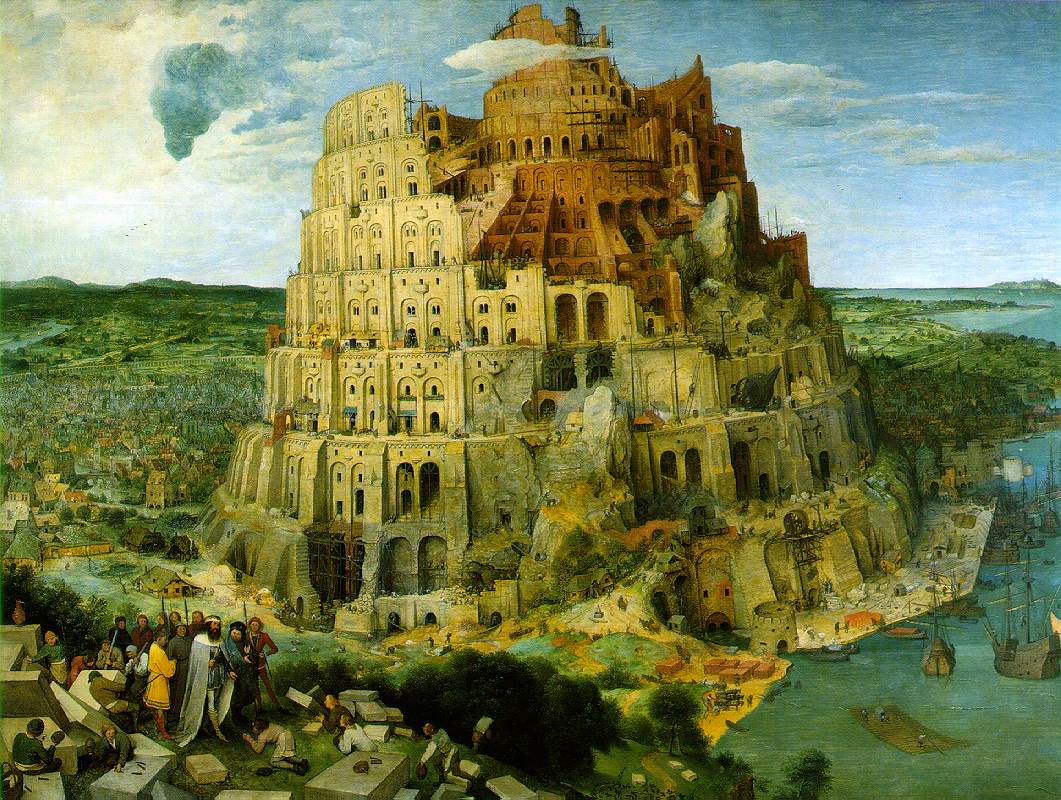
Of the Eighty people chosen to escape Earth's destruction, only a handful survived. And those that made the five-hundred-year trip through time have not emerged unscathed. They've landed among the truly bizarre, and it is now time to confront their strange new reality. Despite the enemies they know are out there, Jobs's and Mo'Steel's group venture out to explore, and soon discover what looks like a recreation of the Tower of Babel. Within the tower, they find an alien creature ? wounded, but a potential threat nonetheless. Still, they decide to follow it deeper into the tower in an effort to unlock its secrets.
176 pages, Unbound
First published October 1, 2001
About the author
Katherine Applegate
289 books6,560 followers#1 New York Times bestselling author Katherine Applegate has written many books for young readers, including THE ONE AND ONLY IVAN, winner of the 2013 Newbery Medal.
Katherine’s picture books include THE BUFFALO STORM, illustrated by Jan Ormerod (Clarion Books); THE REMARKABLE TRUE STORY OF IVAN, THE SHOPPING MALL GORILLA, illustrated by G. Brian Karas (Clarion Books); SOMETIMES YOU FLY, illustrated by Jennifer Black Reinhardt (Clarion Books); and ODDER: AN OTTER’S STORY, illustrated by Charles Santoso (Feiwel & Friends).
She’s written or co-written three early chapter series for young readers: ROSCOE RILEY RULES, a seven-book series illustrated by Brian Biggs (HarperCollins); DOGGO AND PUPPER, a three-book series illustrated by Charlie Alder (Feiwel & Friends). With Gennifer Choldenko, she co-authored DOGTOWN and MOUSE AND HIS DOG, illustrated by Wallace West (Feiwel & Friends).
Books for middle-grade readers include HOME OF THE BRAVE (Feiwel & Friends); THE ONE AND ONLY series, illustrated by Patricia Castelao, including THE ONE AND ONLY IVAN, THE ONE AND ONLY BOB, THE ONE AND ONLY RUBY, and THE ONE AND ONLY FAMILY (HarperCollins); the ENDLING trilogy (HarperCollins); CRENSHAW (Feiwel & Friends); WISHTREE (Feiwel & Friends); WILLODEEN (Feiwel & Friends); ODDER (Feiwel & Friends); and the forthcoming POCKET BEAR (Feiwel & Friends).
With her husband, Michael Grant, Katherine co-wrote ANIMORPHS, a long-running series that has sold over 35 million books worldwide. They also wrote two other series, REMNANTS and EVERWORLD, and a young adult novel, EVE AND ADAM (Feiwel & Friends.)
Katherine’s work has been translated into dozens of languages, and her books have won accolades including the Christopher Medal, the Golden Kite Award, the Bank Street Josette Frank Award, the California Book Award Gold Medal, the Crystal Kite Award, the Green Earth Book Honor Award, the Charlotte Zolotow Honor Award, and the E.B. White Read Aloud Award. Many of her works have appeared on state master lists, Best of the Year lists, and Publishers Weekly, USA Today, and New York Times bestseller lists.
Katherine lives in Nevada with her husband and assorted pets. She is represented by Elena Giovinazzo at Heirloom Literary and Mary Pender at WME.
Katherine’s picture books include THE BUFFALO STORM, illustrated by Jan Ormerod (Clarion Books); THE REMARKABLE TRUE STORY OF IVAN, THE SHOPPING MALL GORILLA, illustrated by G. Brian Karas (Clarion Books); SOMETIMES YOU FLY, illustrated by Jennifer Black Reinhardt (Clarion Books); and ODDER: AN OTTER’S STORY, illustrated by Charles Santoso (Feiwel & Friends).
She’s written or co-written three early chapter series for young readers: ROSCOE RILEY RULES, a seven-book series illustrated by Brian Biggs (HarperCollins); DOGGO AND PUPPER, a three-book series illustrated by Charlie Alder (Feiwel & Friends). With Gennifer Choldenko, she co-authored DOGTOWN and MOUSE AND HIS DOG, illustrated by Wallace West (Feiwel & Friends).
Books for middle-grade readers include HOME OF THE BRAVE (Feiwel & Friends); THE ONE AND ONLY series, illustrated by Patricia Castelao, including THE ONE AND ONLY IVAN, THE ONE AND ONLY BOB, THE ONE AND ONLY RUBY, and THE ONE AND ONLY FAMILY (HarperCollins); the ENDLING trilogy (HarperCollins); CRENSHAW (Feiwel & Friends); WISHTREE (Feiwel & Friends); WILLODEEN (Feiwel & Friends); ODDER (Feiwel & Friends); and the forthcoming POCKET BEAR (Feiwel & Friends).
With her husband, Michael Grant, Katherine co-wrote ANIMORPHS, a long-running series that has sold over 35 million books worldwide. They also wrote two other series, REMNANTS and EVERWORLD, and a young adult novel, EVE AND ADAM (Feiwel & Friends.)
Katherine’s work has been translated into dozens of languages, and her books have won accolades including the Christopher Medal, the Golden Kite Award, the Bank Street Josette Frank Award, the California Book Award Gold Medal, the Crystal Kite Award, the Green Earth Book Honor Award, the Charlotte Zolotow Honor Award, and the E.B. White Read Aloud Award. Many of her works have appeared on state master lists, Best of the Year lists, and Publishers Weekly, USA Today, and New York Times bestseller lists.
Katherine lives in Nevada with her husband and assorted pets. She is represented by Elena Giovinazzo at Heirloom Literary and Mary Pender at WME.
Ratings & Reviews
Friends & Following
Create a free account to discover what your friends think of this book!
Community Reviews
Displaying 1 - 30 of 39 reviews

October 10, 2024
K.A. Applegate begins this, the third in the ‘Remnants’ series, essentially saying she’s a better writer than God. One group of the Remnants—multiple people actually refer to themselves by this term in this installment, even though there was no Marco around to bless them with that name a la the Animorphs (should Mo’Steel have been the one to come up with the name, as the Marco of this group?)—is advancing toward a real-life Tower of Babel and Violet Blake calls it “an allegory about human pride”, adding that it’s a pretty good allegory for instructing people in humility. To which Jobs, the de facto protagonist by dint being given primary focus in the first chapter of each of the books so far, responds dryly, “But not as good as an asteroid.” An asteroid is what destroyed the Earth in THE MAYFLOWER PROJECT and set the Remnants on their course through space. Consequently, Applegate is directly setting her YA sci-fi series against the freakin’ BIBLE. (Incidentally, this calls to mind for me a quote from Dan Harmon, creator of the television series Community and co-creator of Rick & Morty: “I’ll see you in hell, which is where I believe all writers go because we make God jealous.”)
I generally wouldn’t disagree with her assessment that she’s a better author than the Almighty, but I spent much of my time reading THEM thinking that the voice in this one sounded off. I don’t really know how to explain this, except that that sharp, punchy profundity that I so love from Applegate’s writing doesn’t seem as present. The example I saved to illustrate my point is this quote: “A planet destroyed, a million species obliterated, the human race reduced to these Remnants, lost, that was worth some sadness.” It feels like an imitation, like somebody trying to match Applegate’s voice and missing the mark. I am aware that a number of books in the ‘Animorphs’ series were ghostwritten and I wondered if that might be the case here, but as far as I can tell none of these books was ghostwritten. Maybe it’s an instance of Michael Grant writing and trying to mimic his wife’s voice unsuccessfully? I don’t know, but this feeling likely colored my response to the whole of the book.
Or maybe it really is just not as good as the previous two. In THEM, the “Freaks”, the faction of Remnants led by Jobs, find themselves pursued by creatures out of Hieronymus Bosch’s The Last Judgment, a Where’s Waldo? vision of Hell filled with all manner of bizarre and frightful figures. There is an interesting moment here where Jobs thinks, “This is what came of superstition . . . Some late-Middle-Ages painter didn’t know his painting would become a real-life horror a billion miles away from Earth . . . This is what came of believing nonsense.” If Mo’Steel is the Marco of this book, Jobs is the Jalil (from ‘Everworld’), who similarly wanted to figure out the mechanics of the world he inhabited and disdained religion. The majority of the story of Jobs’ group is them running, pausing to rest, running again, pausing to rest, running again. There is a bit about an alien creature who they refer to as a “Blue Meanie” even though he seems gentle enough delivering little bits of exposition about the nature of their situation, but largely this story doesn’t amount to much, in my view.
The other main group of Remnants is the one led by the clearly-evil Yago and Violet Blake’s mother Wylson Lefkowitz-Blake. Theirs is a story of a political power struggle made more difficult by the fact that they are literally under attack by another group of aliens, which they’ve termed Riders, while trying to wrestle for authority among themselves. At one point, 2Face and Jobs’ younger brother Edward try to leave the group but this exodus is short-lived and doesn’t add much except that it introduces the fact that Edward inexplicably has chameleon-style camouflaging abilities which will presumably become more important later. (As an aside, the cover of this book shows Edward fading into a stone wall behind him--this is the first book of the series for which the cover actually portrays something that happens in the book! Will this be the norm now, or will they pull out the cover image randomizer again for book #4? Only time will tell!) The interpersonal dynamics going on among the Remnants is intriguing, I suppose, but I don’t know how much it will really maintain my interest.
There were a number of really heavy scenes of violence, horror, and grief in the previous two books. There’s stabs at recapturing that in this book, but it’s not as effective. The creatures of Bosch’s painting do not instill the same feeling of holy shit, I can’t believe this book is going to such a dark place as the prior books. They’re mostly goofy and even when—::SPOILER::—Jobs, et al., are caught by the monsters and briefly in peril (strung out on a spit over a roaring fire, balanced precariously on the edge of a giant knife, sinking into a tar pit), it doesn’t reach down into your soul the way some of the writing and events of the prior books did. (Although, that said, there was a quote here that I did genuinely enjoy: “Scenes of torture, scenes of horror, sights that made the flesh creep and the mind recoil. At the base of a tree a hand reached up out of the dirt, a hand belonging to someone buried a live, a hand that beckoned for recusal.”) Back with Yago’s group, there’s a bit of forced drama when Tamara and her creepy eyeless baby demand a sacrifice from among the others for the baby to eat, a request which from the beginning seems mostly made as a way to fuck with them as they squabble over who should be eaten, if anybody. This moment, too, fails to deliver the emotional wallop that the previous books had.
I also feel like the action, when it arrives, is not especially well choreographed such that it’s kind of hard to follow where the characters are in physical space. Lastly, I was bothered by a literary technique employed here which may have occurred before but which I found less offensive if so: the use of cliffhanger chapter endings. Because the group was split up into two or even three factions at times, THEM often has some exciting event occur at the end of a chapter, like somebody running up to yell at Yago’s group that Riders are coming, then switches to follow one of the other groups; when they run up against some dramatic action, it’s time for the chapter to end and switch back to another group. This mode of writing doesn’t enhance the excitement by leaving you wondering what happens next, but instead frustrates excitement by cutting away to something less thrilling right as the reader’s interest is piqued. I’m afraid that this tactic is nevertheless going to be used heavily in the coming entries and now that I’m aware of it I may be unable to not see it.
I considered whether to rate this book 2 or 3 stars when finished. I went with 3, but I’m still not certain I made the right choice. Let’s call it 2.5 stars in actuality, regardless. It’s a little disappointing to see this dip in quality after what I thought was a strong opening to the series, and I was particularly focused on those things that caused me to feel frustration, but we’ve still a long way to go and we’ll see how this book ends up looking once more of the picture becomes available.
I generally wouldn’t disagree with her assessment that she’s a better author than the Almighty, but I spent much of my time reading THEM thinking that the voice in this one sounded off. I don’t really know how to explain this, except that that sharp, punchy profundity that I so love from Applegate’s writing doesn’t seem as present. The example I saved to illustrate my point is this quote: “A planet destroyed, a million species obliterated, the human race reduced to these Remnants, lost, that was worth some sadness.” It feels like an imitation, like somebody trying to match Applegate’s voice and missing the mark. I am aware that a number of books in the ‘Animorphs’ series were ghostwritten and I wondered if that might be the case here, but as far as I can tell none of these books was ghostwritten. Maybe it’s an instance of Michael Grant writing and trying to mimic his wife’s voice unsuccessfully? I don’t know, but this feeling likely colored my response to the whole of the book.
Or maybe it really is just not as good as the previous two. In THEM, the “Freaks”, the faction of Remnants led by Jobs, find themselves pursued by creatures out of Hieronymus Bosch’s The Last Judgment, a Where’s Waldo? vision of Hell filled with all manner of bizarre and frightful figures. There is an interesting moment here where Jobs thinks, “This is what came of superstition . . . Some late-Middle-Ages painter didn’t know his painting would become a real-life horror a billion miles away from Earth . . . This is what came of believing nonsense.” If Mo’Steel is the Marco of this book, Jobs is the Jalil (from ‘Everworld’), who similarly wanted to figure out the mechanics of the world he inhabited and disdained religion. The majority of the story of Jobs’ group is them running, pausing to rest, running again, pausing to rest, running again. There is a bit about an alien creature who they refer to as a “Blue Meanie” even though he seems gentle enough delivering little bits of exposition about the nature of their situation, but largely this story doesn’t amount to much, in my view.
The other main group of Remnants is the one led by the clearly-evil Yago and Violet Blake’s mother Wylson Lefkowitz-Blake. Theirs is a story of a political power struggle made more difficult by the fact that they are literally under attack by another group of aliens, which they’ve termed Riders, while trying to wrestle for authority among themselves. At one point, 2Face and Jobs’ younger brother Edward try to leave the group but this exodus is short-lived and doesn’t add much except that it introduces the fact that Edward inexplicably has chameleon-style camouflaging abilities which will presumably become more important later. (As an aside, the cover of this book shows Edward fading into a stone wall behind him--this is the first book of the series for which the cover actually portrays something that happens in the book! Will this be the norm now, or will they pull out the cover image randomizer again for book #4? Only time will tell!) The interpersonal dynamics going on among the Remnants is intriguing, I suppose, but I don’t know how much it will really maintain my interest.
There were a number of really heavy scenes of violence, horror, and grief in the previous two books. There’s stabs at recapturing that in this book, but it’s not as effective. The creatures of Bosch’s painting do not instill the same feeling of holy shit, I can’t believe this book is going to such a dark place as the prior books. They’re mostly goofy and even when—::SPOILER::—Jobs, et al., are caught by the monsters and briefly in peril (strung out on a spit over a roaring fire, balanced precariously on the edge of a giant knife, sinking into a tar pit), it doesn’t reach down into your soul the way some of the writing and events of the prior books did. (Although, that said, there was a quote here that I did genuinely enjoy: “Scenes of torture, scenes of horror, sights that made the flesh creep and the mind recoil. At the base of a tree a hand reached up out of the dirt, a hand belonging to someone buried a live, a hand that beckoned for recusal.”) Back with Yago’s group, there’s a bit of forced drama when Tamara and her creepy eyeless baby demand a sacrifice from among the others for the baby to eat, a request which from the beginning seems mostly made as a way to fuck with them as they squabble over who should be eaten, if anybody. This moment, too, fails to deliver the emotional wallop that the previous books had.
I also feel like the action, when it arrives, is not especially well choreographed such that it’s kind of hard to follow where the characters are in physical space. Lastly, I was bothered by a literary technique employed here which may have occurred before but which I found less offensive if so: the use of cliffhanger chapter endings. Because the group was split up into two or even three factions at times, THEM often has some exciting event occur at the end of a chapter, like somebody running up to yell at Yago’s group that Riders are coming, then switches to follow one of the other groups; when they run up against some dramatic action, it’s time for the chapter to end and switch back to another group. This mode of writing doesn’t enhance the excitement by leaving you wondering what happens next, but instead frustrates excitement by cutting away to something less thrilling right as the reader’s interest is piqued. I’m afraid that this tactic is nevertheless going to be used heavily in the coming entries and now that I’m aware of it I may be unable to not see it.
I considered whether to rate this book 2 or 3 stars when finished. I went with 3, but I’m still not certain I made the right choice. Let’s call it 2.5 stars in actuality, regardless. It’s a little disappointing to see this dip in quality after what I thought was a strong opening to the series, and I was particularly focused on those things that caused me to feel frustration, but we’ve still a long way to go and we’ll see how this book ends up looking once more of the picture becomes available.

July 17, 2020
This creep level is increasing with each passing book.

September 21, 2011
This book is less nightmare fuely than the previous -- mostly because the particular surreal human/animal imagery evoked here doesn't shake me as much as, frankly, anything to do with Tamara. Although that shot of Edward on the cover is horrible, eurgh. I felt bad reading it in public and subjecting the woman beside me to this creepy child staring at her.
What I like about Them is that the worldbuilding questions/mysteries are being addressed at a fairly good pace: you already find out what the deal is with the environment the Remnants have ended up in, and it's a particular trope that I like.
The two absolute stand-out elements of this book, in my opinion:
• Mo's breakdown. I? LOVE HIM? SO MUCH? ALREADY? I'm predictable as all hell, but he's just such an interesting character: a mathematical savant who's obsessed with physical thrills rather than technology, very emotionally cold and prioritising the here-and-now, to the extent of rationalising away the death of his father... but also inculcated with superstition and religion via his Mexican Catholic grandmother. Brave and stalwart until he suddenly isn't, at which point the foundation seems to tremble underfoot as Jobs realises his best friend isn't as untouchable as he seems. (Their relationship is nice: warm and fond and understanding of each others' strengths and weaknesses. The way Mo calls him 'Duck' is so adorable.) Also HE'S SUCH A MAMA'S BOY. Just, I will always love Applegrant's wise-cracking Hispanic men. (Now, if only they weren't always the sidekicks...?)
• The Blue Meanie.
Random spoilery thoughts/reactions:
For those interested, here's the relevant pieces of art for this book:
• Pieter Bruegel the Elder: Tower of Babel, Netherlandish Proverbs, general medieval view
• Hieronymus Bosch: The Last Judgment
It's another 3.5 stars probably -- I feel like I should round up to 4, because there are elements in it that I liked more than the first two books and I feel like we're finally having proper character beats and development from people like Mo, Violet, and 2Face, but it's not blowing me away yet.
Favourite quotes below:
What I like about Them is that the worldbuilding questions/mysteries are being addressed at a fairly good pace: you already find out what the deal is with the environment the Remnants have ended up in, and it's a particular trope that I like.
The two absolute stand-out elements of this book, in my opinion:
• Mo's breakdown. I? LOVE HIM? SO MUCH? ALREADY? I'm predictable as all hell, but he's just such an interesting character: a mathematical savant who's obsessed with physical thrills rather than technology, very emotionally cold and prioritising the here-and-now, to the extent of rationalising away the death of his father... but also inculcated with superstition and religion via his Mexican Catholic grandmother. Brave and stalwart until he suddenly isn't, at which point the foundation seems to tremble underfoot as Jobs realises his best friend isn't as untouchable as he seems. (Their relationship is nice: warm and fond and understanding of each others' strengths and weaknesses. The way Mo calls him 'Duck' is so adorable.) Also HE'S SUCH A MAMA'S BOY. Just, I will always love Applegrant's wise-cracking Hispanic men. (Now, if only they weren't always the sidekicks...?)
• The Blue Meanie.
Random spoilery thoughts/reactions:
For those interested, here's the relevant pieces of art for this book:
• Pieter Bruegel the Elder: Tower of Babel, Netherlandish Proverbs, general medieval view
• Hieronymus Bosch: The Last Judgment
It's another 3.5 stars probably -- I feel like I should round up to 4, because there are elements in it that I liked more than the first two books and I feel like we're finally having proper character beats and development from people like Mo, Violet, and 2Face, but it's not blowing me away yet.
Favourite quotes below:

November 13, 2015
Ah, a cover that makes complete sense, and is book-accurate! (Yes, that’s all I’ll say on that.)
Book 1 was setting up the players, book 2 was setting up the map/game board, and now I would say that book 3 is establishing some of the baseline world background rules as well as the GM – the Game Master – of this world. In that regard, we get a couple of name drops: . Both of whom (which?) are dangled in front of us like a book we want to check out because the cover looks interesting, but the person holding it keeps it just far enough away that we cannot even make out the title.
The Remnants are in two different factions, driven apart by events in the last book. However, even within these factions (okay, mostly the one), there are rifts forming as certain people try to create a power base for themselves at the expense of others in the group (we know who you are). We're getting a little more information about everyone in relation to who they are/are becoming in this new world. At the same time, we are also starting to get a few more looks at some of the Remnants who had not yet really had a proper introduction in the last book (such as T.R., Anamull, Wylson, and Edward). The Remnants also run back into the Riders, and much worse. They are kept on the run, looking over their shoulders at the same time that they are either trying to support or backstab the group they are in. The quote from last book, where Violet states, “ We don’t have to survive, we have to be worthy of survival,” is echoing again in this book through the dilemma surrounding Tamara and the baby, 2Face's brief reflection, and I would say even in Jobs' group's meeting with .
Major creep factor in this book:
Pretty cool revelation:
Once again, though a lot happens in this book and it is solidly written, I can't feel like giving it much more than a 3/3.3 or so. It's good, and it is tantalizing me with promises for more in addition to what it gives me, but it is not quite fulfilling enough in itself. From where I stand, it seems like it is still very much mostly building on what came before, with a few brand-new additions to further set up wherever this series is going.
Only a couple quotes/comments this time around – this book was mostly rolling with the nearly-non-stop action, leaving precious little time for reflection by the characters or just flat out lines that knocked me upside the head and said I’M IMPORTANT PAY ATTENTION.
What rational creature could fail to see the difference between fact and fiction? – page 75 – Excellent question. One we still do not have any good answers for.
2Face knew what she was thinking was wrong. Obviously it was wrong. Or would be, back in the world, but here she was fighting for her life. – page 85 – This has echoes of the moral dilemmas April in the Everworld series goes through, especially. One action is not acceptable in the world they came from no matter the reasons, but in the world they are in now, well, the line is not nearly as clearly drawn.
Sometimes [Edward] had dreamed of bogeymen, of all the creatures that populated his Tolkien and Rowling books.—page 122 – Rowling! Though a 6 year-old being familiar with not only Rowling, but Tolkien too? Seems a bit out of his age category…though then again, this is “the future” and who’s to say 6 years is too young for Tolkien and Rowling?
Book 1 was setting up the players, book 2 was setting up the map/game board, and now I would say that book 3 is establishing some of the baseline world background rules as well as the GM – the Game Master – of this world. In that regard, we get a couple of name drops: . Both of whom (which?) are dangled in front of us like a book we want to check out because the cover looks interesting, but the person holding it keeps it just far enough away that we cannot even make out the title.
The Remnants are in two different factions, driven apart by events in the last book. However, even within these factions (okay, mostly the one), there are rifts forming as certain people try to create a power base for themselves at the expense of others in the group (we know who you are). We're getting a little more information about everyone in relation to who they are/are becoming in this new world. At the same time, we are also starting to get a few more looks at some of the Remnants who had not yet really had a proper introduction in the last book (such as T.R., Anamull, Wylson, and Edward). The Remnants also run back into the Riders, and much worse. They are kept on the run, looking over their shoulders at the same time that they are either trying to support or backstab the group they are in. The quote from last book, where Violet states, “ We don’t have to survive, we have to be worthy of survival,” is echoing again in this book through the dilemma surrounding Tamara and the baby, 2Face's brief reflection, and I would say even in Jobs' group's meeting with .
Major creep factor in this book:
Pretty cool revelation:
Once again, though a lot happens in this book and it is solidly written, I can't feel like giving it much more than a 3/3.3 or so. It's good, and it is tantalizing me with promises for more in addition to what it gives me, but it is not quite fulfilling enough in itself. From where I stand, it seems like it is still very much mostly building on what came before, with a few brand-new additions to further set up wherever this series is going.
Only a couple quotes/comments this time around – this book was mostly rolling with the nearly-non-stop action, leaving precious little time for reflection by the characters or just flat out lines that knocked me upside the head and said I’M IMPORTANT PAY ATTENTION.
What rational creature could fail to see the difference between fact and fiction? – page 75 – Excellent question. One we still do not have any good answers for.
2Face knew what she was thinking was wrong. Obviously it was wrong. Or would be, back in the world, but here she was fighting for her life. – page 85 – This has echoes of the moral dilemmas April in the Everworld series goes through, especially. One action is not acceptable in the world they came from no matter the reasons, but in the world they are in now, well, the line is not nearly as clearly drawn.
Sometimes [Edward] had dreamed of bogeymen, of all the creatures that populated his Tolkien and Rowling books.—page 122 – Rowling! Though a 6 year-old being familiar with not only Rowling, but Tolkien too? Seems a bit out of his age category…though then again, this is “the future” and who’s to say 6 years is too young for Tolkien and Rowling?

April 12, 2013
This book was phenomenal. Absolutely phenomenal. This is the third book in the Remnants series, and although I enjoyed the first two, I'll confess that I couldn't really get into the story. It just felt like extended exposition, without really focusing on plot. But this is where the series sheds that image. Not a whole lot happens - probably a symptom of the tiny length of these books - but the events that did happen were put to a good and exciting use.
The thing that really stands out to me about this book was its originality, the unique way that it handled and averted post-apocalyptic tropes. I won't tell you exactly how, since it's pretty spoilery, but this is definitely a new and different reading experience. It's also scary, intense and frightening in a way that you don't see very often. As usual, Applegrant really delivers in the darkness department, making the experience all the more different and enjoyable.
But this book's strengths really lie in its characters. As is typical, the characters were well-developed, and their interactions interesting. This one was also pretty deep, in a number of ways, mostly involving 2Face. (Who is awesome). They were surprisingly complex and introspective for a kids novel. I mean, look at this stuff, just look at it:
There's more, but it's more spoilery stuff. The entire book is filled with wonderful 2Face moments like that, as well as some pretty interesting bits from other characters.
As you can see from above, the writing is really good - it's sorta simple, sure, but it's effective, and it's never awkward. I'm finding little to say that's new about Applegrant's writing, since I've read so much of it. But it's good, as normal.
That being said, it does read a bit old for an MG book. It's not that it's disturbing - it's scary, sure, but no worse than Animorphs - but things are a bit complex for a kids novel. The vocabulary is also bigger than what I'm used to seeing from Applegrant, with a couple of words that even I didn't know. Based on what happened in Isolation (if you're curious, I have a rant saved up about it), it was already obvious that it should've been a YA book, but there are even some signs this early on.
But it's still a good book, one that I would recommend. People will probably find it bizarre, but I loved its originality and character interactions. It's all wonderful.
Statistics:
(Just some things I'm keeping track of, more for my own benefit than yours.)
Body count: 0 That's a first, and probably a last: NOBODY DIED! NOBODY died in a Remnants book! Holy fucking shit!
Horror count: Infinity, but we'll treat it as 10 (Because how am I supposed to count everything from the Bocsh paintings?)
Plot hole count: 0, once more. I'm starting to suspect that the number of plotholes in this series was grossly overestimated by its... fans.
'Marry me and live on a hosueboat' character of the day: 2Face, forever and always.
The thing that really stands out to me about this book was its originality, the unique way that it handled and averted post-apocalyptic tropes. I won't tell you exactly how, since it's pretty spoilery, but this is definitely a new and different reading experience. It's also scary, intense and frightening in a way that you don't see very often. As usual, Applegrant really delivers in the darkness department, making the experience all the more different and enjoyable.
But this book's strengths really lie in its characters. As is typical, the characters were well-developed, and their interactions interesting. This one was also pretty deep, in a number of ways, mostly involving 2Face. (Who is awesome). They were surprisingly complex and introspective for a kids novel. I mean, look at this stuff, just look at it:
[2Face] had made a virtue of being a freak, back on Earth. In a place where ugliness was merely a curable medical condition, her jarring, disconcerting face was almost a statement: Look, here's pain, here's ugliness, deal with it.
There's more, but it's more spoilery stuff. The entire book is filled with wonderful 2Face moments like that, as well as some pretty interesting bits from other characters.
As you can see from above, the writing is really good - it's sorta simple, sure, but it's effective, and it's never awkward. I'm finding little to say that's new about Applegrant's writing, since I've read so much of it. But it's good, as normal.
That being said, it does read a bit old for an MG book. It's not that it's disturbing - it's scary, sure, but no worse than Animorphs - but things are a bit complex for a kids novel. The vocabulary is also bigger than what I'm used to seeing from Applegrant, with a couple of words that even I didn't know. Based on what happened in Isolation (if you're curious, I have a rant saved up about it), it was already obvious that it should've been a YA book, but there are even some signs this early on.
But it's still a good book, one that I would recommend. People will probably find it bizarre, but I loved its originality and character interactions. It's all wonderful.
Statistics:
(Just some things I'm keeping track of, more for my own benefit than yours.)
Body count: 0 That's a first, and probably a last: NOBODY DIED! NOBODY died in a Remnants book! Holy fucking shit!
Horror count: Infinity, but we'll treat it as 10 (Because how am I supposed to count everything from the Bocsh paintings?)
Plot hole count: 0, once more. I'm starting to suspect that the number of plotholes in this series was grossly overestimated by its... fans.
'Marry me and live on a hosueboat' character of the day: 2Face, forever and always.

August 20, 2008
It's starting to get really insane.
January 7, 2010
The book i am reading is called Remnants Them by Katherine Alice Applegate. The genre of the book is science fiction and is one of the best ones i have ever read. I have not been able to get far with it but so far i have been able to find out that the characters have real unusual names like Jobs, Eeyore, Olga, Mo' Steel and a bunch of others. But in the beginning there is a ship like structure in the sky that is broken down. And it has sent things down that are weird in a way. Like Mo' Steel was cut and someone ran and grabbed a rag off some random person and the person acted like it did not even see him. And the rag grew right back over its head. and thats as far as i have gotten in this book.

January 22, 2019
Maailma, jonne ihmiskunnan rippeet ovat päätyneet viisisataa vuotta kestäneen avaruuslentonsa jälkeen, ei ole planeetta ensinkään. He ovat planeetankokoisella aluksella, joka kykenee valmistamaan tarkkoja kopioita ihmisolennoista ja ympäristöistä, paitsi että luomuksista puuttuu jotain olennaista. Selviytyjät alkavat hiljalleen tajuta, että ympäristön luoja haluaa pelata heidän kanssaan tappavan vaarallisia pelejä. Pelejä joiden palkintona on aina joko elämä... tai kuolema.

March 26, 2017
3.5 stars this time, mostly because the book didn't lodge itself in my conscious memory as much as the first two did. That said, I ripped through this one: the series is really starting to find its legs as far as the worldbuilding and interpersonal dynamics of the Remnants.
If I had to sum up the tone of #3 in a word, that word would be "intense". The Remnants, now divided into two groups, have to deal with both the murderous alien Riders and the surreal landscape the ship has created for them. The good news is they know now it's a simulation derived from the data aboard the Mayflower; the bad news is that the simulation becomes increasingly weird and dark as the ship switches from Brueghel to a Bosch-inspired vision of hell complete with twisted demons.
I didn't find the demonic hellscape as existentially scary as the more sci-fi horror elements of the last book, but it still made for intense reading as Jobs and the others in one group fight against these monsters intent on killing them in horrific ways, ways that almost succeed. It's a more visceral, slasher-inspired horror that reminded me a lot of the Hel sequence from Everworld #4.
Where this book really hooked me, though, was in the power struggles between Yago and 2Face as they deal with the threat of the Riders: KA's analysis of how this external threat pushes the Remnants to their limits and drives them almost to moral breakdown, Lord of the Flies style, is incisive and realistic. I liked also that Tate remains a voice of morality throughout; the story doesn't simplistically divide the groups into scoundrels on one side and heroes on the other. I hope the later books continue the theme of moral ambiguity and rough decisions, because I will always be here for that.
If I had to sum up the tone of #3 in a word, that word would be "intense". The Remnants, now divided into two groups, have to deal with both the murderous alien Riders and the surreal landscape the ship has created for them. The good news is they know now it's a simulation derived from the data aboard the Mayflower; the bad news is that the simulation becomes increasingly weird and dark as the ship switches from Brueghel to a Bosch-inspired vision of hell complete with twisted demons.
I didn't find the demonic hellscape as existentially scary as the more sci-fi horror elements of the last book, but it still made for intense reading as Jobs and the others in one group fight against these monsters intent on killing them in horrific ways, ways that almost succeed. It's a more visceral, slasher-inspired horror that reminded me a lot of the Hel sequence from Everworld #4.
Where this book really hooked me, though, was in the power struggles between Yago and 2Face as they deal with the threat of the Riders: KA's analysis of how this external threat pushes the Remnants to their limits and drives them almost to moral breakdown, Lord of the Flies style, is incisive and realistic. I liked also that Tate remains a voice of morality throughout; the story doesn't simplistically divide the groups into scoundrels on one side and heroes on the other. I hope the later books continue the theme of moral ambiguity and rough decisions, because I will always be here for that.

May 14, 2023
A shred of context — that’s what you’re hoping for in the third book of Remnants, and you get it. After wading through pages of horror after horror. This book was legitimately terrifying and here are a few highlights: cannibalism, the literal devil, a pair of ears with a giant knife strapped between them. Y’all, this series is middle grade horror at a level I’ve never seen.
December 17, 2018
it was good but it was all over the place especially in the beginning. I didn't really know what was going on too much so I was gonna read it for a book report but I couldn't because I couldn't understand it.
August 19, 2019
The struggle of power between Yago and 2face is really intriguing. I'm really liking her as character.
February 26, 2020
Suomeksi. En jaksanut etsiä, kun ei löytynyt Remnants Ne kuin tämä

Read
December 24, 2021I love the Blue Meanies. I never properly appreciated how cool they are, and how they had been tossed off the ship?!??!

March 23, 2024
I honestly have no idea what even happened in this book. It was SO WEIRD.
April 1, 2024
Wonderfully chaotic.
Characters going through evolutions and becoming examples of humanity.
Characters going through evolutions and becoming examples of humanity.

October 16, 2024
I am convinced Applegate was on shrooms in the early 00s, because wtf is this if she wasn't?
Weird as fuck, creepy, and unnerving.
Weird as fuck, creepy, and unnerving.
December 6, 2024
Bosch? Ok well. I hope this never happens to me
February 2, 2025
Continues the horrifying story from the previous story. Creepy and atmospheric

January 9, 2017
**spoilers**
I'm this close to knocking this series' score down from a Liked to an Okay, just because of how darned short these books are. While they're YA books, they're about half the length of an average YA book, for no reason I can see (other than to stretch it out and make more money off the series). That annoys me.
Book 1: The Earth was destroyed, the last 80 people, the Remnants of humanity, were sent off into space in hibernation/untested tech.
Book 2: They land on what they assume is a planet, though one side is a black and white photo by Ansel Adams, and the other side is a painting by some guy whose name I don't recall. The survivors are rightfully confused by how this is possible.
This book/3: They discover that they're on a ship, a ship called Mother by its alien residents (residents, not crew -- it's a huge ship). The ship's 'setting' (human art used to create the setting) changed to [artist whose name I don't recall]'s painting of hell. Demons, people being tortured, stereotypical Satan (red, horns, forked tail). Fun times! Most of the plot was about the survivors trying to survive hell.
One point I hadn't mentioned in my previous reviews: Being in hibernation for 500 years, in a ship that has had almost no testing (there was no time for scientists to test much, the Earth was about to be destroyed), had some major effects on the last humans. Humanity had never had a ship for deep space travel before, let alone one that would go on missions 500 years long, so all the remaining people got a good dose of radiation. In one case, the kid developed an odd power from that (he could sort of blend into the background, though not really a conscious ability).
The hibernation failed in one other way: In one case, the kid was just as almost-dead as the others (hibernation slows all your systems down until you're nearly dead), but unlike them, he was awake the whole time. 500 years of not being able to move, not being able to do anything but think. He went insane and maybe developed some special psychic powers (as he's not really sane, it's hard to tell for sure what exactly is real and not real with him).
I had thought those two things were just minor subplots, so I hadn't mentioned them in my review of book 2. But they were bigger and bigger issues in book 3, so I'm laying them out now. I suspect they're going to become the main plot moving forward
I'm this close to knocking this series' score down from a Liked to an Okay, just because of how darned short these books are. While they're YA books, they're about half the length of an average YA book, for no reason I can see (other than to stretch it out and make more money off the series). That annoys me.
Book 1: The Earth was destroyed, the last 80 people, the Remnants of humanity, were sent off into space in hibernation/untested tech.
Book 2: They land on what they assume is a planet, though one side is a black and white photo by Ansel Adams, and the other side is a painting by some guy whose name I don't recall. The survivors are rightfully confused by how this is possible.
This book/3: They discover that they're on a ship, a ship called Mother by its alien residents (residents, not crew -- it's a huge ship). The ship's 'setting' (human art used to create the setting) changed to [artist whose name I don't recall]'s painting of hell. Demons, people being tortured, stereotypical Satan (red, horns, forked tail). Fun times! Most of the plot was about the survivors trying to survive hell.
One point I hadn't mentioned in my previous reviews: Being in hibernation for 500 years, in a ship that has had almost no testing (there was no time for scientists to test much, the Earth was about to be destroyed), had some major effects on the last humans. Humanity had never had a ship for deep space travel before, let alone one that would go on missions 500 years long, so all the remaining people got a good dose of radiation. In one case, the kid developed an odd power from that (he could sort of blend into the background, though not really a conscious ability).
The hibernation failed in one other way: In one case, the kid was just as almost-dead as the others (hibernation slows all your systems down until you're nearly dead), but unlike them, he was awake the whole time. 500 years of not being able to move, not being able to do anything but think. He went insane and maybe developed some special psychic powers (as he's not really sane, it's hard to tell for sure what exactly is real and not real with him).
I had thought those two things were just minor subplots, so I hadn't mentioned them in my review of book 2. But they were bigger and bigger issues in book 3, so I'm laying them out now. I suspect they're going to become the main plot moving forward

August 10, 2014
The remaining humans are divided. Even though there are so few of them left who survived Earth's demise, they are fighting among themselves, and Yago--who used to be the president's son--wants to take the fittest as part of his group. He doesn't want anyone who is warped by whatever happened to them in space, so no mutated people allowed. (Even though Edward appears to be developing a useful ability to blend into whatever is behind him.) Tamara's baby is able to fuel its mother and give her an amazing ability to fight, and it wants to be paid for this (and guess what it wants to eat?). But what are they fighting? Riders. Creepy creatures that attack on hoverboards. Other creatures may be more likely to ally with them, and Jobs and Mo'Steel are ready to check that out, standing up for their own group and exploring the surreal, human-art-inspired planet which has turned out to actually be a ship. But what, or who, is the "Mother" that is trying to communicate with them? Who are their friends, and who are their allies? Ask the two groups of humans. They may have different answers.
First, I really enjoyed that again the humans are threatened by each other just as much as they are by alien intelligences. They just can't get along, even if it means death. Yago is brutal and cold, and Jobs and Mo'Steel still have personality even though they're the blander good guys. 2Face is an interesting character; I really wanted to like her. I like how, just like Animorphs, kids are taking the lead on some of these terrible decisions. And it's pretty cool that even though some people are developing weird superpowers, not all of them are great and not everybody got one. The plot got a little convoluted with two groups doing their thing separately and so many characters to keep track of, but it's still really strong at this point.
First, I really enjoyed that again the humans are threatened by each other just as much as they are by alien intelligences. They just can't get along, even if it means death. Yago is brutal and cold, and Jobs and Mo'Steel still have personality even though they're the blander good guys. 2Face is an interesting character; I really wanted to like her. I like how, just like Animorphs, kids are taking the lead on some of these terrible decisions. And it's pretty cool that even though some people are developing weird superpowers, not all of them are great and not everybody got one. The plot got a little convoluted with two groups doing their thing separately and so many characters to keep track of, but it's still really strong at this point.

March 29, 2008
In this third book of the series the group of survivors sets out to explore the new world they have landed on. Soon after the set out they discover that this is not a planet, but a ship. A ship large enough to hold worlds, that seems to be controlled by a super computer who is using their own data stores from Earth to create an environment for the survivors, based on artwork. But the artwork it chooses is a combination of artists who created paintings of atrocities that only a crazed mind could create.
What was one group of survivors becomes two separate factions. The normal group and the misfits. Who fits where is slowly determined by emerging mutations and each individuals desire or resistance to follow the self appointed leaders. Jobs, Mo-Steel, Olga (Mo-Steel's mom), Violet and Billy Weir form one group. The others form another, although some do not fit in as well as others. Tamara, who was pregnant when the shuttle took off from Earth, and her 'baby' that was born while the others were in hibernation, seem to be an entity of their own. 2Face who is taking care of Jobs younger brother Edward, finds herself fighting for her very life when the baby demands a human sacrifice. And Edward seems to have developed a mutation to camouflage himself that is becoming evident to the rest of the group.
While these two separate groups battle demons straight from the crazed mind of a long dead artist from Earth, as well as the every present Riders, they make startling discoveries about the ship that they are on and wonder if they can indeed survive.
What was one group of survivors becomes two separate factions. The normal group and the misfits. Who fits where is slowly determined by emerging mutations and each individuals desire or resistance to follow the self appointed leaders. Jobs, Mo-Steel, Olga (Mo-Steel's mom), Violet and Billy Weir form one group. The others form another, although some do not fit in as well as others. Tamara, who was pregnant when the shuttle took off from Earth, and her 'baby' that was born while the others were in hibernation, seem to be an entity of their own. 2Face who is taking care of Jobs younger brother Edward, finds herself fighting for her very life when the baby demands a human sacrifice. And Edward seems to have developed a mutation to camouflage himself that is becoming evident to the rest of the group.
While these two separate groups battle demons straight from the crazed mind of a long dead artist from Earth, as well as the every present Riders, they make startling discoveries about the ship that they are on and wonder if they can indeed survive.

June 17, 2014
Copy and paste the two previous book reviews.
Applegate sure has a way with words. They are simply put and so addictive.
In "Them" stuff actually happens. The plot is worked and developed into more than just survivors. Really this series should be like five books and not 14 short stories because this is book three and this is where the plot grows.
By grows, I mean nothing is really resolved in this book. There is only growing tension and a glimmer of why this is happening.
The only thing I have a hard time with is related to my personal preference. Sci-fi books are hard for me. In describing sci-fi, fantastical characters; my brain shuts down. Don't make me imagine super complicated aliens or even two different species of aliens. My imagination is not what it used to be.
Three books down, 11 more to go. I'm excited to see where this is going.
Applegate sure has a way with words. They are simply put and so addictive.
In "Them" stuff actually happens. The plot is worked and developed into more than just survivors. Really this series should be like five books and not 14 short stories because this is book three and this is where the plot grows.
By grows, I mean nothing is really resolved in this book. There is only growing tension and a glimmer of why this is happening.
The only thing I have a hard time with is related to my personal preference. Sci-fi books are hard for me. In describing sci-fi, fantastical characters; my brain shuts down. Don't make me imagine super complicated aliens or even two different species of aliens. My imagination is not what it used to be.
Three books down, 11 more to go. I'm excited to see where this is going.
June 8, 2016
The story really expands in the third installment - introducing motivations from some of the characters we've seen remain largely in the background. The action increases threefold, with Jobs' group facing non-stop threats from the aliens and the environment of the ship itself. When they encounter the palpably disturbing Bosch demons, it's outright chaos, and becomes a real page-turner. Yago and Wylson's struggles for dominance as less interesting in comparison, but it's still obvious the buildup to the bigger picture is incoming.

December 27, 2008
Yes, here is where things start to get really weird. The Remnants find themselves trapped in sick and twisted paintings, and there are aliens chasing them, and the baby is insane. Actually, everyone is a little insane, including 2Face. Surprisingly, though, I found that I enjoyed this a lot more than I did the first time I read it. When you stop being confused by the artificial environment and remember to focus on the people, things work a bit better.

February 1, 2012
Still good-though plot/action wise, I'd say this book was a bit lower, it kept my attention because of it's use of painting I'm completely familiar with, one that got a lot of attention was one of my favorite paintings (the creepy likes of Bosch!!), so it was really cool to recognize and visualize that so well. Once again, these books have great visuals and I'd love to see them made into movies or a very well done series!

August 4, 2014
The last humans alive, sent 5oo years into the future under hibernation, are picked up by an alien ship. Mother, the ship, is confused and attacking them through created life of painting files taken from earth. Blue Meanie, Four Sacred Streams, who wants mother helps the earthlings fight Bosch's Hell creatures. There are Rider aliens with two heads, one a mouth and the other eyes, that ride hover-boards, attacking the last remnants of man-kind.



March 31, 2016
The start was a bit rough for me but by the end it was definitely my favorite book in the series thus far. I liked getting to see a bit deeper into the oddities in the story-the baby and Tamara, Billy, the Riders, and the crazy world in which everyone had ended up. I look forward to discovering even more from here onward!
So tired.....I fly out of Japan in about 12 hours. I'm going to miss this crazy place.
So tired.....I fly out of Japan in about 12 hours. I'm going to miss this crazy place.
September 19, 2014
I wasn't a big fan of this book because I didn't like the characters and the mood of the story. For example, when the baby needs to eat a human to survive and they had to sacrifice someone from the group so they all wouldn't have to die. The word choice that the author used was very descriptive and helped me to visualize all of the scenes which i liked.
November 30, 2016
The story if finally starting to take shape. We are getting a few answers and a lot more questions. I am still uncertain how I feel about this series but it's certainly raising a few interesting questions and forcing me down some interesting thinking paths. I can't wait to see what else the universe has in store for humanity's last survivors! :)
Displaying 1 - 30 of 39 reviews