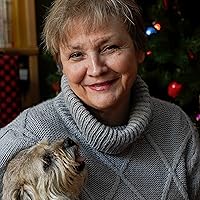
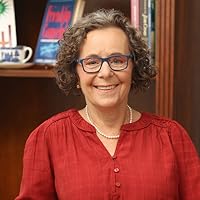
Catherine Slaney grew into womanhood unaware of her celebrated Black ancestors. An unanticipated meeting was to change her life. Her great-grandfather was Dr. Anderson Abbott, the first Canadian-born Black to graduate from medical school in Toronto in 1861. In Family Secrets Catherine Slaney narrates her journey along the trail of her family tree, back through the era of slavery and the plight of fugitive slaves, the Civil War, the Elgin settlement near Chatham, Ontario, and the Chicago years.
Why did some of her family identify with the Black Community while others did not? What role did "passing" play? Personal anecdotes and excerpts from archival Abbott family papers enliven the historical context of this compelling account of a family dealing with an unknown past. A welcome addition to African-Canadian history, this moving and uplifting story demonstrates that understanding one's identity requires first the embracing of the past.
"When Catherine Slaney first consulted me, her intention was to research the life of her distinguished ancestor Anderson R. Abbott. After she told me her story of the discovery of her African heritage and the search for her roots, I urged her to make that the subject of her book. Cathy has served both of these objectives, giving us an intricate and fascinating account of her quest for her own lost identity through the gradual illumination of Dr. Abbott and his legacy for modern Canadians. Family Secrets carries an important message about the issue of 'race' as a historical artifact and as a factor in the lives of real people." - James W. St. G. Walker, University of Waterloo
"This is a welcome addition to the growing collection of African-Canadian materials that connects an unknown past to a promising future. That Slaney was unaware of her Black ancestry, despite that heritage being so rich and powerful, speaks to the dilemma of Black history research -- it is there but requires considerable digging to uncover." - Rosemary Sadlier, President, Ontario Black History Society
Canadian Black history is Canadian History. An estimated 40,000 Black refugees came to Canada between the American War of Independence and the American Civil War. Forests were cleared, railroads built, Military service rendered and industry developed by these new Canadians.
Tolerance is not equality. During two generations, the racial climate receded from tolerance to open oppression in education and industry. Little of these refugees is known; their history is noticeably absent.
This biography of Dr. Anderson Abbott, is also an account of other notable Canadian Black leaders of the mid-1800’s. This researched telling by his great-granddaughter, Catherine Slaney, intrudes upon our sensitivities. How does bigotry and intolerance come about?
Dr. Slaney’s discussion of race identity is from both a personal and academic perspective. Reading this thoughtfully researched book will invite you to balance concepts of “Colour blindness”, “Assimilation” and “Crossing Over” with naive assumptions like “All people are basically the same - they just come in different shades.” “Isn’t race simply based on how you look?”
Dr. Slaney leads the reader to consider that “Before we can liberate ourselves from racism, we need to acknowledge it exists ...” within our selves. Dr.Slaney’s family account is a researched beginning.
Canada is a multiracial, diverse society. Let us behave so.
Interesting in parts and meandering on others, the author had to overtell one story in order to get to hers in many ways. There is a wealth of interesting stories here but often we get an encyclopedia version of it, lacking much writing style and voice. Still this is a necessary history that needs to be told and heard.
This was so interesting. I started reading it because I have a strong interest in genealogy and like reading about how other people explore their history. But I ended up learning so much about Black history in Ontario and I'm so happy to have enriched my understanding through this book.
Family Secrets: Crossing the Colour Line by Catherine Slaney is an autobiographical account of how she discovered her black ancestors and relatives. Raised white, she began uncovering her genealogy in her forties. She uncovered the fact that her great-grandfather was Dr. Anderson Abbott, the first Canadian-born Black to graduate from medical school in Toronto in 1861. In the process of delving into her history, she investigated why (and how) several family members decided to "pass" as white, while their siblings did not.
One key theme I found in this book as well as in others, is that race is not just about the color of one's skin. As Slaney writes, "...this race business seemed to me not so much a matter about colour (sic), but rather one of racial identity and cultural representation." (p. 147)
When Slaney received photographs of her cousins she discovered great variations in appearances. "Some of the cousins were very 'black,' some were 'dark,' and others quite 'fair.' However, what really amazed me was that their skin colour did not necessarily reflect their choice of racial identity. In one case, I received a photo from a 'Black' cousin who strongly resembled my 'white' uncle they could pass as brothers." (p.147)
One of her light-skinned Black cousins wrote to her and said, "Americans tend very much to classify people by race. I think this probably goes back to the first segregation laws. Not that it was absent before but people were forcefully separated by their physical appearance. The Black's facilities, from schools to washrooms, were always inferior to the white's, during segregation, which perpetuated the notion that they were an inferior race." (p. 148)
This led Slaney to question, "If life could be so difficult as Black and one could pass as white, then why not do so? Moreover if one looked white, would it not prove awkward to claim a Black identity? Perhaps the purpose of identifying oneself with a particular race had more to do with the colour of one's state of mind rather than one's color of skin. Did identifying as Black then automatically imply that one could not identify as white? As one white cousin asked, 'When one is of mixed race, where does passing end and identity as white begin? Is it simply based on how you look?'" (p. 150)
I find myself in a similar realm of discovery as Catherine Slaney. I too have black ancestors, unfortunately there are no pictures, but there are photos of ancestors that are of multiracial heritage. My journey is only beginning. I really enjoyed this book as comparing it with my own family it proved to be a compelling insight.