In a small town somewhere near Memphis, ex-policeman, ex-con, war veteran and former therapist John Turner has come to escape his past. However, the past has proved inescapable - thrust into the role of Deputy Sheriff, Turner finds himself at the centre of his new community, one that is drying up and disappearing before his eyes. Two years after his love Val Bjorn was shot as they sat together on the porch of his cabin, Turner is still haunted by his own ghosts, and goes in search of a truth he's not sure he can live with.
James Sallis (born 21 December 1944 in Helena, Arkansas) is an American crime writer, poet and musician, best known for his series of novels featuring the character Lew Griffin and set in New Orleans, and for his 2005 novel Drive, which was adapted into a 2011 film of the same name.
Se il plot, la soluzione del mistero, la spiegazione del giallo, l’individuazione del colpevole, o dei responsabili, se tutto questo fosse quello che mi spinge a leggere, dovrei reputarmi alquanto deluso da questo terzo e conclusivo romanzo della serie che Sallis ha dedicato a Turner (il nome non conta, lo chiamano tutti Turner, inclusa la sua donna): perché tutto sembra restare sospeso, non concluso, inspiegato.
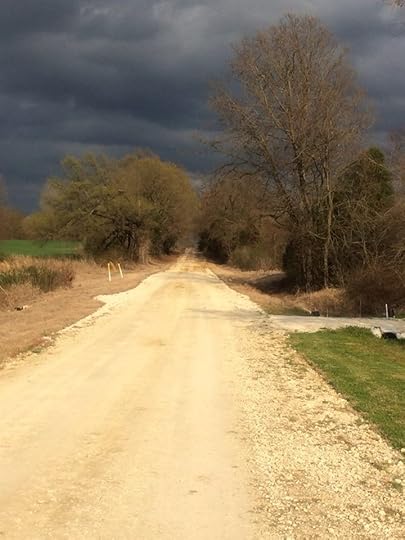
Strada bianca in Tennessee.
Ma il mistero non è tanto quello di sapere perché il figlio dell’ex sceriffo è andato a schiantarsi con la macchina contro il muro del Municipio. Né cosa ci facesse sulla Buick Buick che appartiene a una vecchia signora, signora che sembrava averlo accolto in casa in cambio di lavori di ristrutturazione alla sua dimora, ma che viene ritrovata stordita, percossa, e derubata. Ma derubata di cosa? Nulla: chi si è introdotto in casa sua più probabilmente cercava qualcosa di preciso, che però, probabilmente non ha trovato. Poi anche la nuora dell’ex sceriffo finisce male: rapita, sparisce, e anche casa sua viene perquisita e devastata. Quando riappare è fisicamente conciata male: anche a casa sua quel qualcosa che viene cercato evidentemente non spunta fuori, e i “cercatori” se la rifanno con lei, menandola di brutto e portandosela dietro.
Questo e altro: Eldon, il musicista di colore che doveva andare in tournée con Val, la fidanzata di Turner, è colpevole di omicidio? Sarà mica che essendo nero, ed essendo l’omicidio avvenuto in Texas, un nero risulta essere il colpevole più logico. Non necessariamente quello più responsabile del delitto. L’ex sceriffo, che ha perso il figlio e visto la nuora ospedalizzata piena di tubi, tubicini, respiratori, sacche, ferite e cerotti, parte per St Louis. Si porta dietro l’oggetto che forse tutti i “cercatori” cercavano: ma come vada a finire, non lo sappiamo.
La figlia di Turner, detective a Seattle, che nel secondo romanzo, Cripple Creek è venuta a trovare il padre – anzi, si potrebbe dire che più che a trovarlo, sia venuta a conoscerlo – e alla fine di quella storia rimane nella cittadine del Tennessee in veste di sceriffo – adesso è tornata a Seattle, le manca l’eccitazione urbana. Ma alla fine di questa riappare: ed è proprio chiacchierando con lei, che Turner prende congedo dal lettore.
Come mai conta relativamente la soluzione del caso (o dei casi)? E come mai l’assenza di colpi di scena non delude? Perché Sallis riempie le sue pagine di storie secondarie, episodi, momenti, chiacchiere, silenzi, descrizioni, osservazioni, commenti, immagini, meditazioni, attimi di sospesa poesia: sono queste pagine a fare atmosfera, a dare spessore, a regalare emozioni. Il tono è morbido, malinconico. Turner, un uomo con un passato che vale per quattro (guerra del Vietnam, nella giungla, dove gli scarponi si disintegravano dal primo giorno, eppure i francesi, reduci dalla loro guerra d’Indocina, l’avevano detto agli americani, li avevano avvertiti; detective con anni di strada e pattuglia e interventi, fino all’episodio che spalanca la sua terza vita; anni di carcere, duro, rischioso, in quanto poliziotto in mezzo a detenuti assetati di vendetta, in buona parte impiegati a studiare, e poi l’attività di psicoterapeuta), ci fa capire che qualcosa sta succedendo, si rifiuta di dirci cos’è, e ci abbandona alla fine facendoci percepire che non tornerà perché quella cosa sarà successa.
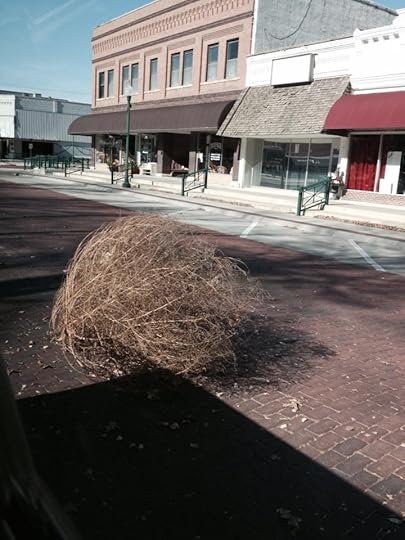
Rotolacampo sulla Main Street.
Lui, e i suoi amici, gli abitanti di quel paese sulle colline del sud degli Stati Uniti, esseri feriti, fragili, in cerca di risposte, sembrano davvero alla fine della corsa. Ma la vita va avanti, si sa. Dove, come, questo non si sa. E sui titoli di coda il vento spinge lungo la Main Street un rotolacampo.
All those films about war from a much younger, far more innocent nation, innocento not in the sense of guiltlessness but in that of immaturity, of callowness.
As "Salt River" is the third book in a trilogy, it may seem strange to start a series at he end and then work backwards through that series. I have done it with two or three other series books. Sometimes you win, sometimes you loose. With James Sallis, you never loose. the experience can be like pealing an onion, discovering a multiplicity of layers, and the building of characters.
This book certainly has a feeling of finality to it. Lots of the characters with in the story die. I guess everyone dies in the end. It's not something many think about until they loose a loved one or grow closer to the finality themselves. Although dealing with this subject this book is no way depressing, which I think is a great feat.
James Sallis is an exceptional writer. His sensitivity and ability to relate the human condition is superb. He has the ability to show all aspects of the human condition from a perspective uniquely his own.
Turner is an unwilling sheriff in a small town in the Tennessee hills. A former therapist, a former jail inmate, a father with a recently deceased wife. Yet Turner is completely human, empathetic, wise and knows when not to talk. In many ways one can see the precursor to Mr. Sallis's amazing novel "Willnot" yet expertly written in it's own voice.
I look greatly forward to "Cripple Creek" volume 2 in this series.
This is copy 110 of 500 signed and numbered copies. Signed by James Sallis.
High brow literary noir from Sallis that demonstrates exactly how lazy his sequel to Drive actually was. Touching on the same themes of memory, ageing, dying, finding ways to keep on going and told in the same introspective, concise, poetic style Salt River excels in all the ways Driven failed. Primarily because it feels honest, the protagonist the right age for such observations, the contemplative mood that is clearly the right one for a small town Sheriff patently not working for a fast paced rehash of Stark's The Hunter. But also this is the third book written about Turner and another excellent example of the abilities of James Sallis to write a series character that doesn't require you to have read prior books to enjoy. Salt River is a pretty stunning standalone novel that just happens to be about a guy who was already the protagonist of two other books, the way that Sallis shifts timeframe in his storytelling, the fluid narrative of recalling memory and dream this feels like a logical outcome, time is flexible, no episode or event in his characters lives is any more important than any other, and they are all accessible in any order. When people talk about how great James Sallis is and how scandalous it is that he isn't widely read it is books like this, places like the nameless small town near Memphis and characters like Turner that they are thinking of.
Salt River is the third book in the Turner trilogy, which ideally need to be read in sequence. At 160 pages it’s more of a novella than novel, but is, I feel, the strongest of the trilogy, in part because the plot is more central than the earlier books, which seemed to concentrate more on the telling of the story rather than the story itself. Sallis is a poet and it shows in the strength of his prose, which is evocative and haunting, dotted with acute observations and philosophical asides. The characterisation is nicely portrayed and Sallis weaves a well developed sense of place. There is no strong hook or sense of urgency or tension, instead the narrative floats along, much like Turner does, sometimes in the flow, other times in the eddies. The result is a thoughtful, reflexive and compulsive tale about a man still coming to terms with his own bad choices and fate as he muddles through trying to resolve the various issues that are placed in his path. A superior piece of literary crime fiction.
Two years after the loss of his lady love, ex-cop, ex-con, ex-therapist John Turner finds himself the defacto Sheriff of a dying town. His life is complicated by the return of two people: the actual Sheriff's son, who arrives in spectacular fashion by plowing into City Hall in a stolen car, and Turner's good friend Eldon, who may or may not have killed someone.
Let's get this out of the way first: if you're looking for fast-paced crime fiction or an intricately intriguing mystery plot-line then James Sallis may not be for you. His tales meander, and are more about damaged characters and musings on the human condition.
But if you like evocative storytelling that will make you think, that pierces into some of those dark and doubting places in our souls like a sliver of dull daylight through the cracks of an abandoned building, then you're in for a real treat when you open one of James Sallis's lyrical crime tales.
A published poet as well as a crime writer, short story writer, essayist, reviewer, and string band member, Sallis brings a broad outlook to his novels while at the same time distilling things in a very concise, powerful way. His writing is elegant and meditative, his prose full of poetic delights.
Salt River caps his trilogy about Deputy Sheriff John Turner, a man living out his days in a dying small town near Memphis. There is some mystery and crime - what's going on with the Sheriff's long-lost son renovating City Hall with his car, and is Turner's good friend Eldon guilty of murder or not? But really this book is more about aging, and dying. The passing of time and the waning of life. What we do with the time we have left. It's contemplative and introspective, and appears to ramble across the landscape more than having clear direction, but the writing is so beautiful and the chords struck so resonant that I didn't mind, that I didn't miss it having a clear spine of crime investigation.
If you like Southern Gothic tales, or classic noir that isn't as neat as a lot of crime fiction, then you might really appreciate what Sallis has created in Salt River. He brings the battered nature of his rural Tennessee setting to vivid life with poetic insight. He cuts us to the core as he and his characters reflect on the cruel inequities that can divert our lives, the inescapable countdown to when our own lights will be switched off for a final time, and how to find and cherish moments of beauty, however small, before then. The flowering weeds growing through paving-stone cracks in a prison yard.
Overall, Salt River is a slim novel (160 pages) that packs a subtle but powerful punch.
--------------------------------------------------------------- This review was first published on Crime Watch: http://kiwicrime.blogspot.com
Craig Sisterson is a journalist from New Zealand who writes for magazines and newspapers in several countries. He has interviewed more than 140 crime writers, discussed crime fiction at literary festivals and on radio, and is the Judging Convenor of the Ngaio Marsh Award for Best Crime Novel. Follow him on Twitter: @craigsisterson
Salt River is the third novel in a series of lyrical crime novels by James Sallis. The first two are Cypress Grove and Cripple Creek. His prose is beautiful and his characters wonderful. The world of these novels is one of unremitting violence. Good people get hurt or killed all the time, although those same people are able to find one another and some comfort in music and one another. Read all three but space them out a bit and read something optimistic after each Sallis novel.
I've read Sallis' bio on Chester Himes and had been impressed. But I was not ready for the beautiful bits of wisdom that appear on just about every page.
The story line didn't really hold together for me -- i felt like i was being tossed characters and had to hold onto them without understanding enough about them.
Yet the beauty of the book is overwhelming. I just wanted to start over again the minute I turned the last page.
I just couldn’t follow it, I finished it to try and find the turn around or sweet spot and I just didn’t get that. Just my opinion and I’m sure for someone else it’s a great read
I don't think you can read James Sallis and not walk away struck with awe and reverence. While others may major in plot or clever twists and irony, Sallis' triumph is his mastery of the language - his use of simple words effortlessly spun in to passages unlocking emotion and conjuring images that defy the common rural settings and ordinary folk of which he writes. This is the English language at its best - the power of Faulkner told in words that can actually be understood. Or think Cormac McCarthy with punctuation - a less complex, but equally potent rendering of the literature.
"Salt Creek" is the third, and one would think the last, in the series of John Turner, the ex-many-things and reluctant fill-in sheriff of a small Tennessee town where he's returned to settle out his last years. As the homilies and allegories and metaphors compete for precious space across Sallis' scant pages, he tells a dark and remorseful tale of lost youth and death that is as relevant to the dying town as it is to its unfortunate but colorful and well-drawn characters. Sallis slides easily in time - memories and dreams blur and blend and are at least as important as Turner's dealing in the here-and-now. But if you're like me, you'll find yourself only casually interested in the events that led the Sheriff's wayward son to crash an apparently stolen car into the City Hall, or unravel the mystery of Turner's friend Eldon Brown, who shows up after a two year absence telling Turner he may or may not have killed someone - as the soaring prose provides more than enough pleasure to pass the too few hours of reading that end too quickly.
So if you measure your literary purchases in dollars/word, this may disappoint - try "War and Peace". But if your looking for an extraordinarily efficient lesson in how to disguise poetry as engaging prose, along with a keen insight into a disappearing slice of American culture, you have to read this book - and "Cypress Grove" and "Cripple Creek" that precede it. For fiction as an art form, there is no one writing today more adept than James Sallis - it's a shame he isn't more widely read.
There are few authors I like more than James Sallis and over the last couple of years, in order to catch-up with his back catalogue, there are probably no authors I have read more. You would think I would get bored, yet I really can’t get enough. I love his simple yet complex writing style – yes, you can have both – he uses few words but each says so much and he has a beautiful turn of phrase. As Sallis says in the book…
‘Two schools of thought. One has it we’re best off using simple words, plain words. That fancier ones only serve to obscure meaning –wrap it in swaddling clothes. Other side says that takes everything down to the lowest common denominator, that thought is complex and if you want to get close to what’s really meant you have to choose words carefully, words that catch up gradations, nuances …’
His characters are complex too, including Turner, who is central to this trilogy of books – with Salt River being the last. Getting to know Turner has been like peeling an onion as layer on layer reveals more stories and sadness. Sadness is how I felt reading this book too because Turner hasn’t gotten over the murder of his girlfriend Val two years ago. He is frozen in time and place.
I expected him to move again, not just go through the motions, when Eldon – his and Val’s old friend – turns up and says he might have killed someone. Or when the former sherfiff’s estranged son announces his arrival back in town by driving into the wall of the sherrif’s office. The old Turner would have tracked people down, thrown some punches, set the world to rights. This Tuner let the world right itself.
And it did, right itself, in ways that were perfectly fitting if not action packed. But sometimes you don’t need action, just a really well written story with characters you have come to care about in the middle of it. I am sad to say goodbye to Turner but it seems right to do so. This book was a fitting end to his story and I loved it.
"Sometimes you just have to see how much music we can still make with what we have left." p. 1
I read the second volume of this trilogy last fall. Apparently, I was concerned with where Sallis was taking Turner, the main character of this series. If I had reread my review of Cripple Creek, I might have put this audiobook off a bit longer. However, I was looking for a good, well-read audiobook and I knew that Sallis would provide.
I don't understand why James Sallis isn't on the top of everyone's reading lists. I admit that I have not read his most famous book, Drive, but I don't think even that book sold a huge number of copies. When I mention Sallis, no one seems to read him. However, his writing is so good and this characters really make me think about the big questions. Turner, in this book, considers his lot in life, his past and where he might be going.
I know that readers often want entertainment from their fiction - thinking isn't part of the equation. That is what I want from the romances that I read. There is not a lot of plot in a Sallis book. As Kirkus Review says, "Sallis is never about plot, but always about good writing. This little gem is a case in point."
However, if you want to meet a complicated human who might be worth knowing in person, I recommend starting with Cripple Creek and meeting Turner.
SALT RIVER finds its ex-cop/ex-con/ex-therapist protagonist John Turner serving as de facto sheriff of the small town outside Memphis that he's come to think of as home (the actual sheriff, Lonnie Bates having, for all intents and purposes, retired). The town, however, has succumbed to the ravages of time and decay. Like so many other people and things in Turner's life, the place is dying.
An auto accident involving Bates' wayward son is the inciting event for this story, which (as with the previous Turner books) serves as more of an excuse for conjuring up the ghosts of Turner's past than a traditional narrative. However, a narrative is implied within the scenarios cobbled together in this book – some from Turner's experiences as a therapist, some from his time in prison, others involving various people and situations in the present.
The mystery storyline, such as it is, comes out in fits and starts. In fact, the plot details emerge almost at random, appropos perhaps for a series that emphasizes life's random qualities.
Sorry to say, folks, but all the great stuff, all the stuff worth reading, deals with death, as do we all. But in dealing with death, we must also celebrate life. This is the final book in Sallis' John Turner trilogy. Turner has now become the sheriff of his small town in Tennessee, having previously been a cop, a therapist, and a convict. It's important to read Cyprus Grove and Cripple Creek first or the impact of this short novel will be lost. Plot summaries are superfluous for a book like this. Sallis is a master at digging to the heart of what makes us human, what is important. A wonderful story that left me with that sadness we all need to embrace.
I haven't read the first two stories in the series, so I thought perhaps this book was such a downer because the main character was dying, hence 60% of the characters were dying, dead or morosely negative. But according to the readers, this is Sallis' modus operendi.
HOWEVER. I liked this short little book so much better than the others I have read lately, I read it twice. Sallis is a genius. Literally.
This is the third book in the Turner series, only thing wrong is I did not want it to end. Love the poetic way he writes, it is all so very real. In this book, Billy, Lonnie.s son comes barreling into town, and the mystery begins. Eldon appears one day and mentions he may have killed someone, and Doc continues to bend Turner's ear as they sit on the porch. Hope ther is a Turner number four.
Another great story by James Sallis..This was the third book in the John Turner series...Two years have passed since Turner lost his love Val Bjorn..His good friend Eldon has returned and he thinks he may have killed someone. ...I like the way Sallis tells a story..Val said "Sometimes you have to see how much music you can make with what you have left."
A quick satisfying read, another in his Turner series. Sometimes I am a little lost in his dialog but usually find my way. His characters are likable and the storyline is believable. He jumps around in time, and you have to wait go with the flow and it eventually makes sense.
I love Sallis - class act who never disappoints. Wonderful prose and dialogue and characters you'll warm to. Crime as a vehicle gives him the opportunity to wax philosophical about the big questions. Rolls things out superbly.
I like Turner, and Sallis is solid. Still, I found myself getting wrapped up in the asides, the little stories Turner tells that might inform the main narrative, but aren’t a part of it. The main story I could really take or leave, truth be told.
Country crime noir - my introduction to Salis. He writes well, the book is very short, the setting is interesting. Salis wanders but he kept my attention going and the style is quiet different than urban noir of Pelecanos or Michael Connelly. Reminded me of Chris Offutt's backwoods tales.
I wish I had read the first two books in the series as I would have understood the characters better, but I’m glad I read this one. A short, beautifully written novel, more about the characters than the crime.