From the accession of Alexius in 1081, through the disastrous Fourth Crusade - when an army destined for the Holy Land was diverted to Constantinople by the blind, octogenarian but infinitely crafty Doge of Venice - to the painfully protracted struggle against the Ottomans, the closing centuries of the Byzantine era are rich in pathos, colour and startling reversals of fortune. The terrible siege of Constantinople in 1453 ended the empire, founded in the year 330, which Lord Norwich has devoted many years to re-creating; this volume forms the climax to an epic sequence of books.
John Julius Norwich was an English historian, writer, and broadcaster known for his engaging books on European history and culture. The son of diplomat and politician Duff Cooper and socialite Lady Diana Manners, he received an elite education at Eton, Strasbourg, and Oxford, and served in the Foreign Service before dedicating himself to writing full-time. He authored acclaimed works on Norman Sicily, Venice, Byzantium, the Mediterranean, and the Papacy, as well as popular anthologies like Christmas Crackers. He was also a familiar voice and face in British media, presenting numerous television documentaries and radio programs. A champion of cultural heritage, he supported causes such as the Venice in Peril Fund and the World Monuments Fund. Norwich’s wide-ranging output, wit, and accessible style made him a beloved figure in historical writing.
By 1425, Byzantium had transformed into effectively a city state. In the concluding volume of this series, John Julius Norwich unravels the events that paved the way for the ultimate downfall of Constantinople.
Norwich adopts a chronological approach, presenting a mini-biography of each successive emperor. With each ruler's reign, the empire's territory diminishes, reminiscent of a juggler struggling to keep multiple balls in the air – one caught, another dropped.
The crusades are given its due attention, the wars between Venice and Genua are all told from Byzantine perspective.
I haven't read the previous two titles, but that was no issue. This book, and I suspect the other two volums as well, stands on its own merit. Norwich's style is engaging and clear - athough he limits himself only to the emperors and assumes from the reader some basic knowledge of Byzantine politics and society. But for me, lacking both, this was no problem.
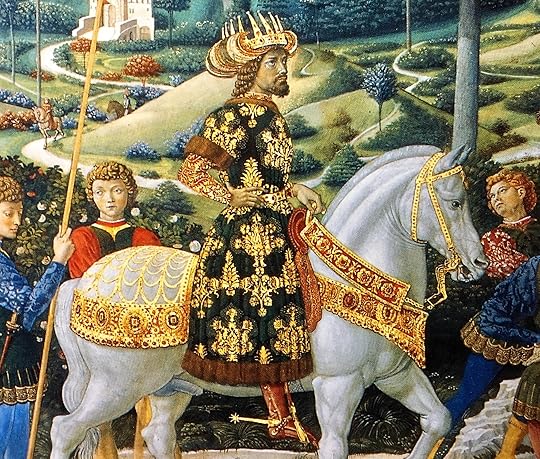
Ренесансовите фрески в Капелата на Медичите поднасят една изненада: портрет на предпоследния византийски император Йоан VIII Палеолог. Съдбата на последните неколцина византийски императори е повече от нерадостна: последният пада в бой с турците през 1453 г. върху руините на завладения град, за да не бъде заловен жив; предходните двама отдават живота си в търсене на невъзможното спасение на своя град, който в единствената останка, до която се е свила някога могъщата империя. Те шестват из християнския запад с години, готови почти на всичко, включително на отказ от независимост на църквата си. Но за помощ е твърде късно - армията на полския крал Владислав Варненчик среща края си край Варна през 1444 г. и възвестява погребалния звън за последния наследник на Рим, пазил вярно над 1100 години портите на Европа от изток.
——— Цялата история на Византия (която никога не е наричала себе си така, а Източна Римска Империя) е люшкане между външни заплахи за унищожение от всички посоки на света, и вътрешни религиозни, социални и икономически катаклизми. Възникнала в резултат на катаклизъм, тя съществува, преодолявайки с нечовешка енергия всеки следващ катаклизъм, за да бъде погребана под последния.
Байрон описва Византия като сплав от римско тяло, гръцки ум и източно-мистична душа. Това творение на римското право, християнската ортодоксия и неусетно вплелите се цивилизационни останки на класическата гръцка и римска античност, е удивително съвременно в уроците си, и преодолява всяка катастрофа (освен последната) с удивителна издържливост.
Когато рационализмът на Рим се сменя с религиозния възход на християнството, Византия е тази, която го шлифова и институционализира. Римският папа векове наред е подчинен на византийския император и патриарх. Части на Италия са под византийски контрол дори след разграбванвто на Рим. Юстиниан I почти успява да възроди старата римска империя и построява най-бляскавата църква в света - Света София, като кодифицира в по-модерна версия старото римско право. Ираклий и потомците му подемат решително усилие за прочистване на християнството от суеверия и превръщането му в едно предимно вътрешно изживяване, забраняващо олицетворяването и бъркането му с изображения като иконите. Векове преди реформацията на запад. Но сблъсъкът между светска и религиозна власт завършва с поражение за първата. За разлика от Рим и Запада обаче върховната власт във Византия остава неизменно светска. Византия удържа приливните вълни на нововъзникналия и войнстващ ислям, които неколкократно се разбиват в стените на Константинопол. Но победа няма, има само оцеляване - Северна Африка и Сирия са завинаги изгубени за империята. Балканите също - от колонизацията на славяни и българи. Както и Италия. Залезът започва да се спуска окончателно в мига, в който империята се отказва от защитните си механизми. Търговията е поета от новоизгряващите венецианци и генуезци, а византийският флот, владял Средиземноморието, изчезва, за да бъде заменен - срещу заплащане и отказ от суверенитет - от Венецианския (и генуезкия) флот.
Истинският край на империята не идва от изток и селджукските турци, а от запад, когато през 1204 г. Четвъртият кръстоносен поход разграбва и оплячкосва Константинопол. Впоследствие Византия е разкъсана на части, някои от които поделени между Венецианската република (която се държи като войнстващ търговски концерн) и част от кръстоносците. Империята никога не се съвзема от този удар и последвалото е бавна агония, която обрича също България и Сърбия. Последните две държави изобщо не схващат картинката, за разлика от умния хан Тервел през 8 век, който отива да отбранява Константинопол срещу арабите. Самите Венеция и Генуа, алчно вкопчени в провалянето на търговския си конкурент, заслужено обричат собственото си бъдеще с късогледството си.
Самите византийци никак не са невинни - те се разпределят на властващи кланове, всеки от който граби трон, земи и данъци до дупка. Тези мафиотски кланове предпочитат да обрекат последния си шанс да прогонят надигащата се турска заплаха в битката при Манцикерт, отколкото да сформират поне временна обща лига срещу опасността. Резултатите са видими.
——— Много може да се разсъждава върху Византия. Нейната история е удивително преплетена с нашата - България е първата независима държава, която цъфва в задния двор на империята и отказва да се разкара оттам, като на моменти сама храни амбиции за Константинопол. И е също толкова късогледа за големите заплахи, вкопчена в дребнави боричкания.
У нас има добра византоложка и османистка школа, най-малко поради историческата и географската близост. Западняците на свой ред пренебрегват Византия или като Едуард Гибън - открито я презират, без ни най-малко да я разбират. Други като Кенет Кларк стигат дотам в невежото си презрение, че дори (в неговата книга за цивилизацията) я считат за ненужна бележка под линия, която нямала нищо общо с Европа и и била по-чужда даже от исляма (?!). Тези високомерни сноби обаче задават дълго време тона в историческото възприятие, и тяхното манипулативно, пропагандно опростяване ни лишава от ценно познание.
Мутафчиев, Острогорски и Норуич са представители на обратното течение. Без навирен нос и гръмовно громене, те възкресяват над 1000 изгубени години, и то само повърхностно, без задълбаване.
Лекциите на Мутафчиев са ценни с погледа си към иконоборството. Завършени през 1943 г., малко преди смъртта на професора, те са исторически документ сами по себе си. На светския поглед от първата половина на 20 век, но и на незабравения гняв от съюзническата и първата световна войни. Мутафчиев се впуска в излишно громене и морализаторстване в доста моменти, а е и откровен женомразец. Но е и ерудиран познавач, който си знае работата и успява в други моменти да е доста проницателен и аналитичен, правещ косвени паралели с новото време. Лекциите приключват с 1204 г.
Острогорски като че ли е по-премерен. Но това в само привидно. Писал през 60-те, у него дреме онази мъглява руска православна мистика, неотървала се от бляна си за Третия Рим. Острогорски замита под килима всичко иконоборско или сектантско, което не съответства на официалната (днешна) религиозна доктрина. Просто избягва да пояснява някои моменти - избира премълчаването. Не че обемът му позволява да се шири, но предпочитанията са видни. Ужасяващо неадекватен на моменти е родният превод. Не знам от коя година е, но “Прозорец” са били жестоко немарливи в редакцията не просто на имена и транслитерации, а на значение на думите! Има цели изречения без никакъв ясен смисъл просто защото преводачката не е имала представа от материята и си е измисляла значения.
Норуич (тук , тук и тук ) е най-балансиран, може би защото е по-съвременен. Той също тълкува и дава оценки, но доста по-умерено, и някак не така яростно като Мутафчиев или подмолно като Острогорски. Недостатъкът при Норуич е, че той често се увлича в западния контекст, но не е прекалено. И уви, подобно на горните двама, не намира време за културата и изкуството.
——— Историята е сплав от несъвместимости. Не можеш да познаваш родната история без контекста. В историята рядко има добри и лоши. И историята е сбор от нишки във всички географски посоки, преминаващи през всички епохи. Изолация няма. Но пък има много липси, изгорели в пожарите, и умишлена пропаганда, предназначена както за онова отминало време, така и за бъдещите читатели. Оруеловите закони на “1984” са били прекрасно познати още през 3 в. от н.е., когато започва този конкретен отрязък. Така че се иска четене с разбиране и мислене. Но най-вече четене.
The third and final volume of Norwich's trilogy on the Byzantine civilization carries the empire through the Crusades, the rise of the Ottoman threat, and the disintegration - through internal miscalculation and external apathy - of the culture that kept Greek and Roman influence alive throughout the Dark Ages.
Standing as a bulwark against the ravaging hordes of the East, she provided safe passage for resentful religious armies intent on "liberating" Jerusalem, came frequently to the negotiating table in an attempt to heal her rift with the Latin papacy, and succumbed to the role of your basic marketing hockey puck through centuries of ruthless full-body checks between the shipping magnates of Venice and Genoa.
These are the sad years, rife with ineffectual leadership and short-term solutions, sacrifice and loss. Norwich catalogues it all, and honors this titanic kingdom in full as it fades forever from view.
Sometimes history reads like a tragedy, and the story of the final centuries of the Byzantine Empire is one of those times. Yet there is a certain beauty in tragedy, and that’s present too, perhaps best exemplified when Emperor Constantine XI removes his imperial regalia and charges into a hoard of enemy Turks as the city of Constantinople falls, the emperor never to be found and the city never to be redeemed.
John Julius Norwich does his own sum-up best: “The Roman Empire of the East was founded by Constantine the Great on Monday, 11 May 330; it came to an end on Tuesday, 29 May 1453. . . . Byzantium may not have lived up to its highest ideals—what does?—but it certainly did not deserve the reputation which, thanks largely to Edward Gibbon, it acquired in the eighteenth- and nineteenth-century in England: that of an Empire constituting, ‘without a single exception, the most thoroughly base and despicable form that civilization has yet assumed.’ So grotesque view ignores the fact that the Byzantines were a deeply religious society in which illiteracy—at least among the middle and upper classes—was virtually unknown, and in which one Emperor after another was renowned for his scholarship. . . . It ignores, too, the immeasurable cultural debt that the Western world owes to a civilization which alone preserved much of the heritage of Greek and Latin antiquity, during these dark centuries when the lights of learning in the West were almost extinguished. . . . Robert Byron maintained that the greatness of Byzantium lay in what he described as ‘the Triple Fusion:’ that of a Roman body, a Greek mind, and an oriental, mystical soul.”
I enjoyed Norwich’s writing style and appreciated his distinction between facts, suppositions, theories, and legends. Well worth reading for anyone who enjoys history.
This, the final volume of a three book series, brings to end a rivetting and excellent history of the Byzantium Empire. I cannot add anything to the other reviews and comments on this series other than to say if your enjoy reading about history you should love these accounts of this Empire and its times. I found my first volume in a second hand bookshop without knowing anything about its author or the subject matter. It was a great read and I could not wait to buy the following two volumes. I only wish I had read these books before I visited Istanbul in 1990. I loved them, they are excellent histories, the author does a great job in bringing the characters and times to live. Read the series and lose yourself in the history. Great books!
John Julius Norwich Chronicles The Tragic Decline & Fall Of The Byzantine Empire, From The Reign Of The Comneni To The Siege Of Constantinople.
Following the outcome of the disastrous Battle of Manzikert in 1071 AD, Byzantium entered its final period of decline, but the Seljuks winning a surprise victory on the rugged steppes of Asia Minor against Romanus IV Diogenes' better equipped Byzantine army was only the beginning of the end -- there were much more tragic events in store for the Eastern Roman empire than the mere loss of a battle & the ransoming of an emperor. The Norman sons of Tancred de'Hauteville waged a decades-long conquest of attrition against both the Eastern & Western emperors for control of Southern Italy & Sicily, turning idyllic areas in Apulia, Calabria, & cultivated Sicilian metropolises such as Syracuse, Messina & Palermo into volatile siege zones, & despite the efforts of larger-than-life historical figures such as the crafty catapan of Italy, Basil Boiaennes, & the towering Greek general George Maniakes, Byzantium lost the entirety of its holdings on the Italian peninsula during this unfortunate historical period.
The aftermath of the Fourth Crusade was, next to the fall of Constantinople in 1453, probably the single most debilitating event in Byzantium's eleven-hundred-year-long history -- it installed a Latin emperor in place of the various dynasties of Greek potentates, & their powerful supporting noble houses, who were members of storied lineages in the Macedonian & Anatolian aristocracies, were relegated, along with their liege lords, to distant principalities located in remote corners of the formerly mighty empire's borders, on the fringe of the Baltic Peninsula & the coast of the Black Sea, such as the Kingdom of Nicaea, the Empire of Trebizond, & the Despotate of Epirus. Eventually, a Greek dynasty was able to once again obtain control of the empire, but these Byzantine successor states persisted, & their existence inhibited their progenitor from maintaining cohesion during a period when its very survival depended upon the perseverance of a unified sovereign state.
This deluxe, clothbound hardcover edition of John Julius Norwich's Byzantium: The Decline & Fall is manufactured by the London-based Folio Society, a premium publisher specializing in limited editions, collector's editions & other top-tier issues of books from all literary genres, & is printed on caxton-wove paper by the Cambridge University Press. This is the trilogy's longest entry, with a 474 page main text that is divided into 24 chapters & features 36 exclusive, full color photographs of various Byzantine & Ottoman artwork & architecture. There are also detailed maps of the Eastern Mediterranean regions & genealogical family trees depicting the houses of the Comneni, Angeli, Palaeologi, & the various Byzantine successor states' ruling dynasties - the Empire of Nicaea, the Despotate of Epirus & the Empire of Trebizond. The period of time covered in book III encompasses the rise of Alexius I Comnenus in 1081 all the way up to the final siege of Constantinople, which lasted 55 days from 6 April 1453 to 29 May, the day of its surrender & capture by the Ottoman Turks.
In the introduction to Byzantium: The Decline & Fall, Norwich cites a passage from the eighteenth-century English historian Edward Gibbon's The History of the Decline & Fall of the Roman Empire, describing how Gibbon's final revisions were at last completed on a peaceful, moonlit summer night, & celebrated with a stroll through his garden & a pleasant amble through a covered walkway. Afterwards, Norwich comments on his own experience upon completing his historic Byzantium trilogy, remarking that, "Although I cannot pretend that my view as spectacular as Gibbon's - or that I ever contemplated the establishment of my fame - I found that I could share at least one of the emotions that he describes. Now that my work is done I too feel that I am saying goodbye to an old & valued friend."
He later makes a series of fascinating comparisons between the Byzantine empire & its fortunate offspring, the Most Serene Republic of Venice, likening their cultures & shared heritage while contrasting their vastly disparate forms of government & dissimilar religions. Finally, he briefly discusses his ultimate goals in completing the book, & the trilogy -- "My aim has never been to cast new light on history. Since the day I put pen to paper, I have had two purposes only in mind. The first has been to make some small amends for the centuries-old conspiracy thanks to which countless generations of Western Europeans have passed through our various education systems with virtually no knowledge of the longest-lived - & perhaps, the most continuously-inspired - Christian Empire in the history of the world. The second has been quite simply to tell a good story, as interestingly & as accurately as I can, to the non-specialized reader. I cannot hope that the reader, having reached the end of this final volume, will lay it down with the same regret that I feel on the completion of a long yet wholly enjoyable task; but he will, I trust, at least agree with me that the tale was worth the telling."
Alexius I Comnenus was a youthful but nonetheless distinguished Anatolian general who had fought in his first skirmish at the age of fourteen, & his illustrious bloodline included such renowned commanders as his uncle, the emperor Issac I Comnenus, whose short-but-productive two-year-reign ended prematurely after he succumbed to a fever in 1059, & his grandfather, Manuel Erotikos Komnenos, who fought against the usurper Bardas Scleros during the reign of Basil II 'Porphyrogenitus'. Alexius was married to Irene Ducas, a member of the second-most-powerful family in Byzantine politics, next to the Comneni. The young general found a chance to elevate his political status during the dual revolts of the future emperor Nicephoros III Botaneiates & his rival, Nicephorus Bryennius, which occurred during the reign of Michael VII Doukas. In the rebellions of the Nicephori, Alexius backed Botaneiates, the more powerful of the two, & received a promotion to nobilissimus for his loyalty to the new emperor once Nicephorus had solidified his own position. This scenario is discussed in much more depth in Chapter 1, The Rise of Alexius: 1081.
In Chapter 3, The First Crusade: 1091-1108, Norwich canvasses the fascinating series of events leading up to the First Holy Crusade, which involved multiple successive movements of troops, eight in total, led by various French, German, & Norman commanders that passed through Alexius I Comnenus's capital in a very short period of time. Peter the Hermit's disastrous People's Crusade entailed a massive contingent of forty-thousand peasants & their families accompanied by a few minor landed German knights whose travails were met with failure after failure, first at Semlin, then at Nicetas, & finally, the debacle at Nicomedia, which was the straw that ended Peter's short-lived expedition. Theoretically, the crusaders & the Eastern Roman empire were supposed to be on the same side, but avaricious generals such as Bohemund of Taranto took advantage of the emperor's generosity & formed new, independent domains such as the Outremer principality, at Byzantium's expense. The long-established imperial stronghold city of Antioch was assaulted by crusader forces on 3 June 1098 & Bohemund was established as its prince & ruler in the aftermath, yet Alexius still admirably (& thanklessly) fulfilled his duties as a host & provided the Christian armies with supplies, shelter & transportation across the Bosphorus, & he was undoubtedly overjoyed to see them finally leave his lands, as they had caused him nothing but trouble.
Chapter 4, Alexius - The Last Years: 1108-1118 discusses the final decade of Alexius I Comnenus's reign, & Norwich implements a number of engaging excerpts from contemporary chroniclers such as John Zoneras, Archbishop Theophylact of Ochrid, & Alexius's own daughter, Anna Comnena, in her famous history, The Alexiad, to augment his subject material & add variety to the narrative. The author makes a number of observations that definitely get the reader thinking, sharing his thoughts on a number of topics related to Alexius's governance of the empire as he awarded family members key bureaucratic positions, & even going somewhat beyond the pale by also placing them in charge of land grants that were called pronoia, which were traditionally administered exclusively by the imperial government. He also creates a new imperial rank, the sebastocrator, into which he installs his brother & most trusted ally, Issac Comnenus. Norwich argues that the emperor's nepotism was a necessary evil, due to the unstable, fractious state of the empire, particularly its financial situation, & also because of Alexius's numerous political enemies & comparative lack of allies within the empire's bureaucracy.
John II Comnenus's extensive military campaigns in Europe, Asia Minor, & the Middle East are the primary subject of Chapter 5, John the Beautiful: 1118-1143. In contrast to his father, Alexius I Comnenus, John's most trusted advisor & confidante during his reign was not a blood relative, but a Turkish man named John Axuch, whom he elevated above all others & appointed as commander-in-chief of the armies, in a title known as Grand Domestic of the Schools. While out campaigning John was always wary of the political machinations of his younger sister, Anna Comnena, who sought to use her status as porphyrogenita to assist her husband, Nicephorus Bryennius, in acquiring the imperial throne, as that had always been a contentious topic between the siblings & Anna simply had never let go of her futile hopes.
John had acquired his sobriquet not from any physical attractiveness he possessed, but from his spiritual beauty & overall character. In an era when most rulers in the medieval age were cruel, avaricious, & extravagant, John the Beautiful was kind, generous & austere, as Norwich so eloquently describes in the following passage: "..there was a gentle, merciful side to his nature that was in his day rare indeed. Nicetas Choniates's testimony that he never condemned anyone to death or mutilation may seem to us faint praise; but John's treatment of his sister Anna & her fellow conspirators seems in retrospect to have been almost dangerously lenient. He was generous, too: despite the austerity of his own life, no Emperor ever dispensed charity with a more lavish hand. Never was he accused, as his father had been, of favouring his family at the expense of his subjects; on the contrary, he deliberately kept his brothers & sisters, as well as his more distant relations, at arm's length, often choosing his ministers & closest advisors from men of relatively humble origins."
Manuel I Comnenus, the younger son of John the Beautiful, succeeded to the throne of Byzantium amid the turmoil of political intrigue perpetrated by his own blood relations, & he had to work fast if he was to secure the succession. His older brother Issac had been passed over due to his propensity to become quick to anger, & his brother-in-law, the Caesar John Roger, began actively hatching a conspiracy to undermine Manuel's fragile political position in the days following the old emperor's death. Upon solidifying his base of power, this most unlikely of emperors quickly became known as a skilled politician & a shrewd negotiator. He differed from his father & grandfather in that he was an extremely attractive man which naturally lends itself well to political aptitude, & he loved nothing more than to debate the particulars of church & state policy with the learned men of his era, making him unpopular with the Orthodox bureaucracy & those who strove to maintain the status quo. Manuel was also a ladies' man & renowned charmer who passed time with numerous mistresses & paramours, despite his important dynastic marriage to Bertha of Sulzbach. Bertha was invaluable as a diplomatic balm to the at-times stormy relations between the Eastern & Western emperors, as she was sister-in-law to the King of the Romans, Conrad of Hohenstaufen. Norwich covers Manuel's reign in Chapter 6, The Second Crusade: 1143-1149, Chapter 7, Realignments: 1149-1158, & Chapter 8, Manuel Comnenus - The Later Years: 1158-1180.
In the years following his treacherous seizure of the Byzantine throne in 1183, Andronicus I Comnenus was faced with a number of foreign threats to his empire's livelihood, namely, a coordinated invasion of Dalmatia & the surrounding territories by the combined armies of King Béla III of Hungary & the Grand Zhupan of Serbia, Stephen Nermanja, as well as an internal uprising -- Andronicus's distant cousin Isaac Comnenus had fortified himself on the island of Cyprus & seceded from Byzantium, forming his own principality. Speaking of Andronicus's overall character, his undeniably cruel nature made a dangerous combination with his debonair good looks & charming, romantic wit, & similar to the fourteenth century Venetian adventurer-turned-conspirator Bajamonte Tiepolo, he cut a dramatic figure with his subjects, at least in the beginning, & it lent him additional popularity as he maneuvered his way to the head of the empire, which is discussed in Chapter 9, Andronicus the Terrible: 1180-1185.
The Angelus dynasty of rulers were in power for nineteen years in total, from 1185-1204, & during their reign the empire suffered a considerable decrease in integrity & stability, & the unfortunate events of the Fourth Crusade were not long to follow. There were three Angeli rulers - Issac II Angelus, who reigned from 1185-8 before he was blinded & deposed by his older brother, Alexius III Angelus, who reigned from 1195-1203 before his onerous trade statutes inclined the Venetian-led crusaders to force him to flee the city. What followed was a brief joint-rule from 1203-1204 by the blinded Issac II & his son, Alexius IV Angelus, however the dual rulers did not possess the financial assets to retain the crusaders' support & were in turn deposed by Alexius V Ducas 'Mourtzouphlos' in a palace coup which also led to their deaths. The chaotic reigns of the Angeli rulers provide the backdrop for the events of Chapter 10, The Fall of Jerusalem: 1185-1198 & Chapter 11, The Fourth Crusade: 1198-1205.
The Byzantine successor states that were formed after the dismantling of the Eastern Empire of the Romans in 1204 in the wake of the Fourth Crusade are the primary subjects of Chapter 12, The Empire in Exile: 1205-1253. Also known as rump states, there were three of these independent principalities in the beginning, although more were formed later on -- the Lascaris dynasty of the Empire of Nicaea occupied a two-hundred-mile swath of land on Asia Minor's westernmost extremity; the Despotate of Epirus was situated on the eastern Adriatic coastline, founded by the illegitimate-born Michael Comnenus Ducas, a cousin of Isaac II & Alexius III Angelus; finally, the Empire of Trebizond was located on the southern coast of the Black Sea, & had begun when, with the assistance of the queen of Georgia, Thamar the Great, two of Andronicus I Comnenus' grandsons, Alexius & David Comnenus, had captured the important Black Sea port of Trebizond & established an autonomous principality in defiance of the Angeli in 1204. Adding to this volatile mix was the ambitious Frankish lord Boniface of Montferrat, who, in reprisal for being snubbed of his desired role as emperor by the Crusaders, had established the Kingdom of Thessalonica after conquering the city upon which his realm was named, but his time in power would be short-lived, as the Despot of Epirus's half-brother Theodore, who had succeeded him upon his death in 1215, in his own turn took Thessalonica from the Franks & added to his considerable dominions in the process.
The Siege of Constantinople occurred in 1453 & remains one of the most momentous events in the history of the Eastern Mediterranean. The population of Byzantium's capital city had been ravaged by multiple outbreaks of plague over the course of the last century, & at the time of the siege its numbers had decreased dramatically to 4,983 Greek & 2,000 foreign defenders which were led by the last Byzantine Emperor, Constantine XI Dragaš.
Prior to his imperial coronation, while reigning over a remaining Byzantine successor state, the Despotate of the Morea, Constantine had in the previous months undertaken a series of daring raids in central Greece to assist in boosting morale for the impending final confrontation, but these minor incursions would in the end make little difference to an Ottoman army of over a quarter-million trained soldiers equipped with devastating array of siege weapons, including a massive bombard cannon designed by the renowned Hungarian engineer, Orbán, which required 60 oxen to transport & 200 men to hold steady, firing 1,340-pound cannon balls at distances over a mile. Constantinople was protected by a series of stout battlements which boasted two formidable sets of walls that reached heights of 30 & 40 feet, each further strengthened with an impressive array of 96 alternating stone towers, & the entire city was encircled with a 60-foot trench that could be flooded & used as a moat in times of crisis.
Overall, John Julius Norwich's Byzantium: The Decline & Fall is a true masterpiece in political & military history -- it shines with memorable characters who time & again demonstrate their courage, intellect, resourcefulness, & above all, their love, for their culture & traditions, their religion, but most of all, for each other, usually in the most extreme & harrowing of circumstances. This last entry is rife with passion, sacrifice, courage, & ambition, but most importantly, hope for the future. The author's signature writing style combines with the historical period's melancholy atmosphere & tone to produce a narrative the likes of which this reviewer had never encountered prior to picking up this most intricate, detailed, & magnificent of literary gems which can only be John Julius Norwich's magnum opus. Thank you so much for reading, I hope you enjoyed the review!
John Julius Norwich was a great writer of lively and sparkling prose and a historian of varied quality. His best books were his earliest ones about the Normans in Sicily (rather like Stephen Runnciman who wrote about some of the eras and personalities as Norwich but who was a stronger historian) and his volumes on the history of Venice. It was probably Venice lead him to Byzantium and he wrote his first, rather good, volume on the history of Byzantium in 1988. His subsequent volumes, including this one did not appear until 1993 and 1995 and it is clear, particularly in this one, that he had lost the enthusiasm or at least the stamina for the task of writing such a long history.
I can't argue against the readability and charm of this volume but even in 1995 it was light on scholarship. As an amateur historian Norwich was an exemplar of a now extinct breed. Rich in knowledge of classical authors and medieval chroniclers (and rich in the funds which allowed him to do nothing but be an amateur historian) but light on knowledge derived from archaeology and other sciences. His books are a joy to read but are poor history. I could not recommend this book or any of his Byzantium books as reliable reading.
The final volume in Norwich's history of Byzantium is a satisfying but perhaps too brief look at the last centuries and the fall of this once great empire.
The book starts with the brilliant reign of Alexios Komnenos, followed by the many crusades, the gradual disintegration of the empire, the turkish onslaught and ends with the last of the Palaiologian emperors. There are about 400 years of history in just as many pages.
The ending feels a bit too rushed and would have liked to get more information about the fall of the last Byzantine remnants in Morea and Trebizond. Instead, after the fall of Constantinople the author just mentions the brief dates that these places were conquered and not much else. The enclave of Theodoro in Crimea is not even mentioned even though it was only conquered in 1475 by the Ottomans making it the last outpost of the empire to fall.
All in all this three book series has been a satisfying summary of the Byzantine Empire. Norwish is a fantastic and engaging storyteller and he manages to pack hundreds of years of history, events and characters into a streamlined story.
This is the final volume of a fabulous series on Byzantium. I read them many years ago when they were first published, and I still remember how eagerly I awaited each volume. The names and number of characters are mind-boggling, but Norwich does such an outstanding job with their presentation that the reader just wants more.
Tercera y última entrega de la apoteósica trilogía sobre la historia del Imperio Bizantino escrita por el grandioso historiador y divulgador británico John Julius Norwich (y que por primera vez se edita en español gracias a los amigos de Atico de los Libros). Este volumen arranca en el punto exacto donde terminó la anterior entrega: La fatídica derrota ante los turcos selyúcidas en Manzikert en el año 1071, un desastre militar que trajo catastróficas consecuencias para un imperio tambaleante, despojándolo de la mayor parte de Asia Menor - su principal fuente de mano de obra - debilitando y empobreciendo a un imperio que, poco más de un siglo después, sería incapaz de resistir el embate de la Cuarta Cruzada - que terminó con el saqueo y conquista de Constantinopla en una de las mayores traiciones de la historia, perpetradas por los reinos cristianos de Francia, la República de Venecia y el Sacro Imperio Romano Germánico.- Los 56 años de pusilánime dominio latino - en el intrascendente y efímero "Imperio Latino" y el regreso triunfal de Miguel VIII Paleológo, no serán más que una vana ilusión a manera de interludio antes del pesaroso descenso del telón: La caída de Constantinopla en un aciago martes, 29 de mayo de 1453 a manos del sultán Mehmed II "El Conquistador".
Y es precisamente en este episodio donde la hermosa y elegante prosa de Norwich -que ha sido sublime a lo largo de los 3 volúmenes - estalla en una majestuosidad propia de los grandes historiadores. El relato de los 53 días de asedio a Constantinopla es una crónica que mezcla el heroísmo puro; la gloria épica; la aflicción; la fuerza del espíritu y la melancolía ante un destino ineludible y trágico. Diez mil defensores contra un cuarto de millón de asaltantes, con el último emperador bizantino - Constantino XI Dragases, irónicamente bautizado igual que el primero y fundador- muriendo de forma heroica blandiendo su espada en las murallas mientras defendía bañado en sudor y sangre a su ciudad... un relato digno de los mejores pasajes de Tolkien!
Un cierre apoteósico para una de las mejores trilogías históricas jamás escritas. Todo aquel que desee acercarse a la historia del imperio bizantino, deberá levar las anclas de su barco y aventurarse junto al señor Norwich en una epopeya de mil ciento veintitrés años de uno de los imperios más grandes e interesantes de nuestro paso por esta tierra.
A Game of Thrones has absolutely nothing on the true story of the Byzantine Empire. Except for dragons, this last volume of Sir Norwich’s brilliant trilogy on the history of Constantinople has it all: mad kings and sultans, barbarian hordes, epic battles raging across continents, shifting alliances, diplomatic double crosses, lots of action between the sheets and a Hollywood ending full of death and glory.
A touch of sadness tinges this final volume as the Byzantines are betrayed by their fellow Christians, pillaged by Crusaders passing through to the Holy Land, besieged by the ever strengthening Ottomans, and let down by their leadership at every crucial turn. Nevertheless, it is a hell of a ride watching the only Christian theocracy ever (the Papal States don’t count to me) slug it out against all odds for the final 250 years of its existence.
This is the way history should be told, with plenty of facts, but never a dull moment. Highly recommended.
Today (24th of July, 2020) sees the return of Hagi Sofia in Istanbul to its use as a mosque. The present building was rebuilt by Justinian 1st (known as The Great) in the sixth century AD. The site served as the city's cathedral for over a thousand years before Constantinople (as it was then known) was captured by Sultan Mehmet The Conqueror. The Turkish sultan had the seat of Orthodox Christianity converted into a mosque, with the erection of minarets at each of its four corners. The interior walls, which were covered in mosaics depicting scenes from the bible and the devotions of Byzantine emperors, were plastered over, as Islam has taboos against the depiction of human and animal forms. In 1935, president Kemal Ataturk of the newly independent (and secular) Turkish state, had the building decommissioned as a mosque and handed over to the department of antiquities. What was left of the mosaics was re-exposed and the building re-opened as a museum to both its Christian and Moslem heritage. In this context, the set up of the interior reflected the building's use both as a mosque and Cathedral, so visitors were able to appreciate 17 centuries of religious devotion.
In November 1992, having newly arrived in the city, I tagged on to a group of tourists on a tour inside. I was struck by the sheer height and breadth of the building, and the fact I was wandering up & down staircases, in & out of side chambers, that had been constructed from huge slabs of stone by ancient Greeks. At the exit to the building, the guide stopped his listeners and put one hand on the wall at about shoulder height. He asked them to imagine the scene in 1453, when the old Byzantine capital was overrun by Turkish soldiers. He said, on the day the city fell, the conquerors were doing the traditional sacking of the city. Hagia Sophia was being used as a dumping place for the bodies of the slaughtered. It's unknown how many soldiers, civilians, women & children were killed. But the Sultan – “the Padishah” - came in to inspect the building. Tradition has it that he put his hand, which was covered in blood, on the wall, marking how high the corpses should be stacked before a halt would be called to the killing. It's an apocryphal tale which I haven't heard repeated again in twenty eight years of living in Turkey, but it has the ring of truth to it. In Julian of Norwich's third and final volume of “Byzantium”, subtitled “Decline and Fall”, the good lord tells us Mehmet called a halt to the slaughter after only one day, when according to Islamic practice, the normal length for sacking a city was three. But if you think that Mehmet - at just twenty-one years of age – was a merciful soul, please read this book.
I suppose the subtitle “Decline and Fall” is supposed to echo Gibbon's six volume history of the Roman Empire. At one point, the Romans even take centre stage in this account, as for more than half a century the Byzantine emperors were exiled from their own capital, and Constantinople was ruled by so-called Latins. But the whole decline is spread over four centuries: from the disastrous battle of Malazgirt (here called Manzikert) to the final capture of the imperial city by Mehmet the Conqueror. The rise and fall of the British Empire, if it's worth making comparisons, took less than half that time. If we measure the whole length of the Byzantine empire - from its foundation by Constantine the first, to its annihilation under Constantine Palaeologus - it's roughly seven times as long as it took India to gain independence from British rule.
As I've said in my reviews of previous volumes, the number of emperors here, several of whom barely qualify for two or three pages each, is daunting. Added to which is the difficulty of pronouncing some of their names. Comnenus, of whom there were no less than five, is a serious tongue-twister. Then there's Palaeologus – all nine of them (excluding non-emperors with the same name). Cantacuzenus, mercifully, makes only one appearance on the list (as John VI), but his career is spread over more than fifty pages.
Some do stand out. Alexius I Comnenus, who turned the Manzikert disaster around. Manzikert (1071) is rather like Hastings (1066) except that it marks - as Churchill might have said - the beginning of the end. Then there are the Anglo-Saxon warriors who escaped England after Hastings and who headed south to join the emperor's Varangian bodyguard. Alexius, who begins the process of paying off the empire's enemies, could be the corollary of William the Conqueror of England. But it's vain of me to try and draw comparisons between Byzantium and just about any other empire. Who or what could compare with the reign of John III Ducas Vatatzes, who spent thirty-three years ruling the empire in exile, but who died within a year of retaking the capital? At times the story reads more fantastical than some Star Wars saga. Somewhere along there are multiple emperors with names such as Manuel, Isaac, Theodore and Andronicus. How on earth students - or contestants on Mastermind – could consign half, or even a third, or these folk to memory boggles my mind.
The Fall itself should not go without some mention. I wouldn't want to spoil it for anyone, though. Suffice to say, it does get somewhat emotional. There seem to be less of the blindings and defacings within the Byzantine camp, but there are some pretty gruesome accounts of impalement and beheadings as the net closes in. There's heroism and cowardliness, cruelty and compassion on both sides. The involvement of the Venetians and Genoese was an eye-opener for me, I knew they were around, but the extent the Empire was reliant on and subject to their colonisation was far greater than I could have imagined. The diaspora after the Fall is perhaps not so surprising, but definitely touching. The region has seen wave after wave of refugees going back five millennia and more.
I would feel a sense of loss coming to the end of this third and final volume. But... there's another I have yet to read. Norwich, I think realising he has covered too much ground to make cogent sense of it all, has written a single volume, condensed version. I have the book and sometime soon I shall dip again into the mysterious world of the Byzantines. They did, after all, keep Western civilisation going for centuries during what we call The Dark Ages. Even though the Greeks of medieval Athens considered them somewhat strange and foreign, they have inspired poets like Yeats. One day, I'm pretty sure Netflix will descend on this ready-made saga, which makes Game of Thrones look rather pedestrian and tame.
It’s hard coming to the end of this magnificent trilogy. Norwich has written quite a masterpiece of history—this final part being no exception. The last forty pages were the culmination of 11 centuries. I was struck by how awing it must have been to be one of those defenders the night before the fall of Constantinople; the despair was tangible through Norwich’s prose.
It’s strange to see something you have been illogically rooting for, since the first book, be brought so low an innumerable amount of times. Each part of this trilogy has its own villains—the Popes, the Emperors themselves and their wives, or the barbarians to the north and west— but this one had proven the true enemy to be the ITALIANS. God, I will never forgive the Venetians and Genoese their intriguing and perfidy for what they did to my precious Byzantium. I don’t know why I now have a para-social relationship with this now forgotten civilization but I do.
“That is why five and a half centuries later…it is the Land Walls—broken, battered, but still marching from sea to sea—that stand as the city’s grandest and most tragic monument.”
Please see my review of Byzantium: The Early Centuries, which covers this volume as well.
Having read all three volumes of Byzantium by Norwich, I found that they filled in the blank spaces of my knowledge of medieval history, especially of the Levant and Greece, where I had roamed much of my mature youth in my 20's up to my 50's (and still roaming). My reading of Norwich's trilogy eventually revitalized my interest in ancient Rome and the history of the Church. Having travelled and lived in these areas before I read the trilogy, I found myself "connecting the dots" so often that I kept copious notes on tiny notebooks (my way of consuming a well written book).
The richness with which Norwich writes drives the narrative forward. I loved this intellectual light that shone down dark paths of my ignorance and capturing subjects that, being married into the Greek culture, I had to know perforce. By the time I finished reading the trilogy, I found that I was ahead on many points of accuracy on the other side of what most people who had grown up with this history that had been passed down to them through osmosis.
Now I would like to go to Runciman, whose name even sounds medieval and whose books I saw in a Beirut bookstore in the 60's and had vowed to read but never got around to it and then of course, Gibbon.
Note: Jan 2014 The whole trilogy: Early Centuries, Apogee, Decline and Fall is some of the best popular writing of history as I've ever read. It's a long read and a slow one because of the detail. You want to hold each page on your tongue like a rich chocolate bon-bon and wish that it would melt into your brain. I intend to read the whole trilogy again very soon. The history of Byzantium links for the modern student of history the ancient age with the beginning of the modern. 15 likes
ну вот наконец движ - крестовые походы (как будто здесь раньше все спали). я не знал, например, некоторых подробностей самой организации крестовых походов: что Византия обеспечивала этим отрядам отребья проход и питание по Виа Эгнатия, а также полицейское сопровождение в виде наемников, которыми были печенеги.
странность всей этой истории заключается в том, что период ее, который автор считает "апогеем" (т.е. предыдущий том) довольно уныл и безрадостен, а также полон опасностей, в то время как период "распада и падения" (этот вот том) вполне весел, лих и даже местами благополучен, хотя мало что есть гаже теократических государств.
новое (для меня) в понимании истории городка: кровавый захват Салоники сицилийцами в 1185 году на 3 месяца из-за идиотизма ее византийского военного коменданта. прежние историки, кого я читал, об этом как-то умалчивали. ну и то, что происходило в городке в 13 веке, стало яснее: некое государство франков, сиречь крестоносцев. просуществовало, впрочем, недолго.
про захват города турками тоже кое-что интересное выяснилось: город сперва отдали в правление двум венецианцам, но те так заебали местное население, что оноьготово само было Пехпету ворота открыть. впрочем, не открыли, хотя монахи монастыря Влатадон предлагали султану Мураду перерезать водовод в город с горы Хортиатис (а сам монастырь стоял и стоит, образно говоря, на распределительном резервуаре этой воды, так что монахи знали, что советуют). турки делать этого почему-то не стали, а просто взяли город штурмом, хотя осташиеся венецианцы пытались его оборонять со стен (эффективные менеджеры между тем попросту съеблись из города на последних галерах; им это не помогло, и в Венеции дож их посадил за сдачу города). но это, в частности, и объясняет, почему турки практически не тронули монастырь. там просто сидели коллаборанты.
Византию, в общем, тоже крестоносцы же просрали - реальный имперский упадок начался с отъема Константинополя латинянами у греков, до этого были флуктуации. но "Латинская империя Константинополя" - одна из самых нелепых страниц средневековья и подлинная кульминация того идиотского и кровавого балагана, который представляло собой христианское престолонаследование Византии на протяжении многих веков.
занимательное: ход византийско-генуэзской войны весной 1349 года (когда один берег бухты Золотой Рог воевал с другим, по сути): загадочная паника, овладевшая сперва византийскими необученными моряками, побросавшими все свои суда, потом жителями, наблюдавшими за боем со стен, а потом и солдатами, посланными зайти Галате в тыл. натурально массовая истерия, объяснения которой нет до сих пор, - что это было-то? вирус? газ? лучи? и железные военные шапочки не помогли.
хотя во многом другом автор, как и в прежних двух томах, играет в сослагательное наклонение: что было б, если. мы же, примерно понимая, как устроена история, отдаем себе отчет, что ничего другого б не было.
из потешного: автор, похоже, смешивает печенегов с половцами, считая, что это примерно одно и то же. ну и порой, как и раньше, забалтывается и мешает метафоры: "Венецианцы вышли на тропу войны", например.
еще из потешного: турки традиционно считали Римом Анатолию, потому что это наследие Римской империи. примерно такие же представления у них были и об остальном глобусе.
а вот потешное профессиональное: из письма Михаила Палеолога Папе Урбану (1263 год), очередная попытка примирить восточную и западную церкви:
In the past, legates and nuncios were often sent back and forth, but they could not speak to each other and, since they conversed through ignorant interpreters, they seldom arrived at the real truth.
т.е. игре "пни переводчика" много веков, эта традиция гораздо древнее, чем нынешние русские читатели "думают". кто виноват в этой их христианской хуемыргии? конечно, "невежественные переводчики".
...ну и история Византии - как, в принципе, и любая другая - сильно выиграла бы от пересказа Стивена Фрая. хотя надо признать, что и в таком виде исторический нарратив Византии несколько более упорядочился в голове, пусть у меня и плохая память на имена (все, впрочем, одинаковые) и даты (тут вообще караул). и еще более очевидна стала вся нелепость и чудовищность христианства.
I love John Julius Norwich's writing and his grasp of history. I'll spare you all ten different reviews. This is narrative history without jargon and without poor writing. It has an air of authority that, in a lesser historian, might be covering a lack of knowledge. I don't seem to get that impression here, and, as I am pretty widely read on Byzantium, I feel qualified to say that Norwich consistently tells the story accurately and well.
The conclusion of the masterful retelling of the history of Byzantium. The story of the final decline is depressing, but enlivened by Norwich's masterful prose and the heroism of Constantine XI.
Estoy absolutamente devastado. Podrán haber pasado 572 años de la caída de Constantinopla, pero es una tragedia que a día de hoy me consterna el alma como si de mi propia patria se tratara.
Mucho hay que decir de este tercer y último tomo. En primer lugar, del mismo modo que el anterior, el título corresponde idóneamente con su contenido; podría decirse que de forma tan aterradora que la historia del Imperio bizantino bien podría dividirse en etapas tan claramente diferenciadas —incluso de forma tajantemente forzosa pese a ser absolutamente causal— como en una trilogía de ficción al uso respetando la introducción, desarrollo y desenlace en tres actos del teatro griego. No obstante, siendo estrictos y puntillosamente exquisitos, me tomo la libertad de proponer como inicio del declive la muerte de Basilio II más incluso que la catástrofe de Manzikert.
Abarcando las Media y Baja Edad Media, la primera característica que llama la atención es un notable mayor trato a la política exterior, en comparación con el apogeo macedonio y tiempos anteriores, especialmente con Europa Occidental, lo cual no deja de ser un rasgo de la decadencia al pasar a ser una potencia de segundo plano. Durante la lectura, me ha sido inevitable pensar sobre la enseñanza de la historia de la Edad Media en los colegios e institutos, concretamente los occidentales, y esta siguiente reflexión se apoya en los tres libros. Dejando a parte el ostracismo al que se ha condenado a la cultura de la Europa Oriental, así como de prácticamente cualquier otra (pero esa discusión la dejo para otro momento) en Occidente, me he dado cuenta de que esa enseñanza se basa en el aleccionamiento de una serie de características o conclusiones extraídas de la narrativa histórica que muchas veces ora son terriblemente desatinadas o tan extraídas de su contexto que más bien se podrían tildar de lecciones de sociología. Estos tres libros de Norwich no dejan de ser una obra exclusivamente narrativa en la que con todo lujo de detalles se sigue el hilo conductor de múltiples nudos sobre la historia de Bizancio y me han forzado a ser crítico con la historia en lugar de darle el mero tratamiento dogmático que se le suele dar en la enseñanza. Hablar sobre el Cisma de Oriente de 1054 sin conocer lo suficiente los antecedentes desde la misma Antigüedad Tardía denota una pobreza muy triste, como lo es hablar sobre la conquista otomana en 1453 sin conocer las relaciones diplomáticas de ambos Estados en las décadas anteriores. Es cierto que no es posible dedicar la misma atención que Edward Gibbon en las clases de secundaria, pero considero que debería fomentarse el espíritu crítico de la Historia más allá de la preservación de legados lejanos y fastuosos. Leyendo esta trilogía, dentro de lo ameno que ha sido en su mayoría, he podido forjarme opiniones propias y discernir factores distintos a los que habitualmente se enseñan para comprender los hechos desde mi perspectiva no impuesta por los programas educativos. Soy de sobra consciente de que no encontraré jamás un libro de secundaria o bachillerato que exponga las causas de la caída del Imperio de los romanos, pero de existir, estoy seguro de poder discrepar o argumentar cada uno de sus puntos lo suficiente razonadamente. Con ello, mi propósito con estas divagaciones es hacer una defensa del pragmatismo crítico de la Historia. En cualquier caso, creo que he hecho bien en partir desde la narrativa, lo que me permitirá leer otras obras con ese juicio crítico; además, por supuesto, por afán de profundizar. Pues, volviendo a la historia en sí, esta lectura me ha hecho abrir boca para curtirme sobre temas tan dispares como iconografía bizantina, filosofía griega medieval, teología y demás.
Retomando más aspectos, debo confesar de nuevo mi asombro por la historia medieval de los casi cuatro siglos que abarca esta obra. Dentro de lo denso, copioso y turbulento de la narrativa en algunos aspectos, ha sido un viaje fascinante por los resonantes y arquetípicos reinos medievales de Europa. Las menciones más honoríficas se las llevan los Hohenstaufen del Sacro Imperio Romano Germánico, los normandos de Sicilia, los reinos de Serbia y Hungría y, como guindas del pastel, las Repúblicas de Venecia y Génova. Vaya perlitas estas dos con sus extraordinarios imperios de ultramar, su ambición desmedida y sus lealtades tasadas que, en términos coloquiales, no pueden ser calificadas de otra forma que de tener poca vergüenza. Sorprendente es también la intervención del Reino de Aragón y la de los piratas Catalanes de Roger de Flor. No obstante, hablar de estos reinos no sería adecuado sin abrir el melón de las cruzadas, idealizadas en el mismo grado que desventuradas, donde la lealtad vuelve a subasta pública y se trata a la cristiandad como un juguete en manos de niños avariciosos.
Pero volviendo a Constantinopla, como mencioné anteriormente, la atención en los siglos posteriores a Manzikert sobre los asuntos occidentales promovió su declive no sólo por la hostilidad directa que el resto de Europa ejercía sobre ella, sino por la omisión tan necesaria como cataclísmica de la amenaza turca que acabaría por anatematizarla. Y para cuando Occidente fue consciente de ese verdadero peligro y de la posibilidad de encontrar en Bizancio un aliado en lugar de a unos cismáticos a los que desangrar y desmembrar bajo el pretexto de una cruzada, ya fue demasiado tarde. Moribundo tras innúmeras humillaciones y traiciones de fe ante Roma (y concesiones económicas y territoriales de igual calado a otras potencias), las disquisiciones teológicas con Bizancio estarían condenadas al estancamiento de su diplomacia para siempre (y su presencia en Europa meramente anecdótica en comparación con los días de Justiniano).
Y como esta no es sino una historia de decadencia, uno no puede sentir sino lástima y pesar con los últimos siglos de un imperio progresivamente gangrenado y dividido, sobre todo en episodios tan trágicos y execrables como el saqueo de la Cuarta Cruzada o el asedio final, al cual la crueldad y obstinación de los atacantes y la desesperada y heroica valentía abocada a la capitulación de los asediados lo convierten en una historia de una épica sin precedentes.
Inmensa es la deuda del mundo con el Imperio de los romanos de Oriente, y conocer y preservar su legado es la mejor manera de subsanar el daño infligido así como de honrar sus merecidas glorias pretéritas.
"El libro se centra en el período más turbulento y trágico de la historia bizantina, cuando el imperio, ya debilitado por siglos de conflictos internos y externos, lucha por mantener su relevancia en un mundo cada vez más hostil. Norwich, como en los dos primeros volúmenes, organiza la narración de manera cronológica, siguiendo los reinados de los emperadores de las dinastías Comneno, Ángelo y Paleólogo, mientras describe los eventos clave que marcaron el declive del imperio: las cruzadas, el saqueo de Constantinopla en 1204 por la Cuarta Cruzada, las luchas internas por el poder y el inexorable avance de los turcos otomanos..." RESEÑA COMPLETA: https://atrapadaenunashojasdepapel.bl...
The climax of this trilogy benefits from having more and better historical sources. Norwich is thus able to look more deeply into the emperors from 1081 to 1453. We learn of their personalities, policies and events in ways that have little resemblance to the kaleidoscope of the previous book. A few are great, more are admirable; some do nothing but cause trouble, and some are pathetic. The thing is, we can relate to them.
Fantastic end to the trilogy of books on Byzantium. Starts with my favourite period of Byzantine history (the Kommennians), goes through the loss and reclamation of Constantinople in the 1200s, then the (kinda tedious) infighting of the Palaiologoi, to the final conquest of the city. After this there was a really interesting bit on where the refugees from Constantinople ended up. People descended from emperors could be found in the late 1600s in Barbados of all places!
Again wonderful work on Byzantine tragedy, series of tragical times for whole Christendom.
Frankokratia and Latinokratia derive from the name given by the Orthodox Greeks to the Western French and Italians who originated from territories that once belonged to the Frankish Empire.
So Greek brotherhood, kinship is well placed in Rome, Macedonia(Slavic) and France. (Apart from that there was large migration of Greeks to Poland itself, indeed, in XX c. )
Also about crusades,and event that caused them all, Crusade of the Paupers, peoples crusade, Rhineland massacres, also known as the German Crusade - series of mass murders of Jews perpetrated by mobs of German Christians
About Emir nur Ed-Din whos victory at battlein of Inab was motive for secend crusade. And victory of Zangid dynasty, that was a Muslim dynasty of Oghuz Turkic origin, which ruled parts of the Levant and Upper Mesopotamia on behalf of the Seljuk Empire.
About Council of Clermont, an assembly for church reform called by Pope Urban IIon November 18, 1095, which became the occasion for initiating the First Crusade. The Council was attended largely by bishops of southern France as well as a few representatives from northern France and elsewhere. - And deus volult cry.
About attack in 1156 on Cyprus Raynald of Châtillon and Thoros II, Prince of Armenia. Garrison defended bravely by distinguished general Michael Branas.
About The Treaty or Peace of Venice, 1177, was a peace treaty between the papacy and its allies, the north Italian city-states of the Lombard League, and Frederick I, Holy Roman Emperor. - And yes Venice back then was Power No1, before Mediterranean sea became just sea, and oceans took its place in trade.
About
Germany that was torn apart by civil war over the succession and England and France has been similar. --- So in England Norman Conquest, after the Battle of Hastings (October 14, 1066) resulting ultimately in profound political, administrative, and social changes in the British Isles.
Was prelude to yet another threat, in spite of Battle of Gisors that was victorus of English, Richard the Lionheart,was shot in the shoulder with an crossbow bolt, at siege of Châlus-Chabro. The wound turned gangrenous, and he died on 6 April 1199.
And so Treaty of Le Goulet was proclamied for over the Duchy of Normandy and finalising the new borders of what was left of the duchy.
The English sovereigns continued to claim them until the Treaty of Paris (1259) but in fact kept only the Channel Islands.
And finally about Battle of the Maritsa River that was disaster not only for Serbs, but for Byzantine and truly whole of Christendom. No longer was there any barrier for invaders to invade Serbia, Macedonia and Greece. Surviving nobility of Serbia became vassals of Turkish overlords, bound to recognize suzerainty of the ottoman sultans.
So Hundred Years' Croatian–Ottoman War ended with startup of The Long Turkish War or Thirteen Years' War , Peace of Zsitvatorok ended Long Turkish and Fifteen Years' War between the Ottoman Empire and the Habsburg Monarchy . --- And this The Ottoman Sultan Mehmed II, who had conquered Constantinople in 1453, died in 1481, and his two sons Cem and Bayezid fought a civil war over who would succeed him.
Desperate for money, Andreas sold his rights to the Byzantine crown in 1494 to Charles VIII of France, who attempted to organize a crusade against the Ottomans. The sale was conditional on Charles, who Andreas hoped to use as a champion against the Ottomans, conquering the Morea and granting it to Andreas.
Andreas Palaiologos sold all his titles to Ferdinand and Isabella of Spain.
Enjoyed the all although it was a lot of reading, and now I'm begging for polish literature.
At 3:09am last night I finished my epic journey through Norwich's three books about Byzantium. I'm glad I did; history fans need to read these books as they are masterpieces. True, Norwich emphasizes the Empire's political history, but there is plenty of depth when taken as a whole. The plot twists and cast of characters are as colorful and lively as in any bestselling novel, and Norwich has wonderful prose. Any professional or amateur historian needs to read this series!
Some of my favorite parts (spoiler alert): 5) All of the entertaining yet failed diplomatic attempts to reunite the Catholic Church with the Eastern Orthodox Church. Towards the end, three Emperors went as far as "reuniting" with the Church out of a plea for help, but the Byzantine people wouldn't have it, and the help never came in earnest.
4)The Fourth Crusade. A debacle if there ever was one, this "Crusade" eventually saw Constantinople sacked by the Crusaders in 1204, and the city would never recover. The main culprit was the eighty-something Doge of Venice Enrico Dandolo, who was also blind as a bat. A sad and pathetic tale!
3) How Tamburlaine's surprising beating on the Ottomans gave the Byzantines a desperately needed second wind. To top it off, captured Ottoman Sultan Bayezit is paraded around in an iron cage, occasionally used as a footstool, and his wife is forced to serve Tamburlaine's table while in the nude.
2) The First Crusade. Originally just wanting mercenaries to help regain Byzantine lands, talented Emperor Alexius Comnenus is shocked beyond belief by the People's Crusade, the sinful behavior of the Crusaders, and the shady Crusader leaders who want to conquer former Byzantine lands for themselves. A fascinating and necessary point of view in order to better understand the First Crusade.
1) The fall of Constantinople in 1453. Sultan Mehmet II, aged 21 and hellbent on annihilating the Empire once and for all, leads a 48 day siege with the biggest cannon ever built (27 feet long, 2.5 feet diameter, 8 inches thick of bronze!). When the attack finally begins, the pillaging is so extreme that Mehmet cuts the normal 3 day sacking to one day only. The last emperor, Constantine XI, dies in the middle of the melee. What a finish!
All in all, 5/5 stars, but to nit pick I'd have liked to have read more about Russia's later role in the Orthodox Church, how the Turks handled the city after Mehmet's conquest, a final chapter to summarize the Byzantines in general, and also more photographs would have been nice to keep track of all of the characters. A great book and series!
I have a lot of affection for these books. They're narrative histories that cover the Byzantine empire from Diocletian to Constantinople's fall to the Ottomans. Despite their length, there's a lot that's missed out: art (although this is something Norwich is clearly interested in), literature (apart from the odd evaluation of a chronicler/primary source), economics (outside these books, there's a lot of interesting scholarship on land tenure) and intellectual history (although this is well treated in the last volume). This perhaps reflects the diachronic nature of the project and we get a lot of interesting characters and anecdotes instead. This volume is particularly interesting for its description of piratical mercenaries like the Catalan Company (rather like the routiers in Europe at this time), its description of the Crusades from the Byzantine perspective (usually writing on the Crusading Kingdoms focusses on Jerusalem which had less relations with Byzantium than Edessa/Antioch), its description of the powerful Slavic kingdoms of the period (which are rarely found in English historiography), its description of the complex efforts to reconcile Eastern/Western Churches so that the pope could co-ordinate aid for Byzantium and particularly for its description of the Early Ottomans (I did not know they're power was based on Europe from a very early moment in their history and that they were on the point of taking Constantinople for about a century, while also having close relations with the Byzantines involving treaties and marriages). One criticism: the volume is slightly Islamophobic; it acts as if it is a genuine loss that Constantinople fell to Muslims rather than just a regime change. Bayezid I and Mehmet II are depicted in fairly negative terms, I do not know if this reflects a judicious assessment of historiography on them. Still a great end to a series that I have always liked, the description of the colossal efforts to take constantinople are a particular highlight.
📚 Bizancio. declive y caída de John Julius Norwich cierra su trilogía sobre el Imperio Bizantino, recorriendo casi cuatro siglos de esplendores, derrotas y cruzadas, desde Alejo I Comneno hasta la caída de Constantinopla, con el estilo ágil del autor.
🕰️ El relato se incia con Alejo I rescatando al imperio del caos, reorganizando el ejército y las finanzas y lidia con el paso de la Primera Cruzada. Su hijo Juan y su nieto Manuel prolongan el impulso, aunque este último se pierde en una mirada demasiado occidental que debilita el frente oriental. Lo que había sido una dinastía vigorosa acaba atrapada en luchas sucesorias y en la corrupción de sus élites.
⚔️ La Cuarta Cruzada es el punto fundamental del libro. Norwich narra con dramatismo cómo los cruzados y venecianos, en lugar de marchar hacia Tierra Santa, saquearon Constantinopla en 1204. Sobre las ruinas bizantinas se levanta un efímero Imperio Latino, mientras los herederos griegos se replegaban en territorios fragmentados. Décadas después, el Imperio de Nicea consiguió recuperar la capital en 1261, pero el golpe había sido irreversible: nunca más tendría la extensión de antaño. Bizancio, aunque aún brillaba en apariencia, tendría una existencia por siempre precaria y acosada por todos sus flancos.
✝️ A lo largo del volumen, un hilo recurrente es la tensión religiosa. Con intentos para la unión de las Iglesias occidental y oriental, llegando incluso a aceptar la autoridad papal. Pero la oposición del clero ortodoxo y del pueblo convierte estos intentos en meras concesiones personales de diversos emperadores. Los Papas siempre desconfían de un imperio cada vez menos poderoso, y las uniones se rompen nada más firmarse.
🧐 Como en los volúmenes anteriores, Norwich no oculta sus juicios. Subraya la desunión de las potencias católicas y la indiferencia de los reyes occidentales ante las súplicas bizantinas, y no duda en calificar de “infieles” a los diferentes pueblos islámicos, reflejo de su visión de Bizancio como tapón frente al islam.
⚖️ Su visión refleja el enfoque típico de parte de la historiografía anglosajona del siglo XX, que tiende a ver ciertos hechos, momentos o batallas históricas como decisivos para “Occidente”. No pretende ser neutral: a menudo plantea preguntas como si fueran ucronías, especulando sobre qué habría pasado si una acción hubiera sido diferente y qué habría supuesto para la cristiandad. A la hora de juzgar los actos de unos y otros, muestra una clara benevolencia hacia Bizancio, por ejemplo puede criticar los métodos sucesorios de los sultanes otomanos, pero pasa de puntillas sobre las purgas de los emperadores bizantinos contra sus propios familiares.
🏛️ La narración avanzará con conspiraciones palaciegas, emperadores niños manejados por regentes, la irrupción devastadora de los almogávares en el Imperio, las luchas entre Venecia y Génova que llegaron a Constantinopla, la peste negra y, finalmente, la aparición imparable de los otomanos. Todo sintetizado en un mosaico de guerras civiles, cismas religiosos y alianzas cambiantes, hasta desembocar en los años finales en que Bizancio ya no es más que Constantinopla.
🛡️ Los últimos dos siglos del Imperio Bizantino son un relato desgarrador de supervivencia contra la adversidad. Entre luchas familiares por un poder cada vez más simbólico que real y ocasionales “milagros” que prolongan su existencia, la historia culmina en 1453: solo 7.000 defensores se enfrentan a la artillería y la flota de Mehmed II, y Constantinopla cae tras la heroica muerte de Constantino XI y el devastador saqueo de la ciudad.
📖 La edición de Ático de los Libros vuelve a ser magnífica con mapas, árboles genealógicos y apéndices que ayudan a orientarse en un relato más enrevesado que los anteriores por la cantidad de personajes que aparecen.
🌍 Este último volumen no solo relata la caída, sino la lenta agonía de un imperio que pudo desaparecer mucho antes y siempre conseguía sobrevivir. Aun en esta situación el autor siempre buscar resaltar lo que fue en su opinión Bizancio para la Europa occidental con su legado en el arte, la teología y preservación de la cultira clásica.
Yesterday, December 24 at 11:48 at night, I finished reading the third and last volume of Byzantium. It is a story whose melancholy increases as we flip the pages. In this last volume, the Empire is like a bonfire (or a pyre?) whose refulgence is still intense and bright by the time of the arrival of the first Crusaders, when Alexis I Komnenos was emperor and the empire could still be proudly called Empire. And then, gradually and inexorably, the fire begins to fade, and worse: the flames are not extinguished by itself or by the Islamic powers of Asia but by their Christian brethren of Europe.
By the envy of princelings of Eastern Europe, by the Franks of the Crusades, and to a much larger extent by the commercial empires of Venice and Genoa, for which their main credo was their own economic welfare at the expense of anything that stood on their way. La Serenissima and Genoa lose face in this story. Towards the end, there is a ray of hope when the (until then) invincible Ottoman army is humiliated by Timur and his Mongols, but Constantinople was already weak due to internal fractures, civil war, and low morale.
I want to share the following passage from the book. It is Monday, May 28, 1453. Mehmet II, camped outside the city walls, has ordered his army to dedicate the day to reflection and prayer. The sun is silently setting.
"Dusk was falling. From all over the city, as if by instinct, the people were making their way to the church of the Holy Wisdom [St. Sophia]... St Sophia was, as no other church could ever be, the spiritual centre of Byzantium. For eleven centuries, since the days of the son of Constantine the Great, the cathedral church of the city had stood on that spot; for over nine of those centuries the great gilded cross surmounting Justinian's vast dome had symbolized the faith of city and Empire. In this moment of supreme crisis, there could be nowhere else to go. That last service of vespers ever to be held in the Great Church was also, surely, the most inspiring. Once again, the defenders on the walls were unable to desert their posts; but virtually every other able-bodied man, woman and child in the city crowded into St Sophia to take the Eucharist and to pray together, under the great golden mosaics that they knew so well, for their deliverance. The Patriarchal Chair was still vacant; but Orthodox bishops and priests, monks and nuns... were present in their hundreds…”
Imagine yourself crossing the threshold of Hagia Sophia as a random tourist visiting Istanbul. You’re wearing blue jeans, white sneakers, and a t-shirt with the Nike logo on it.
Now imagine yourself crossing the threshold after having read the above passage. The distance is unmeasurable, isn’t it?
Now imagine you are entering the church on 28 May 1453.
A fitting end to a solid trilogy. I learned loads since I was starting from basically nothing. It's quite a tale. Alex Comenius pulling the empire back from the disaster at Manzikert, the heart break of the fourth crusade and the slow painful dwindling to the Ottomans that at least ends with a bang.
Byzantium is such an alien culture to us in the West now. I was struck by that over and over in this series and its so fun to read about for that reason. The issues that had popular resonance were so esoteric to my eyes. To have a really devoutly Christian Empire is fascinating.
The Fourth Crusade was actually gutting to me. The way the Doge of Venice played that hand of cards was incredibly effective, but so horrible at the same time. I was very struck by the ambivalence of the Crusades from a Byzantine perspective from the get-go. I hadn't thought before about how much of a mixed blessing they were. The whole thing is again so foreign, I think I'll have to do some more reading into them. It was really the end of hope in 1204 when the Crusaders sack the city. Everything else from then on is a holding action.
The final siege was gripping as well. Quite the classic epic last stand with a fitting end for another Constantine.
Final verdict: a very good intro series to a little studied and little understood story that has a big impact of the West in general. We tend to give the Islamic empires all the credit for saving ancient Greek thought glossing over the important contributions of Byzantium.
This entire review has been hidden because of spoilers.
After reading the complete set an observation. Why, do humans at any place or time in history continue to ignore the threat that will kill and pursue short term goals? As you read this work Norwich points out again and again European rulers who used Byzantium weakness and picked the carcass of the Empire. Instead of assisting the Byzantines against the Arabs or Turks. A shortsighted policy that led to another 200 years of Ottoman conquest through the Balkans and the continued shrinking of Christian lands in the East. A policy that today we continue to see with European involvement in the Balkans as the West try's to get the people of the Balkans to call a cop instead of the Blood feud. Short term goals of personal wealth and glory that lead to long term destruction, pain, death, and continued heart break. And we don't get any better. Our politicians in the U.S., England, Russia, and China along with innumerable Third World dictators use their people for their own gain. Use their land up instead of being good stewards of it. Pollute the air and water and then ask the people to fix their errors. All this done while they hold on to their political empires and or attack the carcass of what is left. It is obvious to me, that out side of a good, well written, and quick moving history the questions that the history asks are just as important.