'The house groaned. Usually it groaned once between three and four in the morning, and sometimes again at around four thirty. The sound woke Leon and Martina up on their first few nights. Then they integrated it into their dreams, which from now on were full of creaking bridges and falling trees. There was also the new wallpaper. It did not stay stuck on well everywhere. Water oozed from the wall in various places, dissolving the paste or leaving tidemarks like unsightly patches of sweat. Water dripped down the insides of the window frames. It will get better when it stops raining, said Leon.' When Leon Ulbricht lands a contract to write a gangster's memoirs and moves into his dream home in an East German village with his beautiful wife Martina, everything seems set for an idyllic existence. But the dream home turns out to be in the middle of a fetid swamp; his house and his marriage are falling apart; he can't write the book he needs to write and has spent all his advance. It rains without end and their attempts to repair the house, or at least dry it out, are hampered by the plague of slugs eating away at the garden and the foundations. And then the gangster, wondering why his
Karen Duve, 1961 in Hamburg geboren, lebt in der Märkischen Schweiz. Sie wurde mit zahlreichen Preisen ausgezeichnet. Ihre Romane »Regenroman« (1999), »Dies ist kein Liebeslied« (2005), »Die entführte Prinzessin« (2005), »Taxi« (2008) und »Macht« (2016) waren Bestseller und wurden in zahlreiche Sprachen übersetzt. 2011 erschien ihr Selbstversuch »Anständig essen«, 2014 die Streitschrift »Warum die Sache schiefgeht«. Die Verfilmung ihres Romans »Taxi« kam im Sommer 2015 ins Kino.
4,5 Sterne. Ein sehr sonderbares Buch, aber sehr interessant. Die vulgäre Sprache ist zunächst etwas gewöhnungsbedürftig, aber mit der Zeit hat man sich daran gewöhnt. Der Roman hat mich wirklich sehr gut unterhalten. 👍👍🤗
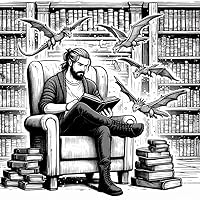
Ich habe die Ausgabe der Büchergilde mit den Illustrationen von Lina Hoven. Sie kratzt ihre Motive mit einem Messer in Schabkarton. Die somit entstandenen schwarz-weißen Kunstwerke lassen einen noch besser in Regenroman eintauchen.
In my humble, uneducated opinion, there is a fine line between describing things to a point where the reader drinks in all the details and savors it, and the point where readers choke on the crap. Karen Duve is in the first category. I savored her colorful characterizations. Even when she is speaking of unpleasant things, I still found myself totally absorbed and not overwhelmed with the description. The characters in this book were quite possibly some of the most bizarre and colorful people ever.
The players: Martina: beautiful, bulimic bimbo. Leon: woman hating loser! (hated him) Married to Martina The strange sisters/neighbors: Isadora : obese and horny Kay: androgynous lesbian (imho, the only awesome person in the book) Kerbel : local guy who pains his fingernails and jerks himself off Harry : Leon's "friend" - huge jerk Pfitzner : pimp supreme/even bigger jerk Noah: a kick ass dog. A multitude of slugs. ick.
The game: I don't even know where to begin. The ill-matched couple buys a home and things go into a downward spiral from there, the marriage, the house, all of it, a disaster. Some parts of this were very hard to read. There were two rape scenes (one was funny. yes. Funny. I realize rape is not funny, but in this book, in this situation it was.) One was horrible. Just horrible. But let me tell you this, justice is served in a most righteous way.
A very strong first novel for Duve. A 4.5 if we ever get half star ratings.
This entire review has been hidden because of spoilers.
I really liked the book. It was pretty weird in a good way. It had some dark humorous moments and also ones that were depressingly dark.
The writing was beautiful. Great descriptions and all the moor landscape was adding a lot to the atmosphere of the book. It was adding to the mood one had reading it.
I didn't like the characters as people but they all added something extraordinary to it. I really liked Leon, not his personality but the way he was developed. He seemed to be too full off himself and yet incredibly insecure. He was angering me, I was looking down on him and yet I was feeling for him and sometimes understanding him.
A book like this that keeps me interested in where the events get going, is so beautifully written and also gives me mixed emotions about events and people in it is a success to me.
Just a warning there are a couple of things that happen with animals that would break one's heart. Be ready for it
3,5 ⭐️ Selten einen so unsympathischen Protagonisten kennengelernt.. Trotzdem: eine in sich Runde und nicht unspannende Erzählung, die vor allem durch ihre vulgäre Sprache und die damit beschriebenen nass - ekligen (nicht alles ist eklig, aber alles ist nass) und intensiven Szenarien und Begegnungen auffällt. Ein insgesamt komisches Buch, das, wenn man ein bisschen drin ist, fesseln kann.
Ich schwanke zwischen vier und fünf Sternen. Es gab schon Themen, die mich gestört haben aber trotzdem hat mich die Geschichte total gefesselt und ich werde noch lange über dieses Buch nachdenken.
Leon und Martina ziehen von Hamburg ins Moor. Es regnet und regnet, das Haus ächzt, die Wände sind feucht. Leon möchte in aller Abgeschiedenheit seinen Traum als Schriftsteller leben. Martina schwebt auf Wolke 7… noch!
Vorab habe ich über das Buch immer wieder gehört, wie intensiv und teilweise ekelhaft die Beschreibungen der verregneten Natur im Moor sind und was diese Umgang mit einem Haus macht. Und ich muss sagen, genauso habe ich diese Geschichte erlebt. Sie ist nass, ekelerregend, die Charakter sind unsympathisch, verschroben… es gibt kaum Lichtblicke und vor allem keine Sonne. ABER genau das hat mich gepackt. Ich konnte das Buch teilweise gar nicht aus der Hand legen, weil mich die Geschichte und die Beschreibungen fasziniert haben. Alleine wenn Martina und Leon im Garten die Nacktschnecken einsammeln und die Geräusche, wenn die Natur in der Feuchtigkeit erwacht, fand ich total realistisch dargestellt. Die Verschrobenheit der Charaktere hat total zur Atmosphäre gepasst. Zwar sollte man das Buch nicht unbedingt vorm essen lesen und auch nicht direkt danach. Nicht, weil es besonders brutal oder es zwanghaft ekelhaft ist, sondern einfach, weil die Beschreibungen so plastisch sind. Für mich eine ganz kalte Leseempfehlung!!
Der Schriftsteller Leon Ulbricht zieht mit seiner Frau Martina in ein einsames Haus in der ostdeutschen Pampa. Leon möchte schriftstellerische Inspiration aus der Sumpflandschaft ziehen, Dauerregen, eine Schneckenplage und zunehmende Mängel am Haus erschweren jedoch das Leben. Eines der seltsamsten Bücher, dass ich je gelesen habe. Teilweise grotesk, abstoßend, stellenweise brutal, aber irgendwie hat es was.
Eigentlich ist die Geschichte schrecklich aber ich war richtig Into it beim lesen, völlig die Zeit vergessen. Sehr gut geschrieben aber einfach insgesamt ein bisschen disturbing…
Die erste Hälfte war gut und dann wurde es mir zu graphisch, besonders bei den Szenen, wo Misshandlung von Tieren und Vergewaltigung vorkamen. Sehr trostloses Buch, aber es macht dem Titel alle Ehre.
I discovered ‘Rain’ by Karen Duve through a friend. I haven’t heard of Karen Duve before and the plot of the story looked quite interesting with an atmospheric feel and so I thought I will read it.
The plot summary of the novel given in the back cover reads like this.
When Leon Ulbricht lands a contract to write a gangster’s memoirs and moves into his dream home in an East German village with his beautiful wife Martina, everything seems set for an idyllic existence. But the dream home turns out to be in the middle of a fetid swamp; his house and marriage are falling apart; he can’t write the book and has spent all of his advance. It rains without end and their attempts to repair the house, or at least dry it out, are hampered by the plague of slugs eating away at the foundations. And then the gangster, wondering why his memoirs are not yet completed, decides to get nasty.
How can one resist a story like that? I couldn’t.
Now that I have finished reading I have good news and bad news. The good news first. The book is very true to the title. It is a bookish personification of rain. The whole book evokes the atmosphere of rain – the drizzle, the downpour, the steady incessant irritating rain, the slugs which come with the rain, the grey sky, the rainy nights setting in early, water getting soaked into the house roofs, walls and the foundation, water dripping through the roof into the house, clothes refusing to dry, boots and shoes soaked with rain, everything outside being marshy and mushy, brown water coming out of the tap, the rain because of which the power gets cut, the telephone cable gets cut, the mobile battery runs out, when it is dark and one can’t do anything but only hope that daylight arrives soon so that atleast one can see around. It is not the beautiful romantic rain – where two people stand under one umbrella on a bridge near the Fontanka river in St.Petersburg with love in their eyes. This is the rain which is messy, which makes your life difficult, which brings slugs, insects and worms inside your home, which you didn’t even know existed, the rain which prevents you from going out and which prevents you from enjoying your staying in, a rain which gets into your nerves all the time. This is the rain which the book portrays from the beginning to the end. Full marks to Karen Duve for that. I haven’t read another book which portrays the annoying characteristic of rain as well as this one. The second nice thing about the book is the way it shows how the rain and the atmosphere and environment it creates transforms the people who live there, not just emotionally or psychologically but in probably very real ways. The way how, Leon starts resembling his next door neighbour Isadora at the end of the book is very uncanny. I didn’t like the main character in the story, Leon the writer, but I liked some of the other characters – Martina (Leon’s wife), Kay (one of their neighbours who loves Martina) and Noah (a stray dog whom Martina takes inside her home).
Now the bad news. I was expecting the book to evoke the atmosphere of rain. And that Karen Duve has masterfully done. But I also expected the book to have a plot which was quite engaging and funny and which grabbed my attention and made me laugh. That is what the blurb hinted at. Unfortunately, I felt that the book didn’t do that. It started off quite well but at some point, I felt that the depiction of the atmosphere and the environment won over the story and the humour. There are some nasty characters (which was okay with me) and some nasty, repulsive scenes (which was not okay with me). One particular scene was so repulsive that I was very upset with it and I also wondered why I bothered with the story. Luckily the book redeemed itself a bit after that. But that scene left a bad taste in the mouth.
In conclusion, I don’t know how to react to the book. I definitely didn’t like it. But the evocation of rain and the rainy atmosphere and environment was masterful. I don’t know whether it was just me – because ‘Rain’ was a bestseller in Germany and has been translated into sixteen languages – or whether other reviewers felt the same as me. So I did some research. Interestingly, I couldn’t find a single blogger-review of the book in English. But I found two other reviews – the Guardian review (by Margaret Stead) and the review at the Goethe Institut site (by Barbara Baker). These two reviews had opposite points of view – Stead’s praised the book while Baker’s review was more complex and was overall unfavourable to the book. I sided with Baker.
I will leave you with some of my favourite lines from the book.
After only a minute out in the rain, Martina’s chin-length red hair was plastered to her face. A strand of it described a calligraphic flourish on her forehead, from which water licked its way down to her mouth.
The stream changed from flowing above ground to flowing underground like a needle swiftly stitching.
The sound woke Leon and Martina up on their first few nights. Then they integrated it into their dreams, which from now on were full of creaking bridges and falling trees.
The rain increased, falling from the sky like a set of evenly arranged guitar strings.
Have you read ‘Rain’ by Karen Duve? What do you think about it?
Das Buch hat mich komplett überrascht. Ganz anders als erwartet wird die eigentlich traurige, aber auch eklige und gegen Ende verrückte Geschichte der Protagonisten erzählt. Es wird auf äußerst gelungene Weise dargestellt, wie sich die beiden Hauptcharaktere langsam verlieren, versinken in ihrem Elend und schlussendlich selber zum Moder des Moores werden in dem sie leben. Die verschiedenen Charaktere sind sehr vielschichtig und machen die Geschichte interessant. Das Buch ist sehr spannend zu lesen, faszinierte und schockierte mich immer wieder.
Ich liebe diese Geschichte. Ich habe mit anderem gerechnet und bin überrascht einen tief feministischen Roman vorgefunden zu haben. Grausam, zum Schmunzeln und in sich stimmig.
E' abbastanza brutto, non del tutto perché comunque sono riuscita a finirlo, spinta più dalla curiosità che dalla piacevolezza della lettura. La trama vira allo stomachevole: c'è una coppia mal assortita composta da uno scrittore mai decollato e una bella ragazza bulimica. Lo scrittore viene assoldato da un bullo locale per scrivere la sua biografia, e per questo riceve una bella cifra, che gli consente di 1) sposarsi con la ragazza bulimica; 2) acquistare una casa ai bordi di una palude. Già il fatto che ad uno piaccia abitare ai bordi di una palude avrebbe dovuto farmi capire. Comunque da qui parte il delirio: piove sempre, ci sono invasioni di lumache ovunque, la casa è ovviamente umidissima, le vicine sono 2 donne inquietanti, il bullo non gradisce la prima stesura della biografia. Ma quello che turba, anzi disturba, non è tanto la trama (di per sè assurda), quando la scelta di cosa scrivere e come descriverlo. Una scrittura piana e facile che descrive situazioni e momenti sempre più disgustosi; la vita dello scrittore ad un certo punto subisce uno scarto (più disgustoso che terrificante) e inizia a rotolare verso il degrado fisico e mentale. Che dire? Mi ha fregato la quarta di copertina.
Now this one I did enjoy, it's quirky and grotesquely comic, very original. It tries to steer a hazardously narrow path between the comic and the deadly serious, and some reviews I've read feel that she hasn't succeeded, but I give it the thumbs-up.
Leon calls himself a writer, although all he's ever written are a few poems. Then he lands a deal to write up the memoirs of a Reeperbahn pimp and failed boxer, takes the advance and the gifted Mercedes and moves with his new wife to a little village on the edge of a marshy moor in the former GDR. But the rain never lets up, the foundations of their house swell with moisture, there is an invasion of slugs, and Leon spends all his time trying to stop the rot rather than getting on with the writing. When the subject of the biography calls in the cards, things turn very, very nasty.
Ich hatte hier ein philosophisch geschriebene Alltagsdarstellung erwartet. Ein Ehepaar, das im Alltagstrott auseinanderdriftet. Aber "Regenroman" ist heftig. Daher (weil Autorin und Verlag es nicht tun) möchte ich eine fette Content Warnung aussprechen: Gewalt, Missbrauch, Depression - passt auf euch auf, wenn ihr das Buch lest.
Ich möchte gar nicht weiter ins Detail gehen, denn das Unerwartete ist der Hauptgrund, warum "Regenroman" so wirkt, wie es wirkt. Ich kann jedoch auch mit etwas Abstand nicht sagen, was ich von dem Buch halte. Aber es hat mich nachhaltig beschäftigt und beeindruckt, daher gebe ich 3 Sterne.
Siccome questo è un libro particolarmente brutto, ho imparato un sacco di cose:
*La Germania centro-orientale ha più precipitazioni che tutte le regioni equatoriali; *Napoleone ha invaso quelle regioni perchè ricche di lumache, cibo di cui i francesi sono ghiotti; *Camminare nel fango può provocare danni irreparabili a calzature e vestiti; *I fiumi della Germania centro-orientale sono solcati da cadaveri in decomposizione; *Se volete provocare un incidente, è sufficiente un mucchio di lumache posizionato sapientemente in mezzo alla strada; *Non è consigliato aggirarsi di notte nelle paludi della Germania centro-orientale; *Le paludi della Germania centro-orientale, nelle ore notturne, sono l'habitat naturale di anziane ciccione nude; *Le anziane ciccione nude che di notte vagano nelle paludi della Germania centro-orientale, sono in cerca di prede per il rituale di accoppiamento; *Fate attenzione, la preda potreste essere voi!
Leon, ein von sich überzeugter Dichter und Schriftsteller, kauft sich mit seiner jungen Frau Martina ein Haus in einem Moorgebiet Ostdeutschlands, um dort in aller Ruhe die Biographie des Boxers und Zuhälters Pfitzner zu schreiben. Doch nichts entwickelt sich so, wie es sollte. Der anhaltende Dauerregen zieht sich nicht nur ins Gemäuer des Hauses, sondern zerstört auch nach und nach die brüchigen Fundamente, auf denen Leon und Martina ihrer Beziehungen bauen.
Also die erste Hälfte des Buchs fand ich super. Der Schreibstil und das Sprachgefühl der Autorin ist super. Die Geschichte irgendwie merkwürdig. Aber ich war im Urlaub und es hat nur geregnet. Das Buch hat gepasst.
Mit „Regenroman“ veröffentlichte Karen Duve 1999 ihren ersten Roman, eine ebenso düstere wie ungewöhnliche Mischung aus Gesellschaftsroman, Beziehungsdrama und schwarzer Tragikomödie.
Der Hamburger Schriftsteller Leon zieht mit seiner Frau in ein abgelegenes Haus am Rand eines Moores in Ostdeutschland. Was zunächst wie der Traum vom idyllischen Landleben wirkt, entwickelt sich zunehmend zu einer beklemmenden Geschichte voller Verfall, Einsamkeit und zwischenmenschlicher Abgründe. Der allgegenwärtige Regen, das Moor und eine stetig wachsende Schneckenplage prägen die bedrückende Atmosphäre des Romans.
Besonders prägend ist die dichte, fast schon unangenehme Stimmung, die Karen Duve erschafft. Das Moor wird dabei weit mehr als nur ein Schauplatz: Es spiegelt den inneren Zustand der Figuren und den schleichenden Zerfall ihrer Beziehungen. Die Charaktere sind vielschichtig, teilweise schwer greifbar und gerade deshalb faszinierend. Duves Sprache wirkt oft nüchtern und trocken, was die düsteren und grotesken Elemente noch stärker hervortreten lässt.
Mich hat das Buch komplett überrascht. Das eher harmlose Cover liess mich etwas ganz anderes erwarten. Stattdessen erhielt ich eine verstörende, teilweise ekelerregende und immer wieder schockierende Geschichte, die mich dennoch ständig bei der Stange hielt. Mehrfach dachte ich, eine Grenze sei erreicht, nur um wenige Seiten später festzustellen, dass noch eine weitere Überschreitung folgt. Die oft erwähnten literarischen Anspielungen konnte ich allerdings kaum erkennen, abgesehen von möglichen Kafka-Bezügen.
Insgesamt ist „Regenroman“ ein ungewöhnliches, düsteres und eindrucksvolles Buch für Leserinnen und Leser, die morbide Atmosphären, schräge Figuren und Geschichten über menschlichen Zerfall schätzen.
Nije me oduševilo kao kad sam prvi put čitala, ali i dalje tvrdim da je jako dobro. Što se desi kad pisac proda dušu (usp. Goethe)? Prvo ima novaca i vozi mercedes i kupi kuću na osami i žena-ljepotica je sretna. Usput nađe leš u rijeci (vidi pod Carver). Dalje ide, mogli smo si misliti, nizbrdo, na rubu fantastike, uz brutalne naturalističke opise (v.Zola), a povremeno se i osjeća kao netom probuđeni kukac (ništa bez Kafke). Uz susjedu pohotnu, debelu vješticu i njenu muškobanjastu sestru (bajke, braća Grim koja će se glavom i bradom pojaviti tek u romanu Fräulein Nettes kurzer Sommer, 25 godina kasnije).
Ako je nešto neponovljivo u ovom romanu, to je voda. Kiša i pljusak i oluja i nevrijeme i vlaga i bare i lokve i močvara i blato. Trulež i plijesan. Žabe i puževi golaći. Beskrajni opisi vodurine koja ih pomalo guta i rastače. Vodurina kao ne samo ravnopravan lik, nego i malo glavniji od ostalih glavnih likova.
Aktuell hat dieses Buch 3,5 Sterne und das ist genau die Bewertung, die ich eigentlich auch gerne vergeben würde. Es ist - ein\e andere\r Rezensent\in hat das schon geschrieben - ein seltsames Buch. Am Anfang hatte ich so meine Schwierigkeiten und fand es etwas fad und zäh. Im Lauf der Zeit merkt man dann auch noch, dass eigentlich keine der handelnden Personen als Sympathieträger\in dienen kann. Wenn man das aber mal erkannt und sich damit abgefunden hat, kann die Geschichte plötzlich ihr morbides Potenzial entwickeln und es kommt auf einmal Schwung in die Angelegenheit, bevor es zum Ende hin erst kurz recht hässlich wird und dann noch mal richtig abdreht. Also vor allem in der zweiten Hälfte durchaus unterhaltsam, aber vielleicht nicht für jede und jeden.
This entire review has been hidden because of spoilers.
De bibliotheek had een sticker met een :) op de rug van dit boek geplakt. Er zit wel een soort van humor in, maar helaas is dit niet het grappige stuk over uitzichtloze verbouwingen, rare buren en scheve relaties dat het had kúnnen zijn. Je kunt het concept 'gewelddadige mannen zijn stom' ook zonder zoveel onnodige wreedheid tegen vrouwen en dieren overbrengen. Aan het eind wenste ik dat dit verhaal op de helft een compleet andere kant op was gegaan, en dat de gekke buurvrouwen eigenlijk een salamander en een pad waren geweest die de nare gangsters op hadden gegeten. Dat was luchtiger én sterker geweest.
This entire review has been hidden because of spoilers.
Ein zu gleichen Teilen verstörender und faszinierender Roman. Habe das Buch aus einem Brockenhaus mitgenommen, weil mir das Cover gefiel und der Klappentext interessant klang. War allerdings ganz anders als ich erwartet hatte.
Keine der Figuren ist wirklich sympathisch. Teilweise etwas gar graphisch - Missbrauch findet auf allen erdenkbaren Ebenen statt. Ein heftiges Buch, dass aber unglaublich gut geschrieben ist. Konnte es trotz phasenweisen Anwiderns kaum aus der Hand legen. Hinterlässt einen bleibenden Eindruck.
Modrig. Gärend. Träge. Trist. Das Wetter, die Menschen, die Stimmung. Der Regen als Synonym für die Schwere des menschlichen Seins.
Die Charaktere haben meiner Meinung nach wenig Tiefgang und sind eher stereotyp, beim Lesen empfand ich rein gar nichts für die Personen, nicht einmal Mitleid.
Die ersten 100-200 Seiten verliefen schleppend. Die letzten Kapitel waren auf einmal ziemlich spannend. Aus dem Ende kann ich mir keinen Reim machen.