

What do you think?

A Foreigner Carrying in the Crook of His Arm a Tiny Book
In this illuminating philosophical book, Jabes, who died in 1991 and lived in France after being forced to leave Egypt with other native-born Jews during the Suez War, ruminates on the link between being Jewish and being mislabeled as a foreigner. It is also an indictment of bigotry. Jabes writes, ``the basic racist is the man who refuses himself as he is. . . . The antisemite can never forgive the Jews for being capable of self-realization . . . . '' Elsewhere he observes in verse on his own experience of exile: ``I left a land not mine / for another, not mine either. / I took refuge in a word of ink with the book for space, / word from nowhere, obscure word of the desert. '' His seamless style brings to mind both religious and French existential writings, although some musings reach heights too abstract to follow: ``We must from now on grant citizen's rights to the foreigner's new name: the foreign I . / Foreign Me, foreign You designated by the I. '' Here, too, Jabes ( The Book of Questions ) evokes powerful images of the desert to underscore a mood of isolation and comments wisely about aging and power.
123 pages, Paperback
First published January 1, 1989
About the author
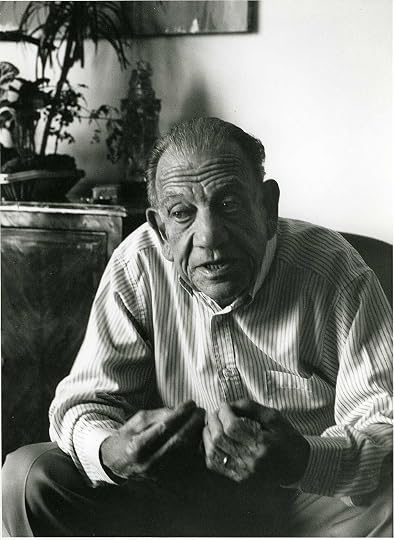
Edmond Jabès
75 books92 followersEdmond Jabes was a major voice in French poetry in the latter half of this century. An Egyptian Jew, he was haunted by the question of place and the loss of place in relation to writing, and he was one of the most significant thinkers of what one might call poetical alienation. He focused on the space of the book, seeing it as the true space in which exile and the promised land meet in poetry and in question. (This is summarized from the reader's description in A New History of French Literature, ed. Denis Hollier.) Very many of Jabes's books of prose and poetry have been translated into English, including The Book of Dialogue ( Wesleyan, 1987) and The Book of Margins (Chicago, 1993), both translated by Rosmarie Waldrop.
Ratings & Reviews
Friends & Following
Create a free account to discover what your friends think of this book!
Community Reviews
Displaying 1 - 10 of 10 reviews

February 3, 2018
"Non si può pretendere che il deserto sia una distanza, poiché è, ad un tempo, reale distanza e non-distanza assoluta a causa dell'assenza di riferimenti. Ha per confini i quattro punti dell'orizzonte, essendo ciò che li congiunge e ciò che li separa. È la sua stessa separazione nel punto in cui diviene luogo aperto; apertura del luogo.
Non si può pretendere che il deserto sia il vuoto, il niente. Non si può neppure pretendere che sia il termine poiché è anche il principio".
Edmond, conterraneo.
Non si può pretendere che il deserto sia il vuoto, il niente. Non si può neppure pretendere che sia il termine poiché è anche il principio".
Edmond, conterraneo.
June 26, 2008
Have been carrying this book around for over a decade. Read it frequently. Full of marginalia. Personal favorite.

September 10, 2013
simply i love it very much.
July 11, 2026
There is no plot in A Foreigner Carrying in the Crook of His Arm a Tiny Book in any conventional sense — no arc, no action, no denouement, no hero limping toward a moral endpoint. Instead, Edmond Jabès stages a philosophical and mystical fugue in the guise of a book.
The drama occurs in the recursion of thought, the sparring of voices, the collapse of place and self, and the aching attempt to inscribe meaning in exile.
If one insists on plot, then it is this: a man, a writer, a Jew — exiled from Cairo after the 1956 Suez Crisis — walks the streets of Paris with a book in his arm and a desert in his voice. From there, the book unspools as a succession of aphorisms, dialogues, meditations, and parables about absence, identity, foreignness, God, language, and writing itself.
The story, if we can call it that, begins with the foreigner who, by merely existing, renders everyone else a foreigner too. The book then splits into hundreds of micro-scenes, like inkblots in a sacred Rorschach: sages argue about whether God has failed; a man with a hump may be bent not by disease, but by the weight of exile and scripture; God tries to close His book but gets His finger stuck between two pages; a man is seen walking aimlessly down Boulevard Saint-Germain, bumping into people, confused by their rootedness.
At one moment, the book seems to be a dialogue between two men; in another, a chorus of sages and disciples; then, again, a silent monologue echoing inside an abandoned synagogue. Time stutters, events flicker and are questioned.
Rather than cause and effect, we get call and erasure: “We never write a whole book, only its beginning and end, that twofold abyss.” Jabès replaces sequence with recurrence, incident with absence, plot with disintegration. Even the characters — if we dare call them that — are specters: the Foreign Man, the Sage, the Disciple, the Book.
And yet, there is a momentum: a journey through identity’s undoing, from the desert of God’s silence to the loneliness of writing. One walks away from the book altered, even if unable to say what has happened. In Jabès’ universe, that is the plot: a reader reading a book about a man carrying a book that contains everything but a home.
A spiritual lovechild of the Torah and an existential crisis, scribbled by a man so exiled he got deported from linear thought. A humpbacked Jew wanders Paris with a tiny book and enough angst to make Kafka look like a motivational speaker. God’s playing hide and seek, the Book keeps catching fire, and every page asks a question that answers with another question, like a rabbinical inquisition sponsored by Derrida. It’s what happens when you’re kicked out of Cairo, move to France, and decide home is a semicolon.
"...In the beginning was the absence of a Word that God, absenting Himself, bequeathed to Nothingness, to the glory of His absence. But if God’s silent word is plowed into Nothingness, could it be that all of language is? The disappointment of Titus and his soldiers, on realizing that the Temple of the Jews they had besieged was empty, and their anger at being duped by their enemy were as great as the stupor they were suddenly plunged into. That the God of a royal people could be invisible, that this people, in turn, could so fervently worship Nothing, made them profoundly uneasy. How could the Jews have made Nothing their god, their universe? And their book, the Book of Nothing? How could they dare raise Nothing to the height of a god and reduce the world to nothing? For the first time, the Romans found themselves confronting the occult power of Nothing. They discovered that the divine book was written on Nothing and that the words of the book were trying, in vain, to say Nothing. Could evoking God mean evoking Nothing? Could thinking, questioning God mean thinking, questioning Nothing? If in the beginning there is Nothing, there cannot be any beginning of the world. The world begins with the beginning of the world, which is the beginning of beginning, hence never begun. Is it in this never begun that God dwells? Is our relation to the world first of all a relation, through God, to an expectation, a hope of world pregnant with all possible beginnings? ..."
❤️ 🇮🇱
The drama occurs in the recursion of thought, the sparring of voices, the collapse of place and self, and the aching attempt to inscribe meaning in exile.
If one insists on plot, then it is this: a man, a writer, a Jew — exiled from Cairo after the 1956 Suez Crisis — walks the streets of Paris with a book in his arm and a desert in his voice. From there, the book unspools as a succession of aphorisms, dialogues, meditations, and parables about absence, identity, foreignness, God, language, and writing itself.
The story, if we can call it that, begins with the foreigner who, by merely existing, renders everyone else a foreigner too. The book then splits into hundreds of micro-scenes, like inkblots in a sacred Rorschach: sages argue about whether God has failed; a man with a hump may be bent not by disease, but by the weight of exile and scripture; God tries to close His book but gets His finger stuck between two pages; a man is seen walking aimlessly down Boulevard Saint-Germain, bumping into people, confused by their rootedness.
At one moment, the book seems to be a dialogue between two men; in another, a chorus of sages and disciples; then, again, a silent monologue echoing inside an abandoned synagogue. Time stutters, events flicker and are questioned.
Rather than cause and effect, we get call and erasure: “We never write a whole book, only its beginning and end, that twofold abyss.” Jabès replaces sequence with recurrence, incident with absence, plot with disintegration. Even the characters — if we dare call them that — are specters: the Foreign Man, the Sage, the Disciple, the Book.
And yet, there is a momentum: a journey through identity’s undoing, from the desert of God’s silence to the loneliness of writing. One walks away from the book altered, even if unable to say what has happened. In Jabès’ universe, that is the plot: a reader reading a book about a man carrying a book that contains everything but a home.
A spiritual lovechild of the Torah and an existential crisis, scribbled by a man so exiled he got deported from linear thought. A humpbacked Jew wanders Paris with a tiny book and enough angst to make Kafka look like a motivational speaker. God’s playing hide and seek, the Book keeps catching fire, and every page asks a question that answers with another question, like a rabbinical inquisition sponsored by Derrida. It’s what happens when you’re kicked out of Cairo, move to France, and decide home is a semicolon.
"...In the beginning was the absence of a Word that God, absenting Himself, bequeathed to Nothingness, to the glory of His absence. But if God’s silent word is plowed into Nothingness, could it be that all of language is? The disappointment of Titus and his soldiers, on realizing that the Temple of the Jews they had besieged was empty, and their anger at being duped by their enemy were as great as the stupor they were suddenly plunged into. That the God of a royal people could be invisible, that this people, in turn, could so fervently worship Nothing, made them profoundly uneasy. How could the Jews have made Nothing their god, their universe? And their book, the Book of Nothing? How could they dare raise Nothing to the height of a god and reduce the world to nothing? For the first time, the Romans found themselves confronting the occult power of Nothing. They discovered that the divine book was written on Nothing and that the words of the book were trying, in vain, to say Nothing. Could evoking God mean evoking Nothing? Could thinking, questioning God mean thinking, questioning Nothing? If in the beginning there is Nothing, there cannot be any beginning of the world. The world begins with the beginning of the world, which is the beginning of beginning, hence never begun. Is it in this never begun that God dwells? Is our relation to the world first of all a relation, through God, to an expectation, a hope of world pregnant with all possible beginnings? ..."
❤️ 🇮🇱

September 29, 2017
"Creare, amare, vi fa crescere le ali, ma ci si accorge un giorno che, a furia di non battere più da molto tempo, piegate l'una sull'altra, esse formano solo una gobba di cui non ci si può sbarazzare." (p. 108)
"Ogni pensiero è forse solo un sussulto spontaneo del Pensiero, un notevole varco nell'ineffabile.
La conoscenza non sarebbe, così, che un buco in un buco." (p. 111)
"Se il libro […] giunge a fare di un lettore anonimo, sconosciuto, un amico, questa è per l'autore la prova confortante che il libro al quale ha sacrificato tanto, non era inutile." (p. 125)
"Ogni pensiero è forse solo un sussulto spontaneo del Pensiero, un notevole varco nell'ineffabile.
La conoscenza non sarebbe, così, che un buco in un buco." (p. 111)
"Se il libro […] giunge a fare di un lettore anonimo, sconosciuto, un amico, questa è per l'autore la prova confortante che il libro al quale ha sacrificato tanto, non era inutile." (p. 125)
July 11, 2025
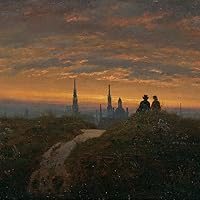
« Je me demande, grâce au recul que je prends, maintenant, avec ma vie, si ce goût prononcé pour le silence n’a pas son origine dans la difficulté qui, de tout temps, fut la mienne, de me sentir d’un quelconque lieu. Avant de connaître le désert, je savais qu’il était mon univers. Seul le sable peut accompagner une parole muette jusqu’à l’horizon.»
simply sublime.
simply sublime.

December 21, 2024
Essere sé stessi significa essere soli.

January 30, 2026
天空堆满了棉絮,
道路隐入于迷雾。
茕茕孑立异乡人,
腋下夹着袖珍书。
道路隐入于迷雾。
茕茕孑立异乡人,
腋下夹着袖珍书。

September 25, 2026
Possiamo davvero dire di aver completato la lettura di questo libro?
E rileggerlo cosa significa? Ci sta sempre accanto, nelle nostre mani aperte.
Ci parla, dal silenzio.
E rileggerlo cosa significa? Ci sta sempre accanto, nelle nostre mani aperte.
Ci parla, dal silenzio.
September 29, 2026
il libro più bello che io abbia mai letto, non c’è una pagina che io non abbia sottolineato. ricco di riflessioni non solo sulla concezione di straniero, ma sul modo di vivere il mondo.
Displaying 1 - 10 of 10 reviews