

What do you think?

Green Days by the River
Another perceptive novel about a boy on the edge of adult responsibilities. It is the story of Shellie, a Trinidadian boy who moves to a new village and there meets two girls. He is charmed by Rosalie but he is attracted to the more cheerful and accessible Joan. Introduction by Gareth Griffiths.
198 pages, Paperback
First published January 1, 1967
About the author
Michael Anthony
264 books83 followersLibrarian Note: There is more than one author in the Goodreads' database with this name. See this thread for more information.
Considered one of Trinidad’s foremost historians,
Anthony travelled to England in 1955, where he
worked in factories and as a telegraphist. His
literary career began with contributions to the
magazine Bim. His first novel, The Games Were
Coming, was published in 1963; his most famous,
The Year in San Fernando, in 1965. Other writings
include short collections Cricket in the Road (1973),
Sandra Street and Other Stories (1973) and The Chieftain’s
Carnival and Other Stories (1993), where each story is
based on significant events in Trinidad’s history.
Much of his work after 1975 consists of historical
research into his native island.
Considered one of Trinidad’s foremost historians,
Anthony travelled to England in 1955, where he
worked in factories and as a telegraphist. His
literary career began with contributions to the
magazine Bim. His first novel, The Games Were
Coming, was published in 1963; his most famous,
The Year in San Fernando, in 1965. Other writings
include short collections Cricket in the Road (1973),
Sandra Street and Other Stories (1973) and The Chieftain’s
Carnival and Other Stories (1993), where each story is
based on significant events in Trinidad’s history.
Much of his work after 1975 consists of historical
research into his native island.
Ratings & Reviews
Friends & Following
Create a free account to discover what your friends think of this book!
Community Reviews
Displaying 1 - 30 of 98 reviews

July 30, 2026
A Coming of Age Tale Where Everyone Needs Therapy
If you've ever wanted to read a Caribbean classic that masquerades as a sweet, pastoral coming of age story before slowly revealing itself to be a psychological horror film about a teenager getting systematically cornered by a local farmer and his attack hounds, Michael Anthony's Green Days by the River is the absolute peak of literature for you.
A few of my students will be studying this novel from September, so I figured I might as well review it.
Set in 1952 in rural Mayaro, in pre-Independence Trinidad, our protagonist is a fifteen-year-old teen named Shell Lammy (affectionately called Shellie by friends and loved ones).
Shell:
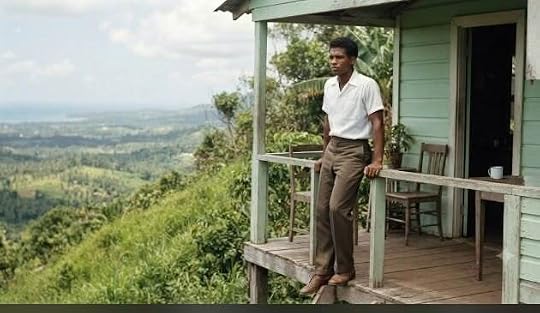
Shell's life plan is simple: graduate high school, get a good job to help his financially beleaguered mom, wear long trousers as the symbolic representation of manliness, avoid manual labour at all costs, and perhaps not implode under the weight of his own hormonal panic. Unfortunately for Shell, his own terrible decisions ensure that his plans get torn apart one agonising piece at a time.
Shell and his parents are forced to relocate from the sunny coast of Radix to the inland hills of Pierre Hill because Shell's father, Pa, is terminally ill.
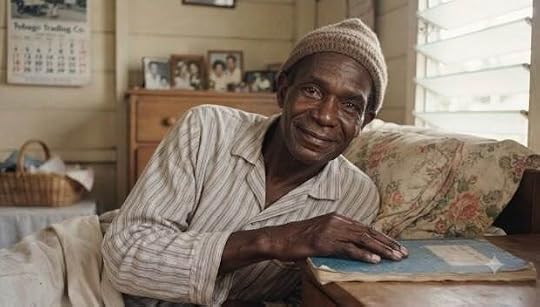
Shell's father, Mr. Lammy:
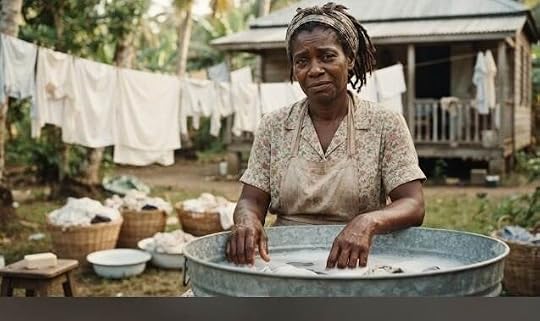
Shell's mother, Mrs. Lammy:
Enter Mr. Gidharee: a wealthy, charismatic Indo-Trinidadian landowner who looks like the ideal mentor to a young man in need of a father figure. He hands out free fruit, offers Shell odd jobs, and teaches him about the land.
Mr. Gidharee:
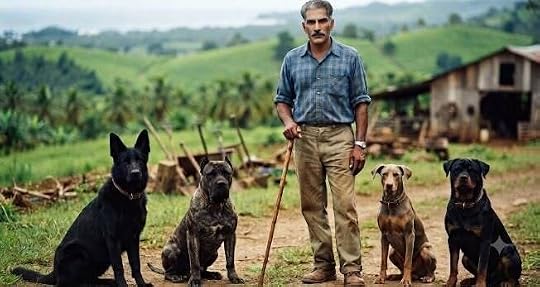
There are only two minor catches: Mr. Gidharee's beautiful biracial teen daughter Rosalie, who's sought after by all the boys in the village and his pack of four terrifying hunting dogs named Hitler, Tiger, Lion, and Rover. While Shell thinks these hounds are just for catching wild deer and iguanas, they quietly function as a furry, four-legged warning system for what happens when you cross the local landlord.
The Double Love Triangle of Doom
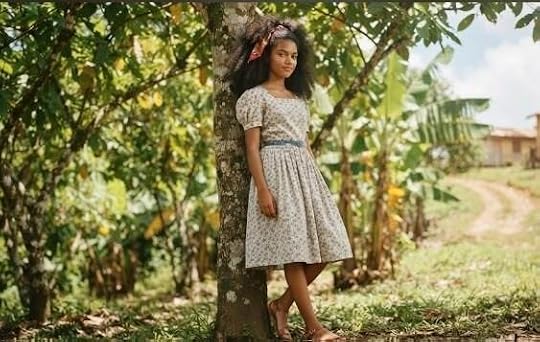
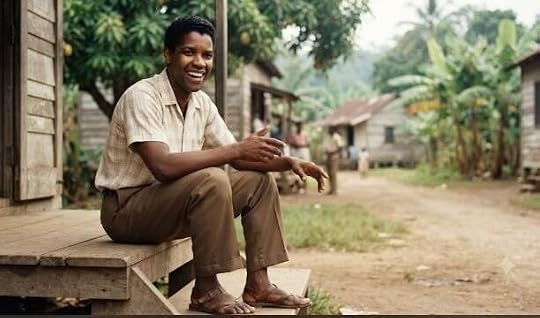
While dealing with his father's slow decline and the grim reality that poverty is going to force him to drop out of school to pick cocoa, Shell finds himself juggling two entirely different romantic options. The first option is Rosalie Gidharee, the local beauty. She is sharp, flirtatious, fiercely independent, infatuated with a boy named Joe, well aware of the power she wields over the teen boys and completely unavailable to Shell until Joe's no longer in the picture. Rosalie represents the rural, creolised soil of Pierre Hill.
Rosalie:
Joe:
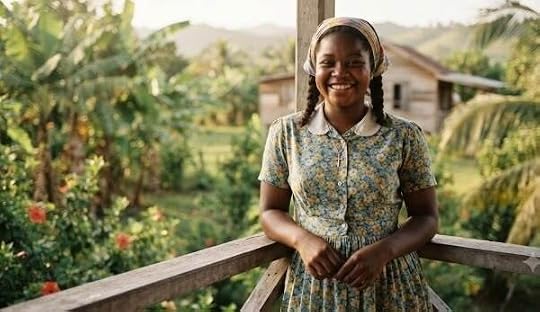
The second option is Joan, a pristine, well-mannered visitor from Sangre Grande. Joan represents bourgeois respectability, proper education, and a future free from agricultural sweat.
Joan:
Naturally, instead of communicating like a normal human being, Shell wavers between both of them while making other catastrophic choices, like getting absolutely drunk on rum at the school fair, creates a public spectacle, and has to be hauled home like a sack of potatoes. It's pretty clear that Shell doesn't have much in common with the aloof Rosalie, but at his age, he's blinded by her beauty and easily mistakes sheer sexual desire for true love.
His feelings for Joan, on the other hand, develop as a proper slow burn. Through a steady stream of weekly letters, they get to know each other and fall in love over shared goals, like their mutual drive to climb the socio-economic ladder and join the then tiny Black middle class in colonial Trinidad.
From the start of the novel, the author focuses on the symbolic significance of a large cashew tree, at the top of Pierre Hill.
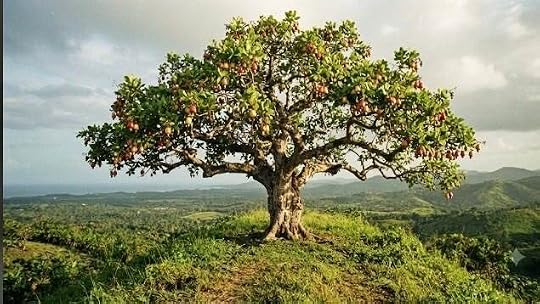
Early on, the boys compete to knock down the ripest cashew fruit from a high branch, mirroring their pursuit of Rosalie because she is the prize everyone wants to pick. On one occasion, Shell manages to smash a high-hanging cashew fruit straight onto the ground, perfectly foreshadowing how his own impulsive moves end up wrecking his life plans.
On Boxing Day night, Shell meets Rosalie under that exact same cashew tree and ignores his father's strict warning not to mess around with her unless he plans to marry her. The second it's over, total panic sets in because he instantly knows he's blown it. Rather than face the music, he tries to pretend it never happened and goes right back to courting Joan.
That's a seriously bad move because Rosalie happens to come equipped with a fiercely protective father. Mr. Gidharee is dead set on hunting down any boy who dares to play games with his daughter, dump her, and then has the absolute audacity to parade his actual girlfriend around the village for everyone to stare at and gossip.
When Rosalie informs her father, Mr. Gidharee promptly drops his former benevolent mask entirely. He unleashes his fearsome dogs to corner and terrorise Shell in the dark woods of Cedar Grove. Stripped of his autonomy, Shell is forced into an arranged marriage under Hindu rites, permanently bound to the Gidharee estate while his dreams of an urban professional life with his true love, Joan, vanish into thin air.
Shell traded a love built on patience and shared goals for a cheap thrill under a cashew tree, proving that the heaviest price a teenager can pay for giving in to the moment is losing the one person who was actually worth waiting for. Perhaps the most frustrating part of it all, for me, is that Shell was simply too cowardly to pick up a pen and tell Joan the shameful truth. Instead of owning up to the consequences of his shameful actions, he just stopped replying, leaving her completely in the dark as to why the boy who swore he was madly in love with her had suddenly put up a brick wall of silence.
What makes this book brilliant is that it completely subverts the traditional Bildungsroman. Usually, growing up means gaining freedom, wisdom, and independence. For Shell, growing up means realising you are trapped in a biological and social snare of your own making, and the only thing left to do is accept your fate with a heavy sigh and a cup of tea. It is sombre, it is brilliantly observed, and it will make you look at local farmers with very deep suspicion 😂.
If you've ever wanted to read a Caribbean classic that masquerades as a sweet, pastoral coming of age story before slowly revealing itself to be a psychological horror film about a teenager getting systematically cornered by a local farmer and his attack hounds, Michael Anthony's Green Days by the River is the absolute peak of literature for you.
A few of my students will be studying this novel from September, so I figured I might as well review it.
Set in 1952 in rural Mayaro, in pre-Independence Trinidad, our protagonist is a fifteen-year-old teen named Shell Lammy (affectionately called Shellie by friends and loved ones).
Shell:
Shell's life plan is simple: graduate high school, get a good job to help his financially beleaguered mom, wear long trousers as the symbolic representation of manliness, avoid manual labour at all costs, and perhaps not implode under the weight of his own hormonal panic. Unfortunately for Shell, his own terrible decisions ensure that his plans get torn apart one agonising piece at a time.
Shell and his parents are forced to relocate from the sunny coast of Radix to the inland hills of Pierre Hill because Shell's father, Pa, is terminally ill.
Shell's father, Mr. Lammy:
Shell's mother, Mrs. Lammy:
Enter Mr. Gidharee: a wealthy, charismatic Indo-Trinidadian landowner who looks like the ideal mentor to a young man in need of a father figure. He hands out free fruit, offers Shell odd jobs, and teaches him about the land.
Mr. Gidharee:
There are only two minor catches: Mr. Gidharee's beautiful biracial teen daughter Rosalie, who's sought after by all the boys in the village and his pack of four terrifying hunting dogs named Hitler, Tiger, Lion, and Rover. While Shell thinks these hounds are just for catching wild deer and iguanas, they quietly function as a furry, four-legged warning system for what happens when you cross the local landlord.
The Double Love Triangle of Doom
While dealing with his father's slow decline and the grim reality that poverty is going to force him to drop out of school to pick cocoa, Shell finds himself juggling two entirely different romantic options. The first option is Rosalie Gidharee, the local beauty. She is sharp, flirtatious, fiercely independent, infatuated with a boy named Joe, well aware of the power she wields over the teen boys and completely unavailable to Shell until Joe's no longer in the picture. Rosalie represents the rural, creolised soil of Pierre Hill.
Rosalie:
Joe:
The second option is Joan, a pristine, well-mannered visitor from Sangre Grande. Joan represents bourgeois respectability, proper education, and a future free from agricultural sweat.
Joan:
Naturally, instead of communicating like a normal human being, Shell wavers between both of them while making other catastrophic choices, like getting absolutely drunk on rum at the school fair, creates a public spectacle, and has to be hauled home like a sack of potatoes. It's pretty clear that Shell doesn't have much in common with the aloof Rosalie, but at his age, he's blinded by her beauty and easily mistakes sheer sexual desire for true love.
His feelings for Joan, on the other hand, develop as a proper slow burn. Through a steady stream of weekly letters, they get to know each other and fall in love over shared goals, like their mutual drive to climb the socio-economic ladder and join the then tiny Black middle class in colonial Trinidad.
From the start of the novel, the author focuses on the symbolic significance of a large cashew tree, at the top of Pierre Hill.
Early on, the boys compete to knock down the ripest cashew fruit from a high branch, mirroring their pursuit of Rosalie because she is the prize everyone wants to pick. On one occasion, Shell manages to smash a high-hanging cashew fruit straight onto the ground, perfectly foreshadowing how his own impulsive moves end up wrecking his life plans.
On Boxing Day night, Shell meets Rosalie under that exact same cashew tree and ignores his father's strict warning not to mess around with her unless he plans to marry her. The second it's over, total panic sets in because he instantly knows he's blown it. Rather than face the music, he tries to pretend it never happened and goes right back to courting Joan.
That's a seriously bad move because Rosalie happens to come equipped with a fiercely protective father. Mr. Gidharee is dead set on hunting down any boy who dares to play games with his daughter, dump her, and then has the absolute audacity to parade his actual girlfriend around the village for everyone to stare at and gossip.
When Rosalie informs her father, Mr. Gidharee promptly drops his former benevolent mask entirely. He unleashes his fearsome dogs to corner and terrorise Shell in the dark woods of Cedar Grove. Stripped of his autonomy, Shell is forced into an arranged marriage under Hindu rites, permanently bound to the Gidharee estate while his dreams of an urban professional life with his true love, Joan, vanish into thin air.
Shell traded a love built on patience and shared goals for a cheap thrill under a cashew tree, proving that the heaviest price a teenager can pay for giving in to the moment is losing the one person who was actually worth waiting for. Perhaps the most frustrating part of it all, for me, is that Shell was simply too cowardly to pick up a pen and tell Joan the shameful truth. Instead of owning up to the consequences of his shameful actions, he just stopped replying, leaving her completely in the dark as to why the boy who swore he was madly in love with her had suddenly put up a brick wall of silence.
What makes this book brilliant is that it completely subverts the traditional Bildungsroman. Usually, growing up means gaining freedom, wisdom, and independence. For Shell, growing up means realising you are trapped in a biological and social snare of your own making, and the only thing left to do is accept your fate with a heavy sigh and a cup of tea. It is sombre, it is brilliantly observed, and it will make you look at local farmers with very deep suspicion 😂.
This entire review has been hidden because of spoilers.

November 19, 2013
I read this book as a part of my Literature class, and I loved every minute I spent with it. The book casts an enlightening spin on a story so enthralling, you have to read it again, and again and again.
Its a 5 star simply for being a Caribbean book that I loved :p
Its a 5 star simply for being a Caribbean book that I loved :p

September 4, 2014
With the impending release of the movie, "Greens Days by the River" I decided to re-read the book, seeing that I completely forgot exactly what happened. I am happy I took the time I re-read this book, having read it 15years go, most if not all of the book felt completely new.
The first time I did read the book I remembered being curious about the country Trinidad and Tobago- where the novel is set. Fast forward to 2018 and I am living in said country. When you are living in a country where the book you're reading is set, it is an entirely different experience- for me, a good one. Michael Anthony captures the life of a teenager growing up in Mayaro and I absolutely could not get enough. Looking forward to seeing the movie.
The first time I did read the book I remembered being curious about the country Trinidad and Tobago- where the novel is set. Fast forward to 2018 and I am living in said country. When you are living in a country where the book you're reading is set, it is an entirely different experience- for me, a good one. Michael Anthony captures the life of a teenager growing up in Mayaro and I absolutely could not get enough. Looking forward to seeing the movie.

October 25, 2008
Set in Trinidad, he describes in sweet details, about life in the island. The plot revolves around a boy who falls in love with a popular girl and all the drama it entails. It follows him through some years as he grows into early adulthood, and his experiences of being young, loss, and love... and of course blackmail :)
An enjoyable book though nothing seems to turn out quite right.
An enjoyable book though nothing seems to turn out quite right.

September 4, 2023
More than just a coming-of-age story
This explores the fragility and endurance of human relationships and the sacrifices that allow us to gain other successes. Author Michael Anthony’s writing is vivid and immersive, capturing the essence of juvenile delights merging with adult responsibilities. I highly recommend
This explores the fragility and endurance of human relationships and the sacrifices that allow us to gain other successes. Author Michael Anthony’s writing is vivid and immersive, capturing the essence of juvenile delights merging with adult responsibilities. I highly recommend

Read
January 15, 2022The BEST BOOK I have ever read.

May 1, 2013
This is my second and last book that I will ever read by Michael Anthony. In the last couple of years, I've taken an interest in Caribbean literature. While looking up books by Trinidadian authors, I found Michael Anthony, whose novels are highly regarded. However, I have noticed that the great reviews come from people who read him years ago while they were in school, so they are more like "nostalgic memories" rather than "factual reviews".
I started off with "The Year In San Fernando", which, while it's an interesting look at city life through the eyes of a country boy, I thought the writing style was rather monotonous. It's a good book with two stories juxtaposed along, where the sense of place and Trinidadian life come alive on every page. Like I said, I didn't really like the writing style, and the overuse of the word "strange", but it motivated me to give another one of his books a try: "Green Days By the River".
The writing style in "Green Days By the River" is definitely more engaging and flowing than in "The Year In San Fernando". Again, the word "strange" is used very often, which for me is very vague because it could mean anything, but I found myself reading chapter after chapter without even noticing. My respect for Mr. Anthony and his skill at giving a sense of place and Trinidadian culture. This time, the story is set in Mayaro, and Mr. Anthony's description of "the bush" takes you right there among the fruit trees, the birds and the Ortoire river. A chapter that I really enjoyed was the one about Shell's last experience with the Tobago dogs, where the tension and apprehension are built up very skillfully.
However, my problem with this book is that, while parts of the story are very detailed, other parts are completely omitted. While planting vegetables and drinking, to name a couple, receive great attention, other moments in Shell's life, which are crucial, are almost completely ignored. Why is that? At some point, I thought that I had missed reading some chapters because it's assumed that we, the readers, know about this. I would have liked to know about those moments previous and after becoming a man; about what he went through with his father, whom he considered his "chum" and with whom he had a very open and meaningful relationship, and how he and his mother faced this crucial event in their lives. I didn't like the way the ending was plotted. The Shell we thought we knew turned out to be a whole different person. Sure, this can happen in real life, but, again, why is this character evolution being omitted from the story?
All in all, I wouldn't say it's a bad book and. Again, I consider that it is worth being read just for the descriptions of town life and the bush alone. However, the plot goes from trite –this is another coming of age story– to uneven.
I started off with "The Year In San Fernando", which, while it's an interesting look at city life through the eyes of a country boy, I thought the writing style was rather monotonous. It's a good book with two stories juxtaposed along, where the sense of place and Trinidadian life come alive on every page. Like I said, I didn't really like the writing style, and the overuse of the word "strange", but it motivated me to give another one of his books a try: "Green Days By the River".
The writing style in "Green Days By the River" is definitely more engaging and flowing than in "The Year In San Fernando". Again, the word "strange" is used very often, which for me is very vague because it could mean anything, but I found myself reading chapter after chapter without even noticing. My respect for Mr. Anthony and his skill at giving a sense of place and Trinidadian culture. This time, the story is set in Mayaro, and Mr. Anthony's description of "the bush" takes you right there among the fruit trees, the birds and the Ortoire river. A chapter that I really enjoyed was the one about Shell's last experience with the Tobago dogs, where the tension and apprehension are built up very skillfully.
However, my problem with this book is that, while parts of the story are very detailed, other parts are completely omitted. While planting vegetables and drinking, to name a couple, receive great attention, other moments in Shell's life, which are crucial, are almost completely ignored. Why is that? At some point, I thought that I had missed reading some chapters because it's assumed that we, the readers, know about this. I would have liked to know about those moments previous and after becoming a man; about what he went through with his father, whom he considered his "chum" and with whom he had a very open and meaningful relationship, and how he and his mother faced this crucial event in their lives. I didn't like the way the ending was plotted. The Shell we thought we knew turned out to be a whole different person. Sure, this can happen in real life, but, again, why is this character evolution being omitted from the story?
All in all, I wouldn't say it's a bad book and. Again, I consider that it is worth being read just for the descriptions of town life and the bush alone. However, the plot goes from trite –this is another coming of age story– to uneven.

November 5, 2012
Recently reread this book and I just loved it even more. This was one of my favorite school assigned books. I'm so happy I read this book. Intriguing plot and I love the symbolism in the book :)

Read
May 6, 2016I read this book in school in 80s and I loved it. I used to long for Literature class so I can
lime between the pages with Shellie and Rosalie. It's a book I will have to reread. It's been years!
lime between the pages with Shellie and Rosalie. It's a book I will have to reread. It's been years!

September 5, 2023
Green Days by the River is a coming of age story about Shellie, a young boy growing up in Trinidad in the 1950’s. His father is very ill and the family has moved to a new village. When Shellie meets Mr. Gidharee, the man takes him under his wing and teaches him about his farm, life, and provides assistance to his family. As Shellie is growing up, two girls catch his attention - Rosalie and Joan. As you see Shellie grow up, you see him try to understand the actions of people around him as you watch him make decisions based on the needs of his family, even though he is only 15. Anthony is an expert at using a young boy as a narrator and having the voice ring so true. I will definitely look for more by this excellent Caribbean writer.
Want to Read
October 5, 2020I want to read the book

July 25, 2011
Not really one for me. I read it because it's a potential text to be studied on the GCSE English Literature paper and I've marked it for years but this is the first time anyone had bothered to answer questions on it - usually people select the far superior 'Of Mice and Men'.
Nevertheless, I bought it and read it so I would be fully informed when marking scripts and I have to say that the novel was persistently disappointing throughout. The author uses the technique of 'omission' (or so the candidates tell me) - which basically means he doesn't write about the best bits.
The plot basically centres around a year in the life of a fifteen year old boy - although he doesn't seem to have a birthday in this time. He goes through all the basic coming of age moments - he can't decide which girl he fancies most, he gets a job, he stops throwing stones at cashews, his Dad becomes ill and he becomes the man of the house, he loses his virginity, he gets drunk, he buys some long trousers - and yet with all of these things going on Anthony never actually describes anything of any interest until the final three chapters when the father of one of his girls gets even.
Maybe it's deliberate. Maybe the candidates are correct and Anthony is cleverly using 'omission'. Maybe by not describing the key events the writer is making some kind of point. However, for me, it was a little frustrating and just seemed like he built up tension towards an event and then missed out the best bits.
I've given it two stars on the basis that I can appreciate that, as a piece of literature and as a representation of a culture, it does have some worth. It's not one I'd read for fun though.
Nevertheless, I bought it and read it so I would be fully informed when marking scripts and I have to say that the novel was persistently disappointing throughout. The author uses the technique of 'omission' (or so the candidates tell me) - which basically means he doesn't write about the best bits.
The plot basically centres around a year in the life of a fifteen year old boy - although he doesn't seem to have a birthday in this time. He goes through all the basic coming of age moments - he can't decide which girl he fancies most, he gets a job, he stops throwing stones at cashews, his Dad becomes ill and he becomes the man of the house, he loses his virginity, he gets drunk, he buys some long trousers - and yet with all of these things going on Anthony never actually describes anything of any interest until the final three chapters when the father of one of his girls gets even.
Maybe it's deliberate. Maybe the candidates are correct and Anthony is cleverly using 'omission'. Maybe by not describing the key events the writer is making some kind of point. However, for me, it was a little frustrating and just seemed like he built up tension towards an event and then missed out the best bits.
I've given it two stars on the basis that I can appreciate that, as a piece of literature and as a representation of a culture, it does have some worth. It's not one I'd read for fun though.

October 13, 2014
Green Days By The River was a great coming of age story. The characters seemed very similar to how boys and girls would be at that time; enjoying simple country life but still being guided by their hormone.
I love a good twist, and that certainly happened at the end of the book, in two of Shell's major relationships. Poor Shell was blindsided. His attitude after everything was arranged was a little strange to me; however, I understood he was not thinking of himself.
I love a good twist, and that certainly happened at the end of the book, in two of Shell's major relationships. Poor Shell was blindsided. His attitude after everything was arranged was a little strange to me; however, I understood he was not thinking of himself.

February 9, 2015
I read this book in high school and it's one of those coming of age stories that you don't quite appreciate till in your late teens.For the most part,the writing is comforting and relatable(I'm from the Caribbean) but loses you in some parts. The morals are strong and thought provoking. It's as if you're looking into the lives of your grandparents or parents as they faced tough decisions about love and the life they hoped to lead one day.
February 16, 2008
I read this book when I was very young, and re-read as a teenager, with vastly different interpretations. Any teenager can relate to the experiences of Shell, as he moves into early adulthood. This book also showcases some of the rural aspects of Trinidad, which most people never see.

March 10, 2011
you have to read this book. It's wonderful and the author had a sense of Caribbean description.
Want to Read
September 18, 2015nice
May 17, 2019
It really gives you the nostalgia feel of old Trinidad.

Read
February 25, 2010high school was more tollerable with this as a literature book

June 17, 2020
I read one of the original copies of this book, printed in 1967!!! And it is also a classic of Trinidadian literature.
Many Trinis read this book in school but I never read it... until I had to interview the author after the movie came out.
I scrambled to borrow this book and your girl read it in one night because the prose just flows.
Our narrator is Shellie, a Trini boy who moves with his parents to a new village and there meets two girls. One is Rosalie Ghidaree, whose father lets Shellie help on his land down by the river. But while Shellie is tacitly accepted as a potential husband for Rosalie, he is also attracted to the cheerful and more accessible Joan. Meanwhile, Shellie's father becomes very sick. And poor Shell must confront these crises as he begins to understand adult responsibilities.
The author really steps back and lets Shell do all the talking. Issues like race relations in Trinidad or sexual discovery are simply presented from his perspective. The author trusts us enough to come to our own conclusions and doesn't feel the need to beat us over the head by saying AND THE POINT OF THIS STORY IS...
"As I waited for the bus to come I slowly grew possessed by the thoughts of Joan. Joan meant Sangre Grande to me and Sangre Grande meant Joan. I kept thinking of her as she had been on Discovery Day. I was seeing her exactly as she looked then, with the ribbon in her hair, and with the blue silky dress - with the waist pulled in tightly because she was fat. She was not fat, really, but a little plump and, girls were always trying to make their waists look as slim as possible."
Fun fact that I learnt when interviewing the author: his schoolmaster once said of Michael and another student as they were preparing to take an exam, "These are my dullest boys. Boys - if you pass, I will pass through a keyhole." The schoolmaster never passed through a keyhole but Michael Anthony did pass and go on to be one of T&T's most recognizable writers.
Many Trinis read this book in school but I never read it... until I had to interview the author after the movie came out.
I scrambled to borrow this book and your girl read it in one night because the prose just flows.
Our narrator is Shellie, a Trini boy who moves with his parents to a new village and there meets two girls. One is Rosalie Ghidaree, whose father lets Shellie help on his land down by the river. But while Shellie is tacitly accepted as a potential husband for Rosalie, he is also attracted to the cheerful and more accessible Joan. Meanwhile, Shellie's father becomes very sick. And poor Shell must confront these crises as he begins to understand adult responsibilities.
The author really steps back and lets Shell do all the talking. Issues like race relations in Trinidad or sexual discovery are simply presented from his perspective. The author trusts us enough to come to our own conclusions and doesn't feel the need to beat us over the head by saying AND THE POINT OF THIS STORY IS...
"As I waited for the bus to come I slowly grew possessed by the thoughts of Joan. Joan meant Sangre Grande to me and Sangre Grande meant Joan. I kept thinking of her as she had been on Discovery Day. I was seeing her exactly as she looked then, with the ribbon in her hair, and with the blue silky dress - with the waist pulled in tightly because she was fat. She was not fat, really, but a little plump and, girls were always trying to make their waists look as slim as possible."
Fun fact that I learnt when interviewing the author: his schoolmaster once said of Michael and another student as they were preparing to take an exam, "These are my dullest boys. Boys - if you pass, I will pass through a keyhole." The schoolmaster never passed through a keyhole but Michael Anthony did pass and go on to be one of T&T's most recognizable writers.

May 3, 2026
‘I could not help thinking about Rosalie as I went on – and about the three boys, especially the pelter.’ -Michael Anthony, Green Days By The River
This retrospective read was great! Green Days By The River was noting like I remember it. Where I thought I would meet the stifling compulsory heterosexuality that strangles most Caribbean coming of age stories was actually a subtle story of appreciation of difference and understanding that as young people we all make the same mistakes in different ways. We’re all just growing and learning. Shell, the protagonist at the centre of this coming of age story, leads the narrative with a command that mimics the wrong and strong approach of teens coming into their own, especially boys who are constantly told they are now a man and need to be taking charge and making man-like decisions. We watch him move from a performative man to an actual man. Michael Anthony is very heavy handed with the symbolism. Any household item can be a symbol in this story. I’m exaggerating of course but I loved the layered symbols. In that way, I see why this makes a perfect text for students of literature at high school. Anthony’s writing is also clear and the story is simple with just the right amount of excitement. It was a solid read and I’m glad I was able to throw off the negative vibes that high school gave me toward this book. It’s a gem. Go read it. 4.5 stars.
This retrospective read was great! Green Days By The River was noting like I remember it. Where I thought I would meet the stifling compulsory heterosexuality that strangles most Caribbean coming of age stories was actually a subtle story of appreciation of difference and understanding that as young people we all make the same mistakes in different ways. We’re all just growing and learning. Shell, the protagonist at the centre of this coming of age story, leads the narrative with a command that mimics the wrong and strong approach of teens coming into their own, especially boys who are constantly told they are now a man and need to be taking charge and making man-like decisions. We watch him move from a performative man to an actual man. Michael Anthony is very heavy handed with the symbolism. Any household item can be a symbol in this story. I’m exaggerating of course but I loved the layered symbols. In that way, I see why this makes a perfect text for students of literature at high school. Anthony’s writing is also clear and the story is simple with just the right amount of excitement. It was a solid read and I’m glad I was able to throw off the negative vibes that high school gave me toward this book. It’s a gem. Go read it. 4.5 stars.

March 9, 2025
Having first encountered Green Days by the River in secondary school but never finishing it, I was excited to finally revisit this coming-of-age classic years later. The novel evokes a strong sense of nostalgia, capturing the innocence and naivety of youth through its storytelling. It presents adolescence as both a period of simplicity and self-discovery, while also highlighting the overwhelming complexities that accompany it. Though I wasn't entirely satisfied with the ending, the book remains a worthwhile read.
July 20, 2025
The Choices made in life has consequences
The main characters in this story really tell the sobering realities of life and the choices we make when we don’t wait. Shellie wanted a life and future with Joan but had to be responsible for taking advantage of Rosalie. He was also ungrateful to Mr. Gid for his help and direction in the early part of his time in Pierre Hill. Mr. Gid really liked him as a young boy helping him and his family out when they really need it. He taught Shellie a serious life lesson with those dogs…..
The main characters in this story really tell the sobering realities of life and the choices we make when we don’t wait. Shellie wanted a life and future with Joan but had to be responsible for taking advantage of Rosalie. He was also ungrateful to Mr. Gid for his help and direction in the early part of his time in Pierre Hill. Mr. Gid really liked him as a young boy helping him and his family out when they really need it. He taught Shellie a serious life lesson with those dogs…..

October 12, 2024
This is a beautiful book. Michael Anthony is able to write characters and dialogue in this book that, more than feeling believable, feel true. He writes a depiction of adolescence with utmost accuracy and sensibility, presenting us thoughts, feelings, and emotions that we all at some point have experienced. In part this is why the book has a sense of nostalgia that feels very present all throughout. We've all been Shellie at some point.
June 26, 2018
Green Days is a lovely coming of age tale
A wonderful story with a surprise towards the end. Anthony is a skillful writer and I read every page with glee as I imagined where Shell's "adventures" would lead him. I definitely recommend. Only about 220 pages long and a great summer read
A wonderful story with a surprise towards the end. Anthony is a skillful writer and I read every page with glee as I imagined where Shell's "adventures" would lead him. I definitely recommend. Only about 220 pages long and a great summer read
June 19, 2020
Yes. I am one for Nostalgia. This book is among the many that lead me to want to be an author. I loved how it drew me in and came alive, setting my imagination ablaze. The teenage crushes and love tales brought me back. The unfortunate events also gave that splash of reality, adding more life to the emotional fiction. As I said, it's all memory for me. I am a little biased here.

November 2, 2023
Enjoyable read.
An authentic setting, and character development, with a surprising ending. Shell is a very interesting character who comes to grips with social reality and the hard choices to be made in life.
An authentic setting, and character development, with a surprising ending. Shell is a very interesting character who comes to grips with social reality and the hard choices to be made in life.

August 26, 2026
I actually read this novel in primary school and I revisited it over the summer. I still do love the themes of community, family and friendship but now I have so many questions. Now that I am seeing it through adult eyes, I am not too sure if those themes still apply.

September 15, 2017
Read this in 1990 as part of my reading for CXC literature and I love love love it. The storyline lit up my teenage imagination

January 27, 2018
👍
It was a great read. First book like this I have read and would love a part two to it.
It was a great read. First book like this I have read and would love a part two to it.
Displaying 1 - 30 of 98 reviews