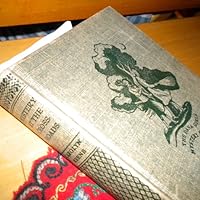
Tredicesimo secolo. Mentre si prepara la sesta crociata, due uomini attraversano la storia e l' Piers, coraggioso cavaliere idealista al seguito dell'imperatore Federico II, e il giovane Tomaso che, abbandonando la ricca e influente famiglia, fa voto di povertà ed entra nell'ordine domenicano per intraprendere uno dei più straordinari cammini di fede della cristianità. In una narrazione vivace e appassionante, de Wohl illumina i lati più intensi della figura di san Tommaso d'Aquino e pone la vita del grande frate domenicano al centro di un affresco storico che, intrecciando le vicende dei personaggi con i principali eventi dell'epoca, ripercorre gli anni dei violenti attriti tra impero e papato ed entra nel fuoco del problema da cui è nata la civiltà il rapporto tra fede e ragione.
Mr. de Wohl was a Knight Commander of the Order of the Holy Sepulchre and his wife (nee Ruth Magdalene Lorch, whom he married in 1953) is a Lady Commander of the same Order. His fifty books include The Living Wood (Lippincott, 1947), Imperial Renegade (id., 1950), The Restless Flame (id., 1951), Throne of the World (id., 1949; published in England as Attila), The Golden Thread (Lippincott, 1952), The Second Conquest (id., 1954), Set All Afire (id., 1953), The Spear (id., 1955), and St. Joan, the Girl Soldier (Farrar, 1957) in the Vision Books series.
I read the Italian version of this book, and I find the Italian title to be more meaningful than "The quiet light". The Italian title translates to "The freeing of the giant", a title that captures two main themes in the book: 1) the power of Saint Thomas's work in reconciling catholic faith with Aristotelian philosophy (Aristotle being the giant); and 2) the story of how Saint Thomas, as a kid, had been imprisoned by his own family who didn't want him to join the Dominican order, and how he ultimately escapes and goes on to become one of the most brilliant stars of the catholic world.
"The freeing of the giant" is a historical novel. Luis De Wohl was a German-Hungarian writer who, in the '30s, left Germany and moved to live in London. His specialty were historical novels, and after WWII he committed to writing about the life of the saints. He was himself a catholic and had a face to face chat with the Pope before writing this book. The Pope asked him to write about St Thomas, and so he did with this book. It should be noted that this is not a novel about religion, but rather about history.
I found this book really enjoyable, well researched and also well balanced between history, philosophy/religion, and romance, to the point that I'm wondering why this auhor is not better known.
Writing a historical novel is no easy feat, even if you know your history well. You need to get the details right, and the spirit of the time you are writing about. Moreover, writing a novel about a Dominican Saint who did little else in his life other than read, pray and write, sounds like a real challenge.
But i think De Wohl nailed it. He uses only one fictional character, Sir Piers, to give the novel the dynamism it needs, a little romance, but most of all as a tool that allows him to weave together in one coherent plot various historical characters like emperor Frederick II, his court, Saint Albert the great, and even some contemporary muslim characters.
The second half of the 13th century was a very interesting time: Frederick II had an immense power over Europe, however the European region was under a lot of pressure from Islam, that was pushing from both the west (Spain) and the East (Turkey). Muslim culture was peaking. On one hand, you had the real conflicts, between the Sacred Roman Empire and Islam, through the Crusades and other battles. On the other, there were cultural battles, no less fierce, among the various intellectuals of that time: on one hand, Averroe and his school of thought were trying to use Aristotle as a way to weaken Christianity, by separating everything religious from what was "rational", and arguing that Aristotle would have never given in to anything but pure rationality and experimentation. On the other, you had the Church, who specifically requested Saint Thomas, one of the finest minds of those times, to find a way to reconcile Aristotle with the Christian faith. And that's what he did, in his "Summa Theologica".
To make things even more complicated, the emperor's relationship with the Church kept worsening, ultimately resulting in a real conflict, that had Frederick II as the end loser, and Italy torn between pro-church and pro-emperor factions.
De Wohl touches on all of these historical and philosophical elements with great simplicity, but never with a heavy hand or in a tacky way, always respecting the known facts in a graceful manner.
In particular, St Thomas's personality comes out of this book as a shining light, as he is depicted as a truly humble, shy, good and highly intelligent man. Yes it is a work of fiction but these personality traits have been well documented.
Sometimes I do think that back in those days, "intelligent" people were much smarter than what we are on average today. Or perhaps, they were intelligent in a very different way. They used to have dialectical, rethorical, and mnemonic skills that today you probably cannot even find (maybe because they are not required anymore?).
You don't really learn history by reading these type of books. It will help enjoying the book more if you already know the main historical facts (Wikipedia helped me a lot!). However, this kind of book is able to bring history to life in such a vivid way, that in a sense you DO learn about history. It's history for right-brainers!
Overall, a truly great read for lovers of quality historical novels.
Just as the first time I read it, I am using this as supplemental material for reading G.K. Chesterton's book about Thomas Aquinas. Both together are a perfect reading combination and - as with the previous two times - I'm enjoying the heck outta it.
-----------
Just as good the second time around. Maybe better.
----------
Having finished G.K. Chesterton's The Dumb Ox for my book club, I thought it would be good supplementary material to read a more straight forward biography of this saint. hCesterton is amusing and clever and did a fine job of making me appreciate Aquinas, but he obviously was counting on the reader to already know the basics. As I know only a smattering of legends, I needed more! Based on reading de Wohl's The Restless Flame about Augustine, I thought he'd be a good source for Aquinas's life story.
I chose wisely, because I thoroughly enjoyed The Quiet Light, which spent as much time on the Aquino family and their Holy Roman Emperor problems as it did on youngest, determined son Thomas. My admiration for De Wohl only increased as I saw how he used both storylines to paint a full picture of the times. Thomas in Paris proved, as his teacher Albert the Great predicted, that "this dumb ox" had a roar that would be heard throughout the world, while English knight Piers headed off to (St.) King Louis's court in Paris. Simultaneously St. Bonaventure was being called upon to defend the Franciscans. I had no idea that all these saints were contemporaneous. I especially appreciated the rare mentions of Aquinas and Bonaventure's mutual respect and friendship, always coupled with how very different both were from each other.
On a personal level, I was inspired by Thomas's ability to let insults slide off, simply ignoring them. This goes hand-in-hand with reading Fire of Mercy, Heart of the Word about the beatitude discussing meekness. It said that meekness is not being a doormat but is the ability to always be open to the opportunity to do good, to turn evil into a work for God. Methinks there is a very powerful message for me in all this.
I am not sure when De Wohl wrote this in relation to his book about St. Augustine, but this one showed considerably more expertise in conveying information while keeping the reader engaged. Although St. Thomas is seen relatively rarely in the overall story, it has the effect of making the impact much greater. I may never forget the vivid description of him dismantling the opposition's faulty treatise in front of the board of cardinals. I read it three times for the beauty and clarity of the passages.
I was surprised when I read the book to realize that it wasn't a simple devout hagiography like Chesterton's St. Thomas Aquinas, but instead a sweeping medieval romance, a Bayeux tapestry dramatizing Aquinas and his cohorts. The secret of the book is that it dramatizes the times which Dante contemplates in his The Divine Comedy. Aquinas does play his role, but the book brings to life many of the other cast of the Divine Comedy, most notably Frederick II, who appears in the Comedy as the great unnamed, buried figure on the Plain of Heretics. It was Dante who brought together these historical figures with the writings of Thomas Aquinas. Reading this book caused me to rediscover Dante as someone who discerned the scope of modernity in its inception, offering to us in advance a diagnosis and the hint of a remedy.
4.5 rounded up. Very interesting and well written. Tons of history.. Not all that much about Saint Thomas, it's much more about his family, a knight who served them, and the political and eclesiastic situation at the time. It wasn't dry, though, and kept me turning the pages!
This was a very interesting story on St. Thomas Aquinas. It also gives insights into the tyranny of the excommunicated emperor, Frederick II, and the crusades. Overall, I would recommend to anyone who loves a good story and wants to know more about this saint.
Enjoyed reading about the man who was one of the greatest teachers we have had in the church. Along with St. Augustine, St. Thomas is recognized at helping explain Catholic theology. St. Thomas was also the answer to the apologetics being offered by the Islamic world of the time. De Wohl paints the portrait of a man enraptured by the love of God, whose love of God culminated in his departure from this life.
De Wohl captures the pressure the church was under by Emperor Fredrick II at the time. With Islam pushing Christendom's borders, and the Excommunicated Emperor self proclaiming himself the anti-Christ causing the pope to flee Rome, St. Thomas came with his teachings at just the right time.
Reading a book by De Wohl is a great way for one to learn about the life of a saint.
Surprisingly this is one of the best Catholic novels I have ever read. I absolutely devoured this book and once read 70 pages in one sitting. Louis de Wohl truly has a way with words and ideas especially when it comes to St Thomas Aquinas. Each chapter ends with a line that strikes at the heart of excitement and anticipation. It compels you to flick to the next page just to keep the plot rolling. Some nights I would find myself sacrificing sleep just to find out what would happen next. If sacrificing sleep just to read a few more pages does not convince you that this a book worth picking up, I don't know what will.
A novel for people who enjoy learning about history. As with Louis de Wohl's other novels, the text is mostly dialogue and the chapters are suspenseful, often ending in cliffhangers.
This is a novel about the life of St Thomas Aquinas through the eyes of of a fictional knight, Sir Piers Ruddle of England, and his sidekick Robin Cherrywood. (At least, I assume he's fictional.)
We first meet St Thomas when he is an Benedictine oblate at Monte Cassino. The monastery is under attack by the excommunicated Holy Roman Emperor, Frederick II, who is at war with the Pope and his allies. Sir Piers rescues St Thomas from the burning monastery, and they travel to the principal castle of the Aquinas family.
It is here that Piers falls madly in love with Theodora, the sister of St Thomas. Since they are a noble family with close connections to the Emperor, she cannot marry him. Nevertheless, he offers to make her his "lady," and she formally accepts. He enters into the service of her family.
Those who have read Cervantes may remember that Don Quixote chose Dulcinea of Toboso to be his "lady"; and although she was a homely peasant girl, he saw her as the most beautiful woman in all of Spain, boldly challenging anyone who might disagree.
Being his "lady," Piers would dedicate every victory and good deed to her honour, putting himself entirely at her disposal, and expecting nothing in return.
As the novel progresses, we follow St Thomas to school, where the other students berate him as a "dumb ox." Although Aquinas is quiet and chubby, his teacher, St Albert the Great, says, "You may call him a dumb ox, but the bellowing of his teaching will be heard throughout the world."
On another occasion, St Thomas is at a banquet thrown by St Louis, the crusader King of France. Lost in though, and oblivious to everyone around him at the dinner table, an epiphany about the nature of evil strikes, and to everyone's consternation, he slams his fist on the table, proclaiming, "And that settles the Manichees!"
While at school, Aquinas meets the Dominicans and decides to take vows with the Order of Preachers. His mother is horrified that he would join a mendicant order, choosing to live as a beggar. Her hope was that he would acquire a more illustrious position in the Church, such as Abbot of Monte Cassino. (She could not have predicted "Angelic Doctor.")
After kidnapping him, she locks him in the tower of one the their castles. His brothers send a prostitute to his room, hoping that he will somehow snap out of it. Instead, he chases her out with a firebrand. In the end, his family relents.
As the novel progresses, we follow Aquinas to the illustrious University of Paris, where he teaches alongside his Dominican brother, St Albert the Great, and the Franciscans St Bonaventure and Friar Roger Bacon, who formulated the scientific method. As the novel implies, Roger Bacon was also instrumental in the development of eyeglasses.
Aquinas' goal is to show that faith and reason are not incompatible, despite the prevailing thought of his day. Aquinas' counterpart in the Muslim world was Averroes, who believed that God established a plurality of contradictory truths, one of faith, as demonstrated in the Qur'an, and another of reason, as demonstrated by Aristotle.
Aquinas, on the other hand, believed that whenever faith and reason seem to be in conflict, either our reasoning is wrong, or our interpretation of Scripture is faulty.
Next to Aquinas, the most important historical figure in this novel is Frederick II. By the time we meet him, he has already been excommunicated multiply times, making enmity with the Popes, and toying with a multitude of heresies. He is also a brilliant megalomaniac who travels with a menagerie, dancing Arab girls, and African eunuchs.
Fearing for his safety, the Pope abandons Rome, fleeing to France, where he has Frederick II deposed. The Aquinas family must then choose between their allegiance to the Emperor and loyalty to the Church.
Ever since Michael Scotus had told the Emperor that he would die sub floris ("under the flower"), Fredrick II had refused to be in the present of flowers. He ends up dying suddenly at a castle named "Florentine."
Why focus so much on Frederick II in a novel about Aquinas? Because Frederick II was the manifestation of the problem that Aquinas set out to solve. In his hubris, the Emperor thought that he was beyond faith, which he equated with superstition. But Aquinas demonstrated that everything taught by faith could be supported by reason.
At another point in the novel, Sir Piers joins St Louis on the failed seventh crusade, where the King of France is captured, and a large ransom must be paid for his return to France. At another point, Piers is enslaved by Muslims, who try to force him to profess the sacred formula of Islam, but he slurs the words and boldy challenges a mullah who insults Our Lady. In the end, he is saved by Prince Edward Plantagenet of England, the great nephew of the crusader king, Richard the Lionheart.
(As to whether Piers ever marries his "lady," you'll have to read the novel to find out.)
Toward the end of Aquinas' life, he had a vision of God, where Jesus spoke to him from a crucifix, saying, "Thou hast written well of me, Thomas. What wouldst thou have as a reward?" His response was: "Only thyself, Lord." After this experience, he was no longer able to write, saying everything he had ever written, including the great Summa Theological, and it's five proofs for the existence of God, was like straw in comparison to what he had seen.
I really enjoyed this book! a lot of the time I don't Really enjoy my school books, but I enjoyed this one enormously! The characters were very well done, and I loved all the parts where Thomas explains things- it was beautifully explained, and very touching. I really liked the writing style of the author, and I think I might look into some of his other books.
Truly excellent book. It really gave me a sense of who St. Thomas Aquinas is and makes me feel like I know him a lot better. I would highly recommend it to anyone!
I haven’t read too many historical fiction novels, but the blend of religion, history, and interesting plot made this book a great read for me. Not so much focused on St Thomas Aquinas, but the historical events that took place around him during his life.
I learned quite a bite about the historical period Aquinas lived in and his major achievements. I could have done without the fabricated love affair between his sister Theodora and the Englishman who never was, but i'm still looking forward to reading The Spear, and The Citadel of God.
Wohl narra los acontecimientos históricos que sucedieron a la vida de Santo Tomás de Aquino, cuya figura y filosofía van iluminando poco a poco, tanto directa como indirectamente, toda la obra.
Este santo juega un papel secundario en el libro, sin embargo, los destellos de su “luz apacible” bañan todas sus páginas y personajes.
Además de ser un libro entretenido, te invita a pararte y a reflexionar, ya que cuenta con un gran trasfondo filosófico, religioso, político y moral; y con unos personajes muy desarrollados.
Este libro no es lo que crees que va a ser. Yo pensaba que se trataría de una biografía novelada al uso de la vida de Tomás de Aquino que, además, tratase un poco sobre su filosofía. Sin embargo lo que me he encontrado ha sido una novela sobre la Europa de la época del Santo y de toda su familia. La historia la vertebran dos personajes principales. Por un lado está Tomás. La novela comienza cuando Tomás no es más que un niño, oblato benedictino por orden de su padre y acaba con su muerte en el monasterio de Fossa Nova. Para mi sorpresa, a pesar de que Tomás es la persona que inspira toda esta historia, no es el personaje que más páginas ocupa. El otro protagonista es Sir Piers Rudde, un caballero inglés ficticio que, tras pertenecer el séquito del emperador Federico II, acaba al servicio de la familia Aquino. Louis de Wohl entreteje la vida del ficticio Piers con la de la familia Aquino y con algunos de los eventos históricos más importantes de la Europa de esa época. Así, entendemos el contexto en el que Tomás desarrolló su vida y su obra. Se narran los problemas que tuvo Tomás con su familia cuando quiso entrar en la Orden de Predicadores, las luchas entre la Santa Sede y el emperador Federico, las Cruzadas, la cátedra de Tomás en la universidad de Nápoles... Bajo todo esto subyace también una historia de amor digna de cualquier buena novela romántica. El estilo de la novela es también impecable. Siempre te hace querer seguir una página más. Tiene su dosis justa de cliffhanger y los personajes están descritos de manera entrañable. De "La luz apacible" me quedo con haber conocido algo más la figura y personalidad de Santo Tomás de Aquino (especialmente en este momento en el que me estoy interesando un poquito por la filosofía en general y por la suya en particular), con la historia y las dinámicas de su familia (Landolfo, Rainaldo, Marotta, Adelasia, Theodora y la Condesa son 10/10), y con la esa bellísima historia de amor que recorre y vertebra toda la novela.
A very amusing book, said to be de Wohls best. Not a masterpiece of literature but just good meat and potatoes. I've not gone over the minutiae yet to see how accurate it is yet, but it doesn't seem that terribly innaccurate. Its a wonderful book to give to a mature teen to get him soaked up on the era, the people or the theology because it definitely breathes life into history. However, there is a little bit of sexual innuendo concerning the episode of Thomas and the harlot, but it is balanced very nicely by the romance of Sir Piers. Its a good read-aloud.
This is one of the best books about a saint that I’ve ever read. It’s a page turner. The story was written from the perspective of those in Aquinas’ life. Mostly his siblings and a knight that served his family over the years. I was surprised that Thomas only showed up a few times in the book. Most of the story is about the political battles and crusades. Thomas’ life work was spent dismantling the different erroneous thinking of his time and he did it with such grace.
For most books you can't wait to pick up again, it is because of the anticipation of what is coming. the hook. But this book I enjoyed each page as it went. I felt in the moment throughout. You get a good feel for Thomas and his world because the story more or less revolves around him rather than being directly about him. I look forward to more books by de Wohl.
This book places the life of St. Thomas Aquinas in a historical fiction setting. I knew little to nothing about the 13th century so it was a very interesting book to read. I was frequently logged onto Wikipedia while reading this book to look up more information on the time period and to keep the fact vs fiction straight.
Both philosophical and romantic. I love the clarity and depth of St. Thomas Aquinas' thoughts lurking behind his phlegmatic personality, as well as the noble love of Piers Rudde for Theodora. Awesome!
Fantastic work of historical fiction; makes me wonder why they have so many fluff and useless books for young adults and children in school. Great storyline, never presented as a textbook...just enjoyable to read and encouraged further self-learning through curiosity.
It was a good historical novel. It had me checking historical facts and biographies. St. Thomas Aquinas isn't the main character --- it is more a story showing the impact of a saint's life on others.
Esta historia novelada es una muy buena forma de acercarse a conocer la vida de este santo, Doctor de la Iglesia, que de otra forma es difícil de lograr solo a través de sus múltiples escritos. Narra su vida y el tiempo en Europa en el que vive, dificultades con su familia, el día a día.
Vida de Santo Tomas de Aquino, es entretenido porque trata la historia sobre su familia y las cruzadas. Recomendado por profesora Alejandra de Filosofia en 7 año