O scrisoare pierdută (Romanian for "A Lost Letter") is a play by Ion Luca Caragiale. It premiered in 1884, and arguably represents the high point of his career.
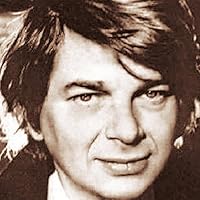
Ion Luca Caragiale was a Wallachian-born Romanian playwright, short story writer, poet, theater manager, political commentator and journalist. Leaving behind an important cultural legacy, he is considered one of the greatest playwrights in Romanian language and literature, as well as one of its most important writers and a leading representative of local humor. Alongside Mihai Eminescu, Ioan Slavici and Ion Creangă, he is seen as one of the main representatives of Junimea, an influential literary society with which he nonetheless parted during the second half of his life.
His work, spanning four decades, covers the ground between Neoclassicism, Realism, and Naturalism, building on an original synthesis of foreign and local influences.
Although few in number, Caragiale's plays constitute the most accomplished expression of Romanian theater, as well as being important venues for criticism of late 19th century Romanian society.
They include the comedies A Stormy Night, Conu Leonida faţă cu reacţiunea, O Scrisoare Pierduta Comedie in patru acte, and the tragedy Năpasta. In addition to these, Caragiale authored the melodrama O soacră, a large number of essays, articles, short stories, novellas and sketch stories, as well as occasional works of poetry and autobiographical texts such as Din carnetul unui vechi sufleur. In many cases, his creations were first published in one of several magazines he edited — Claponul, Moftul Român, Vatra and Epoca. Most of his prose works have been published under the title Momente, schite, povestiri: they include Căldură mare, Cănuţă om sucit, Două loturi, Grand Hotel "Victoria română", as well as several pieces referring to stock characters such as Lache and Mache, Marius Chicoş Rostogan and Mitică. In some of his later fiction writings, including La hanul lui Mânjoală, Kir Ianulea, Abu-Hasan, Pastramă trufanda and Calul dracului, Caragiale adopted the fantasy genre or turned to historical fiction.
Ion Luca Caragiale was interested in the politics of the Romanian Kingdom, and oscillated between the liberal current and conservatism. Most of his satirical works target the liberal republicans and the National Liberals, evidencing both his respect for their rivals at Junimea and his connections with the literary critic Titu Maiorescu. He came to clash with National Liberal leaders such as Dimitrie Sturdza and Bogdan Petriceicu Hasdeu, and was a lifelong adversary of the Symbolist poet Alexandru Macedonski. As a result of these conflicts, the most prominent of Caragiale's critics barred his access to the cultural establishment for several decades. During the 1890s, Caragiale rallied with the radical movement of George Panu, before associating with the Conservative Party. After having decided to settle in Berlin, he came to voice strong criticism for Romanian politicians of all colors in the wake of the 1907 Romanian Peasants' Revolt, and ultimately joined the Conservative-Democratic Party.
Ion Luca was the nephew of Costache and Iorgu Caragiale, who were major figures of mid-19th-century Romanian theater. His sons Mateiu I. Caragiale and Luca I. Caragiale were both modernist writers.
Mi-e silă deseori că astfel de "opere" sunt canonice. Cred că e una dintre cele mai ipocrite piese de teatru pe care le-am citit. Şi, când mă gândesc că domnu' autor a fost egal în epoca cu Eminescu ori Slavici, fac grimase.
It's one of the well-known comic plays written by the famous Romanian writer and playwright, I. L. Caragiale. The story follows the elections and a love letter which almost ruins everything. Mr. Caragiale describes society in his time, its negative aspects and various stereotypes. The writer attracts his readers through his comical and realistic style of his works, which will be immortal in the Romanian literature. Almost everything is a comedy in Mr. Caragiale’s works, beginning with some of the characters’ names (Nae Cațavencu, Iordache Brânzovenescu), some terms which are either misused or pronounced in a silly way while trying to act smart or look like one’s from a higher class and the different situations in which the characters are getting themselves into. As I mentioned before, stereotypes are also present in Ion Luca Caragiale’s literary works. Here are some of them: the snob - Zoe Trahanache; the confused citizen who has no idea who to vote with and who can sometimes be easily manipulated – Cetățeanul Turmentat (The Drunken Citizen), the image of the politicians, politics and election is well described in this play. I recommend these literary works to readers 9+.
Am recitit piesa, pentru școală. Acum am înțeles-o mai bine, dar aceeași părere am despre ea ca și prima dată când am citit-o. E o piesă bună, dar comparativ cu alte piese de-a lui Caragiale, nu e atât de wow.
'O comedie de moravuri', this is pretty much summing up this play. There is quite the conflict going around, and it was caused by a simple love letter and a bit of negligence. Nevertheless, I can state that Caragiale's works are one of my favourites. I love the way he uses irony and sarcasm to make something comical out of the habits of different typologies of people, and he really does it in a legit way.
5 stars nu pt ca a fost mind blowing, ci pt ca a fost o experienta decenta si placuta, scurta si la obiect, iar eu, fiind un mare hater a literaturii clasice (a drc dorian gray) si avand asteptari mediocre privind literatura romana, nu pot sa mi imaginez ca se poate mai bine decat decent.