

What do you think?

Vimy
Vimy
336 pages, Paperback
First published January 1, 1986
About the author
Pierre Berton
181 books215 followersPierre Francis de Marigny Berton, CC, O.Ont. (July 12, 1920 – November 30, 2004) was a Canadian historian, writer, journalist and broadcaster.
From narrative histories and popular culture, to picture and coffee table books to anthologies, to stories for children to readable, historical works for youth, many of his books are now Canadian classics.
Born in 1920 and raised in the Yukon, Pierre Berton worked in Klondike mining camps during his university years. He spent four years in the army, rising from private to captain/instructor at the Royal Military College in Kingston. He spent his early newspaper career in Vancouver, where at 21 he was the youngest city editor on any Canadian daily. He wrote columns for and was editor of Maclean's magazine, appeared on CBC's public affairs program "Close-Up" and was a permanent fixture on "Front Page Challenge" for 39 years. He was a columnist and editor for the Toronto Star, and a writer and host of a series of CBC programs.
Pierre Berton has received over 30 literary awards including the Governor-General's Award for Creative Non-Fiction (three times), the Stephen Leacock Medal of Humour, and the Gabrielle Leger National Heritage Award. He received two Nellies for his work in broadcasting, two National Newspaper awards, and the National History Society's first award for "distinguished achievement in popularizing Canadian history." For his immense contribution to Canadian literature and history, he has been awarded more than a dozen honourary degrees, is a member of the Newsman's Hall of Fame and a Companion of the Order of Canada.
From narrative histories and popular culture, to picture and coffee table books to anthologies, to stories for children to readable, historical works for youth, many of his books are now Canadian classics.
Born in 1920 and raised in the Yukon, Pierre Berton worked in Klondike mining camps during his university years. He spent four years in the army, rising from private to captain/instructor at the Royal Military College in Kingston. He spent his early newspaper career in Vancouver, where at 21 he was the youngest city editor on any Canadian daily. He wrote columns for and was editor of Maclean's magazine, appeared on CBC's public affairs program "Close-Up" and was a permanent fixture on "Front Page Challenge" for 39 years. He was a columnist and editor for the Toronto Star, and a writer and host of a series of CBC programs.
Pierre Berton has received over 30 literary awards including the Governor-General's Award for Creative Non-Fiction (three times), the Stephen Leacock Medal of Humour, and the Gabrielle Leger National Heritage Award. He received two Nellies for his work in broadcasting, two National Newspaper awards, and the National History Society's first award for "distinguished achievement in popularizing Canadian history." For his immense contribution to Canadian literature and history, he has been awarded more than a dozen honourary degrees, is a member of the Newsman's Hall of Fame and a Companion of the Order of Canada.
Ratings & Reviews
Friends & Following
Create a free account to discover what your friends think of this book!
Community Reviews
Displaying 1 - 30 of 137 reviews

November 14, 2015

Page 255 (my book)
The decomposing body of a German, uncovered by the diggers, hung over the back wall [of the trench]. To Moir’s astonishment and disgust a new machine gunner...began tearing the body out with his bare hands to see if there were any souvenirs in the corpse’s pockets. The Canadians were known for this incorrigible habit... “The British fight for glory, the Canadians for souvenirs.” How thin, Moir thought to himself, is the veneer of civilization.
Page 236
The scenes of death on all sides were not heroic but sickening... That sort of thing was never shown in the Victorian paintings of gallant officers expiring slowly in the arms of their comrades, a small pink stain on the shirt front, a hand raised languidly in a kind of greeting as if the hero were sinking into a peaceful sleep. Such scenes, if they had ever existed, were obsolete. Never again would war be referred to as “noble”.
I felt this book to be an overall excellent accounting of the Vimy battle – with the build-up and the actual siege of Vimy Ridge being strikingly told. But what stands out are the people involved – and their individual stories. The author gives us many levels - from the foot soldiers to the officers, plus some of the technical details.
Many of the Canadian soldiers were British immigrants to various parts of Canada – from Halifax to the rather uninhabited Canadian West. Many had settled in this land in the last 10 to 20 years. They were use to hard manual work on farms or Canadian mines or lumber camps. They knew horses – the backbone of World War I. So they “adapted” to trench warfare in a better way than their urban British counterpart. Also many Canadians were more physically fit compared to British and French soldiers.
Another interesting aspect brought out by the author, Pierre Berton, is that for the most part the Canadians were not snobs. Officers and regular infantry soldiers would talk informally to one another – this was unheard of in the British army. Canadian born Arthur Currie, was the chief commanding officer for the Vimy assault, but had lived for several years in Canada. He made sure that “all” troops knew their role and task in the upcoming attack – unheard of in the British and French army where troops were treated as automatons.
Pierre Berton also writes well of the aftermath of Vimy. Before, many of the troops considered themselves British first and Canadian second. After the victory this started changing. This victory was Canadian organized with four Canadian divisions – with little British input – aside from equipment. Also both the French and British armies had attempted, and failed, to take Vimy Ridge.
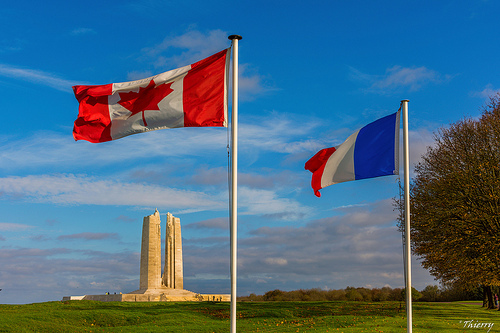
The massive Canadian National Vimy Memorial monument in France attests to this as a Canadian achievement. It is maintained by Veterans Affairs Canada. As a veteran remarked when visiting the site in 1930:
Page 302
“Europe, when viewing the finished work, will change her impressions of the Canadians as a people.”

October 26, 2022
I beg anyone who follows my reviews to read this book. It makes me sick that books like these are not taught in Canadian schools. These men did not die for nothing. I never fully agree with the narrative that WWI was meaningless. The world today would be much different if the Kaiser won the war. The way it started was absurd, but the war still needed to be won once it was on and the gloves were off. These men did not suffer for nothing. I refuse to believe that. This battle forged a country. They changed history. And their stories should be heard. My great-grandfather was at Vimy. I believe I even have the medals around the house somewhere. They might be in my library.
It never ceases to annoy me how much Canadian war history is swept under the rug. Granted, I feel that way about pretty much every country whose history in the World Wars is never spoken of (All we ever hear of is America, then Britain, then America again. Meanwhile, there were so many countries that participated in both World Wars. No disrespect to the Americans or British who died, but come on. Many others from around the world also gave their lives). If real young men gave their lives in disturbing numbers, we should hear their stories. They should be taught; both for the reason of respect, and to prevent their tragedies from repeating in future generations. I believe that latter point is more important now than it has been in my entire life thus far. The world is on a dangerous path at present.
It never ceases to annoy me how much Canadian war history is swept under the rug. Granted, I feel that way about pretty much every country whose history in the World Wars is never spoken of (All we ever hear of is America, then Britain, then America again. Meanwhile, there were so many countries that participated in both World Wars. No disrespect to the Americans or British who died, but come on. Many others from around the world also gave their lives). If real young men gave their lives in disturbing numbers, we should hear their stories. They should be taught; both for the reason of respect, and to prevent their tragedies from repeating in future generations. I believe that latter point is more important now than it has been in my entire life thus far. The world is on a dangerous path at present.
March 4, 2022
I first read this book when it first came out because I wanted to learn more about the battle of Vimy and how it shaped Canada as a nation when we were still considered part of the British Empire, and because (as I've mentioned a few other times, my GR 10 field trip was thru the various battlefields of France)
While reading the book, it mentions the use of horses, the fact there were runners passing messages back and forth, stretcher-bears, tunnel diggers, etc., that I did not think of as part of the battalions of fighting men - that's just embarrassing.
I did appreciate all the research that went into this book with interviews with those on the front lines, history books, etc. That must have been a daunting talk to accumulate it all and then put pen to paper.
Recommend to history buffs who've not read this one.
While reading the book, it mentions the use of horses, the fact there were runners passing messages back and forth, stretcher-bears, tunnel diggers, etc., that I did not think of as part of the battalions of fighting men - that's just embarrassing.
I did appreciate all the research that went into this book with interviews with those on the front lines, history books, etc. That must have been a daunting talk to accumulate it all and then put pen to paper.
Recommend to history buffs who've not read this one.

January 11, 2021
How refreshing to read about an allied operation in WWI that went well. This is unusual ground for the WW1 reader with all the accounts of the Somme, Passchendaele, Verdun, Gallipoli etc. In contrast, Vimy went off pretty well.
Pierre Berton does a great job of telling this story of how the Canadians and their can-do attitudes were able to accomplish so much on the Western Front. The Canadians implemented the trench raid. They were the first to use machine guns as indirect fire weapons. They engineered and implemented counter battery fire. The biggest difference in my opinion was the command structure. The Canadian platoon leader wasn’t an aloof patriarch. There was a free flow of information and feedback loops within a command structure. Very different than the British or French systems. The great thing is, unlike the British preparation for the Somme when they said the men are not trained, the Canadians leader Arthur Currie said “Well let’s train them” and train they did!
Vimy is a great source of Canadian pride and success. This put the Canadians on the map. Prior to Vimy, Canadians identified as British. After Vimy, Canadians became Canadians.
Pierre Berton does a great job of telling this story of how the Canadians and their can-do attitudes were able to accomplish so much on the Western Front. The Canadians implemented the trench raid. They were the first to use machine guns as indirect fire weapons. They engineered and implemented counter battery fire. The biggest difference in my opinion was the command structure. The Canadian platoon leader wasn’t an aloof patriarch. There was a free flow of information and feedback loops within a command structure. Very different than the British or French systems. The great thing is, unlike the British preparation for the Somme when they said the men are not trained, the Canadians leader Arthur Currie said “Well let’s train them” and train they did!
Vimy is a great source of Canadian pride and success. This put the Canadians on the map. Prior to Vimy, Canadians identified as British. After Vimy, Canadians became Canadians.

December 4, 2016
I had the pleasure this Remembrance Day to listen to a Great War Veteran at my local legion and that got me thinking of how naïve I am to the history of this world conflict. Oh sure, I know some of the basics but I challenged myself to learn more of this period in history considering that we are celebrating the 100 years of battles involved. Being Canadian, Vimy by this renowned Canadian author seemed like the obvious place to start.
I had heard over and over that Vimy, The battle of Arras, was the push in April 9 1917 that was the coming of age of our Canadian identity as a military unit. Of this, I cannot say but having read this novel, I sure felt proud of my ancestors. Having not been in the service I cannot imagine what it must have been like and I will not insult anyone who has fought for country to liken the situation to anything that I have experienced in my lifetime. I am just so thankful of the kids, yes kids, young men and women who felt such a calling to sacrifice themselves to help the motherland of Britain at the time.
This novel is a must read for a Canadian or anyone for that matter who wishes to learn of a ridge that was impenetrable until the Canadians decided that enough was enough.
I had heard over and over that Vimy, The battle of Arras, was the push in April 9 1917 that was the coming of age of our Canadian identity as a military unit. Of this, I cannot say but having read this novel, I sure felt proud of my ancestors. Having not been in the service I cannot imagine what it must have been like and I will not insult anyone who has fought for country to liken the situation to anything that I have experienced in my lifetime. I am just so thankful of the kids, yes kids, young men and women who felt such a calling to sacrifice themselves to help the motherland of Britain at the time.
This novel is a must read for a Canadian or anyone for that matter who wishes to learn of a ridge that was impenetrable until the Canadians decided that enough was enough.

December 29, 2013
This book was well written. It was very detailed (sometimes gruesomely so, but that's war) but it didn't bog you down with unnecessary information. Honestly, what can I say? Wow. I've always had a certain respect for veterans, but after reading this book, it's gone to a whole new level. These Canadian men (some were so young, could you even call them men?) were so amazing. The majority of them had no idea what they were in for, but they bravely fought for their country. This book made me proud to be Canadian.
October 16, 2012
Highly recommnded read to any who are interested in Canadian history. The Battle at Vimy Ridge is often referenced by Canadians as the birthplace of our nationhood, the moment when we truly came together as an independent nation of our colonial motherland. Berton explores this sentiment by working through the stories of individual Canadian soldiers' experiences to come to a fascinating conclusion. Beautifully written, moving, educational, and thought provoking. My only caveat is that it does not flinch at the more graphic aspects of the brutality of trench warfare (but neither does it glorify it or dramatize it).

May 15, 2015
A well-written popular history of the Canadian Army's successful assault on Vimy Ridge during the First World War in April 1917. This was the first attack by the Canadian Corps as an separate unit and, by in large, it was carried out with dispatch and professionalism. As time passed, the Canadians made a great deal of this assault, claiming that it helped define Canada as a nation, and later built an enormous memorial on the site of the battle. While the book traces the course of the battle, including the preparations and the battle's aftermath, the emphasis of the narrative is on the conditions on the battlefield (which were pretty grim) and what the experience of battle was like for the soldiers who participated. Worthwhile both as a study of a successful Western Front attack, and of the history of the Canadian military tradition.

November 6, 2015
Thoroughly Canadian in perspective, Vimy is not your book if you're looking for a balanced view of the events of this now-famous (only in Canada) battle.
Vimy, however, is your book if you want a thoroughly human take on what it was like for the soldiers of the Dominion who fought and won and lost on that terrible morning, and who did in a few hours what the English and French could not after two years of trying -- beat the Germans and take Vimy Ridge.
It's Berton the historian/storyteller at his best, and required reading for any Canuck come Remembrance Day.
Vimy, however, is your book if you want a thoroughly human take on what it was like for the soldiers of the Dominion who fought and won and lost on that terrible morning, and who did in a few hours what the English and French could not after two years of trying -- beat the Germans and take Vimy Ridge.
It's Berton the historian/storyteller at his best, and required reading for any Canuck come Remembrance Day.
Read
April 23, 2012I've always felt drawn to and particularly affected by anything that is related to the First World War, out of some mixture of horror and fascination, so this is where I began my sampling of Pierre Berton's oeuvre. What stuns me is that the preparations that the Canadians made in the months leading up to the assault seem so simple and so commonsense in retrospect that it's easy to (not entirely fairly) wonder why the British just couldn't see it, like looking back at Scott's ill-fated push to the South Pole. There was a huge loss of life at Vimy, but it pales by comparison with the bloodbath on just the first day of the Somme. The other thing that is interesting to me is that so many people identify Vimy as the moment when a Canadian national identity truly emerged, and yet, in the second half of the twentieth century, I would have said that the national identity that developed was one, not of the praise of military heroism, but of a voice for peace and justice in the world. Granted, I was not raised in Canada and am only just starting to make more systematic inroads into Canadian history, but this is another aspect of the book that intrigues me.

October 5, 2012
In my opinion, this book cements Pierre Berton into his position as one of Canada's best modern-age writers. His research is incredible, and as the book goes along and we follow the stories of these Canadians who are training to give their British leaders their first victory of the war, one gets a sense of the incredible tragedies and massive loss of lives that modern war inflicts, even though many may think this war wasn't as bad. For some time I have been fascinated at the suffering and bravery of men that fought in the First World War, and this book gives me a double dose, a combination of factual reporting and descriptive writing. Other titles of note from Pierre Berton that I have greatly enjoyed were 'Yukon' and 'The Great Depression'.
August 6, 2016
Another brilliant book in the Berton canon. If you are in any way interested in Canadian history, military history or WWI, this has to be a must-read. Berton's anecdotal style tracks and relates a grand historical event in an easy to read, digestible format that conveys the scale and horror of the assault that, some say, defined and crystallised the idea of Canada as a nation.
As a side note, this book should also be a must-read for anyone carrying the misconception of war as a glorious and honourable pursuit, or labouring under the false impression that personal skill or valour is the most important factor in survival.
That's not to say that heroes don't rise above the muck and mire. Byng, Currie and McNaughton should be names of greater awareness in the Canadian consciousness.
As a side note, this book should also be a must-read for anyone carrying the misconception of war as a glorious and honourable pursuit, or labouring under the false impression that personal skill or valour is the most important factor in survival.
That's not to say that heroes don't rise above the muck and mire. Byng, Currie and McNaughton should be names of greater awareness in the Canadian consciousness.

June 16, 2015
For most of the world the Battle for Vimy Ridge which took place from 9 to 12 April 1917 is just a paragraph or footnote in the larger British “Battle of Arras” part of the Nivelle Offensive. For Canada and Canadians, however, this battle has almost mythical status and it is perhaps the most famous Canadian Battle not only of the First World War but of all times.
Vimy is Canadian historian Pierre Berton’s 1986 account of that battle. It is perhaps one of the more famous books on the battle,
The author divided the book into three main sections. The first section dealt with the leadup and preparation of the battle, covering the extremely chaotic mobilization of Canadians at the start of the war and the, for the time, groundbreaking and innovative preparation and training for the battle. Then he covers the events of the actual battle, dedicating chapters to each of the four Canadian Divisions and their actions during the battle. The final section deals with the aftermath of the battle including the unveiling of the monument to the battle in July 1936 by King Edward VIII (one of the few duties he did before he abdicated the throne on 10 December 1936).
What is interesting about this book is that the author used letters, memoirs, and interviews of common soldiers for a lot of his source material and not just the famous generals such as General Byng and Currie. So you hear the stories from soldiers from across Canada and of all ranks. I say soldiers as this was a predominantly land battle, but the author did include recollections from some pilots for the Royal Flying Corp which was supporting the battle.
The author does s good job of explaining the big picture while interjecting the individual accounts so the reader will understand what is going on even if they don’t have much knowledge of the First World War. There is also a decent collection of maps in the book to help illustrate what is happening.
If you are interested in military history, especially that of the First World War then I recommend this book. In fact. I would also recommend this book to anyone who is just interested in Canada in general, as this book will help explain one of the key events that led to Canada being the nation we are today.
Vimy is Canadian historian Pierre Berton’s 1986 account of that battle. It is perhaps one of the more famous books on the battle,
The author divided the book into three main sections. The first section dealt with the leadup and preparation of the battle, covering the extremely chaotic mobilization of Canadians at the start of the war and the, for the time, groundbreaking and innovative preparation and training for the battle. Then he covers the events of the actual battle, dedicating chapters to each of the four Canadian Divisions and their actions during the battle. The final section deals with the aftermath of the battle including the unveiling of the monument to the battle in July 1936 by King Edward VIII (one of the few duties he did before he abdicated the throne on 10 December 1936).
What is interesting about this book is that the author used letters, memoirs, and interviews of common soldiers for a lot of his source material and not just the famous generals such as General Byng and Currie. So you hear the stories from soldiers from across Canada and of all ranks. I say soldiers as this was a predominantly land battle, but the author did include recollections from some pilots for the Royal Flying Corp which was supporting the battle.
The author does s good job of explaining the big picture while interjecting the individual accounts so the reader will understand what is going on even if they don’t have much knowledge of the First World War. There is also a decent collection of maps in the book to help illustrate what is happening.
If you are interested in military history, especially that of the First World War then I recommend this book. In fact. I would also recommend this book to anyone who is just interested in Canada in general, as this book will help explain one of the key events that led to Canada being the nation we are today.

July 27, 2017
Well written & compelling recounting of the WW1 battle at Vimy Ridge which the Canadians took in less than a day w/ 50,000 troops (lost 11,000). The reason for the success was drilling of platoons (a new concept) so that each member knew each of the other's duties, each knew of their specific objective as well as the overall battle plan - the youngest private felt free to guestion the commander. Advancing troops were preceeded by a whithering barrage of artillery & machine gun spray, all orchestrated w/ precision & aerial spotters to avoid friendly fire. It was an innovative form of battle which revolutionized warfare tactics.
April 26, 2016
The late, great Canadian historian Pierre Berton details the WWI assault on Vimy Ridge, the first time Canadian forces — fighting as Canadians, not British subjects — united in battle. Vimy is not well known elsewhere, but it is seen as a pivotal moment in Canadian nationhood. Berton goes into extraordinary detail about the battle, which featured everything that was horrendous about First World War fighting. The 100th anniversary of Vimy is next year, and if you're the least bit interested in Canadian history, you should read this book.

March 16, 2017
A wonderful tale of a nation coming of age. Berton does ask was it worth it? The answer being no but such are myths made of. In the U.S. it's Valley Forge and Trenton, France, the Bastille, England the Glorious Fourth and Trafalgar and in Canada it's Vimy. How it was done is a masterpiece of detail and new thought. Berton tells the story with humor, a historians attention to detail, and personnel stories and remembrances. A truly good read.

September 30, 2012
Another excellent book from Pierre Berton. There is a sense of urgency in his narrative of the Battle of Vimy Ridge, and I couldn't stop reading. I am always impressed with the way that Berton blends the personal experiences of those involved with the historical narrative. Berton makes history come alive.

March 29, 2009
Pierre Berton certainly had a way of making history engaging. By giving a detailed account of the sights, sounds, and smells of the battlefield, often through the eyes of individuals, the reader feels immersed in this event that brought all the Canadian troops together and helped to forge a nation.

April 19, 2013
"...the country has never overcome their loss in the First War; they were a different breed... Who can say what these future entrepreneurs, lost in the appalling trench warfare of 1914-18, would have wrought if they had lived?" - Author's Note, Pierre Berton.

August 13, 2014
As perfect an encapsulation of one particular time period as you are likely to read. Tragedy and heroism, hand-in-hand, the zenith of Pierre Burton's storytelling talent on display. The final chapter, although 30 years at the time of this reading, is still powerful, profound, and relevant.

December 15, 2013
My favorite history book and easily in my top 5 favorite books. Berton makes you feel as though you're in the trenches in Vimy and climbing the ridge to take it from the Germans.

March 16, 2024
Pierre Berton has written on just about every subject under the sun - especially if it pertains to Canada. As such, this historical retelling of the events that took place at Vimy ridge in WWI, while it doesn’t hide the terrors and horrible conditions, is more from the Canadian perspective. Berton suggested (and I don’t believe he is the only one) that we, as a country, began to feel that we were a country, began to define ourselves, as a result of the actions and successes at Vimy ridge. My own Grandfather was at Vimy, and after reading both his records in the archives and this book, I have a better sense of his time there. This is a worthwhile and engaging read for anyone interested in some details of the Vimy engagements.
February 17, 2024
This book has two different conclusions. Was Vimy and WW1 a time where Canadians grew into their own, established themselves as independent asskickers and valiant soldiers compared to their stiff, rigid British superiors? The book says yes. Was it worth it? The book says no. Never have I seen a book be able to sound so patriotic throughout its course before reaching the end and saying that it all shouldn’t have happened in the first place. It was cleverly written, but the author’s concluding marks were a bit of a surprise.
October 9, 2021
Lives up to the hype.

March 29, 2017
This was a book club choice by our token Canadian and complements my reading of The First Day On The Somme, 1 July 1916 and represents my second foray into military history.
What do they write about when they write about war? Well, pretty much everything of course. Berton is clearly interested in what Vimy meant and means to Canada (writing in 1986) and a strong vein of nationhood and nation-forming runs through his book. But that is not allowed to dominate - allowing access to non-Canadians and those who lack patriotic fervour alike - there is much more here; naturally the tactics and strategy of the Western Front; the consequences of the English class system; ingenuity in adversity, management and planning.
Like Martin Middlebrook on the Somme, Berton follows a number of men in the battle. It is not the same treatment; there are more of them, their histories are less fully described, the arc of their experiences is often not completed. The device works well, populating the narrative with recognisable names and identifying locations and times. Our Canadian pointed out that many of the characters were to become famous in Canadian national life. Even where mentioned, the import was lost to us foreigners but it did not overly detract.
Berton's great success is in putting us there with the people - and, reading this in March 2017, as the days tick down toward the assault, I was often struck by an uncanny feeling. For all the military success, against the odds and against preconceptions of the force's capabilities, the enormity of the event is not for a moment excused. Without a hint of being gratuitous the violence and horror is never underscored.
What do they write about when they write about war? Well, pretty much everything of course. Berton is clearly interested in what Vimy meant and means to Canada (writing in 1986) and a strong vein of nationhood and nation-forming runs through his book. But that is not allowed to dominate - allowing access to non-Canadians and those who lack patriotic fervour alike - there is much more here; naturally the tactics and strategy of the Western Front; the consequences of the English class system; ingenuity in adversity, management and planning.
Like Martin Middlebrook on the Somme, Berton follows a number of men in the battle. It is not the same treatment; there are more of them, their histories are less fully described, the arc of their experiences is often not completed. The device works well, populating the narrative with recognisable names and identifying locations and times. Our Canadian pointed out that many of the characters were to become famous in Canadian national life. Even where mentioned, the import was lost to us foreigners but it did not overly detract.
Berton's great success is in putting us there with the people - and, reading this in March 2017, as the days tick down toward the assault, I was often struck by an uncanny feeling. For all the military success, against the odds and against preconceptions of the force's capabilities, the enormity of the event is not for a moment excused. Without a hint of being gratuitous the violence and horror is never underscored.

March 6, 2024
The focus is strictly on Canadian heroism. Don't expect a both-sides balance. Berton wrote this one for the ages. You're there in the trenches with pink cheeked boys from Calgary. I appreciated Berton's take on why the Canadian troops were so successful. There's more to it than I originally thought.

May 13, 2009
Vimy Ridge in north France is owned by the government of Canada. Canada's gleaming white, towering memorial to its dead of World War I is the stunning feature of Vimy today. Vimy Ridge, not a soaring height, was taken and entrenched by German soldiers in the first month of World War I - August, 1914. It remained a part of the German entrenchments until the day after Easter, April 9, 1917. That Easter Monday morning at Vimy began with a barrage by 983 artillery pieces and 150 machine guns. This was an action by the Canadian Corps. It was the first significant action undertaken by the Canadians alone. It became both their proudest and most flesh-rending hour. Surprisingly - 1914/1917 - this was the first significant victory by forces under the British umbrella in the conflict. The story of the Canadians is a unique story. It is WWI trench warfare with a Canadian perspective, with Canadian twists. Berton tells the story of his fellow Canadians and of all the that came to be with brisk, moving prose. One might stand on that ridge today and ask, "What's the big deal? What did all the death and carnage at this place gain? So what if Germans had trenches here?" Don't ask these questions. They diminish the Canadians' valor, and those regiments from Canada were valorous indeed in that terrible action on Vimy Ridge.
September 11, 2013
Berton does an excellent job portraying "The Battle of Vimy Ridge" ... the only instance of the Allies breaking through the German lines in the Great War ... by the Canadians. They accomplished this by employing novel tactics, new technology and extensive training. Canadians believe that their country "came of age" at Vimy Ridge.
Berton goes into great detail in describing the planning for the battle (about 2/3rds of the book) and the battle itself. He interviewed many veterans of the battle and personalizes his descriptions with many quotes and individual stories. It gives you a very good idea what is must have been like in the battle.
I feel that it is unfortunate that little is know of this significant battle, outside of Canada. In most descriptions of the Great War, it is mentioned only as a part of the the British Battles of Arras.
I recommend this book for any history buff.
Berton goes into great detail in describing the planning for the battle (about 2/3rds of the book) and the battle itself. He interviewed many veterans of the battle and personalizes his descriptions with many quotes and individual stories. It gives you a very good idea what is must have been like in the battle.
I feel that it is unfortunate that little is know of this significant battle, outside of Canada. In most descriptions of the Great War, it is mentioned only as a part of the the British Battles of Arras.
I recommend this book for any history buff.

December 3, 2015
Berton, himself a Canadian icon, here delivers a moving (and occasionally gruesome) narrative history of the most significant battle - from Canada's point of view - of the "Great War." Still considered the milestone at which Canada reached a kind of independent maturity (in the same way that Gallipoli is thought of as Australia's defining moment), Vimy was the occasion where Canadians showed what they were made of. But Berton is not guilty of romanticizing the conflict. On the contrary, he presents the sickening waste that hubris and stupidity lead to. His concluding line sums up this attitude: "Was it worth it? The answer, of course, is no." I'd like to think we've learned something from history - and in fact it is hard to imagine Canadians today signing up for war with the absurd enthusiasm Berton describes - but we can't learn from history without knowing something about it. This important book is therefore well worth your time.
https://youtu.be/Mv9M18RZIbs
https://youtu.be/Mv9M18RZIbs
December 14, 2015
Berton’s books are popular history, but certainly not only of interest to generalists. His historical works are generally short, pithy, focused on interesting events and character-driven. They certainly do not suffer from overdependency on theoretical jargon or post-modern self-reflection. Vimy, in particular, was a strong example of his work at its best.
Ironically, Vimy is so well-laden with interesting anecdotes and useful information, that as a ‘trained historian’ I wish Berton had used more footnotes and references.
In the early 2000s, Anchor released redesigned paperback versions of some of Berton’s most popular works. The covers are gorgeous, and look great on any shelf; Vimy, in particular, would make a great addition to any Canadianist’s or World War One historian’s collection.
Ironically, Vimy is so well-laden with interesting anecdotes and useful information, that as a ‘trained historian’ I wish Berton had used more footnotes and references.
In the early 2000s, Anchor released redesigned paperback versions of some of Berton’s most popular works. The covers are gorgeous, and look great on any shelf; Vimy, in particular, would make a great addition to any Canadianist’s or World War One historian’s collection.
Displaying 1 - 30 of 137 reviews