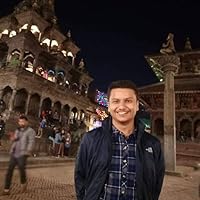
Raymond Chang was an emeritus professor at Williams College in the Department of Chemistry and a textbook author. His most popular textbook was titled Chemistry, which was published up to the thirteenth edition. He also published a few children's books. He was a naturalized American citizen who came from Hong Kong to America to start graduate studies at Yale University. There he received both his master's and PhD degrees. His family was originally from Shanghai, but Chang was born in Hong Kong as a result of his family's deportation in 1937. They left to escape the Japanese invasion of China. However, in 1941, Chang and his family returned to Shanghai for eight years before they again re-returned to Hong Kong. As a result of his forced movement through different regions of China Chang became fluent in many Chinese dialects. At the age of seventeen, Chang followed his sister to London. He received his B.Sc. with a first-class honors degree in chemistry from the University of London and Ph. D. from Yale University. He completed his postdoctoral research at Washington University in St. Louis and served as a professor at Hunter College of the City University of New York, prior to joining the faculty at Williams College in 1968. On August 3, 1968, he married Margaret A. Scrogin. They had one daughter, Elizabeth Chang.
I love this book. I have read this from cover to cover for three times! This helped me lot for my board exams. Since I am an Asian, I get to understand this easily. The words and sentences can be easily understood for everyone especially for Asians like me. Kudos to Raymond Chang!
El libro de Chang me ha acompañado por un montón de Olimpiadas de Química y muchísimos exámenes pero nunca lo había leído por completo hasta ésta semana, para preparar el final de Química General en la facultad.
Si bien ya resulta bastante aburrido después de haber leído reiteradas veces algunos capítulos y conocer ampliamente los temas que trata, confieso que es el mejor libro para empezar a estudiar química.
La simplicidad en los términos que utiliza, las definiciones concisas y la gran cantidad de ejemplos prácticos hacen que sea de lectura y comprensión rápida. Tal vez las partes más interesantes son "La Química en acción" que muestra ejemplos cotidianos o históricos a los que se puede aplicar el tema de determinado capítulo.
Finalmente, es increíble como cambió mi enfoque al leerlo ahora, que estoy cursando la Lic. en Física a cuando lo leí años atrás, pensando que iba a seguir Química o algo relacionado a ella. Si prestás atención, casi todos los científicos que va mencionando Chang son físicos y no químicos (salvo el pobre Lewis y sus amigos)
I want to read this book again and again.. And I hope I could read it more frequently. It's an amazing book for those who want to learn better about chemistry. That's why I love chemistry.. Thanks for this book, it's really useful for all time! :D
I mostly just searched this book out of curiosity but I'm surprised to see GR has textbooks! Anyway, I read this book last year. And now I'm currently reading it and will be reading it for the next 20 weeks.
One of the greatest book in general Chemistry at modern times. It has wonderfully highlighted the development and application alongside the prospects of the subject. Useful to all kind of readers for basic concepts. Hats off to Prof. Raymond Chang.
Great and accessible, also the standard for High School Olympiads. Lacks more advanced stoichiometry (I recommend to use along with Petrucci's General Chemistry textbook, which has wonderful problem sets).
This book Chemistry Chang and Chemistry the central science are the best intro chem. you can pick one of these two books and read cover to cover and you will become a master of gen chem.
2.0 out of 5 stars Info's There, But it's Soulless, Rootless & Mathless January 11, 2007
I took a couple of courses in Chemistry 30 years ago back in high school and then a couple more in college. My son just finished using this book in HIS college Chemistry classes and I thought I'd read through it for grins. I wasn't very impressed. Oh, the information's all there. But, it's presented in the manner of someone having gone through a checklist to see all the Chemistry subjects that should be taught in general Chemistry and then just including them. It's hard to explain, but I think the problem is the lack of historical background in the book. The book has little historical snippets on Chemistry personages, but it doesn't follow along the historical path of discovery to explain WHY Chemistry is what it is. The end result is that the student is presented with dry, bare facts with no place to hang them in his head.
Another problem is the lack of math in the book. I mean, general Chemistry is not exactly a higher math subject (it's an empirical science, instead). But, as an example, on page 277, in the midst of the Quantum Mechanics section, there's a sidebar explaining:
"The <= sign means that the product (DELTA)x(DELTA)p can be greater than or equal to h/4(PI), but it can never be smaller than h/4(PI)" (I've substituted the capitalized words for the greek symbols).
277 pages into a Chemistry book and the author is explaining what the "<=" sign is. This assumption of utter mathematical ignorance on the part of the reader continues throughout the book. And yet, a mere 72 pages further on (page 349), the author assumes knowledge of Coulomb's law in an explanation. Coulomb's law implies a class in Physics which means that anyone reading this book should be well versed in basic math.
And, finally, the biggest problem is that there's almost no lab material presented or used. I don't mean just a lack of lab experiments (I initially assumed there was some companion lab manual for this book -- but, if so, there's nothing anywhere in the book that references it). I mean that the author uses almost no hypothetical, lab-based scenarios to illustrate his points. Again, Chemistry is an historically empirical, experimental science. To entirely ignore that in a Chemistry book makes no sense at all.
Personally, this book feels like a book designed for people who have no interest in Chemistry but are forced to take a Chemistry class because of silly academic requirements. The problem with this is that presenting Chemistry as merely a collection of boring facts makes it even harder for such students to get anything out of the subject. And, for anyone who really is interested in the subject, this book could scare them off. Because of this, the best I can rate Chang's "Chemistry" is a Not Very Good 2 stars out of 5.
A decent chemistry reference, though some background knowledge in the units does help with understanding the various chapters. As content progressed into newer areas for me, it would take more time to try to decipher and process the textbook, and some of the visuals were not particularly clear. Additionally, some of the standard values of enthalpy and bond energy were inconsistent and incorrect.
Lebih menarik belajar Kimia pake buku ini daripada pake buku pegangan anak SMU. Thanks to my big bro yg minjemin buku ini supaya gue belajar mengerti Kimia, bukan sekedar dapat nilai Kimia yang bagus ^^